
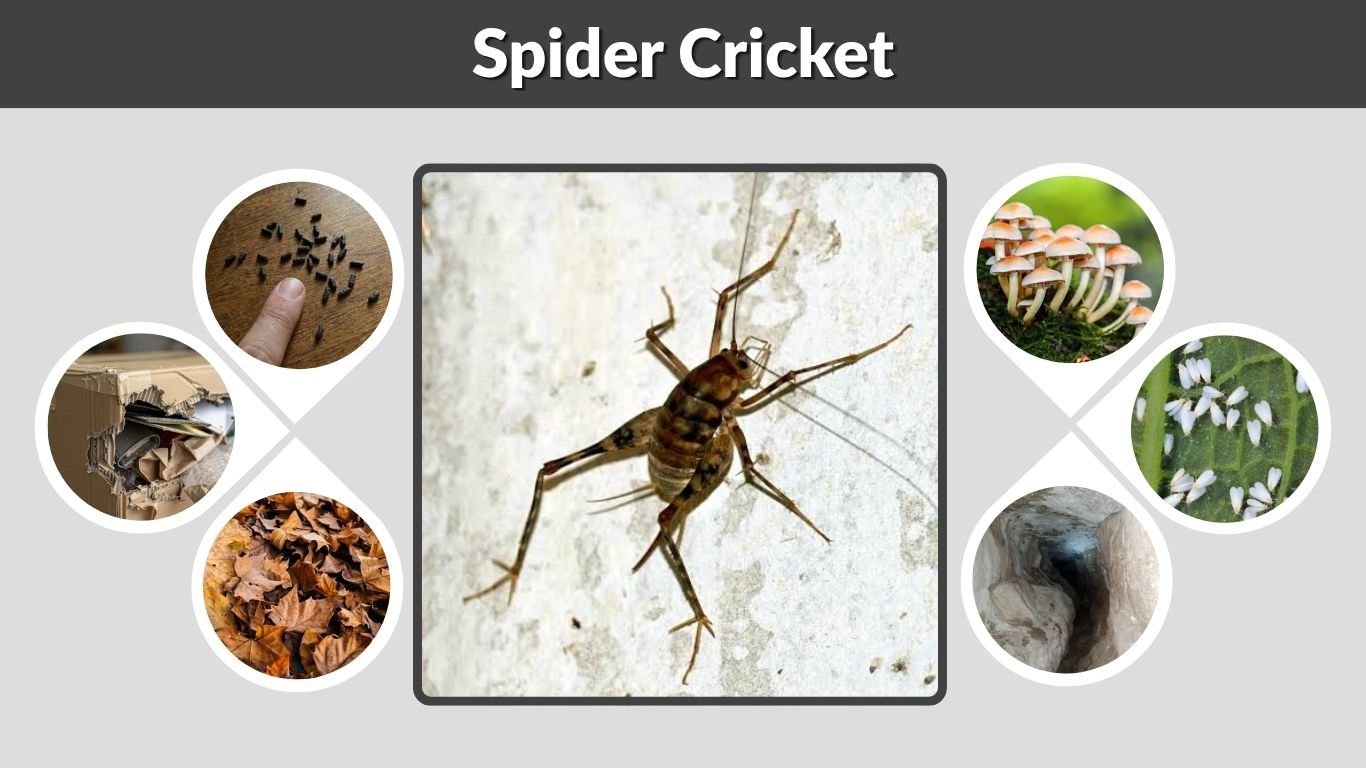
Spider crickets are unusual insects known for their long legs, curved backs, and impressive jumping ability. Although their appearance may seem frightening, they are not spiders and generally pose no danger to people. These insects prefer cool, dark, and humid environments, which is why they frequently appear in basements, crawl spaces, garages, and sheds. They are also called camel crickets, cave crickets, or sprickets. Understanding their appearance, diet, habitat, and behavior can help you identify them correctly and prevent them from becoming an indoor nuisance.
What Is a Spider Cricket?
A spider cricket is a wingless insect belonging to the family Rhaphidophoridae. Its common name comes from its long, spider-like legs. The alternative name “camel cricket” refers to its noticeably arched or hump-shaped back.
Spider crickets are related to grasshoppers, katydids, and other crickets. However, they differ from common house and field crickets in several ways. They do not have wings, cannot fly, and usually do not chirp. Instead, they rely on their long antennae to navigate through dark environments.
Several species are called spider crickets. Some naturally live in caves, while others occupy forests, greenhouses, and buildings. The greenhouse camel cricket is one species commonly found around human structures.
Spider Cricket Identification
Spider crickets have such a distinctive appearance that they are usually easy to recognize once you know their main characteristics. Their enlarged back legs often make the entire insect appear much bigger than its body actually is.
Main Identification Features
- Six long legs, with the back pair being especially large
- Very long, thin antennae that may exceed the body length
- A strongly arched or hump-shaped back
- A rounded, somewhat wingless body
- Light tan, reddish-brown, or dark brown coloring
- Dark spots, bands, or mottled markings on many species
- A pair of short sensory appendages called cerci at the rear
- Powerful jumping movements when disturbed
Adult females may also have a narrow, pointed ovipositor extending from the end of the abdomen. This structure is used for depositing eggs and should not be mistaken for a stinger.
Unlike spiders, spider crickets have six legs rather than eight. They also have obvious antennae, while spiders do not.
Spider Cricket Size
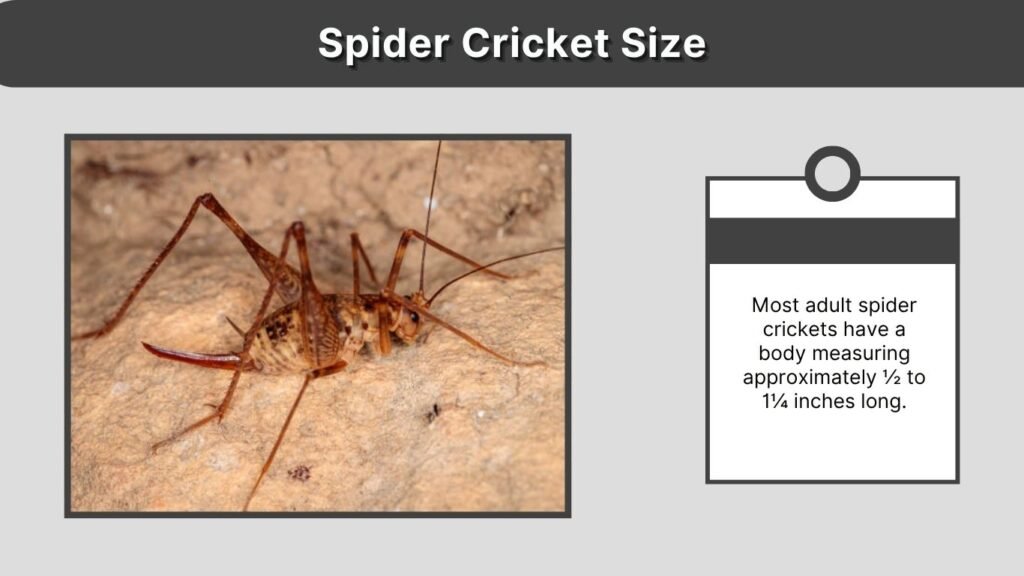
Most adult spider crickets have a body measuring approximately ½ to 1¼ inches long. A typical camel cricket found inside a home is around ¾ inch in body length. However, the extended legs and antennae can make the insect appear several inches across.
Nymphs are much smaller but resemble miniature adults. They have the same hump-shaped body and enlarged back legs. Their bodies become larger and their markings more noticeable as they pass through several growth stages.
Size can vary depending on the species, age, food supply, and environmental conditions. Females may appear slightly larger than males, particularly when carrying developed eggs.
What Color Is a Spider Cricket?
Spider crickets range from pale tan to dark brown. Many have a mottled pattern that combines brown, black, reddish, or yellowish markings. This irregular coloring provides camouflage among rocks, soil, dead leaves, bark, and decaying wood.
Young spider crickets are often lighter and may look almost translucent immediately after molting. Their new outer covering gradually hardens and darkens. Adults generally have stronger patterns and a tougher-looking body.
The color can help separate spider crickets from other indoor crickets. Field crickets are usually dark brown or black, while house crickets tend to be yellowish-brown with dark bands across the head. Spider crickets are wingless and usually have a more rounded, mottled body.
Spider Cricket Habitat
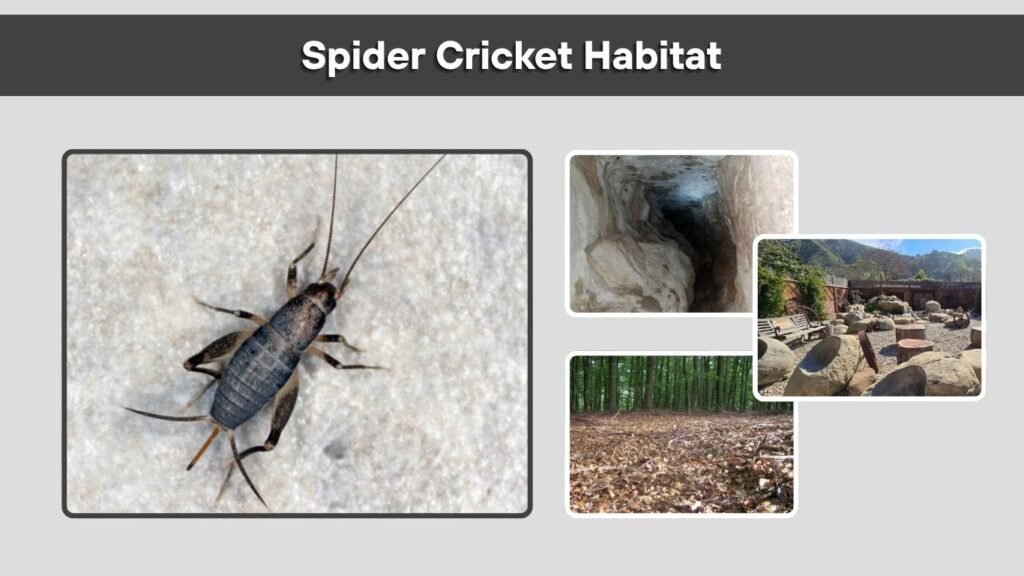
Spider crickets require moisture and shelter from sunlight. Outdoors, they hide in cool places where humidity remains relatively high. They become active after dark and retreat into protected locations during daylight hours.
Natural Habitats
Common outdoor habitats include:
- Caves and rocky crevices
- Spaces underneath stones and logs
- Leaf litter and forest debris
- Hollow trees and rotting wood
- Dense ivy and ground-covering plants
- Woodpiles and stacked building materials
- Areas around drains, wells, and damp foundations
Around houses, spider crickets may enter basements, garages, bathrooms, laundry rooms, storage buildings, and crawl spaces. Damp basements and crawl spaces are especially attractive because they resemble the cool, dark conditions of a cave. University of Maryland Extension notes that their preference for dark, moist environments commonly restricts them to these parts of a building.
Heavy rain may drive them inside when their outdoor shelters become flooded. They may also enter during extended hot or dry weather while searching for moisture.
What Do Spider Crickets Eat?
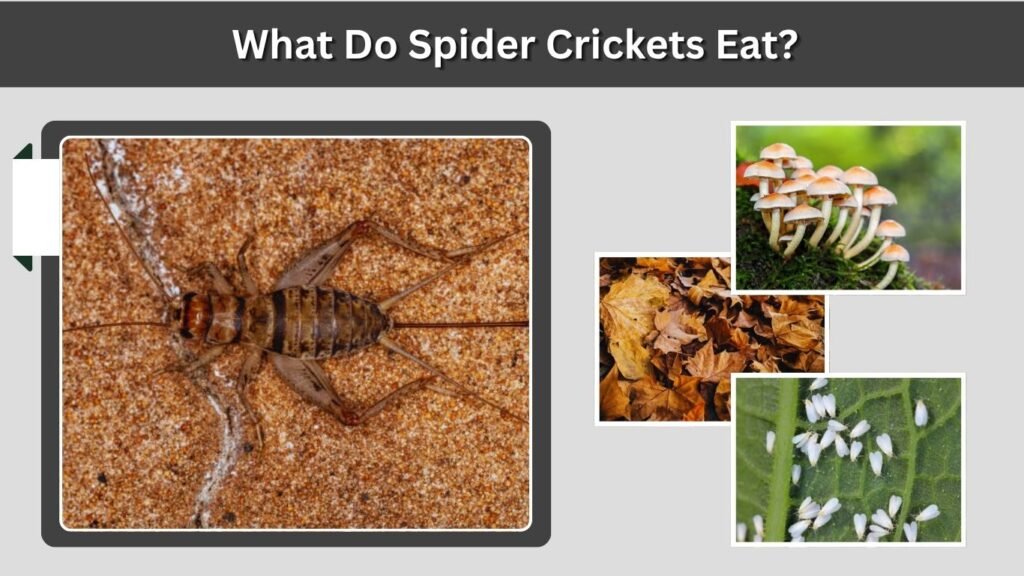
Spider crickets are scavengers that feed on a mixture of plant and animal material. Outdoors, their feeding activities help break down organic debris and return nutrients to the soil.
Their natural diet may include:
- Decaying leaves
- Fungi and mold
- Rotting wood
- Plant debris
- Dead insects
- Small living insects
- Algae and other organic material
Inside a house, hungry spider crickets may nibble on cardboard, paper, stored fabrics, carpet fibers, or other organic materials. However, significant damage is uncommon unless a large population remains inside for an extended period. Camel crickets most often eat plant debris outdoors and may occasionally consume paper products indoors, according to the University of Minnesota Extension.
Removing cardboard boxes, damp paper, mold, and other organic clutter can reduce available food and hiding places.
Spider Cricket Behavior
Spider crickets are primarily nocturnal. They remain hidden during the day and become active at night, searching for food and moisture. You may suddenly notice one when turning on a basement light or moving a box.
They do not normally chirp because adults lack the functional wings used by many true crickets to produce sound. If you hear repeated chirping inside your house, a field or house cricket is a more likely source.
Why Do Spider Crickets Jump at People?
A spider cricket may appear to jump directly at you when frightened. This is a defensive escape response rather than an attack. Jumping toward a perceived threat can confuse a predator and provide the cricket with an opportunity to escape.
Their poor directional control and rapid movements make these jumps seem aggressive. However, spider crickets do not chase people or deliberately try to cause harm.
Spider Cricket Life Cycle
Spider crickets develop through incomplete metamorphosis, consisting of three main stages: egg, nymph, and adult. There is no caterpillar-like larval stage or inactive pupal stage.
Females generally place their eggs in moist soil or another protected material. The eggs eventually hatch into small nymphs that look similar to adults but are not sexually mature. Nymphs molt several times as they grow.
Depending on the species and local climate, spider crickets may survive colder months as nymphs or adults. Adult females can begin depositing eggs in soil during spring, with young nymphs appearing several weeks later. The exact timing varies by temperature and environmental conditions. NC State Extension describes this seasonal development and notes that nymphs resemble smaller adults.
Are Spider Crickets Dangerous?
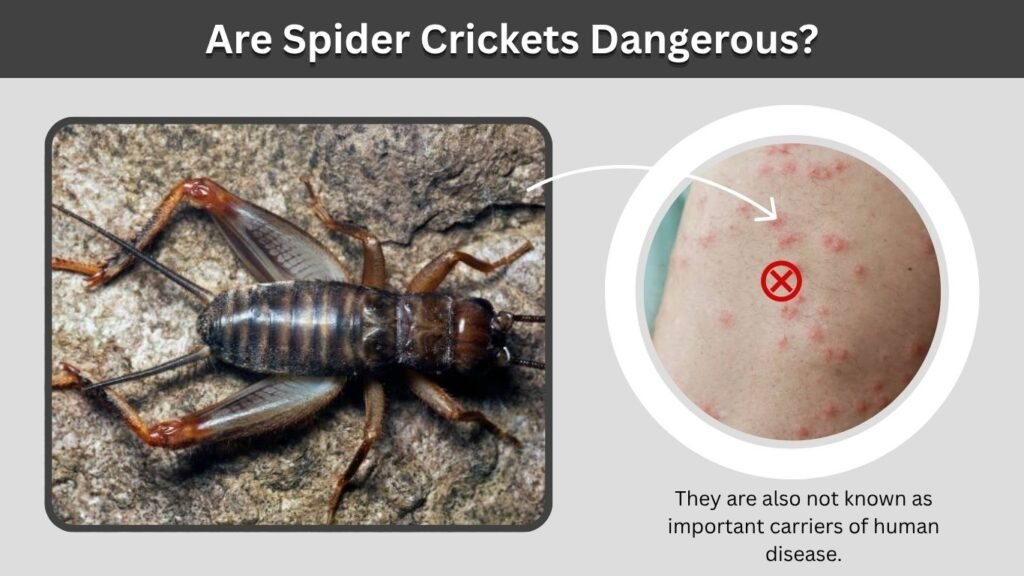
Spider crickets look intimidating, but they are generally harmless to humans and pets. They are not venomous and do not have stingers. Biting is not considered a normal defensive behavior, and their mouthparts are not designed to seriously injure people.
They are also not known as important carriers of human disease. Their main problem is the discomfort and surprise caused by their appearance and sudden jumping.
Large indoor populations can become a nuisance. They may leave droppings, feed on paper products, or occasionally damage stored materials. More importantly, numerous spider crickets may indicate excessive moisture, poor ventilation, plumbing leaks, or unsealed entry points.
Pets may chase or eat them. Consuming one is not usually dangerous, although eating several wild insects could cause minor stomach irritation.
Signs of a Spider Cricket Infestation
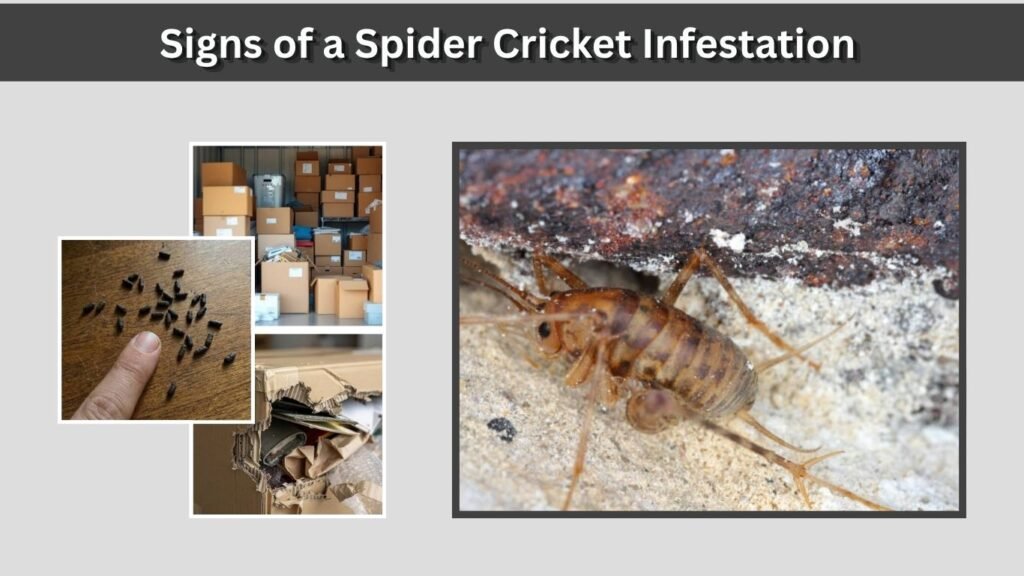
One spider cricket does not necessarily mean that an infestation is present. It may have entered accidentally through an open door or foundation gap. Repeated sightings, however, suggest that suitable habitat exists nearby.
Possible signs include:
- Seeing multiple crickets at night
- Finding them behind boxes or stored items
- Discovering small dark droppings
- Noticing minor damage to paper or cardboard
- Finding crickets in sinks, tubs, or floor drains
- Regular sightings in a damp basement or crawl space
Because they are silent and nocturnal, spider crickets can remain unnoticed until their population becomes relatively large.
How to Get Rid of Spider Crickets
The most effective control method is to make your house less attractive to them. Spraying individual insects may provide temporary relief, but it will not solve the moisture or entry problem that brought them indoors.
Reduce Moisture
Repair leaking pipes, faucets, roofs, and foundation walls. Use a dehumidifier in damp basements and improve ventilation in crawl spaces. Check gutters and downspouts to ensure that water drains away from the foundation.
Seal Entry Points
Close cracks around windows, doors, pipes, vents, and utility lines. Replace damaged weather stripping and install tight-fitting door sweeps. Screen crawl-space vents and repair holes in window screens.
Remove Hiding Places
Eliminate piles of damp leaves, wood, stones, and unused materials close to the building. Store firewood above the ground and away from exterior walls. Indoors, reduce clutter and replace damp cardboard boxes with sealed plastic containers.
Use Traps or a Vacuum
Place sticky traps along basement walls, behind stored items, and near suspected entry points. A vacuum can remove visible crickets quickly without applying chemicals. Dispose of the vacuum contents in a sealed outdoor bin.
Professional pest control may be appropriate when large numbers continue appearing after moisture reduction, cleaning, and exclusion.
FAQs
Are Spider Crickets Actually Spiders?
No. Spider crickets are insects with six legs, two antennae, and three main body regions. Spiders are arachnids with eight legs and no antennae. The cricket’s extremely long legs are responsible for its spider-like appearance and common name.
Can Spider Crickets Fly?
Spider crickets cannot fly because adults do not have functional wings. They escape danger by running or using their enlarged back legs to make powerful jumps. Their jumping ability allows them to cross surprising distances despite being unable to fly.
Do Spider Crickets Chirp?
Spider crickets are normally silent. Unlike house and field crickets, they do not have the developed wings needed to produce familiar chirping sounds. A chirping insect in a basement is therefore more likely to be a house cricket or field cricket.
Why Are Spider Crickets in My Basement?
Your basement probably provides moisture, darkness, food, and protection. Plumbing leaks, poor ventilation, high humidity, cardboard boxes, and foundation cracks can make the area particularly attractive. Reducing humidity and sealing openings are the best long-term solutions.
Do Spider Crickets Die in Winter?
Some populations survive winter as nymphs or adults in protected environments. Heated basements, crawl spaces, caves, and other sheltered locations can protect them from extreme temperatures. Their seasonal survival varies depending on the species, climate, and availability of suitable shelter.
