
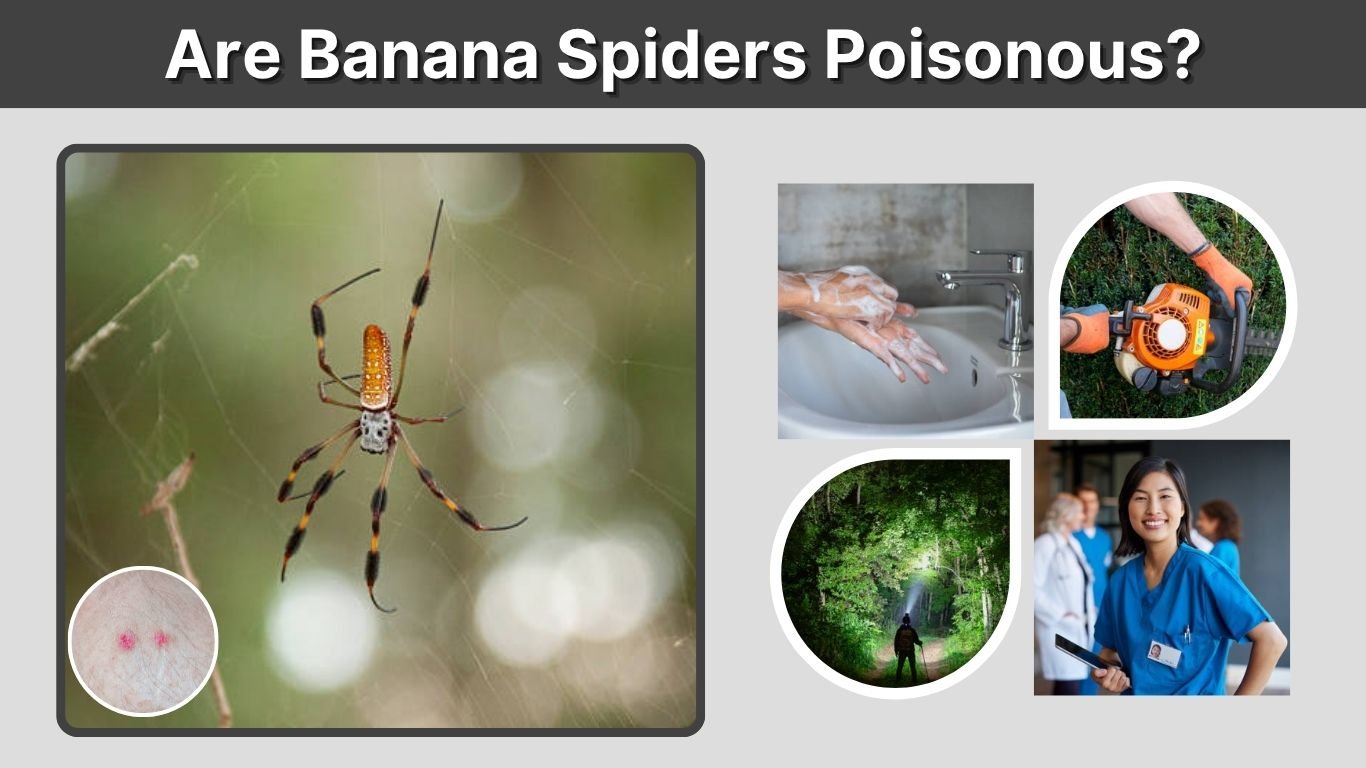
Banana spiders may look frightening because of their large bodies, long legs, bright markings, and enormous webs. However, the banana spider commonly found in Florida and other southeastern states is not considered dangerous to most people.
Technically, banana spiders are venomous rather than poisonous. They produce venom to immobilize insects, but their venom generally causes only mild, temporary symptoms in humans. Bites are uncommon because these spiders are shy and usually bite only when trapped, squeezed, or handled.
Are Banana Spiders Poisonous or Venomous?
Banana spiders are not poisonous in the usual scientific meaning of the word. They are venomous because they inject venom through their fangs when biting prey.
A poisonous animal causes harm when it is eaten, touched, or absorbed. A venomous animal delivers toxins by biting or stinging. Therefore, describing a banana spider as venomous is more accurate than calling it poisonous.
Nearly all spiders produce some form of venom because they need it to capture and digest prey. However, spider venom that works effectively on small insects is not necessarily dangerous to humans.
Quick Answer
The banana spider commonly seen in Florida is venomous, but its venom is considered mild. It is not known to cause life-threatening poisoning in healthy people. A bite may produce localized pain, redness, itching, or swelling, but these effects usually improve quickly.
What Is a Banana Spider?
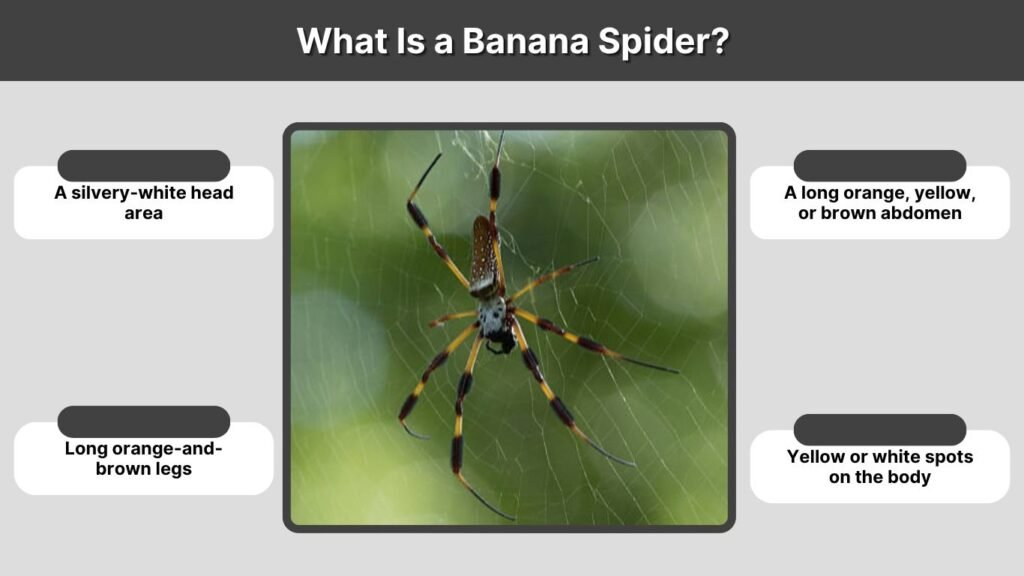
“Banana spider” is a common name used for several different spider species. In Florida and much of the southeastern United States, it normally refers to the golden silk orb-weaver, scientifically known as Trichonephila clavipes.
This spider receives its nickname from its yellow or golden coloration. It is also famous for producing strong, golden-colored silk and building large circular webs between trees, bushes, fences, and other outdoor structures.
Basic Identification
Female golden silk orb-weavers are much larger and more noticeable than males. They usually have:
- A long orange, yellow, or brown abdomen
- Yellow or white spots on the body
- A silvery-white head area
- Long orange-and-brown legs
- Dark hair-like tufts on the legs
- A large web with a golden appearance
Males are considerably smaller, slimmer, and darker. A male may be difficult to notice even when it is sharing the female’s web.
How Dangerous Is a Banana Spider Bite?
A bite from a golden silk orb-weaver is usually not medically serious. These spiders use venom against flies, mosquitoes, moths, beetles, wasps, and other small animals caught in their webs.
Their venom is effective against insect prey, but it has relatively mild effects on humans. University of Florida sources describe the usual effects as localized and short-lived.
| Question | Answer |
| Does it have venom? | Yes |
| Is the venom normally deadly? | No |
| Are bites common? | No |
| Is it aggressive? | No |
| Can the bite hurt? | Yes |
| Is emergency treatment usually needed? | No, unless severe symptoms develop |
Individual reactions can vary. A person with an allergy or unusual sensitivity may experience stronger symptoms than most people.
What Does a Banana Spider Bite Feel Like?
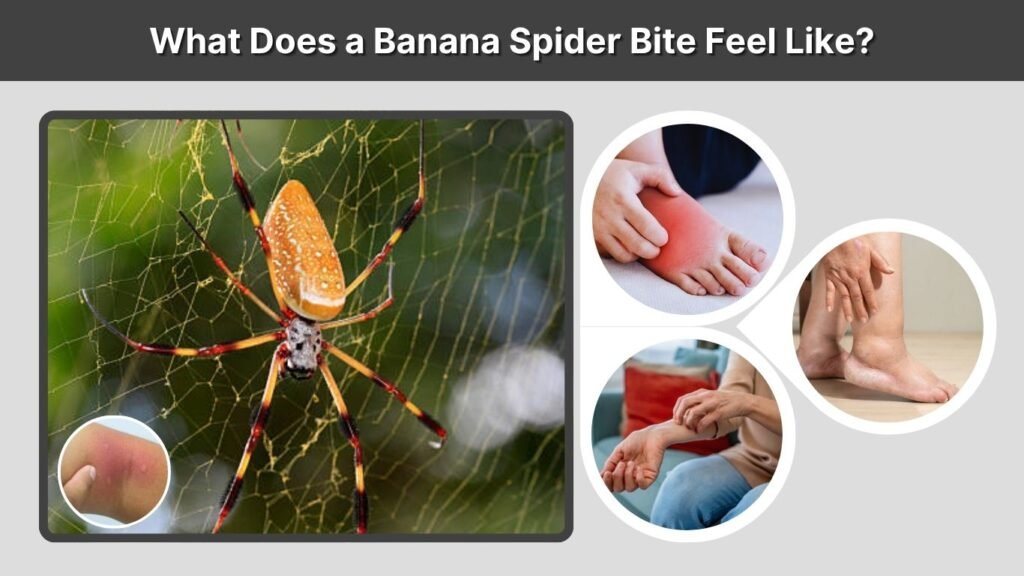
The bite may initially feel like a sharp pinch or sting. The exact reaction depends on how much venom is delivered, the location of the bite, the person’s sensitivity, and whether the skin later becomes irritated or infected.
Common Bite Symptoms
Possible symptoms include:
- Mild or moderate pain
- Redness around the bite
- Minor swelling
- Itching
- Tenderness
- Small fang marks
- Temporary irritation
- Occasionally, a small blister
These symptoms are usually limited to the area surrounding the bite. University of Florida Extension reports that localized reactions normally clear up relatively quickly.
Signs of a Serious Reaction
Although serious reactions are uncommon, seek urgent medical help if the person develops:
- Difficulty breathing
- Wheezing
- Swelling of the face, tongue, or throat
- Widespread hives
- Dizziness or fainting
- Severe or rapidly spreading swelling
- Intense pain that continues to worsen
- Repeated vomiting
- Weakness or confusion
Difficulty breathing, widespread hives, nausea, tingling, and other symptoms beyond the bite area can indicate an allergic or systemic reaction.
Are Banana Spiders Aggressive Toward Humans?
Banana spiders are not naturally aggressive toward people. They normally remain in or near their webs and wait for insects to become trapped.
When disturbed, a banana spider may:
- Move away from the disturbance
- Climb toward the edge of its web
- Drop toward the ground
- Shake or vibrate the web
- Remain still and rely on camouflage
Biting is generally a last line of defense. The spider is most likely to bite if someone grabs it, presses it against the skin, reaches into its hiding place, or traps it inside clothing.
Walking near a banana spider’s web does not normally cause an attack. Even accidentally touching the web is more likely to make the spider retreat than bite.
What Should You Do After a Banana Spider Bite?
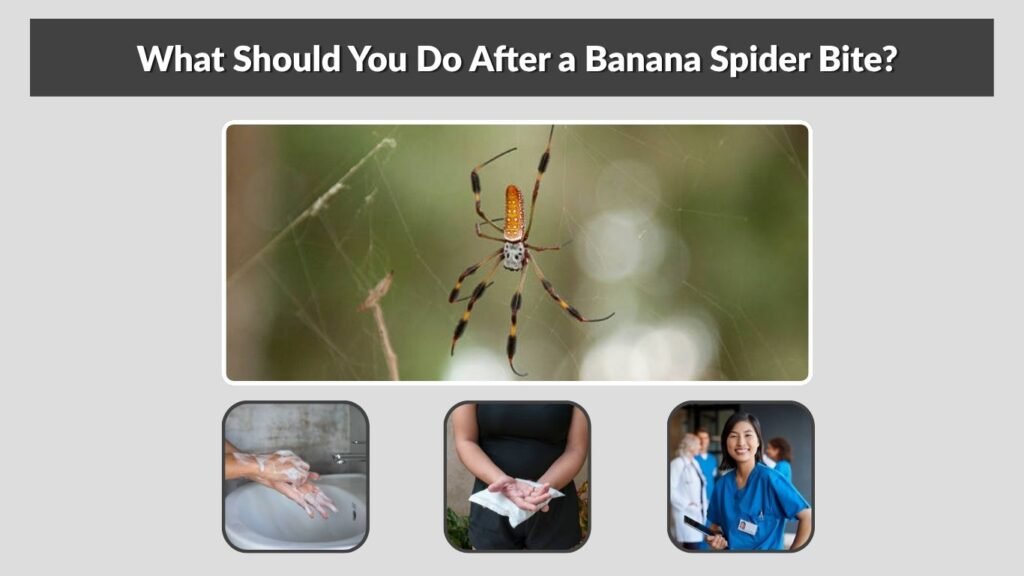
Most mild bites can be managed with basic first aid. However, it may be impossible to identify the responsible spider with certainty, especially when the bite happens indoors or the spider is not clearly seen.
Basic First Aid
After a suspected bite:
- Move away from the spider to prevent another bite.
- Wash the affected area with soap and clean water.
- Apply a wrapped cold pack for short intervals.
- Keep the area clean and avoid scratching.
- Monitor the bite for increasing pain or swelling.
- Contact a healthcare professional if symptoms worsen.
Do not cut the skin, attempt to suck out venom, burn the area, or apply unverified substances. These actions will not safely remove venom and may damage the skin.
A photograph of the spider can sometimes help with identification. Do not attempt to capture it if doing so creates another bite risk.
When Should You Contact a Doctor?
Contact a medical professional when:
- The affected person is a young child
- The person has a history of serious allergic reactions
- The spider cannot be confidently identified
- Pain or swelling continues to increase
- Redness spreads significantly
- The area becomes hot, drains pus, or appears infected
- Symptoms do not begin improving
- Fever, muscle cramps, weakness, or vomiting develops
Many skin infections, insect bites, allergic reactions, and other conditions are incorrectly blamed on spiders. A worsening skin lesion should be evaluated rather than automatically assumed to be a normal banana spider bite.
Can a Banana Spider Bite Kill You?
The golden silk orb-weaver commonly called a banana spider in Florida is not regarded as deadly to humans. Its large size can make it appear dangerous, but body size does not reliably indicate venom toxicity.
A severe allergic reaction could theoretically become dangerous, as it can following many bites or stings. However, this would be an unusual individual reaction rather than the expected effect of golden silk orb-weaver venom.
People sometimes confuse this harmless American orb-weaver with the Brazilian wandering spider, another animal occasionally called a banana spider. Brazilian wandering spiders are different spiders with medically important venom. Therefore, location and accurate identification matter whenever the common name “banana spider” is used.
Are Banana Spiders Dangerous to Dogs or Cats?
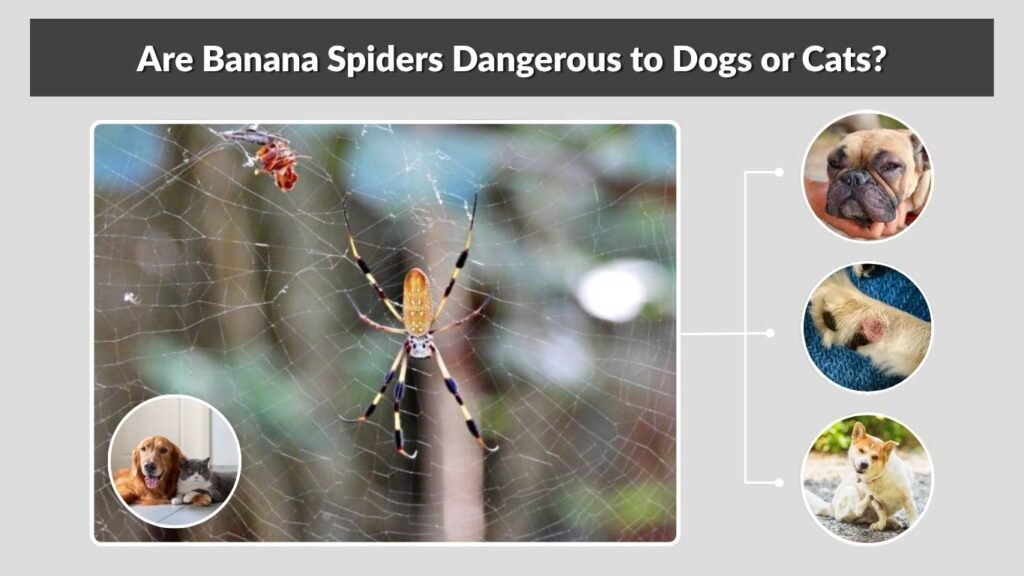
Golden silk orb-weavers are unlikely to seriously harm a healthy dog or cat. Pets may investigate, paw at, or bite a spider, causing it to defend itself.
A bitten pet might show:
- Localized swelling
- Redness
- Tenderness
- Licking or chewing at the affected area
- Temporary discomfort
Contact a veterinarian if the pet develops facial swelling, breathing difficulty, weakness, repeated vomiting, severe pain, or unusual behavior. Small pets, animals with allergies, and pets bitten inside the mouth may require closer attention.
Do Banana Spiders Chase People?
Banana spiders do not chase people. Their survival strategy depends on remaining near their webs, where they catch flying insects.
A spider may appear to move toward someone when it is trying to reach the edge of a damaged web or escape along a silk support line. This movement is defensive or accidental, not an attempt to attack.
If you walk into a web, calmly step back and brush the silk away. The spider will normally attempt to escape rather than bite.
Should You Kill a Banana Spider?
Killing a banana spider is usually unnecessary. Golden silk orb-weavers are beneficial predators that capture numerous flying insects. They can help reduce mosquitoes, flies, moths, wasps, beetles, and other backyard pests.
If the spider’s web blocks a walkway, doorway, play area, or frequently used part of the yard, relocate it rather than handling the spider directly.
Safe Relocation
You can gently remove or move the web with:
- A long broom
- A garden rake
- A long stick
- A container and stiff paper, when the spider is accessible
Wear gloves, keep your hands away from the spider, and release it near shrubs or trees away from busy pathways.
How to Prevent Banana Spider Bites
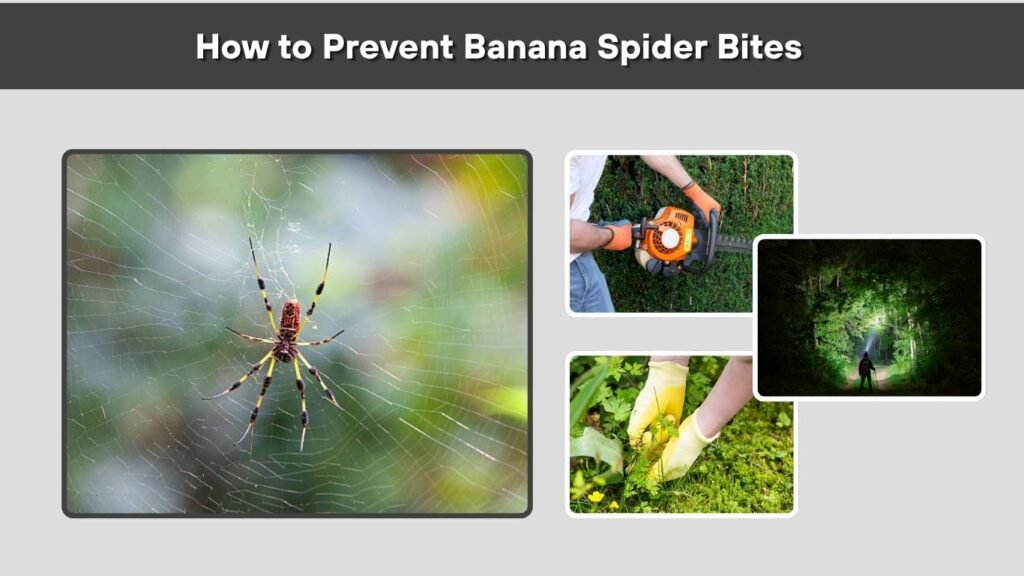
Bites are already uncommon, but simple precautions can reduce the possibility further.
- Do not handle large spiders with bare hands.
- Look between trees before walking through wooded paths.
- Wear gloves while trimming dense vegetation.
- Shake out outdoor clothing and gardening gloves.
- Use a flashlight when walking outside at night.
- Teach children not to poke spiders or their webs.
- Keep bushes trimmed away from doors and porches.
- Move webs that repeatedly cross pathways.
Banana spiders do not normally infest homes. They prefer outdoor areas where they can anchor large webs and catch flying insects.
FAQs
Are yellow banana spiders poisonous?
The large yellow banana spider commonly found in Florida is not poisonous, but it is venomous. It can inject venom through a bite, although the venom is usually mild for humans. Bites are uncommon and generally cause only localized pain, redness, or swelling.
What happens when a banana spider bites you?
A bite may cause a brief sharp pain followed by redness, itching, tenderness, or mild swelling. Most reactions remain limited to the bite area and improve without serious complications. Seek medical attention if severe swelling, breathing difficulty, hives, vomiting, or worsening pain develops.
Can you touch a banana spider?
Touching one is not recommended. Banana spiders are generally calm, but any spider may bite when squeezed, restrained, or trapped against the skin. Observe it without handling it, or use a long tool or container if it must be relocated.
Is a banana spider more dangerous than a black widow?
The golden silk orb-weaver called a banana spider in Florida is far less medically concerning than a black widow. Banana spider bites usually cause localized irritation, while black widow venom can produce severe muscle cramps and other symptoms requiring professional guidance.
Should I worry about a banana spider in my yard?
Usually, no. A banana spider in the yard is more beneficial than harmful because it catches flying insects. Leave it alone when its web is in a safe location. Move the web carefully when it blocks a doorway, path, or children’s play area.
