
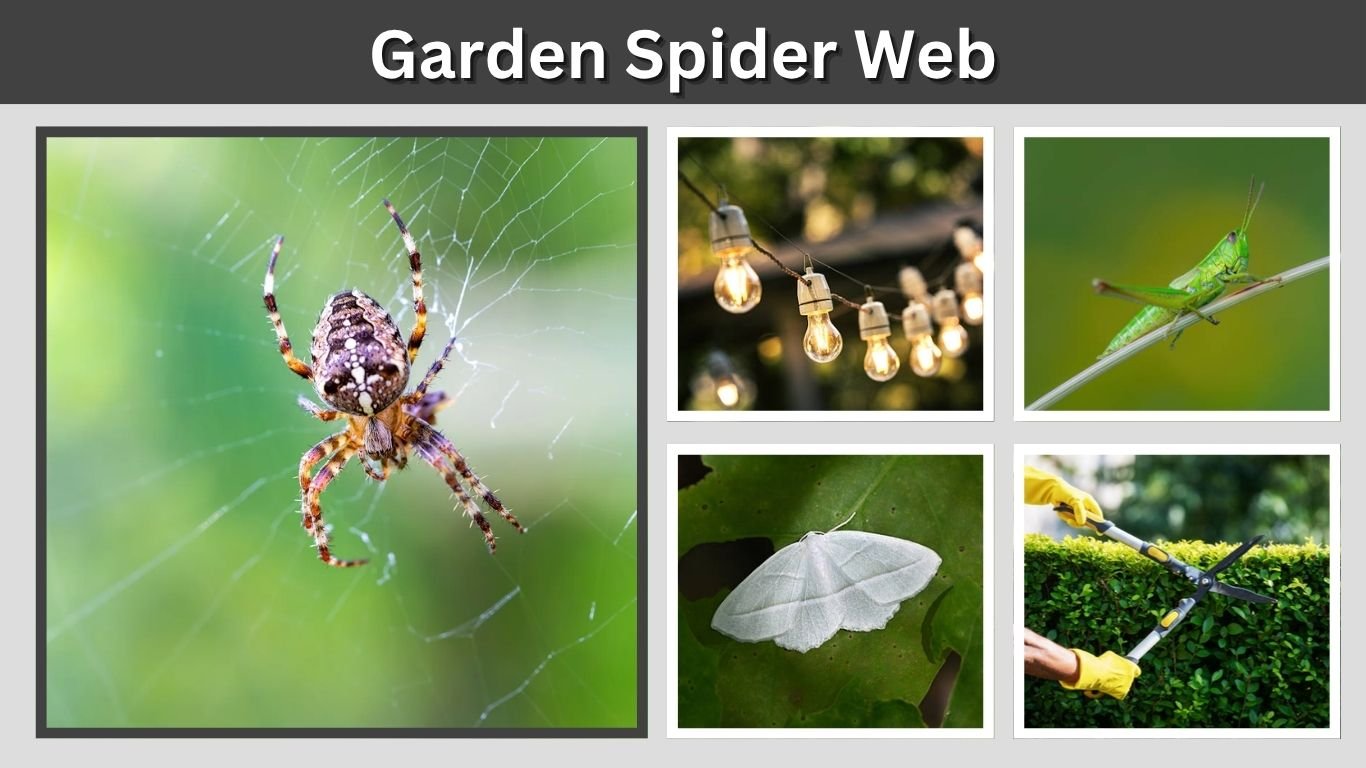
A garden spider web is one of the most impressive structures found around yards, flower beds, shrubs, and vegetable gardens. Many garden spiders create large, circular webs designed to catch flying insects such as flies, moths, mosquitoes, and grasshoppers. Some species add a noticeable white zigzag through the center, while others shake or bounce their webs when disturbed. Although these webs may appear inconvenient, the spiders that build them are usually harmless and provide natural insect control without damaging plants.
What Does a Garden Spider Web Look Like?
Most spiders commonly called garden spiders are orb-weavers. Their webs have a rounded, wheel-like design made from radial support threads and a spiral of sticky silk.
The size and appearance of a web vary according to the spider’s species, age, location, and available space. Some webs fit between two leaves, while others stretch several feet between shrubs, trees, or fence posts.
Main Identification Features
- Circular or nearly circular overall shape
- Strong outer frame attached to plants or structures
- Straight silk lines extending outward from the center
- Sticky spiral threads used to trap insects
- Open hub or dense central resting area
- Spider positioned at the center or hidden nearby
- White zigzag band in some species
- Web commonly built vertically between plants
Garden Spider Web Size
A mature garden spider may create a web measuring one to several feet across. Large female yellow garden spiders and banded garden spiders generally produce the most noticeable webs.
Web size depends on the space available. A spider living between tall plants may build a broad web, while one occupying a small shrub may create a more compact structure.
Why Webs Become Visible in the Morning
Spider silk is usually difficult to see in dry conditions. Morning dew collects along the threads and reveals the complete pattern. Sunlight reflecting from these droplets can make the web look silver, white, or golden.
Dew-covered webs are especially common near grass, vegetable plants, ponds, and other areas where overnight moisture develops.
How Does a Garden Spider Build Its Web?
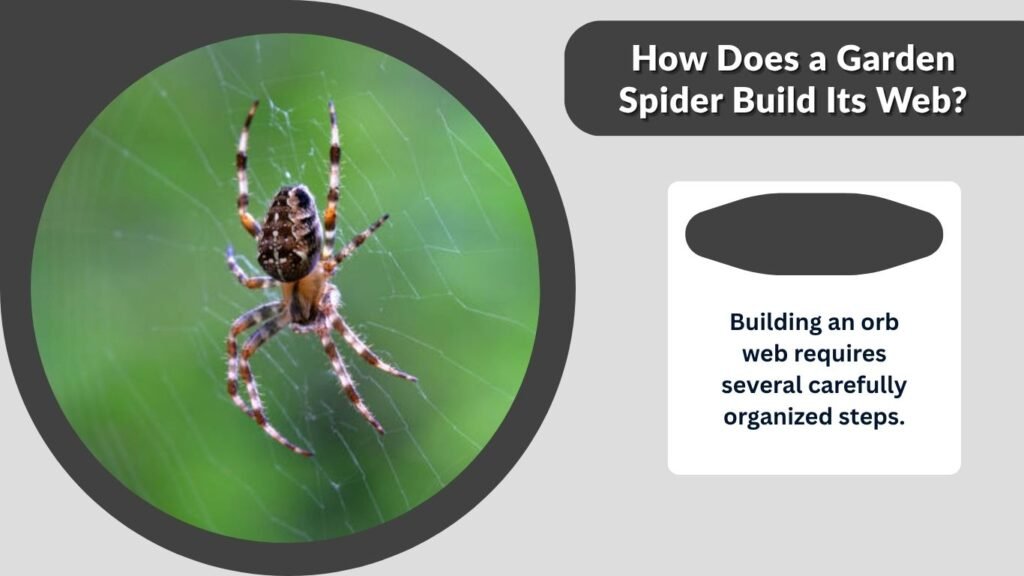
Building an orb web requires several carefully organized steps. The spider relies on touch and vibration rather than sight to position each thread.
A finished web may look delicate, but its supporting lines can withstand wind, struggling prey, and light contact with surrounding plants.
Creating the Web Frame
The spider begins by releasing a thread into the air. When the silk attaches to a branch, fence, leaf, or other surface, the spider crosses it and adds more silk to strengthen the line.
It then creates additional anchor lines, forming the outer frame. These strong threads hold the web in place and distribute pressure when an insect strikes it.
Adding Radial and Spiral Threads
After completing the frame, the spider creates radial lines that extend outward like the spokes of a wheel. These non-sticky threads allow the spider to move quickly across its web.
A temporary spiral helps organize the spacing. The spider then replaces or covers it with a sticky capture spiral that traps flying insects.
How Long Does Web Building Take?
A garden spider can often complete a web within a few hours. Some orb-weavers finish much faster when rebuilding a familiar structure in the same location.
Weather, web size, interruptions, and the distance between anchor points can affect the building time.
Why Is There a Zigzag in a Garden Spider Web?
The thick white zigzag found in some garden spider webs is called a stabilimentum. It is strongly associated with yellow garden spiders and several other members of the genus Argiope.
The structure may appear as one vertical line, several connected sections, a cross, or a circular patch around the center.
The Zipper Web Pattern
The zigzag is often called a zipper because it resembles the teeth of a closed zipper. It is made from dense, reflective silk and is much more visible than the web’s ordinary capture threads.
Young spiders may create circular or disc-shaped patterns, while mature females often produce a longer vertical zigzag.
Why Do Garden Spiders Make Zigzags?
The exact purpose may vary, but the zigzag can potentially:
- Make the web more visible to birds and large animals
- Reduce accidental damage to the web
- Reflect light that attracts certain insects
- Strengthen or mark the central resting area
- Help camouflage the spider’s body
- Protect the spider from some predators
Not every yellow garden spider adds a zigzag every day. The size and shape may change as the spider grows or responds to conditions around the web.
Yellow Garden Spider Web
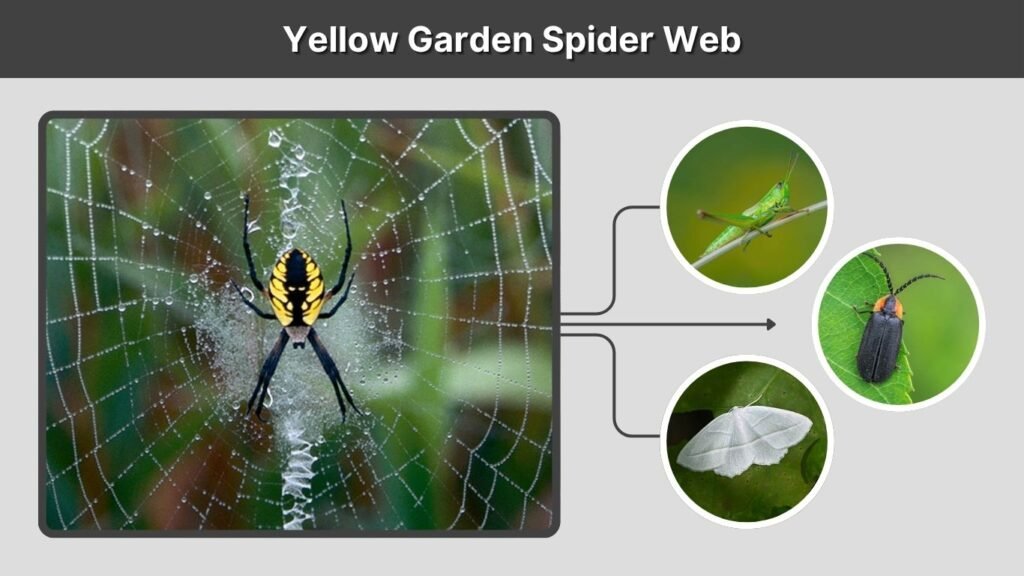
The yellow garden spider creates one of the most recognizable webs in North America. The large female usually rests head-down at the center, holding her legs together in pairs.
Its web is commonly built in open, sunny places with tall vegetation and abundant insects.
Black and Yellow Garden Spider Web
The black and yellow garden spider is another common name for the yellow garden spider. Its circular web can be large and strong enough to trap grasshoppers, beetles, moths, and other medium-sized insects.
The spider’s black-and-yellow abdomen, long banded legs, and white zipper-like silk make identification relatively easy.
Banded Garden Spider Web
The banded garden spider also builds a circular web and may add a zigzag near the center. It often has silver, yellow, black, or white bands across its abdomen.
Its web is frequently found among tall grass, flower beds, fields, and shrubs. The basic structure is similar to that of the yellow garden spider.
European Garden Spider Web
The European garden spider, also called the cross orb-weaver, builds a classic circular web between branches, hedges, fences, and buildings.
Unlike many Argiope spiders, it normally does not create a prominent zipper pattern. It may hide near the web’s edge and remain connected to the center through a signal thread.
Why Does a Garden Spider Shake Its Web?
A garden spider may bounce or shake the web rapidly when it senses danger. The spider flexes its legs and causes the entire structure to move back and forth.
This behavior can make the spider appear larger, blur its outline, and discourage predators from approaching.
Web Shaking and Bouncing
Shaking may occur when a person, bird, wasp, or other animal approaches the web. The spider is not preparing to attack. It is attempting to appear difficult to capture or identify.
Some spiders bounce briefly and then remain still. Others retreat to the edge of the web, drop toward the ground, or hide beneath nearby leaves.
Why Does the Spider Leave the Web?
A garden spider may temporarily abandon its web because of:
- Heavy rain or strong wind
- Repeated disturbance
- Lack of available prey
- Damage from birds or animals
- Mating activity
- Egg-sac production
- Movement to a safer location
The spider may return later or build a new web nearby.
Do Garden Spiders Rebuild Their Webs Every Night?
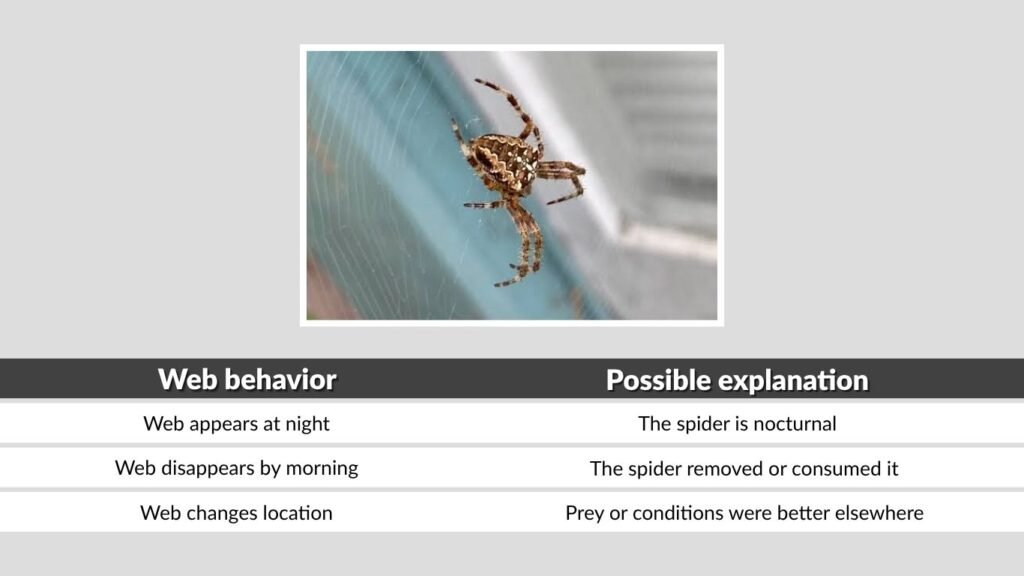
Many orb-weavers repair or replace their webs regularly. Some species are primarily active at night and build a fresh web around sunset. They may consume damaged silk the following morning and hide during daylight.
Other garden spiders maintain the same web for several days. They repair broken areas and replace sections of the sticky spiral when necessary.
| Web behavior | Possible explanation |
| Web appears at night | The spider is nocturnal |
| Web disappears by morning | The spider removed or consumed it |
| Web changes location | Prey or conditions were better elsewhere |
| Web has missing sections | Wind, rain, or prey caused damage |
| Spider hides during the day | It is resting away from predators |
| Web is rebuilt repeatedly | The location attracts many insects |
Are Garden Web Spiders Poisonous?
Garden web spiders are venomous rather than poisonous. They use venom to immobilize insects caught in their webs, but common garden orb-weavers are not considered dangerous to people.
They are generally shy and prefer escaping, hiding, or shaking the web instead of biting.
Garden Orb Web Spider Bite
A bite is uncommon and normally occurs only when the spider is trapped against the skin or handled roughly. Possible minor symptoms include temporary pain, redness, itching, and localized swelling.
Wash the area with soap and water and apply a cold compress. Seek medical care if severe pain, breathing difficulty, widespread swelling, dizziness, vomiting, or other serious symptoms develop.
Spider Webs in Vegetable Gardens
Webs on vegetable plants do not usually indicate that the spider is eating or damaging the crop. Garden spiders are predators, not plant feeders.
They may capture moths, flies, beetles, leafhoppers, and other insects that visit vegetable plants. However, they can also occasionally catch beneficial pollinators.
Do Spider Webs Harm Plants?
Ordinary orb webs do not suck sap, eat leaves, spread plant diseases, or interfere with plant growth. Very heavy webbing may bend delicate stems, but this is uncommon with a single garden spider.
Fine sheets of silk covering numerous leaves may come from spider mites rather than true spiders. Spider mites are tiny plant-feeding pests and can cause yellow spots, dry leaves, and reduced plant health.
How to Get Rid of Spider Webs in the Garden
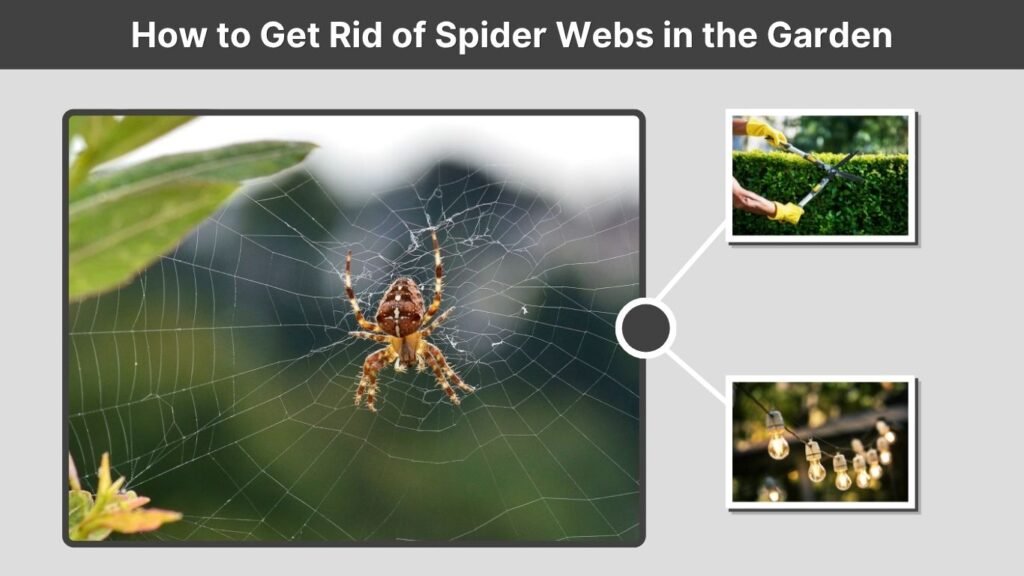
Removing garden spider webs is usually unnecessary. The spiders provide free insect control and rarely remain in one location permanently.
When a web blocks a path, door, gate, or work area, it can be moved without killing the spider.
Safe Web Removal
Wait until the spider moves to the edge of the web, then gently remove the silk with a long stick or garden tool. You can also capture the spider with a container and relocate it to a shrub away from busy areas.
Avoid crushing the spider or spraying insecticide. Chemicals may also harm bees, butterflies, ladybugs, and other beneficial garden animals.
Preventing Webs in Inconvenient Areas
Trim branches away from doors and frequently used walkways. Reduce unnecessary outdoor lighting, since lights attract the flying insects that spiders follow.
Regularly sweeping porch corners and removing abandoned webs can discourage spiders from rebuilding in the same location. Leave webs undisturbed when they are positioned safely among plants.
FAQs
Why Does a Garden Spider Put a Zigzag in Its Web?
The white zigzag may help make the web visible to birds, attract certain insects, camouflage the spider, or reinforce its resting area. Scientists have proposed several purposes, and the function may differ between species and environmental conditions.
Do Garden Spiders Make New Webs Every Night?
Some garden orb-weavers build or repair their webs each evening, especially nocturnal species. Others maintain one web for several days. Wind, rain, prey activity, silk condition, and disturbance influence how frequently a web is replaced.
Why Does a Garden Spider Bounce Its Web?
Web bouncing is usually a defensive behavior. Rapid shaking blurs the spider’s outline and can confuse or discourage predators. The spider is not trying to jump at a person or attack anyone standing nearby.
Should I Remove Spider Webs From Vegetable Plants?
Removal is not necessary unless the web blocks access or bends a delicate plant. Garden spiders do not eat crops and often capture plant pests. Check for spider mites when extremely fine webbing covers leaves and the plant shows visible damage.
Is a Garden Orb Web Spider Dangerous?
Common garden orb-weavers are not considered dangerous. They possess venom for catching insect prey but rarely bite people. A bite generally causes only mild local discomfort, although unusual or severe symptoms should receive medical attention.
