
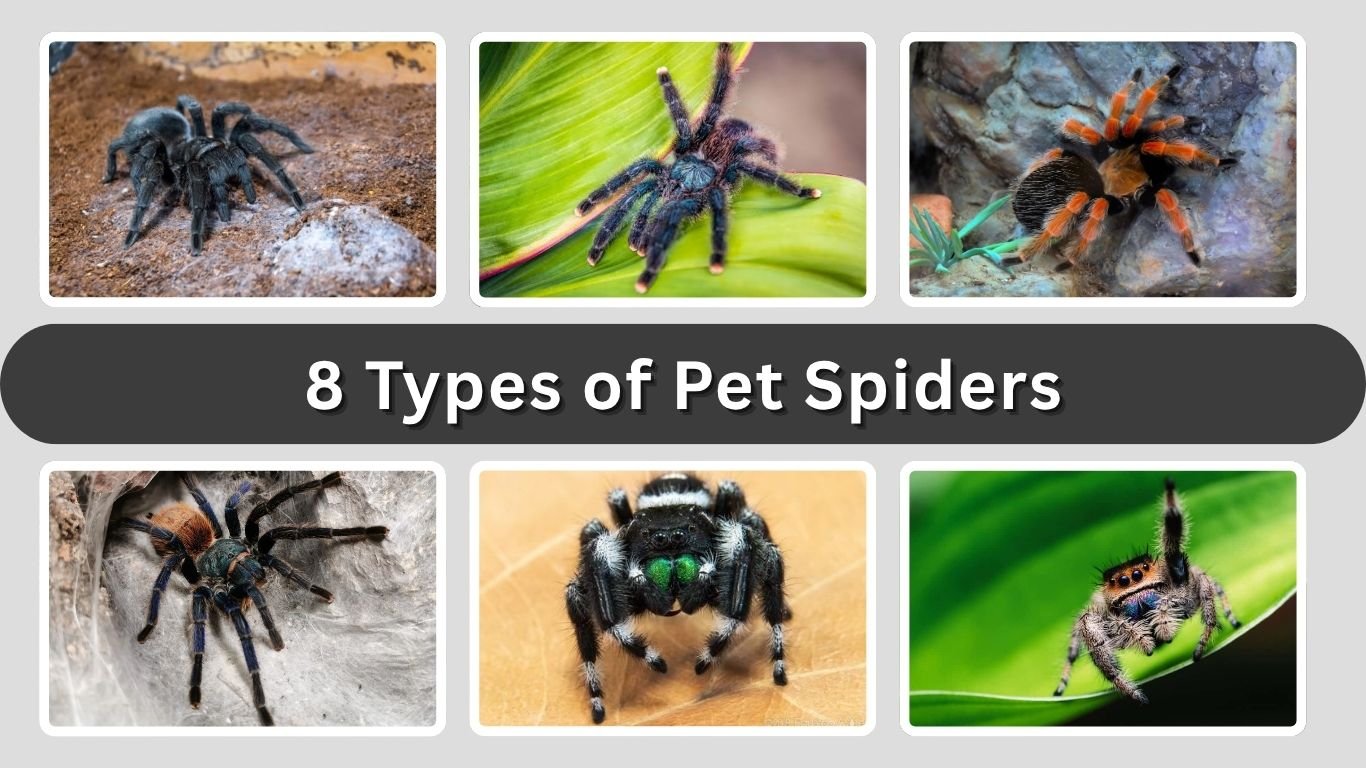
Pet spiders are fascinating, low-maintenance animals that appeal to beginners and experienced keepers alike. Some species are calm and slow-moving, while others are active hunters with curious personalities. From large tarantulas with striking colors to tiny jumping spiders with excellent vision, each type offers a different experience. Choosing the right pet spider depends on its temperament, enclosure needs, diet, lifespan, and handling risks. This guide covers eight popular pet spiders, including their identification, behavior, housing requirements, feeding habits, and expected lifespan to help you select a suitable species with confidence.
1. Chilean Rose Tarantula
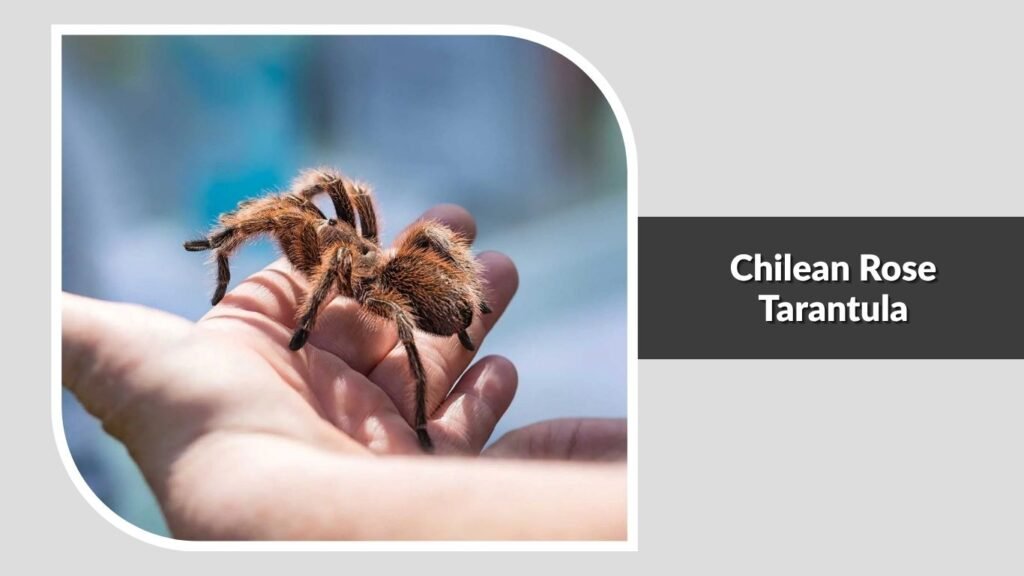
The Chilean rose tarantula is one of the most popular pet spiders because of its calm temperament, simple care needs, and attractive appearance. It is a terrestrial species that spends most of its time on the ground or inside a shallow burrow. With proper care, females can live for many years, making this tarantula a long-term pet.
Identification
- Medium-sized body with a leg span of around 4 to 5 inches
- Brown, gray, or dark-colored body
- Pink, rose, or copper-colored hairs on the legs and upper body
- Thick, hairy legs and a rounded abdomen
- Females are usually larger and heavier than males
Temperament and Handling
Chilean rose tarantulas are generally slow-moving and calm. They are often recommended for beginners because they are less defensive than many other tarantula species. However, handling should be limited because a fall can seriously injure the spider. When frightened, it may flick irritating hairs from its abdomen.
Enclosure Requirements
A 5- to 10-gallon enclosure is usually suitable for an adult. The enclosure should be wider than it is tall because this is a ground-dwelling species. Provide several inches of coconut fiber or chemical-free soil, a shallow water dish, and a secure hide. Keep the enclosure dry with moderate ventilation.
Diet and Lifespan
Chilean rose tarantulas eat live insects such as crickets, roaches, and mealworms. Adults normally need food once every one or two weeks. Females may live for 15 to 20 years, while males usually live for only 3 to 6 years. Tarantulas may stop eating before molting, which is normally not a cause for concern.
2. Mexican Red Knee Tarantula
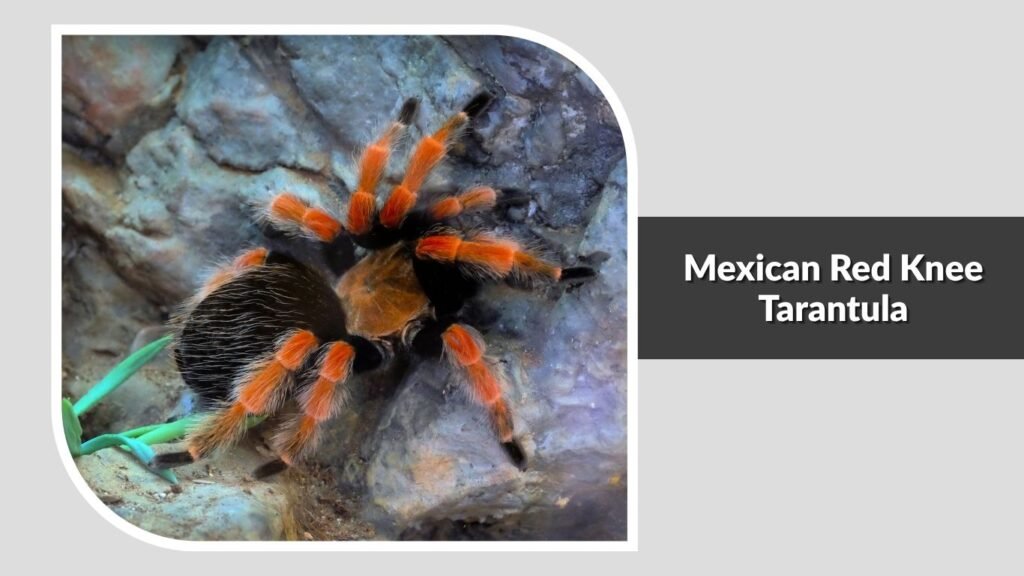
The Mexican red knee tarantula is a popular pet spider known for its striking colors, calm nature, and manageable care requirements. This ground-dwelling tarantula moves slowly and usually prefers hiding or resting near its burrow. Its attractive red-orange leg bands make it one of the most recognizable tarantulas kept by beginners and experienced keepers.
Identification
- Black or dark brown body covered with fine hairs
- Bright orange-red bands around the leg joints
- Thick legs and a large, rounded abdomen
- Adult leg span of about 5 to 6 inches
- Females are usually larger and heavier than males
Temperament and Behavior
Mexican red knee tarantulas are generally calm and slow-moving. They are less likely to display defensive behavior than many faster tarantula species. However, they can flick irritating abdominal hairs when frightened. Handling should be avoided or kept very limited because even a short fall can seriously injure the spider.
Enclosure Requirements
An adult needs a secure enclosure measuring around 10 gallons. The enclosure should be wider than it is tall, with several inches of coconut fiber, topsoil, or another safe substrate. Add a hide, a shallow water dish, and good ventilation. The substrate should remain mostly dry, although one corner can be lightly moistened.
Diet and Lifespan
Mexican red knee tarantulas eat crickets, roaches, mealworms, and other appropriately sized live insects. Adults can usually be fed once every 7 to 14 days. Females may live for 20 to 30 years under proper care, while males generally survive for around 5 to 10 years.
3. Brazilian Black Tarantula
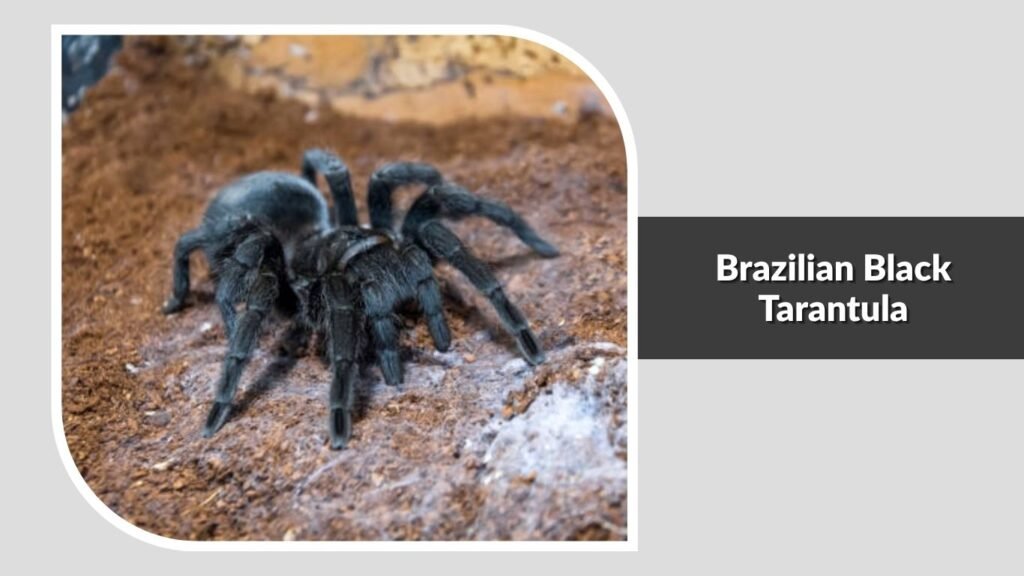
The Brazilian black tarantula is a beautiful ground-dwelling spider admired for its deep black color, calm temperament, and slow growth. It is often considered suitable for patient beginners, although young spiders can take several years to reach adult size. This species spends much of its time resting near a hide or slowly exploring its enclosure.
Identification
- Glossy black body covered with soft, velvety hairs
- Thick legs and a large, rounded abdomen
- Adult leg span of about 6 to 7 inches
- Females are usually larger and more heavily built than males
- Juveniles may appear brown before becoming darker with age
Temperament and Behavior
Brazilian black tarantulas are generally calm, slow-moving, and less defensive than many other large tarantulas. They usually prefer retreating instead of biting. However, they may flick irritating abdominal hairs when stressed. Handling is not recommended because a fall can rupture the abdomen and cause a serious or fatal injury.
Enclosure Requirements
An adult should be kept in a secure enclosure that is wider than it is tall. Provide around four to six inches of coconut fiber, chemical-free topsoil, or a suitable substrate. Include a hide, shallow water dish, and adequate ventilation. The enclosure should remain moderately dry, with one area kept slightly moist.
Diet and Lifespan
Brazilian black tarantulas eat crickets, roaches, mealworms, and other appropriately sized insects. Adults can usually be fed every 7 to 14 days. Females may live for 20 years or longer with proper care, while males normally live for about 6 to 8 years.
4. Pink Toe Tarantula
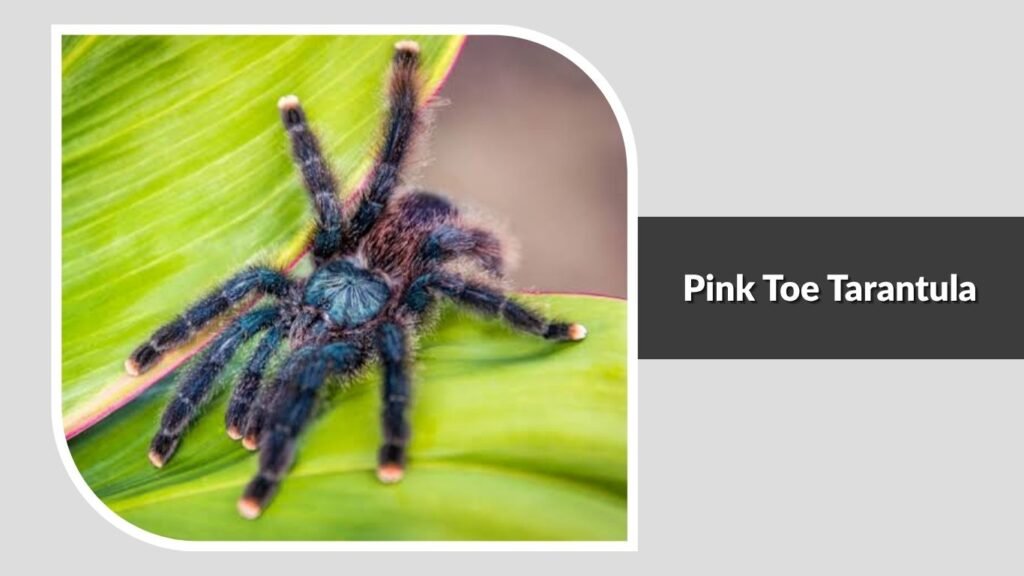
The pink toe tarantula is a popular arboreal pet spider known for its dark body, pink-tipped feet, and active climbing behavior. Unlike ground-dwelling tarantulas, this species spends most of its time on branches, cork bark, and the upper walls of its enclosure. It is attractive and fascinating to observe but requires good ventilation and a vertically arranged habitat.
Identification
- Dark brown or black body covered with fine hairs
- Pink, orange, or reddish tips on the feet
- Adult leg span of around 4.5 to 5 inches
- Long, slender legs suited for climbing
- Juveniles may have brighter colors than adults
Temperament and Behavior
Pink toe tarantulas are usually calm but can move very quickly when startled. They may jump short distances and often retreat into silk-covered hiding places. Although their venom is generally mild, they can bite when threatened. Handling is not recommended because their speed makes accidental falls or escapes more likely.
Enclosure Requirements
A tall, well-ventilated enclosure is essential for this tree-dwelling species. Add vertical cork bark, artificial plants, and climbing branches. Cross-ventilation is especially important because stagnant, overly humid conditions can be harmful. Provide a shallow water dish and lightly moisten one section of the substrate without making the enclosure wet.
Diet and Lifespan
Pink toe tarantulas eat crickets, roaches, moths, and other appropriately sized insects. Prey can be offered once or twice each week, depending on the spider’s size and body condition. Females commonly live for around 8 to 12 years, while males generally live for 3 to 4 years.
5. Curly Hair Tarantula
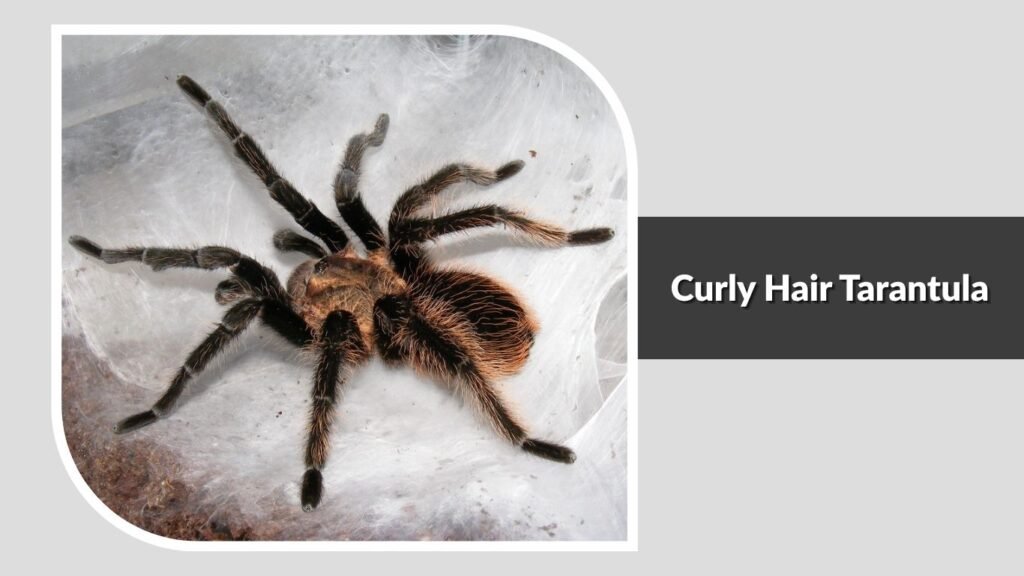
The curly hair tarantula is a popular terrestrial pet spider known for its calm temperament, hardy nature, and distinctive curled body hairs. It is often recommended for beginners because it has straightforward care requirements and usually moves slowly. This tarantula spends much of its time near a hide, inside a shallow burrow, or resting on the substrate.
Identification
- Brown or dark-colored body covered with long, curly hairs
- Golden, bronze, or lighter hairs mixed across the legs and abdomen
- Thick legs and a heavy, rounded body
- Adult leg span of about 5 to 6 inches
- Females are generally larger and more robust than males
Temperament and Behavior
Curly hair tarantulas are usually calm, slow-moving, and easy to observe. They often retreat when disturbed rather than showing aggression. However, they may flick irritating hairs from their abdomen when stressed. Handling should remain limited because dropping the spider can cause severe injury, especially to its abdomen.
Enclosure Requirements
An adult curly hair tarantula needs a secure, low enclosure that is wider than it is tall. Provide four to six inches of coconut fiber, chemical-free topsoil, or another suitable substrate. Include a sturdy hide, a shallow water dish, and proper ventilation. The substrate can be kept slightly moist but should never become waterlogged.
Diet and Lifespan
Curly hair tarantulas eat crickets, roaches, mealworms, and other appropriately sized live insects. Adults usually need feeding once every 7 to 14 days. Females may live for around 15 to 20 years with proper care, while males commonly live for approximately 4 to 6 years.
6. Greenbottle Blue Tarantula
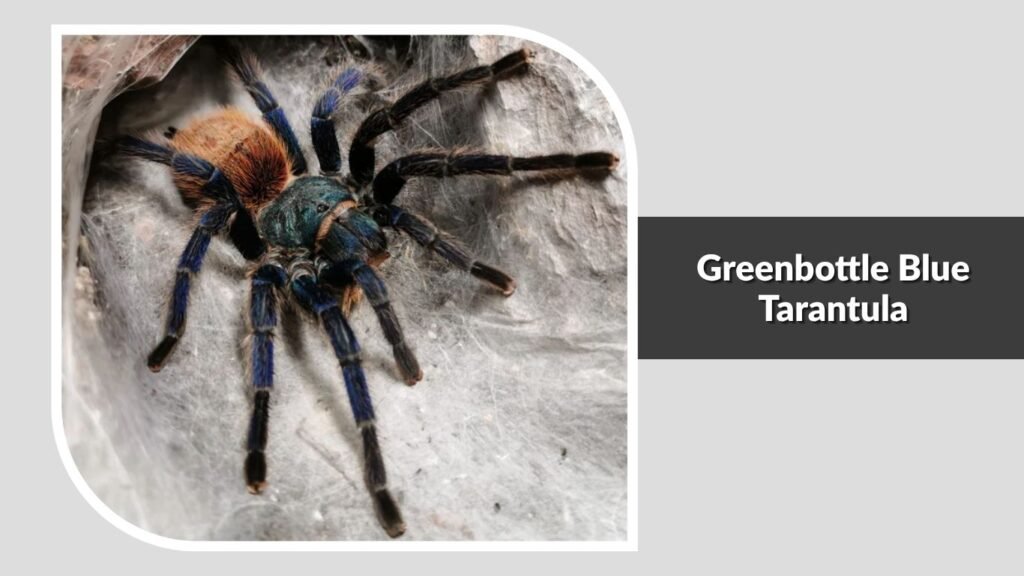
The greenbottle blue tarantula is a colorful terrestrial spider admired for its blue legs, orange abdomen, and metallic green carapace. It is active, hardy, and produces large amounts of webbing throughout its enclosure. Although its care is relatively simple, its speed and defensive behavior make it more suitable for keepers with some tarantula experience.
Identification
- Bright metallic blue legs
- Orange or reddish abdomen covered with hairs
- Green or blue-green carapace
- Adult leg span of around 4.5 to 6 inches
- Slimmer body shape than many heavy-bodied tarantulas
Temperament and Behavior
Greenbottle blue tarantulas are fast, alert, and more defensive than many beginner species. They usually flee when disturbed but may flick irritating hairs or show a threat posture. Handling is not recommended because they can move suddenly and may fall or escape. They are highly visible and often remain outside their hide.
Enclosure Requirements
An adult needs a secure enclosure that is wider than it is tall. Provide several inches of dry coconut fiber or topsoil, along with cork bark, artificial plants, and anchor points for webbing. Good ventilation is essential. Add a shallow water dish, but avoid keeping the enclosure overly humid or wet.
Diet and Lifespan
Greenbottle blue tarantulas eat crickets, roaches, mealworms, and other suitable live insects. Juveniles can be fed once or twice a week, while adults usually eat every 7 to 14 days. Females may live for around 12 to 15 years, while males generally live for about 3 to 4 years.
7. Bold Jumping Spider
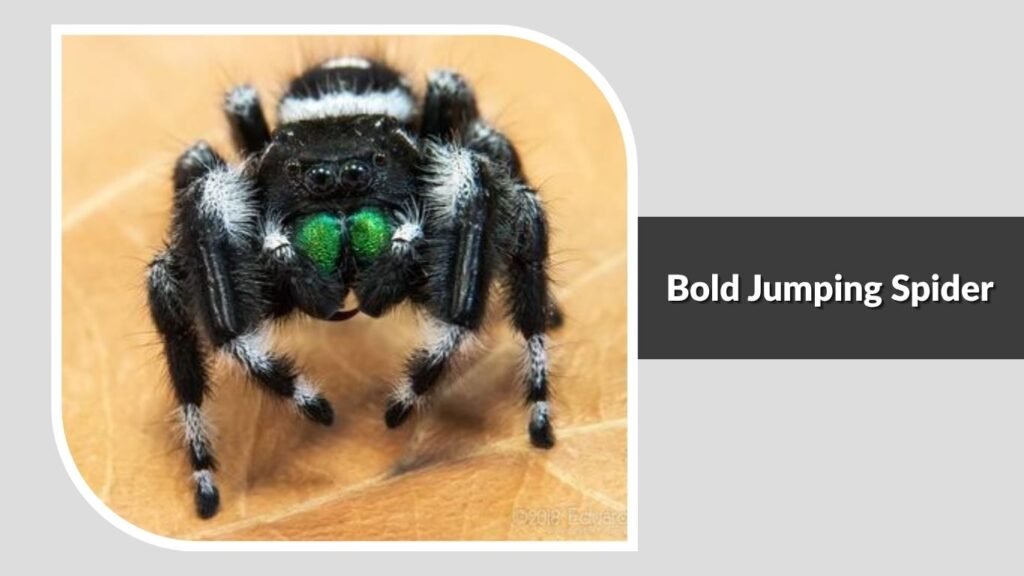
The bold jumping spider is a small, active pet spider known for its curious personality, excellent vision, and impressive jumping ability. Unlike tarantulas, it does not require a large enclosure or deep substrate. Its daytime activity and responsive behavior make it entertaining to observe, although its short lifespan may not suit everyone.
Identification
- Compact black or dark brown body
- Three white, orange, or red spots on the abdomen
- Large forward-facing eyes
- Metallic green or blue mouthparts
- Adult body length of approximately 0.3 to 0.7 inches
- Thick front legs and a hairy appearance
Temperament and Behavior
Bold jumping spiders are generally curious and alert. They may turn to watch their keeper and carefully investigate movement outside the enclosure. They rarely act aggressively but can jump quickly when startled. Gentle handling may be possible, although it should take place close to a safe surface to prevent injury or escape.
Enclosure Requirements
A small, vertically arranged enclosure with strong ventilation is suitable for an adult. Add twigs, cork bark, artificial plants, and other surfaces for climbing and hunting. Because jumping spiders often build silk retreats near the top, the enclosure should open from the side rather than directly above. Lightly mist one wall for drinking water.
Diet and Lifespan
Bold jumping spiders eat fruit flies, houseflies, small crickets, mealworms, and other appropriately sized live insects. Young spiders require tiny prey several times each week, while adults can be fed every three to five days. Their lifespan is relatively short, with most individuals living for approximately one to two years.
8. Regal Jumping Spider
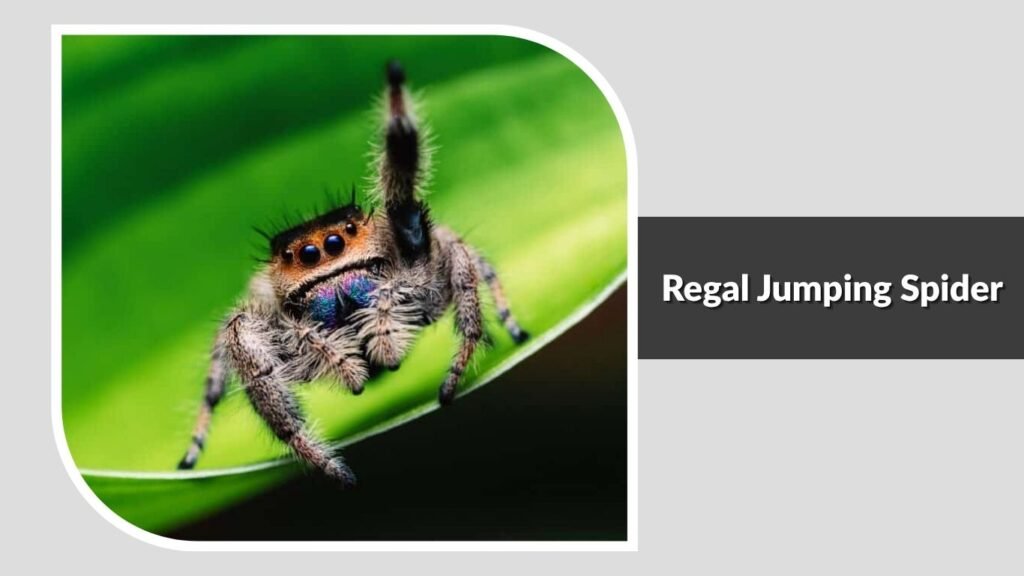
The regal jumping spider is a small and colorful pet spider known for its curious behavior, large eyes, and excellent jumping ability. It is active during the day and often watches movement outside its enclosure. Its small size, simple setup, and interesting personality make it a popular alternative to larger pet tarantulas.
Identification
- Compact and hairy body
- Large forward-facing eyes
- Adult body length of around 0.3 to 0.7 inches
- Males are usually black with white markings
- Females may be gray, brown, orange, or tan
- Metallic green, blue, or purple mouthparts
- Three pale spots often visible on the abdomen
Temperament and Behavior
Regal jumping spiders are generally alert, curious, and calm. They may turn their bodies to watch their keeper and carefully explore nearby objects. They can jump several times their body length when hunting or escaping. Handling should be gentle and limited because these spiders are small, fast, and easy to lose.
Enclosure Requirements
A small vertical enclosure with good cross-ventilation is suitable for an adult. Provide twigs, cork bark, artificial leaves, and other climbing surfaces. The enclosure should preferably open from the side because regal jumping spiders often build their silk sleeping sacs near the top. Lightly mist one wall every few days to provide drinking droplets.
Diet and Lifespan
Regal jumping spiders eat fruit flies, houseflies, small crickets, roaches, and mealworms. Young spiders need very small prey several times per week, while adults can usually be fed every three to five days. Most regal jumping spiders live for approximately one to two years, although females may occasionally live longer.
FAQs
What Is the Best Pet Spider for Beginners?
The Chilean rose, Mexican red knee, Brazilian black, and curly hair tarantulas are good beginner choices because they are generally calm and hardy. Regal and bold jumping spiders are also suitable for people who prefer smaller, more active pets.
Are Pet Spiders Dangerous?
Most commonly kept pet spiders are not considered dangerous to healthy adults. However, all spiders can bite when threatened, and tarantulas may release irritating hairs. Avoid unnecessary handling and wash your hands after cleaning the enclosure or touching equipment.
How Often Should You Feed a Pet Spider?
Feeding frequency depends on the spider’s species, size, and age. Adult tarantulas usually eat once every 7 to 14 days, while jumping spiders may eat every three to five days. Remove uneaten prey to prevent stress or injury.
Can Pet Spiders Be Handled?
Some calm species may tolerate brief handling, but spiders do not need physical interaction. Handling creates a risk of falling, escaping, or biting. Tarantulas are especially vulnerable to abdominal injuries, so observing them inside their enclosure is usually safer.
How Long Do Pet Spiders Live?
Lifespan varies greatly between species. Female tarantulas may live for 10 to 30 years, while males often survive only three to eight years. Jumping spiders have much shorter lifespans, usually living for approximately one to two years.
