
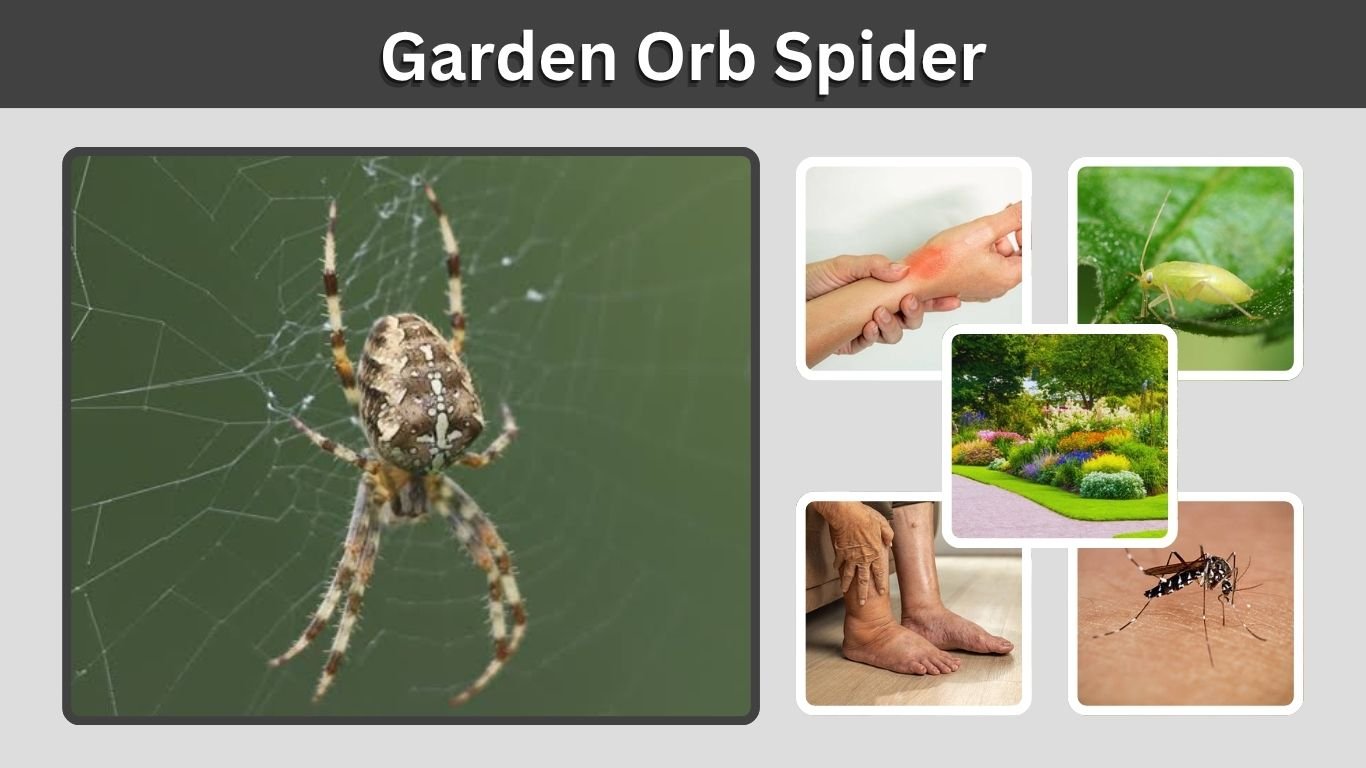
The garden orb spider is a common web-building spider found in gardens, forests, parks, and around homes. It is best known for creating a large, circular web between plants, fences, trees, or outdoor structures. Garden orb-weavers vary greatly in color and size, ranging from brown and gray to bright yellow, black, orange, or white. Although their appearance can be intimidating, these spiders are generally harmless to people and beneficial because they capture flies, mosquitoes, moths, and many other insects.
What Is a Garden Orb Spider?
A garden orb spider is any orb-weaving spider commonly found in gardens and other areas with vegetation. Most belong to the family Araneidae, which contains thousands of species found throughout the world.
The word “orb” refers to the spider’s rounded, wheel-shaped web rather than the shape of its body. Many unrelated-looking spiders are classified as orb-weavers because they use similar web-building techniques.
Garden Orb Spider Identification
- Rounded or oval abdomen
- Eight long legs, often covered with hairs or bands
- Brown, gray, yellow, orange, black, white, or green coloration
- Stripes, spots, crosses, or marbled abdominal patterns
- Females usually much larger than males
- Large circular web built between plants or structures
- Spider commonly rests in the center of the web
- Body size usually ranges from 0.3 to 1.2 inches
The exact appearance depends on the species. Some garden orb spiders have smooth bodies, while others have bumps, spines, or angular abdomens.
Female and Male Differences
Female garden orb-weavers are usually larger, heavier, and more noticeable than males. Their rounded abdomens allow them to produce and carry large numbers of eggs.
Males are generally smaller, slimmer, and less colorful. Once mature, males may stop building full webs and begin wandering through vegetation in search of females. This size difference sometimes causes people to mistake the male and female for separate species.
Garden Orb Spider Web
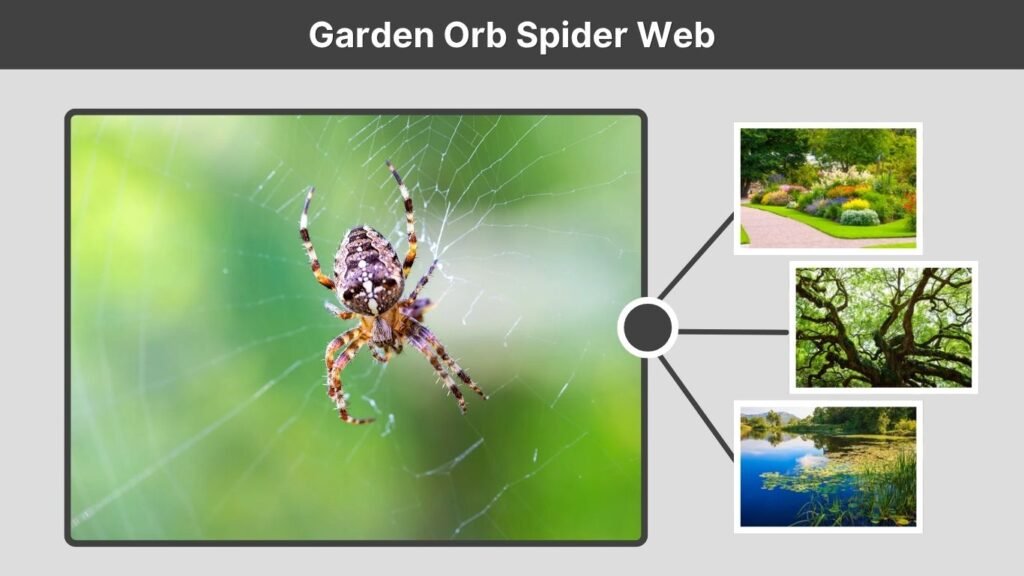
The circular web is the most recognizable sign of a garden orb-weaver. It consists of strong supporting threads, lines radiating outward from the center, and a spiral of sticky silk used to trap insects.
How the Web Is Built
The spider begins by releasing a silk thread that catches onto a nearby branch, leaf, wall, or fence. It then strengthens the first line and creates a frame around the future web.
Radial threads are added from the center to the outer frame. Finally, the spider builds a sticky spiral across the web. Depending on the species and conditions, constructing the web may take less than an hour.
Why Garden Orb Spiders Rebuild Their Webs
Many garden orb-weavers eat or remove damaged web sections and rebuild them regularly. Wind, rain, dust, insects, and larger animals can weaken the delicate silk.
Some species rebuild their webs every evening and remain hidden during the day. Others maintain the same web for several days, repairing damaged areas as needed.
Where They Build Webs
Garden orb spiders commonly place their webs in locations where flying insects are likely to pass, including:
- Between shrubs and flowers
- Across garden pathways
- Between tree branches
- Around porch lights
- Along fences and gates
- Under roof edges
- Near ponds and streams
- Between tall grasses
Webs around outdoor lights are especially successful because moths, mosquitoes, and other insects gather there at night.
Common Types of Garden Orb Spiders
The name garden orb spider can describe different species depending on the region. Color, body shape, markings, and geographic location are needed for accurate identification.
Yellow Garden Spider
The yellow garden spider is a large orb-weaver with bold yellow and black markings. Females may build a thick zigzag band of silk through the center of the web.
This species is common in gardens, fields, and sunny areas with tall vegetation. Despite its size and bright warning-like colors, it is not considered dangerous to humans.
European Garden Spider
The European garden spider is also called the cross orb-weaver because pale spots on its abdomen often form a cross-like shape. Its color can range from light orange and reddish-brown to dark brown.
It is widespread in Europe and has also become established in parts of North America. It often builds webs in gardens, hedges, woodland edges, and around buildings.
Brown Garden Orb-Weaver
Many garden orb-weavers are brown because this coloring helps them blend with bark, dead leaves, fences, and branches. Their abdomens may display pale spots, dark patches, wavy lines, or leaf-like patterns.
Brown individuals are often active at night and may hide beneath leaves or inside cracks during the day.
Australian Garden Orb-Weaver
Australian garden orb-weavers include several species known for building large webs during the evening. Their bodies may be brown, gray, orange, or reddish, with rounded abdomens and banded legs.
They are commonly found in gardens, forests, parks, and near houses. Their webs may disappear during the day because the spiders frequently consume or dismantle them after sunrise.
Golden Orb-Weaver
Golden orb-weavers produce strong silk that may appear yellow or golden in sunlight. They often have long legs and elongated abdomens rather than the compact, rounded shape of many garden orb spiders.
Although they also build circular webs in gardens, golden orb-weavers belong to a different group from yellow garden spiders.
Garden Spider vs. Orb-Weaver
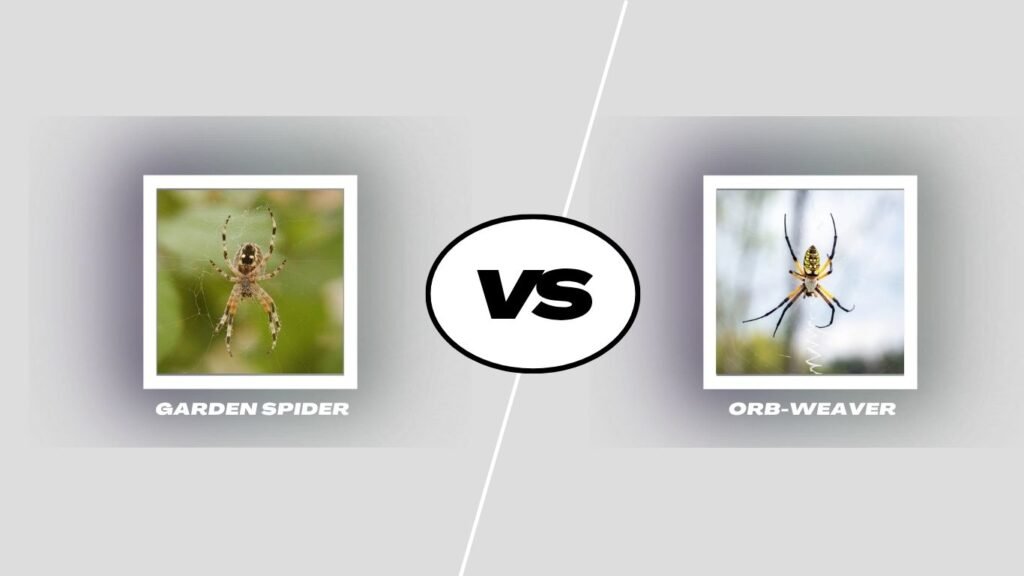
A garden spider is usually an orb-weaver, but not every orb-weaver is specifically called a garden spider. “Orb-weaver” is a broad term for spiders that build circular capture webs, while “garden spider” is a common name used for several visible garden species.
| Feature | Garden spider | Orb-weaver |
| Meaning | Common name for garden-dwelling species | Broad group of web-building spiders |
| Web | Usually circular | Usually circular |
| Habitat | Gardens, fields and vegetation | Gardens, forests, wetlands and buildings |
| Color | Often yellow, black, brown or orange | Highly variable |
| Danger | Generally harmless | Generally harmless |
Yellow Garden Spider vs. Golden Orb-Weaver
The yellow garden spider has a broad black abdomen with bright yellow markings. It often sits with its legs arranged in pairs and may add zigzag silk to the center of its web.
The golden orb-weaver usually has an elongated abdomen, very long legs, and golden-colored silk. Its web can be much larger and stronger than that of a typical yellow garden spider.
What Do Garden Orb Spiders Eat?
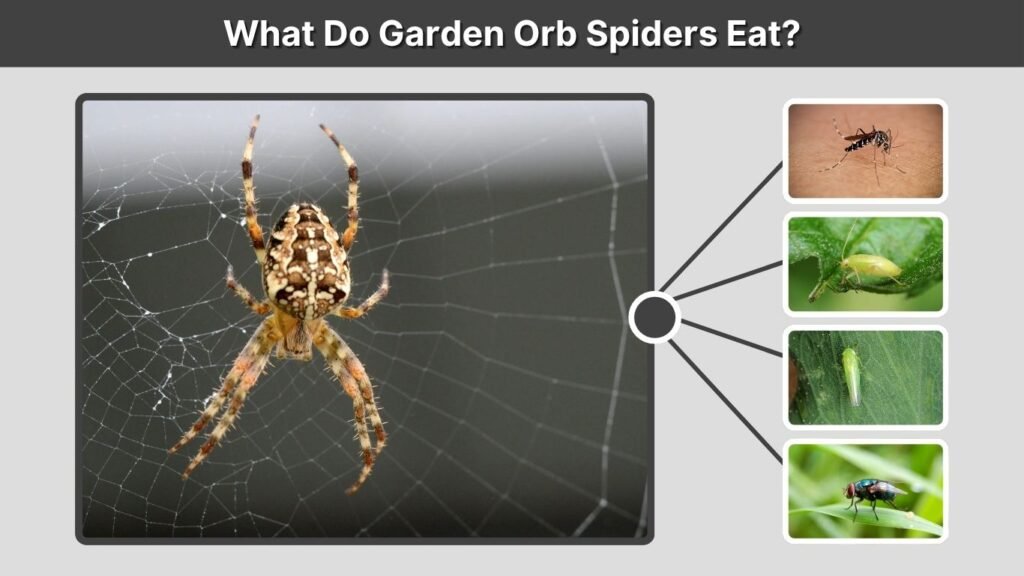
Garden orb-weavers feed mainly on insects caught in their sticky webs. They detect prey by sensing vibrations through the silk.
Common prey includes:
- Mosquitoes
- Flies
- Moths
- Beetles
- Wasps
- Grasshoppers
- Leafhoppers
- Flying ants
- Small crickets
After an insect becomes trapped, the spider may bite it and wrap it in silk. The prey can be eaten immediately or stored for later.
Garden orb spiders do not eat garden plants. Their presence may benefit flowers and vegetables by reducing the number of plant-eating and nuisance insects.
Are Garden Orb Spiders Poisonous?
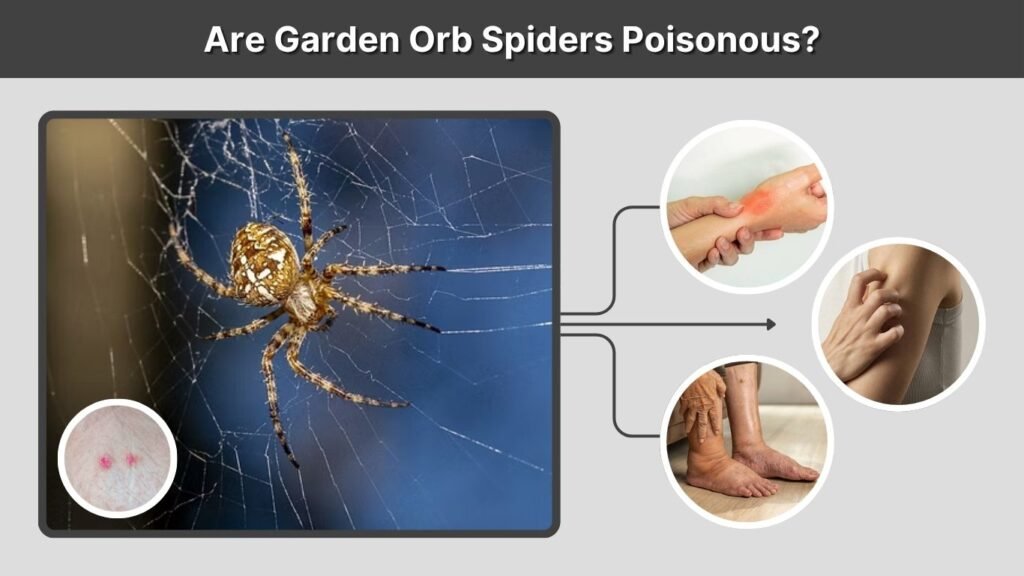
Garden orb spiders are venomous, not poisonous. They inject venom through their fangs to immobilize insect prey. However, their venom is not considered medically significant to most people.
They are shy and non-aggressive spiders. When disturbed, they may shake the web, retreat into nearby vegetation, drop to the ground, or remain still.
Are Garden Orb Spiders Dangerous?
Garden orb-weavers are not considered dangerous to humans or household pets. Their large size and dramatic web may look frightening, but they have little reason to approach or attack people.
A bite is most likely when a spider is squeezed, trapped inside clothing, or deliberately handled. Simply walking near its web does not normally cause defensive behavior.
Garden Orb Spider Bite
A garden orb spider bite may cause mild symptoms such as localized pain, redness, itching, or slight swelling. The discomfort is often compared to a minor insect sting.
Wash the area with soap and water and apply a cold compress if necessary. Medical attention may be needed if symptoms become severe, swelling continues to spread, or the person develops breathing difficulty, dizziness, vomiting, or widespread hives.
Life Cycle and Reproduction
After mating, the female produces one or more egg sacs made from protective silk. Depending on the species, the sac may be attached to leaves, bark, buildings, or the edge of the web.
Each egg sac may contain dozens or hundreds of eggs. The young spiders, called spiderlings, hatch and eventually disperse to build their own tiny webs.
In seasonal climates, adult spiders may die during cold weather while their eggs survive until spring. Species living in warmer regions may remain active for a larger part of the year.
Should You Remove Garden Orb Spiders?
Garden orb spiders should usually be left alone outdoors. They help control insect populations and do not damage plants, wood, furniture, or buildings.
When a web blocks a doorway or walking path, gently move the spider with a container and release it onto a shrub or tree. Repeatedly removing the web may also encourage the spider to build in a less inconvenient location.
Avoid using insecticides unless there is a serious pest problem. These chemicals can kill beneficial spiders, pollinators, and other harmless garden animals.
FAQs
Is a Garden Spider an Orb-Weaver?
Yes, most spiders commonly called garden spiders are orb-weavers. They belong to groups known for constructing circular, wheel-shaped webs. However, orb-weaver is a broad category that includes many species living outside gardens.
How Big Is a Garden Orb Spider?
Size varies by species. Many females have bodies measuring between 0.4 and 1.2 inches, while males are usually much smaller. The legs can make the spider appear considerably larger than its actual body length.
Do Garden Orb Spiders Come Inside Homes?
They prefer outdoor vegetation but may occasionally enter garages, porches, sheds, or houses by accident. Indoor individuals can be captured with a cup and paper and released near shrubs or trees.
Are Garden Orb-Weavers Good for Gardens?
Yes. They consume mosquitoes, flies, moths, beetles, and various plant-feeding insects. Garden orb-weavers do not harm plants and can support natural insect control without the use of chemical pesticides.
How Long Do Garden Orb Spiders Live?
Many garden orb-weavers live for approximately one year. They hatch, mature, reproduce, and die within a single seasonal cycle. Lifespan can differ depending on species, climate, predators, food availability, and environmental conditions.
