
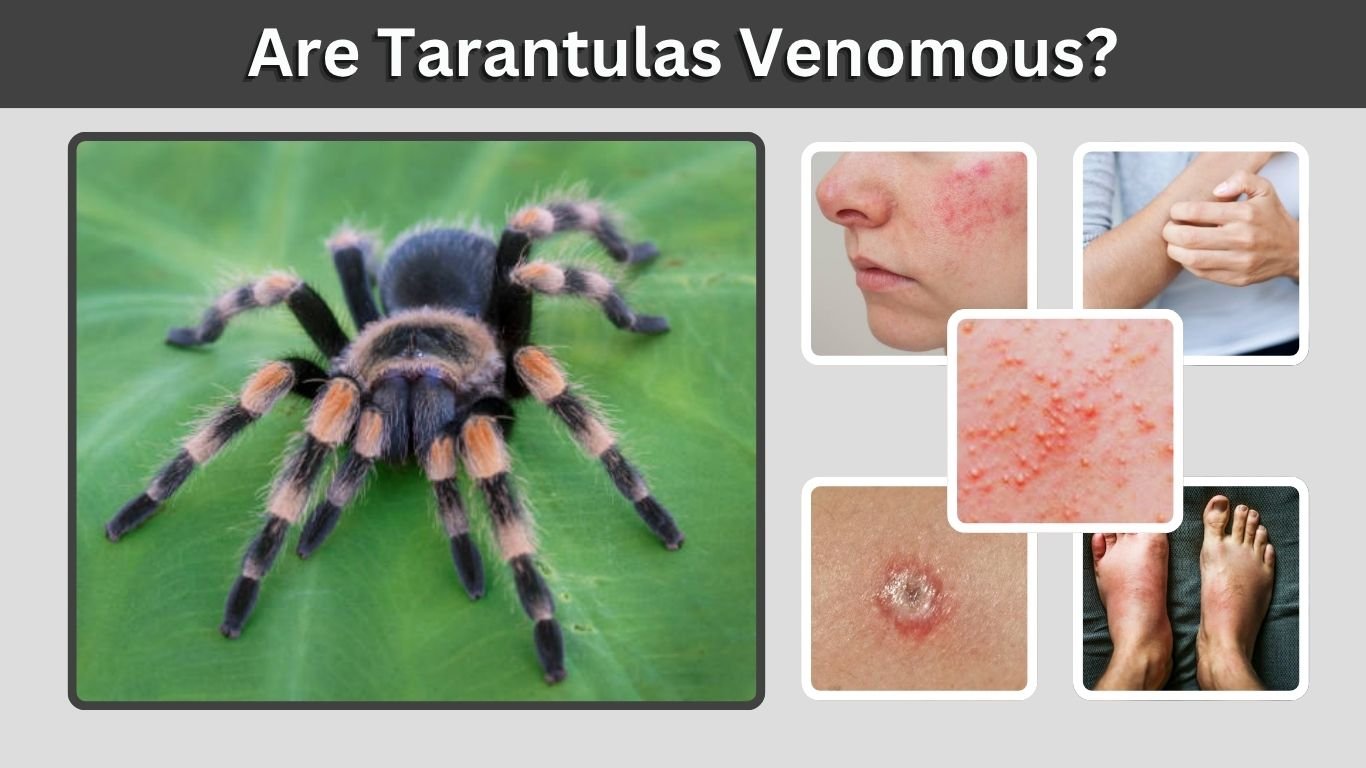
Yes, tarantulas are venomous. They inject venom through their fangs to immobilize insects and other prey. However, being venomous does not automatically make an animal deadly to humans. Most tarantula bites cause localized pain, redness, swelling, or tenderness rather than life-threatening poisoning. Some African, Asian, and Australian species can produce stronger reactions, including severe pain and muscle spasms. Tarantulas may also defend themselves with irritating abdominal hairs that can affect the skin, nose, and eyes.
Are All Tarantulas Venomous?
Tarantulas belong to the spider family Theraphosidae. All known tarantulas have fangs connected to venom glands and use venom when capturing prey. Therefore, there are no truly nonvenomous tarantula species.
Their venom is primarily adapted for small animals such as insects, spiders, and occasionally small vertebrates. It is not designed specifically to kill humans. Tarantula venom contains several biologically active substances, and its composition and effects vary among species.
Venomous vs. Poisonous
Tarantulas are venomous, not poisonous.
- Venomous animals actively inject toxins through fangs, stingers, or similar structures.
- Poisonous animals cause harm when they are eaten, touched, or absorbed by another animal.
A tarantula delivers venom by biting with its fangs. Simply touching an undisturbed tarantula does not inject venom, although contact with defensive hairs may irritate the skin.
How Venomous Are Tarantulas to Humans?
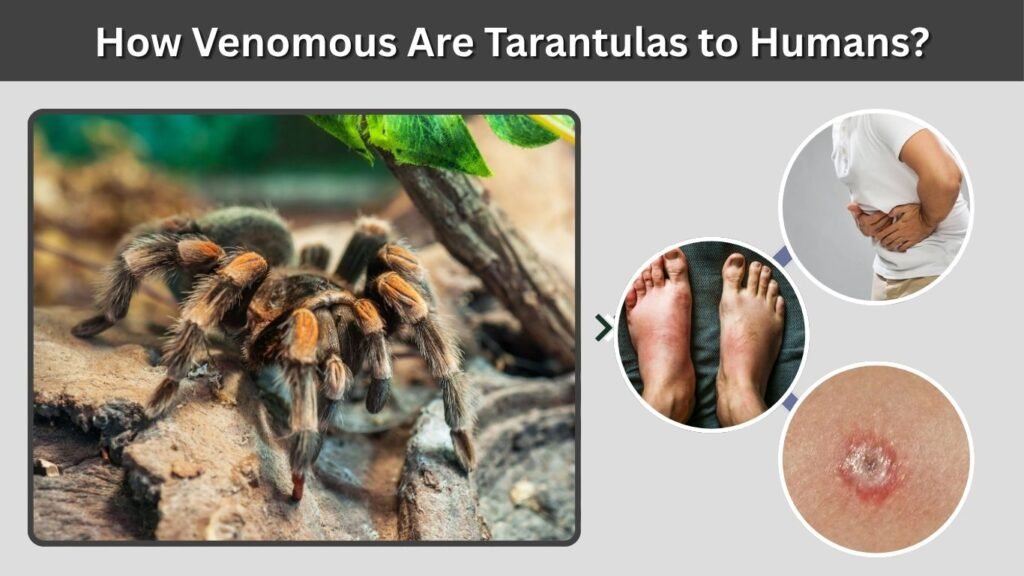
Most medically documented tarantula bites produce localized symptoms. North American tarantula venom typically causes pain around the bite without serious systemic illness. The puncture wounds from the large fangs may sometimes be more troublesome than the venom itself.
Typical bite symptoms include:
- Immediate pain or burning
- Two small fang punctures
- Redness around the bite
- Mild or moderate swelling
- Tenderness
- Muscle discomfort near the bitten area
- Occasional nausea or headache
Serious reactions are uncommon, but severity depends on the species, amount of venom, bite location, and individual sensitivity.
Can Tarantula Venom Kill a Human?
Tarantula venom can be toxic to small laboratory animals, but it has not been shown to be fatal to humans in established medical evidence. That does not mean every bite should be ignored. Certain Old World species can cause prolonged and extremely painful symptoms requiring medical treatment.
Call emergency services when a bitten person develops difficulty breathing, throat tightness, widespread hives, faintness, severe vomiting, rapidly increasing swelling, or intense generalized muscle cramps.
New World vs. Old World Tarantula Venom
The most useful general comparison is between New World tarantulas from the Americas and Old World tarantulas from Africa, Asia, and Australia.
| Group | Common defensive strategy | Typical bite concern |
| New World tarantulas | Urticating hairs, retreating, threat displays | Usually localized pain and swelling |
| Old World tarantulas | Speed, defensive posture, biting | Greater risk of intense pain and muscle spasms |
| Australian tarantulas | Defensive biting and venom | Potentially significant pain and systemic symptoms |
“New World” does not mean harmless, and “Old World” does not mean every bite will be severe. The comparison describes broad tendencies rather than guaranteed outcomes.
Old World Tarantula Bites
Reports involving species such as Indian ornamental, orange baboon, cobalt blue, and other African or Asian tarantulas describe intense local pain, swelling, persistent cramps, and generalized muscle spasms.
A published review documented severe cramps lasting several days after bites from Lampropelma nigerrimum and Pterinochilus murinus. Another person bitten by Poecilotheria regalis developed persistent cramping in the affected hand. The researchers concluded that several Old World genera can cause systemic neurotoxic envenomation.
Are Common Pet Tarantulas Venomous?
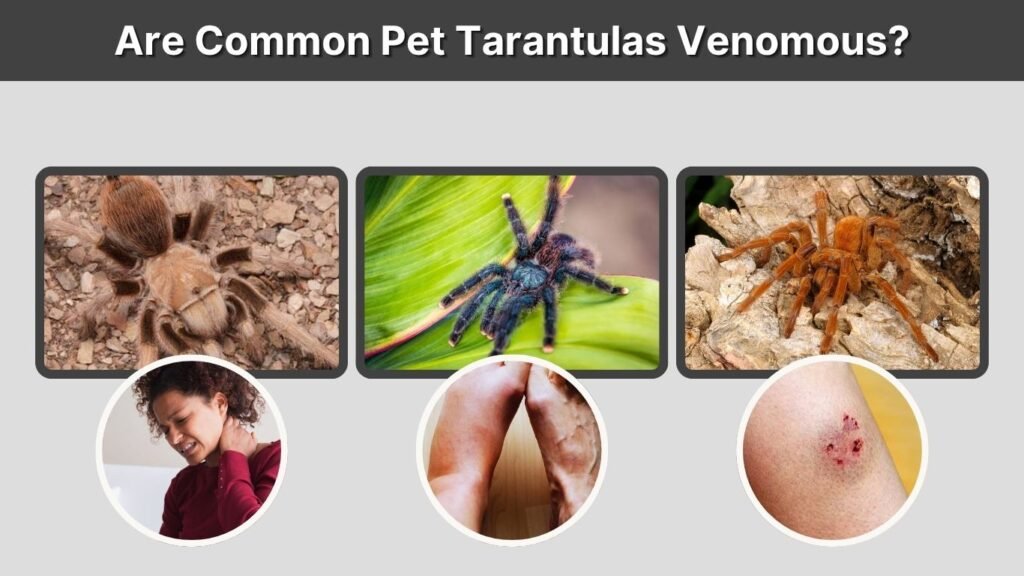
Every pet tarantula is venomous, but species differ substantially in defensive behavior and the expected severity of a bite.
| Tarantula | Region or group | General bite concern |
| Pink Toe | New World | Usually considered relatively mild |
| Curly Hair | New World | Usually localized effects |
| Arizona Blonde | New World | Usually localized effects |
| Texas Brown | New World | Usually localized effects |
| Brazilian Black | New World | Usually localized effects |
| Chilean Rose Hair | New World | Usually localized effects |
| Mexican Red Knee | New World | Usually localized effects |
| Brazilian Jewel | New World | Venomous, but rarely associated with serious human bites |
| Goliath Birdeater | New World | Large fangs and potentially painful bite |
| Cobalt Blue | Old World | Potentially stronger systemic symptoms |
| Orange Baboon | Old World | Defensive, with risk of serious pain and cramps |
| Indian Ornamental | Old World | Associated with severe pain and muscle spasms |
| Australian Tarantulas | Old World region | Greater caution recommended |
This table should not be treated as a guarantee of safety. Individual spiders can deliver different quantities of venom, and allergic or unusual reactions remain possible.
Are Pink Toe Tarantulas Venomous?
Pink toe tarantulas are venomous, but their venom is generally considered unlikely to cause severe illness in a healthy adult. A bite may still produce pain, puncture wounds, swelling, and redness.
Pink toes are arboreal and can move quickly. Handling increases the risk of escape, a fall that injures the spider, or a defensive bite.
Are Goliath Birdeaters Venomous?
Goliath birdeaters possess venom, but their large fangs and defensive hairs are often more concerning to humans. A bite could create deep puncture wounds, significant pain, and swelling.
Their urticating hairs can also irritate exposed skin and mucous membranes. Because of the spider’s size, unnecessary handling is particularly risky.
Are Tarantula Hairs Venomous?
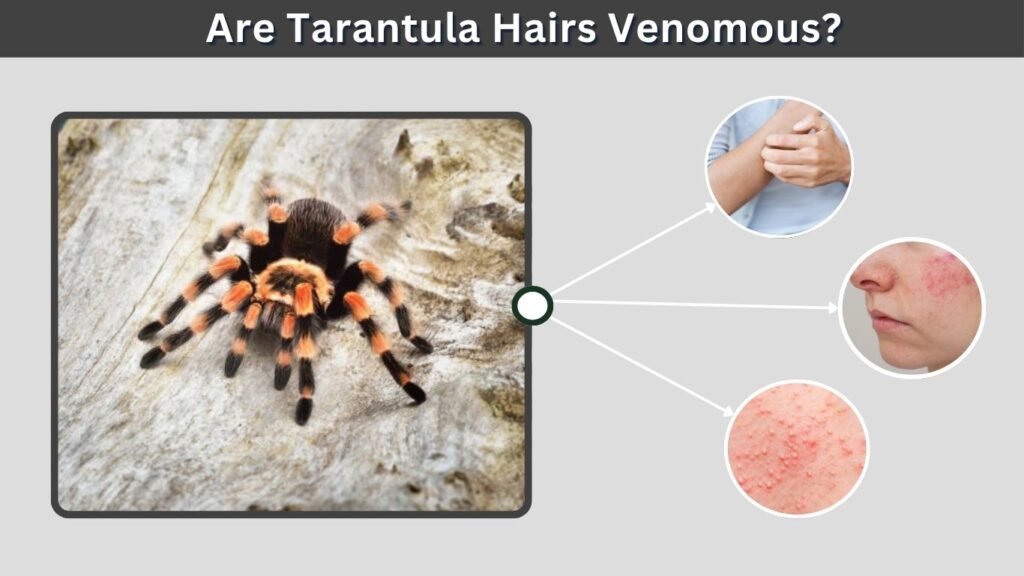
Tarantula bristles are not venomous, but the defensive hairs of many New World species can cause considerable irritation. These microscopic barbed hairs are known as urticating hairs.
A threatened tarantula may brush them from its abdomen with its hind legs. The airborne hairs can cause:
- Itching
- Redness
- A burning sensation
- Small bumps or rash
- Nasal and throat irritation
- Persistent eye inflammation
Eye exposure can be more serious because the hairs may become embedded in delicate tissue and sometimes require specialist removal.
Do not rub your face or eyes after working inside a tarantula enclosure. Wash your hands and exposed skin thoroughly.
What to Do After a Tarantula Bite
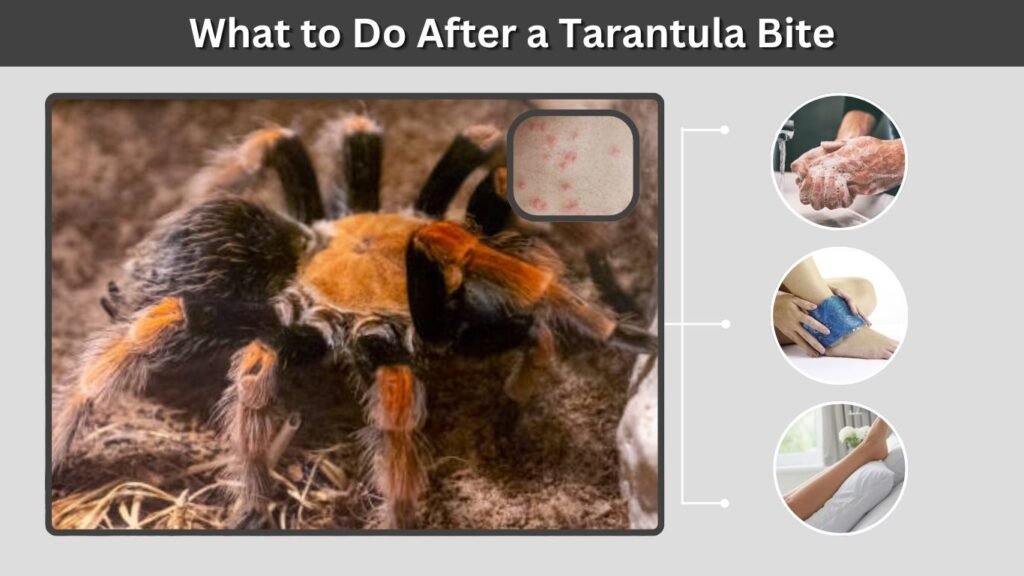
Most mild bites can initially be managed with basic first aid, but bites from unidentified, Old World, or Australian species deserve greater caution.
Immediate First Aid
- Move away from the spider without attempting to handle it.
- Wash the wound thoroughly with soap and water.
- Apply a wrapped cold pack for short periods.
- Remove rings or tight jewelry before swelling increases.
- Keep the bitten limb comfortably elevated.
- Record the spider’s species without risking another bite.
- Contact a poison-control service or healthcare professional for advice.
Poison Control recommends washing tarantula bites with soap and water and contacting a poison center for guidance.
Do not cut the wound, attempt to suck out venom, apply a tourniquet, or use unapproved chemicals.
When Medical Care Is Needed
Seek prompt medical assessment for:
- Severe or increasing pain
- Widespread muscle cramps
- Vomiting or abdominal pain
- Palpitations
- Weakness or dizziness
- Increasing swelling
- Signs of infection
- A bite to the face, mouth, or eye
- Symptoms after an Old World species bite
A reported Venezuelan suntiger bite caused spreading redness, pain, swelling, abdominal discomfort, vomiting, and throat symptoms, showing that unusual systemic reactions can occur even outside the species most frequently associated with severe cramping.
Are Tarantulas Venomous to Dogs and Cats?
Tarantulas can inject venom into dogs and cats. The effects are not as well documented as human bites, and risk may vary with the tarantula species, the pet’s size, and where the animal was bitten.
A bite inside the mouth or on the face may be particularly concerning because swelling could interfere with breathing. Contact a veterinarian when a pet develops facial swelling, drooling, vomiting, weakness, tremors, breathing difficulty, severe pain, or abnormal behavior after interacting with a tarantula.
Keep pet tarantulas in secure enclosures and prevent cats, dogs, and children from accessing them.
Tarantula vs. Tarantula Hawk Venom
A tarantula hawk is not a tarantula. It is a large wasp that hunts tarantulas and paralyzes them with its sting.
Both animals are venomous, but their venom is delivered differently:
- A tarantula injects venom with its fangs.
- A female tarantula hawk injects venom with a stinger.
Therefore, information about tarantula-hawk stings should not be used to judge the effects of a tarantula bite.
FAQs
Are there any nonvenomous tarantulas?
No known tarantula species is completely nonvenomous. All tarantulas use venom to capture prey. However, the medical importance of that venom varies considerably, and many common New World pet species usually cause only localized symptoms in humans.
Are Mexican Red Knee tarantulas highly venomous?
Mexican Red Knee tarantulas are venomous but are not generally considered highly dangerous to humans. Their bites may cause pain, redness, and swelling. Their defensive abdominal hairs are often a more likely source of irritation than a bite.
Are Old World tarantulas more venomous?
Many Old World species produce more medically significant bites than commonly kept New World species. Documented effects include intense pain, swelling, localized cramps, and prolonged generalized muscle spasms. Experienced keepers generally avoid handling these fast and defensive spiders.
Are tarantulas more venomous than black widows?
Black widow spiders are generally of greater medical concern to humans. Their venom can cause severe generalized pain and muscle cramping. Most tarantula bites remain localized, although some Old World tarantulas can also cause serious and prolonged spasms.
Can a pet tarantula bite without injecting venom?
Yes. A tarantula may deliver a “dry bite” with little or no venom. However, it is impossible to know immediately how much venom was injected, so every confirmed bite should be cleaned, observed, and assessed according to the species and symptoms.
