
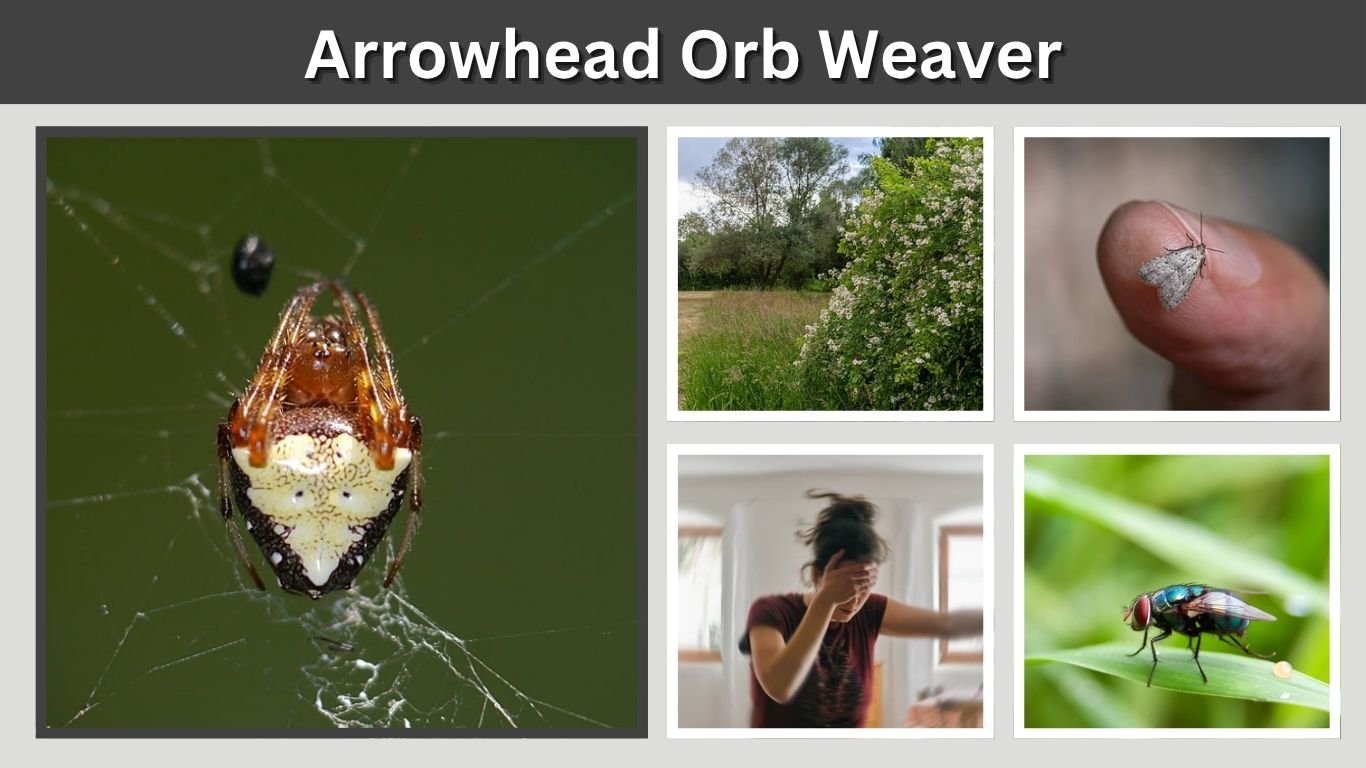
The arrowhead orb weaver (Verrucosa arenata) is a small, unusual spider named for the pointed triangular marking on the female’s abdomen. It often builds a circular web between shrubs, trees, and other vegetation, where it captures flies, mosquitoes, gnats, and similar insects. Its bright yellow, white, or pink markings can make it appear threatening, but this shy spider is not considered dangerous to people. It is a beneficial outdoor predator that normally prefers escaping to biting.
What Is an Arrowhead Orb Weaver?
The arrowhead orb weaver is a member of the orb-weaver family Araneidae. It is also commonly called the arrowhead spider, triangle orb weaver, or triangulate orb weaver. Its accepted scientific name is Verrucosa arenata, and it is the type species of the genus Verrucosa.
| Feature | Description |
| Scientific name | Verrucosa arenata |
| Family | Araneidae |
| Other names | Arrowhead spider, triangle orb weaver |
| Body length | Usually less than ½ inch |
| Main colors | Yellow, white, pink, brown, red or black |
| Habitat | Forests, woodland paths, meadows and yards |
| Diet | Small flying insects |
| Human danger | Very low |
| Web type | Circular orb web |
This species is particularly interesting because females often sit in the center of their webs with their heads pointing upward. Most familiar orb-weaving spiders rest head-down, making this behavior a useful identification clue.
How to Identify an Arrowhead Orb Weaver
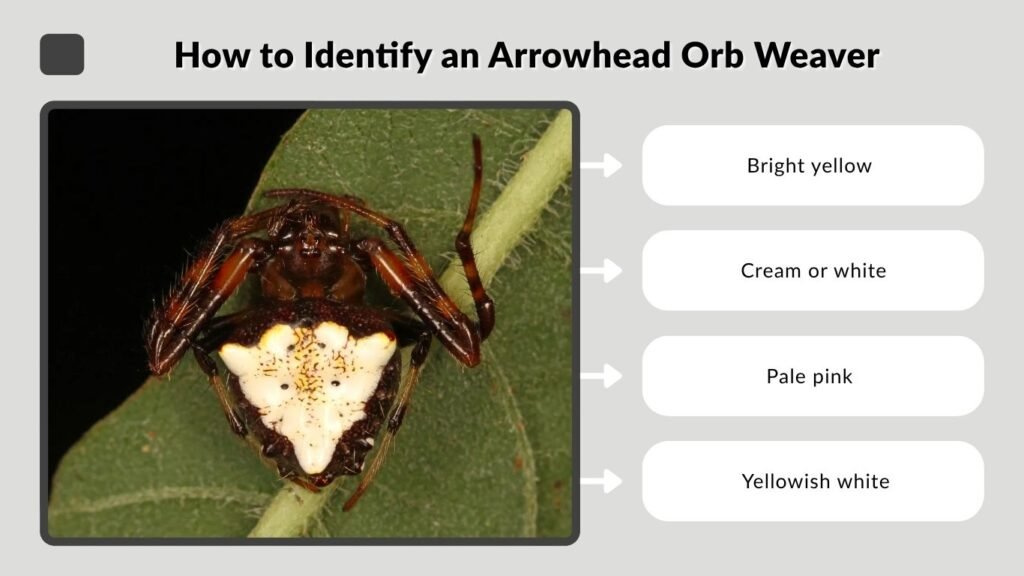
The arrowhead orb weaver’s distinctive abdomen makes mature females relatively easy to recognize. However, color can vary considerably between individuals.
Triangular Abdomen
The most noticeable feature is the pointed, triangular abdomen. A broad patch of color covers much of its upper surface, with the narrow point directed away from the spider’s head. The marking resembles an arrowhead, shield, or shiny triangular drop.
Small wartlike bumps may occur around the abdomen. The genus name Verrucosa refers to these raised, warty structures.
Colors and Markings
The triangular abdominal marking may be:
- Bright yellow
- Cream or white
- Pale pink
- Yellowish white
The surrounding abdomen is usually dark brown, reddish brown, or black. The legs and front body section may also be rusty red, brown, or almost black. Tiny dark spots and fine decorative lines are sometimes visible inside the pale triangle.
Male vs. Female
Females have the familiar arrowhead-shaped abdomen and bright triangular marking. Males are smaller, have a slimmer body, and usually lack the female’s large shieldlike patch. Because males spend less time sitting openly in webs, people encounter them less frequently. They are most likely to be seen near a female during courtship or mating.
Arrowhead Orb Weaver Size
Arrowhead orb weavers are relatively small spiders. Adults are generally less than half an inch long when only the body is measured, although their legs make them appear larger. Females are more robust and noticeable than males.
Their size, abdominal shape, and colorful markings can sometimes cause confusion with spiny orb weavers in the genus Micrathena. The arrowhead orb weaver, however, has a broad triangular abdomen rather than the long, sharp spines seen on many Micrathena species.
Where Do Arrowhead Orb Weavers Live?
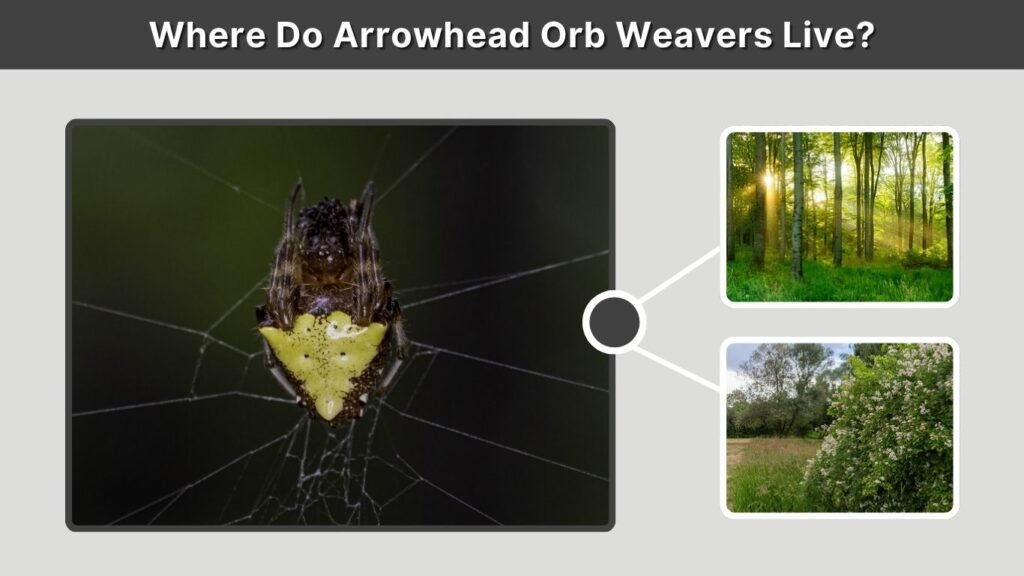
The recognized range of Verrucosa arenata extends from the United States through Mexico and Central America to Panama. It is also documented in the Greater Antilles. Within the United States, it is most closely associated with eastern and southeastern regions.
Typical habitats include:
- Deciduous forests
- Shaded woodland edges
- Hiking trails
- Meadows near trees
- Shrubby gardens
- Bushes around yards
- Openings between trees
- Areas with abundant flying insects
Females often stretch their webs across natural openings used by flying insects. Unfortunately for hikers, these openings may also include narrow forest trails, so the webs are sometimes encountered at face or chest height.
Arrowhead Orb Weavers in Florida
Florida lies within the species’ southeastern range. Suitable locations include wooded yards, parks, forest borders, nature trails, and gardens containing shrubs or small trees.
The spider is most likely to remain outdoors because it depends on vegetation and open spaces for web construction. Finding one near a house does not normally indicate an indoor infestation.
Arrowhead Orb Weaver Web
Like other members of its family, the arrowhead orb weaver produces a circular web with silk spokes radiating from a central hub. Sticky spiral strands capture insects flying through the vegetation.
The web may be built relatively low between trees, bushes, or tall plants. Some individuals construct a large, loosely arranged web in the morning or evening and remove much of it after sunrise. The spider commonly rests near the center with its legs pulled close to its body and its head pointing upward.
When an insect strikes the silk, vibrations alert the spider. It approaches the prey, restrains it with silk or a bite, and then feeds on it.
What Do Arrowhead Orb Weavers Eat?
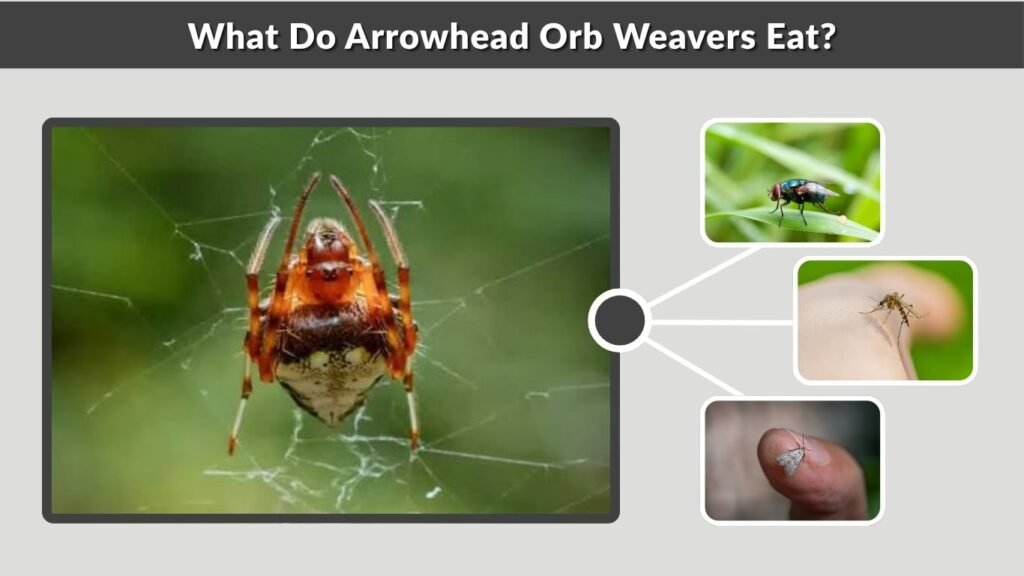
Arrowhead orb weavers are carnivorous predators that eat insects captured in their webs. Likely prey includes:
- Flies
- Mosquitoes
- Gnats
- Midges
- Small moths
- Leafhoppers
- Other small flying insects
Their purpose in the ecosystem is natural insect control. By consuming numerous small insects, they help prevent some populations from becoming excessively abundant. The spiders themselves provide food for birds, reptiles, mammals, and other predators.
They do not eat plants, damage flowers, chew leaves, or harm trees. Their webs may occasionally be inconvenient, but the spiders are generally beneficial garden residents.
Is the Arrowhead Orb Weaver Poisonous?
The arrowhead orb weaver is not poisonous. An animal is poisonous when its toxins cause harm after it is eaten, touched, or absorbed. Spiders instead use venom delivered through their fangs, so the arrowhead orb weaver is technically venomous.
However, its venom is designed to immobilize small insect prey and is not considered medically important to humans. Orb-weaving spiders are generally regarded as harmless and extremely unlikely to bite people.
Its bright colors are not evidence that it has dangerously powerful venom. The markings primarily help identify the species.
Does the Arrowhead Orb Weaver Bite?
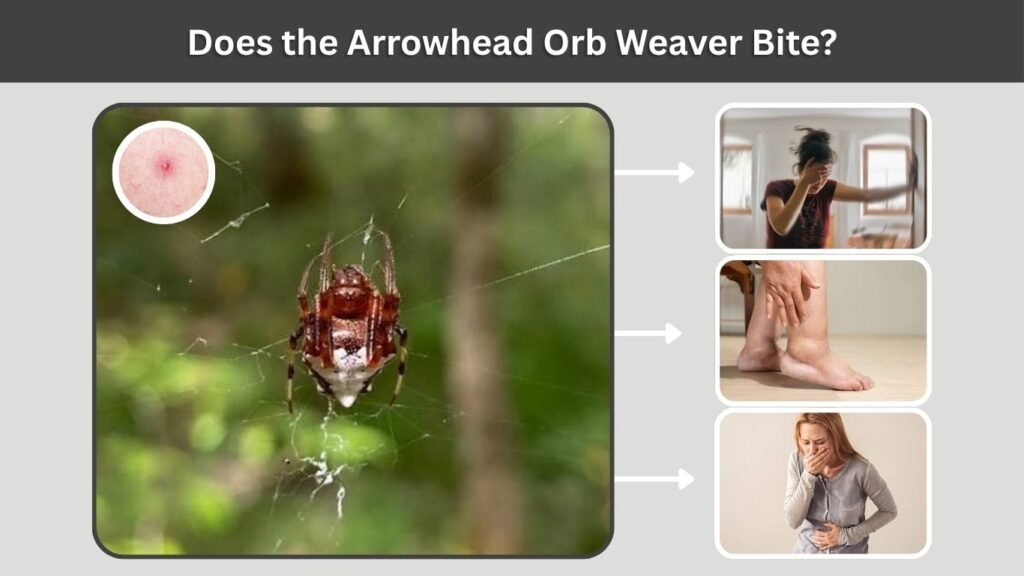
An arrowhead orb weaver is physically capable of biting, but bites are very uncommon. The spider is shy, remains in its web, and has little reason to attack a person.
A bite would be most likely if the spider were:
- Squeezed against the skin
- Trapped inside clothing
- Handled roughly
- Pressed while someone removed its web
Any reaction would generally be expected to remain local rather than become a serious medical emergency. Nevertheless, it is difficult to confirm a spider species based solely on a skin mark.
What to Do After a Suspected Bite
Wash the area gently with soap and water. A cold pack wrapped in a cloth may help reduce mild pain or swelling. Avoid cutting the skin, attempting to remove venom, or applying unproven chemical treatments.
Seek medical care when symptoms rapidly worsen or include spreading swelling, breathing difficulty, dizziness, vomiting, widespread hives, severe pain, or signs of infection. These symptoms could indicate an allergic reaction, infection, or a bite from another animal.
Life Cycle
In temperate parts of its range, arrowhead orb weavers generally emerge from overwintering egg sacs during spring. The young spiders grow throughout the warmer months by feeding and molting. Adults become particularly noticeable in late summer and early fall.
After mating, females produce egg sacs that survive the colder season. Adults normally become inactive and die as freezing weather arrives, while the protected eggs remain until the following spring. The precise timing may differ in warmer southern climates where winters are mild.
Should You Remove Arrowhead Orb Weavers?
There is usually no reason to remove an arrowhead orb weaver from a yard or garden. It does not damage property or plants and can help control mosquitoes, flies, and gnats.
When a web crosses a doorway, walkway, or frequently used path, gently break a few outer support lines with a long stick. The spider will often move and rebuild elsewhere. Avoid touching it directly or spraying broad-spectrum pesticides, which can also kill beneficial insects and other harmless spiders.
FAQs
Are arrowhead orb weaver spiders dangerous?
No. Arrowhead orb weavers are not considered dangerous to people. They are shy outdoor spiders that prefer remaining in their webs. Their venom works on small insect prey, and bites are extremely unlikely under normal circumstances.
Can an arrowhead orb weaver kill a human?
There is no evidence that an arrowhead orb weaver can kill a healthy person. It is not classified among medically important spiders. Anyone experiencing severe symptoms after a suspected bite should still seek urgent medical attention.
Why does an arrowhead orb weaver face upward?
The species naturally rests head-up in the center of its web, unlike most orb weavers, which usually face downward. The exact advantage is unclear, but this unusual posture is one of the best behavioral clues for identifying the spider.
Are arrowhead orb weavers found in Florida?
Yes. Florida is within the broader southeastern portion of the species’ range. They may occur in forests, wooded gardens, parks, shrub-filled yards, and other places offering suitable web supports and plenty of flying insects.
What is the purpose of an arrowhead orb weaver?
Its ecological role is to capture and eat small insects, including flies, mosquitoes, and gnats. It therefore provides natural pest control while also serving as prey for larger animals, making it a useful part of the local food web.
