
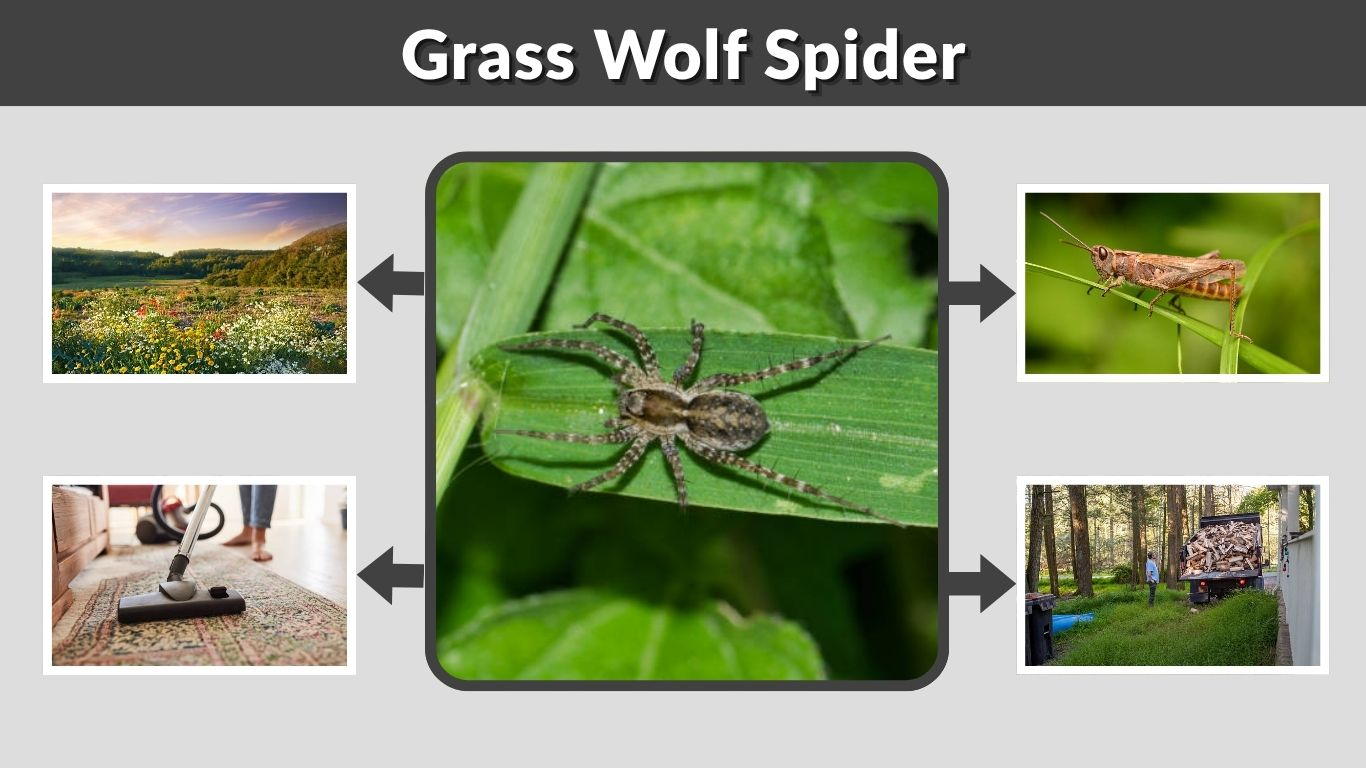
A “grass wolf spider” usually means a wolf spider found in grass, lawns, gardens, or fields. However, many people also confuse wolf spiders with grass spiders because both are brown, striped, fast-moving spiders often seen outdoors. The key difference is that wolf spiders are active hunters, while grass spiders usually build flat funnel-shaped webs in lawns or low vegetation.
What Is a Grass Wolf Spider?
The term “grass wolf spider” is not usually used as a strict scientific name. It commonly describes wolf spiders that live or hunt in grassy areas. Wolf spiders belong to the family Lycosidae and are known for their speed, strong eyesight, hairy bodies, and ground-hunting behavior.
Wolf spiders are often found on the ground, under stones, in grassy meadows, gardens, landscapes, fields, and other outdoor habitats. Some species may even live in burrows.
Grass Wolf Spider Identification
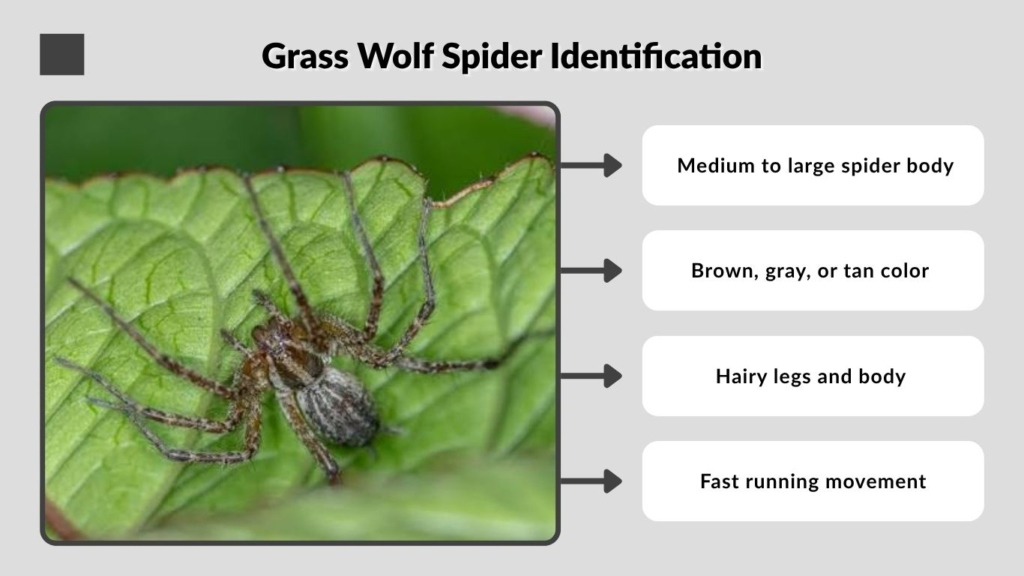
Grass wolf spiders are usually brown, gray, tan, or dark brown with stripes or mottled markings. Their color helps them blend into soil, dead leaves, grass, and mulch.
Key Identification Features
- Medium to large spider body
- Brown, gray, or tan color
- Hairy legs and body
- Fast running movement
- Does not usually sit in a web
- Often found on soil, grass, mulch, or under objects
- Female may carry an egg sac behind her body
- Young spiderlings may ride on the mother’s back
Wolf spiders are often alarming because they move quickly and may look large, but they are not aggressive toward people.
Grass Spider vs Wolf Spider
Many people searching for “grass wolf spider” are actually trying to identify a grass spider. Grass spiders are funnel weavers, not wolf spiders.
| Feature | Wolf Spider | Grass Spider |
| Web | Usually does not use a web to catch prey | Builds flat sheet web with funnel retreat |
| Body | Stockier, hairy body | Slimmer body |
| Movement | Runs on the ground to hunt | Waits near web for prey vibrations |
| Common place | Lawns, gardens, fields, under stones | Short grass, shrubs, foundations, steps |
| Spinnerets | Less noticeable | Long spinnerets often visible |
Grass spiders build horizontal webs in short grass and often have light and dark stripes behind the head. Funnel weaver spiders also have long spinnerets and make a flat web with a funnel-like retreat to one side.
Where Do Grass Wolf Spiders Live?
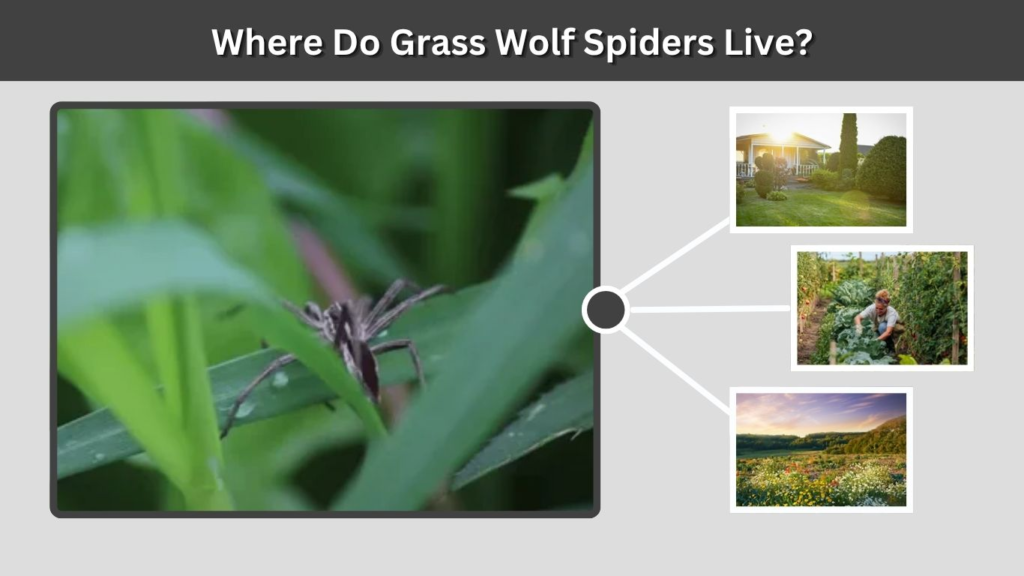
Grass wolf spiders prefer places where they can hide and hunt insects. They are common in:
- Lawns
- Gardens
- Fields
- Meadows
- Mulch beds
- Leaf litter
- Under stones
- Around foundations
- Near outdoor lights where insects gather
They may enter homes by accident, especially through gaps under doors, damaged screens, cracks, or open basement areas.
What Do Grass Wolf Spiders Eat?
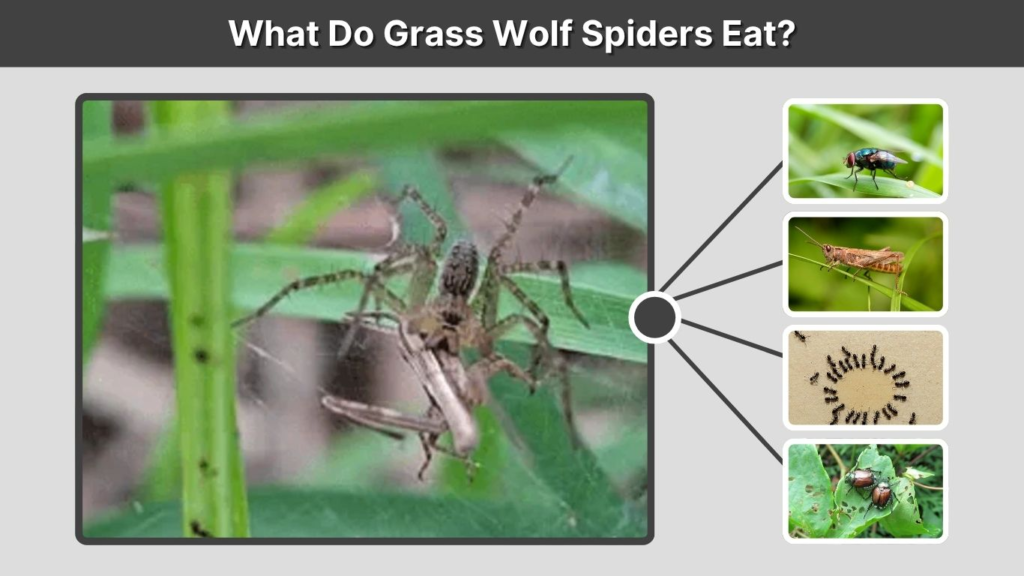
Grass wolf spiders are predators. They mainly eat small insects and other arthropods. Instead of waiting in a sticky web, they chase, ambush, or pounce on prey. NC State Extension notes that wolf spiders have good vision and crawl around to hunt their prey.
Common Food Sources
- Flies
- Crickets
- Grasshoppers
- Ants
- Beetles
- Small moths
- Roaches
- Other small spiders
- Lawn insects
- Garden pests
Because they eat many insects, wolf spiders are generally beneficial outdoors.
Are Grass Wolf Spiders Dangerous?
Grass wolf spiders are not considered dangerous to most people. They have venom for catching prey, but their venom is not dangerously toxic to humans. NC State Extension states that wolf spiders do not feed on plants and their venom is not dangerously toxic to humans.
A bite may happen if the spider is trapped against skin, handled, or pressed inside clothing. Possible symptoms may include mild pain, redness, swelling, or itching. Serious reactions are uncommon, but anyone with severe swelling, breathing trouble, dizziness, or spreading symptoms should seek medical help.
Why Are They in My Lawn or House?
A grass wolf spider in your lawn usually means the area has shelter and prey. They may be attracted by insects, moisture, mulch, leaf piles, tall grass, or outdoor lighting. If they appear indoors, they usually wandered inside accidentally while looking for prey or shelter.
Spiders around homes can be reduced, but making a home completely spider-free is not practical. The University of Minnesota Extension recommends non-chemical steps such as reducing clutter, removing webs, sealing entry points, and reducing insects that serve as food.
How to Get Rid of Grass Wolf Spiders Naturally
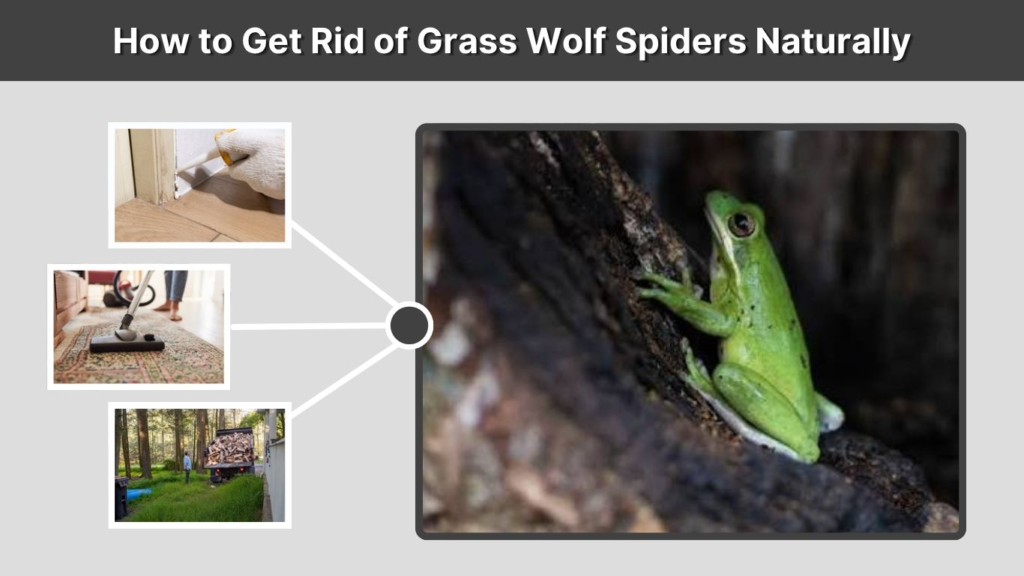
You do not need to kill every wolf spider outdoors because they help control insects. Focus on keeping them out of the house.
Prevention Tips
- Keep grass and weeds short near the house
- Remove leaf piles, stones, boards, and debris
- Seal cracks around doors and windows
- Repair damaged window screens
- Install door sweeps
- Reduce outdoor lights that attract insects
- Vacuum indoor spiders and egg sacs
- Use sticky traps along walls or basement edges
- Move firewood and clutter away from the foundation
The University of Minnesota Extension also notes that getting rid of spiders in lawns, landscapes, and gardens is not recommended because spiders are beneficial parts of the ecosystem.
FAQs
Is a grass wolf spider the same as a grass spider?
No. A grass wolf spider usually means a wolf spider found in grass, while a grass spider is a funnel-weaving spider. Grass spiders build sheet-like funnel webs, but wolf spiders usually hunt on the ground without using webs to catch prey.
Do grass wolf spiders bite?
Yes, they can bite, but bites are uncommon. Most bites happen when the spider is trapped, pressed, or handled. Their bite may cause mild pain, redness, or swelling, but they are not usually dangerous to healthy adults.
Are grass wolf spiders good for the garden?
Yes. They eat insects and other small arthropods, so they can help reduce pest populations in lawns and gardens. Outdoors, it is usually better to leave them alone unless they are entering your home in large numbers.
Why do I see wolf spiders in my grass at night?
Wolf spiders often hunt when conditions are warm, including at night. Lawns, gardens, and mulch beds provide hiding places and insects to eat. You may notice them more with a flashlight because their eyes can reflect light.
How can I tell if it is a wolf spider or a brown recluse?
Wolf spiders are usually hairy, patterned, and fast-moving. Brown recluse spiders are smoother, more uniform in color, and have a violin-like marking behind the head. If you are unsure, avoid handling the spider and use a jar or photo for identification.
