
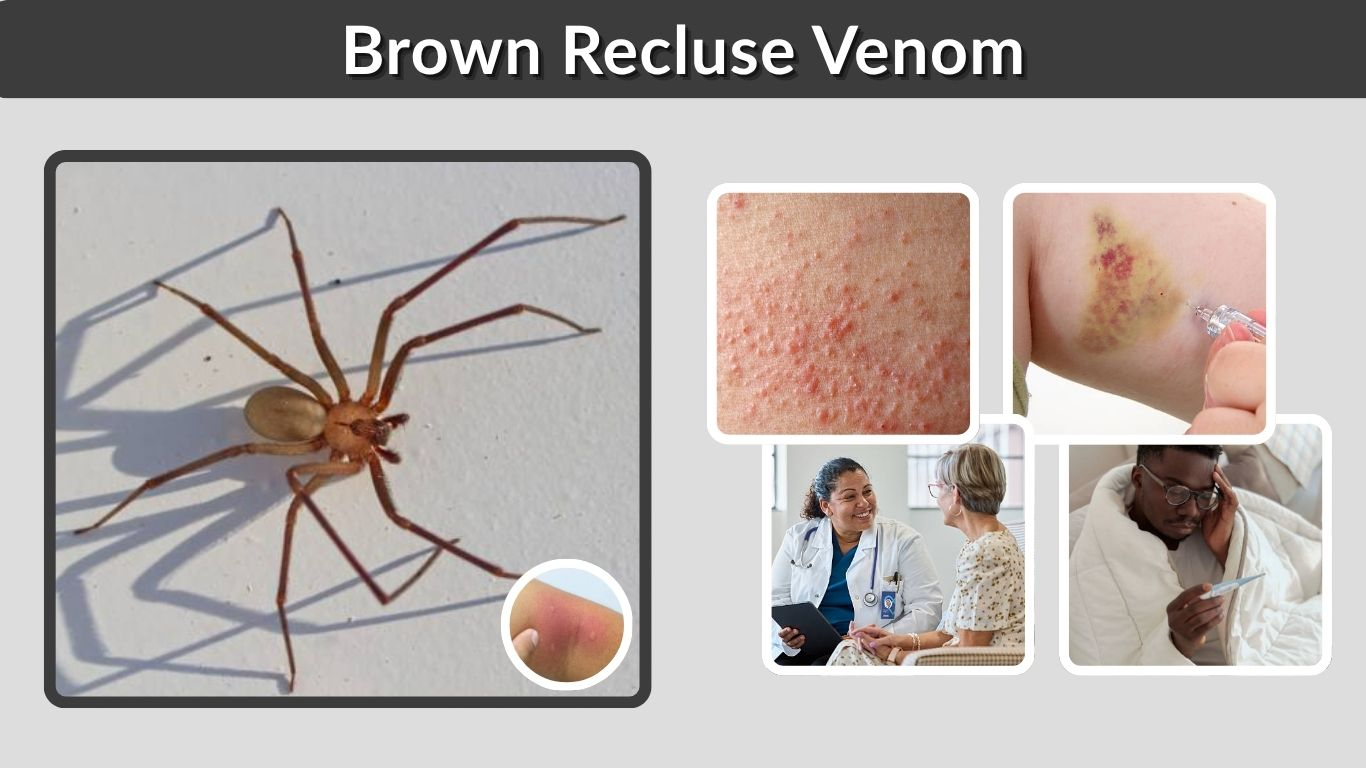
Brown recluse venom is one of the main reasons this spider gets so much attention. Many people search whether brown recluse spiders are venomous, how fast the venom works, whether it causes necrosis, and how it compares with black widow venom. The short answer is yes, brown recluse spiders are venomous, but most bites do not become life-threatening. The real concern is how the venom affects skin tissue, how the body reacts, and when medical care is needed.
Are Brown Recluse Spiders Venomous?
Yes, brown recluse spiders are venomous. They use venom to subdue small prey, not to attack humans. A bite usually happens when the spider is accidentally pressed against the skin, such as inside clothing, bedding, shoes, storage boxes, or cluttered spaces.
The word “venomous” is more accurate than “poisonous.” A venomous animal injects toxins through a bite or sting. A poisonous animal causes harm when touched or eaten. So, a brown recluse spider is venomous, not poisonous.
Key points about brown recluse venom
- Brown recluse spiders can inject venom through a bite.
- Not every bite causes severe symptoms.
- Some bites may be “dry bites” with little or no venom.
- The venom mainly affects skin and soft tissue.
- Serious whole-body reactions are uncommon but possible.
What Type of Venom Does a Brown Recluse Have?
Brown recluse venom is often described as cytotoxic and necrotic. Cytotoxic means it can damage cells. Necrotic means it may contribute to tissue death in some bite cases.
The most important toxin in brown recluse venom is commonly linked to an enzyme called sphingomyelinase D. This enzyme can trigger inflammation, damage cell membranes, and affect blood vessels around the bite area. This is why some bites develop a spreading wound or dead skin tissue.
| Venom feature | What it means |
|---|---|
| Cytotoxic | Damages cells and soft tissue |
| Necrotic | May cause tissue death in some cases |
| Enzymatic | Contains proteins that affect body tissues |
| Inflammatory | Can trigger swelling, redness, and pain |
| Localized | Most effects stay near the bite area |
What Does Brown Recluse Venom Do to Humans?
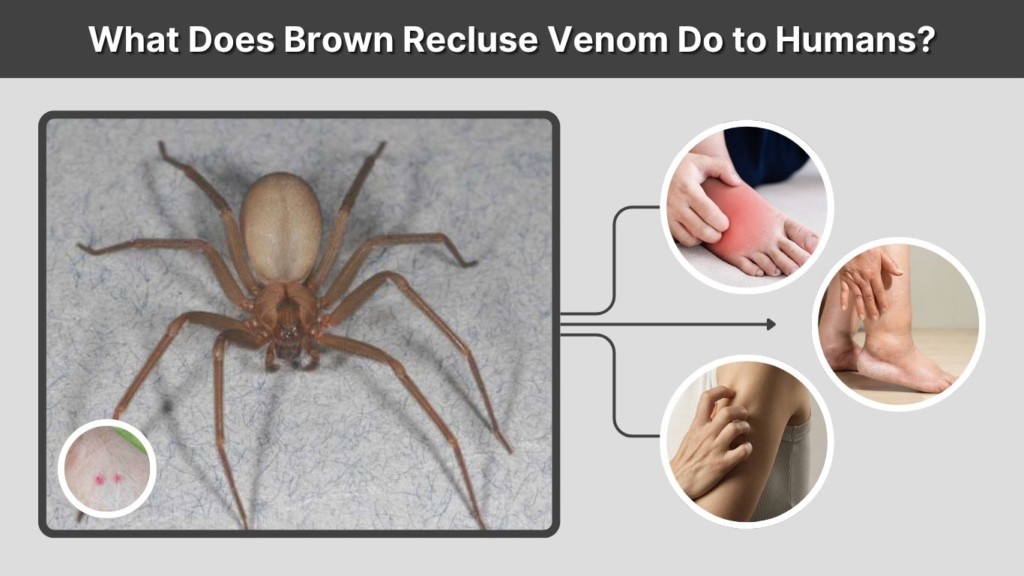
Brown recluse venom can affect people differently. Some people may only develop mild redness and itching, while others may develop a painful lesion. In more serious cases, the venom can damage skin tissue and cause a wound that takes weeks to heal.
A typical venom reaction may begin with mild pain, redness, or a stinging feeling. Over time, the area may become swollen, tender, or discolored. Some bites develop a pale center, a red outer ring, or a blister. In rare cases, the skin can break down and form an ulcer.
Common brown recluse venom effects
- Redness around the bite
- Burning, itching, or mild pain
- Swelling and tenderness
- Blistering
- Blue, purple, or dark skin discoloration
- Open sore or ulcer in more serious cases
- Slow healing wound
Not every suspicious bite is from a brown recluse. Many skin infections, allergic reactions, tick bites, and other spider bites are often mistaken for brown recluse bites.
How Fast Does Brown Recluse Venom Work?
Brown recluse venom does not always cause instant severe pain. In many cases, the bite may feel like a small pinch or may go unnoticed at first. Symptoms can become more obvious over several hours.
Some people notice pain and redness within 2 to 8 hours. A blister or discolored center may develop later. If tissue damage happens, it may become clearer over the next 24 to 72 hours.
| Time after bite | Possible reaction |
|---|---|
| First few minutes | Bite may feel mild or go unnoticed |
| 2–8 hours | Redness, itching, burning, or pain may begin |
| 12–24 hours | Swelling, blistering, or discoloration may appear |
| 24–72 hours | Wound may worsen if necrosis develops |
| Days to weeks | Healing may continue slowly in severe cases |
Does Brown Recluse Venom Cause Necrosis?
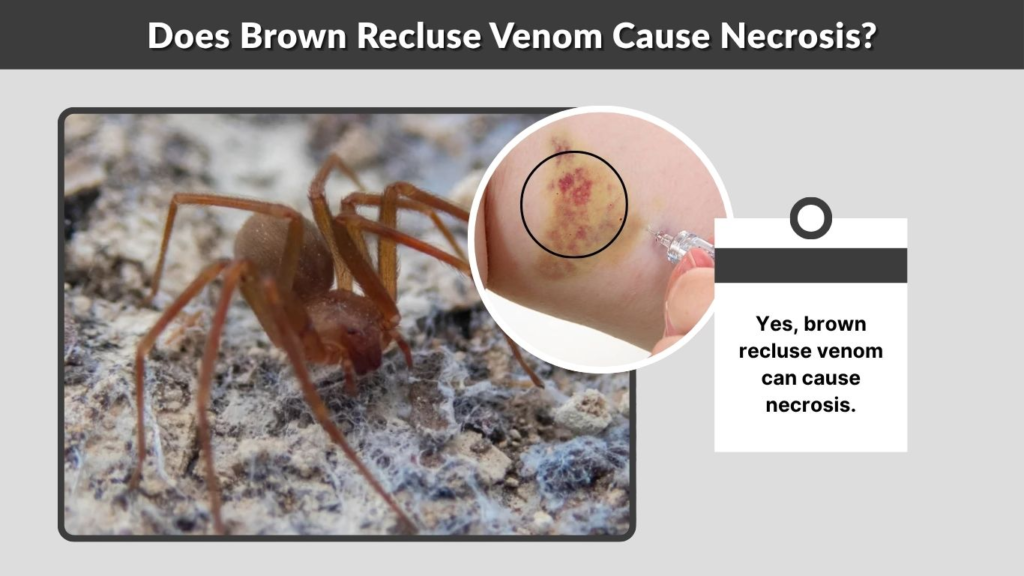
Yes, brown recluse venom can cause necrosis, but it does not happen in every bite. Necrosis means tissue death. This is the effect people fear most when they hear about brown recluse spider venom.
Necrosis may appear as a dark, sunken, or open wound. The skin may turn blue, purple, black, or gray in the center. However, many brown recluse bites heal without major tissue loss.
Signs that may suggest necrotic damage
- A blister that becomes darker
- A painful sore that grows wider
- Skin turning purple, blue, gray, or black
- A wound that opens and drains
- Increasing redness around the bite
- Skin that feels hard, sunken, or dead
A wound that spreads quickly, becomes very painful, or shows signs of infection should be checked by a medical professional.
How Long Does Brown Recluse Venom Stay in Your System?
Brown recluse venom does not usually “stay in your system” for a long time in the way many people imagine. The venom begins acting on local tissue after the bite. The body then breaks down and clears venom components over time.
The visible effects can last much longer than the venom itself. Redness and pain may last a few days. A more serious wound may take several weeks or even months to fully heal. So, when people say the venom is still in their system, they are often noticing the ongoing tissue damage and healing process rather than active venom spreading through the body.
Brown Recluse Venom in the Bloodstream
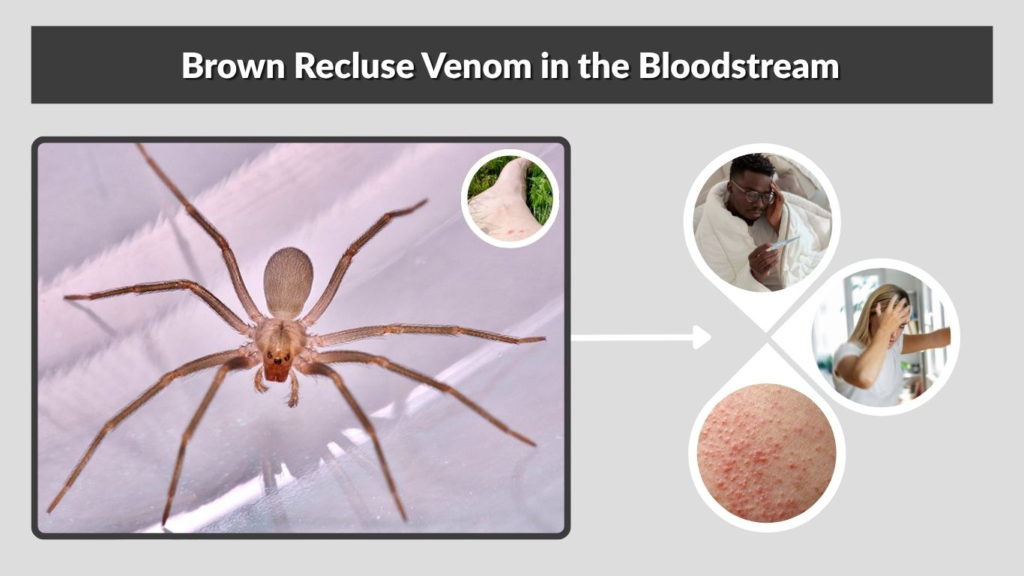
Most brown recluse bites cause local symptoms near the bite site. In rare cases, venom effects may become systemic, meaning they affect the body beyond the skin.
Systemic reactions are more concerning in children, older adults, and people with weaker immune systems. These reactions are uncommon, but they need medical attention.
Possible systemic symptoms
- Fever or chills
- Nausea
- Weakness
- Body aches
- Rash
- Dark urine
- Jaundice
- Unusual bruising
- Severe fatigue
Dark urine, yellowing of the skin or eyes, or extreme weakness after a suspected brown recluse bite should be treated as urgent.
Is There an Antivenom for Brown Recluse Venom?
In the United States, there is no commonly available brown recluse antivenom used as a standard treatment. Treatment usually focuses on wound care, pain control, infection prevention, and monitoring for serious symptoms.
Doctors may recommend cleaning the bite, using cold compresses, elevating the area, taking pain relievers, or treating infection if it develops. Severe wounds may need follow-up care. Surgery is not usually done immediately because the wound may continue changing for several days.
What treatment may include
- Washing the bite with soap and water
- Applying a cold pack wrapped in cloth
- Keeping the bite area elevated
- Taking approved pain medicine
- Watching for spreading redness or dark tissue
- Getting medical care if symptoms worsen
- Treating secondary infection if present
Do not cut the bite, squeeze it, burn it, or try to suck out venom. These methods can make tissue damage worse.
Brown Recluse Venom vs Black Widow Venom
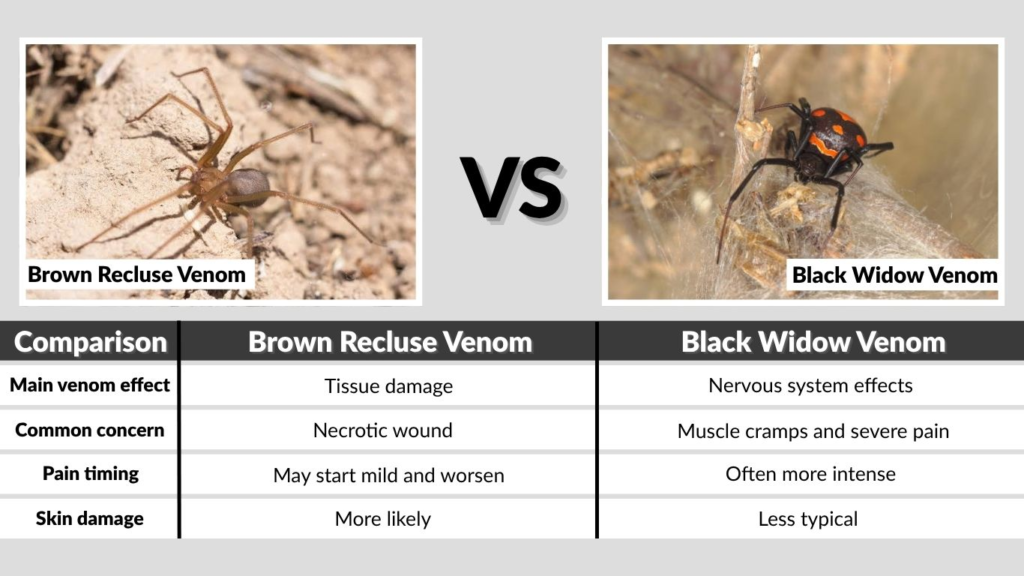
Brown recluse and black widow spiders are both venomous, but their venoms work differently. Brown recluse venom is mainly known for local tissue damage. Black widow venom is mainly neurotoxic, meaning it affects the nervous system.
A black widow bite is more likely to cause muscle cramps, severe pain, sweating, nausea, and body-wide symptoms. A brown recluse bite is more likely to cause a skin lesion or necrotic wound.
| Comparison | Brown recluse | Black widow |
|---|---|---|
| Main venom effect | Tissue damage | Nervous system effects |
| Common concern | Necrotic wound | Muscle cramps and severe pain |
| Pain timing | May start mild and worsen | Often more intense |
| Skin damage | More likely | Less typical |
| Systemic symptoms | Rare but possible | More common |
So, which is more venomous: black widow or brown recluse? It depends on what you mean. Black widow venom is often considered more dangerous for whole-body symptoms, while brown recluse venom is more feared for local tissue damage.
Are Male and Baby Brown Recluse Spiders Venomous?
Male brown recluse spiders are venomous, but they are usually smaller than females. Baby brown recluse spiders can also have venom, but they are tiny and less likely to deliver a medically significant bite.
Still, any suspected brown recluse bite should be watched carefully. The size of the spider does not always predict how a person’s body will react.
When to Seek Medical Help
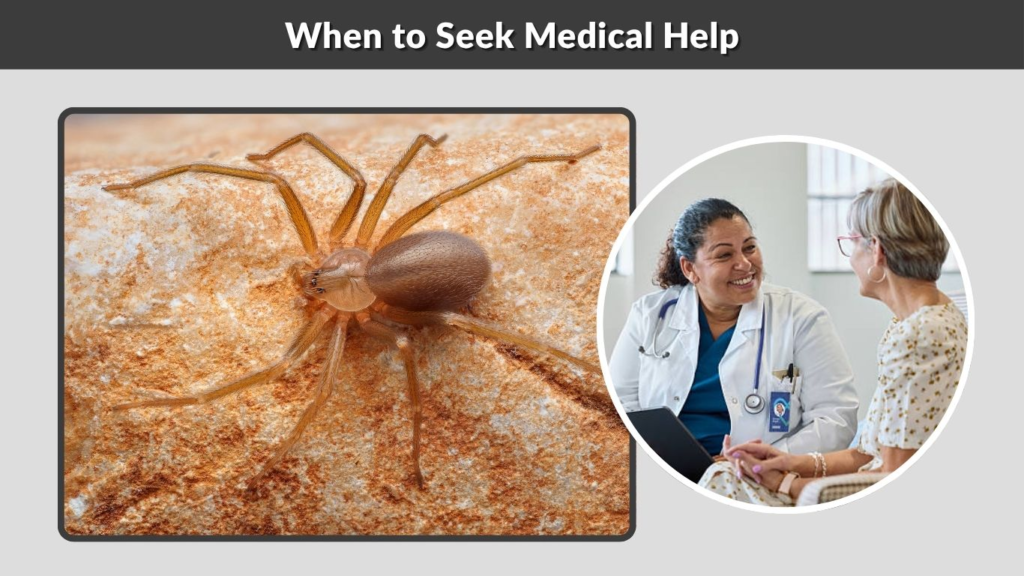
Many bites can be managed with basic first aid, but some symptoms need medical attention. It is better to get checked early if the bite area is worsening or if you feel sick.
Get medical care if you notice:
- Severe or increasing pain
- A growing dark or purple wound
- Fever, chills, or nausea
- Redness spreading away from the bite
- Pus or signs of infection
- Dark urine
- Yellow skin or eyes
- A bite on a child, older adult, or high-risk person
- A wound that does not improve after a few days
If possible, safely take a clear photo of the spider or the bite area over time. Do not try to catch the spider with your bare hands.
FAQs
Is a brown recluse spider venomous or poisonous?
A brown recluse spider is venomous, not poisonous. It injects venom through a bite. “Poisonous” usually means something is harmful when touched, swallowed, or absorbed.
What does brown recluse venom do?
Brown recluse venom can damage skin cells, trigger inflammation, and sometimes cause tissue death. Most effects happen near the bite area, but rare systemic reactions can occur.
How venomous is a brown recluse spider?
A brown recluse is medically important because its venom can cause painful skin wounds and necrosis. However, most bites are not fatal, and many heal without severe damage.
Is brown recluse venom necrotic?
Yes, brown recluse venom can be necrotic. This means it may cause skin and tissue death in some cases. Not every bite becomes necrotic.
Is there an antidote for brown recluse venom?
There is no widely used standard brown recluse antivenom in the United States. Treatment usually focuses on wound care, pain relief, and medical monitoring when symptoms are serious.
oastal areas. They often perch on branches, wires, or banks while watching for fish below.
