
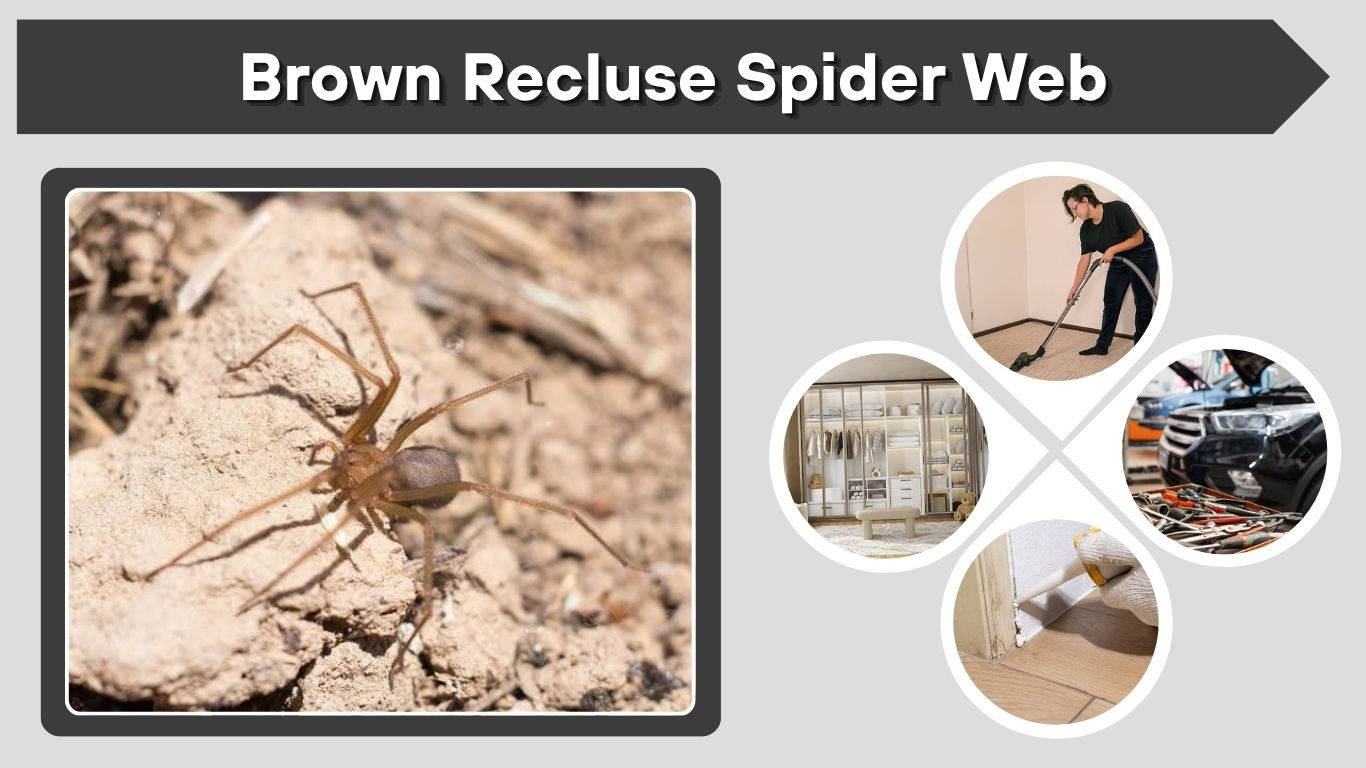
A brown recluse spider web is not the neat, round, classic spider web many people imagine. Brown recluse spiders do make webs, but they do not build large orb webs to catch flying insects. Their web is usually messy, irregular, and hidden in quiet places. Most brown recluse webs are used as retreats, not as beautiful open hunting webs. This is why people often find them in basements, closets, garages, storage boxes, crawl spaces, and behind clutter rather than stretched across open windows or garden paths.
Do Brown Recluse Spiders Make Webs?
Yes, brown recluse spiders make webs. However, their webs are different from the webs of orb weavers, funnel weavers, and cellar spiders. A brown recluse web is usually small, loose, irregular, and built in a protected hiding place.
The University of Kentucky notes that brown recluse spiders make messy, dense webs and usually build them close to the ground, along floors, walls, or in secluded underground-style locations. Brown recluse spiders also have only six eyes, which helps separate them from many other common spiders.
Brown recluses are not web-based hunters in the same way many spiders are. They usually leave their retreats at night to search for prey. Their web works more like a shelter, resting area, molting site, and egg-sac location.
What Does a Brown Recluse Web Look Like?
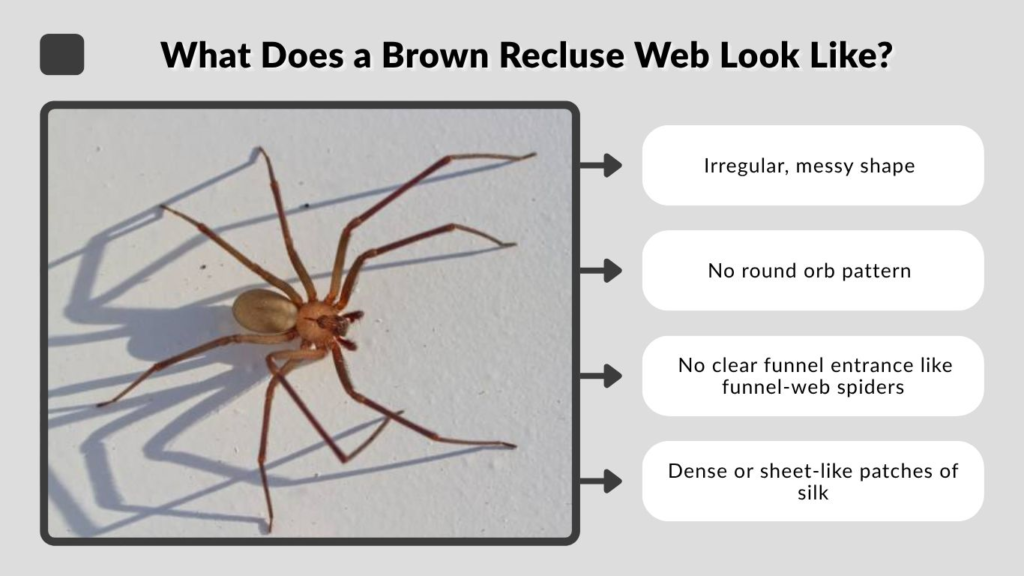
A brown recluse web usually looks like a messy patch of silk rather than a designed pattern. It may appear grayish, off-white, dusty, flat, or tangled. Because the spider places it in hidden areas, the web may collect dust, insect parts, shed skins, and debris.
Common Brown Recluse Web Features
A brown recluse spider web may have these features:
- Irregular, messy shape
- No round orb pattern
- No clear funnel entrance like funnel-web spiders
- Dense or sheet-like patches of silk
- Usually close to the floor or ground
- Often hidden behind clutter or inside cracks
- May contain egg sacs or shed skins
- Usually found in dry, quiet spaces
The web is not always easy to notice because it is often tucked away in corners, crevices, and storage areas. If you are searching for brown recluse webs, you usually need a bright flashlight and careful inspection.
Brown Recluse Web Identification
Brown recluse web identification should be done carefully. A messy web alone does not prove you have brown recluse spiders. Many spiders make irregular webs, including cellar spiders, cobweb spiders, black widows, and house spiders.
The best way to identify a brown recluse problem is to look at the spider, the location, and the web together. The web may support the identification, but it should not be the only clue.
Brown Recluse Web vs Other Spider Webs
| Web Type | What It Looks Like | Common Spider |
|---|---|---|
| Messy, dense retreat web | Hidden, irregular, often near floor | Brown recluse |
| Round wheel-shaped web | Open, organized, sticky spiral | Orb weaver |
| Funnel-shaped sheet | Flat sheet with tunnel entrance | Funnel weaver/grass spider |
| Loose cobweb | Tangled web in corners or ceilings | Cellar spider/cobweb spider |
| Strong irregular web | Dense web near ground or clutter | Black widow |
A brown recluse web is most often confused with other messy cobwebs. That is why spider identification is more reliable than web identification alone.
Where Are Brown Recluse Webs Found in the House?
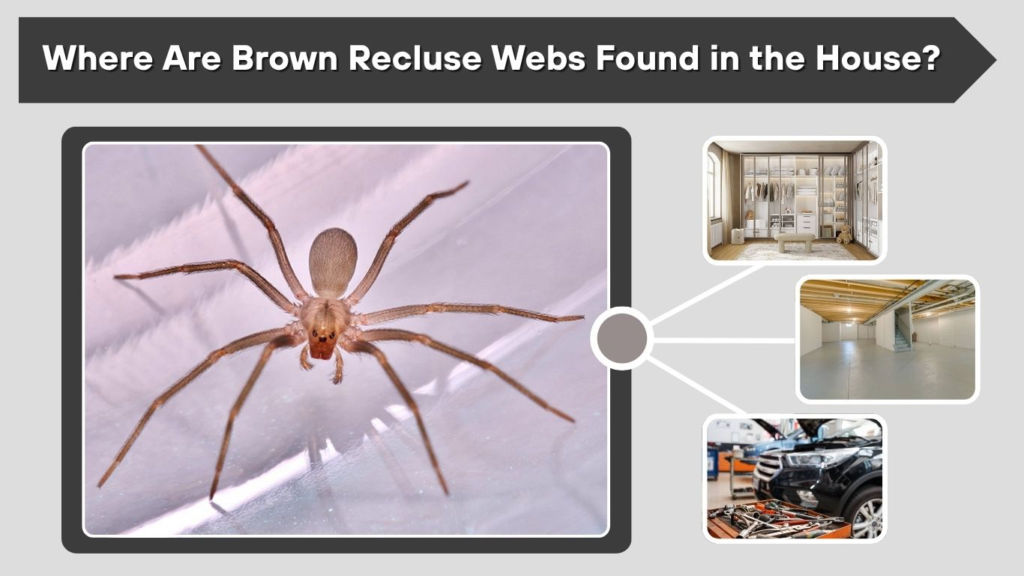
Brown recluse webs are usually found in dark, dry, undisturbed places. They are especially common in cluttered areas where boxes, papers, shoes, and stored materials provide hiding spaces. The University of Kentucky recommends inspecting cracks, corners, and other dark undisturbed areas with a flashlight, especially basements, attics, crawl spaces, closets, under beds, behind furniture, inside shoes, boxes, and hanging clothing.
Common Indoor Locations
Inside a home, brown recluse webs may be found in:
- Basements
- Attics
- Garages
- Closets
- Crawl spaces
- Storage rooms
- Behind furniture
- Under beds
- Inside cardboard boxes
- Around stored shoes or boots
- Behind baseboards
- In wall-floor corners
- Around stacked papers or newspapers
- In rarely used cabinets
Michigan State University also notes that in buildings, brown recluse spiders prefer warm, dry places with small crevices, including cracks in walls, storage areas, boxes, and stacks of paper or newspapers.
Brown Recluse Web in Window: Is That Likely?
A web in a window is usually not a brown recluse web. Many spiders build webs near windows because insects are attracted to light. Orb weavers, cobweb spiders, cellar spiders, and house spiders are much more likely to build visible webs in window frames.
Brown recluse spiders usually prefer hidden, low-traffic areas. They are more likely to hide behind stored items, inside cracks, under furniture, or near the floor than to build a visible web in a bright window.
A brown spider near a window may still be worth identifying, but the presence of a window web alone does not strongly suggest brown recluse activity.
Do Brown Recluse Spiders Make Funnel Webs?
No, brown recluse spiders do not make true funnel webs. Funnel webs are usually made by funnel weavers, grass spiders, and related spiders. These webs often look like flat sheets with a tunnel-like retreat at one end.
Brown recluse webs are more irregular and less structured. They are not designed as large sheet-and-funnel traps. If you see a clear funnel-shaped web in grass, shrubs, window wells, or corners, it is more likely from a funnel weaver or grass spider than a brown recluse.
Brown Recluse Funnel Web Confusion
Many people search for “brown recluse funnel web” because both spiders may be brown and both may hide in sheltered places. But the web is an important difference:
- Brown recluse: messy, hidden retreat web
- Funnel weaver: sheet web with funnel tunnel
- Grass spider: funnel web in grass, shrubs, or corners
- Nursery web spider: does not make the same kind of brown recluse retreat web
A funnel-shaped web should not automatically be treated as a brown recluse web.
Brown Recluse Spider Web Pictures: What to Look For
When looking at brown recluse web pictures, remember that photos can be misleading. A dusty cobweb in a basement may look like a brown recluse web even when another spider made it. The web itself is usually not enough for a confident identification.
A useful brown recluse web photo should show:
- the spider clearly
- the web location
- nearby egg sacs or shed skins
- the surrounding habitat
- the spider’s body shape and legs
- if possible, eye arrangement
Colorado State University Extension explains that brown recluse spiders have six eyes arranged in three pairs and are active at night, staying in web-lined refuges during the day. This means the spider’s body features are more important than the web alone.
Brown Recluse Spider in Web: What It Means
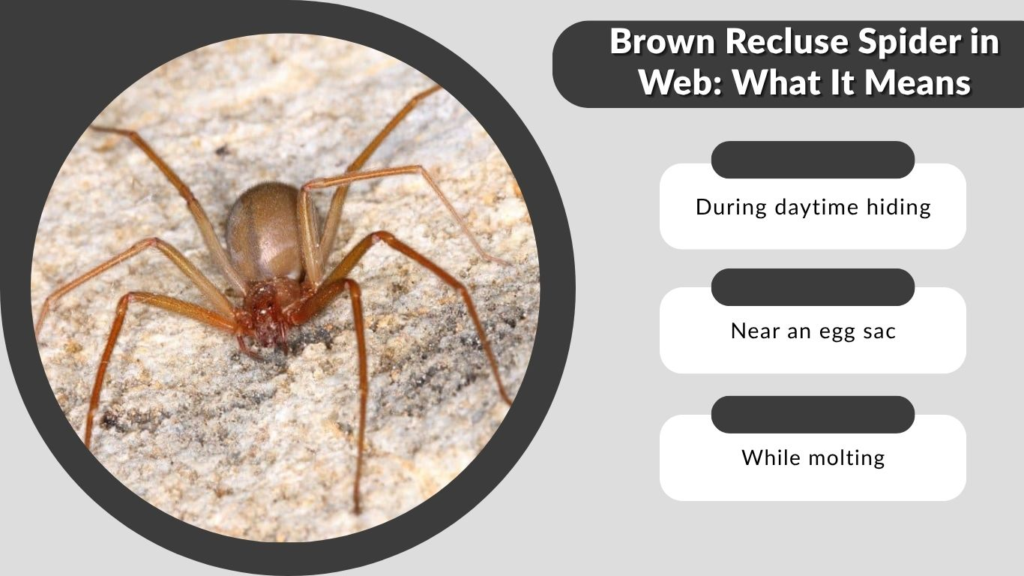
If you see a brown recluse spider sitting in a web, it may be resting in its retreat. Brown recluse spiders often stay hidden during the day and become more active at night. They do not usually sit in the center of a neat web waiting for insects.
A brown recluse in its web may be found:
- during daytime hiding
- near an egg sac
- while molting
- in a retreat after feeding
- in a protected crack or corner
Do not touch or disturb the spider with bare hands. If you need to remove it, use gloves, a jar, sticky trap, or vacuum carefully.
Brown Recluse Web Nest: Is It a Nest?
People often call spider webs “nests,” but brown recluse spiders do not build nests like wasps or ants. A brown recluse “web nest” is usually a hidden retreat area made of silk. Female brown recluses may also place egg sacs in these protected spaces.
Oklahoma State University notes that brown recluse egg sacs are off-white, round, about 1/4 inch in diameter, and usually placed in dark sheltered areas.
If you find a messy web with small round silk sacs in a dark storage space, avoid handling it directly. Egg sacs can indicate a breeding population if you are in a state where brown recluse spiders are established.
Nursery Web Spider vs Brown Recluse
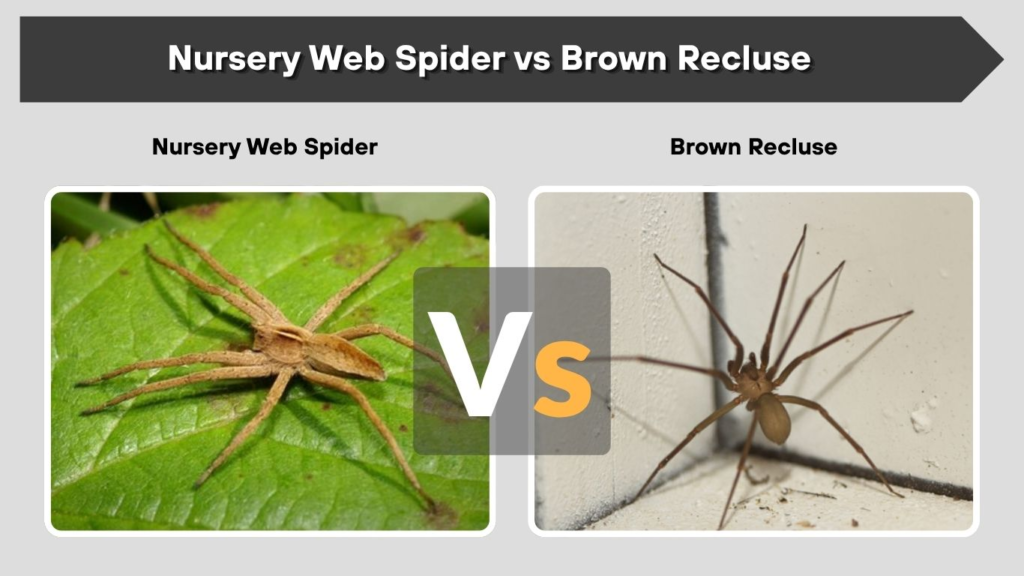
Nursery web spiders are often confused with brown recluse spiders because some are brown and long-legged. However, they are different in appearance, behavior, and web use.
Nursery web spiders are active hunters. Females carry or guard egg sacs and may build nursery webs for their young. Brown recluse spiders build hidden retreat webs and are usually more secretive.
Nursery Web Spider vs Brown Recluse Table
| Feature | Nursery Web Spider | Brown Recluse |
|---|---|---|
| Body | Often larger and more patterned | Plain tan to brown |
| Legs | Long, often visibly spiny | Smooth-looking, no obvious spines |
| Web use | Nursery web for young | Hidden retreat web |
| Eye count | Usually eight eyes | Six eyes |
| Behavior | Active hunter | Secretive nocturnal hunter |
| Medical concern | Usually not serious | Medically important in range areas |
A large brown spider with long legs and visible markings is often not a brown recluse.
Wolf Spider Web vs Brown Recluse Web
Wolf spiders do not build prey-catching webs like orb weavers. Many wolf spiders live in burrows or wander as hunters. Because they are brown and fast-moving, they are often mistaken for brown recluses.
A wolf spider is usually larger, hairier, and more robust than a brown recluse. Brown recluses are smoother-looking, more plain-colored, and have the six-eye pattern.
If you see a large hairy brown spider running across the floor, it is more likely to be a wolf spider than a brown recluse.
How to Inspect for Brown Recluse Webs Safely
If you live in a brown recluse range state and suspect webs in your home, inspect carefully. Do not reach blindly into boxes, closets, shoes, or dark corners.
Safe Inspection Steps
- Wear gloves and long sleeves.
- Use a bright flashlight.
- Pull boxes away from walls carefully.
- Check wall-floor corners.
- Look behind stored items.
- Shake out shoes, gloves, and clothing.
- Use sticky traps along walls.
- Vacuum webs and egg sacs when safe.
- Seal vacuum contents before disposal.
Sticky traps are useful because they can help confirm whether brown recluse spiders are actually present. Place them along walls, behind furniture, in closets, and near storage areas.
How to Prevent Brown Recluse Webs in the House
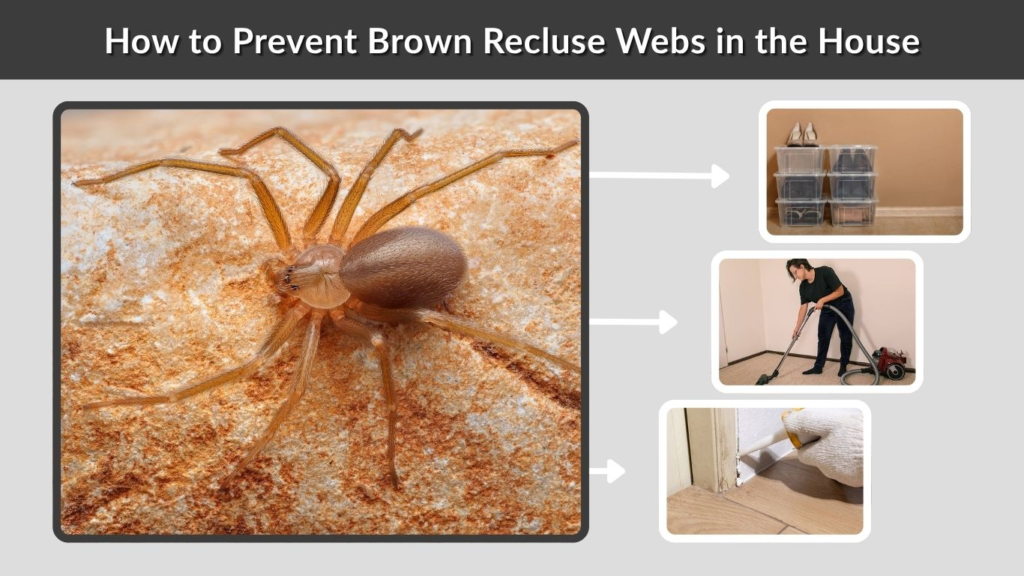
The best prevention is to remove the places where brown recluse spiders hide. Web removal alone may not solve the problem if clutter, insects, and cracks remain.
Focus on these steps:
- Reduce clutter in closets, garages, and basements.
- Replace cardboard boxes with sealed plastic bins.
- Keep beds away from walls and stored items.
- Store shoes and gloves in closed containers.
- Vacuum corners, baseboards, and storage areas.
- Seal cracks around walls, floors, pipes, and foundations.
- Reduce insects that spiders eat.
- Keep firewood and debris away from the house.
Brown recluse spiders prefer sheltered areas with low moisture and are found under bark, hollow logs, and stones outdoors, according to the University of Tennessee Extension. Keeping outdoor hiding places away from the home can reduce the chance of spiders moving indoors.
FAQs
Do brown recluse spiders make webs?
Yes, brown recluse spiders make webs, but they do not make neat round webs. Their webs are usually messy, irregular, dense, and hidden in dark, quiet places.
What does a brown recluse spider web look like?
A brown recluse spider web usually looks like a messy patch of silk. It may be grayish, dusty, flat, or tangled and is often found near the floor, in cracks, behind clutter, or inside storage areas.
Do brown recluse spiders make funnel webs?
No, brown recluse spiders do not make true funnel webs. Funnel-shaped webs are usually made by funnel weavers, grass spiders, or related species.
Where are brown recluse webs found in a house?
Brown recluse webs may be found in basements, attics, garages, closets, crawl spaces, cardboard boxes, behind furniture, under beds, and in wall-floor corners.
Can you identify a brown recluse by its web?
Not with certainty. A messy web can suggest a hiding spider, but many spiders make messy webs. To identify a brown recluse, look at the spider’s body features, location, and eye pattern, not the web alone.
