
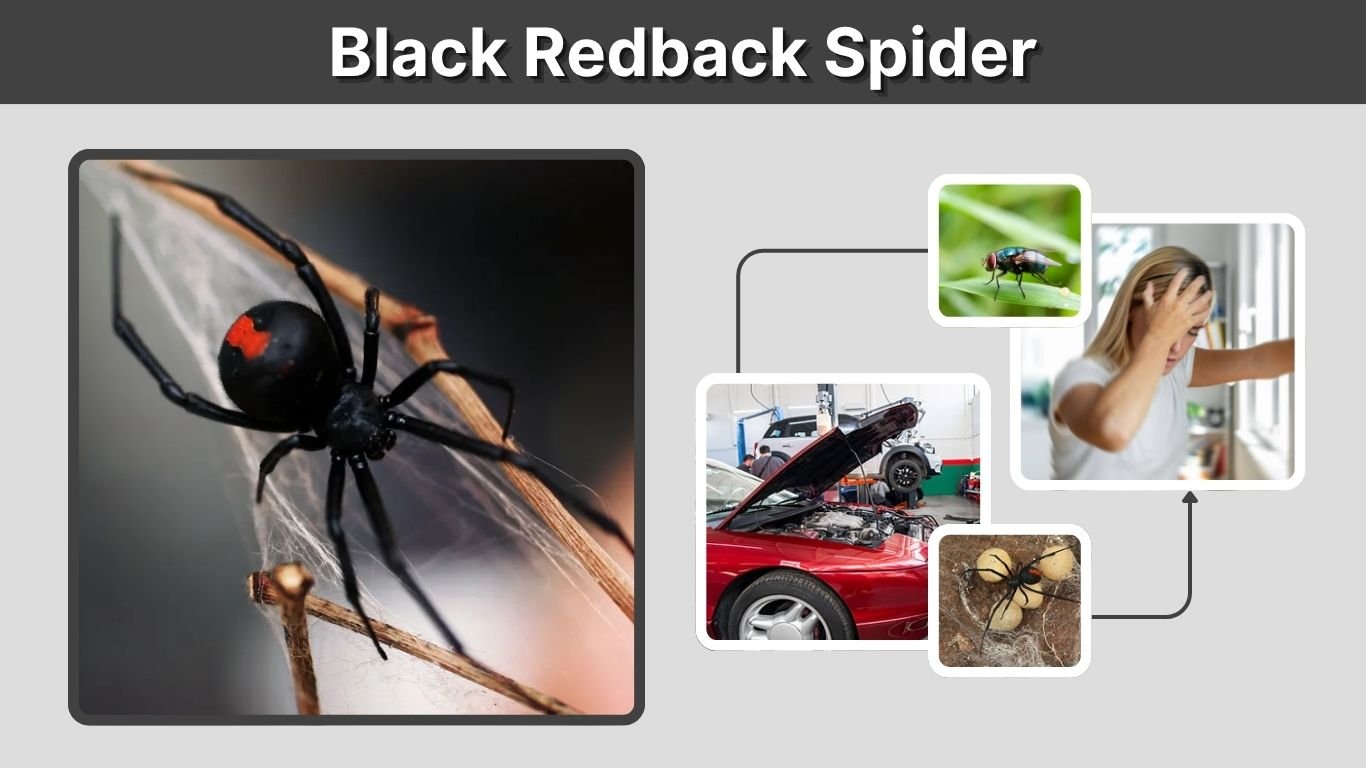
The black redback spider (Latrodectus hasselti) is a venomous spider best known for its glossy dark body and distinctive red or orange marking on the abdomen. Native to Australia, redback spiders commonly live around homes, sheds, garages, fences, outdoor furniture, and other sheltered locations. Adult females are considerably larger and more medically significant than males. Although most females show an obvious red stripe, some individuals can appear almost completely black when the marking is faint, dark, or difficult to see.
What Is a Black Redback Spider?
The redback spider belongs to the widow spider genus Latrodectus, which also includes black widow spiders. Adult females usually have a round, glossy black abdomen with a red or orange stripe running along the upper surface.
The species is primarily associated with Australia, where it is one of the country’s best-known venomous spiders.
Despite its reputation, the spider is generally shy and prefers to remain inside its web rather than actively approach humans.
Identification
- Scientific name: Latrodectus hasselti
- Family: Theridiidae
- Genus: Latrodectus
- Female color: Glossy black to very dark brown
- Main marking: Red or orange stripe on the abdomen
- Female body length: Around 10 mm
- Male body length: Around 3–4 mm
- Web: Irregular, tangled web
- Diet: Insects and other small animals
- Habitat: Sheltered, dry areas around buildings and vegetation
What Does a Black Redback Spider Look Like?
An adult female black redback spider has a rounded abdomen, thin legs, and a shiny black appearance.
The most recognizable feature is normally a red or orange longitudinal stripe on the upper side of the abdomen. Some individuals may also have an additional reddish marking underneath.
Males are much smaller and usually look quite different. They may be brownish rather than completely black and can have pale markings on their abdomen.
Young redbacks also look different from mature females and may have white, cream, red, or brown patterns before developing darker adult coloration.
Solid Black Redback Spider
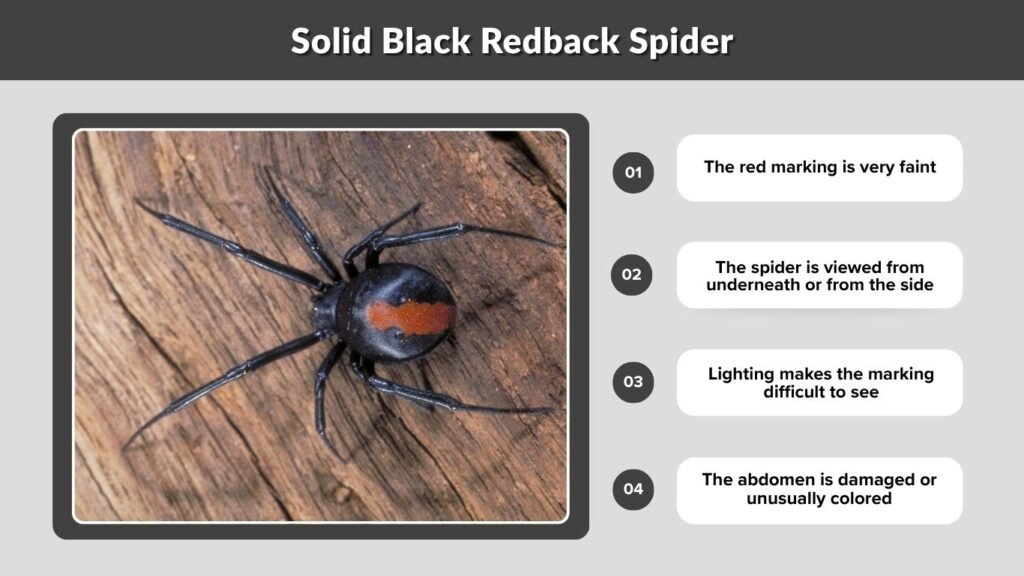
People sometimes report seeing a solid black redback spider without any obvious red marking.
A redback’s characteristic stripe can occasionally be faint, partially developed, obscured by lighting, or difficult to see from certain angles. However, a completely black spider should not automatically be identified as a redback.
Australia has many dark-colored spiders that can be confused with redbacks.
Could a Redback Have No Visible Red Stripe?
A very dark female may appear nearly solid black, particularly if:
- The red marking is very faint
- The spider is viewed from underneath or from the side
- Lighting makes the marking difficult to see
- The abdomen is damaged or unusually colored
- The spider is not actually a redback
Identification should therefore consider the spider’s body shape, web, size, location, and markings rather than color alone.
Black Redback Spider vs Black Widow
Redback spiders and black widow spiders are close relatives belonging to the same genus, Latrodectus.
They share several characteristics, including glossy dark bodies, potent neurotoxic venom, irregular webs, and reddish markings.
However, they are different species.
The redback spider is particularly associated with Australia, while several species referred to as black widows occur in North America and other regions.
Black widows are commonly associated with a red hourglass-shaped marking underneath the abdomen. Female redbacks are better known for the red stripe running along the upper abdomen.
Where Do Black Redback Spiders Live?
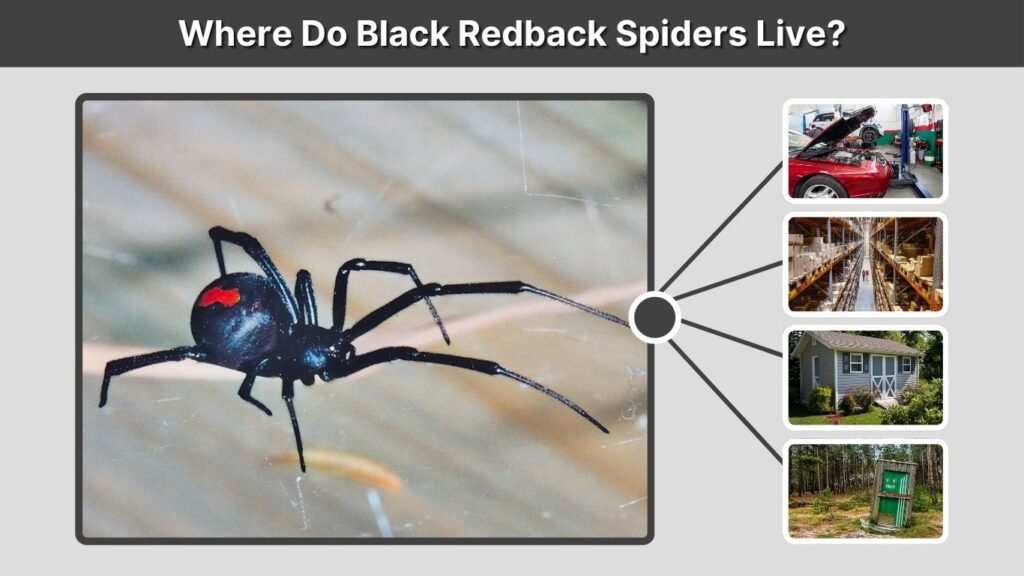
Redback spiders prefer dry, protected places where their webs are unlikely to be disturbed.
They frequently occur around human structures.
Common hiding locations include:
- Sheds
- Garages
- Outdoor toilets
- Storage areas
- Garden furniture
- Wood piles
- Under rocks
- Beneath plant pots
- Fences
- Mailboxes
- Machinery
- Children’s outdoor equipment
Their ability to live around buildings means accidental encounters with humans are possible.
Black Redback Spider Web
Redback spiders build messy, irregular webs rather than the symmetrical circular webs associated with orb-weaver spiders.
The web usually consists of tangled silk combined with stronger vertical catching threads.
The spider often remains hidden in a protected retreat during the day and becomes more active around its web at night.
When an insect becomes trapped, vibrations alert the spider. It approaches the prey, restrains it with silk, bites it, and later consumes it.
What Do Black Redback Spiders Eat?
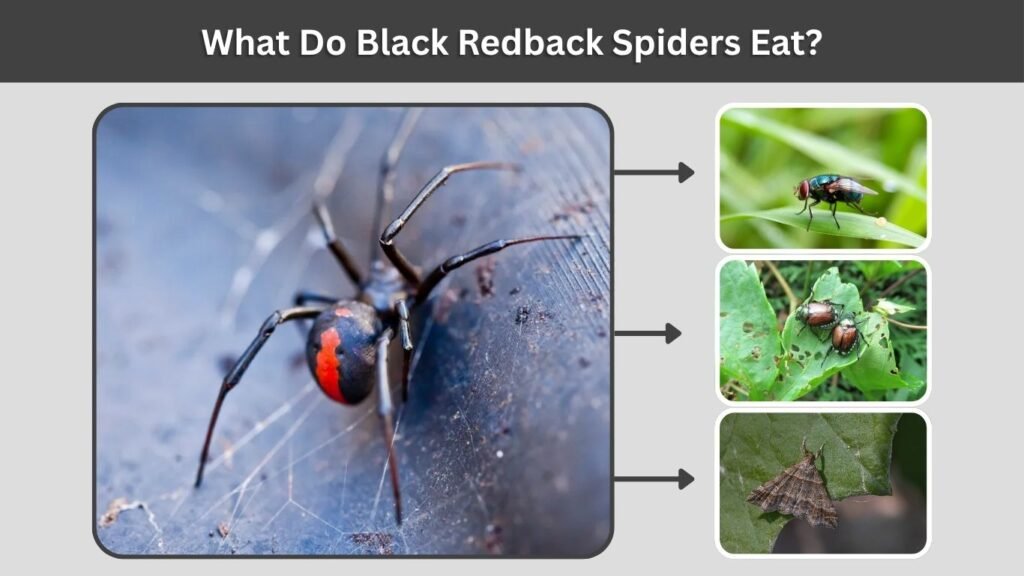
Black redback spiders are predators that primarily consume insects and other small invertebrates.
Their diet may include:
- Flies
- Beetles
- Cockroaches
- Moths
- Crickets
- Ants
- Other spiders
Large females can occasionally capture surprisingly large prey when it becomes trapped in their strong webs.
Redbacks do not hunt humans and have no reason to bite unless they feel trapped, pressed, or threatened.
Is the Black Redback Spider Venomous?
Yes. The black redback spider is venomous, and females can deliver medically significant bites.
Its venom affects the nervous system and can cause a condition known as latrodectism.
Female bites are generally of greater concern because females are larger and possess larger venom glands than males.
A bite does not necessarily mean severe poisoning will occur, but suspected redback bites should be treated seriously.
Black Redback Spider Bite Symptoms
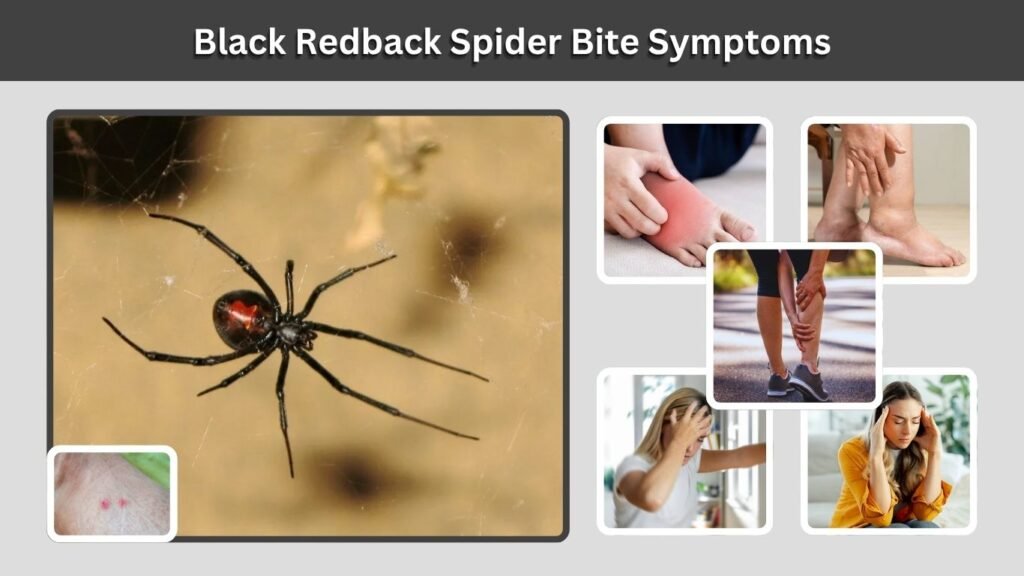
A redback bite may initially feel like a sharp pinprick, although some bites are not immediately noticed.
Symptoms can develop or worsen over time.
Possible symptoms include:
- Local pain
- Redness
- Swelling
- Sweating around the bite
- Increasing or spreading pain
- Muscle discomfort
- Nausea
- Headache
- Restlessness
- Abdominal discomfort
Severe symptoms are less common but require medical attention.
Young children, older adults, and people experiencing significant symptoms may need particularly careful medical assessment.
What Should You Do After a Redback Spider Bite?
If you suspect a redback spider bite, remain as calm as possible and seek appropriate medical advice, especially if pain or other symptoms are developing.
The bite area can be gently cleaned, and a cold pack wrapped in cloth may help reduce discomfort.
Unlike some dangerous Australian snake and spider bites, tight pressure-immobilization bandaging is generally not recommended for redback bites because it may increase localized pain.
Emergency medical attention is appropriate if the person develops severe pain, breathing problems, loss of consciousness, persistent vomiting, or other serious symptoms.
Are Black Redback Spiders Aggressive?
Redback spiders are not generally aggressive toward people.
Females usually remain within or close to their webs and prefer hiding rather than confronting large animals.
Bites most commonly happen when someone accidentally touches, squeezes, or disturbs a spider hidden in objects.
Wearing gloves when moving outdoor furniture, firewood, stored containers, or garden materials can reduce the chance of accidental contact.
Black Redback Spider Reproduction
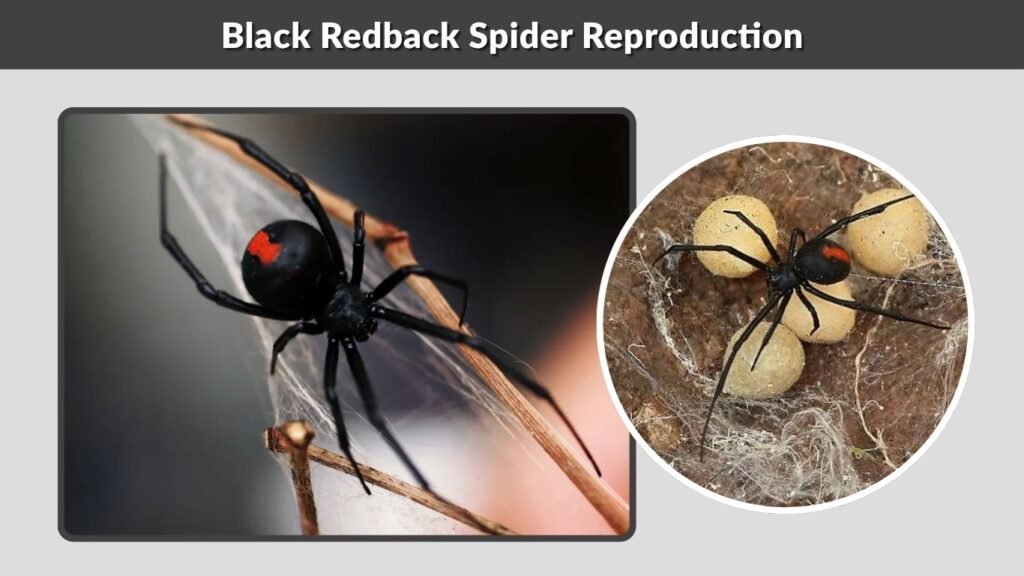
The female redback produces silk egg sacs containing numerous eggs.
These sacs are usually kept within the female’s protected web. Spiderlings emerge after development and eventually disperse to establish their own webs.
Females are much larger than males. Redback mating behavior is particularly unusual because males may sometimes place themselves near the female’s mouthparts during mating, and females may consume males.
However, male consumption does not happen in every mating event.
Interesting Black Redback Spider Facts
- The scientific name of the redback spider is Latrodectus hasselti.
- Females are much larger than males.
- Adult females are usually glossy black with red or orange markings.
- Redbacks belong to the same genus as black widow spiders.
- Their webs look tangled rather than circular.
- They commonly live around human buildings.
- Females possess medically significant venom.
- They mainly eat insects and other small arthropods.
- Redbacks usually bite only when disturbed or trapped.
- A spider that looks completely black should not be identified as a redback based on color alone.
FAQs
Is a Black Redback Spider Dangerous?
Yes. Female redback spiders possess potent venom capable of producing significant pain and other symptoms. However, bites are uncommon when the spiders are left undisturbed.
Can a Redback Spider Be Completely Black?
Some individuals may appear almost completely black because the red marking is faint or difficult to see. However, a solid black spider without visible markings could also be another species.
How Can You Identify a Female Redback Spider?
Look for a glossy black rounded abdomen, slender legs, an irregular web, and usually a red or orange stripe on the upper abdomen.
Where Do Redback Spiders Usually Hide?
They commonly hide in dry, protected areas such as sheds, garages, outdoor furniture, wood piles, plant pots, fences, storage spaces, and underneath objects.
Is a Redback Spider the Same as a Black Widow?
No. They are different species, although both belong to the genus Latrodectus and share similar body shapes, venom characteristics, and red markings.
