
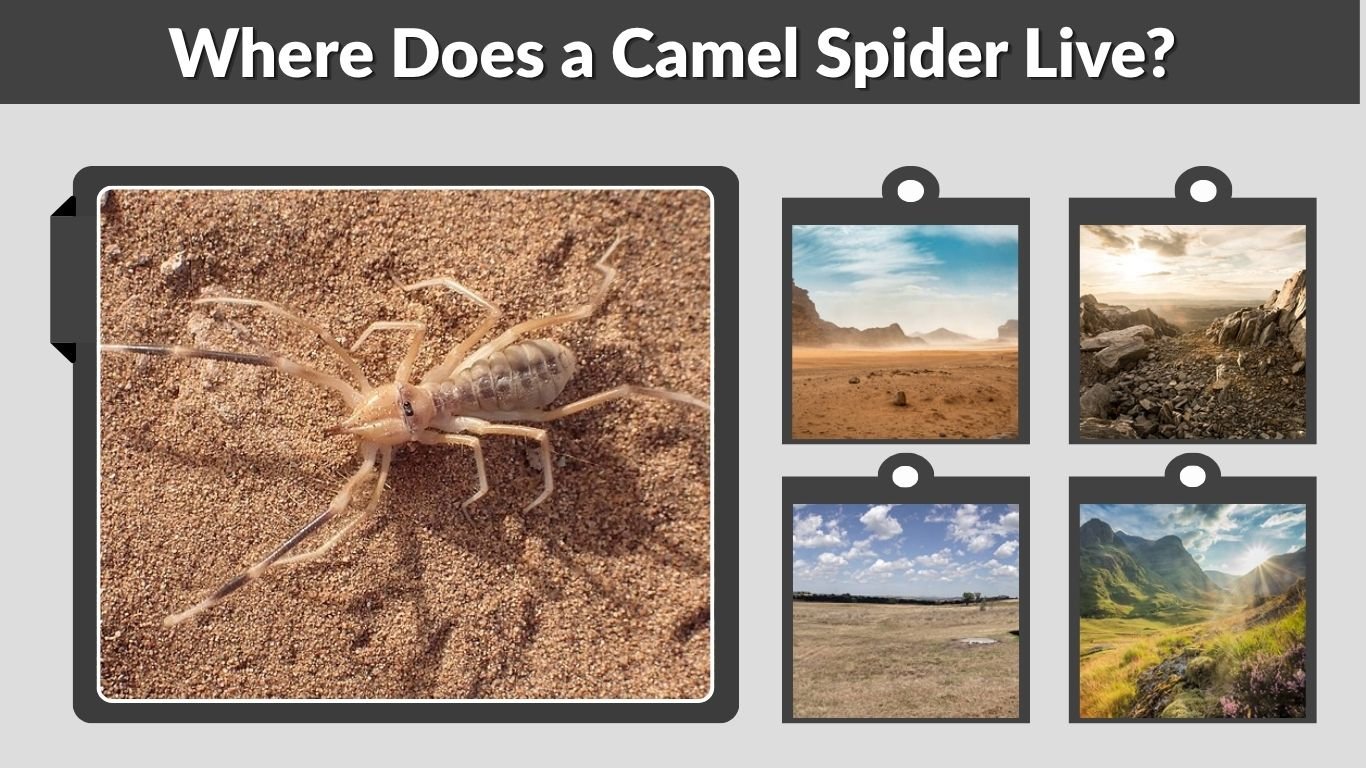
Where does a camel spider live? Camel spiders are primarily found in hot, dry regions, especially deserts and semi-deserts across Africa, the Middle East, Asia, parts of southern Europe, and the Americas. Despite their name, camel spiders are not true spiders; they are arachnids belonging to the order Solifugae. Most species spend the day hidden in burrows, beneath rocks, or in other sheltered places and become more active when temperatures are cooler. Their ability to survive harsh, arid environments makes them highly successful desert predators.
Where Do Camel Spiders Live?
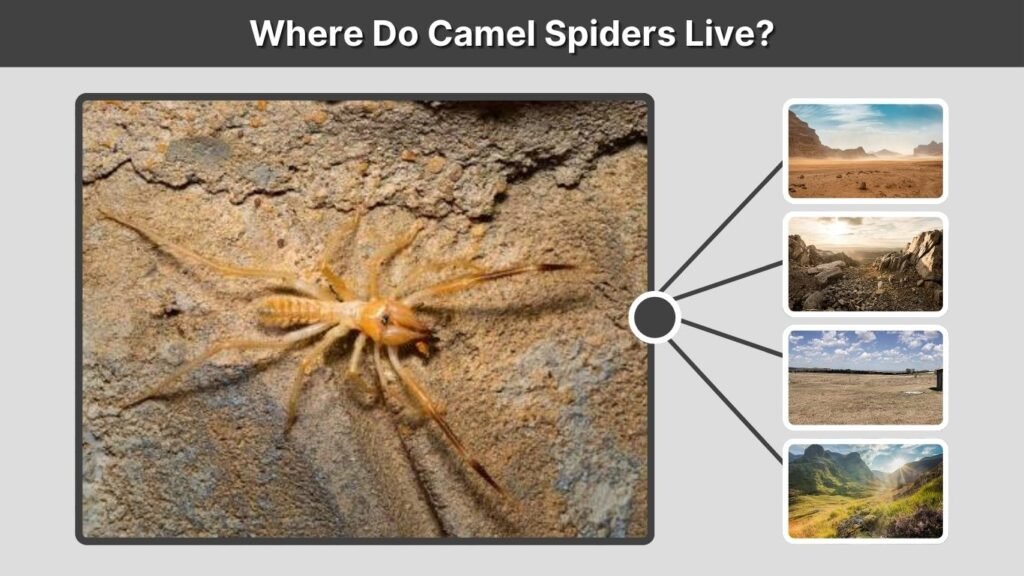
Camel spiders primarily live in arid and semi-arid environments. Most species occur in warm regions where rainfall is limited and vegetation is relatively sparse.
They are particularly associated with deserts, but a camel spider’s habitat is not limited to endless sand dunes. Different species occupy rocky slopes, gravel plains, dry grasslands, scrublands, and mountain valleys as well.
Camel Spider Habitat
Typical camel spider habitats include:
- Deserts
- Semi-deserts
- Sandy plains
- Rocky terrain
- Dry grasslands
- Desert shrublands
- Gravel plains
- Mountain valleys
- Areas beneath rocks and logs
- Underground burrows
Most camel spiders prefer dry environments rather than wet, heavily vegetated habitats.
Where Do Camel Spiders Live in the World?
Camel spiders have a surprisingly broad global range. Solifuges occur across Africa, the Middle East, much of Asia, parts of southern Europe, and the Americas.
They are particularly well known from desert regions of the Middle East and North Africa, but species also occur in Mexico and the southwestern United States.
Despite Australia’s reputation for unusual arachnids, living Solifugae are notably absent from Australia. They are also absent from Madagascar.
Do Camel Spiders Live in the Desert?
Yes. Camel spiders commonly live in deserts, and these dry habitats contain many species.
Their sandy or yellowish-brown coloration often blends well with desert soil. They are also adapted behaviorally to extreme temperatures by avoiding the hottest parts of the day.
The name Solifugae is associated with fleeing from the sun, which suits the behavior of many species that seek shade and shelter when exposed to intense sunlight.
Where Do They Hide During the Day?
During hot periods, camel spiders may shelter:
- Inside underground burrows
- Beneath stones
- Under vegetation
- In cracks and crevices
- Beneath debris
- Around shaded structures
Some species construct or occupy burrows, while more active species may spend substantial time moving across the surface and use temporary shelters when necessary.
This behavior helps them avoid excessive heat and reduces water loss.
What Countries Have Camel Spiders?
Because “camel spider” describes many species within Solifugae rather than one single species, their distribution covers numerous countries.
They occur in regions that include the Middle East, North and southern Africa, Central and South Asia, the southwestern United States, Mexico, and parts of Central and South America.
Camel spiders became especially famous in countries such as Iraq because soldiers encountered them during military deployments, but Iraq is only a small part of their overall range.
Do Camel Spiders Live in the United States?
Yes. Camel spiders live in the United States, particularly in dry regions of the Southwest.
They can occur in desert and semi-desert environments where temperatures and soil conditions are suitable. American camel spiders may also be called wind scorpions or sun spiders.
Despite these names, they are neither true scorpions nor true spiders.
Do Camel Spiders Live in Houses?
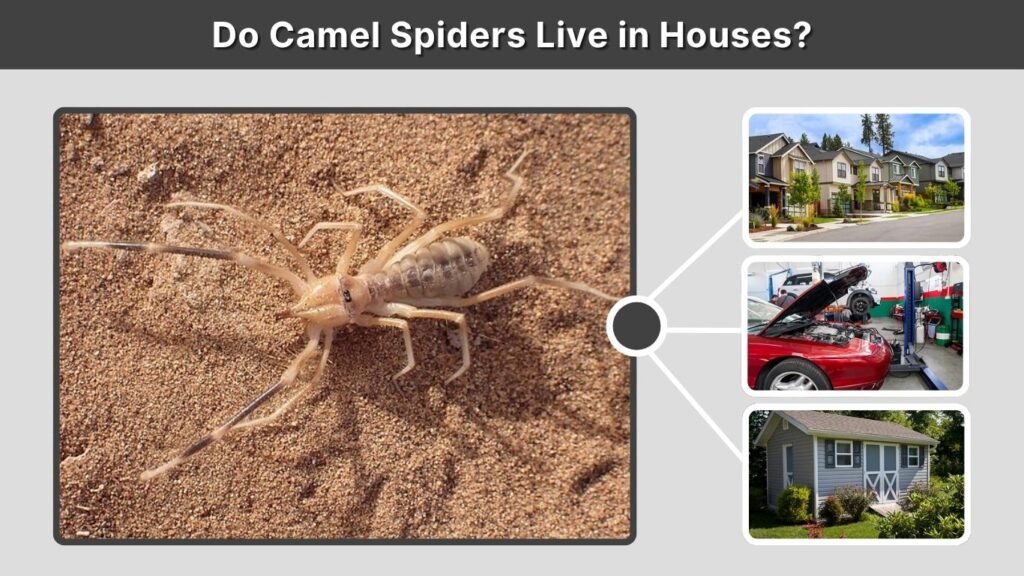
Camel spiders are fundamentally outdoor animals, but they can occasionally wander into houses, garages, sheds, tents, and other structures.
A camel spider entering a building may simply be searching for:
- Shade
- Cooler temperatures
- Shelter
- Insect prey
- A protected hiding place
Finding a camel spider indoors does not necessarily mean there is an infestation.
Why Would Camel Spiders Enter a House?
Warm desert regions can become extremely hot during the day. Buildings offer shaded spaces where camel spiders can temporarily escape heat.
Outdoor lights may also attract insects, potentially bringing hunting camel spiders closer to houses.
If you find several camel spiders around a home, reducing clutter and sealing gaps beneath doors and around windows may make indoor encounters less likely.
Do Camel Spiders Live in Groups?
Camel spiders are generally solitary hunters rather than social arachnids living in organized colonies.
They actively search for prey instead of building capture webs. Their powerful jaws, known as chelicerae, are used to seize and process insects and other small animals.
Multiple camel spiders may sometimes occur in the same general area when food and shelter are abundant, but this does not mean they have formed a cooperative social group.
Do Camel Spiders Make Webs?
No. Camel spiders do not produce the prey-catching webs associated with true spiders.
They are active ground hunters that rely on speed and powerful mouthparts to catch prey. Solifuges lack the silk-producing structures used by true spiders for making conventional webs.
They may instead retreat into natural shelters or burrows when resting.
Where Do Camel Spiders Sleep?
Camel spiders commonly spend inactive periods inside sheltered locations.
A burrow provides protection from:
- Extreme daytime temperatures
- Predators
- Drying conditions
- Direct sunlight
Some species dig their own shelters in loose soil, while others take advantage of existing cracks, spaces beneath rocks, or other protected places.
Many desert species become more active after sunset when temperatures are considerably cooler.
What Do Camel Spiders Eat Where They Live?
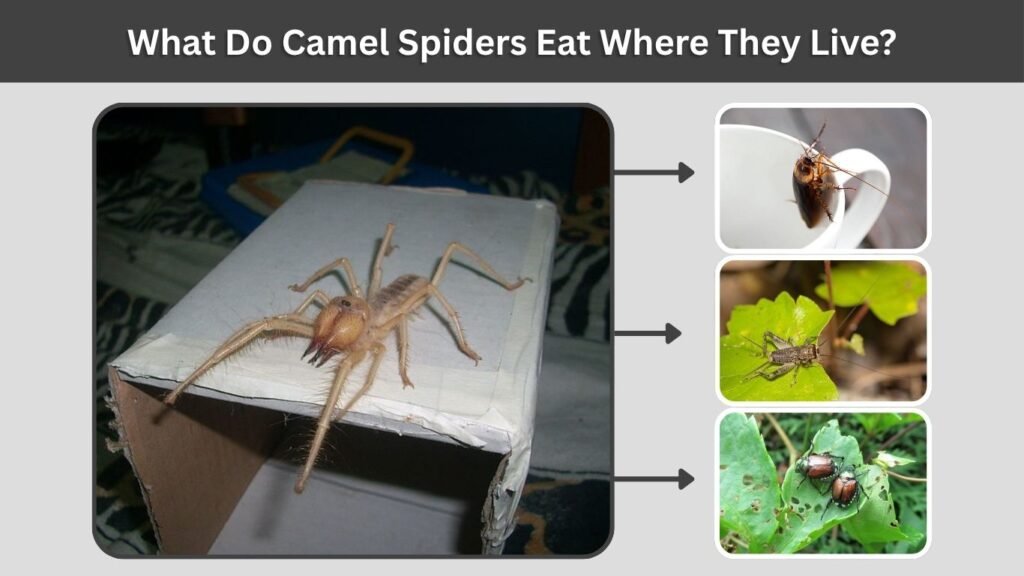
Camel spiders are opportunistic predators of animals they encounter in their habitat.
Common prey can include:
- Beetles
- Crickets
- Grasshoppers
- Cockroaches
- Termites
- Other arachnids
- Various small invertebrates
Larger species may occasionally attack small vertebrates, but insects and other arthropods make up much of their prey.
Their active hunting lifestyle allows camel spiders to move rapidly across desert ground while searching for food.
How Long Does a Camel Spider Live?
The exact camel spider lifespan varies among species and environmental conditions, and detailed lifespan information is limited for many wild solifuges.
Their life cycle generally includes egg, juvenile, and adult stages. Females typically place eggs in protected burrows, helping shield the developing young from predators and harsh environmental conditions.
Rather than relying on a single lifespan figure for all camel spiders, it is more accurate to remember that Solifugae contains more than 1,000 described species with different life histories.
How Long Can a Camel Spider Live Without Food?
There is no reliable single number that applies to every camel spider species.
Survival without food depends on the animal’s species, age, size, temperature, hydration, activity level, and overall condition.
A camel spider temporarily hiding in a house may survive without immediately finding prey, but it still depends on suitable food and environmental conditions over the long term.
Why Are Camel Spiders Suited to Desert Life?
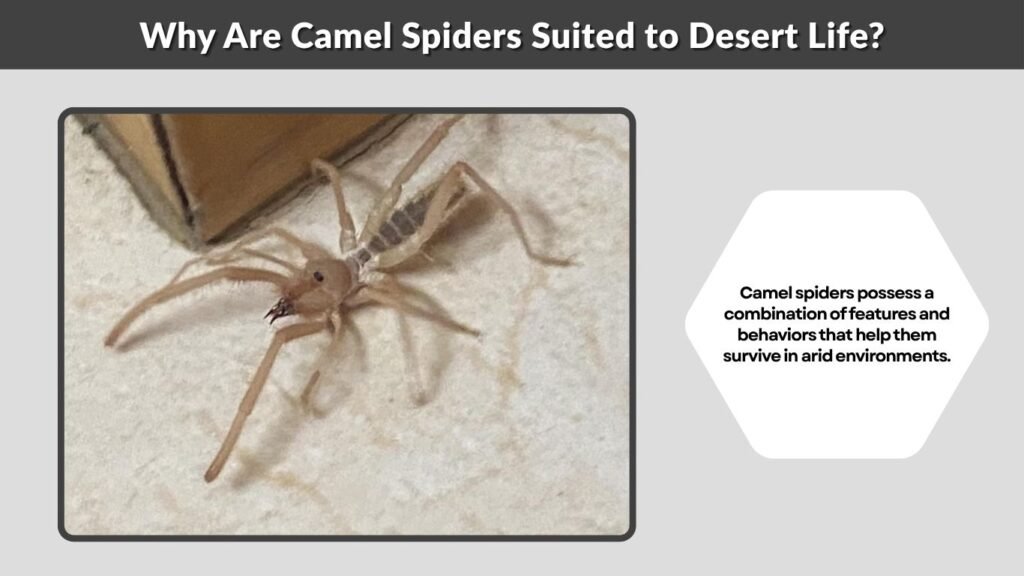
Camel spiders possess a combination of features and behaviors that help them survive in arid environments.
Their fast running ability helps them catch mobile prey and move quickly between sheltered locations. Their coloration often provides camouflage against sand and soil.
More importantly, many avoid the hottest periods by hiding underground or beneath objects and becoming active during cooler conditions.
These adaptations allow Solifugae to occupy habitats ranging from sand dunes and gravel plains to rocky hillsides and dry shrublands.
FAQs
Where Does a Camel Spider Live?
Camel spiders primarily live in deserts, semi-deserts, dry grasslands, rocky areas, scrublands, and other arid environments. They occur across Africa, Asia, the Middle East, parts of Europe, and the Americas.
Do Camel Spiders Live in the Desert?
Yes. Deserts and other dry habitats are the primary environments for many camel spider species. They often hide from intense daytime heat and become more active when conditions are cooler.
Do Camel Spiders Live in the United States?
Yes. Camel spiders occur in dry regions of the southwestern United States, where they are also commonly known as wind scorpions or sun spiders.
Can Camel Spiders Live in Your House?
Camel spiders can occasionally enter homes, garages, sheds, or other buildings while searching for shade, shelter, or prey. However, they are primarily outdoor arachnids.
Do Camel Spiders Live in Groups?
Generally, no. Camel spiders are mainly solitary predators. Several individuals may occur in the same favorable habitat, but they do not normally form organized colonies or hunt cooperatively.
