
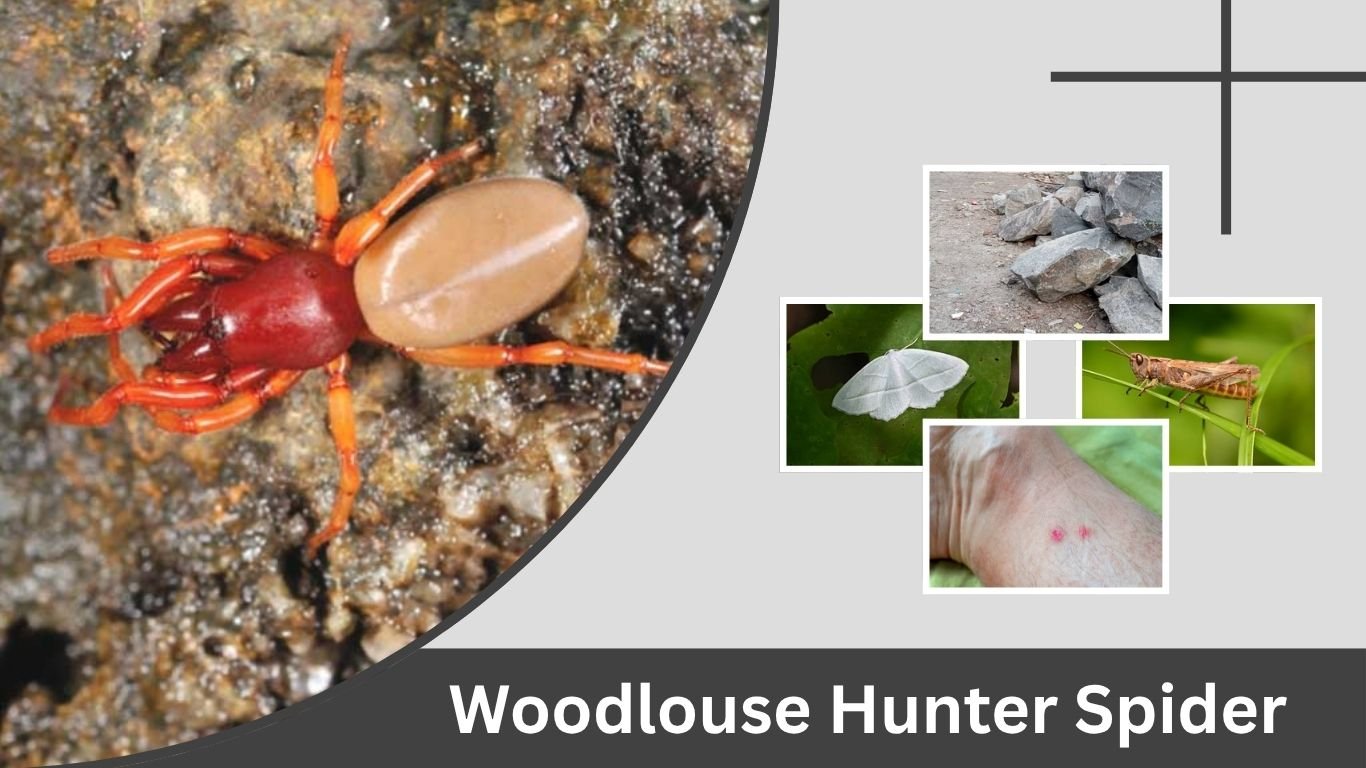
The woodlouse hunter spider is a distinctive reddish spider commonly discovered beneath stones, logs, flowerpots, and damp objects. Scientifically known as Dysdera crocata, it is specially adapted to hunting woodlice, pill bugs, and sow bugs. Its unusually large fangs may make it appear threatening, but it is not considered medically dangerous to humans. Although a defensive bite can be painful, documented symptoms are generally mild and temporary.
What Is a Woodlouse Hunter Spider?
The woodlouse hunter spider belongs to the family Dysderidae. Other common names include the woodlouse spider, sowbug hunter, pillbug killer, and woodlouse hunting spider.
Unlike orb-weavers and house spiders, it does not build a sticky web to capture food. It actively searches for prey at night and rests inside a small silken retreat during the day. Its large, forward-pointing jaws allow it to pierce the hard protective plates of woodlice.
| Feature | Description |
| Scientific name | Dysdera crocata |
| Family | Dysderidae |
| Body length | Approximately 9–15 mm |
| Color | Reddish-orange front body with a pale abdomen |
| Eyes | Six |
| Diet | Mainly woodlice and other small arthropods |
| Activity | Primarily nocturnal |
| Risk to humans | Low |
Woodlouse Hunter Spider Identification
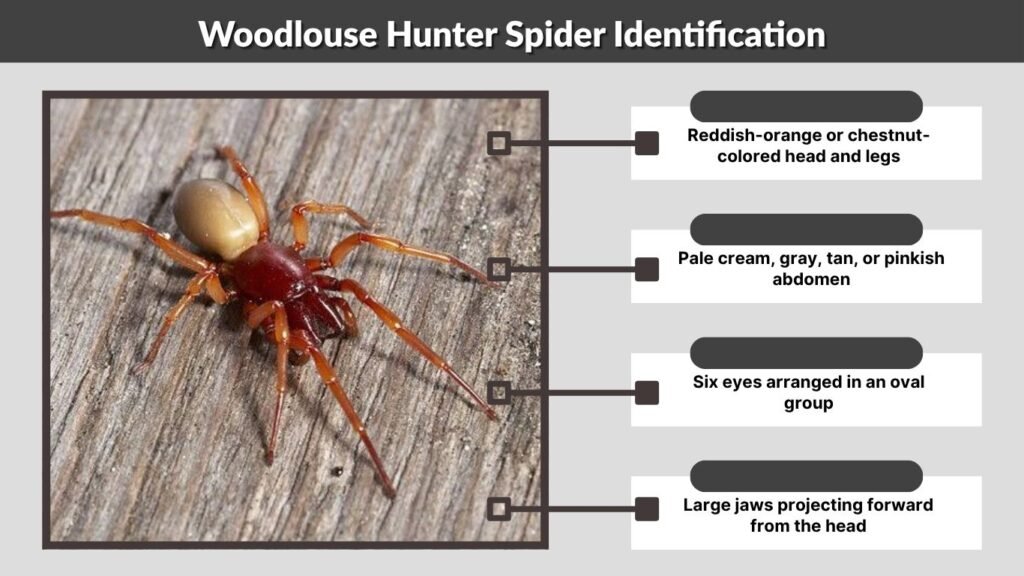
The woodlouse hunter has a smooth, shiny appearance that separates it from the hairier wolf spiders with which it is sometimes confused. Its contrasting red and pale coloration makes mature specimens relatively easy to recognize.
Key Identification Features
- Reddish-orange or chestnut-colored head and legs
- Pale cream, gray, tan, or pinkish abdomen
- Six eyes arranged in an oval group
- Large jaws projecting forward from the head
- Smooth body with relatively little visible hair
- Long orange-red legs
- No obvious pattern across the abdomen
Its prominent mouthparts are called chelicerae. These powerful structures are angled forward and are adapted for gripping and puncturing armored prey.
Woodlouse Hunter Spider Size
Adult females normally measure approximately 11–15 millimeters in body length, while males are usually around 9–10 millimeters. This measurement excludes the legs.
Large females may appear considerably bigger when their legs are fully extended. Nevertheless, the spider’s body is generally no longer than about half an inch. Females also tend to have broader abdomens than males, particularly while carrying developing eggs.
Where Do Woodlouse Hunter Spiders Live?
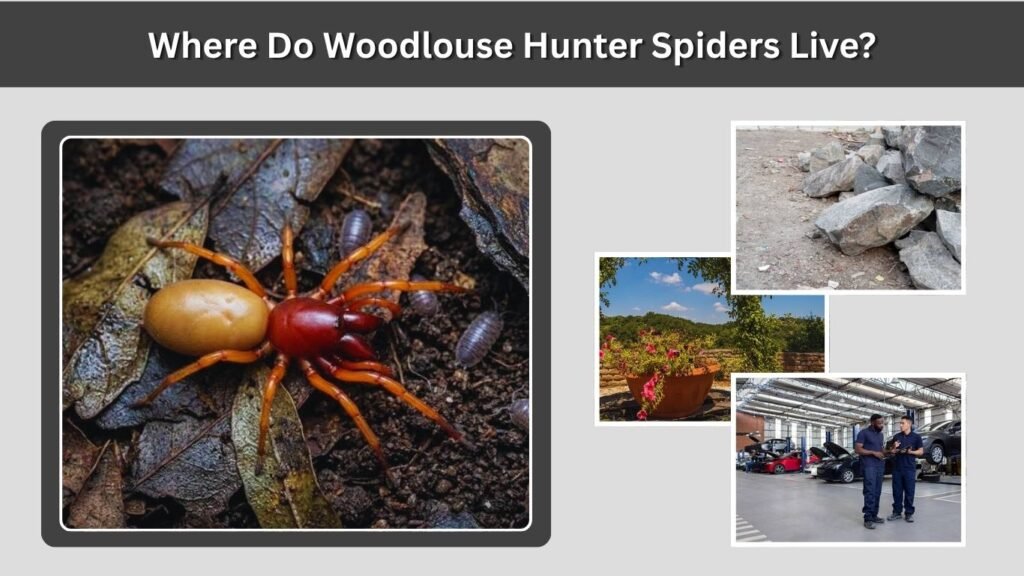
Woodlouse hunters prefer dark, warm, and damp places where woodlice are abundant. During daylight, they remain concealed inside silken cells beneath objects or within narrow crevices.
Common hiding places include:
- Under rocks and paving stones
- Beneath logs and loose tree bark
- Inside compost piles
- Under flowerpots and trash containers
- Around mulch and wood piles
- Within cracks in brickwork
- Inside garages, basements, and cellars
- Beneath damp objects near foundations
The species was originally associated with the Mediterranean region but has been introduced to many other parts of the world. It now occurs across Europe, North America, Australia, South Africa, parts of Asia, and other temperate regions. In North America, records extend from the northeastern states to the Southeast and westward to California.
What Do Woodlouse Hunter Spiders Eat?
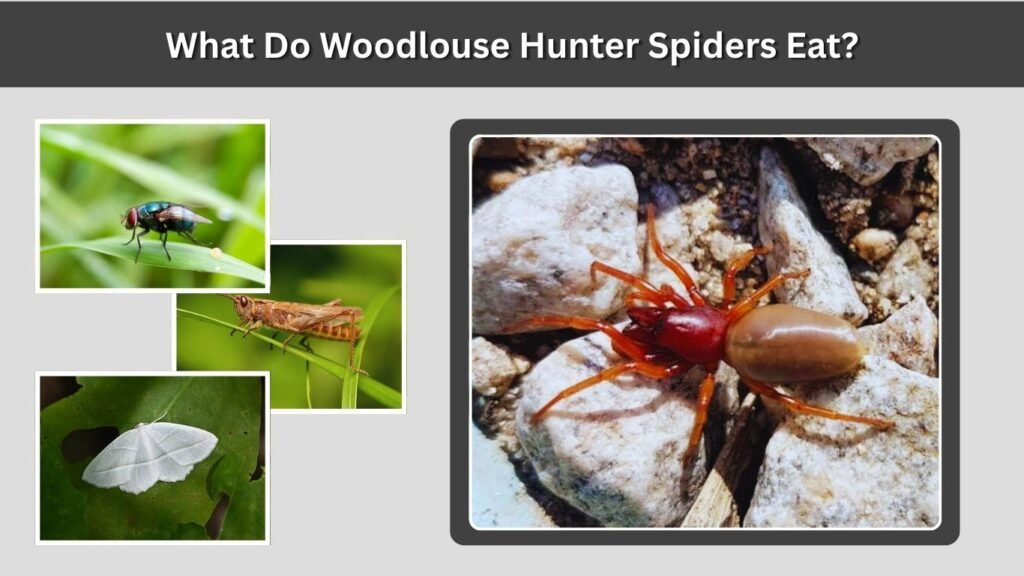
Woodlouse hunter spiders primarily eat woodlice, also called pill bugs, sowbugs, roly-polies, or slaters. Their large, forward-pointing fangs help them pierce the woodlouse’s hard protective shell.
However, woodlouse hunters are not limited to this prey. They may also eat:
- Small beetles and beetle larvae
- Flies
- Crickets
- Moths
- Silverfish
- Other small, soft-bodied arthropods
Research suggests that woodlouse hunter spiders can accept various insect prey rather than feeding exclusively on woodlice. They are nocturnal hunters that search beneath stones, logs, leaf litter, and other damp hiding places instead of building webs to catch food.
Is the Woodlouse Hunter Spider Poisonous?
The woodlouse hunter spider is venomous, not poisonous. Venom is injected through fangs, while a poisonous animal causes harm when eaten or touched.
Its venom helps subdue small prey but is not known to produce serious systemic poisoning in humans. Penn State Extension reports that documented reactions have involved a small area of intensely itchy redness without systemic neurotoxicity or tissue-destroying effects.
Is the Woodlouse Hunter Dangerous?
The spider is not regarded as a significant human health hazard. Its bright red coloration and oversized jaws can look alarming, but it generally avoids contact and spends most of its time hidden.
It may raise its front legs and expose its fangs when threatened. A bite is most likely when the spider is squeezed, trapped inside clothing, or deliberately handled.
Woodlouse Hunter Spider Bite
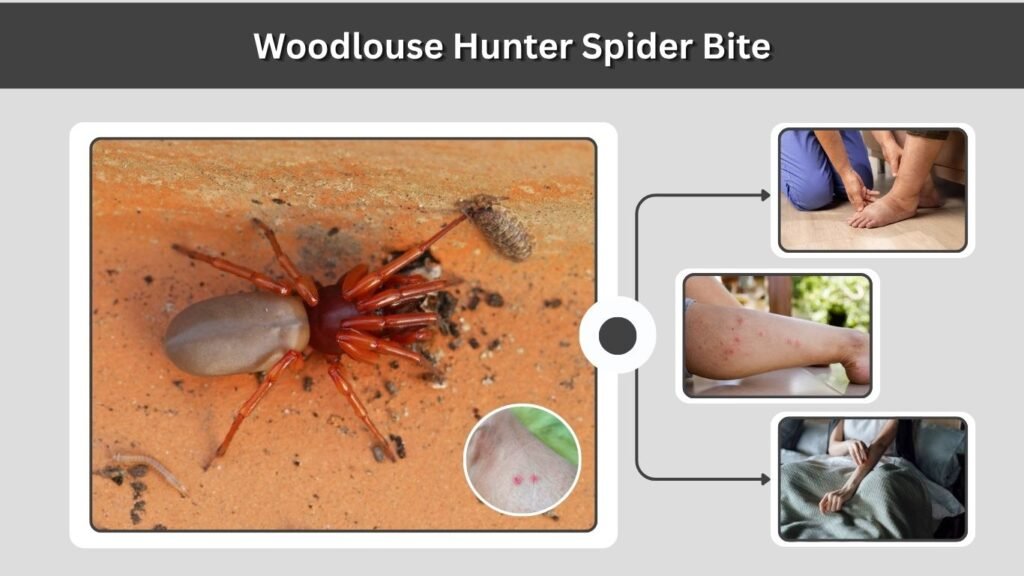
Woodlouse hunter spiders possess strong fangs capable of puncturing human skin. Verified bites suggest that the initial pain may come largely from the mechanical action of the fangs rather than from severe venom effects.
A study reviewing verified cases found that bites were essentially harmless. The most common effect was minor pain, typically lasting less than one hour.
Possible Bite Symptoms
A bite may cause:
- Immediate pinching or stinging pain
- Mild burning or tenderness
- A small red area
- Localized itching
- Minor swelling
- One or two tiny puncture marks
Symptoms normally remain limited to the bite area. Tissue death, widespread neurological symptoms, and severe poisoning are not expected from a correctly identified woodlouse hunter.
What to Do After a Bite
Wash the area thoroughly with soap and clean water. Apply a cool compress for 10–15 minutes at a time to reduce discomfort and swelling. Avoid scratching the area, as broken skin can increase the risk of a secondary infection.
Seek medical advice when pain or swelling becomes severe, redness continues spreading, the wound produces pus, or symptoms do not improve. Emergency care is necessary for difficulty breathing, facial swelling, fainting, or other signs of a serious allergic reaction. These severe effects would be unusual and could indicate an allergy, infection, or incorrect spider identification.
Woodlouse Hunter Spider in the House
Finding one indoors does not necessarily indicate an infestation. These spiders may accidentally enter through gaps around doors, windows, pipes, or foundations while searching for prey or shelter.
Frequent sightings usually suggest that the property offers damp hiding places and a supply of woodlice. Basements, garages, bathrooms, crawl spaces, and ground-level storage areas are the most likely indoor locations.
How to Get Rid of Woodlouse Hunter Spiders
Control should focus on moisture, entry points, and the woodlice on which the spiders feed.
- Reduce indoor moisture: Repair leaks, improve drainage, and ventilate damp rooms.
- Remove hiding places: Clear away stacked wood, mulch, stones, and debris touching the foundation.
- Seal entrances: Close cracks around windows, doors, pipes, vents, and utility lines.
- Install door sweeps: Use tight-fitting sweeps beneath exterior doors.
- Control woodlice: Reduce damp organic material and moisture around the building.
- Remove individual spiders: Cover the spider with a container, slide stiff paper underneath, and release it outside.
- Vacuum when necessary: A vacuum can remove spiders and silken retreats from inaccessible areas.
Routine pesticide spraying is rarely necessary for occasional sightings. Correcting moisture problems and reducing woodlouse populations usually provides better long-term control.
Woodlouse Hunter Spider vs. Wolf Spider
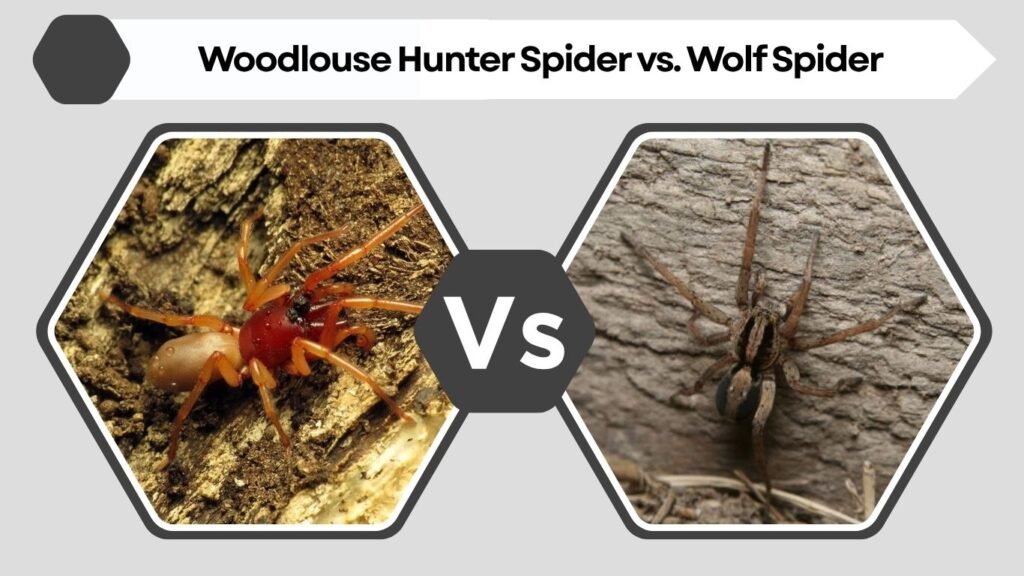
| Feature | Woodlouse Hunter | Wolf Spider |
| Body texture | Smooth and shiny | Usually hairy |
| Main color | Red-orange and cream | Brown, gray, or black |
| Eyes | Six | Eight |
| Jaws | Large and forward-pointing | Less visibly projected |
| Main prey | Woodlice | Various insects and arthropods |
| Typical habitat | Damp crevices and objects | Soil, grass, gardens, and leaf litter |
Wolf spiders usually have patterned, hairy bodies and prominent eyes. Woodlouse hunters have smooth reddish bodies, pale unmarked abdomens, and only six eyes.
Reproduction and Life Cycle
After mating, the female creates a silken retreat and deposits her eggs inside it. A single egg sac may contain up to approximately 70 eggs.
The female remains with the eggs and initially guards the newly emerged spiderlings. Young spiders stay in the retreat for a period before dispersing and hunting independently. Adults may survive the winter inside protected shelters.
FAQs
Can a woodlouse hunter spider kill a person?
No verified evidence indicates that its venom can kill a healthy person. Bites generally produce brief localized pain, redness, or itching without serious systemic effects.
Does a woodlouse hunter bite hurt?
A bite can be painful because the spider has large, powerful fangs. Verified cases describe minor pain that usually lasted less than one hour.
Why are woodlouse hunter spiders in my house?
They may enter while looking for woodlice, moisture, or protected hiding places. Frequent appearances can indicate damp conditions and an existing woodlouse population.
Are woodlouse hunter spiders aggressive?
They may display their fangs or bite when trapped or handled, but they do not normally pursue people. Their first response is usually to hide or escape.
Should I kill a woodlouse hunter spider?
Killing it is generally unnecessary. It is a beneficial predator and poses little danger. Use a container and paper to move it outside, then address moisture and entry points.
