
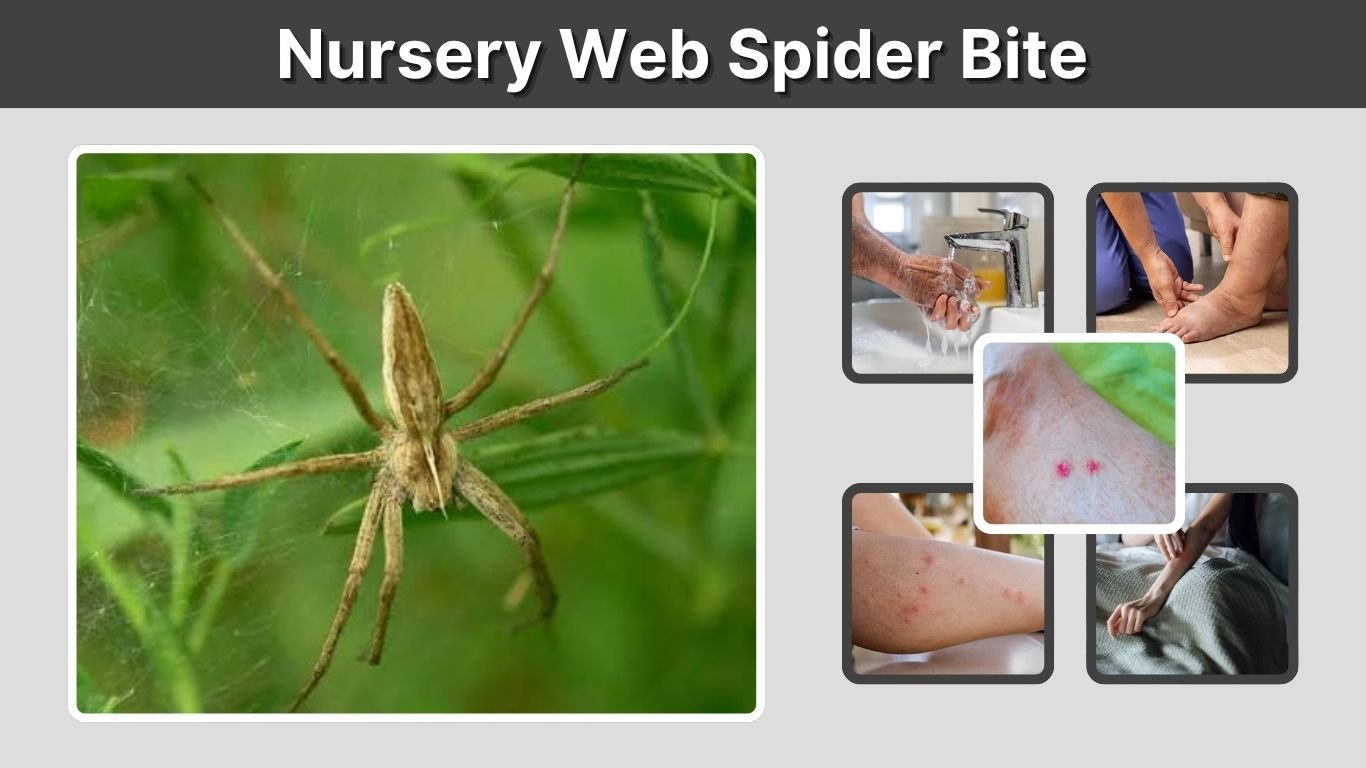
A nursery web spider bite is uncommon and generally causes only a mild, localized reaction. These long-legged hunting spiders possess venom for immobilizing insects, but nursery web species are not considered medically significant to humans. A bite may produce temporary pain, redness, itching, or swelling, particularly when a spider becomes trapped against the skin or is handled roughly. Serious reactions are unusual, but any worsening or body-wide symptoms require medical attention.
Are Nursery Web Spiders Dangerous?
Nursery web spiders belong to the family Pisauridae, which also includes fishing spiders and raft spiders. They are active hunters rather than spiders that depend on sticky webs to catch prey. Females create silk nursery structures to protect their eggs and newly hatched spiderlings.
Nearly all nursery web spiders have venom, but “venomous” does not automatically mean dangerous. Their venom is primarily adapted to small prey, and nursery web spiders are not among the spiders considered medically important in the United States. The spiders of greatest medical concern there are primarily widows and recluses.
Do Nursery Web Spiders Bite Humans?
Nursery web spiders can bite, but they rarely do so. They usually retreat when approached and are more likely to bite when:
- Trapped inside clothing
- Pressed against bare skin
- Picked up by hand
- Accidentally squeezed
- Defending an egg sac or nursery
A spider found near the site of a skin lesion does not prove that it caused the lesion. Doctors often cannot diagnose a spider bite by appearance alone because bacterial infections, other arthropod bites, and skin conditions may look similar.
Nursery Web Spider Bite Symptoms
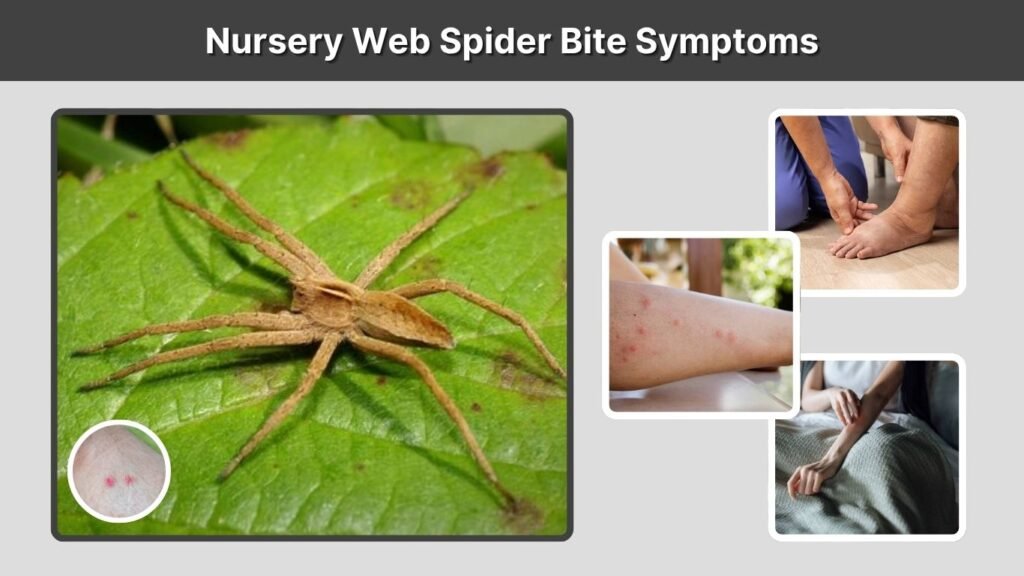
Detailed clinical reports specifically involving nursery web spiders are limited. Based on their low medical significance and the usual effects of minor spider bites, symptoms are expected to remain close to the bite site.
Common Local Symptoms
Possible symptoms include:
- A brief sharp or pinching sensation
- Mild burning or tenderness
- A small red mark
- Limited swelling
- Itching around the bite
- Two tiny puncture marks, although these may not be visible
Symptoms may begin immediately or become noticeable within several hours. Most uncomplicated spider bites improve with basic wound care, although individual reactions vary according to skin sensitivity, bite location, and the amount of venom delivered.
Signs of Infection
A nursery web spider’s venom is not known to cause tissue death. However, any break in the skin can become infected, especially when scratched repeatedly.
Possible infection symptoms include increasing warmth, worsening pain, expanding redness, pus, red streaks extending from the wound, swollen lymph nodes, or fever. These symptoms should be evaluated by a healthcare professional.
Is a Nursery Web Spider Bite Dangerous?
For most healthy adults, a correctly identified nursery web spider bite is unlikely to be dangerous. A mild reaction should remain limited to the skin around the bite.
Children, older adults, people with weakened immune systems, and individuals with a history of severe allergic reactions may need closer observation. The seriousness of any spider bite depends partly on the spider involved, the amount of venom introduced, and the person’s sensitivity.
Emergency Warning Signs
Get emergency medical help if the person develops:
- Difficulty breathing or swallowing
- Swelling of the face, lips, tongue, or throat
- Wheezing or chest tightness
- Fainting, severe weakness, or confusion
- Rapidly spreading swelling or hives
- Severe muscle cramps
- Repeated vomiting
- Intense pain spreading beyond the bite
- A rapidly worsening wound
These symptoms are not typical of nursery web spider bites and may indicate a severe allergic reaction, another spider species, or a different medical problem.
Nursery Web Spider Bite Treatment
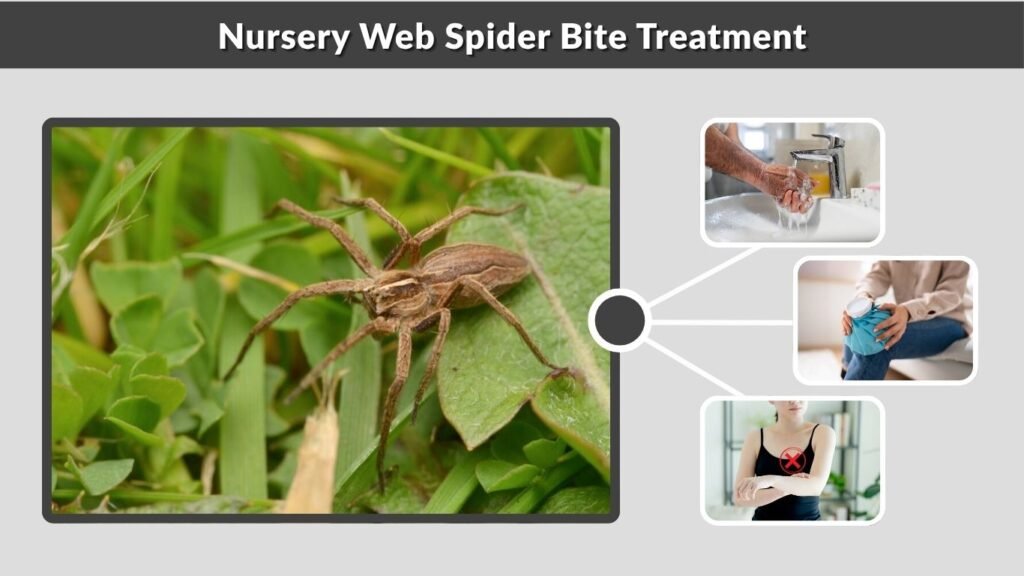
Most mild bites can be managed with simple first aid. Monitor the affected area for changes during the following hours and days.
Immediate First Aid
Follow these steps:
- Move away from the spider. Do not handle it with bare hands.
- Wash the area. Use soap and clean running water.
- Apply a cool compress. Hold it against the area for approximately 10–15 minutes at a time.
- Elevate the affected limb. This may help reduce swelling.
- Avoid scratching. Scratching can damage the skin and increase infection risk.
- Monitor the wound. Note whether redness, pain, or swelling is increasing.
An over-the-counter pain reliever or antihistamine may help some people, but medicines should be used according to their labels and personal medical circumstances. Seek professional advice when treating a young child, a pregnant person, or someone taking other medication.
What Not to Do
Do not cut the bite, attempt to suck out venom, burn the skin, apply harsh chemicals, or place ice directly against bare skin. These actions do not remove venom and may cause additional tissue damage.
Do not attempt to capture a live spider by hand. A clear photograph taken from a safe distance may help with identification. When safely possible, identification is more reliable when the actual spider was seen delivering the bite.
American Nursery Web Spider Bite
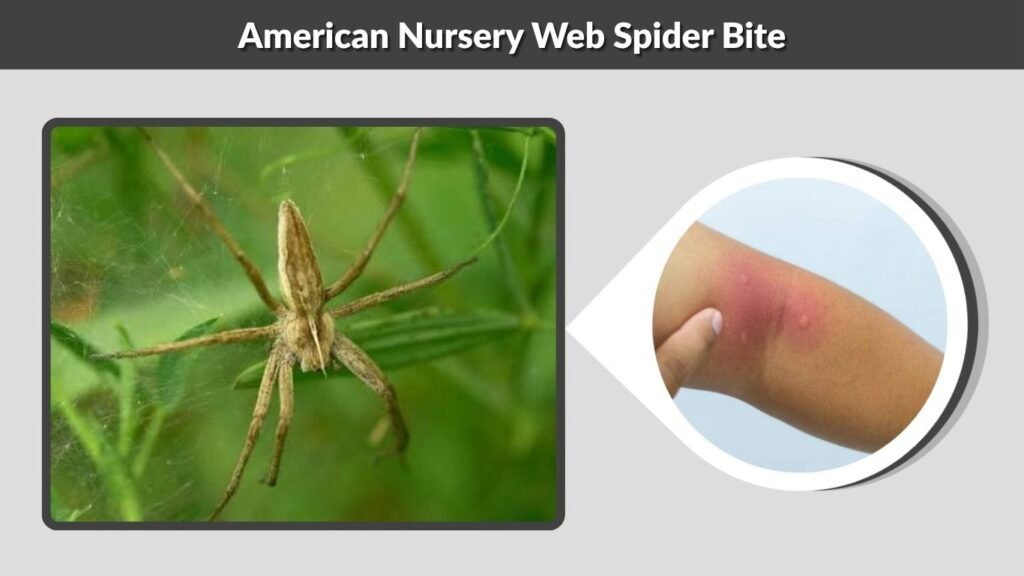
The American nursery web spider, Pisaurina mira, is found in North America and is commonly encountered on tall plants, shrubs, and garden vegetation. It has an elongated brown body, long legs, and a darker stripe or leaf-shaped marking along its back.
An American nursery web spider may bite when physically restrained, but it is not considered one of North America’s medically significant spiders. A suspected bite would generally be expected to cause localized discomfort rather than serious poisoning.
Nursery Web Spider Bites in the UK
The best-known UK nursery web spider is Pisaura mirabilis. It is commonly found in grasslands and grassy gardens, where females construct silk tents in low vegetation to protect their eggs and young.
It is not considered a dangerous British spider. Bites are unlikely and would normally occur only through accidental trapping or handling. A severe or worsening reaction should still receive medical attention because the spider may have been misidentified.
Nursery Web Spider Bites in New Zealand
New Zealand’s nursery web spider, Dolomedes minor, is a medium-to-large spider with a body length of around 18 mm. It is widespread in open scrubland, where females build nursery webs on shrubs and guard their young.
Most New Zealand spiders are harmless to people. However, anyone uncertain about a spider bite—particularly a possible katipō, redback, or white-tailed spider bite—should contact a healthcare provider or New Zealand’s National Poisons Centre for guidance.
How to Avoid Nursery Web Spider Bites
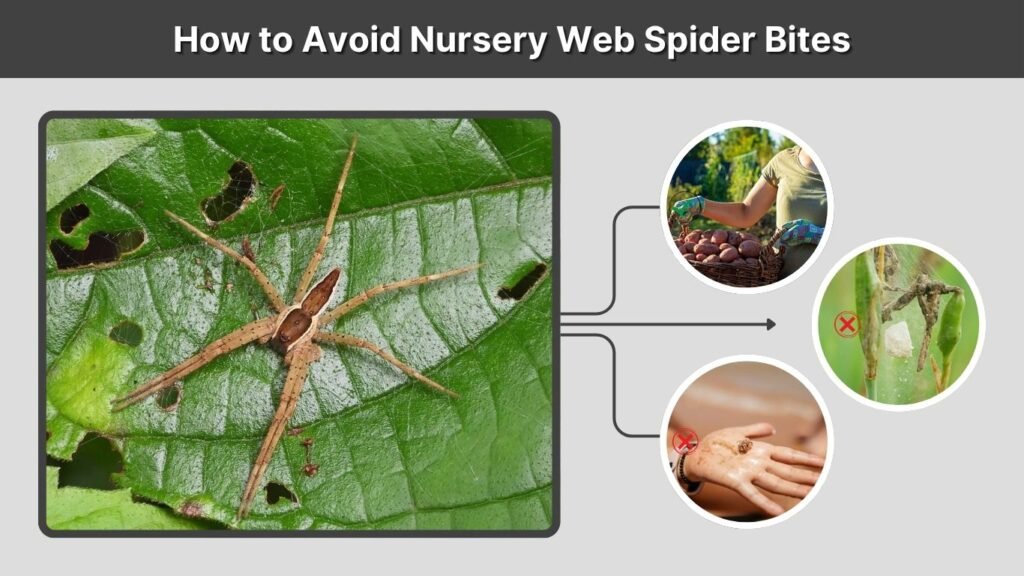
Nursery web spiders provide natural pest control and normally do not need to be killed. Simple precautions can prevent accidental contact:
- Wear gloves when moving dense vegetation.
- Shake out gardening gloves and outdoor clothing.
- Avoid touching egg sacs or silk nurseries.
- Do not pick up unidentified spiders.
- Use a container and stiff paper to move an indoor spider.
- Keep children from handling large spiders.
FAQs
What does a nursery web spider bite look like?
A mild bite may appear as a small red bump with limited swelling, tenderness, or itching. Its appearance is not distinctive enough to identify the spider, and several infections and skin conditions can resemble spider bites.
How painful is a nursery web spider bite?
A bite may feel like a brief pinprick, sting, or burning sensation. Pain is generally expected to remain mild and localized, although reactions vary between individuals.
Can a nursery web spider bite cause death?
Nursery web spiders are not considered medically dangerous, and fatal bites are not expected. Emergency care is still necessary for breathing difficulty, facial swelling, fainting, or other signs of a severe allergic reaction.
How long does a nursery web spider bite last?
Mild redness, discomfort, or itching should gradually improve over several days. Seek medical advice when symptoms worsen, persist, spread beyond the bite area, or develop signs of infection.
Are nursery web spiders poisonous or venomous?
They are venomous because they inject venom through their fangs to immobilize prey. They are not poisonous, and their venom is not considered medically significant to most people.
