
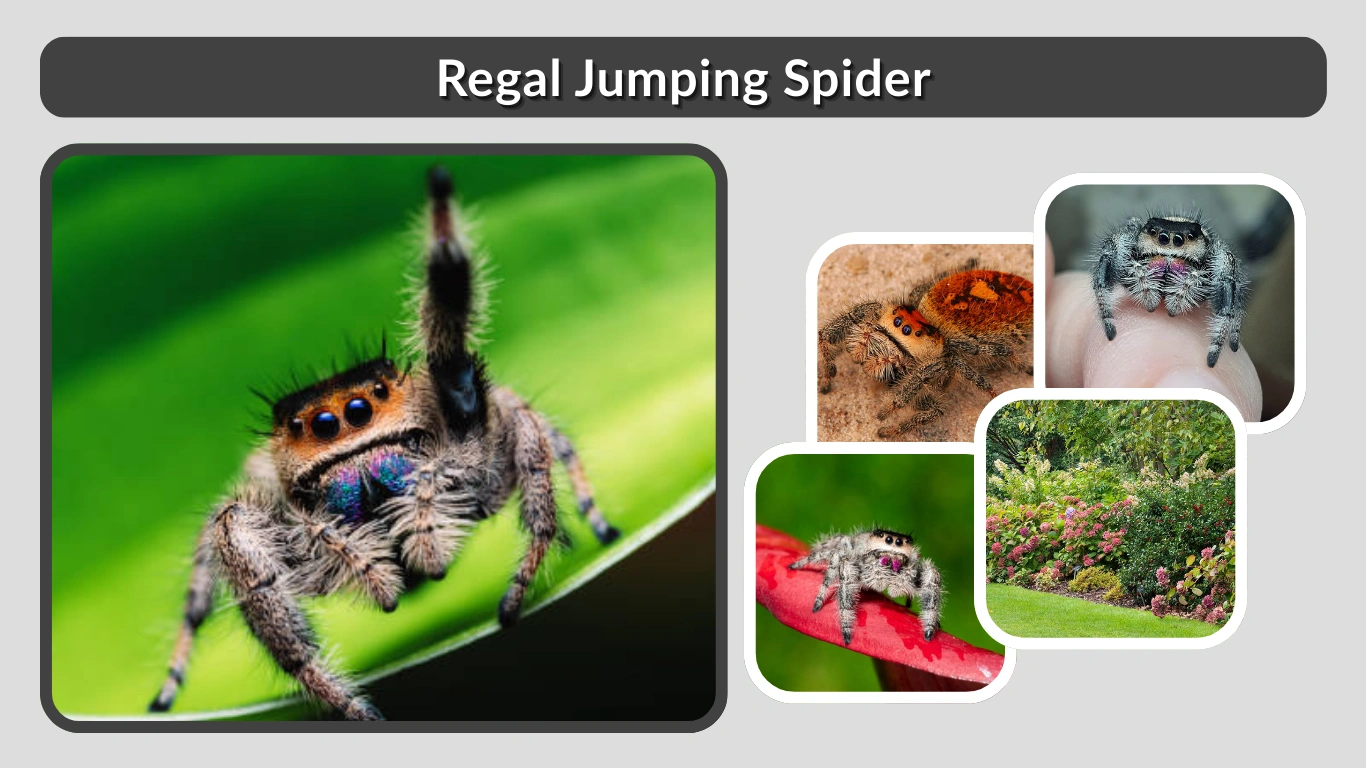
The regal jumping spider (Phidippus regius) is one of the most recognizable and fascinating jumping spiders in the world. Known for its large forward-facing eyes, bold personality, and impressive jumping ability, this species has become extremely popular among spider enthusiasts and beginner keepers alike. Many people search for regal jumping spider lifespan, regal jumping spider size, and regal jumping spider care to better understand how long they live, how big they grow, and how to properly care for them as pets.
What Is a Regal Jumping Spider?
The regal jumping spider is a medium-sized jumping spider native to the southeastern United States, especially Florida and nearby coastal regions. Scientifically named Phidippus regius, it belongs to the Salticidae family, a group known for excellent vision and active hunting behavior. Unlike web-dependent spiders, regal jumping spiders rely on sight and agility to stalk and pounce on prey.
One of the most distinctive features of the regal jumping spider is its face. The large central eyes give it binocular vision, allowing accurate depth perception and precise jumps. This visual ability makes them curious, responsive, and often interactive, which is one reason they are commonly kept as pet jumping spiders.
In the wild, regal jumping spiders are often seen on tree bark, fences, walls, and garden plants. They do not build traditional capture webs. Instead, they create small silk retreats for resting and molting, spending most of the day actively exploring and hunting.
Natural Habitat and Behavior

Regal jumping spiders naturally inhabit warm, humid environments. They are commonly found in subtropical regions where sunlight, vegetation, and insect populations are abundant. Outdoor habitats include shrubs, tree trunks, tall grasses, outdoor walls, and even window frames where insects gather.
These spiders are strictly diurnal, meaning they are active during daylight hours. Their daily routine consists of exploring, watching movement, stalking prey, and making short, controlled jumps. Regal jumping spiders often stop and visually assess their surroundings, turning their heads and bodies toward movement, which gives them a noticeably alert and intelligent appearance.
Behaviorally, regal jumping spiders are not aggressive toward humans. When threatened, they are far more likely to retreat or jump away than bite. They use silk primarily as a safety line when jumping and to build resting hammocks. Molting, resting, and egg-laying all occur inside these small silk shelters.
Regal Jumping Spider Identification

Regal jumping spiders are easy to recognize once you know what to look for. They combine bold facial features, compact body structure, and vivid color patterns that set them apart from most house spiders.
- Large forward-facing central eyes with smaller surrounding eyes
- Short, compact, fuzzy body with thick front legs
- Color variations including black, gray, white, and orange
- Metallic green or blue mouthparts in many individuals
- Strong jumping legs and quick, jerky movements
- Juveniles often appear paler and become darker with maturity
Regal Jumping Spider Lifespan
The regal jumping spider lifespan depends on sex, environment, and overall care. In the wild, these spiders typically live between one and two years. Their lives are shorter outdoors due to predators, climate exposure, and inconsistent food availability. Many wild regal jumping spiders never reach full adulthood.
In captivity, regal jumping spiders often live longer. With stable temperatures, regular feeding, and protection from predators, they may reach 18 months to over two years. Proper hydration and successful molting are two of the most important factors influencing lifespan in captivity.
Male and female regal jumping spiders do not live the same length of time. Females usually outlive males, sometimes by several months. Males often mature faster, spend more energy searching for mates, and may stop eating after breeding. Females, on the other hand, tend to grow larger, live longer, and may produce one or more egg sacs during adulthood.
The life cycle includes the spiderling stage, juvenile growth periods with multiple molts, and finally adulthood. Most regal jumping spiders reach maturity within 6 to 9 months, depending on food availability and temperature.
Regal Jumping Spider Size and Growth

Regal jumping spiders are considered medium-sized jumping spiders. Adult regal jumping spider size typically ranges from about 12 to 20 millimeters in body length, with females generally larger than males. Females have broader abdomens, while males often appear slimmer with longer front legs.
Growth occurs through a series of molts. After hatching, spiderlings molt frequently as they develop. Each molt allows the spider to increase in size, develop adult coloration, and refine hunting ability. Juveniles may molt every few weeks, while adults stop molting once maturity is reached.
Environmental conditions strongly influence growth. Consistent access to appropriately sized prey, proper humidity, and stable temperatures help ensure healthy development. Poor nutrition or dehydration can slow growth and increase the risk of failed molts.
Male vs Female Regal Jumping Spider
Male and female regal jumping spiders show clear differences in appearance and behavior, especially after reaching adulthood.
- Females are larger and heavier-bodied
- Males often have brighter facial colors and longer front legs
- Females tend to live longer than males
- Males are more active and roam more frequently
- Females build thicker silk nests, especially before laying eggs
- Temperament is usually calmer in females compared to males
Female Regal Jumping Spider

A female regal jumping spider is typically larger, heavier-bodied, and longer-lived than a male. Adult females often reach the upper end of the species’ size range and develop a broader abdomen, especially when well fed. Their coloration may be black, gray, brown, or even orange, sometimes with white markings. While males are often more visually flashy, females are usually more robust and less restless.
Female regal jumping spiders are responsible for egg production. After mating, a female builds a dense silk nest where she lays her eggs and guards them closely. During this time, she may become more defensive and may refuse food for days or weeks while protecting the egg sac. Some females can produce more than one egg sac in their lifetime if conditions are favorable.
From a keeper’s perspective, females are often preferred because of their longer lifespan and calmer behavior. They tend to settle into enclosures well and show less constant roaming than males. However, extra care must be taken with adult females to avoid accidental breeding and to provide a secure, stress-free environment.
Male Regal Jumping Spider

Male regal jumping spiders are usually smaller, slimmer, and more active than females. They are well known for their striking appearance, often displaying bright white, black, or gray bodies with metallic green or blue chelicerae. Males also develop longer front legs, which they use in courtship displays.
Behaviorally, males are more exploratory. Once mature, they spend much of their time searching for females. This increased activity means they may appear more curious and interactive, but it also contributes to their shorter lifespan. Many males live only a few months after reaching adulthood.
Male regal jumping spiders perform complex visual courtship dances, raising their legs and waving their bodies to communicate with females. In captivity, males may lose interest in food once mature, making careful monitoring important. Proper hydration and gentle care help maintain their health during this high-energy life stage.
Regal Jumping Spider Care Guide

Keeping a regal jumping spider as a pet is relatively simple when their basic needs are met. They thrive in clean, well-ventilated enclosures that allow climbing, hiding, and hunting behavior.
- Small vertical enclosure with cross-ventilation
- Branches, cork bark, or artificial plants for climbing
- Warm temperature range with natural day/night lighting
- Light misting or water droplets for hydration
- Feeding live prey such as fruit flies, small crickets, or roaches
- Removing uneaten food to prevent stress and mold
- Minimal handling and gentle enclosure maintenance
A well-designed habitat allows the spider to build silk retreats near the top of the enclosure, which is where regal jumping spiders prefer to rest and molt.
Regal Jumping Spider as a Pet
The regal jumping spider is widely considered one of the best spider species for beginners. Its daytime activity, expressive behavior, and relatively simple care make it appealing even to people who are normally afraid of spiders. Many keepers enjoy observing their hunting techniques, head movements, and curiosity toward objects outside the enclosure.
As pets, regal jumping spiders require little space and minimal equipment. They are quiet, odorless, and inexpensive to maintain. However, they are delicate creatures and should not be treated like handleable pets. Gentle observation is the best way to interact with them.
Captive-bred regal jumping spiders are strongly recommended. They adapt better to enclosure life, reduce pressure on wild populations, and are less likely to carry parasites. When properly cared for, a regal jumping spider can be a fascinating and rewarding pet.
Common Health Problems and Care Mistakes
The most common health issue in regal jumping spiders is dehydration. Without regular access to moisture, they may become weak, fail to molt properly, or die prematurely. Light misting and visible water droplets are essential.
Molting problems are another major concern. Low humidity, stress, or poor nutrition can cause failed molts, which are often fatal. Overfeeding can also lead to lethargy and shortened lifespan, while underfeeding may stunt growth.
Other common mistakes include enclosures without ventilation, disturbing spiders during molting, and placing them in direct sunlight. A stable, quiet environment is one of the most important factors in long-term health.
Breeding and Life Cycle Overview
In nature, regal jumping spiders breed after reaching sexual maturity. Males locate females visually and perform elaborate courtship displays. If accepted, mating occurs cautiously, as females may prey on males if they feel threatened.
After mating, females lay eggs inside a thick silk nest. Spiderlings hatch within a few weeks and remain in the nest until their first molt. Once they disperse, they begin hunting tiny prey and molting frequently as they grow.
Breeding regal jumping spiders is considered advanced care. It requires careful separation, specialized feeding, and appropriate housing for potentially dozens of spiderlings.
FAQs
What is the average regal jumping spider lifespan?
The average regal jumping spider lifespan is about one to two years. In the wild, many live shorter lives due to predators and environmental stress. In captivity, females may live over two years with proper care, while males often live a few months after maturity.
How big does a regal jumping spider get?
Adult regal jumping spiders typically grow between 12 and 20 millimeters in body length. Females are usually larger and heavier-bodied than males. Size varies depending on diet, temperature, and overall care during the juvenile growth stages.
Are regal jumping spiders good pets?
Yes, regal jumping spiders are considered excellent beginner pet spiders. They are active, visually engaging, and relatively easy to care for. They require small enclosures, simple feeding routines, and minimal maintenance compared to many other exotic pets.
What is the difference between male and female regal jumping spiders?
Female regal jumping spiders are larger, calmer, and usually live longer. Males are smaller, more active, and often have brighter facial colors and longer front legs. Males focus on finding mates after maturity, while females build nests and lay eggs.
How do you properly care for a regal jumping spider?
Proper care includes a ventilated enclosure, climbing structures, regular feeding of live insects, and consistent access to moisture. Avoid handling, provide gentle misting, maintain warmth, and keep the enclosure clean to support healthy growth and molting.
