
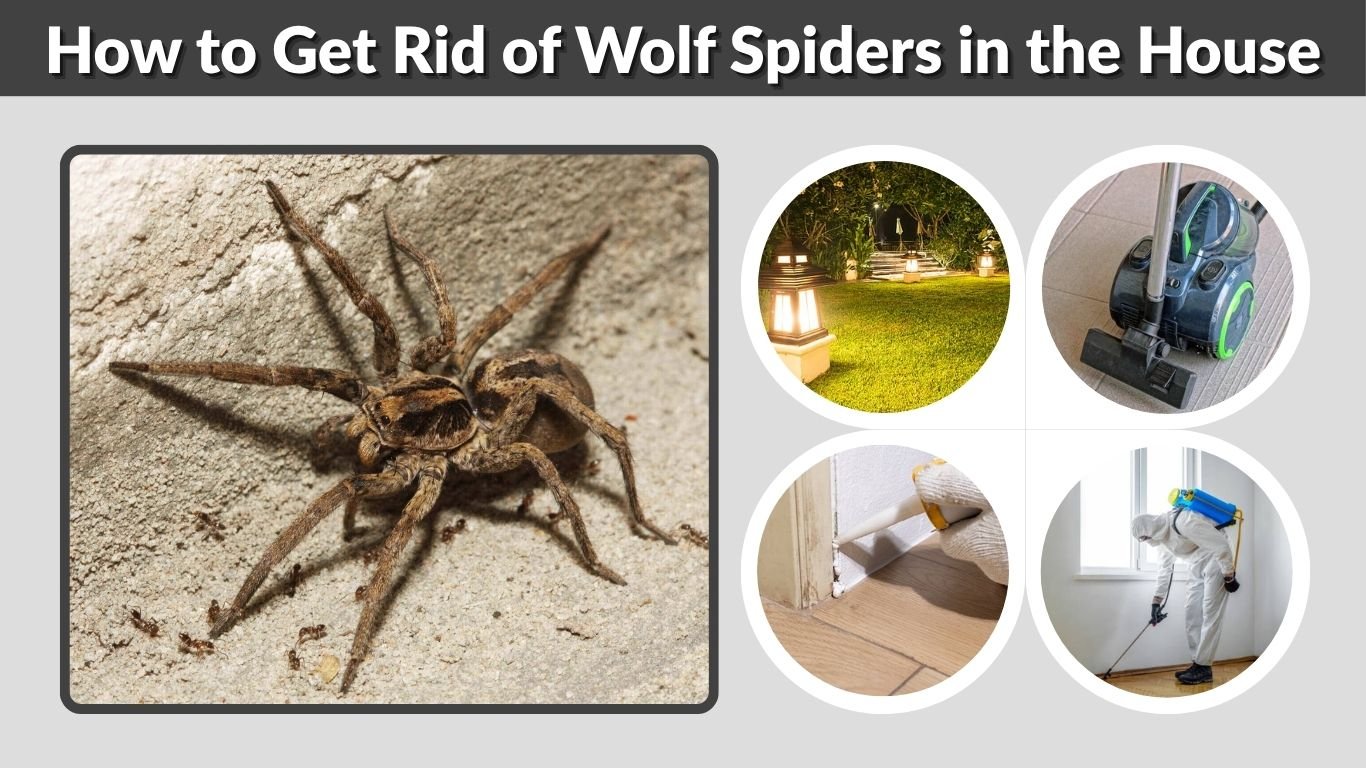
Wolf spiders are large, fast-moving spiders that sometimes enter homes in search of insects, shelter, or suitable hiding places. Although they are generally harmless to humans, their hairy bodies and sudden movements can make them unsettling indoor visitors. If you are wondering how to get rid of wolf spiders in the house, several simple methods can help. Vacuuming, sealing entry points, reducing clutter, and controlling insects are effective ways to manage them. Understanding their behavior also helps you prevent wolf spiders from returning without relying heavily on chemical treatments.
Why Are Wolf Spiders Coming Into Your House?
Wolf spiders usually live outdoors in gardens, grass, mulch, and areas beneath rocks or logs. Unlike many other spiders, they actively hunt insects instead of building webs to capture prey. They occasionally enter houses through small openings while searching for food or shelter.
Several conditions can contribute to wolf spider activity indoors:
- Food availability: Crickets, cockroaches, and other insects attract hunting spiders.
- Entry points: Cracks around foundations, windows, and doors allow spiders inside.
- Cluttered spaces: Boxes, furniture, and stored belongings provide shelter.
- Outdoor vegetation: Mulch, woodpiles, and plants near walls offer hiding places.
- Seasonal movement: Some species enter buildings while wandering in search of mates or shelter.
Identifying these conditions makes it easier to choose effective prevention methods.
10 Best Ways to Get Rid of Wolf Spiders in the House
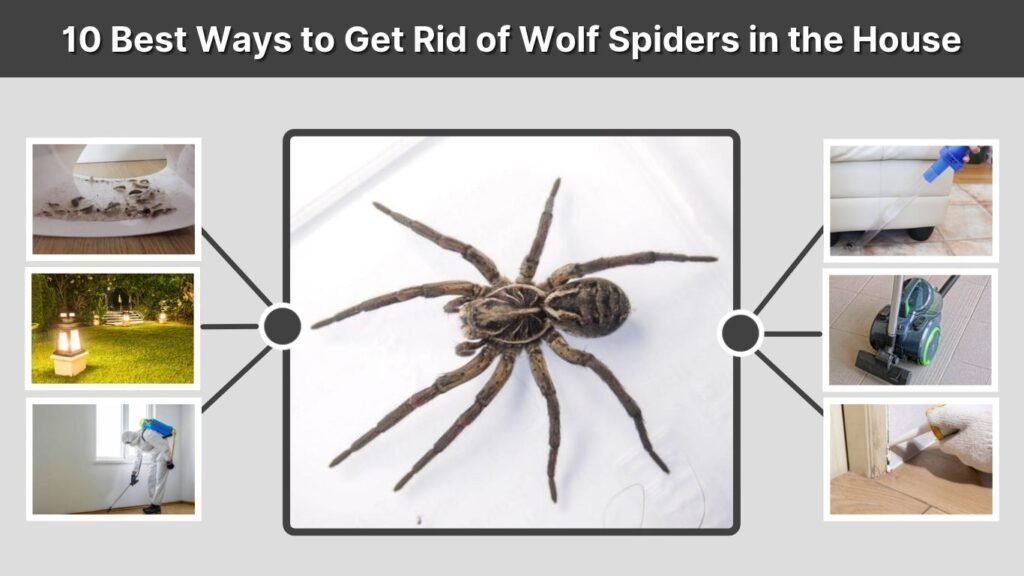
Wolf spider control works best when immediate removal is combined with long-term prevention. Because these spiders move along floors and actively hunt insects, controlling their hiding places and food sources is especially important. The following methods can help remove existing wolf spiders and reduce the likelihood of more entering your home.
1. Remove Wolf Spiders With a Vacuum Cleaner
Vacuuming is a practical way to remove wolf spiders from floors, corners, and difficult-to-reach spaces. A vacuum hose attachment allows you to collect spiders without touching them directly.
Focus on areas beneath furniture, along baseboards, and around storage boxes. Check garages, basements, and closets where spiders may hide during the day.
Dispose of the vacuum contents promptly in a sealed bag. If a spider is carrying an egg sac or young, take extra care to contain everything during removal.
2. Catch and Release Wolf Spiders Outside
If you prefer not to kill wolf spiders, catching and releasing them is an effective alternative. Since they help control insects, relocating occasional visitors can be beneficial.
Place a clear container over the spider and carefully slide a stiff piece of paper underneath. Carry the container outside and release the spider in a sheltered location away from entrances.
Avoid handling wolf spiders with bare hands. They usually retreat when disturbed but may bite defensively if trapped or squeezed.
3. Seal Cracks and Entry Points
Closing small openings around your home is one of the most important long-term prevention measures. Wolf spiders can enter through gaps beneath doors, damaged window screens, and cracks in exterior walls.
Inspect the foundation, door frames, window edges, and openings around utility pipes. Seal suitable cracks with caulk and install weatherstripping where needed.
Door sweeps are particularly useful because wolf spiders frequently travel along the ground. Maintaining tight-fitting barriers makes it more difficult for them to wander indoors.
4. Use Sticky Traps to Monitor Activity
Sticky traps can help capture wandering wolf spiders and reveal where they are entering or moving through your home.
Place enclosed or protected traps along baseboards, behind appliances, or near suspected entry points. Keep them inaccessible to children and pets, and check them regularly.
These traps are most useful for monitoring and reducing individual spiders rather than eliminating the source of the problem. University pest-management guidance supports using traps alongside exclusion, cleaning, and habitat reduction.
5. Remove Clutter and Hiding Places
Wolf spiders prefer sheltered areas where they can remain undisturbed. Cardboard boxes, unused furniture, clothing piles, and stored belongings provide convenient hiding places.
Organize closets, garages, and basements regularly. Store seasonal belongings in sealed plastic containers instead of leaving loose items on the floor.
Move furniture occasionally to clean underneath and behind it. Reducing clutter makes spiders easier to detect and decreases the protected spaces available inside your house.
6. Eliminate Insects That Wolf Spiders Eat
Wolf spiders are predators that feed on insects and other small arthropods. Reducing these prey animals makes indoor environments less attractive to them.
To limit their food supply:
- Store pantry foods in sealed containers.
- Clean crumbs and food spills promptly.
- Repair leaking pipes that support moisture-loving insects.
- Empty household trash regularly.
- Repair screens to prevent flying insects from entering.
Addressing cockroaches, crickets, and other indoor pests can help reduce wolf spider activity naturally.
7. Reduce Moisture in Damp Areas
Basements, bathrooms, crawl spaces, and laundry rooms may provide suitable conditions for insects that wolf spiders hunt.
Inspect these areas for plumbing leaks, condensation, and poor ventilation. Repair moisture problems and use a dehumidifier when necessary.
Keep storage items off damp floors and avoid allowing water to accumulate around foundations. While reducing humidity does not directly repel every wolf spider, it can help limit the insects and sheltered conditions associated with spider activity.
8. Change Outdoor Lighting
Exterior lighting often attracts moths and other flying insects. These insects can become prey for wolf spiders and other predators near entrances.
Replace unnecessarily bright exterior bulbs with insect-attracting alternatives such as suitable yellow lighting. Turn off lights when they are not needed.
Position outdoor fixtures away from doors and windows where practical. Reducing insect activity around entrances may lower the number of hunting spiders nearby.
9. Maintain Your Yard and Home Exterior
Wolf spiders naturally inhabit lawns, gardens, mulch, and sheltered areas beneath outdoor materials. Maintaining the exterior of your house can reduce potential hiding places directly beside entry points.
Trim vegetation touching exterior walls and remove accumulated leaves near foundations. Keep firewood, boards, and unused garden equipment organized.
Inspect outdoor furniture and plant containers before carrying them inside. These simple practices reduce accidental introductions while allowing beneficial spiders to remain in the garden.
10. Consider Professional Pest Control for Persistent Problems
Occasional wolf spider sightings usually do not require professional treatment. However, frequent sightings despite cleaning and sealing entry points may justify a pest inspection.
A qualified professional can identify the spiders, evaluate possible entry routes, and determine whether another household pest problem is attracting them.
Chemical products should be a last resort. Broad indoor spraying and foggers are generally unnecessary for occasional wolf spiders and may not provide lasting control without preventive maintenance.
How to Get Rid of Wolf Spiders in the House Naturally
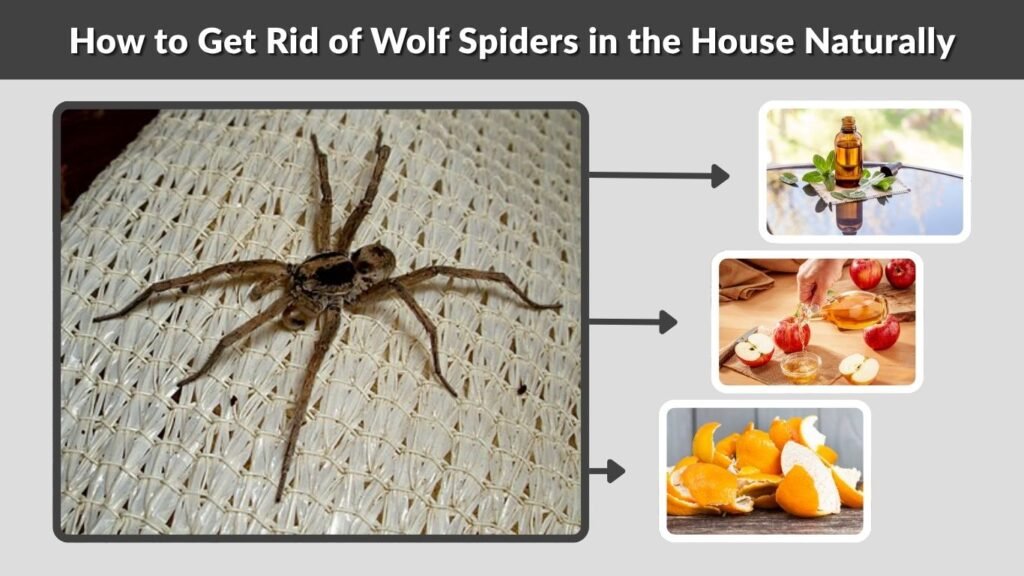
Natural wolf spider control focuses on physical removal, environmental changes, and preventing access to indoor spaces. These methods avoid routine pesticide applications and address the underlying reasons spiders enter houses.
The most useful nonchemical approaches include sealing openings, vacuuming, removing clutter, reducing insect populations, and keeping outdoor vegetation away from entrances.
Do Natural Spider Repellents Work?
Peppermint oil, vinegar, citrus peels, and other strong-smelling substances are sometimes recommended as homemade wolf spider repellents.
However, reliable evidence that these treatments consistently repel wolf spiders inside homes is limited. Some essential oils may also irritate people or harm pets.
Instead of depending on homemade sprays, prioritize proven physical prevention methods such as door sweeps, window screens, and regular cleaning.
How to Prevent Wolf Spiders From Coming Back
Preventing wolf spiders requires ongoing attention to household maintenance. Even after removing visible spiders, new individuals may enter if suitable openings and hiding places remain.
Inspect door seals and window screens periodically. Keep clutter under control, address moisture problems, and monitor areas where spiders were previously found.
Pay particular attention to ground-level entrances, garages, and basements. Wolf spiders generally live outdoors, so preventing accidental entry is more practical than trying to eliminate every spider around your property.
FAQs
1. What is the fastest way to get rid of a wolf spider?
The fastest method is to capture the spider with a container and release it outdoors or remove it with a vacuum cleaner. Both methods work immediately for individual spiders. Seal entry points afterward to reduce future sightings.
2. Are wolf spiders dangerous inside the house?
Wolf spiders are venomous, but they are generally not considered medically dangerous to humans. They usually avoid confrontation and bite only when threatened or trapped. Bites may cause temporary pain, redness, or swelling, although serious reactions are uncommon.
3. Do wolf spiders lay eggs inside houses?
Female wolf spiders carry their egg sacs attached to their spinnerets. After hatching, the spiderlings ride on the mother’s back. A female may enter a house while carrying eggs or young, so carefully contain her during removal.
4. What smells keep wolf spiders away?
There is no household scent proven to reliably keep wolf spiders away. Peppermint and citrus are popular suggestions, but evidence for consistent wolf spider repellency is limited. Sealing cracks, reducing insects, and cleaning hiding places are more dependable methods.
5. Why do I keep seeing wolf spiders in my house?
Frequent sightings may result from accessible door gaps, foundation cracks, nearby outdoor habitats, or abundant insect prey. Wolf spiders often wander indoors accidentally. Inspecting entry points and reducing sheltered spaces can help limit repeated encounters.
