
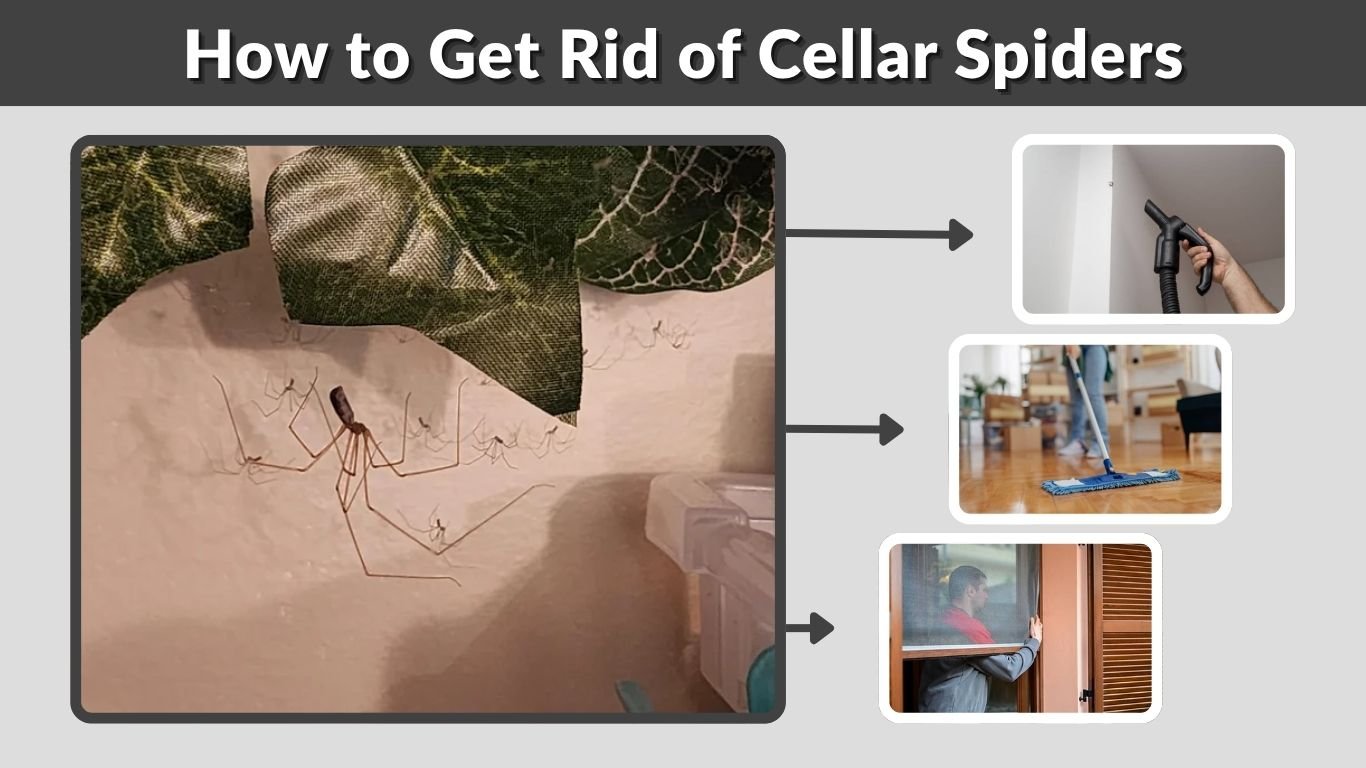
Cellar spiders are common household visitors known for their extremely long legs and messy webs in basements, garages, and ceiling corners. Although these spiders are generally harmless, finding them throughout your home can be frustrating. Fortunately, learning how to get rid of cellar spiders does not usually require expensive treatments or harsh chemicals. Regular cleaning, removing webs, controlling insects, and sealing entry points can significantly reduce their numbers. This guide explains effective removal methods, natural alternatives, and practical ways to prevent cellar spiders from returning.
How to Identify Cellar Spiders Before Removal
Before attempting removal, make sure the spiders in your home are actually cellar spiders. These arachnids belong to the family Pholcidae and are often called daddy longlegs spiders. They prefer sheltered, undisturbed locations and construct irregular webs. Correct identification is important because other household spiders may have different behaviors and require different management approaches.
What Do Cellar Spiders Look Like?
The long-bodied cellar spider (Pholcus phalangioides) has a small, elongated body and extremely thin legs. Adults typically measure about 6–8 millimeters in body length, excluding their legs.
Their bodies are generally pale yellowish-brown or grayish. They often hang upside down in loose webs.
When disturbed, cellar spiders may vibrate rapidly, causing their bodies to appear blurry.
Are Cellar Spiders Dangerous?
Cellar spiders are not considered medically significant to humans. They rarely bite and generally retreat when disturbed.
They also consume flies, mosquitoes, and other spiders, making them beneficial predators.
However, excessive webbing and large indoor populations may encourage homeowners to remove them.
How to Get Rid of Cellar Spiders in Your House
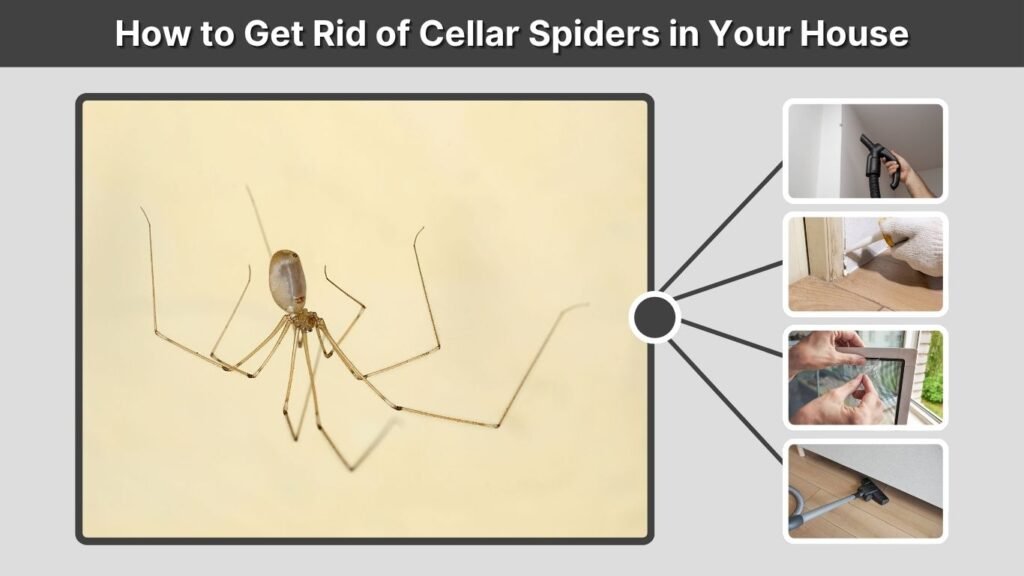
The best way to get rid of cellar spiders is to remove existing spiders and webs while eliminating conditions that support their populations. Because they spend much of their time suspended in webs, physical removal is particularly effective. Combining cleaning, exclusion, and insect management provides better long-term results than depending on a single treatment method.
7 Effective Cellar Spider Removal Methods
- Vacuum cellar spiders: Use a vacuum hose to remove spiders from accessible ceilings, corners, and walls.
- Remove webs and egg clusters: Clear tangled webbing and any accessible egg clusters or females carrying eggs.
- Reduce household insects: Control flies, gnats, and other prey that attract spiders.
- Declutter storage areas: Organize boxes, unused furniture, and belongings that create sheltered spaces.
- Seal entry points: Close gaps around windows, doors, foundations, and utility openings.
- Repair window screens: Replace damaged screens and install suitable door sweeps.
- Maintain regular cleaning: Inspect previously occupied areas and remove new webs promptly.
How to Remove Cellar Spiders Without Killing Them
If you prefer humane removal, place a transparent container gently over an individual spider.
Slide a stiff piece of paper beneath the container and move the spider to an appropriate sheltered location.
Avoid handling spiders directly, especially when identification is uncertain. Relocation may be less successful for indoor-adapted species during unfavorable outdoor weather.
Why Do Cellar Spiders Keep Coming Back?
Cellar spiders may return because the same conditions that supported them originally remain unchanged. Insects provide food, while quiet corners and protected spaces offer ideal web-building locations. Some species also reproduce successfully indoors, producing additional spiders without repeated outdoor entry. Addressing these environmental factors is essential for achieving lasting population reduction.
Insects Attract Cellar Spiders
Cellar spiders feed on small insects and other arthropods. Homes with abundant flies, gnats, or mosquitoes may provide suitable feeding opportunities.
Reducing these insects can make indoor areas less attractive to spiders.
Check window screens, leaking plumbing, indoor plant conditions, and other potential insect sources.
Cellar Spider Reproduction Indoors
Female cellar spiders carry clusters of eggs wrapped in a thin layer of silk.
After hatching, young spiders eventually disperse and establish webs in suitable locations.
An increase in spiderlings may explain why cellar spiders suddenly appear throughout a basement or other quiet room.
How to Get Rid of Cellar Spiders Naturally
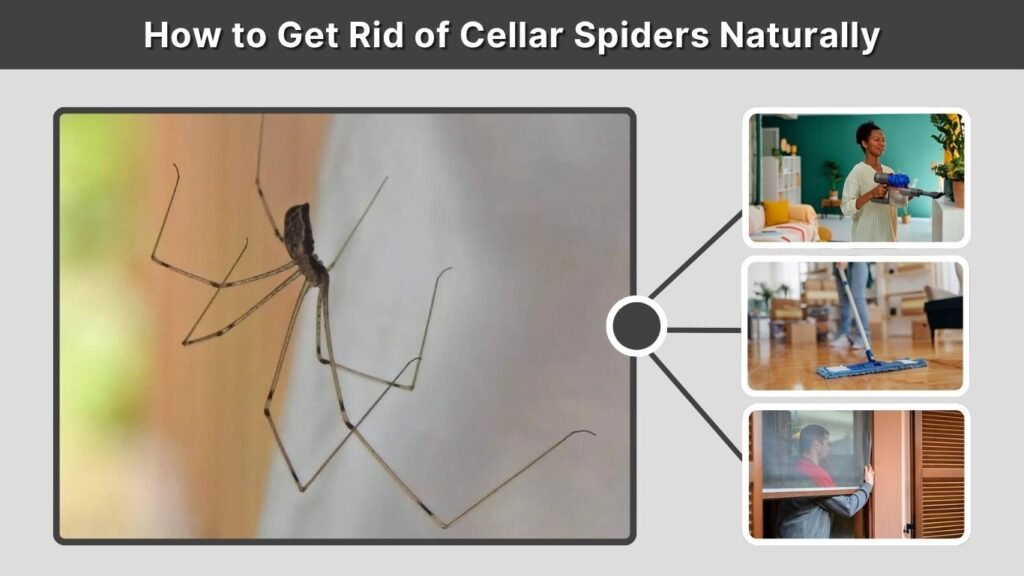
Natural cellar spider control focuses on physical removal and making the environment less attractive. These approaches avoid routine pesticide applications and are generally practical for ordinary household spider problems. However, not every popular home remedy works as advertised. Vacuuming, exclusion, and reducing insect prey have stronger support from pest-management specialists than improvised chemical mixtures.
Natural Cellar Spider Control Methods
- Vacuum regularly: Remove spiders and webs from indoor corners.
- Use a soft broom: Clear empty webs from accessible ceilings.
- Capture individual spiders: Relocate them with a container when practical.
- Reduce clutter: Eliminate protected web-building locations.
- Maintain window screens: Limit the entry of spiders and flying insects.
- Reduce insect food sources: Address household pest populations through appropriate sanitation and exclusion.
Do Peppermint Oil or Vinegar Repel Cellar Spiders?
Peppermint oil and vinegar are commonly suggested as natural spider repellents, but reliable evidence for controlling cellar spiders with these remedies is limited.
Strongly scented mixtures may also irritate people or affect pets, while vinegar can damage certain household materials.
Physical cleaning and exclusion remain more dependable approaches.
Getting Rid of Cellar Spiders in Basements and Garages
Basements and garages provide many of the conditions cellar spiders prefer, including low disturbance, sheltered corners, and accessible insect prey. Webs frequently accumulate behind storage containers, around exposed pipes, and along ceiling joints. Controlling spiders in these areas requires thorough cleaning and careful attention to neglected spaces rather than simply removing visible individuals.
How to Remove Cellar Spiders From Basements
Begin by inspecting ceiling corners, exposed beams, pipes, and storage shelves.
Vacuum accessible spiders and webs, then organize stored belongings to make cleaning easier.
Repair moisture problems when present, particularly if they support small flying insects. However, cellar spiders can also live in relatively dry environments, so dehumidification alone will not eliminate them.
How to Get Rid of Cellar Spiders in Garages
Garages may contain spiders near doors, shelves, windows, and seldom-moved equipment.
Remove existing webs and inspect stored boxes for insects or spiders.
Repair gaps around garage doors and use weatherstripping where appropriate. Regular maintenance reduces opportunities for new spiders to establish webs.
How to Prevent Cellar Spiders Permanently
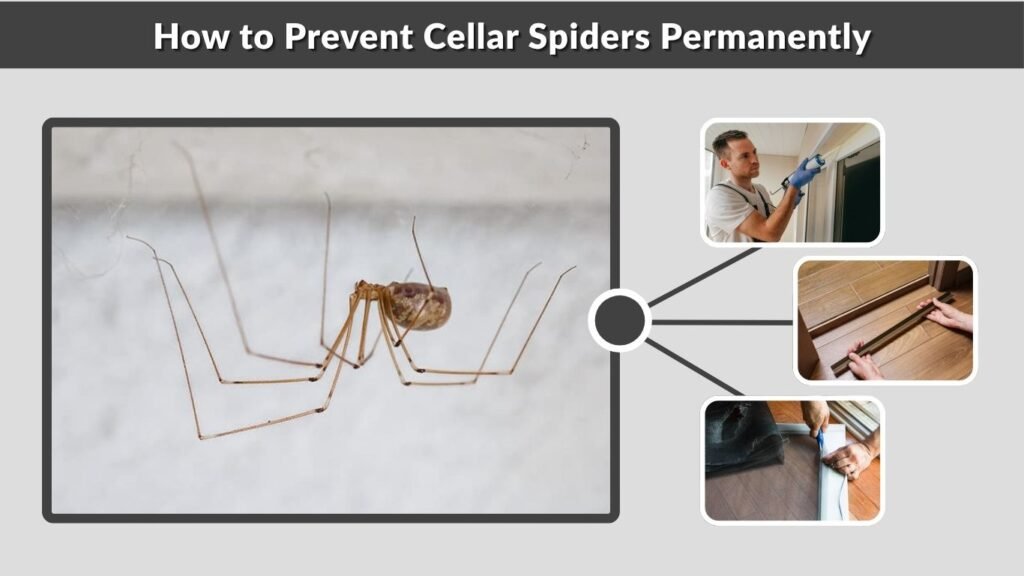
Preventing cellar spiders involves reducing suitable habitats, limiting entry points, and managing household insects. Although making a home completely spider-free is unrealistic, consistent maintenance can substantially reduce their numbers. A preventive routine is especially useful in older buildings, basement apartments, and homes near areas with abundant insects.
Cellar Spider Prevention Checklist
- Seal structural cracks: Repair openings around foundations and exterior walls.
- Install door sweeps: Close gaps beneath exterior doors.
- Maintain screens: Repair window and ventilation screening without obstructing airflow.
- Inspect storage spaces: Keep boxes organized and accessible.
- Control insects: Address gnats, flies, and other household pests.
- Clean frequently: Remove unwanted webs before they accumulate.
- Maintain outdoor areas: Keep unnecessary debris and heavy vegetation away from foundations.
Does Outdoor Lighting Attract Cellar Spiders?
Outdoor lighting can attract flying insects, which may indirectly attract spiders searching for food.
Consider directing exterior lights away from doors and windows where practical.
Reducing unnecessary nighttime illumination can also help decrease insect activity around building entrances.
Do You Need Pesticides to Kill Cellar Spiders?
Chemical treatment is usually unnecessary for cellar spiders because they are harmless and relatively easy to remove physically. Spraying may temporarily reduce visible individuals without addressing reproduction, food sources, or favorable hiding places. Pest-management specialists generally recommend nonchemical methods first. Any pesticide considered for indoor use must be specifically labeled for the intended application and used according to its directions.
Why Spider Sprays May Not Solve the Problem
Cellar spiders spend much of their time in webs, limiting their contact with certain treated surfaces.
Even when individual spiders are eliminated, others may establish webs if insects and suitable shelter remain.
Foggers and routine broad indoor spraying are not recommended solutions for ordinary cellar spider problems.
When Should You Call Pest Control?
Professional assistance may be useful when spider numbers remain excessive despite repeated cleaning and exclusion efforts.
A specialist can identify the spiders, inspect possible entry points, and investigate underlying insect problems.
Expert identification is also appropriate when you suspect a medically significant spider rather than a harmless cellar spider.
FAQs
Cellar spiders are common indoor predators, but their long legs and persistent webs can create frustration. Homeowners often ask whether natural remedies work, how large these spiders become, and why they repeatedly return. These answers address common concerns about removal and long-term management while explaining when professional assistance may be appropriate.
1. What Is the Fastest Way to Get Rid of Cellar Spiders?
Vacuuming accessible spiders and their webs provides immediate removal. Follow up by reducing insect prey, eliminating clutter, and sealing unnecessary openings.
2. How Big Do Cellar Spiders Get?
Adult long-bodied cellar spiders typically have bodies around 6–8 millimeters long. Their extremely long legs make them appear much larger.
3. Can You Get Rid of Cellar Spiders Naturally?
Yes. Regular vacuuming, removing webs, reducing clutter, and controlling household insects can effectively reduce their numbers without routine pesticide applications.
4. Why Do I Keep Getting Cellar Spiders?
Recurring populations often result from abundant insect prey, sheltered web-building locations, indoor reproduction, or unsealed entry points.
5. Is It Possible to Get Rid of Cellar Spiders Completely?
You can greatly reduce their numbers, but permanent elimination is difficult because spiders may reproduce indoors or enter from outside. Consistent preventive maintenance offers the best long-term control.
