
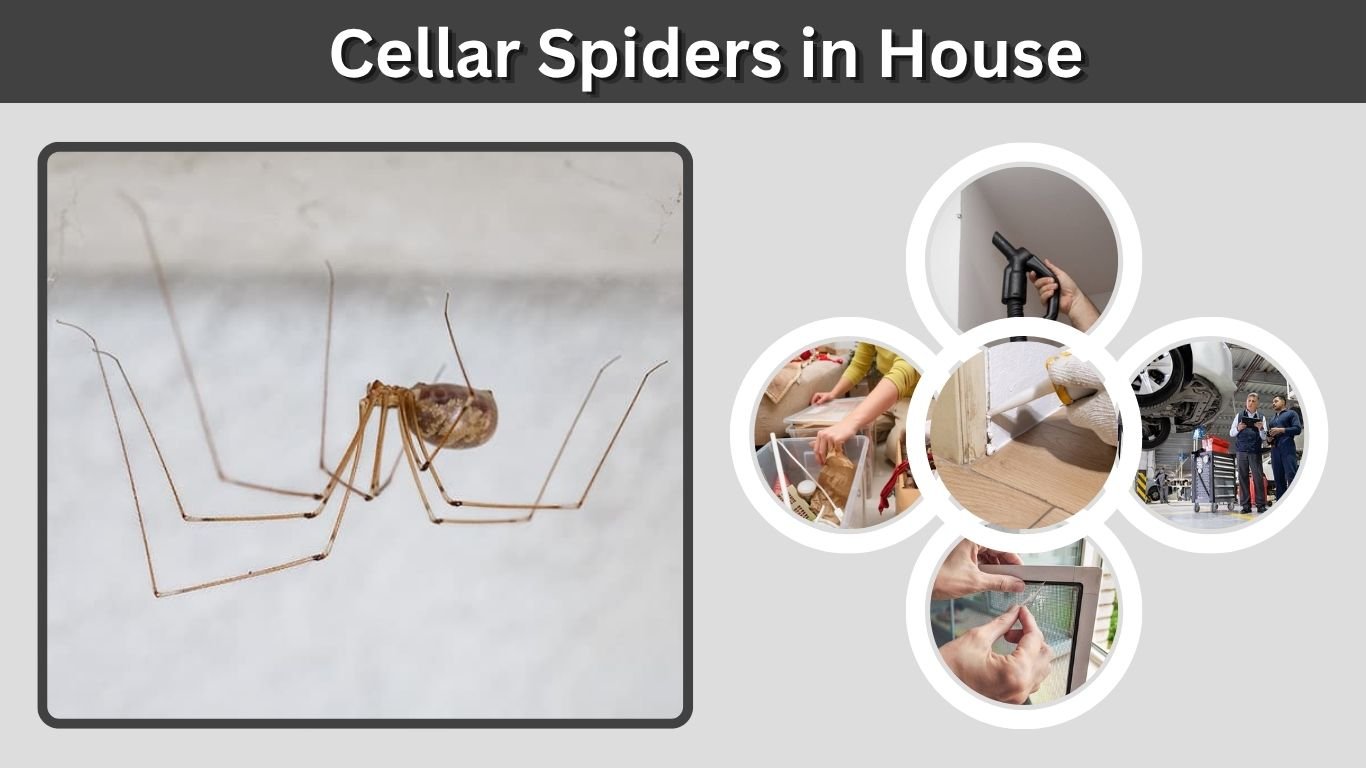
Finding cellar spiders in your house can be surprising, especially when their long, delicate legs and messy webs appear in every corner. These common household spiders often settle in basements, bathrooms, garages, and other quiet spaces where insects provide a steady food supply. Although cellar spiders are generally harmless and beneficial, large numbers can become a nuisance. Understanding why cellar spiders enter homes, where they hide, and how they reproduce makes controlling them easier. This guide covers identification, common causes, safe removal methods, and practical prevention tips.
What Are Cellar Spiders in a House?
Cellar spiders belong to the family Pholcidae and are commonly called daddy longlegs spiders. They are recognized by their unusually thin legs, small bodies, and irregular webs. One widespread species is the long-bodied cellar spider (Pholcus phalangioides). Unlike many wandering spiders, cellar spiders usually remain suspended in their webs while waiting for insects or other spiders to approach.
How to Identify Cellar Spiders
Cellar spiders commonly have pale brown, grayish, or yellowish bodies with extremely long legs.
They construct loose, tangled webs along ceilings, wall corners, and sheltered spaces. When disturbed, they may vibrate rapidly, making their bodies appear blurred.
Despite sharing the nickname daddy longlegs, cellar spiders are different from harvestmen, which do not produce silk webs.
Cellar Spiders vs. Common House Spiders
Cellar spiders have particularly long, thin legs and frequently hang upside down in irregular webs.
Other common house spiders vary greatly in appearance. Some create dense cobwebs, while others actively roam floors and walls.
Identification should consider body shape, web structure, and behavior rather than leg length alone.
Why Are There So Many Cellar Spiders in My House?
Seeing numerous cellar spiders indoors usually means the environment provides suitable shelter and available prey. These spiders prefer protected areas where they can maintain webs without frequent disturbance. Small flying insects and other arthropods provide food, while indoor conditions allow some species to reproduce throughout the year. Multiple spiderlings emerging from egg sacs can also explain sudden increases.
Main Reasons Cellar Spiders Appear
Common contributing factors include:
- Abundant insects: Flies, gnats, and other small prey provide food.
- Quiet spaces: Undisturbed corners offer suitable web-building locations.
- Indoor reproduction: Spiderlings may establish webs near their birthplace.
- Structural gaps: Cracks around doors and windows allow spiders to enter.
- Cluttered storage: Stored boxes and furniture create sheltered spaces.
- Limited cleaning: Undisturbed webs allow spiders to remain established.
Why Do Cellar Spiders Suddenly Appear Everywhere?
A sudden increase may occur when young spiders disperse after hatching or when existing spiders become more noticeable.
Changes in insect availability and household cleaning routines can also influence their numbers.
Finding many cellar spiders does not automatically indicate poor sanitation, although reducing indoor insects can make the environment less attractive.
Where Do Cellar Spiders Hide Inside Houses?
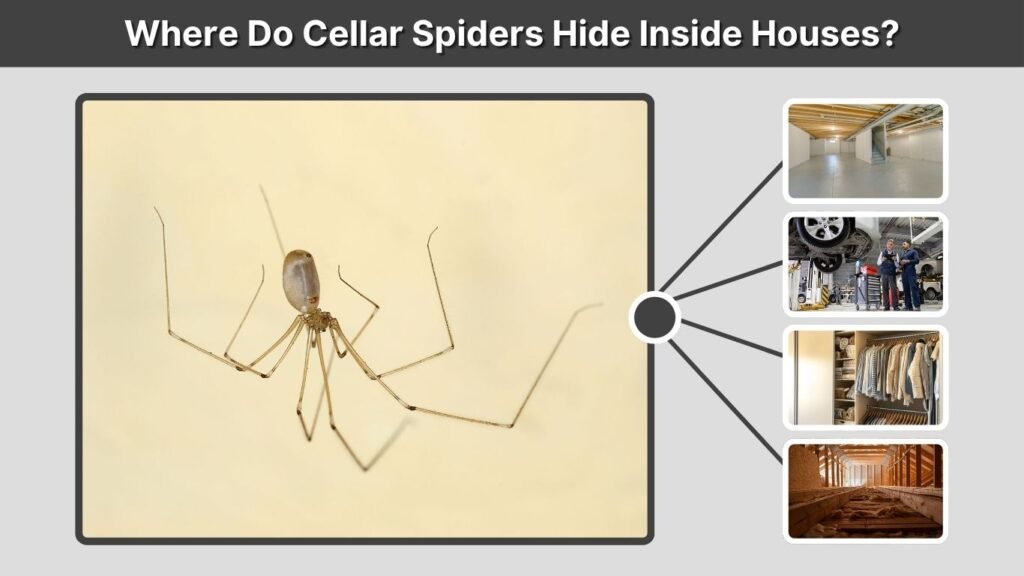
Cellar spiders commonly establish webs in locations protected from frequent movement and cleaning. Despite their name, they are not restricted to cellars or damp basements. Many species also occupy relatively dry indoor spaces. They usually select areas where their webs can remain undisturbed and where passing insects provide feeding opportunities.
Common Cellar Spider Hiding Places
- Basements: Along ceiling corners, pipes, and storage areas.
- Garages: Behind shelves, equipment, and stored boxes.
- Bathrooms: In quiet corners and behind fixtures.
- Attics: Along rafters and sheltered structural gaps.
- Living rooms: Behind furniture and near ceiling corners.
- Closets: Around infrequently moved belongings.
- Crawl spaces: Beneath buildings and around protected openings.
How Do Cellar Spiders Get Into Your House?
Cellar spiders may enter through small gaps around windows, doors, foundations, and utility openings.
They can also arrive on boxes, plants, or other objects brought indoors.
However, not every indoor cellar spider came from outside recently. Established populations may reproduce successfully inside buildings.
Should You Keep Cellar Spiders in Your House?
Cellar spiders are generally considered beneficial predators because they capture insects and other arachnids. They are not known to present a significant health hazard to people, and they rarely bite. Allowing a few to remain in quiet areas may provide limited natural pest control. However, homeowners may prefer removal when webs become excessive or spiders occupy frequently used rooms.
Are Cellar Spiders Beneficial Indoors?
Cellar spiders feed on flies, mosquitoes, gnats, and various other small insects.
They may also prey on other spiders, helping reduce some unwanted arthropods indoors.
However, they cannot reliably eliminate established infestations of cockroaches, bed bugs, or other household pests. Their benefits are supplementary rather than a replacement for proper pest management.
Do Cellar Spiders Kill House Spiders?
Yes. Some cellar spiders invade the webs of other spiders and capture them using silk and careful movements.
They may successfully attack spiders larger than themselves under favorable conditions.
However, encounters with giant house spiders or other large species do not always favor cellar spiders. Either spider may escape or become prey depending on the circumstances.
How to Get Rid of Cellar Spiders in Your House
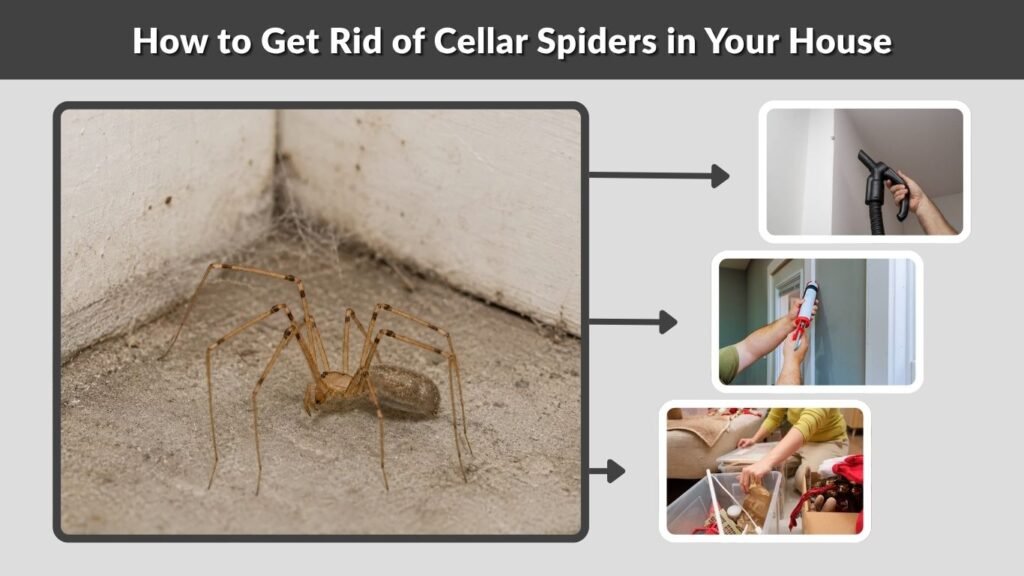
Removing cellar spiders usually does not require chemical pesticides. Because they remain in webs for extended periods, physical removal and regular cleaning are often effective. Addressing the insects they feed on and reducing suitable web-building locations can also discourage their return. University extension programs generally recommend integrated pest management, emphasizing sanitation, exclusion, and direct removal before chemical treatments.
Step-by-Step Cellar Spider Removal
- Locate spider webs: Inspect ceiling corners, basements, garages, and storage areas.
- Vacuum webs: Use a hose attachment to remove existing webs and unwanted spiders.
- Relocate individual spiders: Capture them using a container and stiff paper if preferred.
- Remove clutter: Organize boxes and belongings that create sheltered spaces.
- Reduce insect activity: Address flies, gnats, and other household pests.
- Seal entry gaps: Repair openings around windows, doors, and foundations.
- Repeat inspections: Remove newly formed webs before populations become established again.
Are Spider Sprays Necessary?
Pesticides are generally unnecessary for ordinary cellar spider problems.
Residual insecticides may provide inconsistent results because cellar spiders spend much of their time suspended in webs rather than walking across treated surfaces.
For persistent problems, identify the species and underlying causes before considering professional pest control.
How to Prevent Cellar Spiders From Coming Back
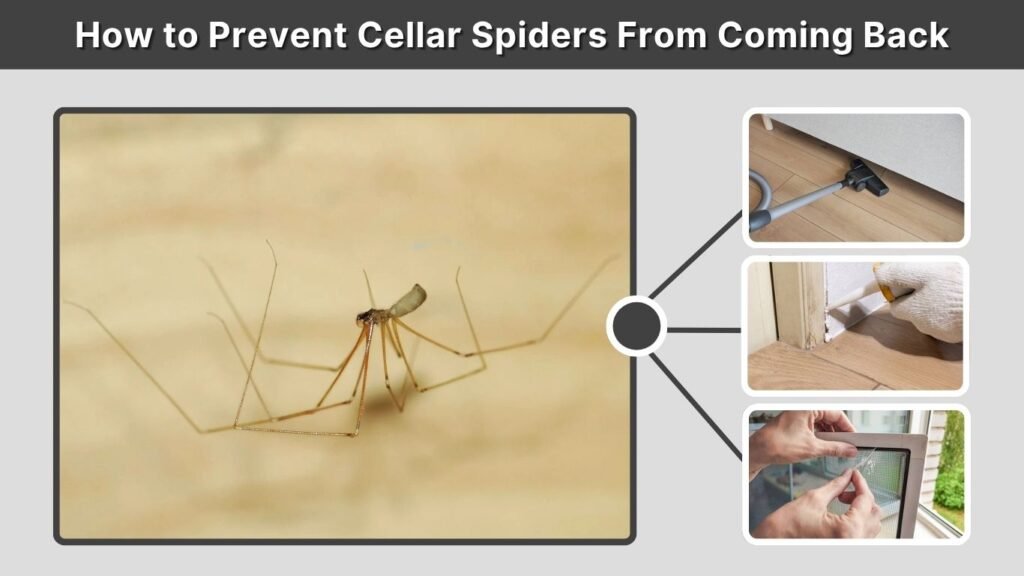
Preventing cellar spiders requires reducing attractive indoor conditions and limiting access from outside. Regular cleaning helps prevent webs from accumulating, while structural maintenance reduces potential entry points. Because insects provide the spiders’ food supply, controlling indoor pest populations also contributes to long-term prevention. Consistent maintenance is more effective than relying on a single cleaning session.
Cellar Spider Prevention Checklist
- Vacuum regularly: Clean corners, ceilings, and undisturbed areas.
- Seal cracks: Close unnecessary openings around foundations and exterior walls.
- Repair screens: Prevent insects and spiders from entering through windows.
- Install door sweeps: Reduce gaps beneath exterior doors.
- Manage clutter: Keep storage areas accessible for cleaning.
- Reduce outdoor insect attraction: Use appropriate lighting near entrances.
- Fix moisture problems: Address leaks that encourage moisture-loving insect prey.
Long-Term Cellar Spider Control
Cellar spiders may return if suitable shelter and food remain available.
Inspect previously occupied corners every few weeks and remove unwanted webs promptly.
Complete elimination is not always practical, but regular maintenance can substantially reduce indoor spider numbers without unnecessary pesticide use.
FAQs
Cellar spiders often raise questions about household safety, reproduction, and whether they should be removed. Their long legs and tangled webs can make them seem alarming, but they are generally harmless predators. These answers explain common concerns about sudden population increases, feeding behavior, and practical household management.
1. Why Is My House Full of Cellar Spiders?
Numerous cellar spiders may indicate abundant insects, sheltered web-building locations, or recent spiderling emergence. Regular cleaning and reducing prey insects can help control their numbers.
2. Are Cellar Spiders Dangerous to Humans?
Cellar spiders are not considered medically significant to humans. They rarely bite and generally avoid direct contact with people.
3. Do Cellar Spiders Eat Giant House Spiders?
Cellar spiders can capture other spiders, including relatively large individuals. However, successful predation on giant house spiders is not guaranteed.
4. Can Cellar Spiders Live in Dry Houses?
Yes. Cellar spiders can inhabit both relatively dry and damp indoor environments, provided suitable shelter and prey are available.
5. Should I Call Pest Control for Cellar Spiders?
Professional treatment is usually unnecessary. Consider expert assistance if spider numbers remain excessive despite regular cleaning and prevention measures or if identification is uncertain.
