
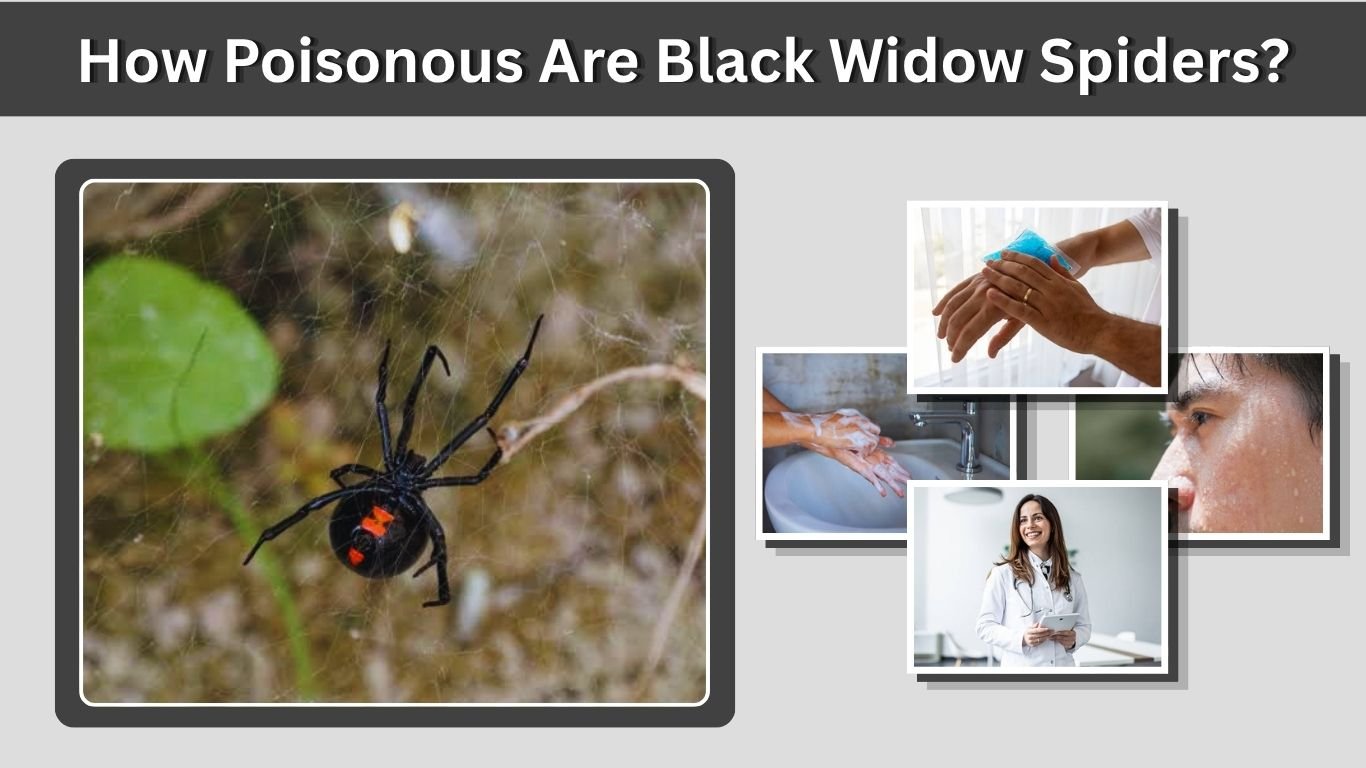
Black widow spiders are famous for their powerful venom and distinctive red hourglass markings. But how poisonous are black widow spiders, and can their bites be deadly? These spiders produce a potent neurotoxin that affects the nervous system, potentially causing severe pain, muscle cramps, and other symptoms. However, most bites are not fatal, especially when proper medical treatment is available. Female black widows pose the greatest risk, while males and young spiderlings are considerably less threatening. Understanding their venom, toxicity, and behavior helps explain their actual danger.
How Poisonous Are Black Widow Spiders?
Black widow spiders are among the most medically significant venomous spiders in North America. Their venom is extremely potent, but the amount injected during a bite is generally small. Although severe symptoms can develop, fatalities are exceptionally rare. Understanding how their venom works provides a clearer picture of their toxicity and why they deserve caution.
Are Black Widow Spiders Poisonous or Venomous?
Black widow spiders are technically venomous rather than poisonous. Venom is delivered through specialized structures, such as fangs, while poison generally causes harm when swallowed, inhaled, or absorbed.
Black widows use their fangs to inject venom into insects and other prey. Humans can also experience envenomation when bitten defensively. Simply touching an intact spider does not inject venom, although handling one creates a risk of being bitten.
What Makes Black Widow Venom So Powerful?
Black widow venom contains alpha-latrotoxin, a neurotoxin that causes nerve endings to release large amounts of chemical messengers called neurotransmitters.
This disruption can trigger painful muscle contractions, sweating, and other symptoms throughout the body. While the venom is exceptionally potent, toxicity alone does not determine the severity of a bite. The injected dose and the individual’s health are important factors.
Are All Black Widow Spiders Poisonous?
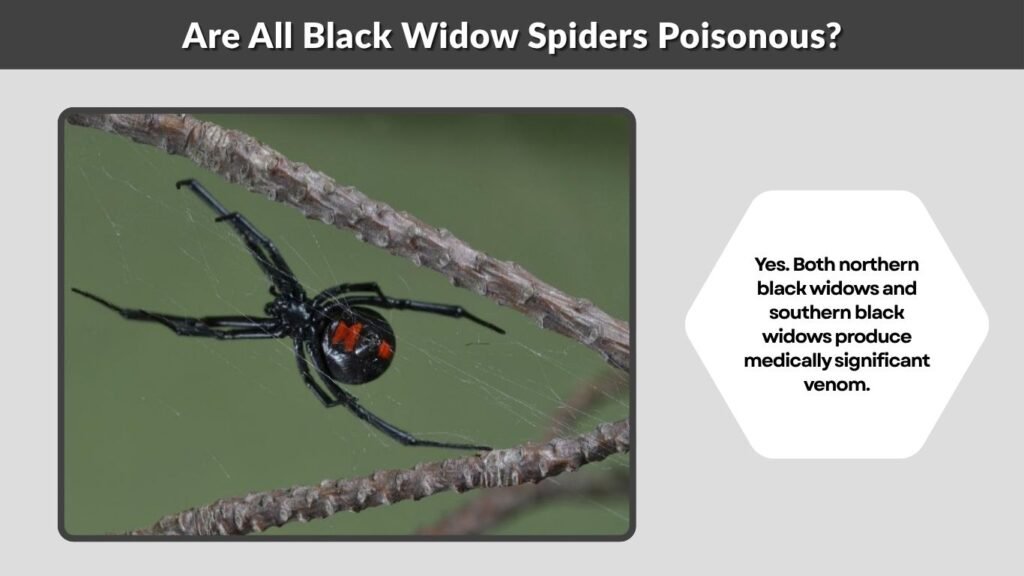
All true black widow species belong to the genus Latrodectus and possess venom used for hunting and protection. However, their ability to deliver medically significant bites varies according to sex, size, and development. Adult females pose the highest risk to people because their larger fangs can penetrate human skin and deliver more venom.
Are Female Black Widow Spiders Poisonous?
Adult female black widows are responsible for nearly all medically significant bites. They typically have shiny black bodies and a rounded abdomen featuring red or orange markings underneath.
Females can inject enough venom to produce serious symptoms. However, they generally remain hidden in their webs and bite defensively when disturbed, trapped, or compressed.
Are Male Black Widow Spiders Poisonous?
Male black widow spiders are venomous but rarely dangerous to humans. They have much smaller bodies and fangs that generally cannot penetrate human skin effectively.
Males use venom to subdue small prey but are not considered a significant medical threat to people. Their bodies are often brownish with lighter markings, making them look different from adult females.
Are Baby Black Widow Spiders Poisonous?
Baby black widow spiders possess developing venom systems, but newly hatched spiderlings are unlikely to cause medically significant bites.
Their tiny fangs have difficulty penetrating human skin. However, as immature females grow larger, they may become capable of injecting venom. Therefore, unfamiliar juvenile spiders should not be handled.
Are Northern and Southern Black Widow Spiders Poisonous?
Yes. Both northern black widows (Latrodectus variolus) and southern black widows (Latrodectus mactans) produce medically significant venom.
The northern black widow frequently has a divided hourglass marking, while southern females typically display a more complete hourglass. Despite their differences in appearance, adult females of both species can cause painful bites requiring medical evaluation.
Are False Black Widow Spiders Poisonous?
False black widow spiders resemble true black widows but belong to the genus Steatoda. Although they also possess venom, their bites are generally less severe. Several species live around buildings, gardens, and outdoor structures, where they may occasionally encounter humans. Understanding their differences helps prevent confusion between these spiders and true black widows.
How Toxic Are False Black Widow Spiders?
False widows can inject venom that causes localized pain, redness, and swelling. Most bites result in mild or moderate symptoms.
However, certain species, particularly the noble false widow (Steatoda nobilis), have occasionally caused more extensive symptoms, including severe pain and nausea.
Although less dangerous overall than true black widows, false widows should not be handled unnecessarily.
Are Brown Recluse Spiders More Poisonous Than Black Widows?
Both spiders are venomous, but their toxins affect the body differently.
Black widow venom primarily disrupts nerve signaling, producing muscle cramps and widespread pain. Brown recluse venom can damage skin and surrounding tissues, occasionally resulting in ulceration.
Neither is universally more dangerous. The medical consequences depend on the severity of the bite and the affected individual.
How Does Black Widow Venom Affect Humans and Pets?
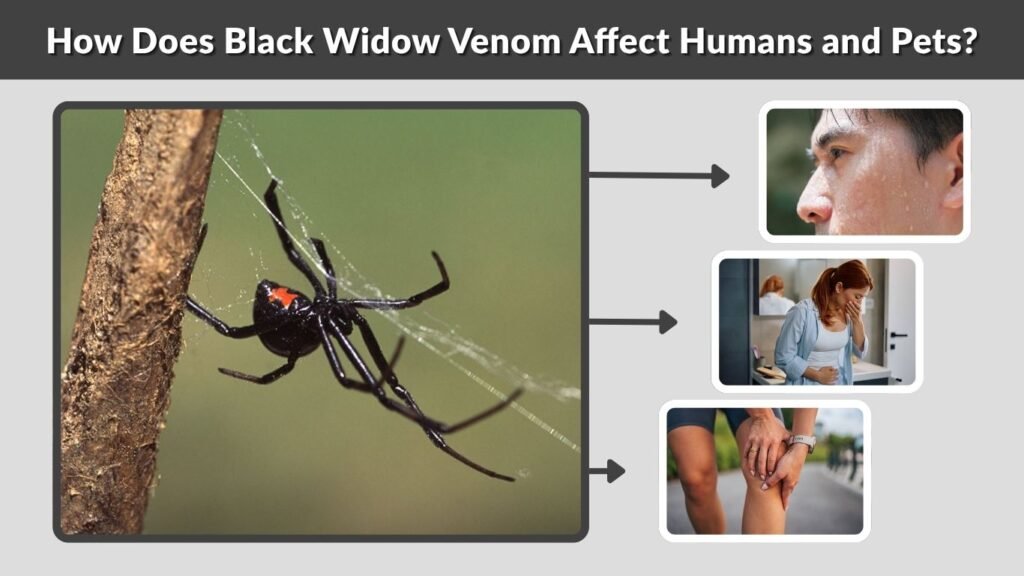
Black widow venom affects the nervous system, causing symptoms that range from mild discomfort to severe muscle spasms. Most people recover, but children, older adults, and individuals with certain health conditions may require closer medical supervision. Dogs and cats are also vulnerable, although their sensitivity to the venom differs significantly.
Symptoms of Black Widow Spider Poisoning
Black widow envenomation may produce several recognizable symptoms:
- Localized pain: Sharp or burning discomfort around the bite.
- Muscle cramps: Painful contractions affecting the abdomen, chest, or back.
- Sweating: Excessive sweating or unusual skin moisture.
- Nausea: Vomiting, dizziness, or general weakness.
- Severe symptoms: Breathing difficulties, significant muscle rigidity, or increased blood pressure.
Symptoms may develop within minutes or hours. Significant reactions require prompt medical attention.
Are Black Widow Spiders Poisonous to Dogs and Cats?
Black widow venom can seriously affect domestic animals, particularly cats. Cats are highly sensitive and may experience severe muscle spasms, weakness, paralysis, or breathing problems.
Dogs can also develop painful symptoms, although they are generally more resistant than cats.
Any suspected black widow bite in a dog or cat requires immediate veterinary advice. Severe envenomation can become life-threatening without appropriate treatment.
What Should You Do After a Black Widow Spider Bite?
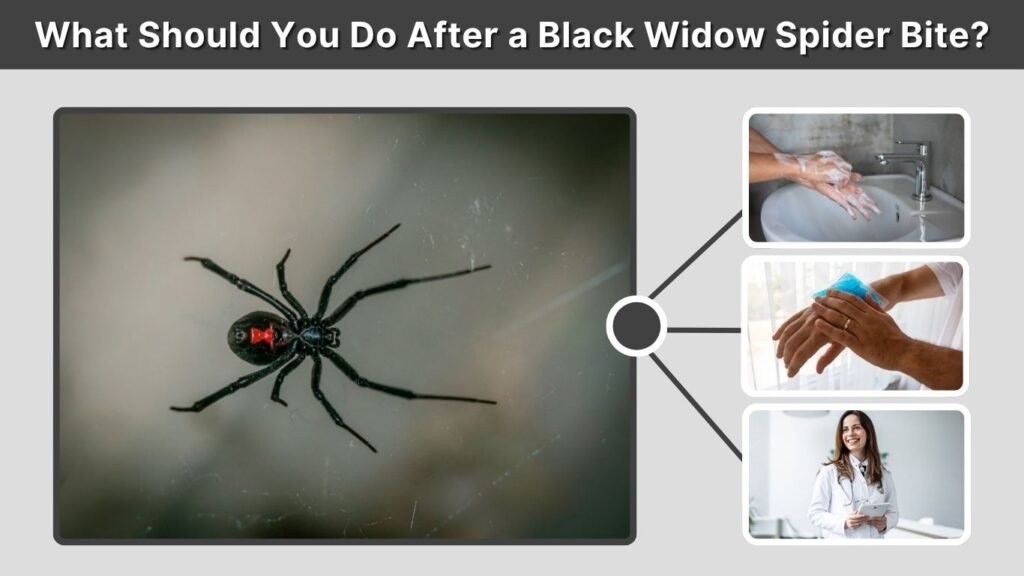
A suspected black widow bite should be taken seriously, even when the initial wound appears minor. Medical professionals can assess symptoms and determine whether additional treatment is necessary. Treatment may involve pain relief, medication for muscle spasms, and, in selected severe cases, antivenom. Early evaluation is particularly important for vulnerable individuals.
Immediate First Aid for a Black Widow Bite
If someone may have been bitten by a black widow, follow these steps:
- Wash the affected skin gently with soap and water.
- Apply a cold pack wrapped in cloth to reduce discomfort.
- Keep the affected area reasonably still.
- Contact a healthcare professional or poison control center promptly.
- Seek emergency care for breathing difficulty, chest pain, or other severe symptoms.
Never cut the wound, attempt to suck out venom, or apply a tourniquet.
How to Prevent Black Widow Spider Bites
Black widows prefer sheltered, undisturbed locations such as garages, woodpiles, sheds, and storage areas.
- Wear gloves when moving firewood or outdoor equipment.
- Inspect shoes, gardening gloves, and stored clothing.
- Reduce unnecessary clutter around your home.
- Avoid placing bare hands into dark cracks or concealed webs.
- Keep children and pets away from suspected black widow habitats.
Reducing accidental encounters is usually the most effective prevention method.
FAQs
1. Can Black Widow Spider Venom Kill a Human?
Yes, severe black widow envenomation can potentially become life-threatening, but deaths are exceptionally rare. Most bites produce mild to moderate symptoms, although some require hospital treatment. A person’s age, health, and the amount of venom injected influence the severity of the reaction. Prompt medical evaluation is recommended.
2. Are Black Widow Spider Egg Sacs Poisonous?
Black widow egg sacs are not venomous structures and cannot inject toxins. They contain developing eggs protected by silk. However, female black widows may remain near their egg sacs and bite defensively when disturbed. Avoid touching or opening an egg sac, particularly if an adult spider is nearby.
3. Are Black Widow Spiders Poisonous to Touch?
Touching the outside of a black widow spider does not automatically expose someone to injected venom. The primary danger comes from a defensive bite. However, attempting to hold or handle one increases the chance of accidental envenomation. It is safest to observe black widows without direct physical contact.
4. How Long Does Black Widow Venom Stay Active in Humans?
The effects of black widow venom usually become noticeable within a few hours after a significant bite. Most acute symptoms improve within one to three days, although pain or fatigue can occasionally last longer. Recovery depends on bite severity and treatment, and the duration of symptoms does not directly measure venom persistence.
5. Are Brown Widow Spiders More Poisonous Than Black Widows?
Brown widow spiders (Latrodectus geometricus) are venomous, but their bites generally cause milder symptoms than those of black widows. Brown widows often inject smaller amounts of venom during defensive bites. Nevertheless, significant reactions are possible, and anyone experiencing severe symptoms after a suspected widow spider bite should obtain medical attention.
