
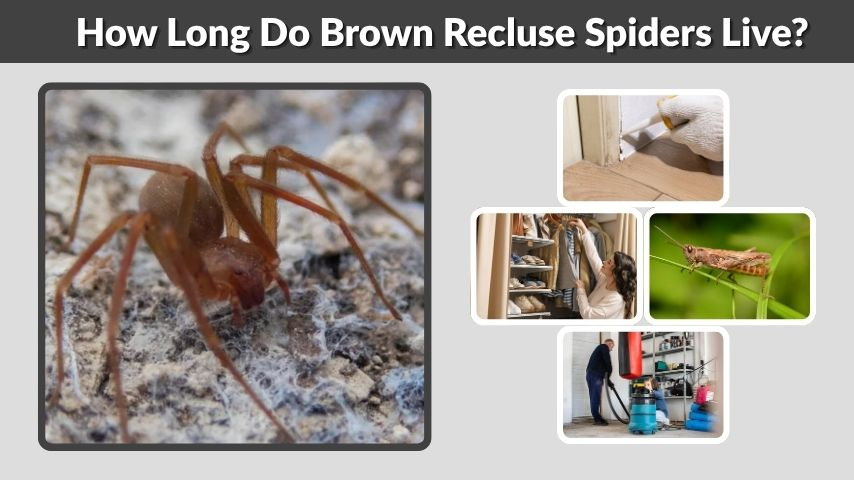
Brown recluse spiders are known for hiding in quiet places, but many people also wonder how long they can survive inside homes, basements, garages, and storage spaces. The answer is longer than many expect. A brown recluse spider can live for several years under the right conditions, and it can survive for months with little food. However, if you live on Long Island or elsewhere in New York, the bigger question is not only how long they live, but whether brown recluse spiders actually live there at all.
How Long Do Brown Recluse Spiders Live?
Brown recluse spiders are relatively long-lived compared with many common household spiders. Alabama Extension states that brown recluse spiders mature in about one year and have an average lifespan of about 2 to 4 years.
Other sources often describe adult brown recluse spiders as living about 1 to 2 years, while some individuals may live longer in protected conditions. The exact lifespan depends on temperature, food supply, shelter, and whether the spider avoids predators, pesticides, and human activity.
In a house, brown recluse spiders may survive longer than expected because they hide in undisturbed areas. Closets, basements, attics, crawl spaces, storage boxes, and garages can provide shelter from weather and predators.
How Long Can Brown Recluse Spiders Live Without Food?
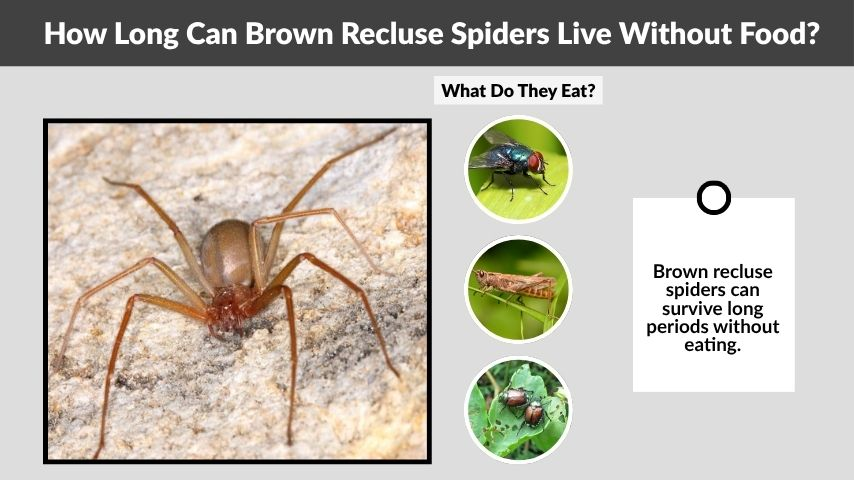
Brown recluse spiders can survive long periods without eating. This is one reason they can remain hidden in storage areas or vacant buildings. They do not need daily meals like many household pests.
Brown recluse spiders can tolerate long periods of food scarcity, and some records show they may survive for months without food under extreme conditions.
This does not mean they prefer to starve. In normal conditions, they feed on small insects and other arthropods. But their ability to survive without regular food helps them persist in quiet indoor spaces.
What Do They Eat?
Brown recluse spiders eat small insects and other small arthropods. They may hunt live prey, but they can also scavenge dead insects. This makes cluttered homes, garages, and basements attractive if those areas also have insects.
Common food sources may include:
- small flies
- roaches
- silverfish
- crickets
- beetles
- ants
- dead insects
- other small spiders
Reducing other insects in the home can make the environment less suitable for brown recluse spiders.
Brown Recluse Life Cycle
The brown recluse life cycle has three main stages: egg, spiderling, and adult. Females produce egg sacs, and spiderlings hatch after development. Young spiders slowly grow by molting until they become adults.
Brown recluse spiderlings may take about a year to mature. Once mature, adults can continue living for one or more years, depending on conditions.
Basic Life Cycle Table
| Stage | What Happens |
|---|---|
| Egg sac | Female lays eggs inside a silk sac |
| Spiderling | Young spiders hatch and begin to grow |
| Juvenile | Spider molts several times |
| Adult | Mature spider can reproduce |
| Lifespan | Often around 1–4 years depending on conditions |
Are Brown Recluse Spiders on Long Island?
Brown recluse spiders are not considered established on Long Island. Long Island is in New York, and Cornell IPM states that the brown recluse spider does not occur in New York.
This is important because many people on Long Island mistake ordinary brown spiders for brown recluse spiders. A small brown spider in a basement, shed, garage, or bathroom is usually another species.
Some pest control websites may mention brown recluse spiders in Long Island, but university and extension sources are more reliable for species range. Cornell’s guidance is clear: brown recluse spiders are not a normal New York spider.
Are There Brown Recluse Spiders in Long Island, NY?
In most cases, no. Brown recluse spiders are not native or established in Long Island, NY. It is possible for an individual spider to be accidentally transported in a box, package, furniture shipment, or moving truck from a brown recluse range state. However, a rare transported spider does not mean the species lives in the area.
The brown recluse is mainly found in the south-central and Midwestern United States. The University of Kentucky notes that recluse spiders are rare outside their native range and are widely over-reported.
So, if someone asks, “Do brown recluse spiders live on Long Island?” the best answer is: not as an established local population.
Brown Recluse Spiders vs Long Island Brown Spiders
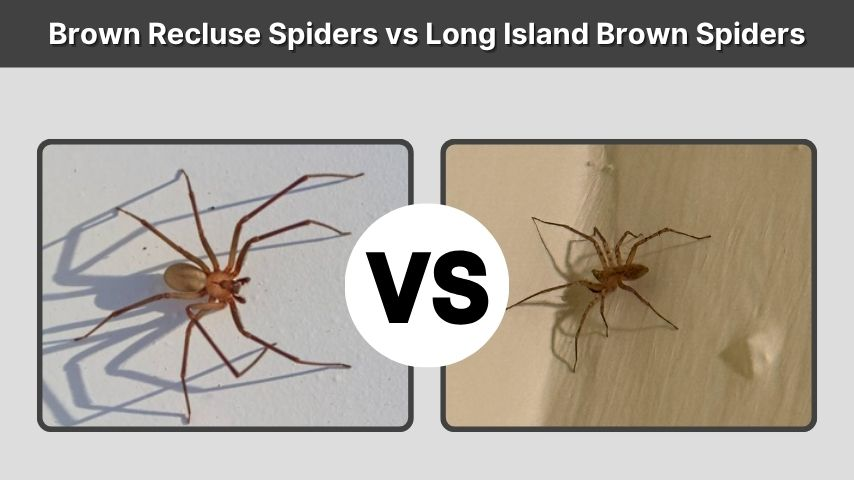
Long Island has many spiders that can look brown, but most are not dangerous. Color is not enough to identify a brown recluse. Many harmless spiders are tan, brown, gray, or yellowish.
The New York State Department of Environmental Conservation notes that bites attributed to brown recluse spiders in New York are almost certainly from yellow sac spiders.
Common Long Island Spiders Mistaken for Brown Recluse
Some spiders that may be confused with brown recluse spiders include:
- yellow sac spiders
- wolf spiders
- grass spiders
- cellar spiders
- funnel weavers
- house spiders
- jumping spiders
- nursery web spiders
Most of these spiders are not medically serious. Some may bite if trapped against the skin, but they are not the same as a brown recluse.
Do Brown Recluse Spiders Look Like Daddy Long Legs?
Brown recluse spiders do not really look like daddy long legs when you compare them closely. However, people sometimes confuse the two because both can have long legs and may be found indoors.
“Daddy long legs” can refer to different animals, including cellar spiders and harvestmen. Cellar spiders are true spiders with very long, thin legs and small bodies. Harvestmen are arachnids, but they are not true spiders.
Brown recluse spiders have a more compact body and are usually light to medium brown. They also have a dark violin-shaped marking on the front part of the body, though this mark can be hard to use for identification.
Brown Recluse vs Daddy Long Legs
| Feature | Brown Recluse | Daddy Long Legs |
|---|---|---|
| Body shape | Compact spider body | Very small body with very long legs |
| Legs | Long but not extremely thin | Extremely long and thin |
| Venom concern | Medically important in range areas | Not considered dangerous to people |
| Web | Irregular retreat web | Cellar spiders make loose webs; harvestmen do not make webs |
| Location | South-central/Midwest U.S. | Common in many regions |
Do Daddy Long Legs Eat Brown Recluse Spiders?
Some cellar spiders, often called daddy long legs spiders, may catch and eat other spiders if they share the same space. However, this does not mean daddy long legs are a reliable form of brown recluse control.
If you live in a state where brown recluse spiders are established, prevention should focus on reducing clutter, sealing entry points, removing insect prey, and using sticky traps for monitoring. In Long Island or New York, the concern is usually misidentification rather than an actual brown recluse infestation.
How Long Can Brown Recluse Spiders Stay Underwater?
Brown recluse spiders are not aquatic spiders and do not live in water. Like many spiders, they may survive brief contact with water, but they are not adapted to stay underwater for long periods.
If one falls into a sink, bathtub, or bucket, it may survive for some time depending on air bubbles, temperature, and stress. But water is not a normal habitat for brown recluse spiders.
How Long Will It Take to Kill Brown Recluse Spiders?
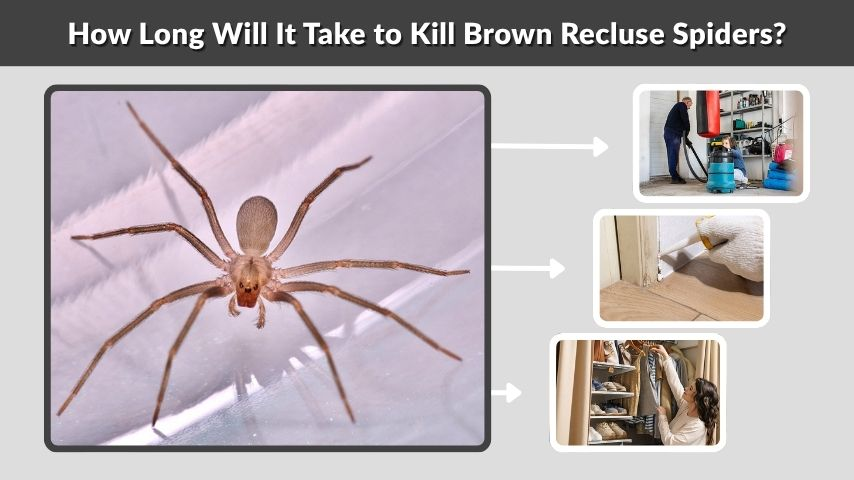
The time it takes to kill brown recluse spiders depends on the method. A direct spray may kill a spider quickly if it contacts the body. Sticky traps can catch spiders over days or weeks. A full infestation may take longer because hidden spiders and egg sacs can be difficult to reach.
For control, the best approach is usually a combination of methods:
- remove clutter
- vacuum storage areas
- seal cracks and gaps
- use sticky traps along walls
- reduce insect prey
- store clothes and shoes properly
- contact pest control if infestation is confirmed
In Long Island, however, it is better to confirm the spider first before treating for brown recluse spiders.
How to Identify a Brown Recluse Safely
A true brown recluse has six eyes arranged in three pairs. Most spiders have eight eyes. It may also have a violin-shaped marking, but the mark alone is not always reliable. Many harmless spiders have dark markings that can confuse people.
If you find a suspicious spider, do not handle it with bare hands. Place a clear cup over it, slide paper underneath, and take photos if safe. You can ask a local extension office, pest expert, or arachnid identification group for help.
FAQs
How long do brown recluse spiders live?
Brown recluse spiders often live around 1 to 4 years depending on conditions. Some sources describe adults living 1 to 2 years, while Alabama Extension lists an average lifespan of 2 to 4 years.
Are brown recluse spiders on Long Island?
No, brown recluse spiders are not considered established on Long Island. Cornell IPM says brown recluse spiders do not occur in New York.
Do brown recluse spiders live in Long Island, NY homes?
They are not a normal Long Island house spider. A transported individual is possible but rare. Most suspected brown recluse spiders in Long Island homes are other brown spider species.
Do brown recluse spiders look like daddy long legs?
Not closely. Brown recluse spiders have a compact brown body and moderately long legs. Daddy long legs usually have very long, thin legs and a much smaller-looking body.
Do daddy long legs eat brown recluse spiders?
Some cellar spiders may catch and eat other spiders, including potentially recluse spiders in areas where they overlap. However, daddy long legs should not be relied on as brown recluse pest control.
