
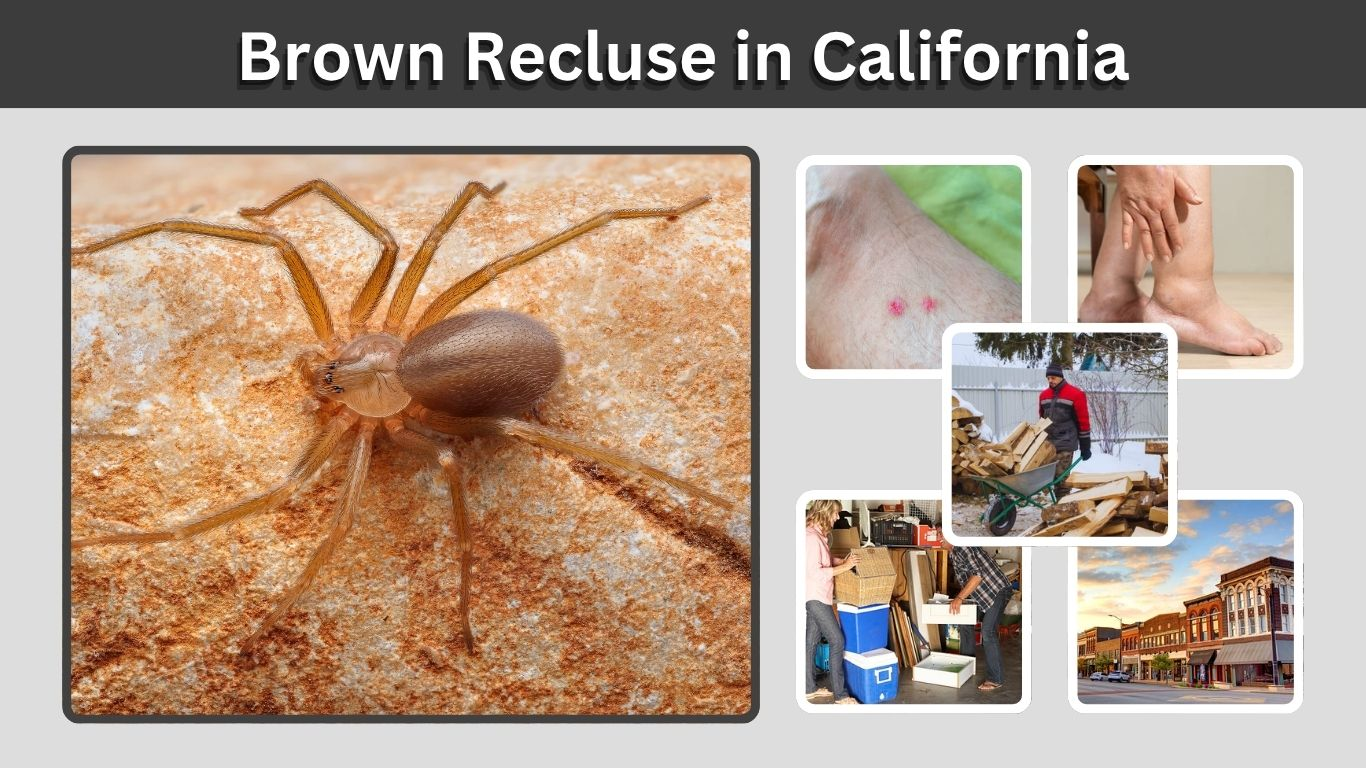
Many people search for “brown recluse in California” because they worry after seeing a small brown spider indoors or after developing a painful skin mark. However, the real story is different from the common fear. According to the University of California Integrated Pest Management program, brown recluse spiders do not have established populations in California. The spider is often blamed for bites in the state, but most suspected cases are actually misidentified spiders, other insects, or unrelated skin conditions.
Are Brown Recluse Spiders in California?
The true brown recluse spider, scientifically known as Loxosceles reclusa, is not considered a resident spider of California. UC IPM clearly states that there are no populations of the brown recluse spider in the state.
This does not mean a brown recluse can never be found in California. Very rarely, one may be transported in boxes, furniture, vehicles, firewood, or shipments from states where the species naturally lives. However, these isolated spiders do not mean the species has breeding populations in California.
Why This Myth Is So Common
The brown recluse myth in California has lasted for many years because many small brown spiders look similar to non-experts. When someone sees a brown spider in a garage, closet, storage box, or shed, they may assume it is a brown recluse.
The University of California, Riverside has written extensively about this problem. UCR notes that many more people in California are diagnosed with brown recluse bites than the number of actual brown recluse spiders ever confirmed in the state.
In simple words, the fear is much more common than the spider itself.
Where Do Brown Recluse Spiders Actually Live?
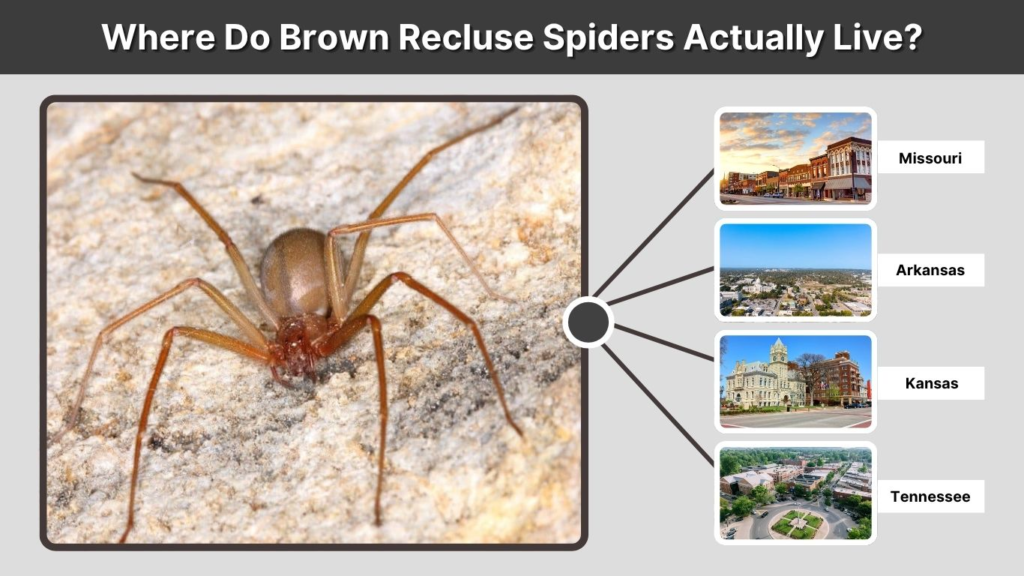
Brown recluse spiders are native mainly to the central and south-central United States. Their range includes areas such as parts of Missouri, Arkansas, Kansas, Oklahoma, Texas, Tennessee, Kentucky, Illinois, Indiana, and nearby regions. They are not naturally widespread across the West Coast.
A peer-reviewed pest management review describes the brown recluse as occurring from southeastern Nebraska to southwestern Ohio, south into northwestern Georgia and Texas.
California is outside the normal range of the true brown recluse. This is one of the biggest reasons experts are cautious when someone claims they found a brown recluse in Los Angeles, San Diego, San Francisco, Sacramento, or other populated parts of California.
Are There Any Recluse Spiders in California?
Although the true brown recluse does not live in California, there are related recluse spiders in parts of the state. UC IPM explains that some native recluse species occur in southern California, especially in desert regions.
The most important one to know is the desert recluse.
Desert Recluse in California
The desert recluse, Loxosceles deserta, is found in desert areas of the Southwest, including parts of southeastern California. It usually lives in dry, remote habitats rather than normal homes in coastal or urban California.
This spider may be found around:
- desert vegetation
- rocks
- woodpiles
- rodent nests
- undisturbed outdoor shelters
- desert structures or outbuildings
The desert recluse can look similar to the brown recluse because it belongs to the same genus, Loxosceles. However, it is not the same species as the brown recluse. If someone in California finds a recluse-type spider, location matters a lot. A spider found in the Mojave or Sonoran desert region is more likely to be a desert recluse than a true brown recluse.
How to Identify a Brown Recluse Spider
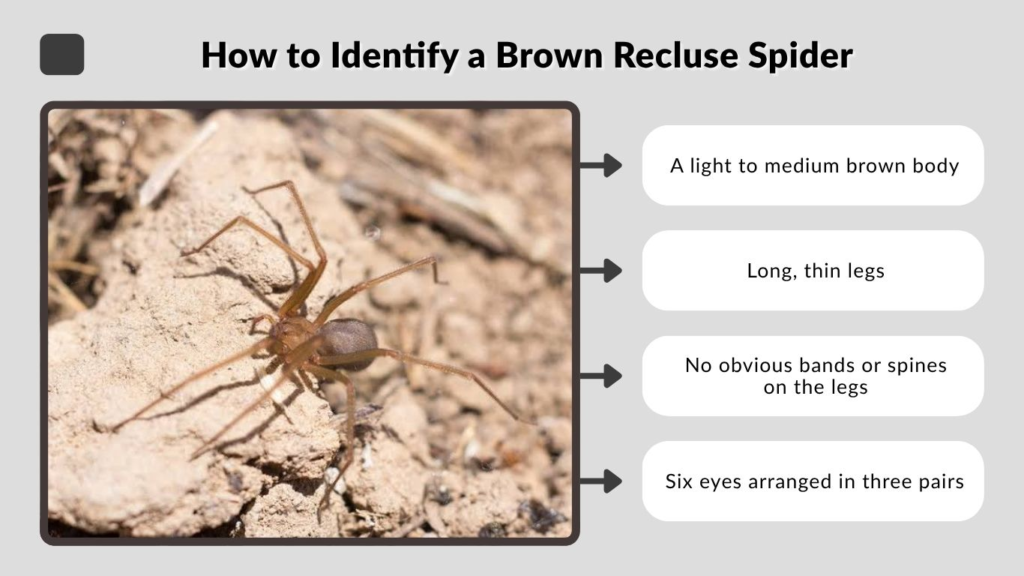
Brown recluse identification is difficult because many spiders are brown. Color alone is not enough. A spider being small, brown, and indoors does not make it a brown recluse.
A true brown recluse usually has:
- a light to medium brown body
- long, thin legs
- no obvious bands or spines on the legs
- a dark violin-shaped marking on the top front part of the body
- six eyes arranged in three pairs
The “Violin Mark” Can Be Misleading
Many people look for the violin-shaped mark, but UCR warns that this feature is often misread. Many non-recluse spiders have dark marks that people mistake for a violin.
The eye pattern is more reliable. Most spiders have eight eyes, while recluse spiders have six eyes arranged in three pairs. However, counting spider eyes is not easy without magnification, and most people should not handle unknown spiders.
Common California Spiders Mistaken for Brown Recluse
Many California spiders are harmless or only mildly concerning but are often mistaken for brown recluse spiders.
Common lookalikes include:
- cellar spiders
- wolf spiders
- grass spiders
- false wolf spiders
- sac spiders
- house spiders
- funnel weavers
- huntsman-type spiders in some areas
Most of these spiders are not medically important. Some may bite if trapped against the skin, but they are not the same as a brown recluse.
Brown Recluse Bite in California: Is It Likely?
A true brown recluse bite in California is very unlikely because the spider is not established in the state. This is especially true in coastal and urban areas such as Los Angeles, San Francisco, San Jose, Sacramento, San Diego, Oakland, and Fresno.
Many wounds blamed on brown recluse bites are actually caused by something else. Possible causes include:
- bacterial skin infections
- allergic reactions
- mosquito or flea bites
- bed bug bites
- tick bites
- irritated hair follicles
- skin abscesses
- burns or chemical irritation
- reactions to medication
- other medical skin conditions
This is why it is risky to self-diagnose a “brown recluse bite” based only on a red, swollen, or painful sore.
What Does a Brown Recluse Bite Look Like?
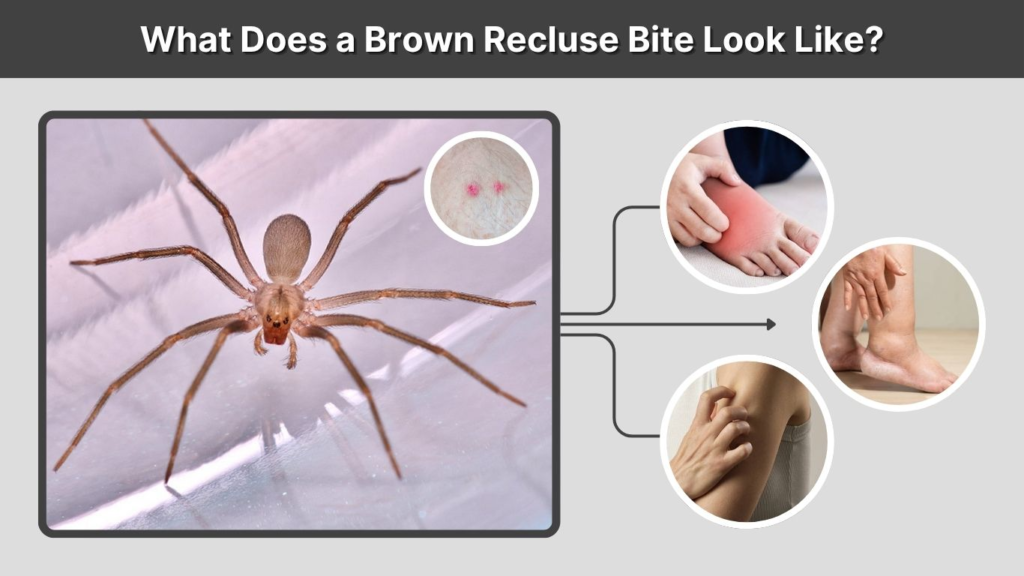
A brown recluse bite can vary. Some bites are mild and heal on their own. In more serious cases, the venom can damage skin tissue.
Possible symptoms may include:
- mild pain or burning
- redness around the bite
- swelling
- itching
- a pale center with a red outer area
- blistering
- blue, purple, or dark skin in severe cases
- an open sore that heals slowly
However, these symptoms are not unique to brown recluse bites. Many infections and insect bites can look similar. In California, a suspicious wound should not automatically be called a brown recluse bite.
What to Do If You Think You Were Bitten
If you believe you were bitten by a spider in California, stay calm and focus on basic first aid. Most spider bites are not dangerous, but worsening symptoms should be checked by a medical professional.
Basic steps:
- Wash the area with soap and water.
- Apply a cold pack wrapped in cloth.
- Keep the area clean and dry.
- Avoid scratching the bite.
- Do not cut, squeeze, or drain the wound.
- Take a clear photo each day to track changes.
- Seek medical help if symptoms worsen.
Get medical care quickly if you notice severe pain, spreading redness, fever, chills, vomiting, a blackening wound, or signs of infection. A doctor can evaluate whether the problem is an infection, allergic reaction, spider bite, or another condition.
How to Prevent Recluse-Type Spiders Around the Home
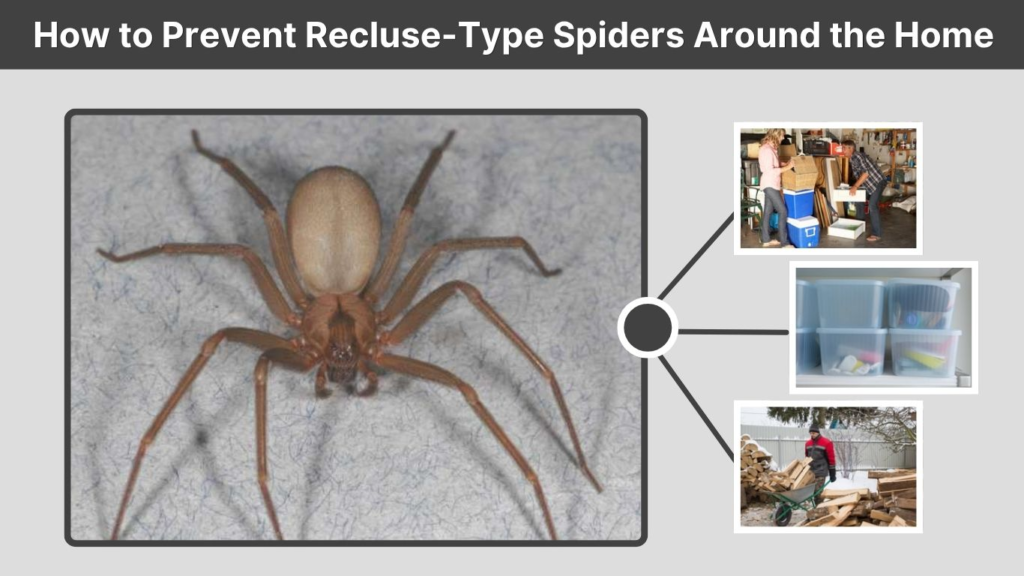
Even though brown recluse spiders are not established in California, general spider prevention is still useful. California homes can attract many types of spiders, especially in garages, sheds, basements, crawl spaces, and storage areas.
Reduce Hiding Places
Spiders prefer quiet, undisturbed spaces. To reduce hiding spots:
- remove clutter from garages and closets
- store items in sealed plastic bins
- avoid leaving clothes or towels on the floor
- shake out shoes and gloves before wearing them
- move firewood away from the house
- clean behind furniture and storage boxes
Seal Entry Points
Spiders often enter homes through small gaps. Seal cracks around windows, doors, pipes, vents, and foundations. Repair damaged screens and add door sweeps where needed.
Control Other Insects
Spiders feed on insects. If your home has many flies, ants, moths, or other small insects, spiders may stay because food is available. Reducing pest activity can also reduce spider activity.
Should You Kill Every Brown Spider in California?
No, you do not need to panic over every brown spider. Most spiders are beneficial because they eat insects. If a spider is not in a dangerous location, it can often be removed with a jar and paper or left alone.
However, caution is reasonable in areas where people may accidentally press spiders against skin, such as:
- bedding
- shoes
- gloves
- clothing piles
- towels
- children’s play areas
In those cases, remove the spider safely and clean the area.
Brown Recluse in California: Key Facts
Here is a simple comparison to understand the issue better.
| Topic | What to Know |
|---|---|
| True brown recluse in California | Not established |
| Scientific name | Loxosceles reclusa |
| Common California myth | Many brown spiders are wrongly identified as brown recluse |
| Recluse species in California | Some occur in southern desert regions |
| Most likely California recluse | Desert recluse |
| Bite reports | Often misdiagnosed or caused by other conditions |
| Best response to a suspected bite | Clean the wound and seek medical care if symptoms worsen |
FAQs
Are brown recluse spiders common in California?
No. Brown recluse spiders are not common in California because they do not have established populations there. Most reports are based on mistaken identity or imported individual spiders.
Does the brown recluse live in Los Angeles?
The true brown recluse is not considered established in Los Angeles. Many brown spiders live in Southern California, but they are usually other species.
Are there brown recluse spiders in San Diego?
San Diego is not known as an established home for the true brown recluse. Some recluse relatives may occur in desert areas farther inland, but common urban sightings are usually misidentified spiders.
What spider is mistaken for a brown recluse in California?
Several spiders can be mistaken for a brown recluse, including wolf spiders, cellar spiders, grass spiders, sac spiders, false wolf spiders, and common house spiders.
What should I do if I find a spider that looks like a brown recluse?
Do not handle it with bare hands. Take a clear photo if possible, capture it safely in a container if needed, and compare it with reliable identification resources. If you have a worsening skin wound, seek medical advice instead of assuming it is a brown recluse bite.
