
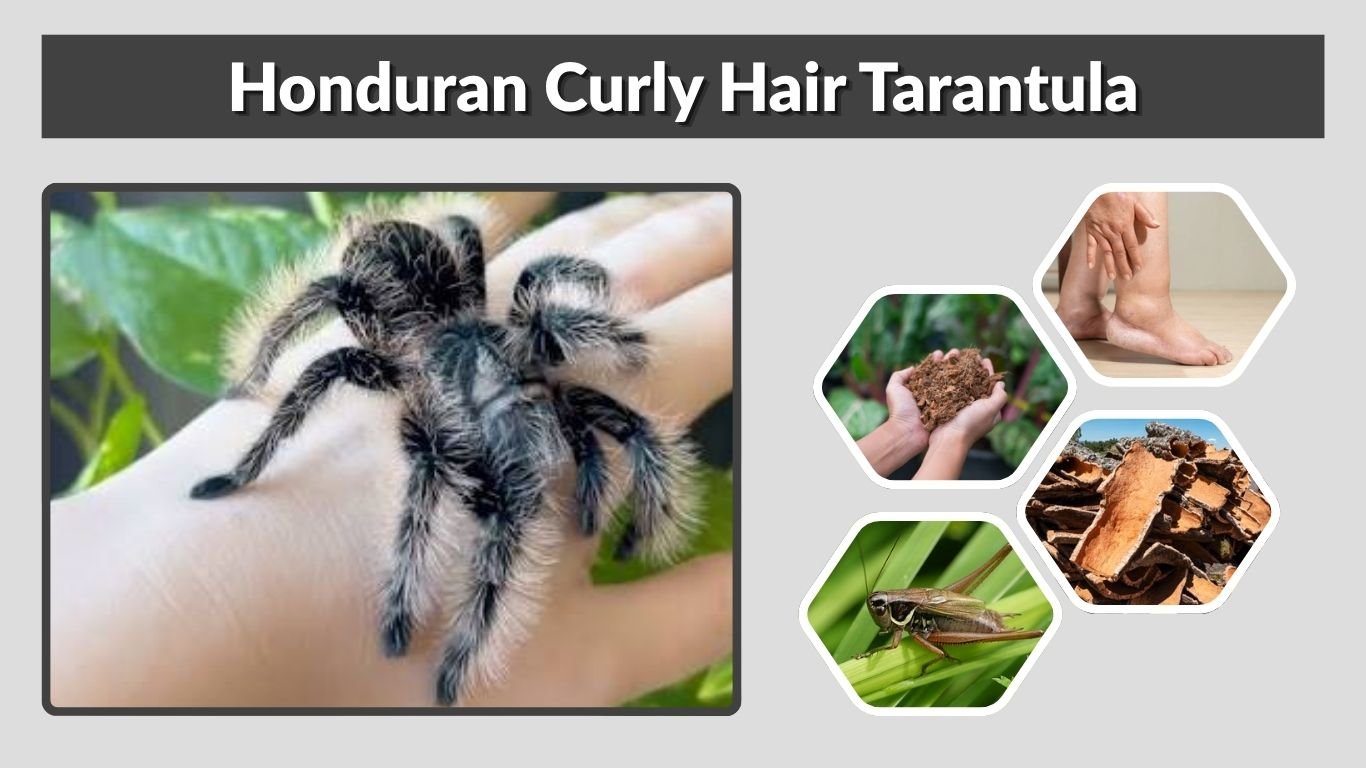
The Honduran curly hair tarantula is a dark, fluffy terrestrial spider recognized by the long golden or tan hairs curling across its body and legs. It is commonly sold as a calm, hardy species suitable for beginner keepers. However, the word “Honduran” is mainly a pet-trade label and does not always confirm the animal’s geographic origin. Proper care requires a ground-based enclosure, deep substrate, a secure hide, clean water and limited handling.
What Is a Honduran Curly Hair Tarantula?
The Honduran curly hair tarantula is generally sold as Tliltocatl albopilosus, formerly known as Brachypelma albopilosum. The World Spider Catalog recognizes Tliltocatl albopilosus as the current scientific name and lists Costa Rica as its documented distribution.
“Honduran curly hair” and “Nicaraguan curly hair” are longstanding names used for different captive lines. Their exact origins are sometimes uncertain, so appearance or a seller’s label cannot prove that a specimen or its ancestors came from Honduras. Both forms are normally maintained with essentially the same care.
| Feature | Description |
| Scientific name | Tliltocatl albopilosus |
| Former name | Brachypelma albopilosum |
| Lifestyle | Terrestrial and semi-burrowing |
| Adult leg span | Commonly 5–6.5 inches |
| Temperament | Usually calm but individually variable |
| Female lifespan | Often 15–20 years or longer |
| Male lifespan | Usually much shorter |
| Experience level | Beginner-friendly |
The British Tarantula Society identifies T. albopilosus as one of the best starter tarantulas, while still warning that New World tarantulas possess irritating defensive hairs.
Appearance and Identification
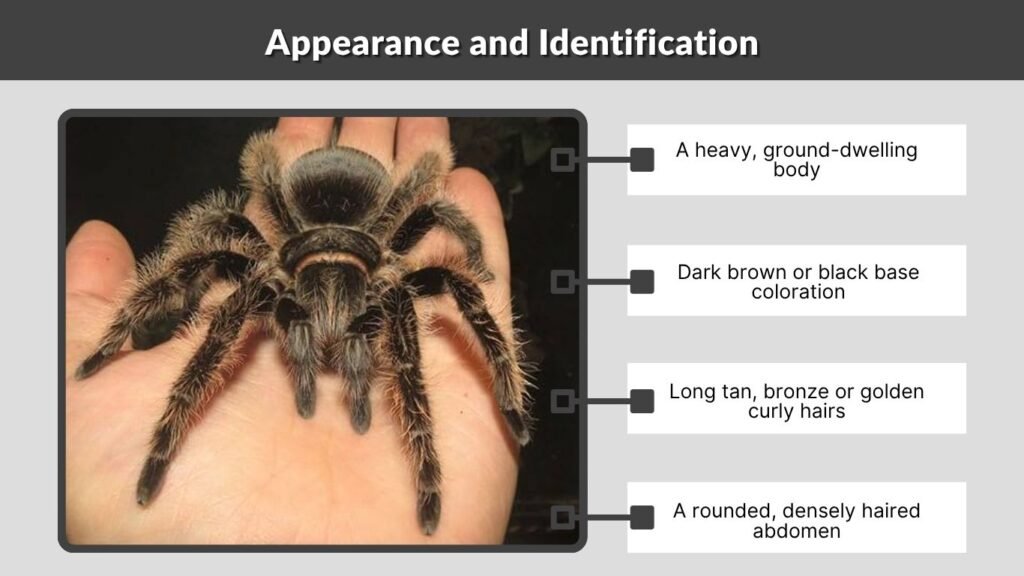
Honduran curly hairs normally have dark brown or nearly black bodies covered with tan, bronze or golden setae. Many of the longer hairs bend outward, creating their characteristic curly appearance.
Identification Features
A typical specimen has:
- A heavy, ground-dwelling body
- Dark brown or black base coloration
- Long tan, bronze or golden curly hairs
- A rounded, densely haired abdomen
- Thick legs designed for walking and digging
- Eight small eyes grouped on a raised mound
- Downward-pointing fangs
- Irritating defensive hairs on the abdomen
Some specimens sold as Honduran forms appear darker and less densely curled than animals marketed as Nicaraguan forms. However, color, curliness and body size vary with age, sex, lighting and individual lineage.
Honduran vs. Nicaraguan Curly Hair
The distinction between these trade forms is not scientifically settled. The Honduran name is often applied to long-established captive lines, while Nicaraguan animals are frequently marketed as having thicker golden curls and a more contrasting appearance.
These differences do not provide dependable identification. A trustworthy breeder should be able to explain the spider’s lineage instead of guaranteeing its locality from color alone. The hobby continues to debate whether some older lines were mixed with related spiders, and definitive genetic evidence remains limited.
Full-Grown Honduran Curly Hair Tarantula Size
A full-grown curly hair tarantula commonly reaches approximately 5–6 inches in diagonal leg span, although some individuals may approach 6.5 inches. Females usually have broader bodies and larger abdomens. Mature males often look slimmer and have proportionally longer legs.
Growth is relatively slow. A sling may require several years to reach adult size, depending on feeding, temperature, genetics and sex. Males generally mature earlier than females.
Honduran Curly Hair Tarantula Enclosure
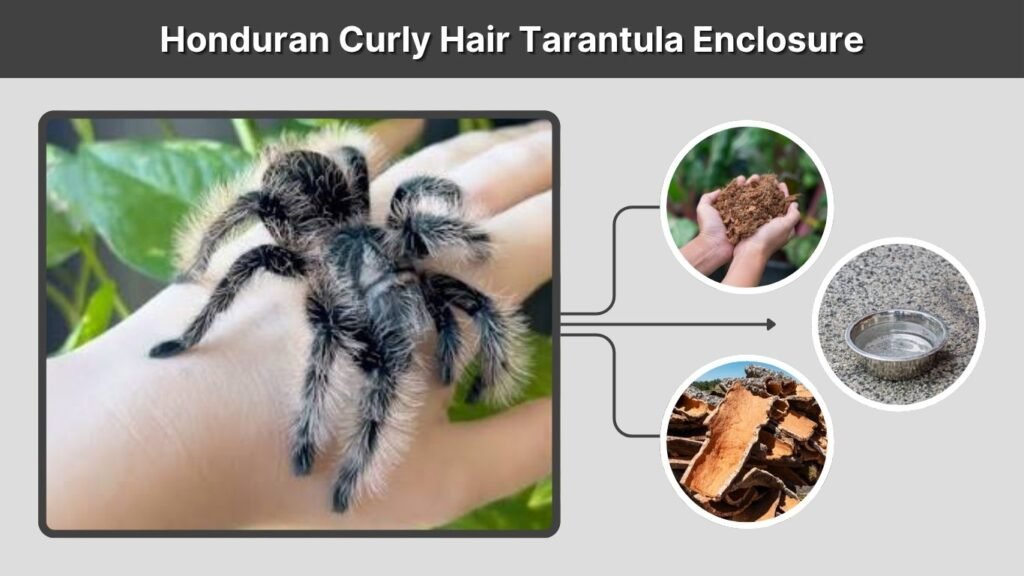
This tarantula is terrestrial, not arboreal. Its enclosure should prioritize usable floor space and digging depth rather than climbing height.
Tank Size and Setup
An adult enclosure should measure at least approximately three times the spider’s leg span in length and twice its leg span in width. Exact measurements are less important than providing enough floor space without excessive height.
Include:
- Four to six inches of compactable substrate
- A half-buried cork-bark hide
- A shallow water dish
- Cross-ventilation or adequate airflow
- A tightly secured lid
- Artificial foliage or light ground cover
Fill a substantial portion of the enclosure with substrate so the spider can burrow and cannot fall far. Terrestrial tarantulas may suffer fatal abdominal injuries after falling onto a hard object.
Best Substrate
Suitable options include pesticide-free topsoil, coconut fiber, peat-based soil or a mixture formulated for burrowing tarantulas. The substrate should hold its shape when the spider digs but should not remain muddy.
Avoid gravel, wood chips, calcium sand and heavily scented soil. Decorations should be lightweight and securely positioned so they cannot collapse into a burrow.
Temperature and Humidity
A temperature of approximately 70–80°F works well for most specimens. Normal comfortable room temperature is often sufficient, making heat lamps unnecessary.
Keep a clean water dish available at all times. The substrate can be maintained mostly dry on the surface while one corner is occasionally moistened to create a moisture gradient. Spiderlings require slightly more attention to moisture because they dehydrate faster, but their containers should never become swampy or poorly ventilated.
Honduran Curly Hair Tarantula Diet and Feeding
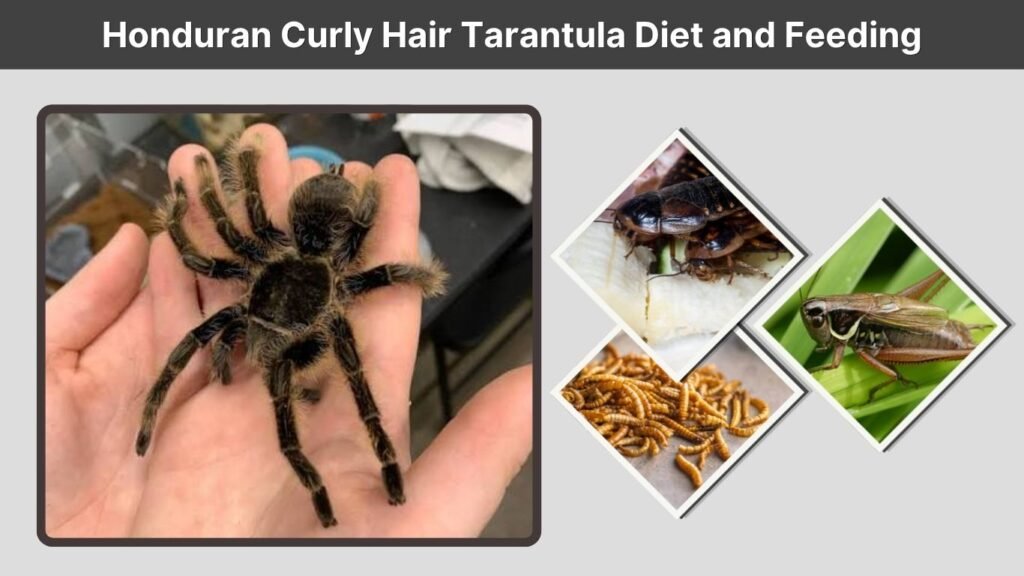
Honduran curly hair tarantulas eat live invertebrates. Appropriate foods include crickets, Dubia roaches, mealworms, superworms and other captive-bred feeders.
How Often Should You Feed It?
A practical schedule is:
- Small slings: tiny prey every four to seven days
- Juveniles: appropriately sized prey about once a week
- Adults: one or two suitable meals every one to two weeks
Feeding should also be adjusted according to the abdomen. Reduce food when the abdomen becomes much wider than the carapace. Increase meals gradually when it appears unusually small.
Remove uneaten feeders within 24 hours. Live prey must be removed immediately when the tarantula is preparing to molt because a cricket or roach may injure a soft, helpless spider.
Molting and Premolt Signs
A tarantula must shed its exoskeleton to grow. Before molting, a Honduran curly hair may refuse food, remain hidden, become less active or seal the entrance to its burrow.
Signs It Is Near a Molt
Common premolt signs include:
- Refusing food
- A darkening bald patch on the abdomen
- Increased webbing
- Remaining inside the hide
- Reduced movement
- Lying on its back when molting begins
A tarantula lying on its back is usually molting, not dying. Do not turn it over or disturb its enclosure.
Keep the water dish full and wait until the new fangs become completely dark before feeding. A large juvenile or adult may need seven to ten days to harden after a molt.
Bald Spots and Defensive Hairs
A bald patch commonly develops after a tarantula brushes or releases urticating hairs from its abdomen. These hairs can cause itching and irritation if they contact human skin, eyes or airways.
A pale bald spot that gradually becomes dark often indicates an approaching molt. The missing hairs normally return after the spider sheds its exoskeleton.
Wash your hands after enclosure maintenance and avoid touching your eyes. Seek medical assistance if hairs enter the eyes or cause breathing difficulty.
Temperament and Handling
Honduran curly hair tarantulas are frequently calm and slow-moving, but temperament varies. A frightened individual may retreat, kick irritating hairs, raise its front legs or bite.
Handling is not recommended. The spider gains no benefit from being held, and the risk of dropping it is more serious than the usual risk to the keeper. Use a catch cup and a soft brush when transferring the tarantula.
Is a Honduran Curly Hair Tarantula Poisonous?
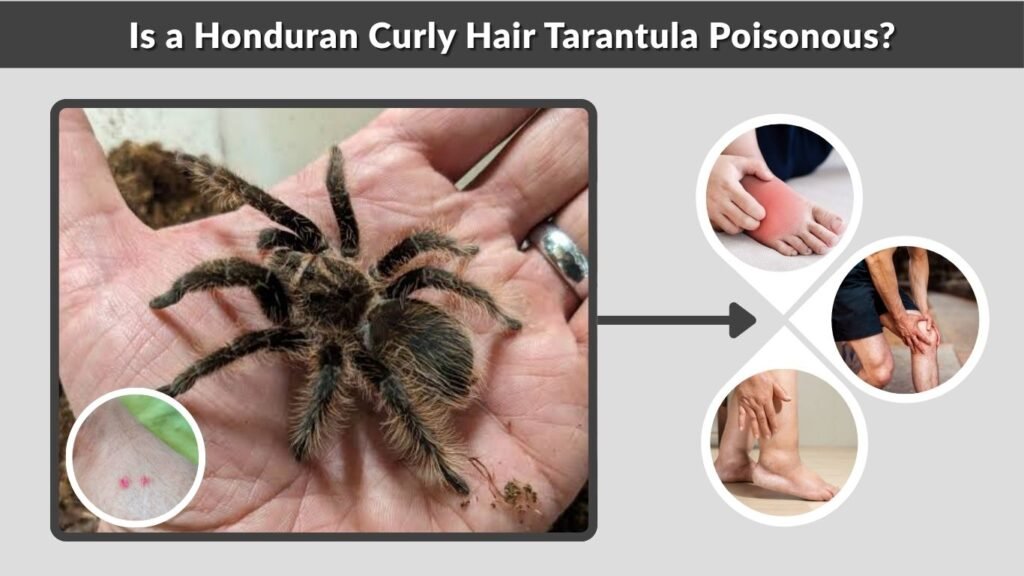
It is venomous rather than poisonous. Its venom helps immobilize prey, but its bite is not generally regarded as medically significant for a healthy person.
A bite may cause pain, swelling or redness. Reactions vary, and anyone experiencing severe pain, spreading swelling, breathing problems or other concerning symptoms should seek medical care.
Male vs. Female Honduran Curly Hair
Young males and females usually look similar. Examining the inside of a well-preserved molt is the most dependable way to determine sex before maturity.
Females have reproductive structures called spermathecae inside the shed abdomen. Males lack these structures. After maturity, males develop swollen reproductive bulbs on their pedipalps and hooks on the first pair of legs.
Females are generally heavier and can continue molting throughout adulthood. Mature males become slimmer, roam more frequently and normally stop molting after their ultimate molt.
Lifespan
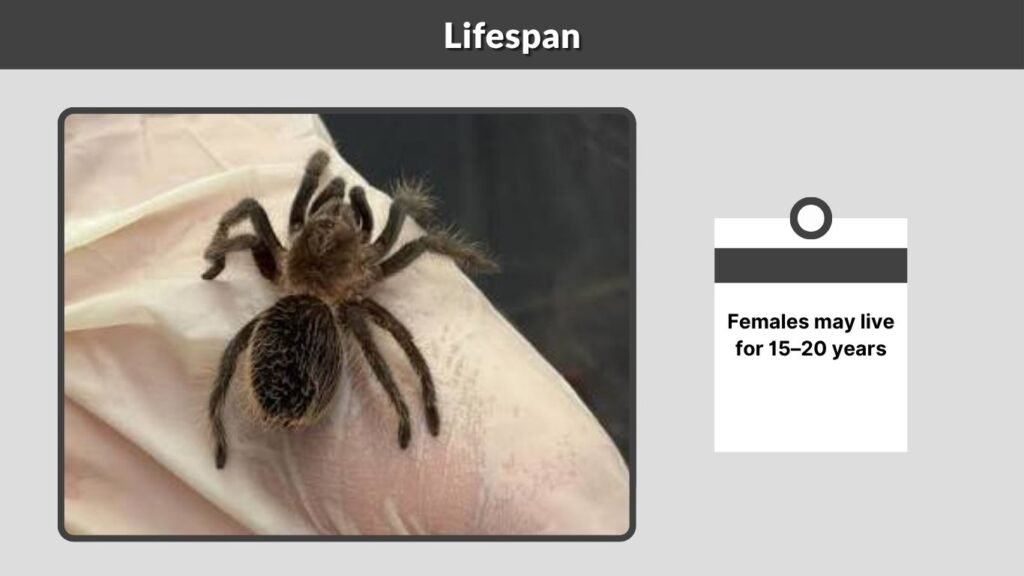
Females may live for 15–20 years, and exceptionally long-lived individuals may survive longer with proper care. Males have much shorter lives and may survive only a few years after reaching maturity.
Buying a confirmed female usually costs more because of her longer expected lifespan. A mature male is often less expensive but may have limited time remaining.
Buying a Honduran Curly Hair Tarantula
Choose a captive-bred spider from a breeder who can explain its feeding history, last molt, approximate size and lineage. Captive-bred tarantulas are preferable to wild-caught specimens for conservation and health reasons.
Before buying, check:
- Whether the tarantula is captive-bred
- Whether its sex is confirmed
- Its current leg span
- Its feeding and molting records
- Whether the locality label is documented
- Local ownership and shipping regulations
- Whether the abdomen appears healthy and intact
Avoid spiders leaking fluid, dragging their legs or showing a severely shrunken abdomen.
FAQs
Is a Honduran curly hair tarantula good for beginners?
Yes. It is generally hardy, slow-moving and tolerant of minor care mistakes. Beginners must still provide a deep substrate, a water dish, proper ventilation and a safe enclosure.
How large does a Honduran curly hair get?
A full-grown specimen commonly reaches around 5–6 inches in leg span. Some individuals may approach 6.5 inches, with females usually developing heavier bodies.
Do Honduran curly hair tarantulas burrow?
Yes. They may dig deep burrows beneath cork bark or remain in a shallow hide. Burrowing, closing the hide and remaining unseen for weeks can all be normal.
How often should it be fed?
Juveniles can usually eat weekly, while adults may eat every one to two weeks. Adjust the schedule according to abdomen size, activity and premolt behavior.
Is the Honduran form a separate species?
It is normally sold under the same scientific name, Tliltocatl albopilosus. “Honduran” is primarily a trade label, and the origin or purity of some captive lines may be uncertain.
