
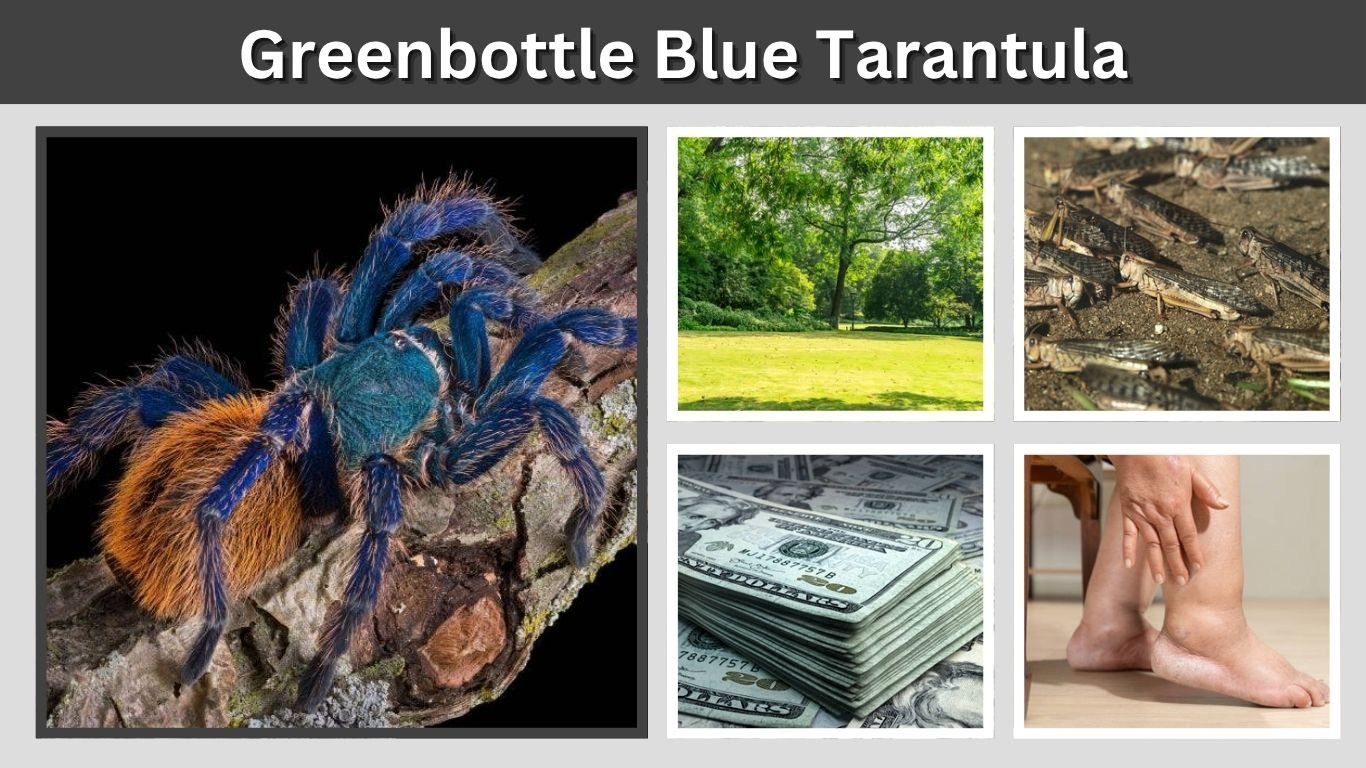
The greenbottle blue tarantula is a colorful Venezuelan species recognized by its metallic blue legs, blue-green carapace and bright orange abdomen. It is also famous for covering much of its enclosure with thick sheets and tunnels of silk. Although hardy and relatively straightforward to maintain, this tarantula can move quickly and may release irritating hairs when disturbed. A suitable enclosure should provide dry substrate, a secure retreat, webbing anchor points, clean water and enough floor space for safe movement.
What Is a Greenbottle Blue Tarantula?
The greenbottle blue tarantula’s scientific name is Chromatopelma cyaneopubescens. It belongs to the family Theraphosidae and is the only currently recognized species in the genus Chromatopelma. Its documented natural range is Venezuela.
It is often abbreviated as GBB by tarantula keepers.
| Feature | Description |
| Scientific name | Chromatopelma cyaneopubescens |
| Origin | Venezuela |
| Lifestyle | Terrestrial and heavy-webbing |
| Adult leg span | Commonly around 4.5–6 inches |
| Temperament | Skittish, fast and usually defensive rather than aggressive |
| Female lifespan | Often more than 12 years |
| Diet | Live insects and other invertebrates |
| Experience level | Beginner to intermediate |
Colors and Identification
An adult greenbottle blue usually has:
- Metallic blue legs
- A turquoise or blue-green carapace
- A bright orange abdomen
- Long orange abdominal hairs
- Dark undersides and joints
- A medium-sized, relatively slender body
- Dense webbing around its retreat
Juveniles look noticeably different. They may have pinkish legs and a dark abdomen marked with reddish or orange patterns. Their distinctive adult colors develop through successive molts.
Greenbottle Blue Tarantula Natural Habitat
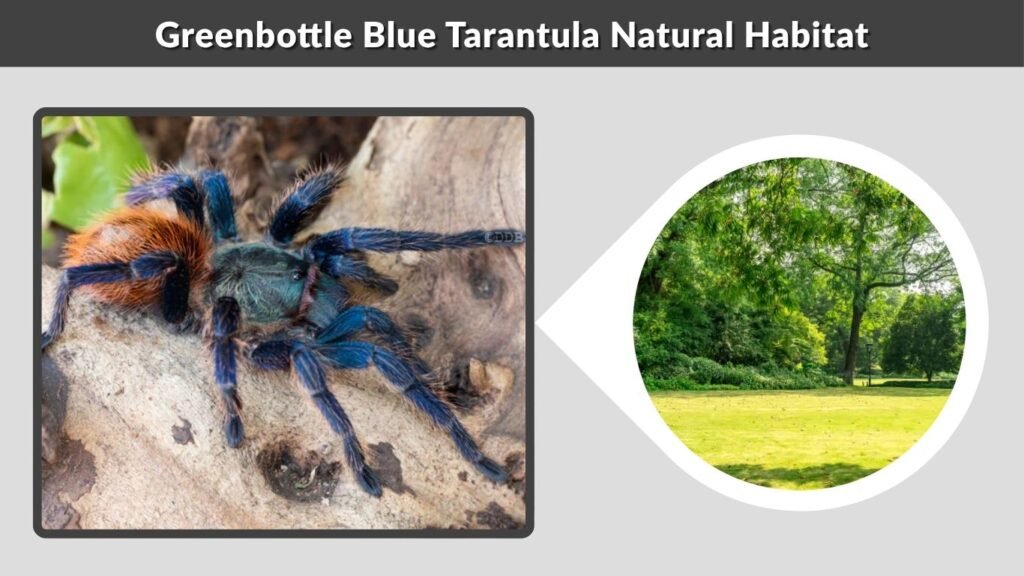
Greenbottle blues originate from dry areas of Venezuela’s Paraguaná region. They inhabit xeric scrub, open woodland and areas around thorny bushes, tree roots and protected ground cavities.
Wild spiders create silk-lined retreats near the bases of vegetation. Their webs may form surface tunnels or hammock-like structures connected to a shallow burrow. This habitat explains why captive specimens require relatively dry conditions, good airflow and numerous webbing anchors rather than a constantly humid enclosure.
Greenbottle Blue Tarantula Size
A full-grown greenbottle blue generally reaches around 4.5–6 inches in diagonal leg span. Females usually develop heavier bodies, while mature males appear slimmer and leggier.
An older husbandry and breeding account reported adult females with body lengths of approximately 5–7 centimetres, excluding the legs. Feeding frequency, sex, temperature and genetics can affect the final size and growth rate.
Sling and Growth Rate
Greenbottle blue slings can grow moderately quickly when kept warm and fed consistently. Males may mature in approximately 1.5–3 years, while females generally mature more slowly, although growth varies considerably between individual spiders and captive conditions.
Young slings require appropriately sized containers. An enclosure that is too large can make feeding difficult, while one that is too small may not provide enough room for webbing and molting.
Greenbottle Blue Tarantula Enclosure
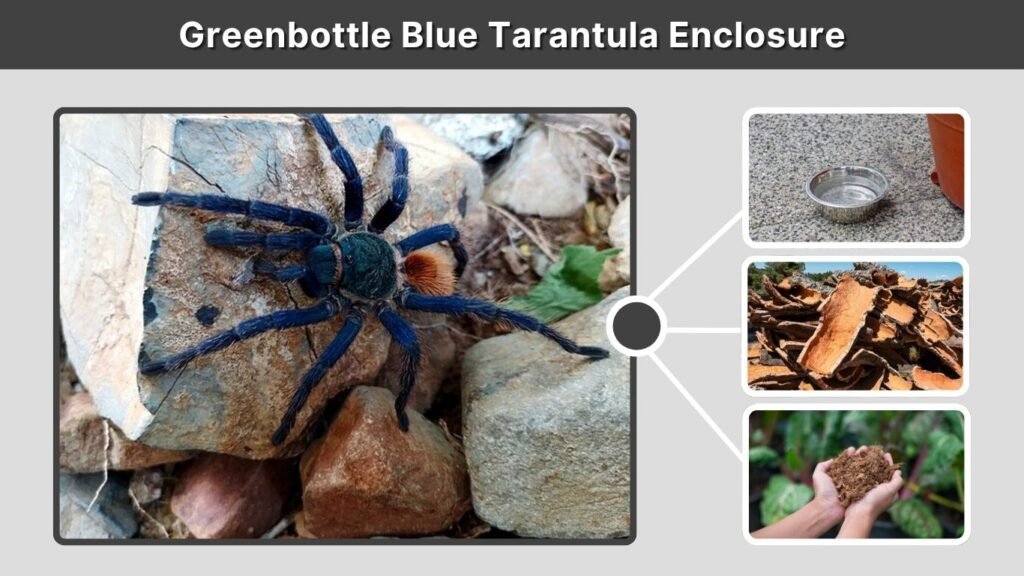
Greenbottle blues are primarily ground-dwelling but often build elevated silk structures. Their enclosures should therefore provide floor space, shallow digging depth and low climbing opportunities.
Enclosure Setup
An adult setup should contain:
- Several inches of compactable substrate
- A cork-bark hide or starter burrow
- Artificial plants, cork pieces or branches
- Multiple webbing anchor points
- A shallow water dish
- Good ventilation
- A secure, escape-proof lid
The enclosure can be approximately three times the spider’s leg span in length and about twice its leg span in width. Excessive vertical space should be avoided because a fall can rupture a terrestrial tarantula’s abdomen.
Do not repeatedly destroy or remove the web unless maintenance makes it unavoidable. The tarantula uses its silk network for shelter, sensing prey, molting and moving safely around its territory.
Substrate and Humidity
Suitable substrates include pesticide-free topsoil, coconut fiber or a compactable soil-based mixture. Keep most of the substrate dry, particularly for juveniles and adults.
A water dish should remain available. Occasionally overflowing a small amount of water into one corner can create a limited moisture gradient, but the enclosure should not be kept wet or swampy. Early captive observations describe adults as thriving on the dry side, while smaller juveniles may benefit from a slightly moistened section of substrate.
Temperature
A stable room temperature of approximately 72–80°F is generally suitable. Brief variation is usually tolerated, but prolonged extreme heat should be avoided.
Do not use a heat lamp or place the enclosure in direct sunlight. Sunlight can rapidly overheat a small container. When supplemental heating is necessary, warm the room or use a properly regulated heat source outside one side of the enclosure.
What Does a Greenbottle Blue Tarantula Eat?
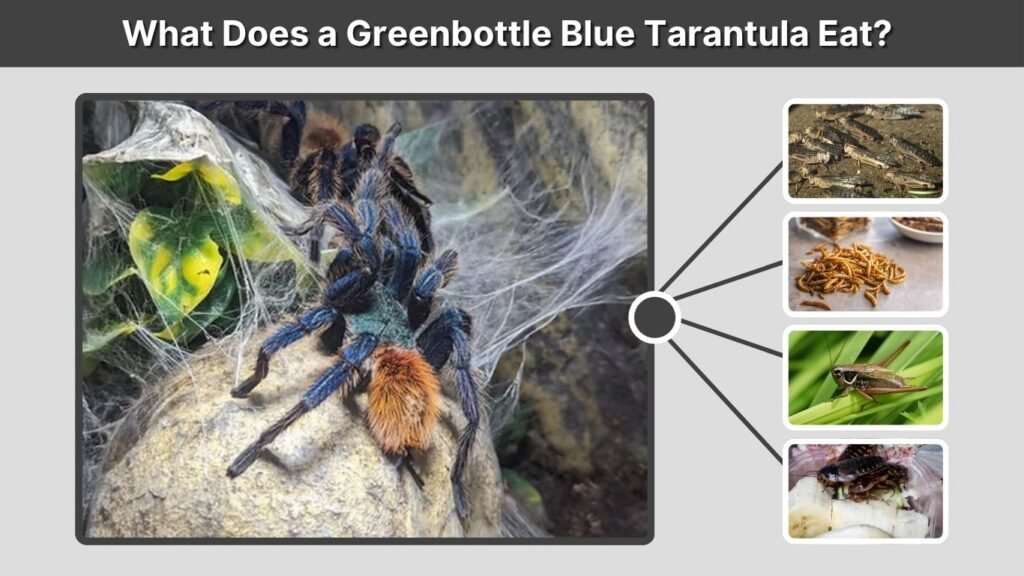
Greenbottle blue tarantulas are carnivorous predators. Captive specimens commonly accept:
- Crickets
- Dubia roaches
- Red runner roaches
- Mealworms
- Superworms
- Locusts
- Other appropriately sized captive-bred insects
Zoos primarily feed them insects, while wild individuals may capture various invertebrates and occasionally small vertebrate prey. Vertebrate feeding is unnecessary in captivity.
Feeding Schedule
Small slings can receive appropriately sized prey every four to seven days. Juveniles may be fed approximately once a week, while adults commonly eat every seven to fourteen days.
Use the abdomen as a body-condition guide. It should remain rounded without becoming excessively swollen. Remove prey that remains uneaten after approximately 24 hours, and never leave live feeders with a molting spider.
Webbing Behavior
Heavy web production is one of the species’ most distinctive characteristics. A greenbottle blue may cover the substrate, hide, plants and enclosure walls with a connected network of silk.
The web may include:
- Sheet-like feeding platforms
- Silk tunnels
- Covered entrances
- Retreat chambers
- Molting areas
- Lines that transmit prey vibrations
A well-established adult can transform nearly the entire enclosure. Providing many lightweight anchor points encourages natural construction and creates an impressive display. Extensive ground webs and tunnel-like entrances are also documented in the species’ natural behavior.
Temperament and Handling
Greenbottle blues are generally not considered highly aggressive, but they can be fast, nervous and unpredictable. A disturbed specimen may sprint into its hide, release urticating hairs or display a defensive posture.
Handling is not recommended. Tarantulas do not benefit from being held, and a sudden run can result in a dangerous fall. The British Tarantula Society recommends moving tarantulas with a catch container rather than handling them directly.
Greenbottle Blue Tarantula Bite and Venom
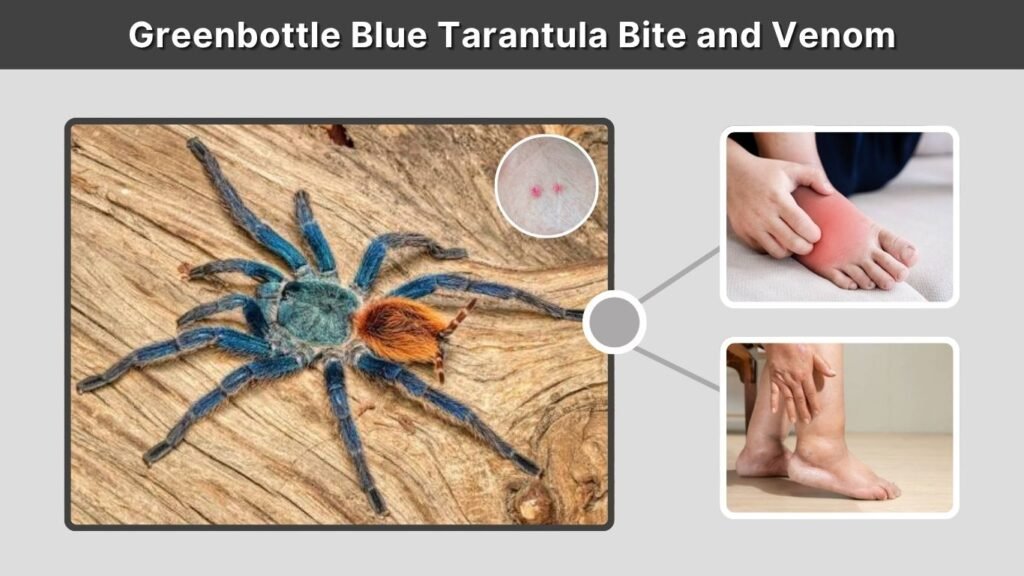
Greenbottle blue tarantulas possess venom and can bite, but they normally prefer escaping or using irritating abdominal hairs. Their venom is not generally regarded as medically significant to a healthy adult, although a bite may cause localized pain, redness, swelling or aching.
Individual reactions can vary. Seek medical attention for severe pain, spreading swelling, breathing difficulty or other serious symptoms. Urticating hairs can also irritate the skin, eyes and respiratory system.
Molting
Before molting, a greenbottle blue may stop eating, become less active, darken in color or remain inside a sealed web retreat.
During this period:
- Remove all live feeders.
- Keep the water dish available.
- Do not open the retreat.
- Never turn over a spider lying on its back.
- Avoid vibrating or moving the enclosure.
- Wait for the fangs to harden before feeding again.
Large juveniles and adults may need seven to ten days after molting before they can safely overpower prey. Young slings generally harden sooner.
Lifespan and Male vs. Female
Female greenbottle blue tarantulas can live for more than 12 years under suitable captive conditions. Males mature earlier and have significantly shorter lifespans.
Mature males develop enlarged reproductive bulbs on their pedipalps and become slimmer and more active. Females retain normal-looking pedipalps, have heavier bodies and continue molting after maturity.
Examining the inside of a well-preserved shed exoskeleton is more dependable than estimating sex from body shape alone.
Buying a Greenbottle Blue Tarantula
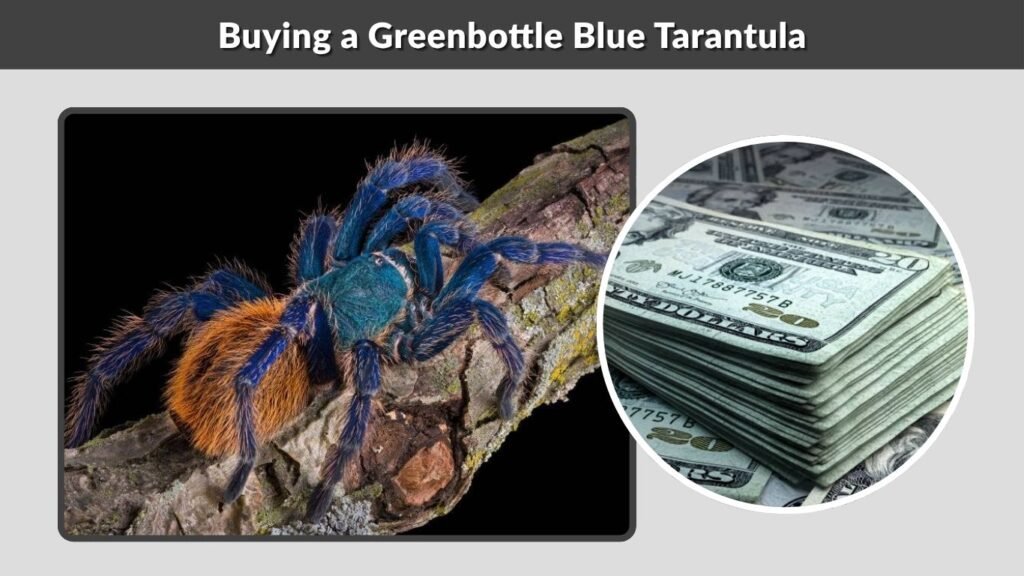
Prices vary according to the tarantula’s size, sex, availability and seller. Confirmed females typically cost more than slings or mature males because they have much longer expected lifespans.
Before buying, confirm:
- The spider is captive-bred
- Its approximate leg span
- Its feeding and molting history
- Whether its sex has been confirmed
- The seller’s live-arrival policy
- Local ownership and shipping regulations
Captive-bred tarantulas are preferable because they reduce pressure on wild populations and are less likely to carry parasites.
FAQs
Are greenbottle blue tarantulas good for beginners?
They can suit a prepared beginner because they are hardy and tolerate relatively dry conditions. However, their speed and defensive hairs make them more challenging than slow terrestrial species such as curly hair tarantulas.
How big does a greenbottle blue tarantula get?
A full-grown specimen commonly reaches approximately 4.5–6 inches across the legs. Females generally develop heavier bodies, while mature males appear slimmer and more long-legged.
Does a greenbottle blue need high humidity?
No. It comes from a dry environment and should not be kept in constantly wet conditions. Provide dry substrate, ventilation, a water dish and, when needed, a lightly moistened corner.
Why is my greenbottle blue making so much web?
Heavy webbing is normal. The spider uses silk to build tunnels, create a secure retreat, detect prey and connect different areas of its enclosure.
Is a green bottle blue the same as a cobalt blue?
No. The greenbottle blue is Chromatopelma cyaneopubescens, a colorful Venezuelan species that builds extensive surface webbing. The cobalt blue is an Asian burrowing tarantula with different care requirements and generally more defensive behavior.
