
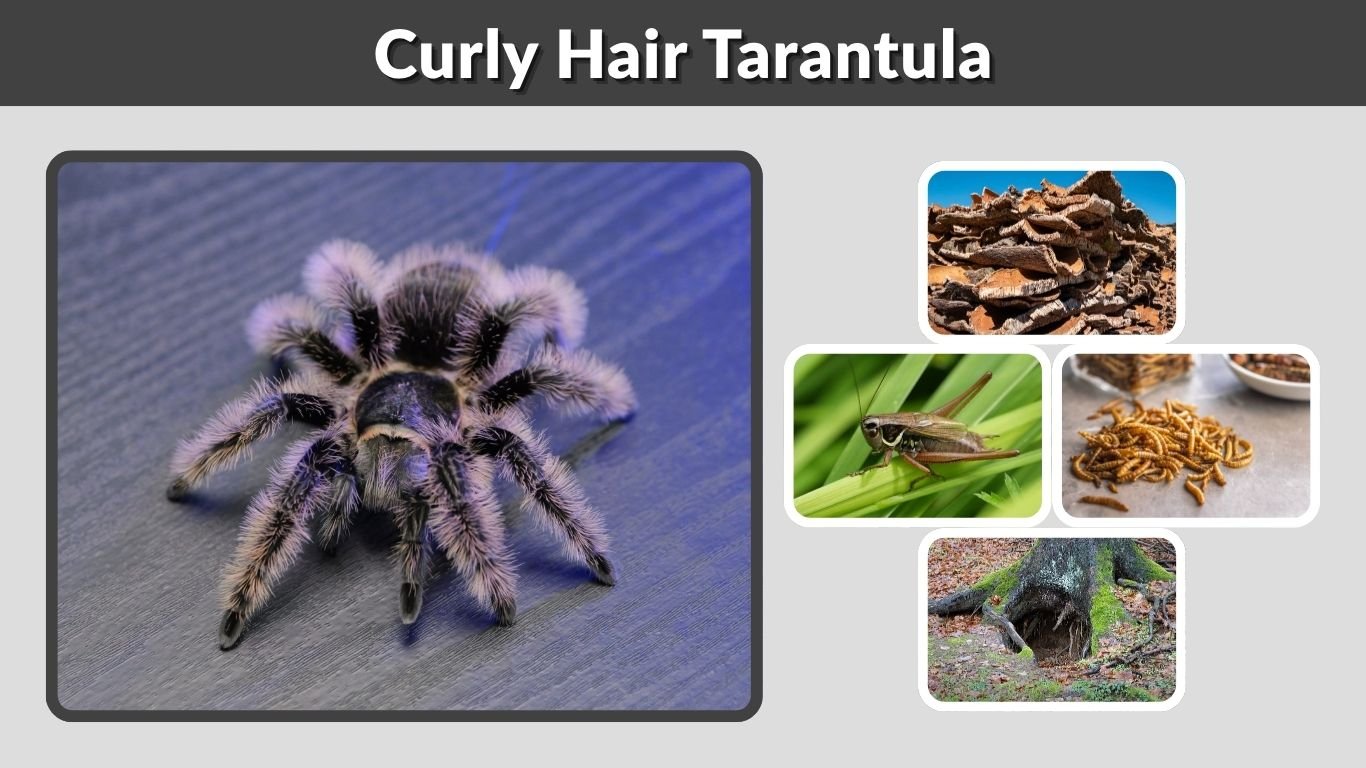
The curly hair tarantula is a terrestrial, burrowing spider known for its dark body and long, golden-brown hairs that curl outward from its legs. Its calm behavior, hardy nature and straightforward enclosure requirements make it a popular first tarantula. However, it still requires a deep substrate, a secure hide, clean water and minimal handling. This guide covers its size, lifespan, habitat, enclosure, feeding, molting, sex differences and bite risk.
What Is a Curly Hair Tarantula?
The curly hair tarantula’s accepted scientific name is Tliltocatl albopilosus. It was formerly classified as Brachypelma albopilosum, so the older name still appears in pet stores and care guides. The World Spider Catalog recognizes Tliltocatl albopilosus as the current name.
| Quick fact | Description |
| Scientific name | Tliltocatl albopilosus |
| Former name | Brachypelma albopilosum |
| Family | Theraphosidae |
| Lifestyle | Terrestrial and burrowing |
| Adult leg span | Usually around 5–6 inches |
| Temperament | Generally calm but variable |
| Diet | Live invertebrates |
| Activity | Mostly nocturnal |
| Beginner-friendly | Generally yes |
Appearance and Identification
A curly hair tarantula has a dark brown or black body covered with dense bronze, tan or golden hairs. Many of the longer hairs bend or curl, producing the fluffy appearance responsible for its common name.
Identification features include:
- Thick, heavy terrestrial body
- Dense, curly hairs on the legs and abdomen
- Dark brown or black base coloration
- Golden, bronze or tan outer hairs
- Eight small eyes grouped on a raised mound
- Large downward-pointing fangs
- A rounded abdomen covered with defensive hairs
Some individuals appear darker, lighter or more golden than others. Age, lighting, sex and breeding line can all affect their appearance.
Curly Hair Tarantula Origin and Natural Habitat
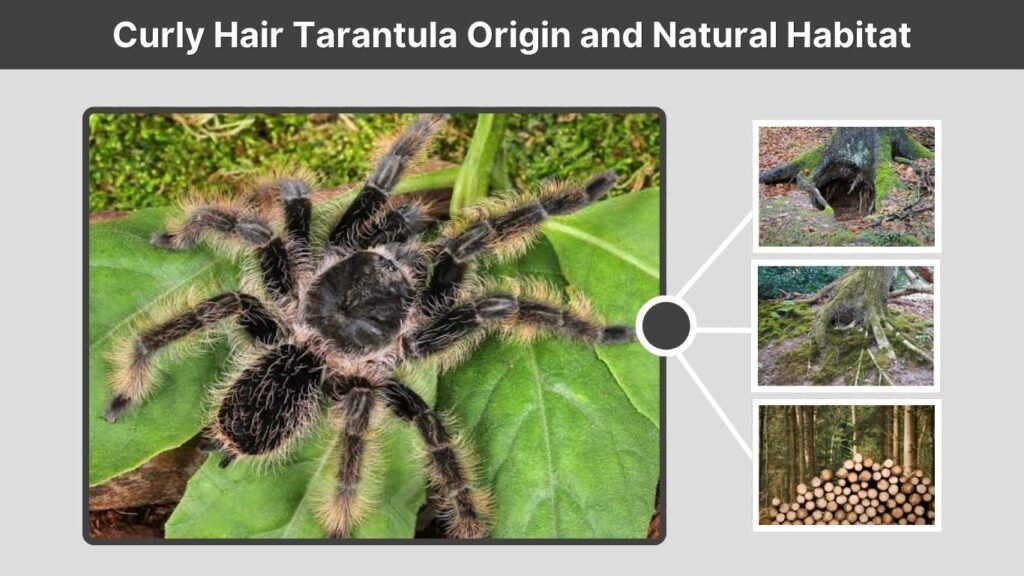
Current taxonomic records associate T. albopilosus primarily with Costa Rica, while zoo and hobby sources also discuss curly hair populations or trade forms connected with Nicaragua. The commonly used “Honduran curly hair” label may refer to older pet-trade lines and should not automatically be treated as a precise locality identification.
In the wild, curly hair tarantulas live on the ground and use burrows beneath roots, logs or other protected areas. They may enlarge an existing cavity or excavate their own shelter. Their burrows provide protection from predators, temperature changes and excessive dryness.
Honduran vs Nicaraguan Curly Hair
Pet sellers sometimes distinguish between “Honduran” and “Nicaraguan” curly hair tarantulas. Nicaraguan or “true form” individuals are often described as having heavier golden curls and a fluffier appearance, while some Honduran trade lines look darker or less densely curled.
These labels are not always applied consistently. Ask a breeder for documented lineage rather than relying only on a common name or color.
Curly Hair Tarantula Size
A full-grown curly hair tarantula commonly reaches approximately 5–6 inches across the legs. Females usually develop heavier bodies, while mature males become slimmer and leggier. Zoo sources report adults near a six-inch leg span.
Growth speed varies with feeding, temperature, sex and genetics. Spiderlings molt frequently, while large juveniles and adults grow more slowly. It may take several years for a small sling to reach adult size.
Curly Hair Tarantula Enclosure
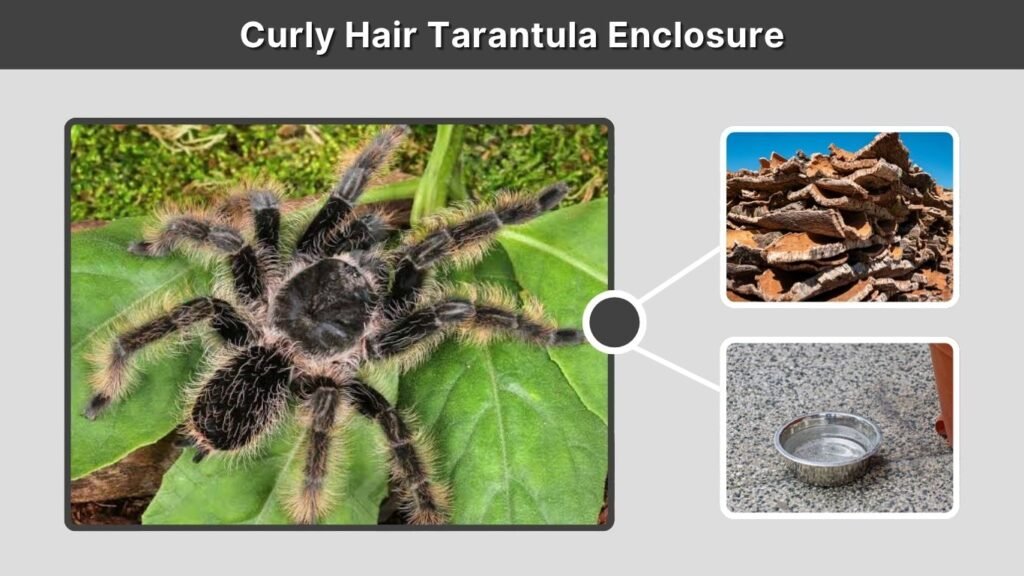
Curly hair tarantulas are terrestrial rather than arboreal. Their enclosure should provide substantial ground space, deep substrate and limited climbing height. Too much empty vertical space creates a dangerous fall risk because a ruptured abdomen can be fatal.
Enclosure Size and Setup
An adult can be housed in a secure enclosure measuring roughly three times its leg span in length and about twice its leg span in width. Exact dimensions matter less than safe proportions and usable floor space.
Include:
- Deep, compactable substrate
- A cork-bark or artificial hide
- A shallow water dish
- Adequate ventilation
- Artificial plants or light ground cover
- A tightly secured lid
Keep the distance between the substrate and lid relatively short. Avoid sharp stones, wire mesh floors and heavy decorations that could collapse into a burrow.
Best Substrate
Suitable substrate options include pesticide-free topsoil, coconut fiber, peat-based mixtures or combinations designed for terrestrial tarantulas. The material should hold a burrow without becoming waterlogged.
Provide at least four inches for an adult, with deeper substrate when the enclosure allows it. Some individuals remain visible, while others excavate extensive tunnels or close the entrance for weeks.
Temperature and Humidity
Normal indoor temperatures around 70–80°F are generally suitable. Avoid direct sunlight, heat lamps and unregulated heating pads. When a room becomes too cold, warming the room is safer than applying intense heat directly to the enclosure.
Humidity should be managed through substrate moisture and access to drinking water rather than constant heavy misting. Keep a clean water dish available and allow most of the surface to remain dry. Slightly moisten one corner when the deeper substrate becomes completely dry. Good airflow helps prevent mold and stagnant conditions. Experienced care guidance recommends a moisture gradient rather than keeping the entire enclosure wet.
Curly Hair Tarantula Diet and Feeding
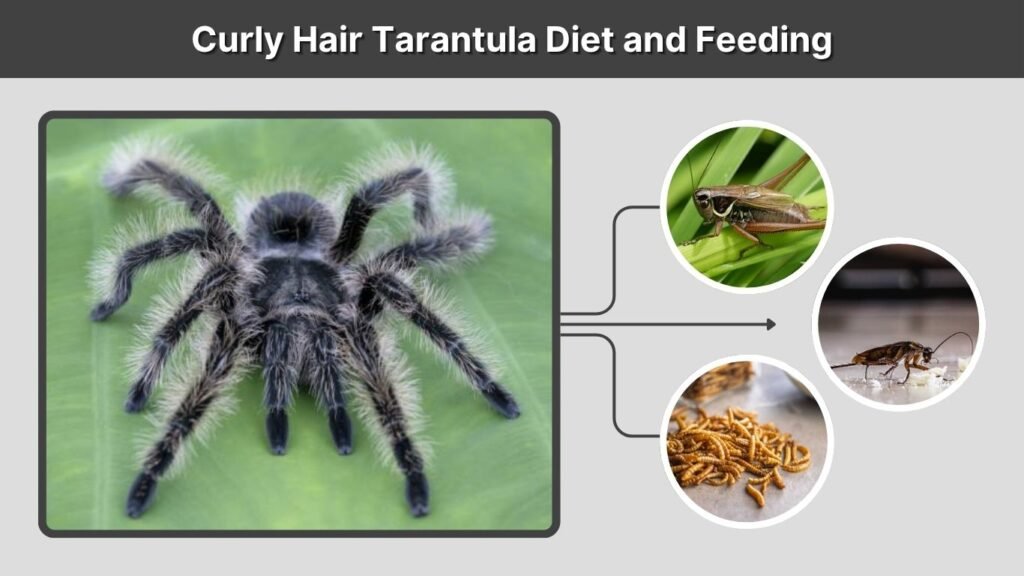
Curly hair tarantulas are predators that eat live invertebrates. Captive specimens commonly accept crickets, roaches, mealworms, superworms and similar appropriately sized feeders. Zoo care information also lists insects such as crickets and roaches as normal food.
Feeding Schedule
Spiderlings may eat small prey every four to seven days. Juveniles can usually be fed every seven days, while adults often need food every seven to fourteen days.
Use the abdomen as a condition guide. It should appear rounded but not excessively swollen. Remove uneaten prey within 24 hours and immediately remove feeders when the spider shows signs of premolt.
A tarantula may refuse food because it is preparing to molt, has recently eaten, is stressed or is a mature male. Food refusal alone is not usually an emergency when the abdomen remains healthy and water is available.
Curly Hair Tarantula Molting and Bald Spots
Molting allows the tarantula to grow and replace its exoskeleton. Before molting, a curly hair may stop eating, become inactive, darken in color or seal itself inside its hide.
A bald patch on the abdomen is often caused by the tarantula releasing defensive hairs. The exposed skin usually darkens before a molt as the new exoskeleton develops underneath.
During molting:
- Remove all live feeders.
- Do not disturb the spider.
- Keep the water dish filled.
- Do not turn over a spider lying on its back.
- Wait until its fangs harden before feeding.
Small juveniles may be ready to eat after several days, while large adults should generally receive at least seven to ten days of recovery.
Curly Hair Tarantula Temperament and Handling
Curly hair tarantulas are commonly described as calm, slow-moving and suitable for beginners. However, every individual has its own temperament. A disturbed spider may retreat, raise its front legs, release urticating hairs or bite.
Handling is not recommended. The greatest danger is often to the tarantula rather than the person. A sudden movement or short fall can badly injure its abdomen. Use a catch cup and soft brush when transferring it.
Are Curly Hair Tarantulas Venomous?
Yes. Like other tarantulas, they possess venom used to subdue prey. Their bites are not generally considered life-threatening to healthy adults, but they can produce pain, swelling, redness or other reactions.
Their urticating hairs may irritate the skin, eyes and respiratory passages. Avoid touching your face after enclosure maintenance and seek medical assistance for breathing problems, eye exposure or a severe reaction.
Male vs Female Curly Hair Tarantula
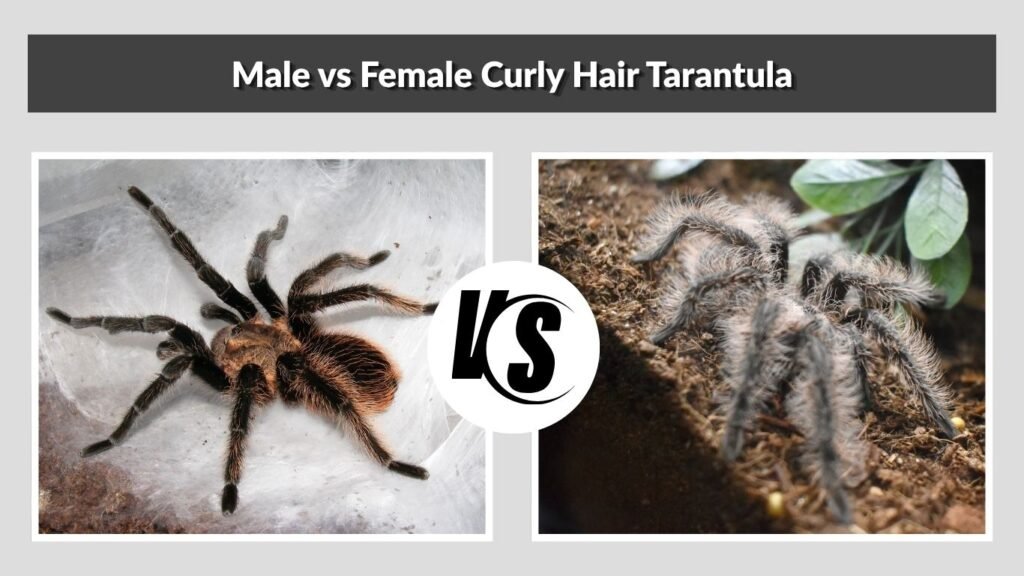
Juvenile males and females can look similar. Examining the inside of a well-preserved shed exoskeleton is the most reliable method of determining sex before maturity.
| Feature | Male | Female |
| Adult build | Slimmer and leggier | Broader and heavier |
| Abdomen | Usually smaller | Usually larger |
| Mature pedipalps | Enlarged reproductive bulbs | Normal leg-like ends |
| Front legs | Mature males develop hooks | No mating hooks |
| Adult molting | Usually stops after maturity | Continues throughout life |
| Lifespan | Shorter | Much longer |
Lifespan
Females may live for 15 years or longer, with some zoo sources reporting potential lifespans approaching 20 years. Males mature earlier and normally live much shorter lives. Published zoo estimates vary, demonstrating that lifespan depends on sex, individual development and captive conditions.
A mature male may roam frequently, eat less and spend more time searching around the enclosure. Enlarged pedipalps that resemble boxing gloves and hooks on the first pair of legs confirm maturity.
Buying a Curly Hair Tarantula
Choose a captive-bred tarantula from a breeder who can explain its approximate size, feeding history, last molt and sexing method. Price varies according to size, confirmed sex, locality label and availability. Adult females generally cost more than spiderlings or mature males because of their longer remaining lifespan.
Avoid purchasing a spider with fluid leaking from its body, a severely shrunken abdomen or an unclear history. Check local rules before ordering, especially when purchasing across state or international borders.
FAQs
Are curly hair tarantulas good for beginners?
Yes. They are generally hardy, terrestrial and calmer than many faster species. Beginners must still provide a safe enclosure, deep substrate, water and minimal handling.
Do curly hair tarantulas burrow?
Yes. Many individuals excavate beneath hides or create deep tunnels. Others remain visible and only make a shallow retreat. Both behaviors can be normal.
How big does a curly hair tarantula get?
A full-grown specimen commonly reaches around 5–6 inches in leg span. Females are usually heavier-bodied, while mature males have longer-looking legs.
Why is my curly hair tarantula not eating?
Premolt is the most common explanation. Overfeeding, stress, recent relocation and male maturity can also reduce appetite. Remove uneaten prey and continue providing water.
Can you hold a curly hair tarantula?
Handling is possible but not recommended. The spider may release irritating hairs, bite or fall. Observing it inside a properly designed enclosure is safer for both the keeper and the tarantula.
