
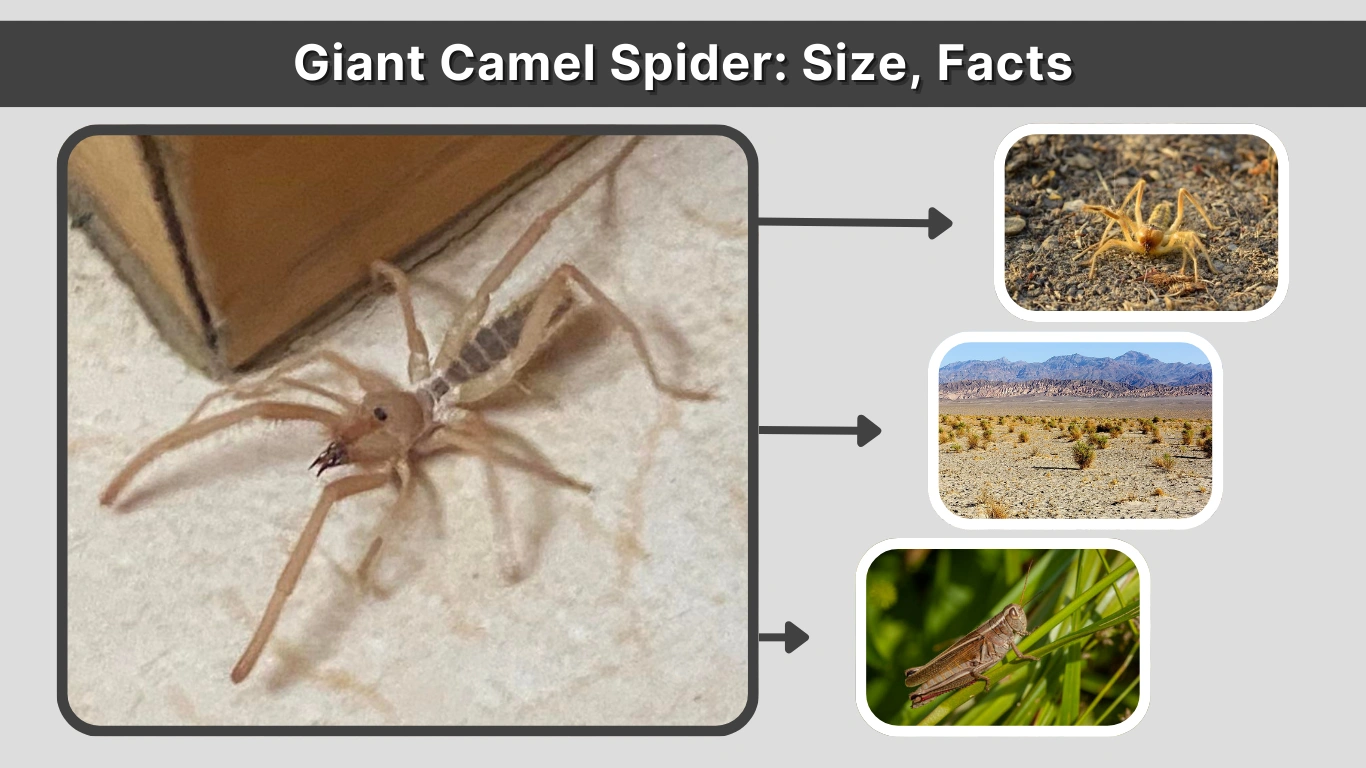
Giant camel spiders are often described online as terrifying desert monsters, capable of growing to enormous sizes and posing serious threats to humans. Viral photographs and exaggerated stories have helped create this image, especially those shared during military deployments in desert regions. In reality, the term “giant camel spider” is misleading. While some camel spiders are larger than average, they are far from the massive creatures often portrayed. Understanding their true size, physical traits, and behavior helps separate fact from fiction and reduces unnecessary fear.
What Is a Giant Camel Spider?
The phrase “giant camel spider” does not refer to a specific species. Camel spiders belong to the arachnid order Solifugae, a group that includes hundreds of species adapted to hot, dry environments. Some species grow larger than others, which has led to the informal use of the word “giant,” especially when individuals are photographed up close.
Camel spiders are also known as sun spiders or wind scorpions, although they are neither true spiders nor scorpions. These alternative names further add to the confusion surrounding their identity and behavior.
Is There a Real Giant Camel Spider Species?
There is no officially recognized species called a giant camel spider. Size differences exist among species, but all camel spiders fall within a similar range. Claims of camel spiders reaching extreme sizes are usually the result of visual distortion rather than biological reality.
How Big Can a Giant Camel Spider Get?

Camel spiders are larger than many common spiders, but they are not enormous. Most adult camel spiders measure between 3 and 6 inches in total length, including their legs. Some larger species may appear slightly bigger, but even the largest camel spiders do not reach the exaggerated dimensions often seen online.
Body Length vs Leg Span
A major reason camel spiders appear so large is the way their legs are positioned. Their long legs spread outward, increasing their apparent size. When measured by body length alone, camel spiders are much smaller than their leg span suggests.
Photos taken from close angles can dramatically exaggerate size, making a camel spider look far larger than it actually is.
Giant Camel Spider vs Common Spiders
When compared to tarantulas or wolf spiders, camel spiders may look larger due to their long legs and upright stance. However, many tarantulas have heavier bodies and greater mass. Camel spiders appear “giant” mainly because of their structure and movement, not their actual body size.
Physical Characteristics of Giant Camel Spiders

Camel spiders have a distinctive appearance shaped by their desert lifestyle. Their bodies are elongated and covered in fine hairs that help detect vibrations and environmental changes. Coloration usually ranges from pale yellow to sandy brown, allowing them to blend into desert terrain.
They have eight legs and a pair of large pedipalps, which resemble extra legs and are often mistaken as such. These pedipalps are used for sensing surroundings and gripping prey.
Jaws, Legs, and Sensory Features
The most striking feature of a giant camel spider is its chelicerae, or jaws. These powerful jaws are used to capture and crush prey rather than inject venom. Camel spiders do not have venom glands, despite common myths suggesting otherwise.
Their legs are built for speed, enabling them to move quickly across sand and rocks. Sensory hairs covering their body help them detect movement, temperature, and vibrations, making them effective nocturnal hunters.
Habitat and Geographic Distribution

Camel spiders are primarily found in arid and desert regions, where temperatures can be extreme. They are nocturnal creatures, avoiding daytime heat by hiding under rocks, in burrows, or beneath debris.
Regions Known for Large Camel Spiders
Camel spiders are commonly found in:
- The Middle East
- Northern and Southern Africa
- Southwestern United States
- Parts of Central and South Asia
Encounters with larger camel spiders are more frequent in these regions, especially in remote desert environments.
How Fast Are Giant Camel Spiders?
Giant camel spiders are known for their impressive speed, which often adds to their frightening reputation. They can run at speeds of up to 10 miles per hour, making them one of the faster arachnids found in desert environments. This speed allows them to hunt efficiently and escape predators in open terrain.
Their sudden bursts of movement and erratic direction changes can make them appear aggressive, especially to someone unfamiliar with their behavior.
Do Giant Camel Spiders Chase Humans?
One of the most common myths is that giant camel spiders chase people. In reality, they are attracted to shade, not humans. When a person moves, their shadow moves as well, giving the impression that the camel spider is pursuing them. This behavior is purely a survival instinct used to avoid overheating in extreme desert heat.
What Do Giant Camel Spiders Eat?

Giant camel spiders are carnivorous predators with a broad diet. They primarily feed on insects such as beetles, termites, and grasshoppers. Larger individuals are also capable of hunting small lizards, rodents, and even other arachnids.
Hunting and Feeding Behavior
Camel spiders rely on speed, powerful jaws, and sensory awareness rather than venom. They actively hunt at night, detecting vibrations and movement before quickly capturing prey with their chelicerae. Once caught, prey is crushed and consumed efficiently.
Are Giant Camel Spiders Dangerous to Humans?
Despite their intimidating size and appearance, giant camel spiders are not considered dangerous to humans. They are non-aggressive and prefer to flee rather than attack. Most encounters occur accidentally, especially when humans enter their habitat.
Giant Camel Spider Bite Explained
Giant camel spiders can bite if they feel threatened or are handled, but bites are rare. A bite may cause localized pain, redness, or mild swelling. Since camel spiders are not venomous, any discomfort comes from mechanical injury caused by their jaws rather than toxins.
Proper wound cleaning usually prevents complications.
Are Giant Camel Spiders Venomous?
Camel spiders do not possess venom glands and do not inject venom. Claims that they produce anesthetic substances or cause tissue damage are myths with no scientific support. Serious reactions are extremely uncommon.
Giant Camel Spider Myths vs Facts
Giant camel spiders have become the subject of numerous myths, often fueled by viral images and dramatic storytelling. These myths exaggerate their size, danger, and behavior.
Common Myths About Giant Camel Spiders
- They are deadly predators – False. They pose little threat to humans.
- They inject venom or anesthetic – False. They are non-venomous.
- They scream or jump at faces – False. They cannot jump and do not scream.
Most myths originate from fear, poor lighting, and misleading photography.
Why Do Giant Camel Spider Photos Look So Terrifying?
Photos of giant camel spiders often use forced perspective, placing the animal close to the camera while objects or people appear farther away. This creates an illusion of massive size.
How Viral Images Exaggerate Size
Close-up shots, wide-angle lenses, and lack of scale references can dramatically distort perception. When viewed in real life, camel spiders are far smaller than they appear online.
How to Avoid Encounters With Giant Camel Spiders
Avoiding encounters with giant camel spiders is relatively simple, especially in desert regions. Sealing living spaces, shaking out clothing and bedding, and avoiding handling arachnids significantly reduces the chance of contact.
FAQs
Are giant camel spiders real?
There is no specific species called a giant camel spider. The term is used informally to describe larger individuals of certain camel spider species.
What is the largest camel spider ever recorded?
Most camel spiders reach a maximum size of about 6 inches including leg span. Claims of larger sizes are typically exaggerated.
Can a giant camel spider kill a human?
No, there are no confirmed cases of camel spiders killing humans.
Are giant camel spiders found in the United States?
Yes, camel spiders can be found in the southwestern United States, particularly in desert regions.
Why do giant camel spiders look bigger in photos?
Forced perspective, camera angles, and lighting make them appear much larger than they are.
Conclusion
Giant camel spiders may look frightening, but they are far less dangerous than commonly believed. Their size, speed, and appearance are often exaggerated by myths and viral images. In reality, they are non-venomous desert predators that play an important role in controlling insect populations. Understanding the facts helps replace fear with informed awareness and respect for these misunderstood creatures.
