
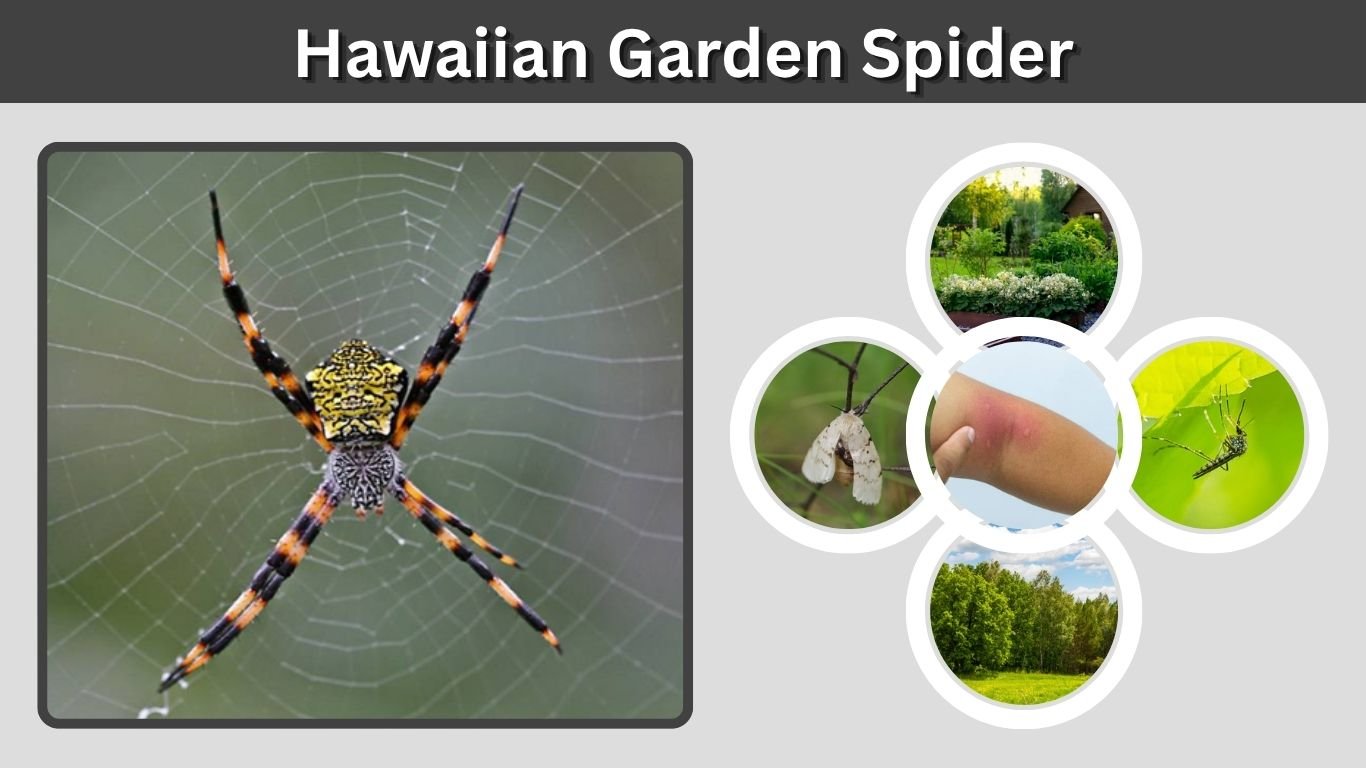
The Hawaiian garden spider (Argiope appensa) is a large, colorful orb-weaver commonly seen in gardens, forests, farms, and other sunny areas across the Hawaiian Islands. Females are especially noticeable because of their yellow-and-black abdomens, long banded legs, and large circular webs decorated with thick zigzag silk.
Despite its intimidating appearance, this spider is not considered dangerous to humans. It prefers remaining in its web and catching flying insects rather than interacting with people. The World Spider Catalog lists the species as native from Taiwan to New Guinea and introduced to Hawaii.
Hawaiian Garden Spider Identification
The Hawaiian garden spider belongs to the orb-weaver family Araneidae. Members of this family are known for constructing round, wheel-shaped webs.
Adult females are much larger and more colorful than males. Their appearance can vary, but mature females generally display a combination of yellow, black, silver, brown, and reddish markings.
Female Appearance
A female Hawaiian garden spider can be identified by:
- Broad yellow abdomen with black markings
- Silver or gray hairs covering the carapace
- Long legs with black, brown, orange, or reddish bands
- Small bumps or lobes along the abdomen
- Dark underside with yellow markings
- Legs often held together in pairs
- Position at the center of a large orb web
The paired-leg posture can make the spider appear to have four legs rather than eight. When resting, its legs frequently form a large X across the middle of the web.
Male Appearance
Male Hawaiian garden spiders are considerably smaller and less colorful. They usually have slender brown or gray bodies and may be difficult to recognize as the same species.
A mature male may live near the outer edge of a female’s web. Because of the dramatic difference in size and color, people sometimes mistake the male for an unrelated spider. Strong size differences between males and females are characteristic of Argiope spiders.
Hawaiian Garden Spider Size
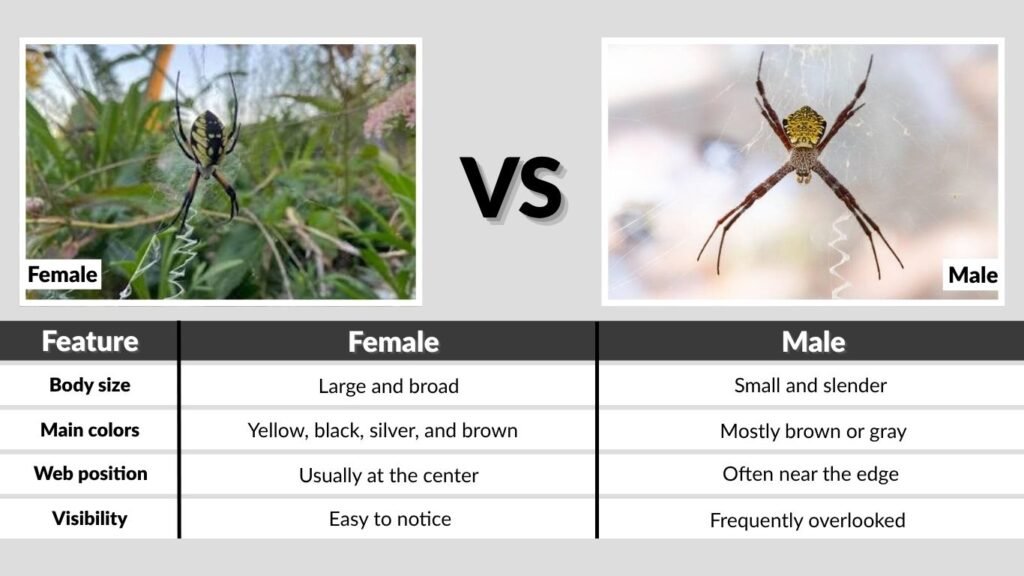
A mature female commonly has a body length of around 20–28 millimeters, or approximately 0.8–1.1 inches. A gravid female documented in Guam measured about 2.6 centimeters in body length. Including its long legs, a large female can appear several inches across.
Males are much smaller, often measuring only a fraction of the female’s size. This size difference is one of the easiest ways to distinguish the sexes.
| Feature | Female | Male |
| Body size | Large and broad | Small and slender |
| Main colors | Yellow, black, silver, and brown | Mostly brown or gray |
| Web position | Usually at the center | Often near the edge |
| Visibility | Easy to notice | Frequently overlooked |
| Abdomen | Wide and patterned | Narrow and less colorful |
Hawaiian Garden Spider Web
The spider builds a large vertical orb web between shrubs, trees, fences, buildings, and tall plants. The web contains sticky spiral threads that capture flying insects.
The spider normally waits at the center with its head pointing downward. Vibrations in the silk alert it when an insect has become trapped.
What Is the Zigzag Pattern?
Many webs contain one or more thick white zigzag bands known as stabilimenta or web decorations. These structures may extend above, below, or around the spider.
Scientists continue to study their exact purpose. Proposed functions include attracting insect prey, making the web more visible to birds, providing camouflage, and protecting the spider. Research on A. appensa found that spiders using smaller decorated webs achieved feeding results similar to those using larger undecorated webs, suggesting that decoration is part of a flexible foraging strategy.
Juvenile web decorations may differ between geographic populations. One study found that small juveniles frequently produced disc-shaped decorations in the Philippines but rarely did so in the Mariana Islands, possibly because they face different predator communities.
Does the Spider Rebuild Its Web?
Damaged portions may be repaired or replaced as needed. Wind, rain, struggling prey, people, and birds can break sections of the web.
A spider may remain in the same productive location for an extended period, rebuilding parts of its web between the same plants or structures.
Hawaiian Garden Spider Habitat
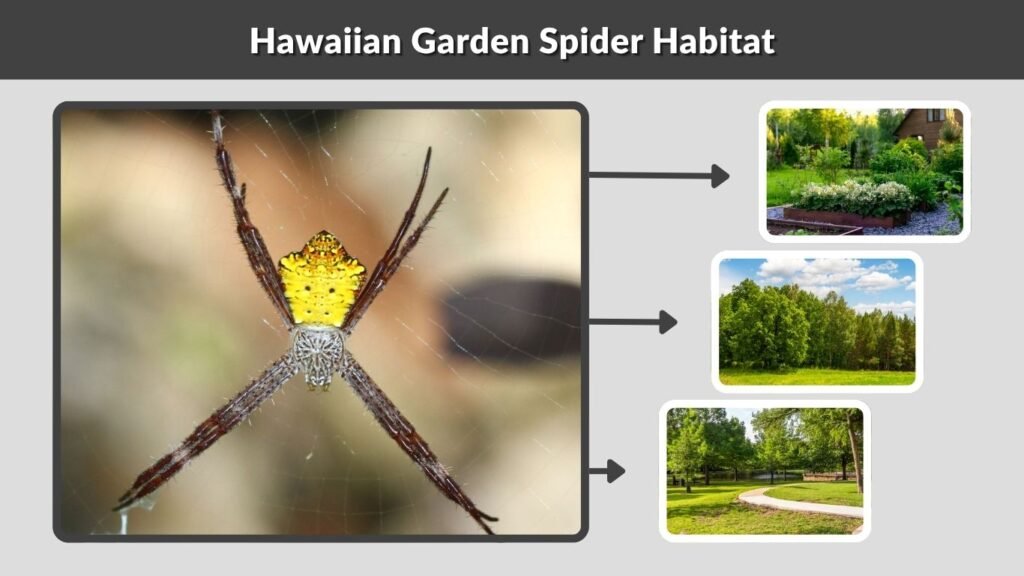
Hawaiian garden spiders prefer warm areas with enough open space for a large web and plenty of flying insects.
They may be found in:
- Residential gardens
- Forest edges
- Hiking trails
- Agricultural fields
- Shrublands
- Parks
- Roadside vegetation
- Between trees and fences
- Around porches and outdoor structures
They usually remain outdoors. A spider found inside a home may have entered accidentally or constructed its web near an open window, doorway, or screened area.
The species occurs naturally from Taiwan through New Guinea and has been introduced to Hawaii. It is now widely associated with the Hawaiian Islands, which explains its common name.
What Do Hawaiian Garden Spiders Eat?
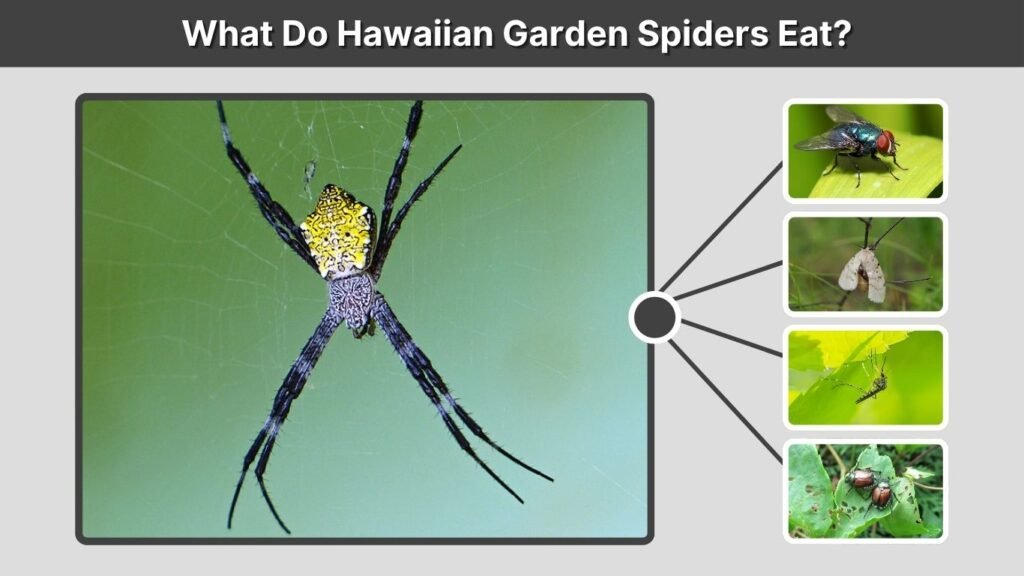
Hawaiian garden spiders feed mainly on insects that fly or jump into their webs.
Common prey may include:
- Flies
- Moths
- Mosquitoes
- Beetles
- Grasshoppers
- Bees and wasps
- Leafhoppers
- Other small flying insects
After detecting a struggling insect, the spider approaches it and may wrap it in silk. It then uses venom to immobilize the prey and begins feeding.
Garden spiders can be beneficial around homes and farms because they naturally remove insects. Spiders in general provide valuable ecological services by helping prevent insect populations from growing unchecked.
Is the Hawaiian Garden Spider Poisonous?
The Hawaiian garden spider is venomous, not poisonous. Venom is delivered through fangs, while poison causes harm when touched or eaten.
Almost all spiders use venom to immobilize prey, but relatively few have venom considered medically important to humans. Garden orb-weavers are not regarded as dangerous spiders.
Its bright colors are not evidence that it is deadly. The markings may help with camouflage, signaling, or other ecological functions.
Does the Hawaiian Garden Spider Bite?
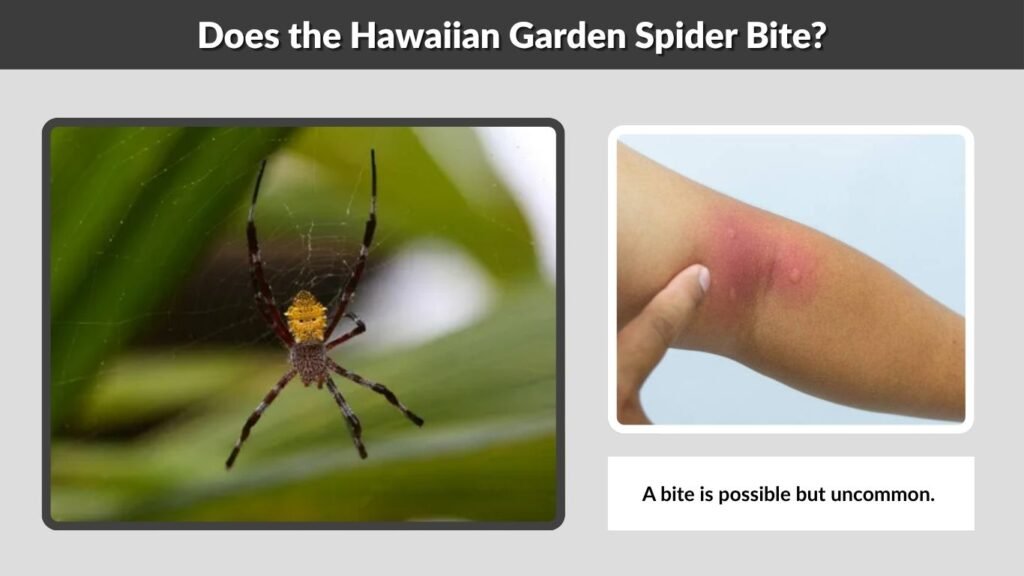
A bite is possible but uncommon. The spider is not aggressive and normally remains in its web or attempts to escape when disturbed.
A defensive bite is most likely when someone:
- Squeezes the spider
- Traps it against bare skin
- Handles it roughly
- Reaches into its web without seeing it
- Prevents it from escaping
Other Argiope and garden orb-weavers are described by university extension sources as harmless to people and extremely unlikely to bite. A bite, when it occurs, would generally be expected to cause localized pain, redness, or swelling rather than severe poisoning.
What to Do After a Bite
Wash the area with soap and water and apply a wrapped cold pack for short intervals. Avoid scratching the skin.
Seek medical advice if pain or swelling continues to increase, the area shows signs of infection, or the person develops widespread hives, dizziness, breathing difficulty, or facial swelling. Severe allergic reactions are unusual but require urgent care.
Hawaiian Garden Spider Life Cycle
The life cycle includes the egg, spiderling, juvenile, and adult stages. Unlike insects, spiders do not pass through a caterpillar-like larva or pupal stage.
After mating, the female produces an egg sac containing numerous eggs. The sac protects the developing young from weather and some predators.
Newly emerged spiderlings are tiny and disperse to build individual webs. They molt repeatedly as they grow. Their colors, body proportions, and web decorations may change as they approach maturity.
The precise lifespan varies with climate, food, predation, and sex. Like many garden orb-weavers, individuals are generally expected to complete their life cycle within roughly a year, although tropical conditions may allow overlapping generations.
Is It Safe to Leave One in the Garden?
A Hawaiian garden spider can normally be left alone when its web is not blocking a doorway, walkway, or frequently used area. It helps control insects and is unlikely to approach people.
When relocation is necessary, avoid grabbing the spider. Break or remove part of the web gently and allow it to move into nearby vegetation. Wearing gloves and using a long container can reduce accidental contact.
Pesticide treatment is rarely necessary for a single outdoor garden spider. Removing it may also allow more flying insects to remain in the area.
Hawaiian Garden Spider vs. Similar Spiders
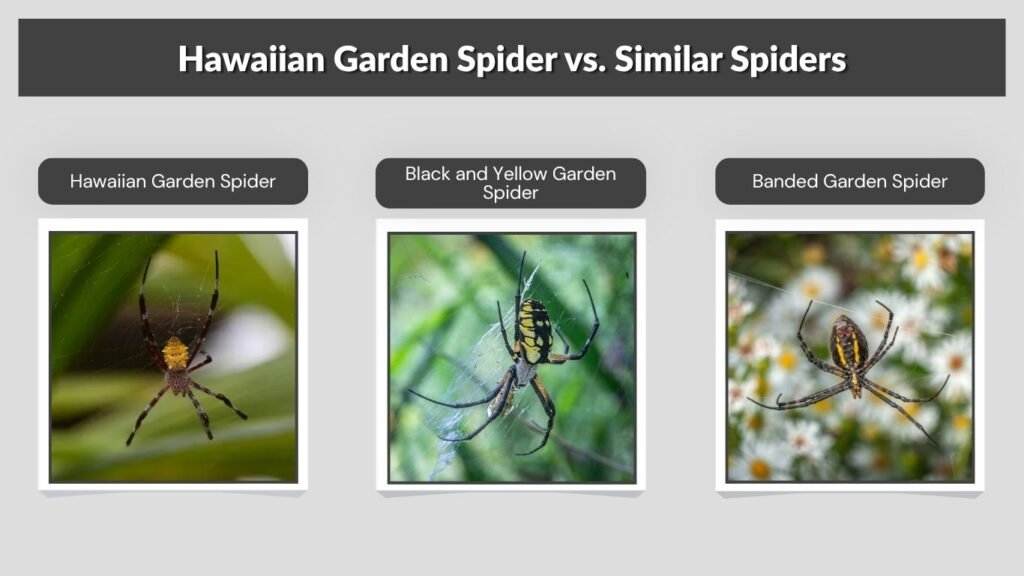
The Hawaiian garden spider may be confused with several other large orb-weavers.
Black and Yellow Garden Spider
The black and yellow garden spider, Argiope aurantia, has a smoother oval abdomen with bold black-and-yellow patches. The Hawaiian species often has a more irregular, textured abdomen and reddish-brown legs.
Banded Garden Spider
The banded garden spider, Argiope trifasciata, normally has narrow horizontal silver, yellow, and black bands across its abdomen. Its body is more elongated than that of many Hawaiian garden spiders.
Spiny-Backed Orb-Weaver
A spiny-backed orb-weaver has a much smaller, hard-looking abdomen with obvious pointed spines. It does not have the Hawaiian garden spider’s long body, extremely long legs, or large X-shaped resting posture.
FAQs
Is the Hawaiian Garden Spider Native to Hawaii?
No. The World Spider Catalog lists Argiope appensa as native from Taiwan to New Guinea and introduced to Hawaii. It is now common and well established across the islands.
Are Hawaiian Garden Spiders Dangerous?
They are not considered dangerous to humans. They possess venom for subduing insects but are reluctant to bite and generally remain in their webs.
Why Does the Spider Sit in an X Shape?
The spider groups its eight legs into four pairs while resting at the web’s center. This posture may help it blend with the zigzag silk, monitor vibrations, or respond quickly to prey and threats.
Should I Destroy a Hawaiian Garden Spider Web?
Leave it undisturbed when it is in a safe location. Remove or relocate it only when the web blocks a walkway or creates frequent accidental contact.
Can Hawaiian Garden Spiders Live Inside a House?
They are primarily outdoor spiders because they need enough space for a large orb web and a regular supply of insects. One found indoors probably entered accidentally or built beside an opening.
