
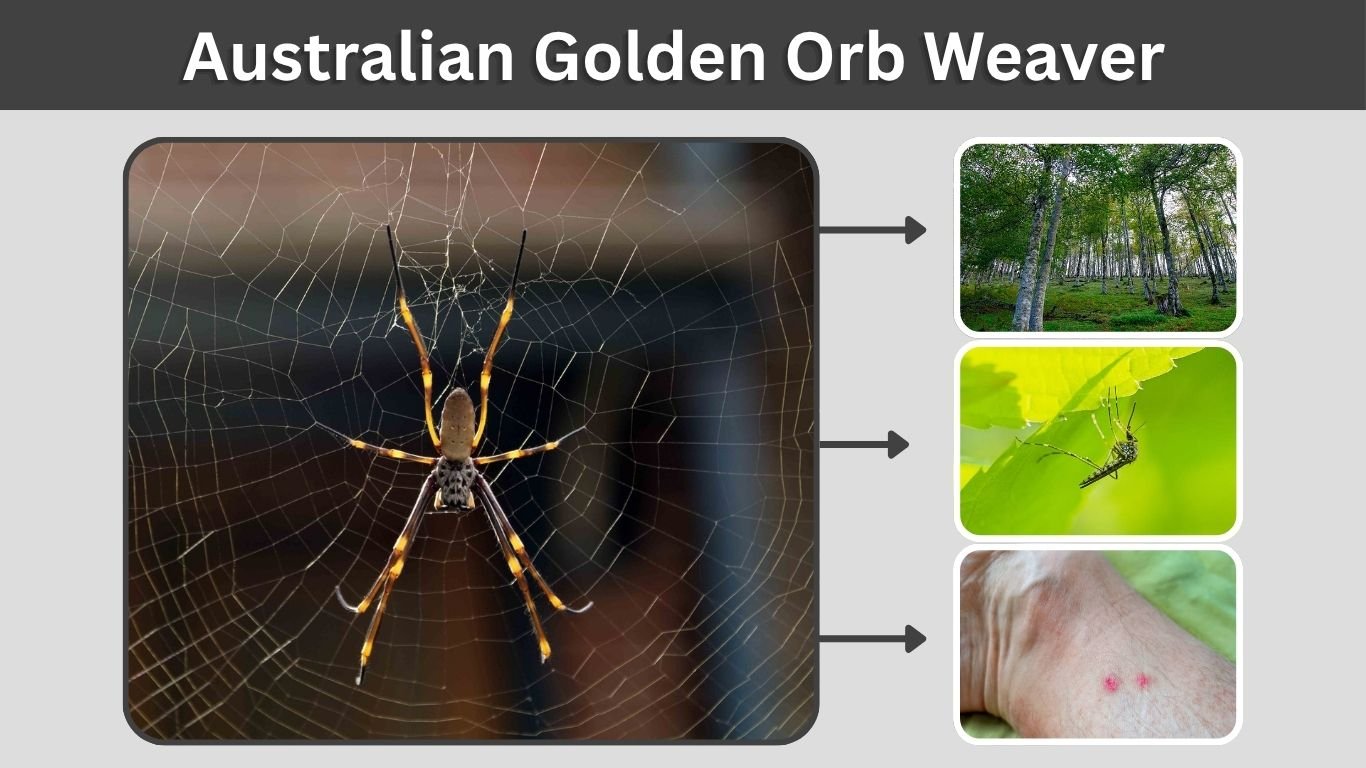
The Australian golden orb weaver (Trichonephila edulis) is a large web-building spider known for producing strong silk that appears golden in sunlight. It occurs across Australia, including Tasmania, and commonly builds its impressive webs between trees, shrubs, fences, and outdoor structures.
Despite its large size and intimidating appearance, the Australian golden orb weaver is not considered dangerous to humans. It is a shy spider that spends most of its life in its web, capturing flies, beetles, moths, cicadas, and other insects.
What Is an Australian Golden Orb Weaver?
The Australian golden orb-weaving spider belongs to the orb-weaver family Araneidae. Its currently accepted scientific name is Trichonephila edulis, although older references commonly call it Nephila edulis.
Australia is also home to other golden orb-weavers, including Trichonephila plumipes and the giant golden orb-weaver, Trichonephila pilipes. Therefore, “golden orb weaver” may describe a group of closely related spiders rather than one species in every context.
Australian Golden Orb Weaver Identification
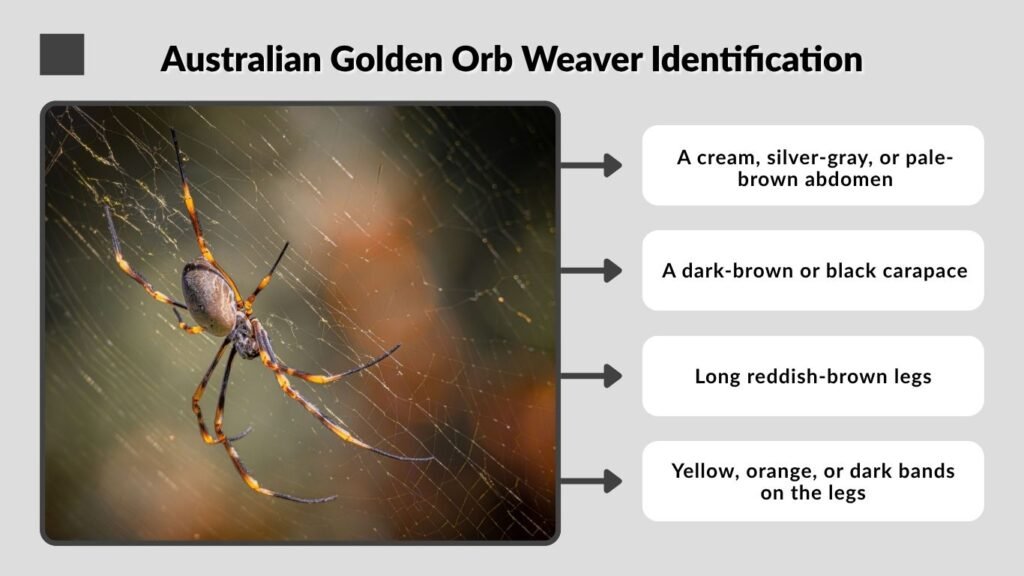
A mature female is much larger and more noticeable than the male. She usually rests near the center of a large vertical web with her long legs spread across the silk.
Female Appearance
Female Australian golden orb weavers commonly have:
- A cream, silver-gray, or pale-brown abdomen
- A dark-brown or black carapace
- Long reddish-brown legs
- Yellow, orange, or dark bands on the legs
- Dark brushes or thickened sections on some legs
- An elongated or oval abdomen
- A large golden-colored orb web
Body color varies among individuals and may change slightly as the spider grows. Some females look silver-gray, while others appear brown, plum-colored, or cream.
Male Appearance
Male golden orb weavers are tiny compared with females. They are generally reddish-brown or dark brown, with slender bodies and relatively long legs.
One or more males may live along the edges of a female’s web while waiting for an opportunity to mate. Their small size makes them easy to overlook or mistake for unrelated spiders.
How Big Is an Australian Golden Orb Weaver?
Female Australian golden orb weavers usually measure approximately 2–4 centimeters in body length. Including their long legs, large females can appear several inches across.
Males generally reach only about 5–6 millimeters in body length. This dramatic difference between the sexes is known as sexual size dimorphism.
| Feature | Female | Male |
| Body length | Around 2–4 cm | Around 5–6 mm |
| Body shape | Large and robust | Tiny and slender |
| Main colors | Cream, gray, brown, and black | Red-brown to dark brown |
| Web position | Usually near the center | Commonly around the edges |
| Visibility | Easy to notice | Often overlooked |
The giant golden orb-weaver found in northern Australia can develop an even greater leg span and is considered one of Australia’s largest spiders by overall span.
Australian Golden Orb Weaver Web
The web is the spider’s most remarkable feature. It is a large, suspended, wheel-shaped structure built across openings where flying insects are likely to pass.
A web made by Trichonephila edulis may measure approximately 0.5–1 meter across. Its silk has a yellow or golden appearance that becomes particularly visible in direct sunlight.
Why Is the Web Golden?
The web contains naturally yellow-colored silk. When sunlight reflects from the strands, the entire structure may appear to shine like gold.
The coloration may make the silk less noticeable under certain lighting conditions or influence how insects respond to the web. Regardless of its precise function, the golden sheen gives these spiders their common name.
Strong and Semi-Permanent Silk
Unlike many orb-weavers that replace most of their web regularly, golden orb weavers maintain large, semi-permanent structures. They repair damaged sections while retaining usable portions.
Additional barrier threads are often positioned in front of or behind the main orb. These tangled strands may help protect the spider from birds and reduce accidental damage to the central web.
Several females may sometimes build webs close together, creating a large network of overlapping silk. Small kleptoparasitic spiders may also live within the web and steal tiny captured insects.
Habitat and Distribution
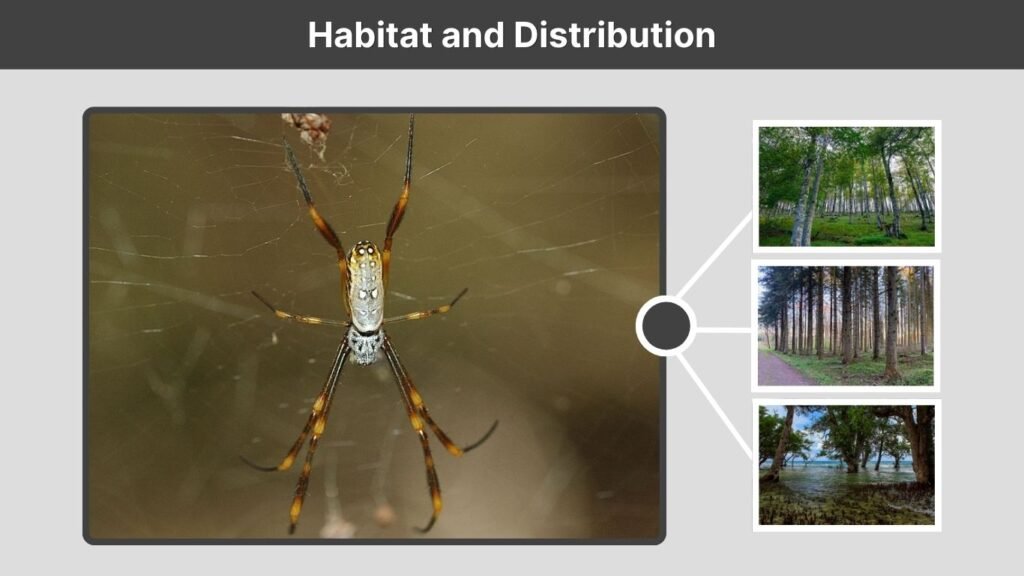
Australian golden orb weavers occur throughout Australia, including Tasmania. They are also recorded in New Guinea, New Caledonia, New Zealand, and nearby Pacific regions.
Common habitats include:
- Open forests
- Woodlands
- Shrublands
- Coastal dune vegetation
- Mangroves
- Vegetation beside waterways
- Residential gardens
- Parks and walking trails
- Farms and orchards
- Outdoor areas around buildings
They select locations with enough space to support a large web and regular insect traffic. Webs are often stretched between bushes, tree branches, fences, verandas, sheds, and other stable structures.
What Do Australian Golden Orb Weavers Eat?
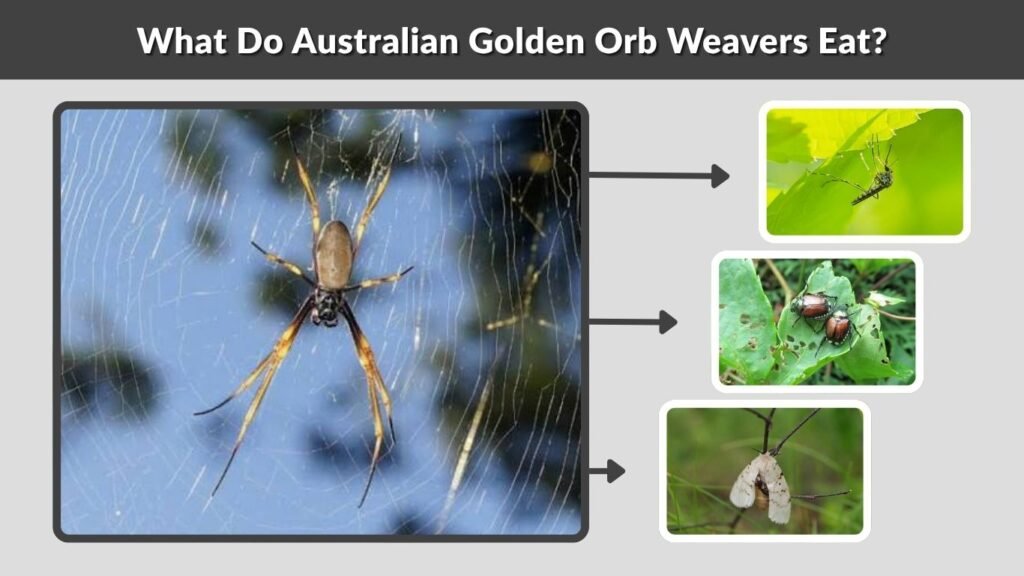
Golden orb weavers are opportunistic predators that eat insects caught in their sticky webs.
Common prey includes:
- Flies
- Beetles
- Moths
- Cicadas
- Locusts
- Grasshoppers
- Winged ants
- Wasps
- Other flying insects
The spider uses vibrations travelling through the silk to determine the position and approximate size of its prey. Small insects may be seized and removed immediately, while larger prey may be bitten, allowed to weaken, and then wrapped in silk.
During periods of abundant food, females may store several silk-wrapped insects in a vertical cache above or below the web’s center. This reserve provides food when fewer insects are available.
Can the Web Catch Birds or Bats?
Their silk is strong enough to occasionally entangle small birds or bats. However, these incidents are unusual and do not represent the spider’s normal hunting behavior.
Most of its prey consists of insects. It is not always clear whether a spider consumes a vertebrate accidentally trapped in its web.
Is the Australian Golden Orb Weaver Venomous?
Yes, the Australian golden orb weaver has venom, as do nearly all spiders. It uses venom to immobilize insect prey.
However, its venom is not considered medically dangerous to healthy humans. The spider is more accurately described as venomous rather than poisonous because it delivers venom through its fangs instead of causing harm when touched or eaten.
Does an Australian Golden Orb Weaver Bite?
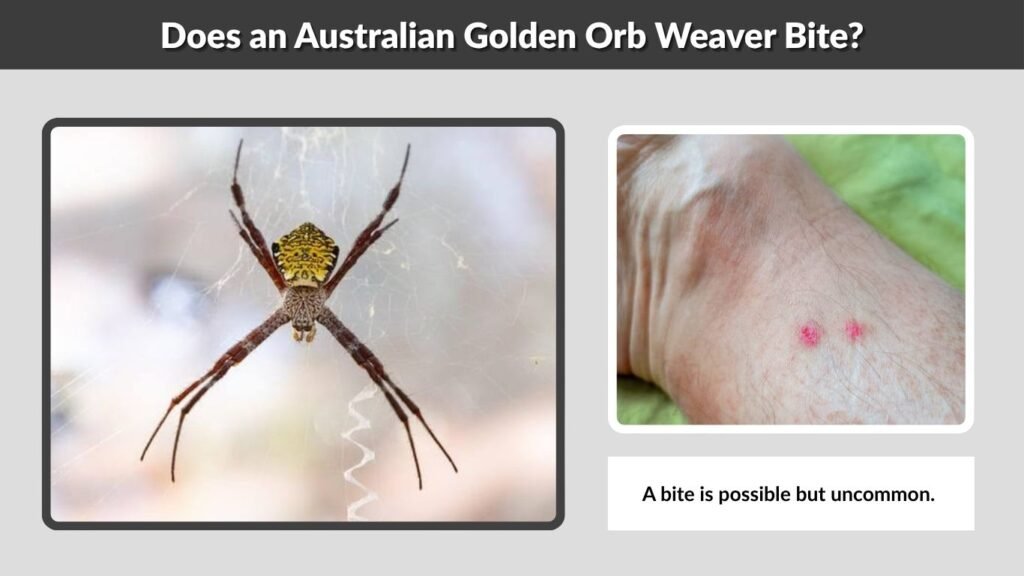
A bite is possible but uncommon. Golden orb weavers are not aggressive and normally remain in their webs or retreat when disturbed.
A defensive bite is most likely when the spider is:
- Squeezed against the skin
- Trapped inside clothing
- Picked up by hand
- Prevented from escaping
- Accidentally pressed while its web is being removed
Reported symptoms are generally limited to temporary local pain, numbness, redness, or swelling. Nausea or dizziness may occasionally occur, but serious effects are not expected under normal circumstances. Persistent or worsening symptoms should receive medical attention.
Reproduction and Life Cycle
Several tiny males may occupy the edges of a mature female’s web. A male approaches cautiously and may wait until the female is feeding or otherwise less likely to react aggressively.
After mating, a female produces one or more egg sacs. Each sac may contain hundreds of eggs, with an average of approximately 380 reported for T. edulis. The egg sac is wrapped in silk and hidden among folded leaves, twigs, or nearby vegetation away from the main capture web.
Young spiderlings emerge from the sac and disperse to construct their own small webs. They molt several times while developing into adults. Growth rate and lifespan vary with climate, season, food supply, predators, and location.
Should You Remove One From Your Garden?
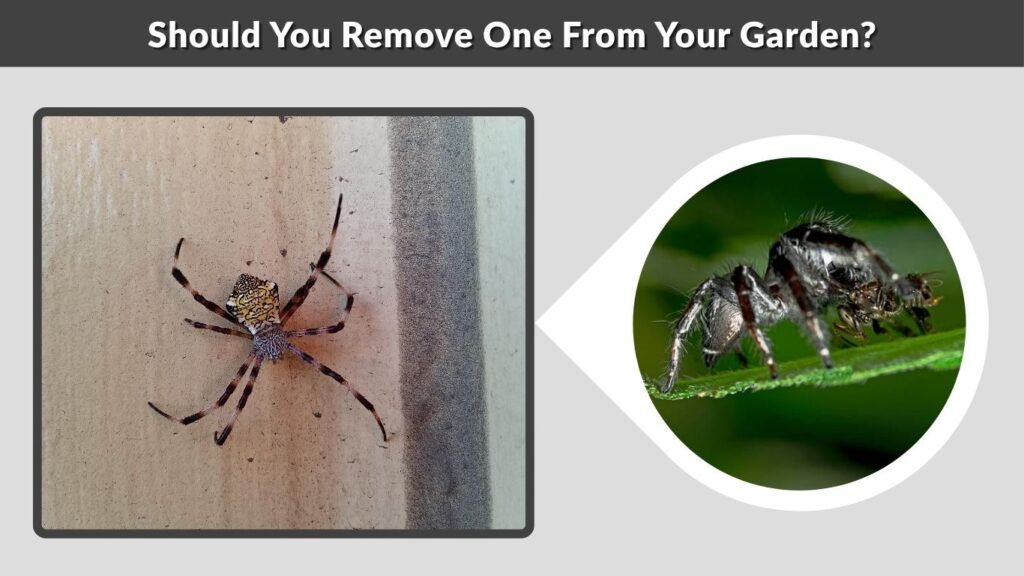
A golden orb weaver can usually remain where it is when its web does not block a doorway, path, or frequently used area. The spider provides natural insect control and rarely leaves its web to enter homes.
When relocation is necessary, avoid handling the spider directly. Gently remove some supporting silk and give it time to move into nearby vegetation. It will often rebuild its web in a quieter location.
Pesticide treatment is unnecessary for a single outdoor orb weaver and may kill other helpful spiders, pollinators, and predatory insects.
FAQs
Is the Australian Golden Orb Weaver Dangerous?
No. Although it is venomous, it is not considered medically dangerous to humans. Bites are uncommon and usually cause only mild local symptoms.
Why Is the Female So Much Bigger Than the Male?
The species displays extreme sexual size dimorphism. Females grow large enough to produce eggs and capture substantial prey, while males remain small and live around female webs while searching for mating opportunities.
How Large Can Its Web Become?
The central orb may measure between approximately 0.5 and 1 meter across. Supporting and barrier threads can make the complete web structure appear even larger.
Are Australian Golden Orb Weavers Aggressive?
No. They generally remain motionless in their webs, vibrate the silk, retreat, or drop away when threatened. They normally bite only when trapped or roughly handled.
Are Golden Orb Weavers Beneficial?
Yes. They capture flies, moths, beetles, cicadas, grasshoppers, and other insects. Leaving them undisturbed can support natural pest control and local biodiversity.
