
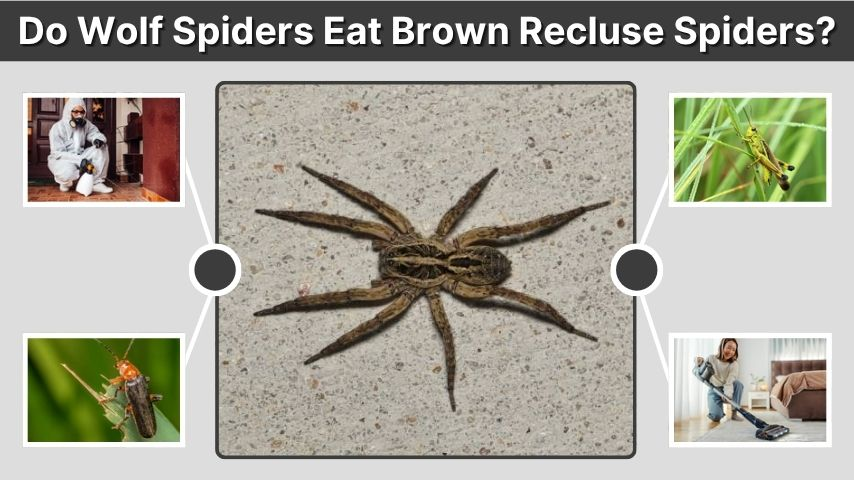
Yes, wolf spiders can eat brown recluse spiders, but they do not specifically hunt only brown recluses. Wolf spiders are active, opportunistic predators that eat insects and other invertebrates, including other spiders when they can overpower them. A wolf spider may attack a brown recluse if they cross paths, especially if the wolf spider is larger. However, relying on wolf spiders alone is not a safe or complete way to control brown recluse spiders inside a home.
Do Wolf Spiders Eat Brown Recluse Spiders?
Wolf spiders may eat brown recluse spiders because they are generalist predators. This means they are not picky hunters. They feed on many small animals they can catch, including insects and other arthropods. Colorado State University describes spiders as generalist predators that feed on insects or other arthropods, and notes that wolf spiders are among the hunting spiders that move around to catch prey instead of using webs.
The Short Answer
Yes, a wolf spider can eat a brown recluse if the conditions are right. The wolf spider usually needs to find, catch, and overpower the recluse. This is more likely when the wolf spider is larger, faster, or in a better position to attack.
Wolf spiders do not build sticky webs to trap prey. They hunt by running, stalking, ambushing, or jumping on prey. BioKIDS from the University of Michigan says wolf spiders eat insects and other invertebrates, and some species wander on the ground looking for small animals to eat.
Are Brown Recluses Normal Prey?
Brown recluse spiders are not usually listed as a main food source for wolf spiders. A wolf spider’s regular diet is more likely to include crickets, ants, flies, grasshoppers, beetles, cockroaches, moths, and other small arthropods. However, because many wolf spiders eat other invertebrates, another spider can become prey if it is small enough or vulnerable enough.
The safest answer is this: wolf spiders can eat brown recluses, but they are not a guaranteed brown recluse control method.
Why Size Matters
A large wolf spider has a better chance of overpowering a brown recluse than a small wolf spider. Wolf spiders are often stronger-looking, hairier, and more robust than brown recluses. Brown recluses are usually more slender and smoother, with long thin legs and a plain brown body. University of Kentucky Entomology notes that adult brown recluses are about the size of a U.S. quarter with legs extended, and they have a more uniform body without stripes or bands.
What Do Wolf Spiders Usually Eat?
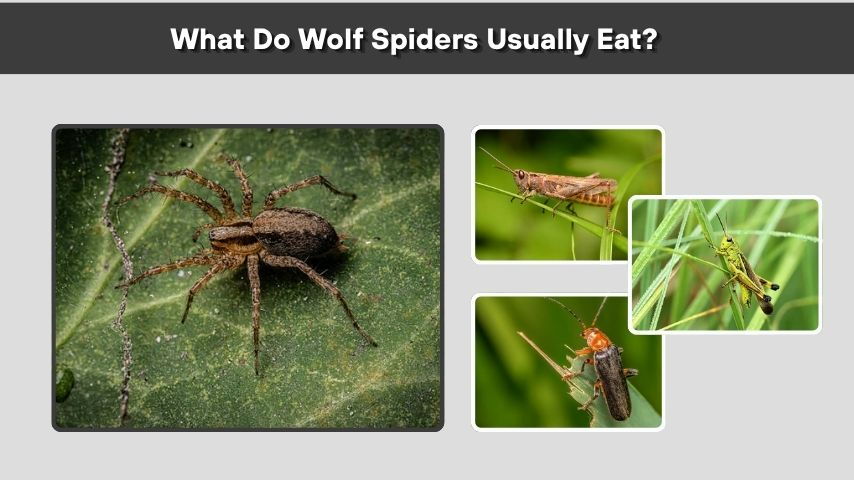
Wolf spiders are hunters, not web trappers. They rely on speed, eyesight, vibration sensing, and ambush behavior to catch prey. Their diet depends on their size, species, habitat, and what prey is available nearby.
Common Wolf Spider Food
- Crickets
- Grasshoppers
- Ants
- Flies
- Beetles
- Roaches
- Moths
- Caterpillars
- Small ground insects
- Other spiders
- Other small invertebrates
BioKIDS explains that wolf spiders eat insects and other invertebrates, and they may even attack insects larger than themselves. The Animal Diversity Web entry for the rabid wolf spider also says this species eats crickets, locusts, ants, grasshoppers, and even other spiders.
Do Wolf Spiders Eat Other Spiders?
Yes, wolf spiders can eat other spiders. Spider-on-spider predation is common in nature. University of Nebraska–Lincoln reported research showing that wolf spiders of multiple species may eat one another and even cannibalize their own kind when prey variety is limited.
This supports the idea that a wolf spider could eat a brown recluse if they meet and the wolf spider wins the encounter. However, it does not mean every wolf spider will actively search for brown recluses.
Are Wolf Spiders Good Pest Controllers?
Wolf spiders can help reduce insect populations. Colorado State University notes that spiders can be important biological control agents indoors and outdoors, helping reduce pests such as flies, mosquitoes, moths, beetles, caterpillars, leafhoppers, and aphids.
Still, “helpful” does not mean you should release wolf spiders into your home. They may reduce some pests, but they cannot fully solve a brown recluse problem.
Wolf Spider vs Brown Recluse: Hunter Differences
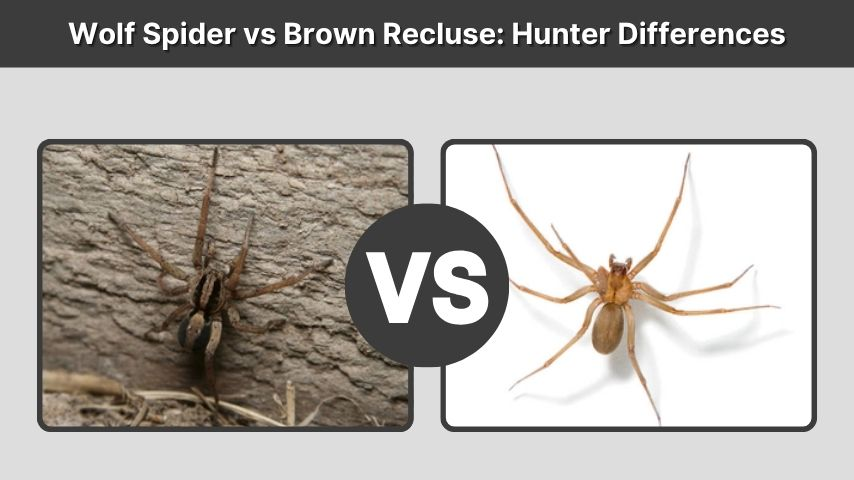
Wolf spiders and brown recluses are both predators, but they do not hunt in exactly the same way. Their body shape, movement, and hiding habits are different.
Hunting Style Comparison
| Feature | Wolf Spider | Brown Recluse |
| Main hunting method | Active hunting, stalking, ambushing | Night hunting, hiding by day |
| Web use | Does not use a web to trap prey | Does not use a web to capture prey |
| Body appearance | Hairy, patterned, robust | Smooth, plain brown, slender |
| Common movement | Fast runner on floors or ground | Secretive, hides in dark places |
| Diet | Insects, invertebrates, sometimes spiders | Insects, dead or live prey |
| Human risk | Usually not medically serious | Bite can be medically significant |
Brown recluses also hunt rather than trap food in large webs. University of Kentucky Entomology says the brown recluse hunts at night for insect prey, either alive or dead, and does not use a web to capture food.
Can a Brown Recluse Eat a Wolf Spider?
It is possible, but it would depend on size and opportunity. Brown recluses are predators and may feed on small prey, including other arthropods. However, a large wolf spider is usually a difficult target because it is fast, strong, and active. In a direct encounter, the bigger and better-positioned spider usually has the advantage.
Do They Live in the Same Places?
They can overlap in some areas, but they often prefer different microhabitats. Wolf spiders are commonly found on the ground, in grass, leaf litter, fields, gardens, basements, garages, and sometimes inside homes. BioKIDS says wolf spiders live in many habitats where insects are available, and many species stay on the ground.
Brown recluses prefer dark, secluded areas. In nature, they live under rocks, logs, woodpiles, and debris. Indoors, they can hide in basements, attics, closets, clothing, shoes, and storage boxes.
Do Wolf Spiders Eat Black Widows Too?
Wolf spiders may eat black widows if they can overpower them, but black widows are dangerous prey because they have strong venom and protective webs. A wolf spider is more likely to eat another spider when it catches it away from a strong defensive position.
Brown Recluse vs Black Widow as Prey
A brown recluse may be easier for a wolf spider to attack if it is wandering on the ground or hiding in a reachable space. A black widow often stays in a web, which gives it a defensive advantage. A wolf spider that walks into a widow’s web may become trapped or bitten instead.
Why Venom Does Not Always Decide the Winner
Both wolf spiders and brown recluses have venom, but hunting success depends on more than venom. Size, speed, timing, position, and surprise all matter. A wolf spider that ambushes a smaller spider may win quickly. But if the prey spider bites first or has a strong defensive position, the outcome can change.
Should You Keep Wolf Spiders to Control Dangerous Spiders?
No, you should not depend on wolf spiders to control brown recluses or black widows. They may eat some spiders, but they will not inspect your closets, shoes, attic, basement, or storage boxes in a reliable way. For home safety, prevention and monitoring are better than relying on one predator to control another.
Are Wolf Spiders Better Than Brown Recluses in the House?
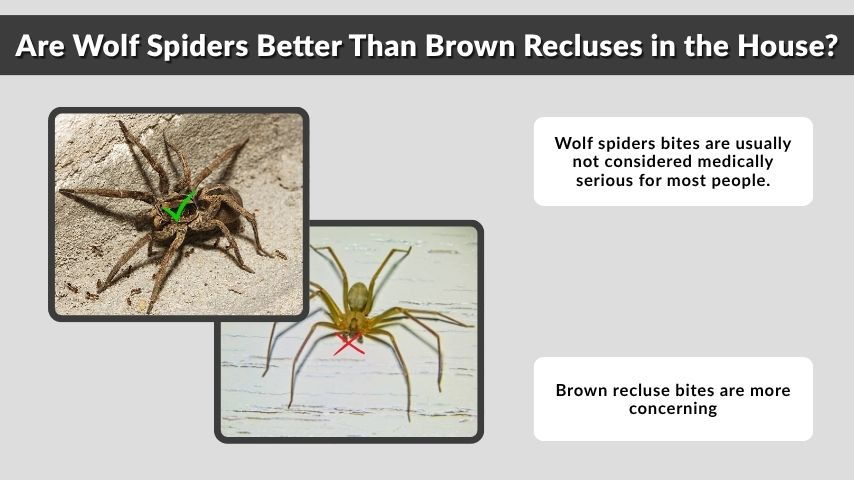
Wolf spiders are usually less medically concerning than brown recluses, but most people still do not want large spiders roaming indoors. If you find wolf spiders inside, it may mean insects are present or that spiders are entering through gaps.
Are Wolf Spiders Dangerous?
Wolf spiders can bite if handled or trapped, but their bites are usually not considered medically serious for most people. BioKIDS notes that wolf spiders can give a painful bite if handled carelessly, but the bite usually does not cause much damage unless the person is allergic.
Brown recluse bites are more concerning. University of Kentucky Entomology says most brown recluse bites remain localized, but some can develop necrotic wounds or systemic symptoms, especially in higher-risk people.
Should You Kill a Wolf Spider?
You do not have to kill a wolf spider if you can safely remove it. Wolf spiders are beneficial predators. If one is indoors, you can trap it with a cup and paper and release it outside away from the house. Colorado State University recommends avoiding killing spiders when possible and carefully removing indoor spiders outdoors.
What If You Find Both Wolf Spiders and Brown Recluses?
If you find both, do not assume the wolf spiders will fix the problem. Use sticky traps, reduce clutter, seal cracks, inspect stored items, and confirm the spider identification. Brown recluses are often confused with wolf spiders, grass spiders, southern house spiders, and other brown spiders.
How to Control Brown Recluses Without Relying on Wolf Spiders
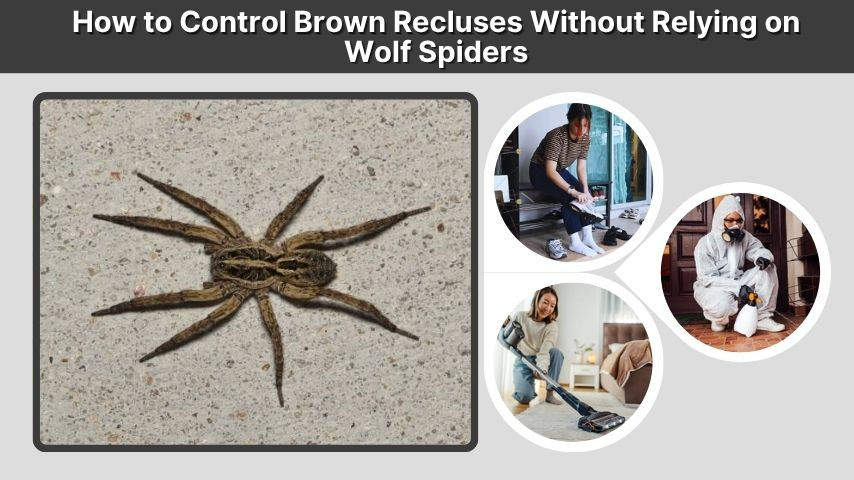
Wolf spiders may help naturally, but brown recluse control inside a home requires direct prevention. The goal is to reduce hiding spots, reduce insect prey, and prevent accidental contact with spiders.
Practical Brown Recluse Control Tips
- Remove clutter from closets, basements, attics, and garages.
- Store items in sealed plastic bins instead of cardboard boxes.
- Shake out shoes, gloves, towels, and clothing before use.
- Keep beds away from walls if brown recluses are common in your area.
- Do not leave laundry on the floor.
- Vacuum behind furniture, along baseboards, and under beds.
- Use sticky traps along walls, in closets, and near storage areas.
- Seal cracks around doors, windows, foundations, and vents.
- Move woodpiles, boards, and debris away from the house.
- Call pest control if you keep finding confirmed brown recluses.
University of Kentucky Entomology notes that brown recluse spiders often retreat to dark secluded areas during the day, and wandering males or older juveniles may enter shoes, clothing, or bedding at night.
Best Way to Monitor Spider Activity
Sticky traps are one of the easiest ways to learn what spiders are actually in your home. Place traps along walls, behind furniture, under beds, near closets, in garages, and around storage boxes. They can catch brown recluses, wolf spiders, and other crawling insects. This helps you identify whether you have one random spider or repeated activity.
Why Identification Matters
Wolf spiders are often mistaken for brown recluses because both can be brown and fast-moving. The easiest visible difference is that wolf spiders are usually hairier and more patterned, while brown recluses are smoother and more uniform. University of Kentucky Entomology also notes that brown recluses have six eyes arranged in three pairs, while most spiders have eight eyes.
FAQs
Do wolf spiders hunt brown recluse spiders?
Wolf spiders can hunt and eat brown recluse spiders if they encounter them, but brown recluses are not their only or main prey. Wolf spiders are opportunistic hunters that eat insects, other invertebrates, and sometimes other spiders.
Will wolf spiders keep brown recluses away?
Not reliably. Wolf spiders may eat some spiders, but they will not fully control a brown recluse problem. Brown recluse control requires decluttering, sealing entry points, using sticky traps, reducing insects, and checking stored items.
Do rabid wolf spiders eat brown recluses?
Rabid wolf spiders can eat other spiders, so they may eat brown recluses if the opportunity occurs. The Animal Diversity Web says rabid wolf spiders eat small insects and other invertebrates, including other spiders.
Which is more dangerous, a wolf spider or a brown recluse?
A brown recluse is more medically concerning. Wolf spider bites are usually mild for most people, while brown recluse bites can sometimes cause serious skin wounds or systemic symptoms. Any worsening bite should be checked by a medical professional.
Should I leave wolf spiders alone if I have brown recluses?
You can leave wolf spiders alone outdoors because they are beneficial predators. Indoors, it is better to safely remove them rather than rely on them for pest control. If you suspect brown recluses, use sticky traps and consider professional identification or pest control.
