
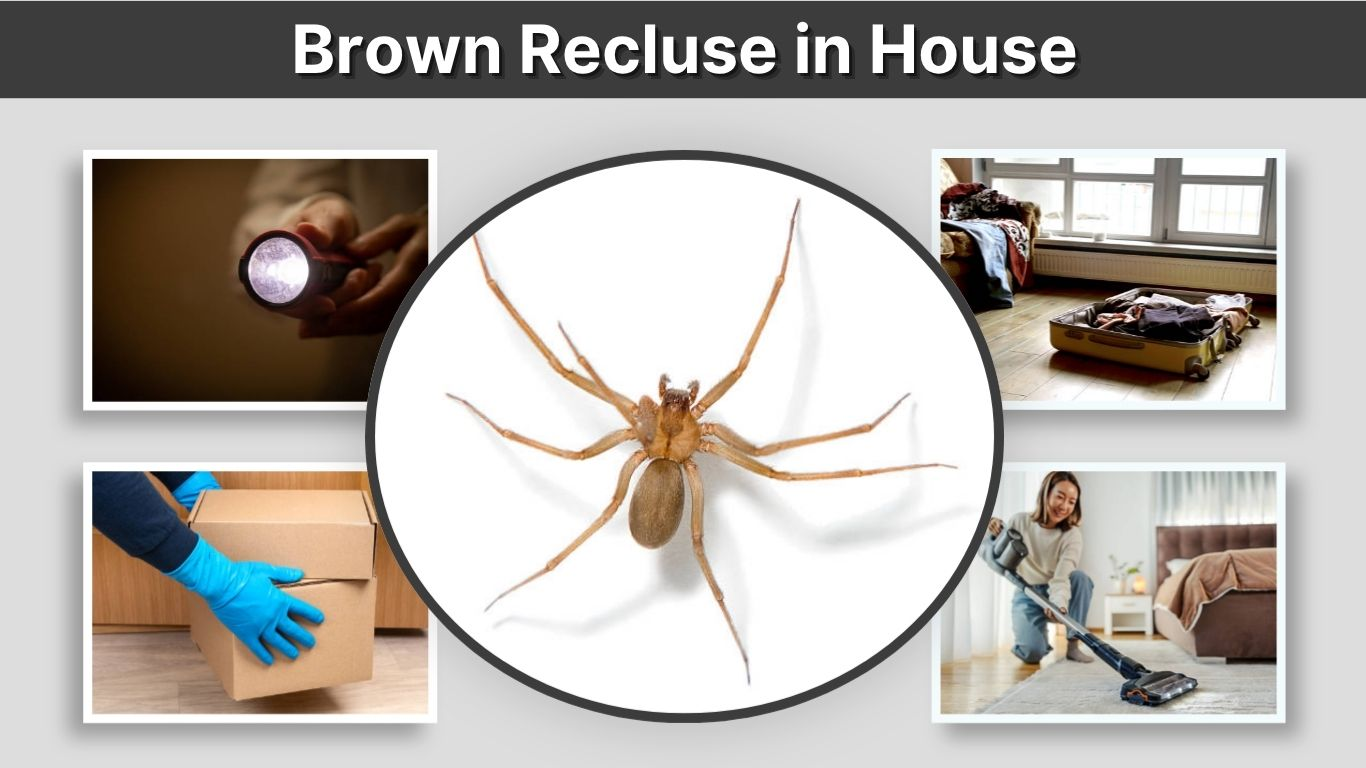
Finding a brown recluse in your house can be alarming, especially because this spider is known for its medically significant bite. However, one spider does not always mean a major infestation. Brown recluses prefer dark, dry, quiet spaces and often hide in closets, boxes, attics, basements, garages, and stored clothing. The safest response is to identify the spider correctly, reduce hiding places, use sticky traps, and take extra care around shoes, bedding, and storage areas.
What Does It Mean If You Find a Brown Recluse in Your House?
Finding a brown recluse spider indoors means your home may offer the type of shelter this spider likes: quiet, dry, dark, and undisturbed areas. It does not always mean your house is full of them, but repeated sightings should be taken seriously.
Is One Brown Recluse a Sign of More?
One brown recluse in your house may be a single wandering spider, especially if it came in through boxes, furniture, firewood, or gaps around the home. However, if you live in the spider’s natural range and keep finding them indoors, there may be a larger population hiding in storage spaces, wall voids, closets, attics, or basements. Oklahoma State University notes that brown recluse spiders can be difficult to control and may build up to large numbers, especially in vacant homes and buildings.
Should You Panic?
You should not panic, but you should act carefully. Brown recluses are not aggressive spiders that chase people. Bites usually happen when the spider is pressed against skin, such as inside shoes, clothing, bedding, or stored items. Oklahoma State University explains that brown recluses rest during the day in dark spaces like baseboards, crevices, and piles of clothes, and bites usually happen when physical pressure is applied.
What to Do Right Away
- Do not handle the spider with bare hands.
- Safely trap it in a jar or container if possible.
- Take a clear photo for identification.
- Place sticky traps along walls and in storage areas.
- Shake out shoes, gloves, clothing, and bedding.
- Inspect closets, boxes, basements, garages, and attics.
- Call a pest professional if you keep finding them.
Where Do Brown Recluse Spiders Hide in a House?
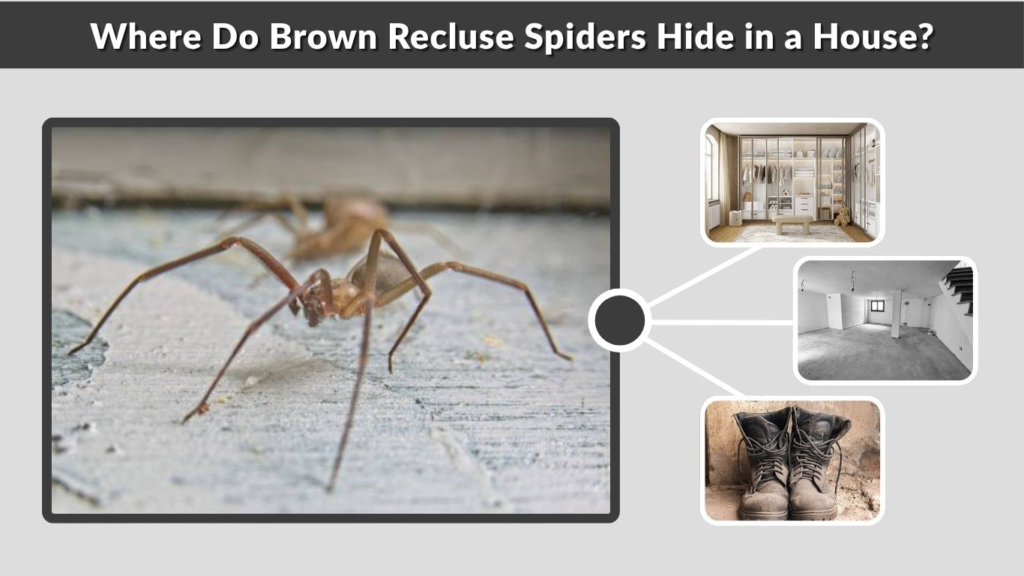
Brown recluse spiders are named “recluse” for a reason. They avoid open, busy areas and prefer places where they are rarely disturbed. In a house, this usually means cluttered, dark, dry spaces.
Common Indoor Hiding Spots
| Area in the House | Why Brown Recluses Hide There |
| Closets | Dark, quiet, and full of clothing or boxes |
| Attics | Dry, warm, and rarely disturbed |
| Basements | Quiet, cluttered, and close to cracks or gaps |
| Garages | Stored items, cardboard, tools, and insects |
| Crawl spaces | Dark, protected, and low-traffic |
| Shoes and boots | Small, dark hiding spaces near the floor |
| Bedding and laundry | Spiders may wander into fabric at night |
| Cardboard boxes | Easy shelter and common transport source |
| Behind furniture | Low disturbance and insect prey nearby |
Oklahoma State University lists closets, guest rooms, basements, attics, shoe boxes, clothing, and furniture as places where brown recluse spiders may be found indoors.
Do Brown Recluses Live in Walls?
Brown recluses can hide in cracks, gaps, baseboards, and wall voids, especially if the home has clutter and insect prey. They may travel along edges of rooms rather than across open spaces. This is why sticky traps are usually placed along walls, under furniture, in closets, and near storage areas. Texas A&M AgriLife Extension says sticky cards placed next to walls, in closets, and under furniture can trap spiders and help track control efforts over time.
Do Brown Recluse Spiders Hide in Beds?
Beds are not their main habitat, but brown recluses may wander into bedding. This can happen when bedding touches the floor, the bed is close to walls, or the room has clutter under the bed. Alabama Extension advises residents to check and shake out bedding before sleeping until a brown recluse problem is controlled, and to remove bed skirts to reduce the chance of spiders crawling onto the bed.
Why Are Brown Recluse Spiders in My House?
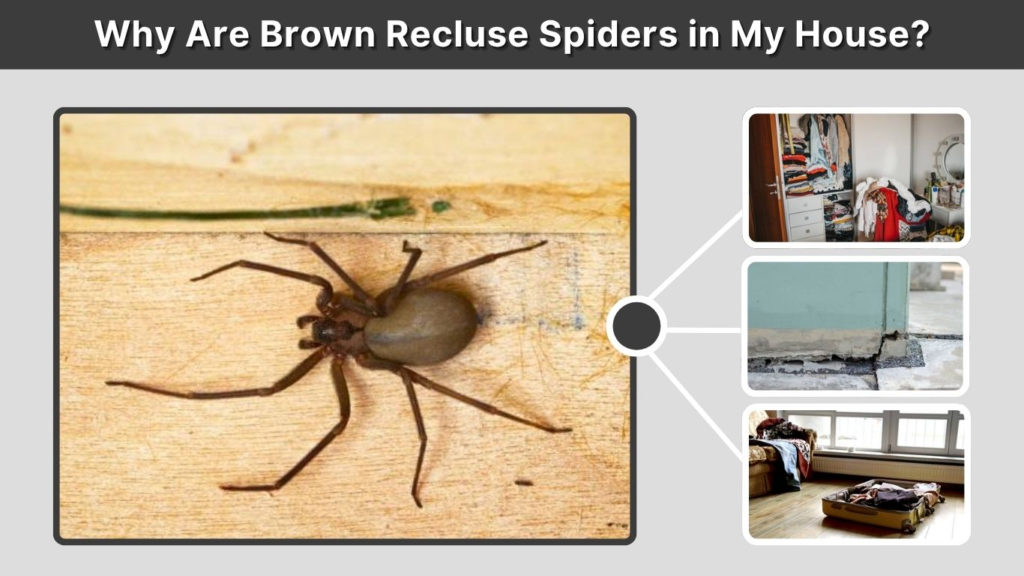
Brown recluse spiders enter or remain in homes because the environment gives them shelter, food, and safe hiding places. They are especially common in homes with cluttered storage areas, old boxes, unused rooms, and many insects.
What Attracts Brown Recluses Indoors?
Brown recluses are not attracted to people. They are attracted to survival conditions. A home may support them if it has:
- Cluttered closets, attics, basements, or garages
- Cardboard boxes and stored paper items
- Cracks around doors, windows, foundations, and vents
- Insect prey such as flies, roaches, crickets, or other small pests
- Quiet rooms that are rarely cleaned or disturbed
- Clothing, towels, or bedding left on the floor
- Outdoor woodpiles, boards, or debris near the foundation
Texas A&M AgriLife Extension recommends reducing clutter, vacuuming around and behind furniture, sealing stored boxes, and using sticky cards in out-of-the-way places such as closets, under furniture, and along walls.
How Do Brown Recluses Get Inside?
Brown recluse spiders may enter through cracks, gaps, damaged screens, spaces under doors, vents, utility openings, or around windows. They may also be carried indoors inside boxes, furniture, stored items, luggage, or firewood. Oklahoma State University recommends screening, weather stripping, and caulking to help seal buildings against spiders.
Are Brown Recluses Common in Houses?
In areas where brown recluses are established, they can live indoors successfully. They are more of a concern in parts of the south-central and Midwestern United States. Outside their normal range, many “brown recluse” reports turn out to be misidentified brown spiders. Correct identification matters because wolf spiders, southern house spiders, cellar spiders, and funnel weavers are often mistaken for brown recluses.
Brown Recluse Webs, Egg Sacs, and “Nests” in the House
People often search for a “brown recluse nest,” but brown recluses do not make nests like ants, wasps, or termites. Instead, they make small, irregular silk retreats in hidden areas.
What Does a Brown Recluse Web Look Like?
Brown recluse webs are usually messy, irregular, and hidden. They are not neat orb webs like garden spiders make. You may find their silk in boxes, corners, storage piles, under furniture, behind baseboards, or in undisturbed clutter. Their webs are used more as retreats than as large prey-catching webs.
Do Brown Recluses Lay Eggs Indoors?
Yes, female brown recluses can lay egg sacs indoors if the environment is suitable. Egg sacs may be hidden in quiet areas such as storage boxes, wall gaps, closets, attics, garages, or behind furniture. If you are finding many small brown spiders along with adults, shed skins, or egg sacs, the problem may be more than one wandering spider.
Signs of a Brown Recluse Infestation
| Sign | What It May Mean |
| Multiple confirmed brown recluses | Possible indoor population |
| Spiders caught on sticky traps | Activity along walls or hidden routes |
| Shed skins | Spiders are growing and living indoors |
| Egg sacs | Possible breeding population |
| Repeated sightings in closets or storage | Hidden shelter nearby |
| Spiders in shoes, laundry, or bedding | Wandering spiders at night |
Sticky traps are one of the best ways to monitor activity because they catch spiders when people are not watching. Texas A&M explains that sticky traps are useful for detecting pests that are active at night or when people are not present.
How to Get Rid of Brown Recluse Spiders in the House
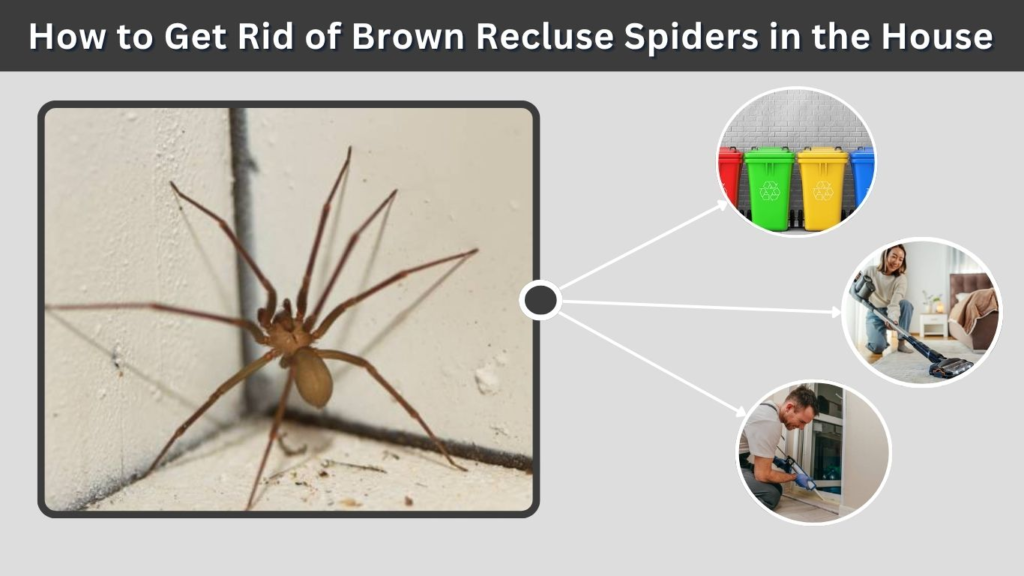
Getting rid of brown recluse spiders usually requires more than killing one spider. The goal is to reduce hiding places, block entry points, remove prey insects, and monitor activity.
Step-by-Step Control Plan
- Declutter first: Remove piles of clothes, papers, boxes, and unused items.
- Switch to plastic bins: Store items in sealed plastic containers instead of cardboard boxes.
- Vacuum carefully: Vacuum corners, baseboards, behind furniture, closets, garages, and storage rooms.
- Use sticky traps: Place traps along walls, behind furniture, in closets, under beds, and near storage.
- Seal entry points: Caulk cracks, repair screens, add door sweeps, and seal gaps around utilities.
- Move outdoor clutter: Keep firewood, boards, leaves, and debris away from the foundation.
- Reduce insect prey: Control roaches, crickets, flies, and other insects that spiders may eat.
- Inspect clothing and shoes: Shake out shoes, gloves, towels, and clothing before use.
- Call professionals if needed: Repeated sightings may require professional treatment.
Oklahoma State University says brown recluse spiders can be extremely difficult to control and that if they are commonly seen, a pest control firm may be needed for thorough treatment. Control may require more than one treatment.
Should You Kill a Brown Recluse in Your House?
If you safely can, killing or trapping a brown recluse may reduce immediate risk. However, do not use your bare hands or try to grab it. A vacuum, jar, shoe, or sticky trap is safer than direct contact. If you need identification, try to keep the specimen intact or take a clear photo.
When Should You Call Pest Control?
Call a pest control professional if you find multiple confirmed brown recluses, keep catching them on sticky traps, see them in bedrooms, or suspect egg sacs and shed skins. Severe infestations are difficult to handle with casual spraying because many spiders hide deep in cracks, storage areas, and wall voids.
How to Stay Safe If You Have Brown Recluses Indoors
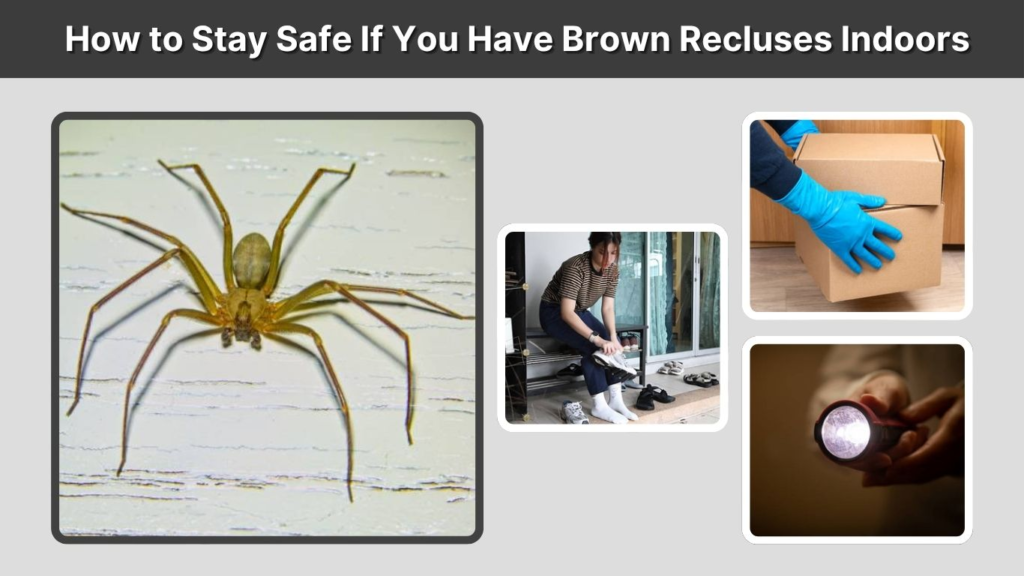
Living with possible brown recluse activity requires prevention habits. Most bites happen by accident, so reducing contact is the most important safety step.
Daily Safety Habits
- Shake out shoes before putting them on.
- Check gloves, jackets, and stored clothing.
- Do not leave laundry on the floor.
- Keep beds away from walls if possible.
- Keep bed skirts and blankets from touching the floor.
- Wear gloves when moving boxes or stored items.
- Use a flashlight when inspecting garages, closets, or crawl spaces.
- Teach children not to touch spiders.
What If You Are Bitten?
Wash the bite area with soap and water, apply a cold pack, and seek medical advice if symptoms worsen. Get urgent care for severe pain, spreading redness, fever, nausea, weakness, dark urine, or a wound that turns purple, black, or ulcerated. Oklahoma State University advises seeing a physician or emergency room as soon as you suspect a brown recluse bite and, if possible, taking the spider for identification.
FAQs
What should I do if I find a brown recluse in my house?
Do not pick it up with your hands. Trap it safely, take a photo if possible, and place sticky traps along walls, closets, and storage areas. Then inspect cluttered rooms, shoes, clothing, boxes, and bedding. If you keep finding them, call pest control.
Does finding one brown recluse mean infestation?
Not always. One spider may have wandered in or been carried inside with boxes or furniture. However, finding multiple brown recluses, egg sacs, shed skins, or repeated spiders on sticky traps may suggest an indoor population.
Where do brown recluse spiders hide in houses?
They commonly hide in closets, attics, basements, crawl spaces, garages, cardboard boxes, shoes, folded clothing, behind furniture, and near baseboards. They prefer dark, dry, quiet places that are rarely disturbed.
What attracts brown recluse spiders in the house?
Brown recluses are attracted to shelter, clutter, insect prey, and undisturbed spaces. They may be more likely in homes with cardboard boxes, stored clothing, piles of paper, cracks, gaps, and insect activity.
How do I get rid of brown recluse spiders permanently?
Long-term control requires decluttering, sealing entry points, using sticky traps, vacuuming hidden areas, storing items in sealed bins, reducing insect prey, and sometimes hiring a professional. Severe brown recluse problems often need more than one treatment.
