
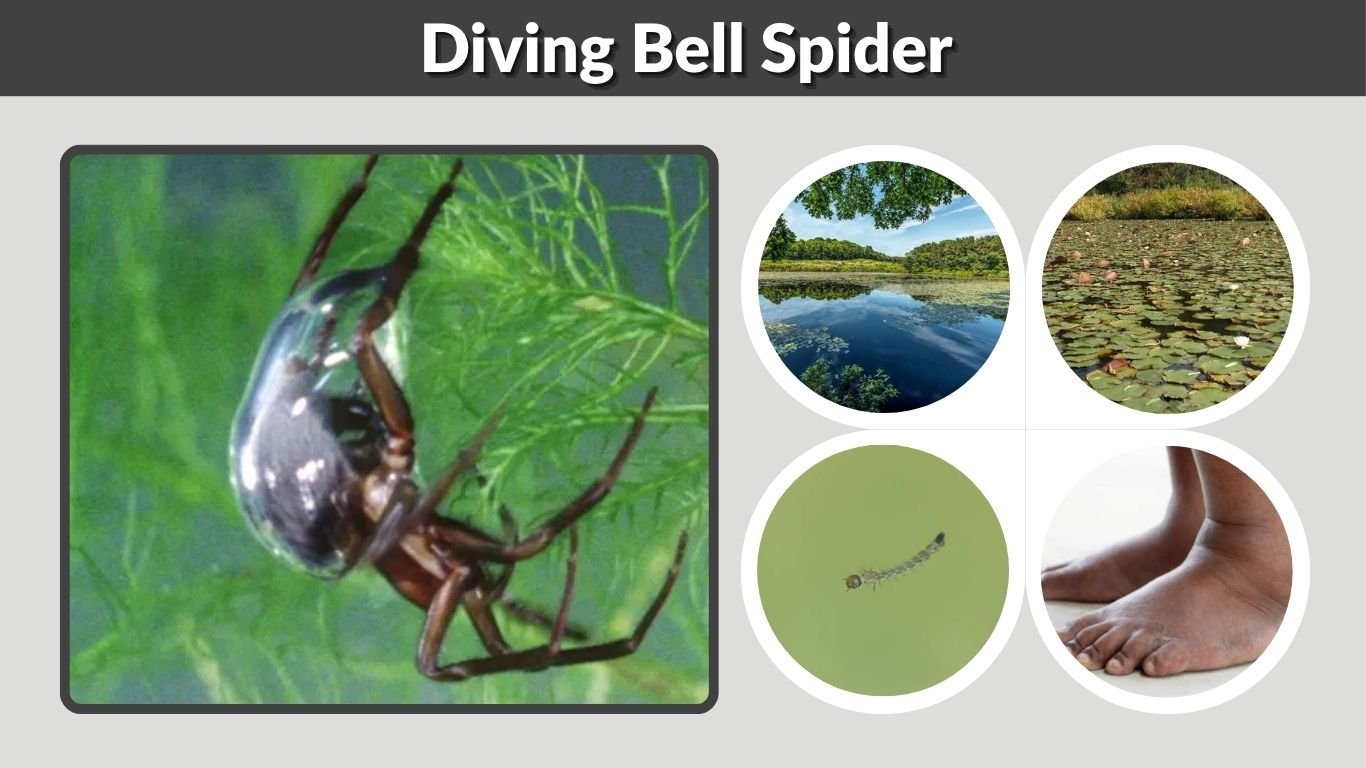
The diving bell spider is one of the most unusual spiders in the world. Unlike ordinary spiders that live on land, it spends nearly its entire life beneath the surface of freshwater. It builds a silk chamber filled with air, hunts aquatic prey, mates, lays eggs, and rests underwater. Its ability to carry air from the surface and store it inside a submerged web has earned it the names diving bell spider and water spider. Although its aquatic lifestyle may sound alarming, it is rarely encountered by people and is not considered a major human threat.
What Is a Diving Bell Spider?
The diving bell spider’s scientific name is Argyroneta aquatica. It is the only species in the genus Argyroneta and is widely described as the only spider that spends almost all stages of its life underwater. It briefly visits the surface to collect air but performs most normal activities below the water.
Diving Bell Spider Identification
- Scientific name: Argyroneta aquatica
- Medium-sized body with relatively long legs
- Brown or gray appearance outside the water
- Silvery abdomen when submerged
- Dense water-repelling hairs on the body
- Strong swimmer capable of moving through submerged vegetation
- Commonly found near an air-filled underwater silk chamber
The spider may look silver beneath the water because a thin layer of air becomes trapped around its abdomen and legs. Light reflecting from this air layer creates its unusual metallic appearance.
Why Is It Called a Diving Bell Spider?
Its name comes from the bell-shaped silk structure it creates beneath the surface. This underwater chamber resembles an old-fashioned diving bell, which allowed human divers to breathe from a trapped pocket of air.
The spider spins its web between aquatic plants and repeatedly carries bubbles from the surface to fill the chamber. It then uses the air-filled space as a home, feeding area, refuge, and breeding site.
How Does the Diving Bell Spider Breathe Underwater?
The diving bell spider does not have true gills. It breathes atmospheric air like other spiders, but it has developed a remarkable way to transport and store that air beneath the water.
Carrying Air Below the Surface
When the spider reaches the surface, water-repelling hairs on its abdomen and legs trap a layer of air. It then dives and carries the bubble down to its silk chamber. The spider releases the air beneath the web, gradually expanding the bell.
Its breathing organs are located on the underside of its abdomen. By placing its abdomen inside the air chamber, it can breathe while keeping much of its body outside the bell and remaining alert for prey.
The Web Acts Like a Physical Gill
The diving bell does more than store air. Oxygen dissolved in the surrounding water can move into the bubble through the air-water boundary. This allows the structure to function as a type of physical gill.
Scientific research found that the air bell can obtain oxygen from the surrounding water, allowing the spider to remain submerged for extended periods before returning to the surface. However, nitrogen gradually escapes from the chamber, so the spider must eventually add fresh air.
Diving Bell Spider Web
A diving bell spider web is very different from the circular webs commonly associated with garden spiders. It is a three-dimensional silk retreat attached to submerged plants.
How the Web Is Built
The spider first anchors silk threads to aquatic vegetation. It forms a dome or bell-shaped structure with an opening underneath. The spider then makes repeated journeys to the surface, bringing air bubbles down and releasing them beneath the web.
As more air is added, the silk expands and forms a stable underwater chamber. Research has also shown that the spider can attach silk to underwater surfaces by working within a small air layer around its spinnerets.
How the Spider Uses Its Bell
The bell serves several purposes. The spider rests inside it, digests captured prey, hides from predators, mates, lays eggs, and cares for its young there. Females generally build larger bells because they need additional space for egg sacs and developing spiderlings.
Males also construct bells, although theirs are usually smaller. Before mating, a male may build his chamber close to a female’s bell and connect the two structures with silk.
Diving Bell Spider Habitat and Locations
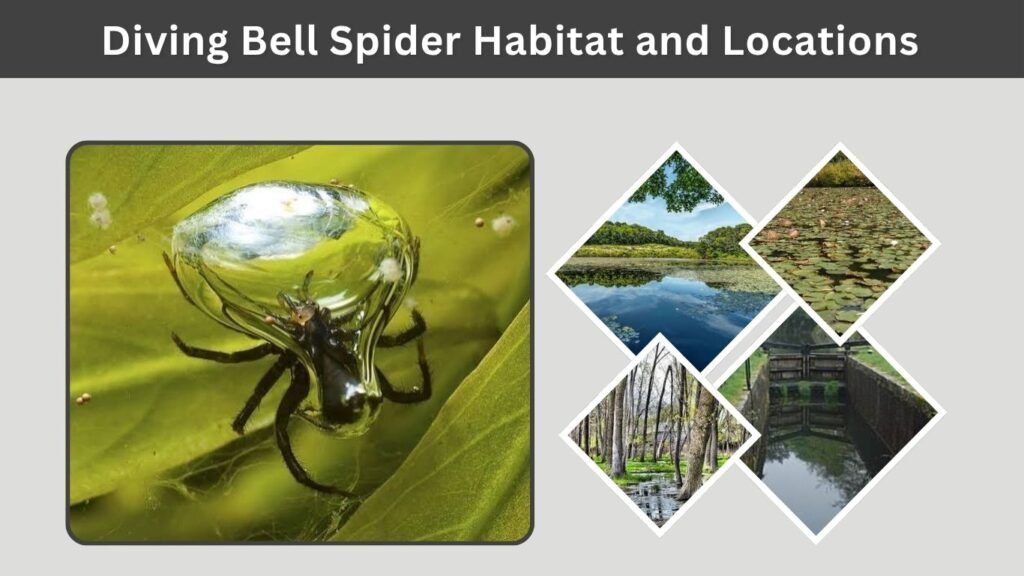
Diving bell spiders inhabit freshwater environments containing abundant underwater vegetation. Plants are essential because they provide support for the silk chamber and hunting lines.
Preferred Habitat
Suitable locations include:
- Freshwater ponds
- Marshes and swamps
- Lakes with aquatic vegetation
- Canals
- Slow-moving streams
- Quiet pools with limited water disturbance
They generally avoid fast-flowing water because strong currents could damage their webs and make it difficult to maintain the air chamber. The species has been recorded in waters with relatively low oxygen concentrations, partly because its bell can collect dissolved oxygen from the surrounding water.
Where Do Diving Bell Spiders Live?
The natural range of the species includes much of Europe and northern and central Asia. It is found in the United Kingdom and parts of mainland Europe, with its distribution continuing eastward through temperate areas of Asia. A closely related Japanese subspecies is also recognized.
Claims of wild diving bell spiders in Florida, Texas, Utah, or other parts of the United States are generally cases of mistaken identity. The species is not native to the United States. People in North America may confuse fishing spiders, water spiders, or other semiaquatic species with Argyroneta aquatica.
Diving Bell Spider Size
The diving bell spider is not exceptionally large, although its long legs can make it appear more impressive underwater. Its exact measurements vary according to sex, age, and geographic population.
Adult females generally have bodies measuring roughly 8–15 millimeters, while males can reach approximately 10–15 millimeters or slightly more. Including the legs, an adult may span several centimeters.
Male vs. Female Size
The species is unusual because adult males are often larger than females. In many other spider species, females are considerably larger.
Larger males may move more efficiently through the water while searching for mates. Females benefit from having smaller bodies because their underwater chambers must provide space for eggs and developing young.
What Do Diving Bell Spiders Eat?
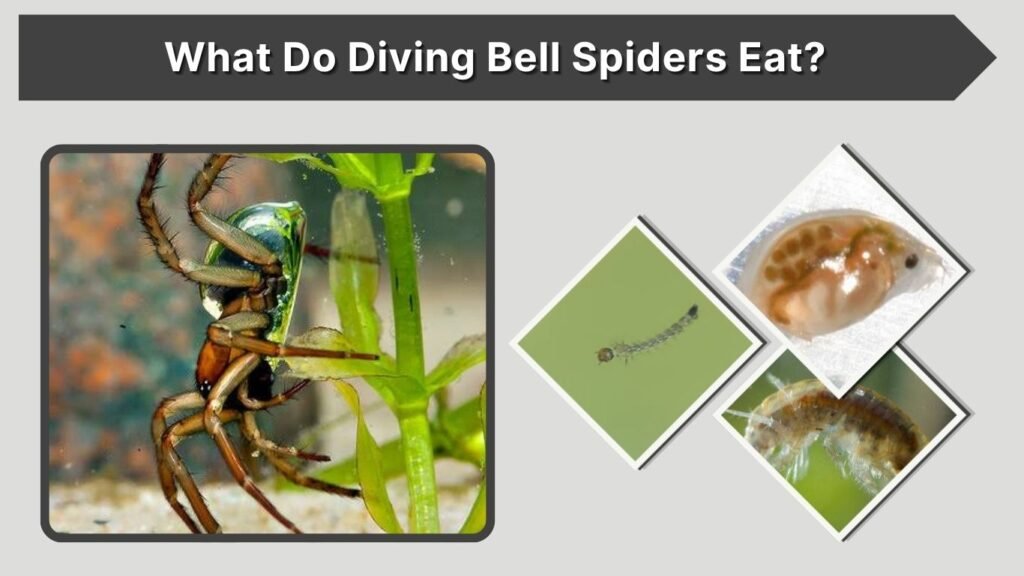
Diving bell spiders are carnivorous predators. They detect movement through silk lines extending from their underwater retreat. When prey touches these threads or swims close to the bell, the spider rushes out and captures it.
Common Prey
Their diet may include:
- Mosquito larvae
- Aquatic insect larvae
- Water fleas such as Daphnia
- Small crustaceans
- Aquatic worms
- Tiny water-dwelling arthropods
- Occasionally very small fish or tadpoles
After biting and immobilizing its prey, the spider usually carries it back to the diving bell. It feeds inside the air chamber because spiders digest food externally and require an air-filled environment to handle and consume prey efficiently.
Diving Bell Spider Behavior
These spiders are skilled swimmers and underwater hunters. Females tend to remain near their bells, waiting for prey to activate nearby silk lines. Males are generally more active and may travel farther while searching for females.
The spiders can swim with their backs facing downward and their undersides oriented toward the surface. Their legs help them move through plants, while the trapped air layer around the abdomen provides oxygen and creates their characteristic silver appearance.
They may also build more than one air chamber. Different bells can be used for resting, feeding, molting, reproduction, or overwintering.
Life Cycle and Baby Diving Bell Spiders
The diving bell spider completes its entire developmental cycle in freshwater. Mating occurs inside an air-filled chamber, usually within or close to the female’s bell.
Eggs and Spiderlings
The female constructs an egg sac inside the upper portion of her bell. Reports commonly describe clutches containing approximately 30–70 eggs, although the number may vary.
The mother remains near the eggs and guards the chamber. After hatching, the young stay inside or near the maternal bell for a period before dispersing.
Baby diving bell spiders must soon construct small air chambers of their own. Even young spiders are capable of carrying air underwater and building miniature diving bells.
Lifespan
Precise lifespan information from wild populations is limited. Captive individuals have reportedly lived for around two years, but survival in nature depends on food availability, water quality, weather, and predation.
Fish, frogs, and larger aquatic animals may prey on diving bell spiders. Young spiders are especially vulnerable while establishing their first underwater retreats.
Are Diving Bell Spiders Poisonous or Venomous?
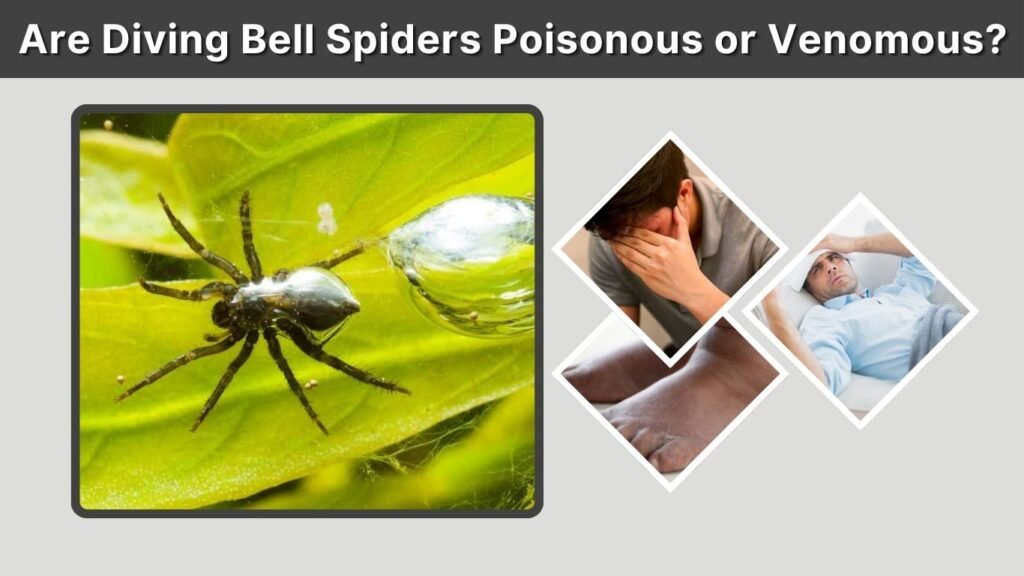
Diving bell spiders are venomous, as are most spiders. They use venom to immobilize aquatic prey. However, “poisonous” is not the correct term because they do not harm people when touched or swallowed. Venom must be injected through a bite.
Are Diving Bell Spiders Dangerous?
They are not aggressive toward humans and have little opportunity to bite because they live underwater among vegetation. A bite would most likely occur if someone trapped, squeezed, or handled the spider.
Older accounts describe bites as painful and associate them with localized swelling, nausea, or mild fever-like symptoms. However, modern verified medical evidence is limited, and arachnological sources note the absence of recent, well-documented bite reports.
Diving Bell Spider Bite Treatment
Anyone bitten by a suspected diving bell spider should wash the area with soap and water. A cold pack wrapped in cloth may help reduce pain or swelling. Avoid cutting the bite, attempting to remove venom, or applying unverified chemicals.
Medical advice should be sought if pain becomes severe or the person develops spreading swelling, vomiting, breathing difficulty, dizziness, fever, or signs of an allergic reaction. Whenever possible, photograph the spider from a safe distance rather than attempting to capture it by hand.
Can Diving Bell Spiders Live in a House?
A true diving bell spider is extremely unlikely to establish itself inside a normal home. It requires a permanent freshwater habitat, submerged vegetation, aquatic prey, and enough space to build an underwater air chamber.
A spider found in a bathtub, sink, basement, or swimming pool is more likely to be another species that accidentally fell into the water. Diving bell spiders do not normally infest bedrooms, kitchens, or household walls.
Can You Keep a Diving Bell Spider as a Pet?
Keeping this species is difficult and is not recommended for inexperienced keepers. It needs cool, clean, well-oxygenated freshwater, living plants, suitable aquatic prey, and a carefully maintained enclosure. Poor water quality or a lack of anchoring plants can prevent it from constructing a functional bell.
The legality of collecting, buying, or keeping the species may vary by country. Wild collection can also damage small local populations. Anyone considering aquatic arachnids should consult local wildlife regulations and experienced invertebrate specialists rather than purchasing an animal from an unverified seller.
Interesting Diving Bell Spider Facts
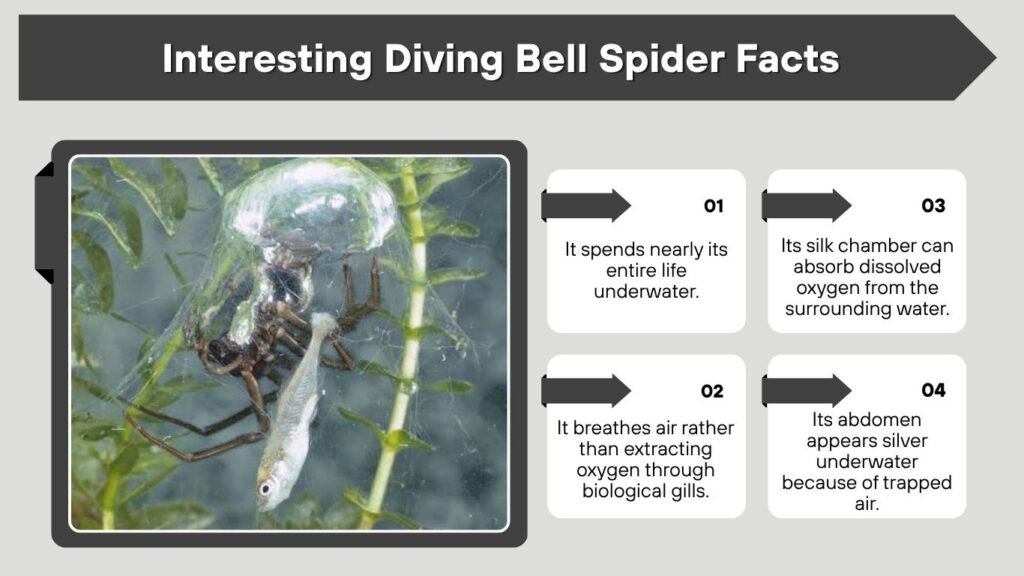
- It spends nearly its entire life underwater.
- It breathes air rather than extracting oxygen through biological gills.
- Its silk chamber can absorb dissolved oxygen from the surrounding water.
- Its abdomen appears silver underwater because of trapped air.
- Males are often larger and more active than females.
- Females use their bells for laying eggs and protecting young.
- Spiderlings build tiny diving bells soon after leaving their mother.
- It is native to freshwater habitats in Europe and Asia.
- It is not a normal household pest.
- Confirmed serious bites to humans are poorly documented.
FAQs
Can a diving bell spider breathe underwater forever?
No. Its bell collects some dissolved oxygen from the water, but the air chamber gradually loses gases and shrinks. The spider eventually returns to the surface and carries down additional air.
Does a diving bell spider leave the water?
It spends almost all its life underwater and leaves only rarely. Most trips toward the surface are made to collect air rather than to travel onto land.
Is the diving bell spider found in the USA?
It is not considered native to the United States. Reports from Florida, Texas, and other states usually involve misidentified fishing spiders or other semiaquatic species.
What makes the spider look silver?
Tiny water-repelling hairs hold a layer of air against its abdomen. Light reflects from this trapped air, giving the submerged spider a bright silver appearance.
Can a diving bell spider jump?
It is primarily adapted for swimming and moving through aquatic vegetation. It may make quick lunging movements while hunting, but it is not known as a specialized jumping spider.
