
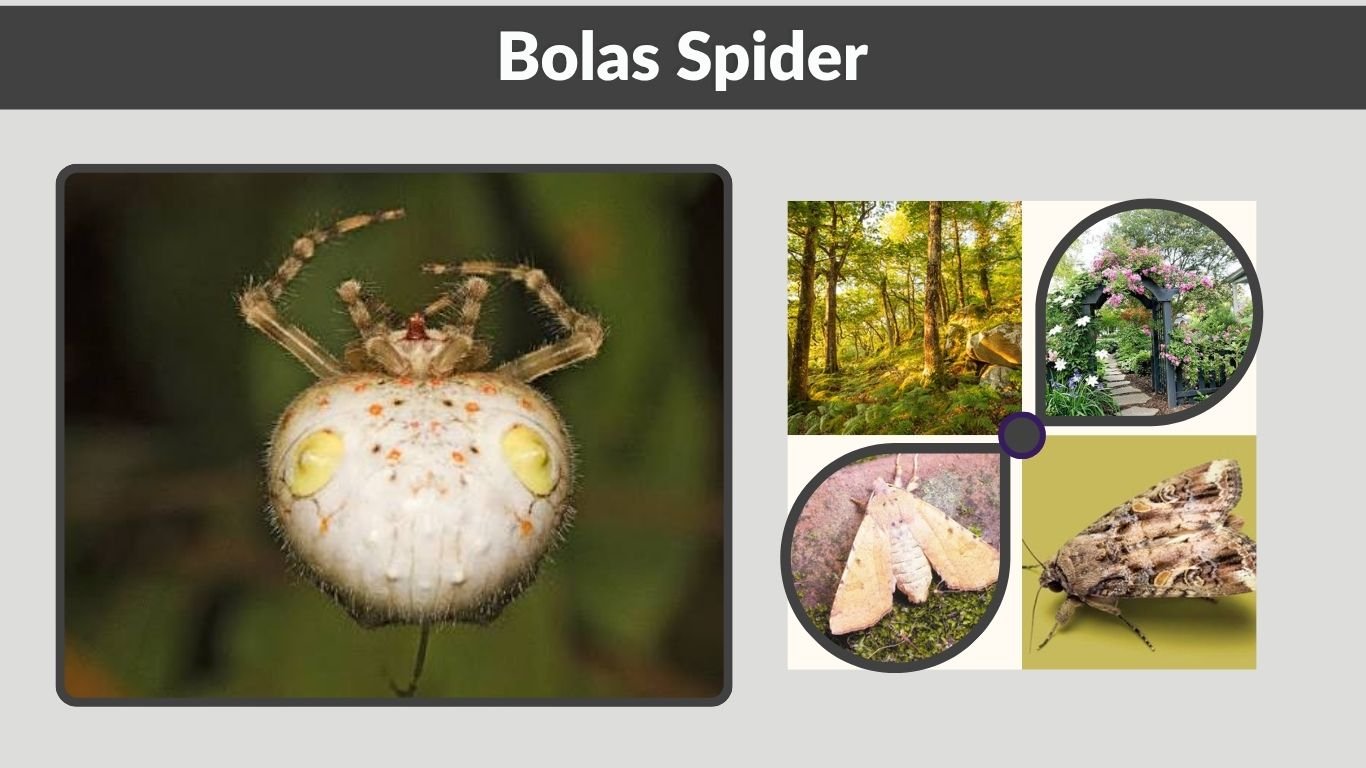
The bolas spider is an unusual orb-weaver famous for catching moths with a sticky silk line instead of building a traditional circular web. A hunting female produces chemicals that imitate the sex pheromones of female moths, attracting males within striking distance. She then swings or flicks a silk thread tipped with an adhesive droplet to capture the approaching insect. This remarkable combination of chemical deception and precise silk use makes the bolas spider one of nature’s most specialized predators. Despite its dramatic hunting technique, it is small, secretive, and generally harmless to people.
What Is a Bolas Spider?
“Bolas spider” is a general name for several specialized orb-weaving spiders. Many of the best-known American species belong to the genus Mastophora, while Australian bolas spiders include species in the genus Ordgarius. These spiders belong to the orb-weaver family Araneidae, even though adult females do not produce the large wheel-shaped webs normally associated with that family.
Their name refers to the bolas, a traditional throwing weapon consisting of a cord with weighted ends. The spider’s capture line resembles a miniature version of this weapon because it carries one or more sticky droplets that attach to flying prey.
Bolas Spider Identification
- Rounded or swollen abdomen
- Brown, white, gray, yellow, pink, or cream markings
- Shorter, less delicate appearance than many orb-weavers
- Adult females noticeably larger than males
- Often rests with its legs drawn close to its body
- May resemble bird droppings, plant growths, or debris
- Creates a short silk line with a sticky droplet at night
Female bolas spiders can look very different among species. Some have humps, knobs, spots, or irregular markings on the abdomen. The magnificent bolas spider of eastern Australia, for example, has a pale body, yellow abdominal knobs, salmon-colored markings, and fine hairs on its body and legs.
Why Does a Bolas Spider Look Like Bird Droppings?
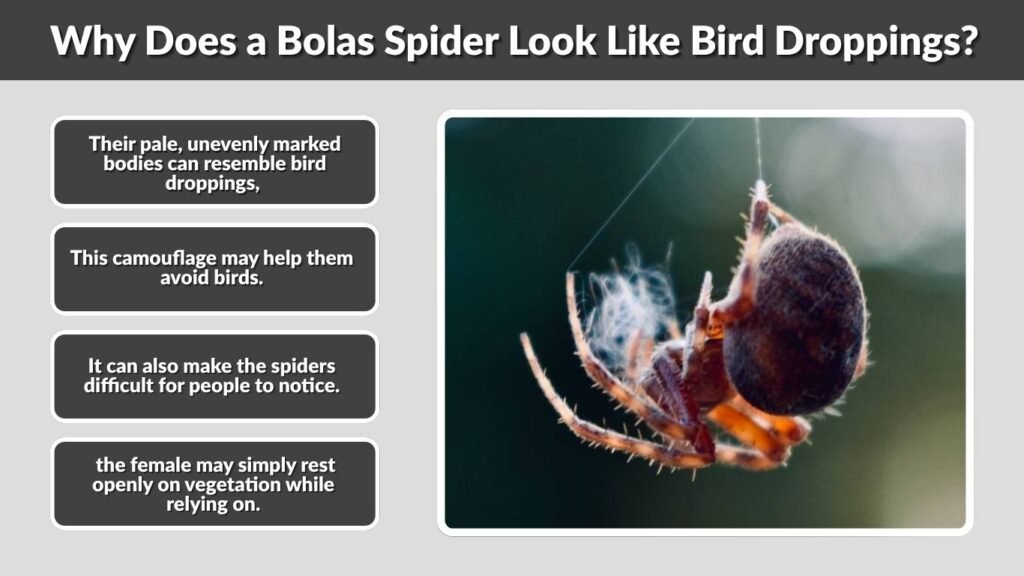
Many bolas spiders remain motionless on leaves or branches during daylight. Their pale, unevenly marked bodies can resemble bird droppings, damaged plant tissue, or other uninteresting material.
This camouflage may help them avoid birds, wasps, lizards, and other predators. It can also make the spiders difficult for people to notice. Instead of hiding inside a permanent web, the female may simply rest openly on vegetation while relying on her shape and coloration for protection.
Bolas Spider Web
A bolas spider does not usually create the familiar spiral-shaped orb web used by garden orb-weavers. An adult female normally produces a simple horizontal support line and hangs beneath it while hunting.
How the Bolas Is Made
The spider creates a short capture thread and places a thick, sticky droplet near its end. In some species, several smaller adhesive droplets may occur along the line, but many use one major droplet.
The capture thread is held with one of the front legs while the spider waits for a moth to approach. Although this structure appears simple, it represents a highly modified form of an orb-weaver’s prey-capture web. Research describes bolas spiders as producing some of the most reduced and specialized orb webs, sometimes consisting of only a short line and a single adhesive mass.
Do Young Bolas Spiders Build Webs?
Young bolas spiders may use different hunting structures from adult females. Spiderlings can construct small orb-like webs or specialized webs suited for catching smaller insects.
As the females mature and begin targeting male moths, their prey-capture system becomes increasingly reduced. Adult males remain extremely small and do not develop the large hunting equipment seen in females.
How Does a Bolas Spider Catch Prey?
The hunting behavior of a bolas spider combines smell, vibration, timing, and rapid movement. The spider usually begins hunting after dark, when moths are active.
Chemical Mimicry
A mature female releases airborne chemicals that imitate components of female moth sex pheromones. Male moths detect these chemicals with their sensitive antennae and fly toward the source because they mistakenly believe a potential mate is nearby.
Scientific analysis of substances released by Mastophora cornigera identified compounds also used in the pheromone blends of some moth species. This confirmed that the spider’s attraction system is based on chemical mimicry rather than chance.
This strategy is known as aggressive chemical mimicry. The predator imitates a signal that is attractive or meaningful to its prey and uses the false signal to bring the victim closer. Early experiments demonstrated that mature female bolas spiders could attract male moths by apparently copying female moth attractants.
Swinging the Sticky Lasso
When a moth approaches, the spider detects the vibrations or sound produced by its wings. She prepares the silk line and swings, flicks, or casts the sticky droplet toward the flying insect.
High-speed research on Mastophora hutchinsoni found that the spider may swing the bolas toward the moth as it passes. Once the adhesive droplet contacts a wing or part of the body, the moth becomes attached to the line.
The spider quickly pulls the prey upward, bites it, and injects venom. The immobilized moth may be wrapped in silk and eaten immediately or stored for later feeding.
Can a Bolas Spider Attract Different Moths?
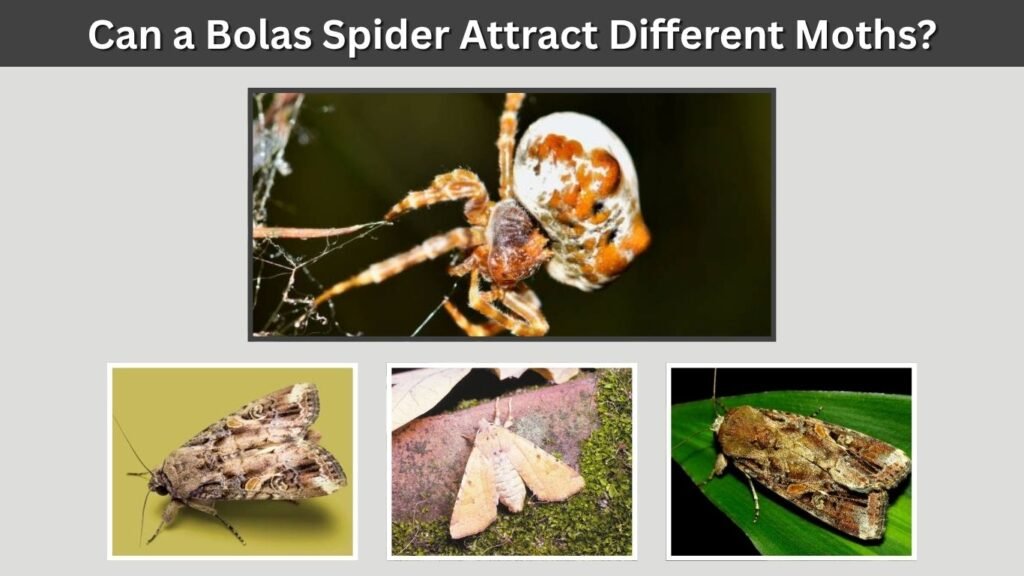
Some bolas spiders can attract more than one moth species. This is especially impressive because different moths may rely on different pheromone mixtures.
Research indicates that certain spiders can adjust the attractive chemical signal during the night. One prey species may be active earlier, while another begins flying later. By changing the chemical mixture or the amount released, the spider can target whichever moth is most likely to be present at that time.
This adaptation allows a female to hunt efficiently without producing a large web. Instead of waiting for any insect to strike a broad web, she actively brings selected prey close enough to capture.
Bolas Spider Diet
Adult female bolas spiders specialize mainly in moths. They are especially effective at capturing male moths attracted by their false pheromone signal.
Their diet may include:
- Armyworm moths
- Cutworm moths
- Owlet moths
- Smaller nocturnal moth species
- Flies and other small insects, particularly when young
The exact prey varies between spider species and geographic locations. Young spiders and tiny males cannot handle the same large moths captured by adult females, so their diets generally include smaller flying insects.
The spider’s feeding habits can be beneficial because some moth prey are agricultural or garden pests during their caterpillar stage.
Bolas Spider Habitat and Location
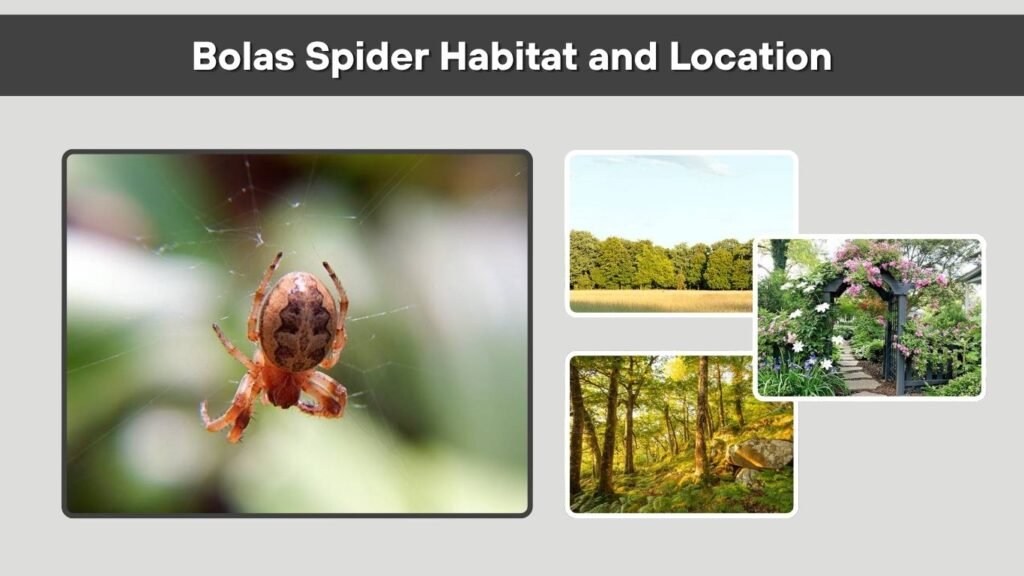
Bolas spiders occur in several warm, temperate, tropical, and subtropical regions. Different genera and species are found in North America, South America, Africa, Asia, and Australia.
They commonly inhabit:
- Forest edges
- Woodlands
- Gardens
- Shrublands
- Orchards
- Meadows
- Areas with trees, vines, or tall plants
Vegetation provides the support needed for resting, hunting, mating, and attaching egg sacs. The South African bolas spider, for example, is associated with lower tree branches that provide suitable support for its reduced prey-capture web.
Bolas Spiders in the United States
Species of Mastophora occur across parts of the United States and Canada. Records include eastern, central, southern, and some western regions, depending on the species.
Searches for bolas spiders in Florida, Ohio, Indiana, North Carolina, Arizona, and California may refer to different regional species rather than one spider living across the entire country. Because females often resemble bird droppings, they may be present without being noticed.
Australian Bolas Spiders
Australia has several bolas spiders, including the magnificent spider, Ordgarius magnificus. The Australian Museum reports three Ordgarius species in eastern Australia: O. magnificus, O. furcatus, and O. monstrosus.
The magnificent spider is sometimes called the magnificent bolas spider. Females hide among vegetation during the day and hunt moths after dark using their chemical lure and sticky silk line.
Male vs. Female Bolas Spider
Bolas spiders show extreme sexual dimorphism, meaning adult males and females differ greatly in size and appearance.
Adult females are the large, rounded spiders responsible for the famous bolas-hunting behavior. They need a substantial abdomen for producing eggs, silk, and chemical attractants.
Males are tiny by comparison and may look like unrelated spiders. They do not grow into the large, ornamented form of females and do not hunt large moths with a heavy sticky bolas. Their adult lives are focused largely on locating females and mating.
Because the male is so small, people who find one may not recognize it as the same species as the much larger female.
Bolas Spider Egg Sac and Eggs
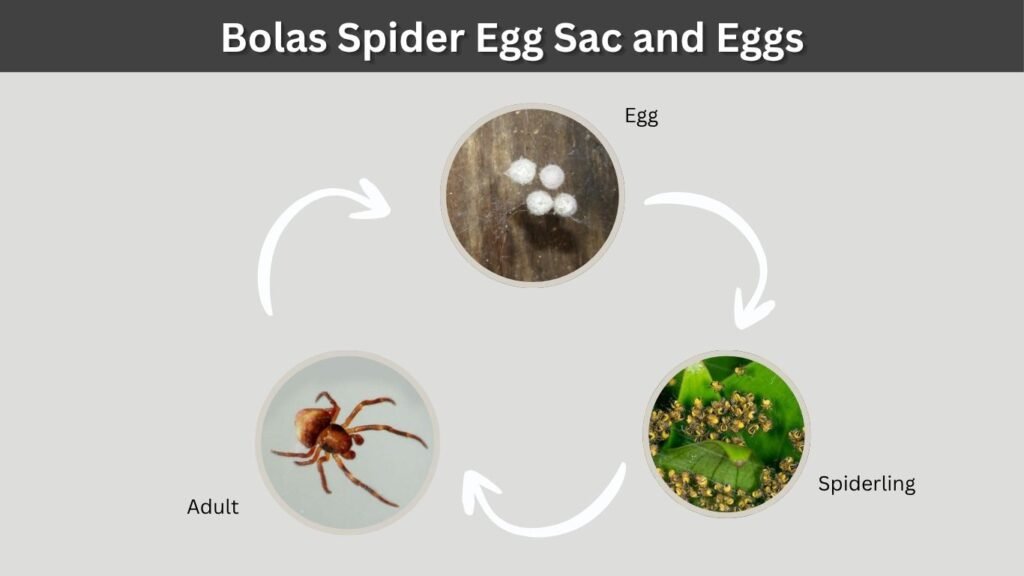
After mating, a female bolas spider produces one or more egg sacs. These are usually attached to a strong silk line, leaf, twig, or other protected part of the surrounding vegetation.
The sacs may be rounded, spindle-shaped, or elongated, depending on the species. A female can hang several sacs close together, creating a row that may remain in place after she dies.
Each sac may contain numerous eggs. The thick silk protects them from changing weather, drying, minor physical damage, and some predators. Nevertheless, parasitoid wasps can occasionally invade bolas spider egg sacs and develop by feeding on the eggs or young spiders.
Bolas Spider Life Cycle
The life cycle has three basic stages:
- Egg
- Spiderling
- Adult
Spiderlings emerge from their protective sac when environmental conditions are suitable. They disperse through nearby vegetation, sometimes using silk threads carried by air.
Young females grow through several molts before becoming adults. Once mature, they shift toward the specialized pheromone-based moth-hunting behavior. Adult reproduction and egg-sac production are often seasonal, although timing varies with climate and species.
Are Bolas Spiders Poisonous or Venomous?
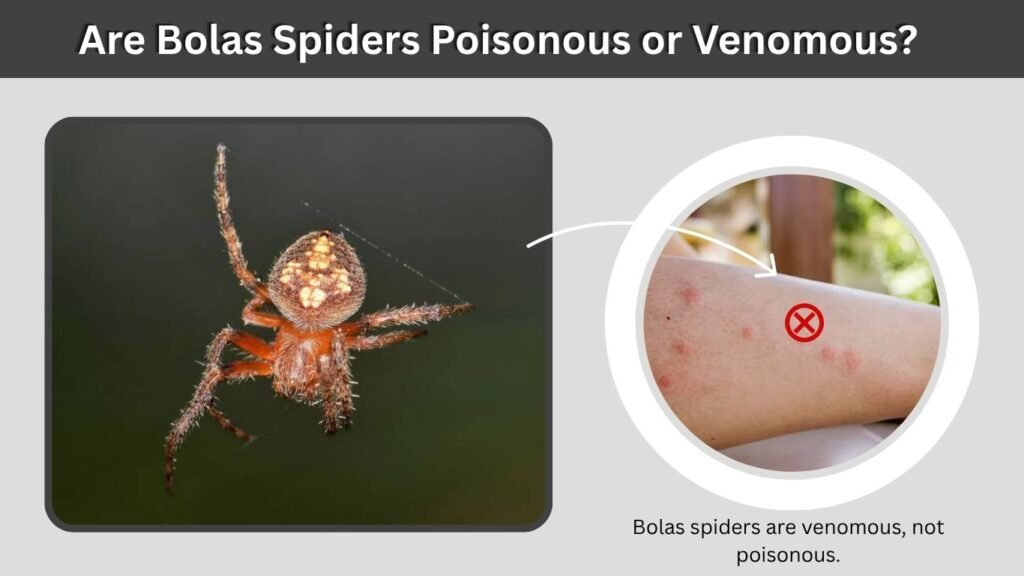
Bolas spiders are venomous, not poisonous. They inject venom through their fangs to subdue moths and other prey. An organism is described as poisonous when it causes harm after being touched or eaten, while venom is delivered through a bite or sting.
Their venom is adapted for small prey and is not known to create a significant medical danger to humans.
Do Bolas Spiders Bite?
A bolas spider may bite if it is squeezed, trapped against the skin, or handled carelessly. However, these spiders are not aggressive and generally depend on camouflage rather than confrontation.
They spend much of the day resting quietly and become active at night to hunt moths. Human contact is uncommon because the spiders are small, secretive, and usually remain on plants.
Is a Bolas Spider Bite Dangerous?
Bolas spiders are not regarded as medically significant spiders. A possible bite would be expected to cause minor local effects, such as temporary pain, redness, itching, or swelling. Serious bites are not well documented.
Spider bites in general are uncommon because most species avoid people and bite mainly when trapped or threatened. Many suspected spider bites are caused by other insects, skin irritation, or infection.
Wash a suspected bite with soap and water and apply a wrapped cold pack for short periods. Medical attention is appropriate when pain or swelling becomes severe, symptoms spread, the wound appears infected, or breathing difficulty and other allergic symptoms develop.
Bolas Spider Predators
Bolas spiders may be hunted by birds, lizards, frogs, predatory insects, and other spiders. Parasitic and parasitoid wasps may attack the spiders or their egg sacs.
Their daytime resemblance to bird droppings is likely an important protective adaptation. Remaining motionless also reduces the chance that a visual predator will recognize them as prey.
At night, the spider’s limited web may make it less visible than a full orb web. However, hunting from an exposed line still creates risks from predators that are active after dark.
Can You Keep a Bolas Spider as a Pet?
Bolas spiders are unsuitable pets for most people. Their specialized diet, seasonal life cycle, size differences between the sexes, and unusual hunting requirements make long-term care difficult.
An adult female may require suitable live moth species rather than common feeder insects. Reproducing the correct hunting environment and providing insects that respond to her chemical lure can be challenging.
Wild collection may also be restricted or harmful to local populations. It is better to observe or photograph a bolas spider in its habitat without disturbing it, its hunting line, or its egg sacs.
Interesting Bolas Spider Facts
- Bolas spiders are specialized members of the orb-weaver family.
- Adult females catch moths with a short adhesive silk line.
- They imitate female moth pheromones to attract males.
- Some can target different moth species at different times of night.
- Females are dramatically larger than males.
- Their bodies often resemble bird droppings.
- Young spiders may build more recognizable webs than adults.
- Bolas spiders are venomous but not considered dangerous to humans.
- Australian species include the magnificent bolas spider.
- Their unusual hunting method combines chemical mimicry with accurate silk casting.
FAQs
Does a bolas spider build a regular web?
Adult females normally do not build a large circular orb web. They create a support line and a short silk capture thread tipped with one or more sticky droplets.
Why does a bolas spider attract male moths?
The female releases chemicals that imitate the mating pheromones of female moths. Male moths follow the scent and unknowingly fly toward the waiting spider.
Does a bolas spider throw its lasso?
The spider does not release the thread completely. It holds the silk line and swings or flicks its adhesive end toward a moth flying nearby.
Are bolas spiders helpful?
Yes. They capture moths, including species whose caterpillars may damage crops and garden plants. They are natural predators and do not damage vegetation.
Where do bolas spiders hide during the day?
They commonly rest on leaves, twigs, branches, or vegetation. Their rounded, patterned bodies often resemble bird droppings, helping them remain unnoticed by predators.
