
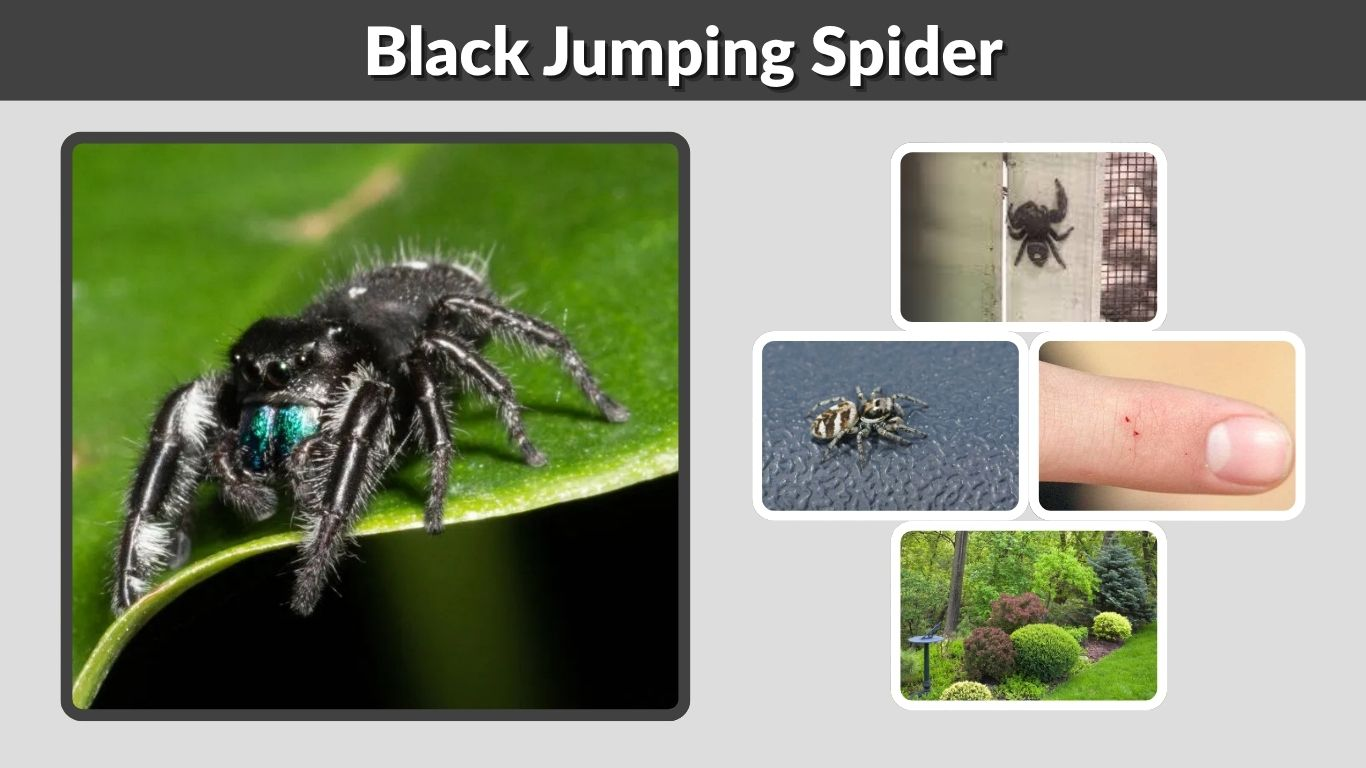
A black jumping spider can look surprising because of its bold movements, compact body, bright markings, and sometimes shiny green fangs. Many people notice these spiders on walls, windows, decks, plants, or inside homes. Although they may seem intimidating, black jumping spiders are usually harmless to people and helpful because they hunt small insects. Learning their colors, markings, behavior, and bite risks can make identification easier.
What Is a Black Jumping Spider?
A black jumping spider is not always one single species. It is often a general description used for several jumping spiders that appear mostly black or dark-colored. These spiders belong to the family Salticidae, a large group known for excellent vision, quick jumps, and curious behavior.
Jumping spiders do not spin webs to catch prey. Instead, they actively hunt by stalking insects and leaping on them. Their short, strong legs and large front-facing eyes make them easy to recognize.
Why They Are Called Jumping Spiders
Jumping spiders get their name from the way they move and hunt. They can jump several times their body length to catch prey or escape danger. Before jumping, many attach a silk safety line to the surface, which helps them avoid falling.
Their jumps may look sudden, but they are controlled and accurate. This behavior is one reason people often notice them indoors or around gardens.
Are All Black Jumping Spiders the Same?
No. A “black jumping spider” may refer to a bold jumping spider, zebra jumping spider, emerald jumper, or another dark salticid species. Color can vary by sex, age, location, and species.
Some are all black, while others have white dots, white stripes, red spots, orange markings, yellow bands, blue reflections, or metallic green fangs.
What Does a Black Jumping Spider Look Like?
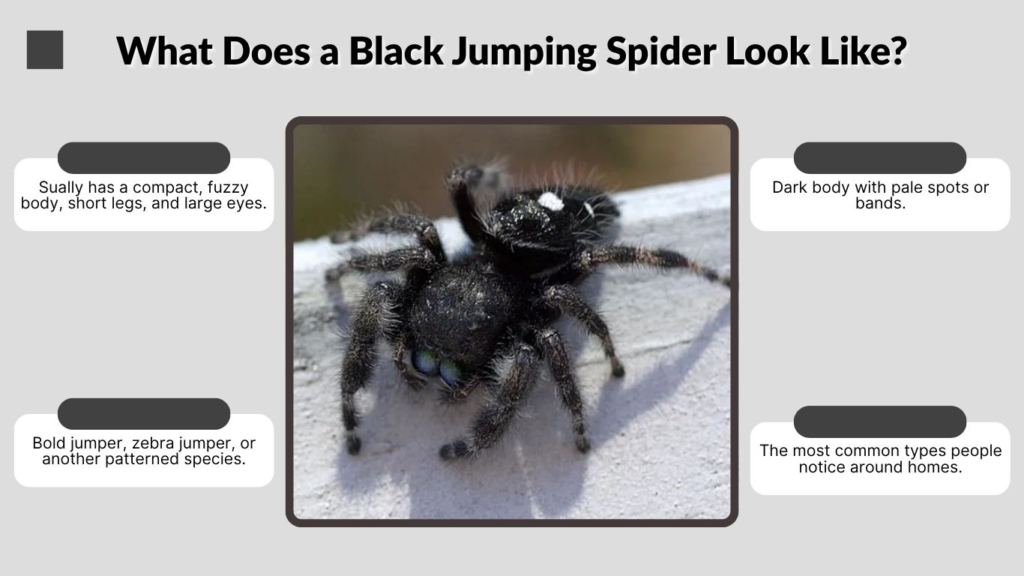
A black jumping spider usually has a compact, fuzzy body, short legs, and large eyes. Its body may look stocky rather than long and thin. Many species have a dark body with pale spots or bands.
Their face is especially distinctive. Jumping spiders have large front eyes that give them a curious, almost alert expression. They often turn to look at movement, which makes them seem more aware than many other spiders.
Black Jumping Spider With White Dot
A black jumping spider with a white dot is commonly a bold jumping spider or a related species. The white dot may appear on the abdomen, sometimes with smaller pale markings nearby.
These white markings can help with identification, but they should not be the only clue. Size, location, body shape, and behavior also matter.
Black Jumping Spider With White Spots
A black jumping spider with white spots is one of the most common types people notice around homes. Some have three clear white spots on the abdomen, while others have broken bands or small speckles.
The white spots may be brighter on males and less clear on females or juveniles. Young spiders may also show different patterns as they grow.
Black and White Jumping Spider
A black and white jumping spider may be a bold jumper, zebra jumper, or another patterned species. Zebra jumpers often show black-and-white striping, while bold jumpers are usually darker with white spots.
If the spider is small, striped, and active on walls or fences, it may be a zebra jumping spider. If it is larger, black, fuzzy, and has white abdominal spots, it may be a bold jumping spider.
Black Jumping Spider With Green Fangs
One of the most noticeable features of some black jumping spiders is their shiny green fangs. These are not actually fangs in the way people often imagine. The bright green parts are usually the chelicerae, the mouthpart structures near the fangs.
In bold jumping spiders, these chelicerae can look metallic green, blue-green, or turquoise. This bright color often makes the spider look more dramatic than it really is.
Is a Black Jumping Spider With Green Fangs Dangerous?
A black jumping spider with green fangs is usually not dangerous to people. The metallic color does not mean the spider is highly venomous or aggressive. It is simply part of the spider’s appearance.
Like most spiders, jumping spiders do have venom for subduing prey. However, their bites are not usually considered medically serious for humans. They are more likely to run or jump away than bite.
Black and White Jumping Spider With Green Fangs
A black and white jumping spider with green fangs is often a bold jumping spider. This spider may have a black fuzzy body, white spots or bands, and metallic green mouthparts.
It is one of the most commonly noticed jumping spiders because it is relatively large, active during the day, and often appears around homes, gardens, decks, and windows.
Common Black Jumping Spider Colors and Markings
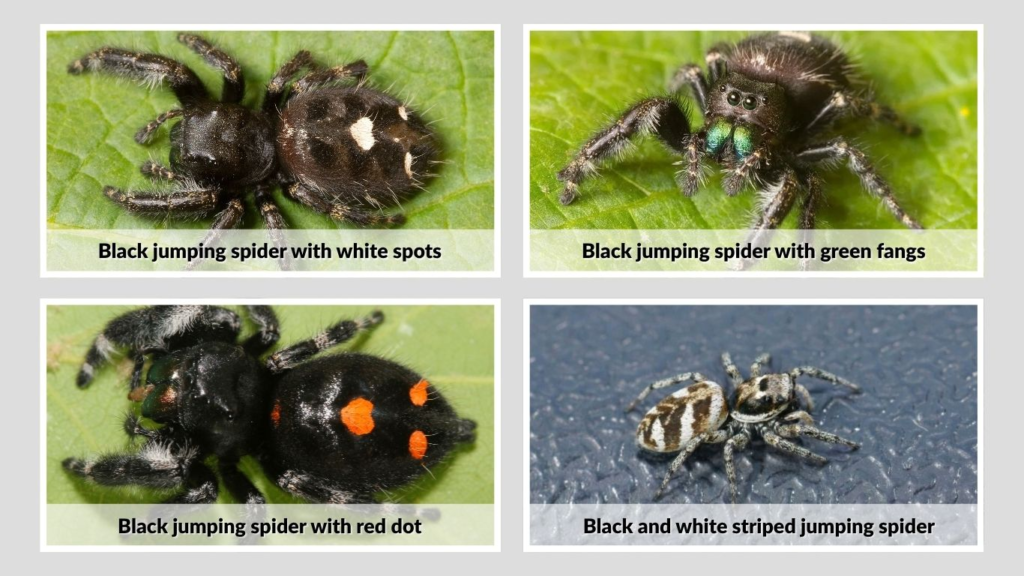
Black jumping spiders come in several color patterns. Some markings are natural species features, while others may vary between males, females, and juveniles.
| Type or Description | Possible Appearance | Common Notes |
| Black jumping spider with white spots | Dark body with white dots or bands | Often seen on walls, decks, and windows |
| Black jumping spider with green fangs | Black body with metallic green mouthparts | Common in bold jumping spiders |
| Black jumping spider with red dot | Dark body with red or orange marking | May be confused with other spiders |
| Black and white striped jumping spider | Striped body pattern | Often used to describe zebra jumpers |
| All black jumping spider | Mostly dark with little marking | Identification may require closer photos |
Black Jumping Spider With Red, Orange, or Yellow Dots
Some people find a black jumping spider with a red dot, orange dot, or yellow markings. These colors can appear in different species, especially on the abdomen or legs. Juvenile spiders may also show brighter colors than adults.
A red and black jumping spider does not automatically mean it is a black widow. Black widows have a very different body shape, smoother shiny body, and a red hourglass marking on the underside of the abdomen.
Black Jumping Spider With Red Dot
A black jumping spider with a red dot may be a juvenile jumping spider or a species with reddish abdominal markings. It should not be identified by color alone.
Look for jumping spider features: large front eyes, compact body, quick movements, and jumping behavior. If the spider has a round shiny abdomen and hangs in a messy web, it may not be a jumping spider.
Black Jumping Spider With Orange Dot
A black jumping spider with an orange dot may be a young bold jumper or another colorful jumping spider. Orange markings are not unusual in juveniles.
The spider’s behavior is important. Jumping spiders usually wander and hunt during the day. They do not sit in sticky webs waiting for prey like many web-building spiders.
Black and Yellow Jumping Spider
A black and yellow jumping spider may have yellow bands, yellow spots, or golden markings. Some jumping spiders use bright colors for species recognition or display.
Yellow markings alone do not mean the spider is dangerous. Many small spiders have bright markings but are harmless to people.
Small, Tiny, Big, and Large Black Jumping Spiders
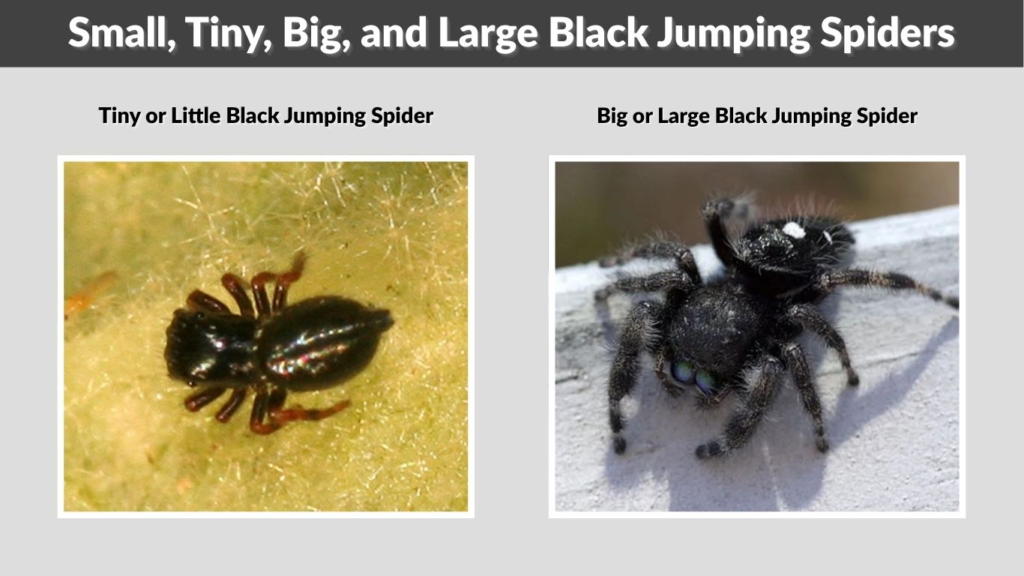
People often describe jumping spiders by size because they can appear very different depending on age and species. A tiny black jumping spider may be a juvenile, while a big black jumping spider may be an adult bold jumper.
Even large jumping spiders are still small compared with many house spiders. Their stocky shape and bold movement can make them look bigger than they are.
Tiny or Little Black Jumping Spider
A tiny black jumping spider may be newly hatched or immature. Young spiders often have less obvious markings and may look like small black specks moving across a wall, plant, or window.
They are usually not a concern indoors. If possible, gently move them outside using a cup and paper.
Big or Large Black Jumping Spider
A big black jumping spider is often an adult. It may appear fuzzy, thick-bodied, and confident. Large individuals are more noticeable because they move in short bursts and may turn to face you.
Despite their bold look, they usually avoid contact and are not aggressive toward humans.
Black Jumping Spider Bite
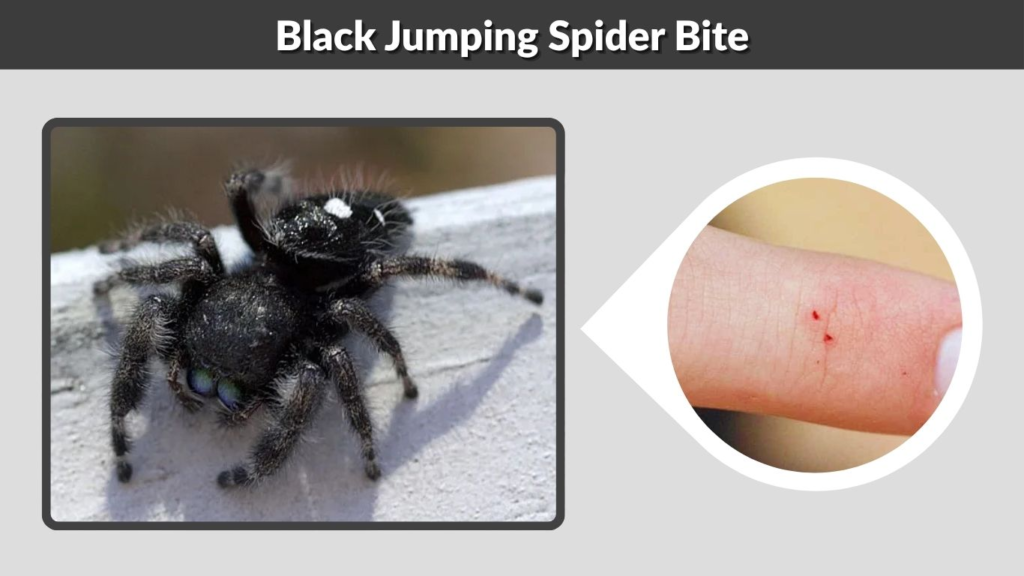
A black jumping spider bite is uncommon. These spiders usually bite only if trapped against the skin, squeezed, or handled roughly. Most encounters do not result in a bite.
If a bite happens, it may feel like a small pinch or bee-sting-like irritation. Mild redness, swelling, itching, or tenderness can occur.
What to Do for a Jumping Spider Bite
Basic care usually includes washing the area with soap and water, applying a cold compress, and avoiding scratching. If there is discomfort, follow standard first-aid steps and monitor the bite.
Seek medical advice if symptoms worsen, if redness spreads, if pus appears, or if you develop severe pain, fever, trouble breathing, dizziness, or swelling of the face or throat.
Is a Black Jumping Spider Poisonous?
People often ask if black jumping spiders are poisonous, but “venomous” is the more accurate word. Jumping spiders have venom for catching insects, but they are not considered dangerous to most people.
They are not in the same risk category as black widows or brown recluses. Still, any bite can become irritated or infected if scratched or neglected.
Black Jumping Spider in Texas, Michigan, and Other States
Black jumping spiders are found in many parts of the United States. People commonly search for them in Texas, Michigan, California, Florida, and other states because they often appear around homes and gardens.
Local species vary by region, but many jumping spiders share similar habits: daytime hunting, strong eyesight, quick jumps, and compact bodies.
Black Jumping Spider in Texas
Texas has many jumping spider species because of its warm climate and varied habitats. Black and white jumping spiders, black spiders with green fangs, and colorful red or orange-marked jumpers may all be seen in gardens, fences, sheds, and around homes.
They are usually beneficial because they eat flies, mosquitoes, small moths, and other insects.
Black Jumping Spider in Michigan
In Michigan, black jumping spiders are often noticed during warmer months. They may appear on siding, windows, decks, tree trunks, and garden plants.
Some may enter homes accidentally, especially when temperatures change. They can be relocated outside if found indoors.
Where Do Black Jumping Spiders Live?
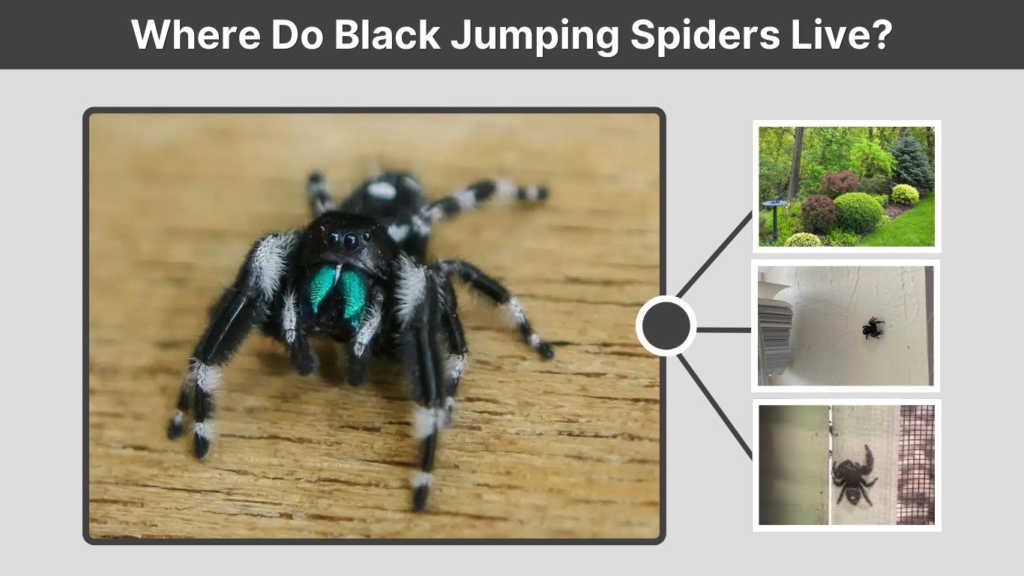
Black jumping spiders live in many habitats, including forests, fields, gardens, yards, walls, fences, sheds, and homes. They like places where insects are available and where they can hunt during the day.
They may rest in small silk shelters under leaves, bark, corners, or cracks. These shelters are not prey-catching webs. They are used for resting, molting, hiding, or protecting egg sacs.
Common Places to Find Them
You may see black jumping spiders on:
- Windows and screens
- Exterior walls
- Deck rails
- Garden plants
- Tree bark
- Fences
- Sheds and garages
- Rocks and logs
- Indoor walls
- Houseplants
Because they hunt visually, they are often active in bright areas where insects gather.
Are Black Jumping Spiders Good to Have Around?
Yes, black jumping spiders are generally good to have around. They help control small insects and do not damage homes, plants, food, clothing, or wood. They are natural predators and part of a healthy outdoor ecosystem.
Many people who fear spiders become more comfortable with jumping spiders because they are small, curious, and unlikely to bite.
Benefits of Black Jumping Spiders
They help by eating:
- Flies
- Gnats
- Mosquitoes
- Small moths
- Aphids
- Leafhoppers
- Other small insects
- Occasionally other spiders
In gardens, they can be helpful hunters. Indoors, they may catch small pests near windows or houseplants.
How to Remove a Black Jumping Spider Safely
If you do not want a jumping spider indoors, avoid squashing it. These spiders are beneficial and easy to relocate.
Place a cup or jar gently over the spider, slide a piece of paper underneath, and carry it outside. Release it near plants, shrubs, or a sheltered outdoor area.
How to Keep Them Out
To reduce indoor sightings:
- Seal gaps around windows and doors
- Repair torn screens
- Reduce indoor insects
- Keep outdoor lights from attracting bugs near doors
- Move clutter away from entry points
- Shake out stored items from garages or sheds
Jumping spiders enter homes mostly by accident while following prey or searching for shelter.
FAQs
What is a black jumping spider with white spots?
A black jumping spider with white spots is often a bold jumping spider or a related species. These spiders may have a black fuzzy body with white dots or bands on the abdomen. They are active hunters and are usually harmless to people.
Are black jumping spiders poisonous?
Black jumping spiders are venomous to their insect prey, but they are not considered dangerous to most people. Their bites are uncommon and usually cause mild local symptoms if they happen. They are not the same as black widows or brown recluses.
What happens if a black jumping spider bites you?
A black jumping spider bite may cause mild redness, swelling, itching, or tenderness. Wash the area with soap and water, use a cold compress, and monitor it. Get medical advice if symptoms spread, worsen, or include severe pain, fever, or allergic signs.
Why does a black jumping spider have green fangs?
The green “fangs” are usually metallic green chelicerae, which are mouthpart structures near the fangs. This feature is common in some bold jumping spiders. The bright color does not mean the spider is highly dangerous.
Should I kill black jumping spiders?
You usually do not need to kill black jumping spiders. They are beneficial predators that eat small insects and rarely bite people. If one is indoors, gently move it outside with a cup and paper instead of harming it.
