
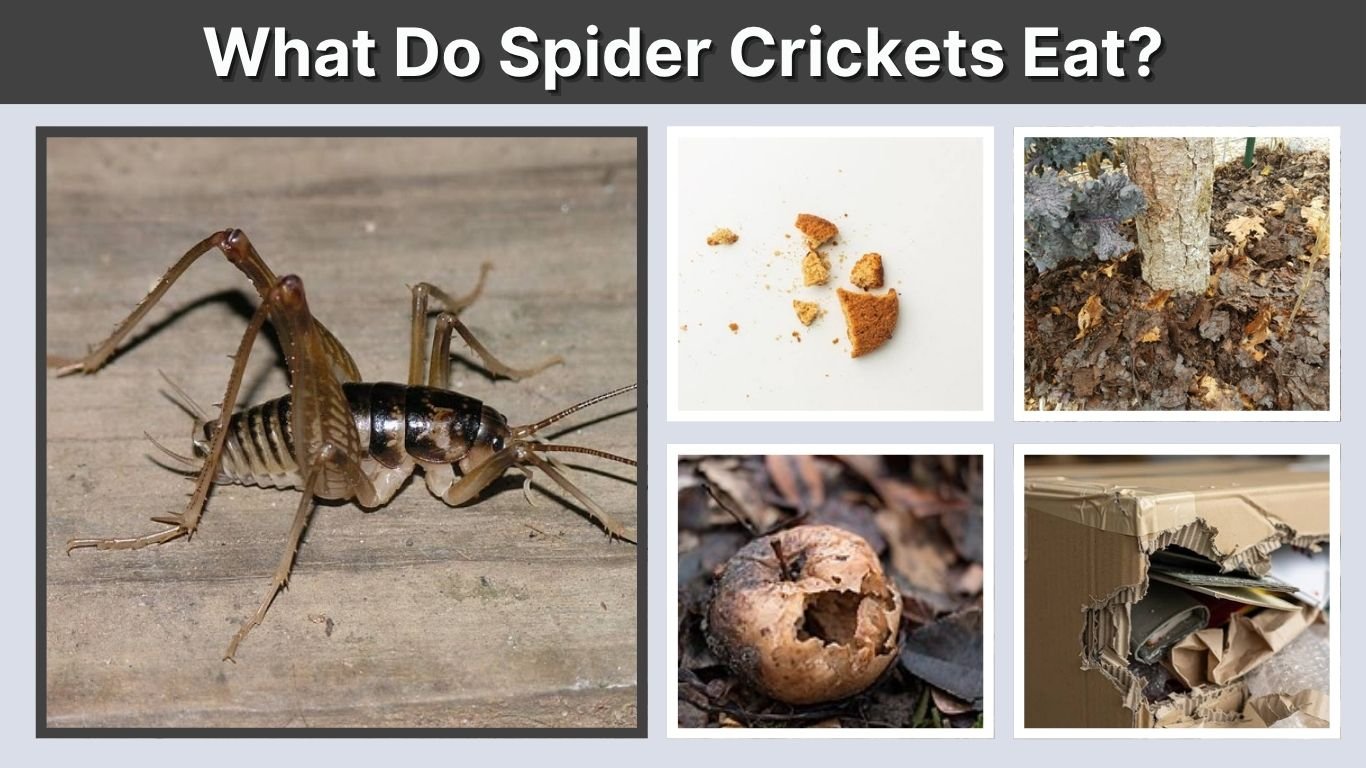
Spider crickets eat fungi, decaying plants, dead insects, food scraps, and other organic materials. These strange-looking insects are omnivorous scavengers, meaning they consume both plant- and animal-based matter. They may also chew paper, cardboard, clothing, and houseplants when they enter damp areas of a home. Although spider crickets occasionally eat small living insects, they are not effective pest-control insects. Their flexible diet allows them to survive in basements, crawl spaces, garages, caves, greenhouses, and other dark environments where moisture and organic debris are available.
What Are Spider Crickets?
Spider crickets are wingless insects belonging to the family Rhaphidophoridae. They are also called camel crickets, cave crickets, or sprickets. Their hump-shaped bodies and extremely long legs make them look like a cross between a cricket and a spider.
Unlike common house crickets, spider crickets do not chirp. They are primarily nocturnal and depend on their long antennae to navigate dark environments.
How to Identify Spider Crickets
- Hump-shaped or rounded back
- Brown, tan, or mottled body
- Six legs with enlarged hind legs
- Extremely long antennae
- No functional wings
- Body approximately ½ to 1½ inches long
- Strong jumping ability
- Preference for cool, dark, and damp places
Spider crickets are not venomous, and they do not normally bite or sting people. When frightened, they may jump toward a perceived threat because their vision is limited and jumping is their main escape response.
What Do Spider Crickets Eat in the Wild?
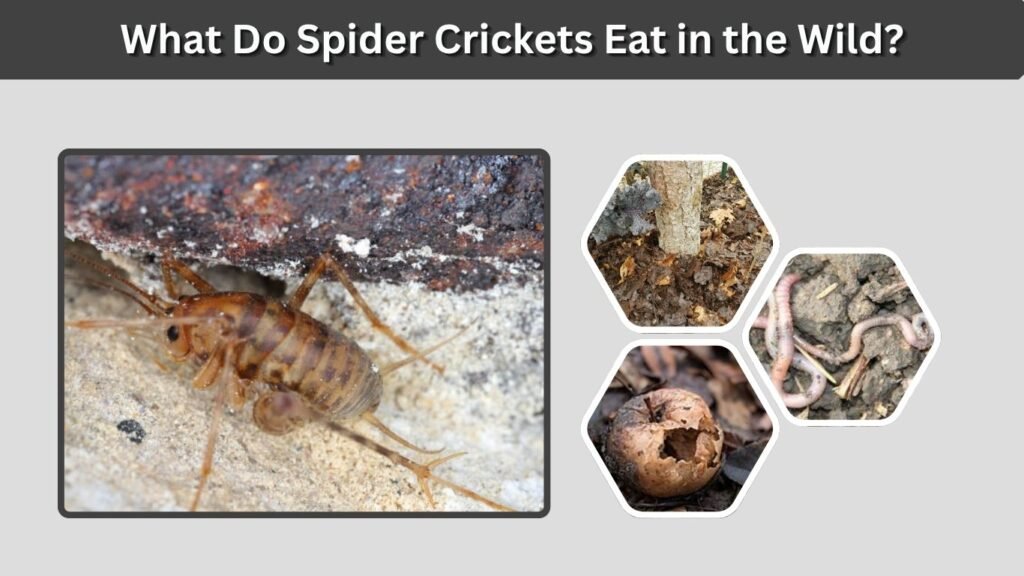
Spider crickets are primarily scavengers and detritivores. Instead of hunting one particular type of prey, they feed on whatever suitable organic material is available.
| Food category | Common examples |
|---|---|
| Fungi | Mold, mushrooms, and fungal growth |
| Decaying plants | Dead leaves, roots, grass, and rotting wood |
| Animal matter | Dead insects and other small invertebrates |
| Living prey | Insect eggs and weakened insects |
| Waste material | Droppings and decomposing organic debris |
| Plant material | Tender roots, seedlings, and fallen fruit |
Fungi and Mold
Fungi are an important part of the spider cricket’s natural diet. These insects frequently live beneath logs, inside caves, and among moist leaf litter, where fungal growth is abundant.
Mold growing on damp cardboard, wood, or stored materials can provide food inside a house. Therefore, a large spider cricket population may indicate excessive humidity or another underlying moisture problem.
Decaying Plant Material
Dead leaves, grass, roots, bark, rotting fruit, and other decomposing plant materials are common foods. Spider crickets help break this material into smaller pieces, allowing microorganisms to continue the decomposition process.
Outdoors, they often gather beneath firewood, stones, mulch, logs, and thick groundcover. These locations provide food, moisture, darkness, and protection from predators.
Dead Insects and Animal Matter
Spider crickets readily scavenge dead insects and other animal remains. They may eat dead flies, beetles, cockroaches, spiders, or even other crickets when they encounter them.
Their feeding activity contributes to decomposition. However, it does not mean that homeowners should keep them as natural cleaners. A large indoor population can become a nuisance and may damage stored belongings.
What Do Spider Crickets Eat Inside a House?
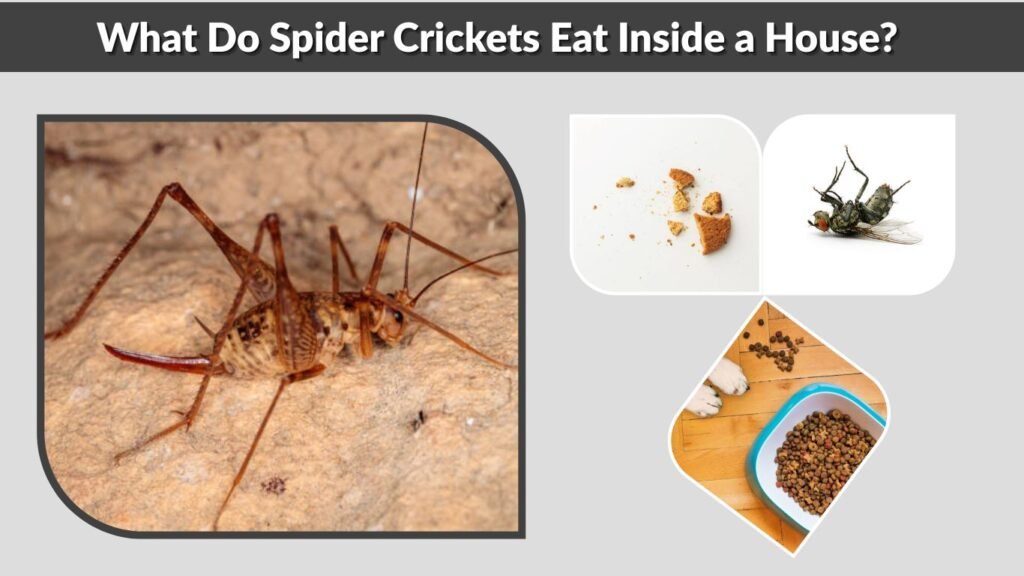
Once indoors, spider crickets continue searching for moisture and organic material. Basements and crawl spaces may contain more potential food than homeowners realize.
They can survive on mold, dead insects, food crumbs, pet-food particles, damp paper, cardboard, and natural-fiber fabrics. University research describes them as omnivores and detritivores that consume fungi, decomposing plant and animal material, occasional live insects, paper, and fabric. University of Wisconsin–Milwaukee
Paper and Cardboard
Spider crickets may chew cardboard boxes, newspapers, books, wallpaper, and other paper products. Damp paper is especially vulnerable because moisture encourages mold and softens the material.
Damage usually appears as irregular surface marks or small chewed areas. Unlike termites, spider crickets do not create organized galleries or consume the structural wood of a building.
Clothing and Fabrics
Spider crickets can nibble natural fabrics, including cotton, wool, linen, and silk. They are particularly attracted to clothing that is damp, dirty, or stained with perspiration and food.
Clean clothing stored in sealed plastic containers is much less likely to be damaged. Clothes should not be left in piles on a basement or garage floor.
Food Crumbs and Pet Food
Food crumbs, spilled beverages, garbage residue, and unsealed pet food may attract spider crickets. They are opportunistic feeders and may investigate almost any accessible organic food.
Regular cleaning and tightly sealed food containers can reduce available feeding opportunities. Pet bowls should also be cleaned after feeding, especially in rooms where spider crickets have been seen.
Houseplants
Spider crickets may nibble young seedlings, tender roots, fallen leaves, and weakened houseplants. They may also feed on fungus growing in consistently damp potting soil.
They are not normally major plant pests, but numerous crickets could damage young plants. Avoid overwatering houseplants and remove dead leaves from the soil.
Do Spider Crickets Eat Other Bugs?
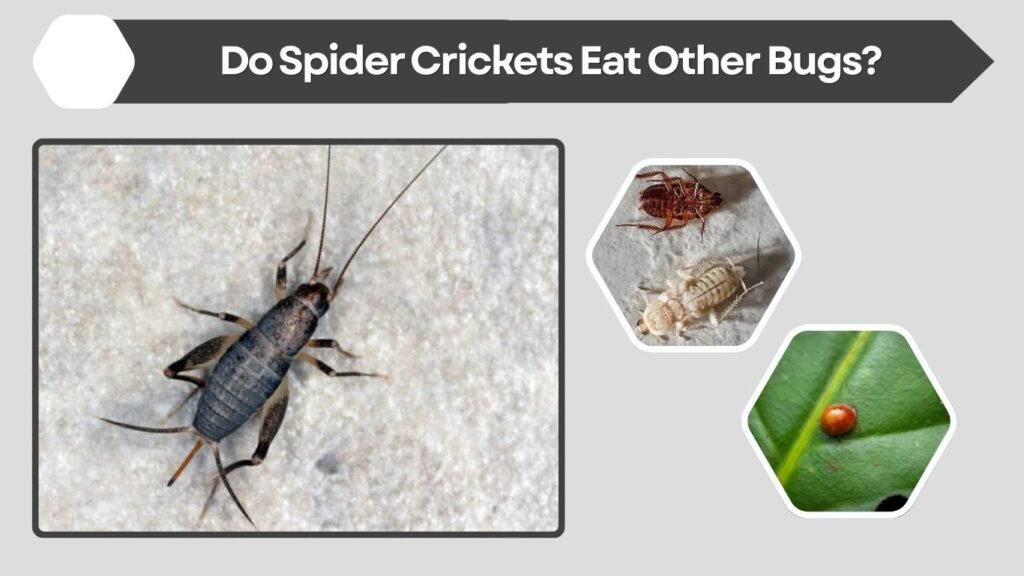
Spider crickets sometimes eat other bugs, but they are primarily scavengers rather than active hunters. They are more likely to consume a dead, injured, newly hatched, or slow-moving insect than chase healthy prey.
Do Spider Crickets Eat Roaches?
Spider crickets may scavenge dead cockroaches or eat a vulnerable roach nymph. However, they will not eliminate a cockroach infestation. Both insects may live in the same area because they are independently attracted to moisture, shelter, and available food.
Finding spider crickets and cockroaches together usually indicates suitable conditions for multiple household pests.
Do Spider Crickets Eat Spiders?
They may eat a dead spider, spider eggs, or a very small and weakened spider. However, healthy spiders are more likely to capture and eat spider crickets.
Large house spiders, wolf spiders, and other ground-hunting species commonly prey on crickets. Therefore, seeing a spider eating a cricket is considerably more common than seeing a spider cricket kill a healthy spider.
Do Spider Crickets Eat Fleas?
There is little reason to consider spider crickets dependable flea predators. They might consume an occasional dead flea or vulnerable insect, but they cannot control a flea infestation.
Flea control requires treating the affected pets under veterinary guidance, cleaning the home, washing pet bedding, and using appropriate control products.
Do Spider Crickets Eat Each Other?
Spider crickets can display cannibalistic behavior. They may eat dead members of their own species, injured adults, eggs, or smaller crickets, particularly when other food is limited.
Cannibalism does not normally reduce an infestation enough to provide meaningful control. A damp environment with abundant organic material may continue supporting a substantial population.
Do Spider Crickets Eat Clothes or House Foundations?
Spider crickets can damage clothes, but they do not eat concrete foundations. Their presence around foundations often creates confusion because they hide inside cracks and openings.
Clothing Damage
Damage is most likely when natural-fiber clothing is stored in a humid basement or crawl space. Spider crickets may chew irregular holes or scrape fibers from accessible surfaces.
Wash clothing before storing it, allow it to dry completely, and place it in sealed plastic containers. Reducing humidity will also make the storage area less attractive.
Foundation Concerns
Spider crickets cannot digest concrete, brick, metal, or other foundation materials. They may shelter inside existing cracks, but they do not create those structural openings.
Seeing numerous crickets around a foundation could indicate excessive moisture, poor drainage, damaged seals, or gaps that require repair.
What Eats Spider Crickets?
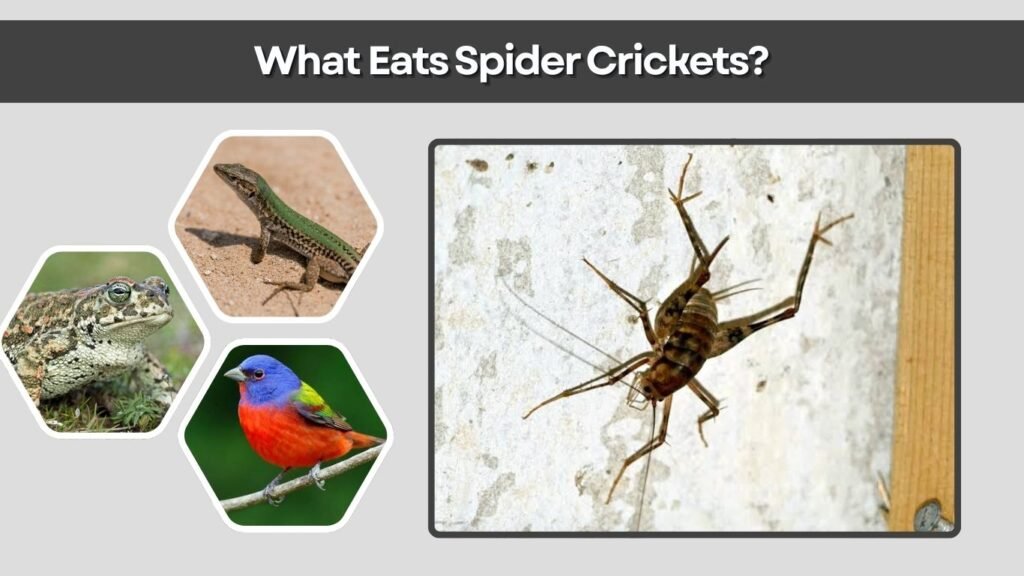
Spider crickets provide food for many insect-eating animals. Their predators help regulate outdoor populations, although they rarely eliminate every cricket living around a home.
Common predators include:
- Spiders
- Centipedes
- Frogs and toads
- Lizards
- Birds
- Rodents
- Predatory insects
- Small mammals
Wolf spiders, fishing spiders, and other large spiders may capture spider crickets. Frogs and toads also eat them when the crickets move through damp outdoor environments.
Although mice may eat spider crickets, intentionally encouraging mice is not a safe control method. Rodents can contaminate food, damage property, and introduce more serious problems than the crickets themselves.
Can Pets Eat Spider Crickets?
Dogs, cats, and reptiles may chase spider crickets because of their sudden movement. Accidentally eating one is different from intentionally using wild spider crickets as pet food.
Can Cats or Dogs Eat Spider Crickets?
Spider crickets are not known for venom or poisonous tissues, so eating one untreated cricket is unlikely to cause severe poisoning in a healthy dog or cat. However, the hard body and legs could irritate the digestive tract and cause drooling, vomiting, or diarrhea.
There is also a risk that that a wild cricket has contacted pesticides or other household chemicals. Contact a veterinarian if the pet develops repeated vomiting, weakness, breathing difficulties, excessive drooling, or unusual behavior.
Can Bearded Dragons Eat Spider Crickets?
Bearded dragons eat insects, but wild spider crickets should not be intentionally offered as feeders. Their nutritional value is uncertain, and they may carry pesticide residue, parasites, or environmental contaminants.
Use captive-raised feeder crickets, dubia roaches, or other insects recommended for bearded dragons. Appropriate feeder insects should be correctly sized, gut-loaded, and dusted with supplements according to the reptile’s dietary requirements.
How to Remove Their Food Sources
Eliminating food alone may not remove every spider cricket because moisture and shelter are also important. Combining sanitation with moisture control and exclusion produces better results.
- Vacuum dead insects, crumbs, and organic debris.
- Replace cardboard boxes with plastic containers.
- Store clothing in clean, dry, sealed containers.
- Repair plumbing and foundation leaks.
- Use a dehumidifier in damp rooms.
- Remove leaf litter and firewood from the foundation.
- Seal gaps around doors, windows, pipes, and cables.
- Avoid overwatering indoor plants.
- Place sticky traps along walls and hiding areas.
FAQs
What is a spider cricket’s favorite food?
Spider crickets do not have one favorite food. They commonly consume fungi, mold, dead leaves, decaying plants, and animal remains. The exact diet depends on what is available in their environment, making them highly adaptable omnivorous scavengers.
Do spider crickets eat mice?
Spider crickets cannot attack or consume living mice. They might scavenge small amounts of decomposing animal tissue under unusual conditions, but mice are not a normal prey item. Spider crickets mainly eat fungi, plant debris, dead insects, and other relatively soft organic materials.
Will spiders eat spider crickets?
Many spiders can eat spider crickets. Large house spiders, wolf spiders, fishing spiders, and other ground-hunting species may capture them. However, allowing spiders to multiply indoors is not a dependable cricket-control method because neither predator nor prey addresses the moisture attracting them.
Do spider crickets eat wood?
Spider crickets may feed on fungi, softened plant fibers, or decaying material found on rotting wood. They do not consume sound structural lumber like termites. Damage near wood usually suggests moisture, fungal growth, or another wood-destroying pest that requires closer inspection.
Can spider crickets survive without food?
Spider crickets may survive for a limited period without an obvious food source because tiny amounts of mold, debris, dead insects, or paper can sustain them. Removing food helps, but reducing humidity, cleaning clutter, sealing entrances, and installing traps are also necessary for lasting control.
