
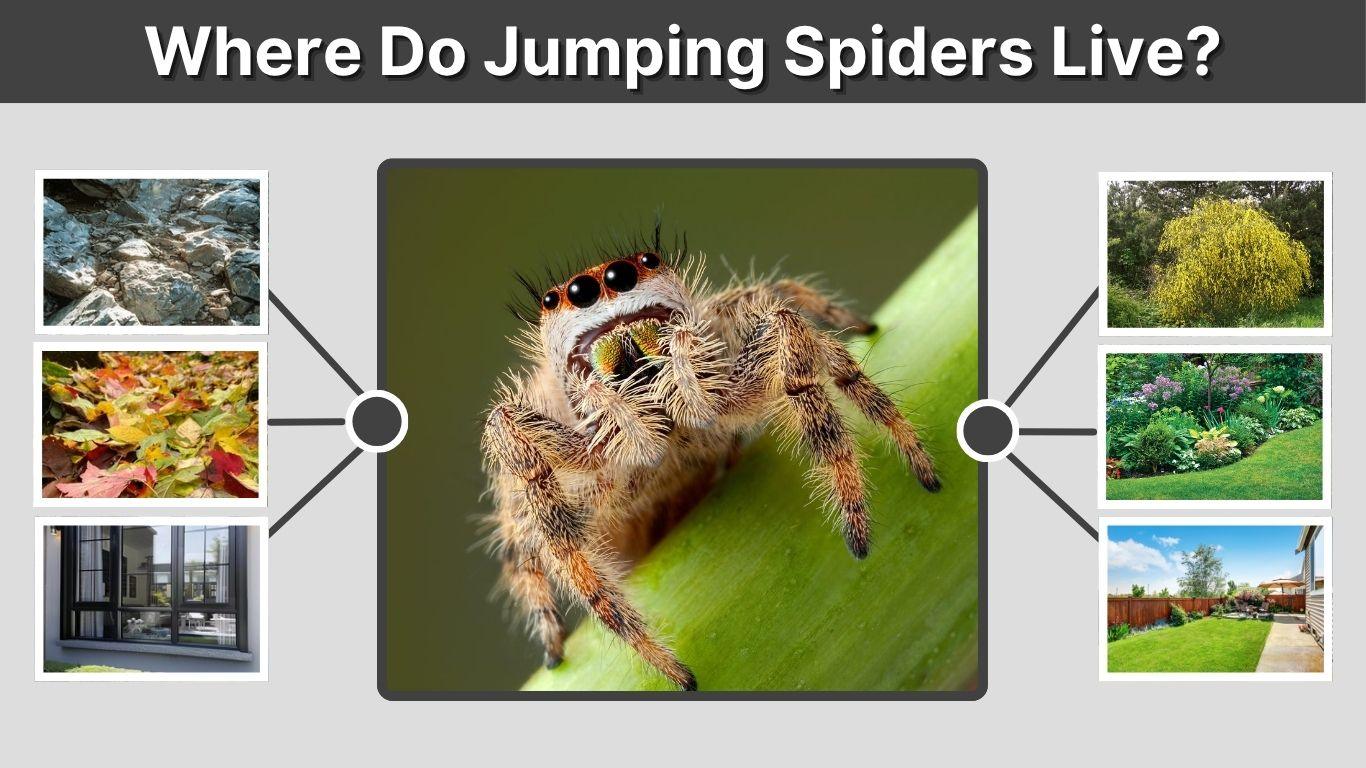
Jumping spiders live in many natural and human-made places where they can find food, shelter, and safe surfaces for climbing. You can find them in forests, grasslands, gardens, backyards, shrubs, tree bark, leaf litter, house walls, window frames, and rocky areas. These tiny hunters do not use webs to catch prey. Instead, they rely on sharp eyesight, quick movement, and accurate jumps to hunt insects in their surroundings.
1. Forests
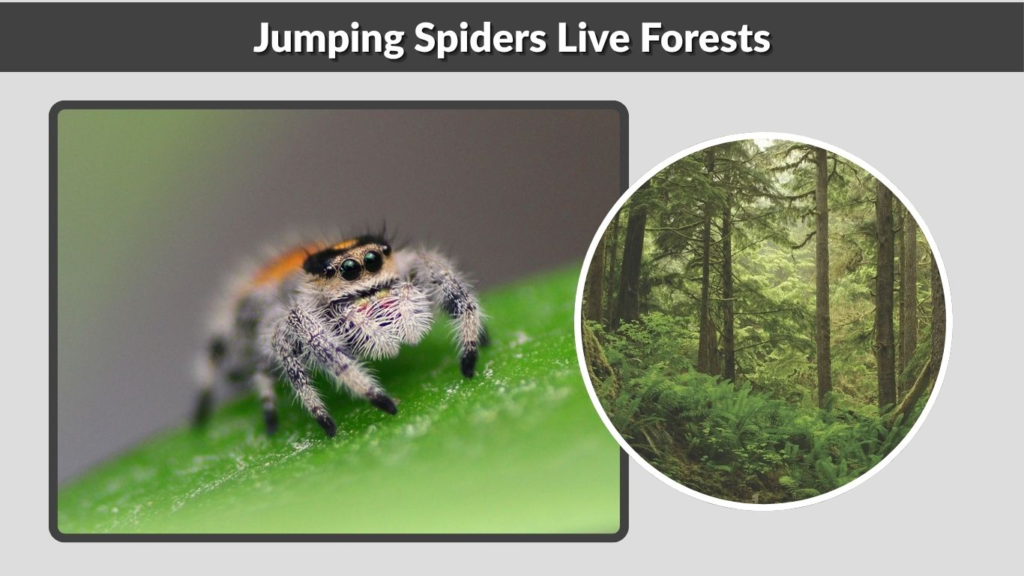
Forests are one of the most common places where jumping spiders live. These habitats provide plenty of insects to hunt, safe hiding places, and natural surfaces for climbing. Jumping spiders do not build webs to catch prey, so forests give them the perfect environment to stalk, jump, and explore leaves, bark, branches, and low plants.
Why Jumping Spiders Live in Forests
Jumping spiders live in forests because these areas are full of food and shelter. Small insects are common around leaves, tree trunks, fallen branches, and forest plants. Since jumping spiders are active hunters, they use their sharp eyesight to spot prey and move carefully through the forest before making a quick jump.
Common Forest Spots Where They Hide
- Tree bark
- Green leaves
- Shrubs
- Fallen branches
- Leaf litter
- Mossy areas
- Small plants
- Around flowers
- Under loose bark
- Low tree trunks
How Forests Help Them Hunt
Forests give jumping spiders many surfaces to climb and explore. They can move across leaves, branches, and bark while searching for flies, ants, mosquitoes, and other tiny insects. Their strong vision helps them notice movement quickly, and their jumping ability allows them to catch prey without needing a web.
Why Forests Are Safe for Jumping Spiders
Forests offer many natural hiding places that protect jumping spiders from birds, lizards, larger spiders, and harsh weather. They may rest under leaves, inside curled foliage, or in small silk shelters. These hidden spots help them stay safe while molting, resting, or waiting for better hunting conditions.
2. Grasslands
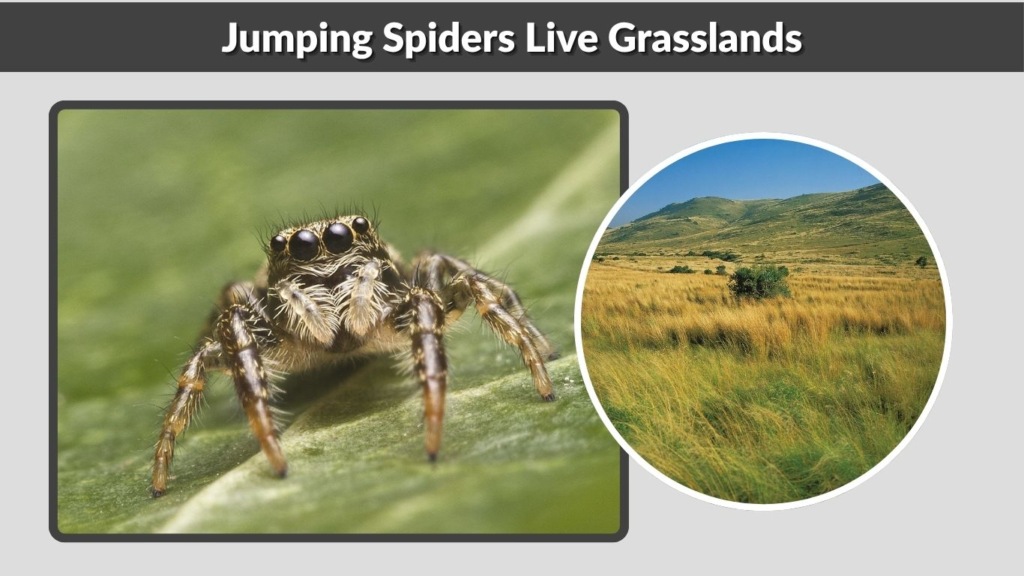
Grasslands are another common place where jumping spiders live. These open habitats have tall grass, weeds, wildflowers, and many small insects for them to hunt. Jumping spiders use grass blades and plant stems as climbing spots, lookout points, and hiding places while they search for prey during the day.
Why Jumping Spiders Live in Grasslands
Jumping spiders live in grasslands because these areas are rich in small insects. Flies, gnats, mosquitoes, beetles, and other tiny bugs often move through grass and flowers. Since jumping spiders hunt by sight, grasslands give them many chances to spot movement, stalk prey, and jump from one plant surface to another.
Common Grassland Spots Where They Hide
- Tall grass
- Weed stems
- Wildflowers
- Low plants
- Dry grass clumps
- Small bushes
- Plant leaves
- Around seed heads
- Near ground cover
- Between grass blades
How Grasslands Help Them Hunt
Grasslands give jumping spiders many natural paths for hunting. They can climb up grass blades to watch for prey, then move slowly toward insects resting on nearby plants. Their excellent eyesight helps them detect tiny movements, and their quick jumping ability allows them to catch prey without using a web.
Why Grasslands Are Safe for Jumping Spiders
Grasslands provide cover from predators and harsh sunlight. Jumping spiders can hide between grass blades, under leaves, or inside small silk shelters attached to plants. These hiding places help protect them from birds, larger insects, and sudden weather changes while still keeping them close to food.
3. Gardens
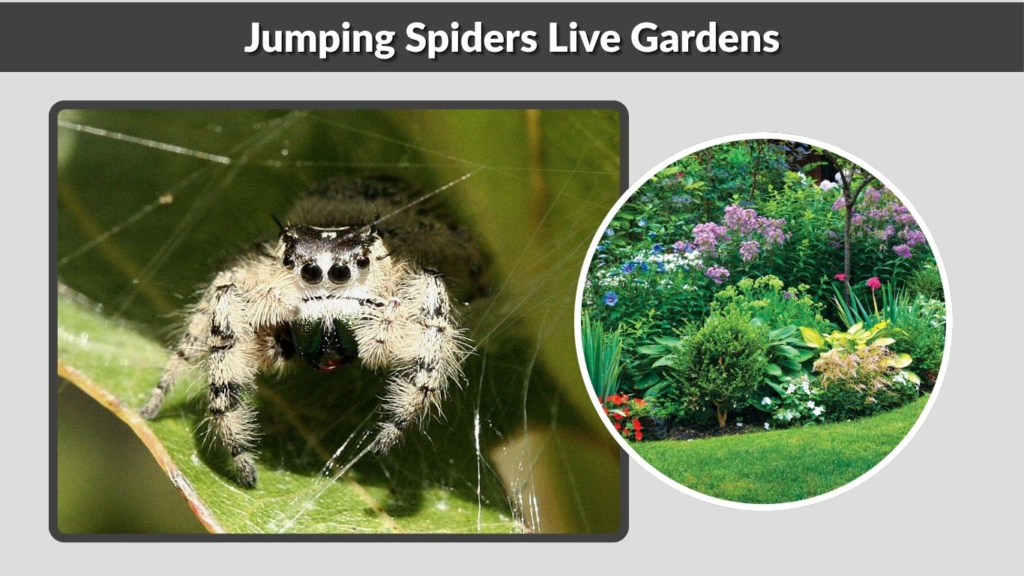
Gardens are common places where jumping spiders live because they offer plants, flowers, moisture, and plenty of small insects. These spaces give jumping spiders natural hunting areas and safe hiding spots. They often move across leaves, flower stems, fences, and garden pots while searching for prey during the day.
Why Jumping Spiders Live in Gardens
Jumping spiders live in gardens because insects are easy to find there. Flowers, vegetables, shrubs, and damp soil attract flies, mosquitoes, aphids, beetles, and other tiny bugs. Since jumping spiders are active hunters, gardens give them a steady food supply and many surfaces to explore.
Common Garden Spots Where They Hide
- Under leaves
- Flower stems
- Garden fences
- Plant pots
- Shrubs
- Vegetable plants
- Around vines
- Near garden lights
- Wooden stakes
- Small garden walls
How Gardens Help Them Hunt
Gardens are excellent hunting grounds for jumping spiders. They can sit on leaves or flowers and wait for insects to come close. When they notice movement, they slowly approach and jump at the right moment. Their sharp eyesight helps them track prey across plants and garden surfaces.
Why Gardens Are Safe for Jumping Spiders
Gardens provide many hiding places where jumping spiders can rest and avoid predators. Leaves, plant stems, and small gaps around pots help protect them from birds, lizards, and larger insects. A garden with fewer chemicals is especially safer because pesticides can harm spiders and reduce their food supply.
4. Backyards
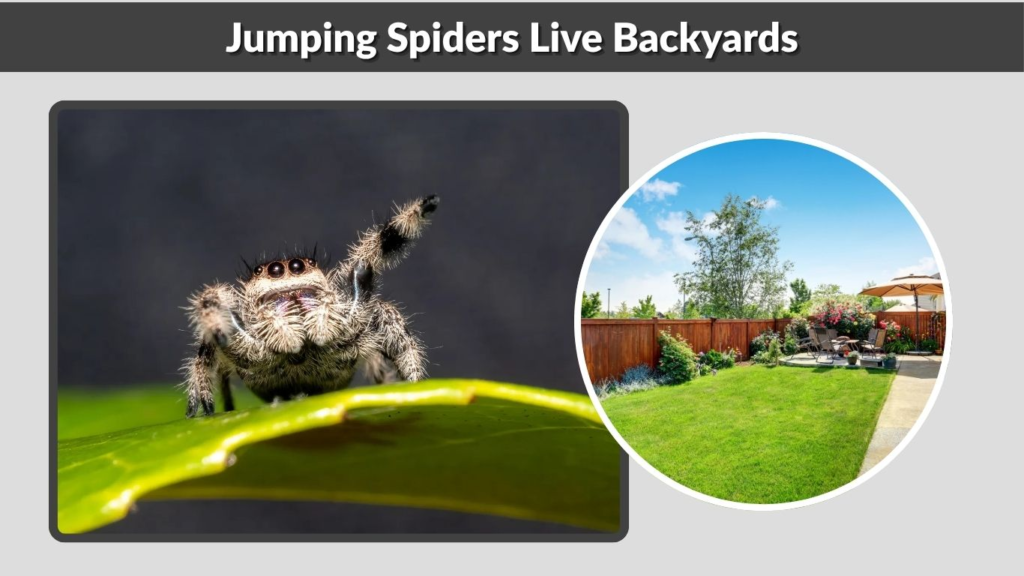
Backyards are common places where jumping spiders live because they have plants, fences, walls, wood, and small insects. These areas often mix natural and human-made surfaces, giving jumping spiders many places to climb, hide, and hunt. A backyard with grass, shrubs, flowers, or garden corners can easily attract them.
Why Jumping Spiders Live in Backyards
Jumping spiders live in backyards because they can find food and shelter close together. Small insects often gather around plants, outdoor lights, compost areas, and damp corners. Jumping spiders use these spots to search for prey while staying near safe places where they can rest or hide.
Common Backyard Spots Where They Hide
- Fence posts
- Patio furniture
- Outdoor walls
- Grass edges
- Shrubs
- Flower beds
- Wood piles
- Garden tools
- Plant pots
- Around porch lights
How Backyards Help Them Hunt
Backyards give jumping spiders many hunting surfaces. They may move across fences, leaves, walls, and outdoor furniture while watching for flies, mosquitoes, ants, and other small insects. Their excellent eyesight helps them notice prey quickly, and their strong legs allow them to jump accurately when the prey gets close.
Why Backyards Are Safe for Jumping Spiders
Backyards can provide safe resting places if there are plants, shaded corners, and small gaps where spiders can hide. They may build tiny silk shelters under leaves, behind objects, or near fence cracks. Backyards with fewer pesticides are safer because chemicals can harm jumping spiders and reduce the insects they need for food.
5. Shrubs
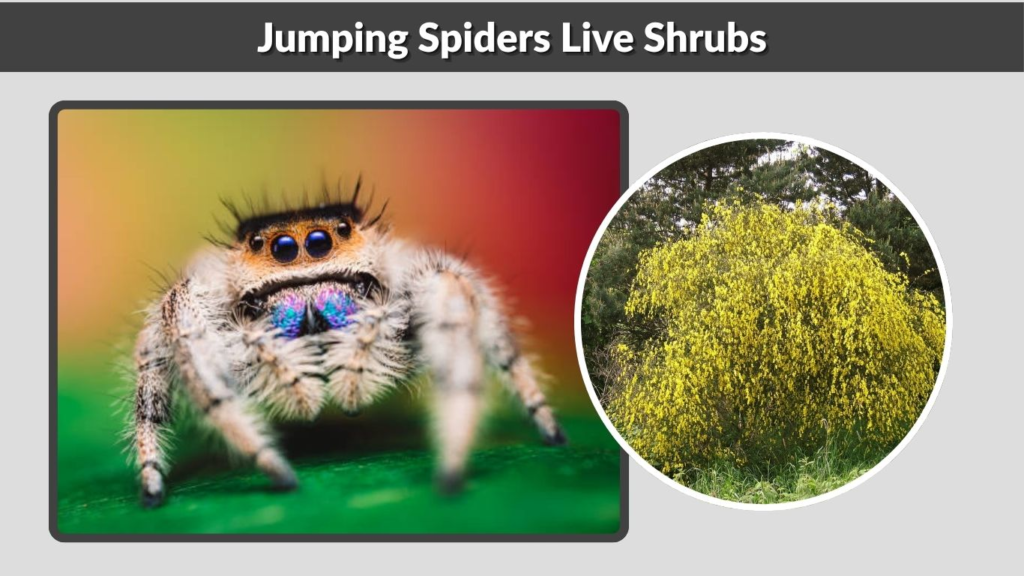
Shrubs are common places where jumping spiders live because they offer dense leaves, small branches, and many insects. These plants give jumping spiders both hunting space and protection. Since shrubs are usually close to the ground and full of hiding spots, they are ideal places for jumping spiders to rest, explore, and catch prey.
Why Jumping Spiders Live in Shrubs
Jumping spiders live in shrubs because they provide food, shade, and shelter in one place. Many small insects land on shrub leaves and branches, giving spiders easy hunting opportunities. The thick plant structure also helps them stay hidden from predators while they move through the leaves.
Common Shrub Spots Where They Hide
- Under leaves
- Between small branches
- Near flower buds
- Around new plant growth
- Inside curled leaves
- On leaf stems
- Near berries
- In shaded corners
- Around dry leaves
- Close to the plant base
How Shrubs Help Them Hunt
Shrubs give jumping spiders many surfaces for stalking prey. They can move slowly across leaves and branches while watching for flies, gnats, aphids, and other small insects. When prey comes close, the spider uses its sharp eyesight to judge distance and then jumps quickly to catch it.
Why Shrubs Are Safe for Jumping Spiders
Shrubs are safe because their dense leaves and branches create natural cover. Jumping spiders can hide from birds, lizards, and larger insects inside the plant. They may also build small silk shelters under leaves, where they can rest, molt, or stay protected during bad weather.
6. Tree Bark
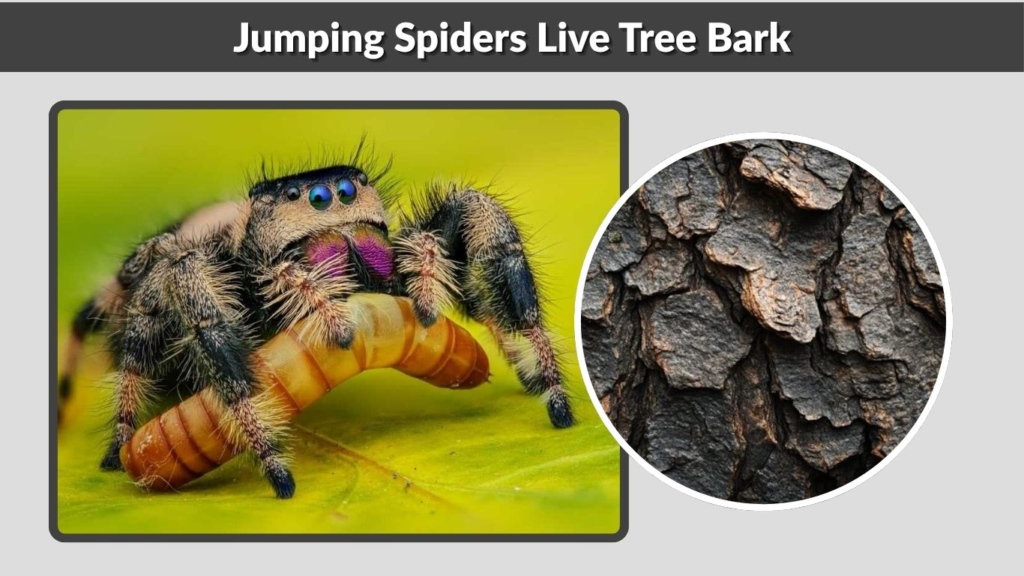
Tree bark is a common place where jumping spiders live because it provides rough surfaces, tiny cracks, and good hiding places. Many insects also move across tree trunks, making bark a useful hunting area. Jumping spiders can climb easily on bark and use its natural texture to rest, hide, and search for prey.
Why Jumping Spiders Live on Tree Bark
Jumping spiders live on tree bark because it gives them both food and shelter. Small insects often crawl or rest on tree trunks, especially in warm weather. The uneven bark surface also helps jumping spiders stay hidden while they watch for prey and avoid predators.
Common Tree Bark Spots Where They Hide
- Bark cracks
- Loose bark edges
- Tree trunk grooves
- Small holes
- Mossy bark
- Around branch joints
- Under peeling bark
- Shaded bark areas
- Near sap spots
- At the base of trees
How Tree Bark Helps Them Hunt
Tree bark gives jumping spiders a strong climbing surface and many lookout points. They can move across the trunk, pause in grooves, and watch for ants, flies, beetles, and other tiny insects. When prey comes close, they carefully judge the distance and jump with accuracy.
Why Tree Bark Is Safe for Jumping Spiders
Tree bark protects jumping spiders by giving them natural cover. Cracks, grooves, and loose bark help them hide from birds, lizards, and larger insects. They may also build small silk shelters in protected bark spaces where they can rest, molt, or stay safe during bad weather.
7. Leaf Litter
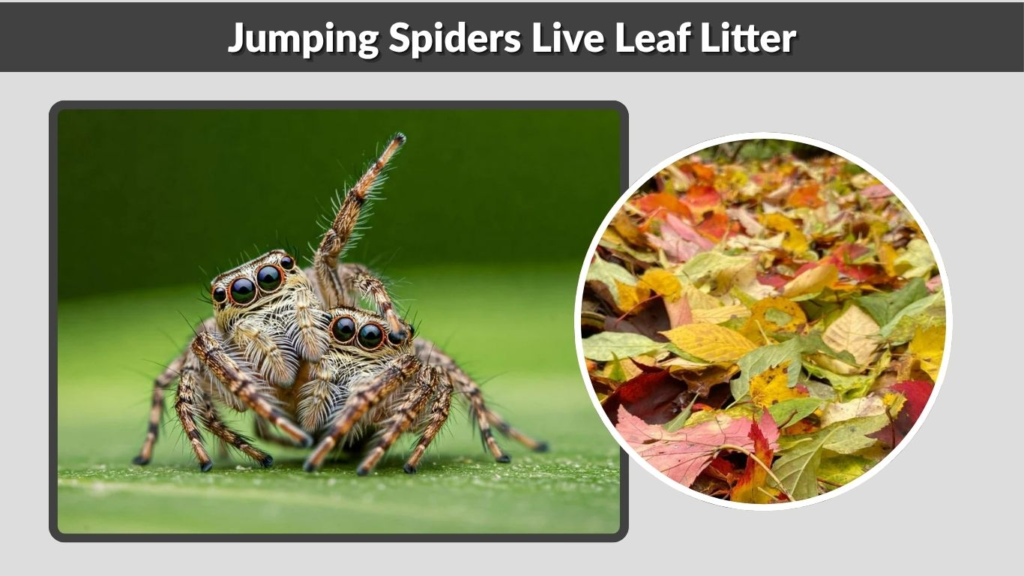
Leaf litter is a common place where jumping spiders live because it provides shelter, moisture, and many small insects. Fallen leaves create a protected layer on the ground where spiders can hide from predators and harsh weather. Jumping spiders may move through leaf litter while hunting, resting, or searching for safe places to build small silk shelters.
Why Jumping Spiders Live in Leaf Litter
Jumping spiders live in leaf litter because it is full of tiny insects and hiding places. Small flies, ants, beetles, springtails, and other small creatures often move under or between fallen leaves. This gives jumping spiders many chances to find food while staying protected close to the ground.
Common Leaf Litter Spots Where They Hide
- Under dry leaves
- Between fallen leaves
- Around small twigs
- Near rotting wood
- Under curled leaves
- Beside plant roots
- Around mossy patches
- In shaded ground areas
- Near garden mulch
- Under loose ground cover
How Leaf Litter Helps Them Hunt
Leaf litter gives jumping spiders many small spaces to explore while searching for prey. They can move carefully between leaves and watch for insects crawling nearby. Their sharp eyesight helps them notice movement, and their quick jumping ability lets them catch prey even in tight spaces.
Why Leaf Litter Is Safe for Jumping Spiders
Leaf litter helps protect jumping spiders from birds, lizards, larger spiders, and strong sunlight. The layered leaves create natural cover where they can hide, rest, or molt. It also helps keep moisture in the ground, which can make the area more comfortable for small spiders and their prey.
8. House Walls
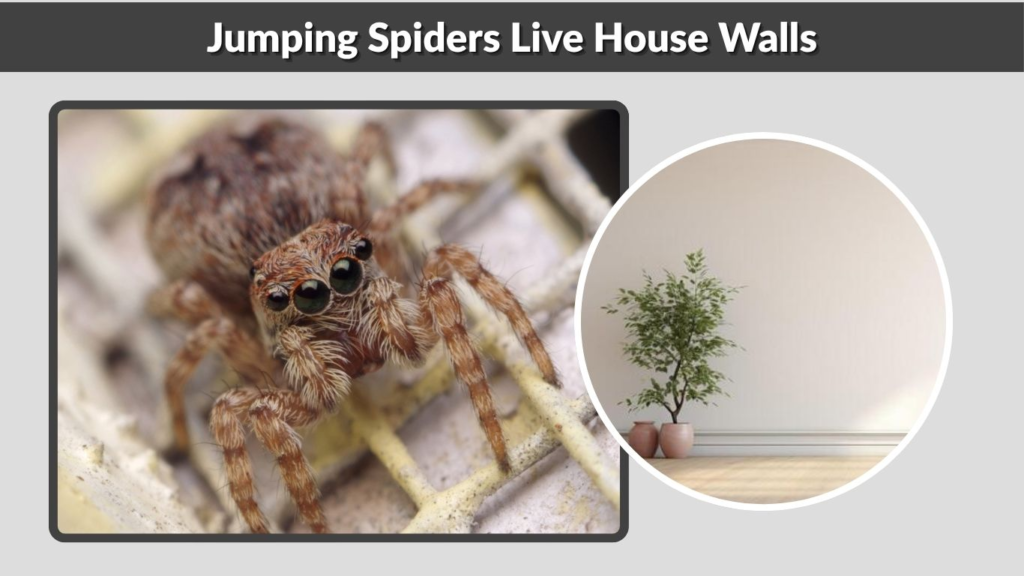
House walls are common places where jumping spiders live or rest, especially when small insects gather nearby. Outdoor walls, indoor corners, and sunny surfaces can attract them because they provide warmth, climbing space, and hunting opportunities. Jumping spiders may explore walls while searching for flies, mosquitoes, gnats, and other tiny insects.
Why Jumping Spiders Live on House Walls
Jumping spiders live on house walls because walls are easy surfaces for them to climb and patrol. Insects often land on walls near lights, windows, doors, and warm areas. These spots give jumping spiders a chance to hunt while staying close to cracks, corners, or edges where they can hide.
Common Wall Spots Where They Hide
- Window edges
- Door frames
- Wall corners
- Near outdoor lights
- Small cracks
- Behind wall decorations
- Around vents
- Porch walls
- Garage walls
- Sunny exterior walls
How House Walls Help Them Hunt
House walls help jumping spiders hunt by giving them open surfaces where prey is easy to notice. Their sharp eyesight allows them to spot small insects moving across the wall. Once they focus on prey, they slowly move closer, judge the distance, and jump quickly to catch it.
Why House Walls Are Safe for Jumping Spiders
House walls can offer protection because they have corners, gaps, and shaded edges where jumping spiders can hide. Outdoor walls may also stay warm in sunlight, which helps spiders remain active. They may build tiny silk shelters near cracks, window frames, or protected wall spaces where they can rest safely.
9. Window Frames
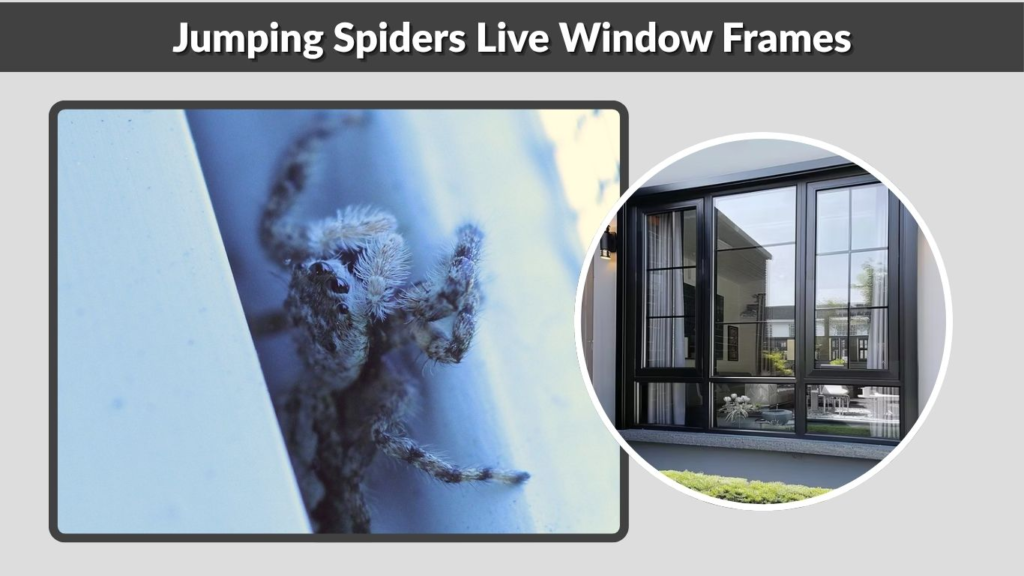
Window frames are common places where jumping spiders live or hide because insects often gather around windows. Light, warmth, and small gaps make these areas attractive to both spiders and their prey. Jumping spiders may rest near window edges, climb across glass, or build tiny silk shelters in protected corners.
Why Jumping Spiders Live Around Window Frames
Jumping spiders live around window frames because these spots often attract small insects. Flies, gnats, mosquitoes, and moths may gather near windows, especially when indoor or outdoor lights are on. This gives jumping spiders a steady place to hunt while staying close to safe hiding spaces.
Common Window Frame Spots Where They Hide
- Window corners
- Small frame gaps
- Around screens
- Behind curtains
- Near window tracks
- Exterior window edges
- Under loose trim
- Around sill cracks
- Between frame joints
- Near sunny glass areas
How Window Frames Help Them Hunt
Window frames help jumping spiders hunt by giving them a clear view of insects moving nearby. They can wait on the frame, watch prey on the glass or screen, and then move closer before jumping. Their sharp eyesight makes windows useful hunting areas because small insect movement is easy to notice.
Why Window Frames Are Safe for Jumping Spiders
Window frames provide small gaps, corners, and sheltered edges where jumping spiders can hide from danger. These spaces can protect them from larger insects, birds, and harsh weather. A spider may also build a tiny silk retreat near the frame, using it as a resting place between hunting trips.
10. Rocky Areas
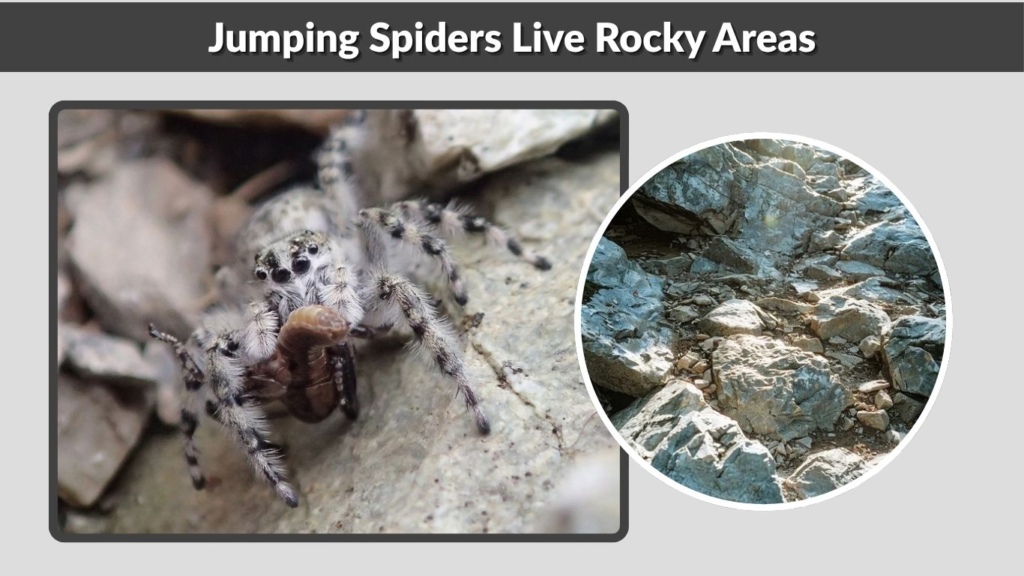
Rocky areas are common places where jumping spiders live because rocks provide warmth, climbing surfaces, and many small hiding spaces. These habitats can be found in gardens, forests, hillsides, dry fields, and near stone walls. Jumping spiders may move across rocks during the day while searching for insects and safe resting spots.
Why Jumping Spiders Live in Rocky Areas
Jumping spiders live in rocky areas because rocks attract warmth and small insects. Many insects rest or crawl around stones, cracks, and dry surfaces. Since jumping spiders hunt by sight, open rocky spaces help them notice movement clearly and move toward prey with careful, accurate jumps.
Common Rocky Spots Where They Hide
- Rock cracks
- Under small stones
- Stone walls
- Gravel edges
- Rocky garden borders
- Around boulders
- Dry rock surfaces
- Between stacked stones
- Near mossy rocks
- Shaded rock gaps
How Rocky Areas Help Them Hunt
Rocky areas help jumping spiders hunt by giving them high points and open surfaces to watch for prey. They can climb onto stones, pause, and scan the area for insects. When they see movement, they move closer and jump quickly. The rough texture of rocks also helps them grip while hunting.
Why Rocky Areas Are Safe for Jumping Spiders
Rocky areas offer many small cracks and gaps where jumping spiders can hide from predators and bad weather. These protected spaces help them rest, molt, and build tiny silk shelters. Rocks can also hold warmth during the day, which may help jumping spiders stay active in cooler conditions.
FAQs
Where do jumping spiders live most often?
Jumping spiders most often live in places with plants, insects, and hiding spots. Common habitats include forests, grasslands, gardens, shrubs, tree bark, leaf litter, house walls, window frames, and rocky areas. They prefer places where they can climb, watch for prey, and hide safely.
Do jumping spiders live inside houses?
Yes, jumping spiders can live inside houses, especially near windows, walls, door frames, and corners where small insects gather. They usually enter homes by accident while searching for food or shelter. Most are harmless and may even help reduce small pests indoors.
Why do jumping spiders stay near windows?
Jumping spiders often stay near windows because insects are attracted to light and warmth. Window frames also provide small gaps and corners where spiders can hide. These areas give them both food and protection, making windows a common indoor or outdoor resting place.
Do jumping spiders live in gardens?
Yes, gardens are excellent places for jumping spiders. Plants, flowers, shrubs, and vegetable beds attract many small insects, giving jumping spiders plenty of food. Gardens also provide leaves, stems, and plant pots where they can hide, rest, and build small silk shelters.
Are jumping spiders found in forests?
Yes, many jumping spiders live in forests. Forests provide tree bark, leaves, branches, shrubs, and leaf litter, all of which help them hunt and hide. These habitats are rich in insects, making forests one of the best natural environments for jumping spiders.
