
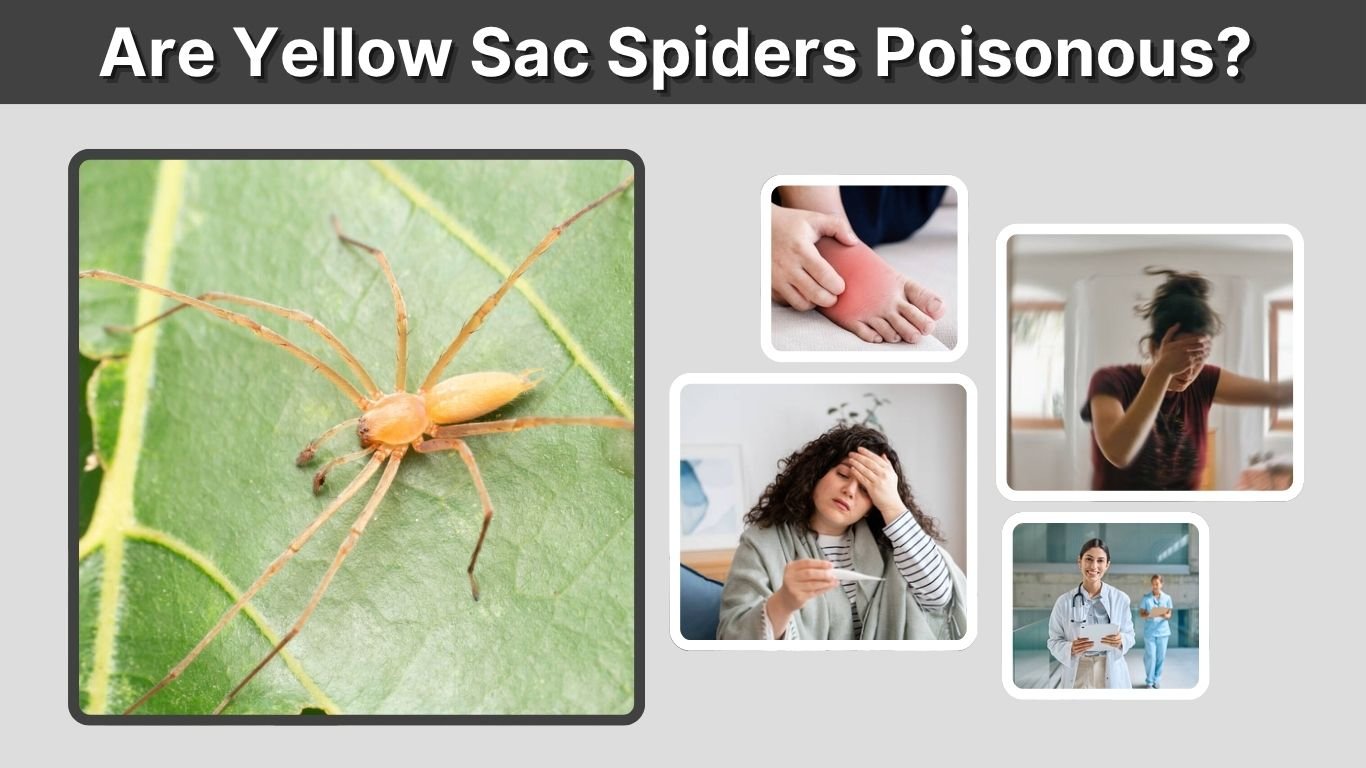
Yellow sac spiders often cause concern because of their pale yellow color, fast movement, and habit of wandering inside homes at night. Although people frequently describe them as poisonous, the more accurate term is venomous. Yellow sac spiders use venom to subdue small insects, and they can inject that venom when they bite. For most people, however, a bite causes localized pain, redness, or swelling rather than severe poisoning. Understanding their actual risk can help separate common myths from the medical evidence.
Are Yellow Sac Spiders Poisonous?
Yellow sac spiders are venomous rather than poisonous. Poison generally causes harm when something is eaten, inhaled, or touched, whereas venom is delivered through a bite or sting.
Yellow sac spiders belong to the genus Cheiracanthium. Like most spiders, they possess venom glands and fangs that help them capture prey. Their venom is effective against small insects but is not considered highly dangerous to most healthy humans.
A yellow sac spider may bite when it becomes trapped against the skin, such as inside clothing, bedding, towels, or shoes. UC IPM notes that typical bites can cause immediate pain similar to a bee sting, followed by redness and sometimes swelling.
How Dangerous Is Yellow Sac Spider Venom?
Yellow sac spider venom can cause an uncomfortable local reaction, but serious systemic poisoning is uncommon.
Most documented symptoms remain concentrated around the bite site. The intensity can vary depending on the individual, location of the bite, and amount of venom delivered.
Yellow sac spiders should therefore be treated with caution, but they are not generally placed in the same risk category as medically important widow spiders.
What Does a Yellow Sac Spider Bite Feel Like?
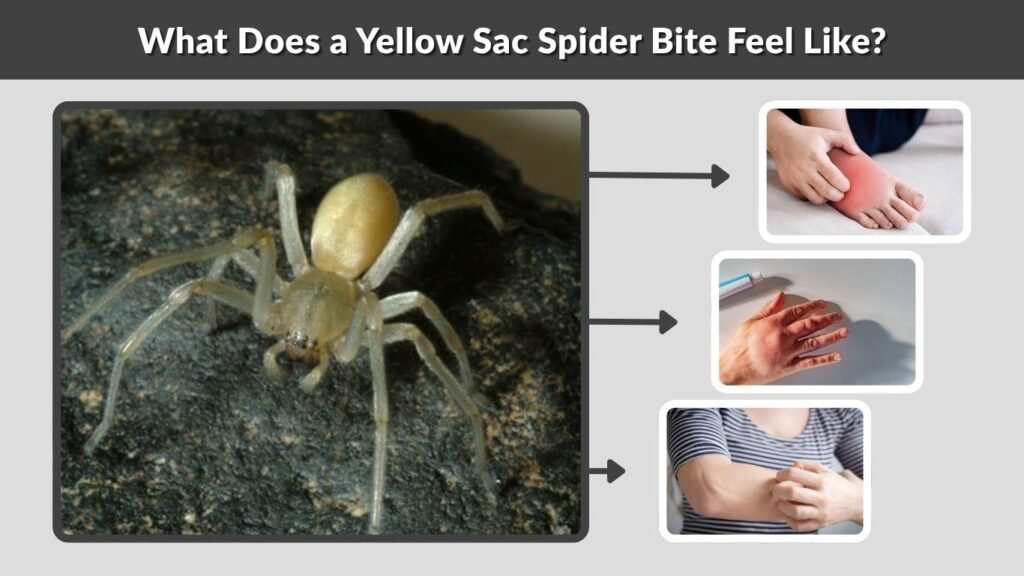
A yellow sac spider bite may be painful immediately or become uncomfortable shortly afterward.
Common symptoms can include:
- Sharp or stinging pain
- Redness around the bite
- Mild to moderate swelling
- Burning sensation
- Itching
- Tenderness
- A small irritated bump
Some people may experience more noticeable swelling or prolonged irritation.
Because many unexplained skin lesions are incorrectly blamed on spiders, seeing or positively identifying the spider is important before concluding that a yellow sac spider caused the wound.
Can a Yellow Sac Spider Bite Cause Necrosis?
Yellow sac spiders have historically been blamed for severe necrotic skin lesions, but research does not strongly support that reputation.
A study examining 20 verified yellow sac spider bites in the United States and Australia found no cases of necrosis. When researchers reviewed 39 verified bites reported internationally, only one mild necrotic reaction was associated with a European species, Cheiracanthium punctorium.
This means yellow sac spider bites should not automatically be expected to produce dying or severely ulcerated tissue.
A worsening wound may have another cause, including infection, another type of arthropod bite, or a completely unrelated skin condition.
Are Yellow Sac Spiders Poisonous to Humans?
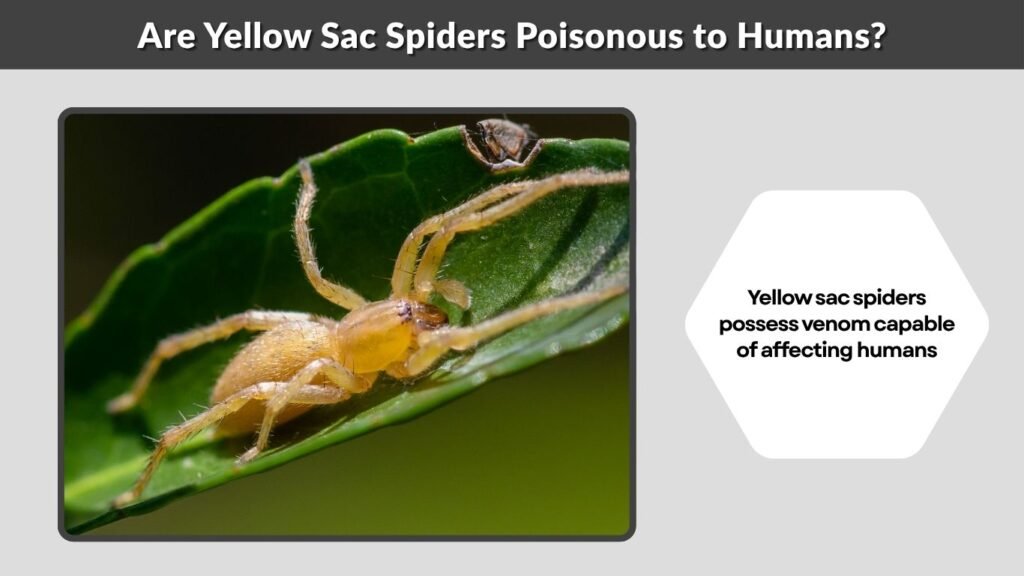
Yellow sac spiders possess venom capable of affecting humans, but most bites produce localized rather than life-threatening symptoms.
The most common reaction involves pain, redness, swelling, or irritation near the bite.
People can respond differently to arthropod venom, however. Children, older adults, and people with unusual sensitivity may experience symptoms differently.
Seek medical attention if symptoms become severe, rapidly worsen, spread well beyond the bite area, or are accompanied by difficulty breathing, severe weakness, dizziness, vomiting, or other significant systemic symptoms.
Is the Black-Footed Yellow Sac Spider Poisonous?
The black-footed yellow sac spider, commonly associated with Cheiracanthium inclusum, is venomous.
It is generally pale yellow, cream, or light greenish with darker tips on its legs and mouthparts. Like other yellow sac spiders, it hunts rather than relying on a large prey-catching web.
Its venom helps immobilize insects and can cause a painful reaction if the spider bites a person.
However, the presence of venom does not mean that black-footed yellow sac spiders routinely cause dangerous poisoning in humans. Most encounters do not result in bites at all.
Is the Northern Yellow Sac Spider Poisonous?
The northern yellow sac spider, often identified as Cheiracanthium mildei, is also venomous.
This species frequently lives around buildings and may create small silken retreats in corners, behind objects, or along walls and ceilings.
It is mostly active at night and may wander through rooms while hunting insects. UC IPM describes C. mildei as a common house-dwelling yellow sac spider and notes that bites usually occur when a spider becomes trapped against someone’s skin.
Its bite can hurt, but severe complications are unusual.
Yellow Sac Spider vs. Brown Recluse Bite
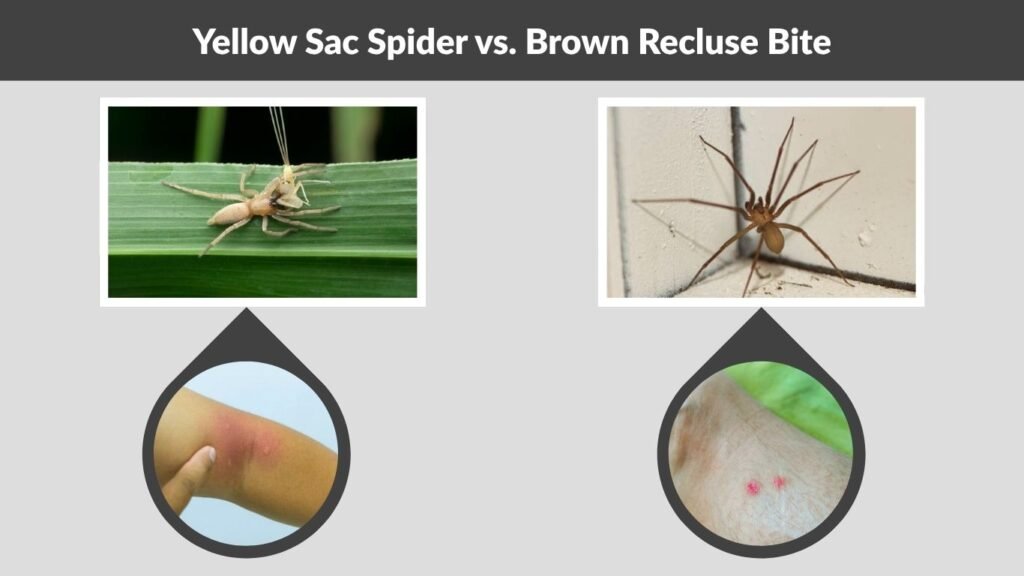
Yellow sac spiders are sometimes confused with brown recluse spiders because both may have relatively plain coloration.
However, they are different spiders with different medical reputations.
Yellow sac spiders typically have eight eyes arranged in two rows, while recluse spiders have six eyes arranged in three pairs. Yellow sac spiders also tend to be pale yellow or cream and frequently wander openly at night.
Verified evidence does not support treating typical yellow sac spider bites as equivalent to brown recluse bites.
Are Yellow Sac Spiders Aggressive?
Yellow sac spiders are active hunters, but that does not mean they deliberately seek people to bite.
They normally prefer escaping when disturbed. Problems occur when a spider is accidentally pressed against skin or handled.
Common situations include:
- Getting trapped inside clothing
- Crawling into bedding
- Hiding inside towels
- Being accidentally handled
- Becoming trapped between skin and another object
Their nighttime wandering habits can make encounters indoors more common than with spiders that remain in permanent webs.
Are Yellow Sac Spiders Poisonous to Cats?
Yellow sac spiders are venomous, but there is limited evidence showing that their bites represent a major poisoning threat to cats.
A curious cat may paw at or attempt to catch a spider, making a defensive bite possible. Because pets cannot describe pain or discomfort, owners should watch for swelling, limping, excessive licking, unusual vocalization, weakness, vomiting, or other sudden changes after a suspected bite.
If significant symptoms appear or a bite involves the mouth or face, contacting a veterinarian is appropriate.
Never give a cat human pain medication unless a veterinarian specifically directs you to do so.
What to Do After a Yellow Sac Spider Bite
Most mild spider bites can initially be managed with basic first aid.
Wash the affected area with soap and water and apply a wrapped cold pack for about 10–20 minutes at a time to help reduce pain and swelling. Poison Control recommends monitoring the area and seeking medical help if local symptoms worsen considerably or systemic symptoms develop.
Avoid cutting the bite, attempting to suck out venom, or applying harsh chemicals.
If possible, photograph the spider from a safe distance rather than trying to catch it with your bare hands.
When Should You See a Doctor?
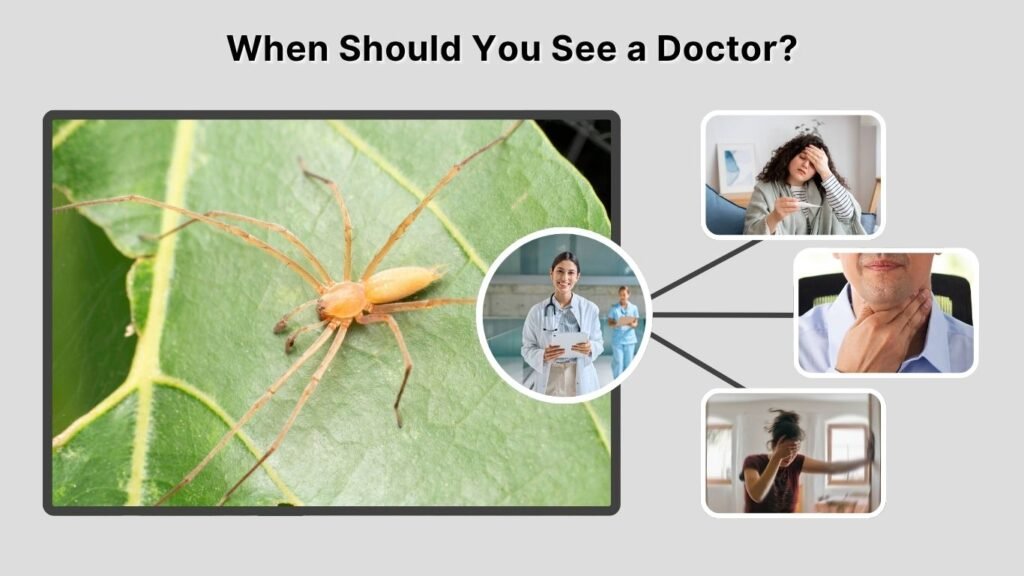
Medical evaluation is especially important when:
- Pain becomes severe
- Swelling continues to spread
- Redness expands significantly
- The wound begins draining or looks infected
- Fever develops
- Breathing becomes difficult
- Facial or throat swelling develops
- Severe weakness or dizziness occurs
- Symptoms continue getting worse rather than improving
A skin lesion should not automatically be diagnosed as a spider bite without good evidence, particularly when the spider was never seen.
How to Prevent Yellow Sac Spider Bites Indoors
Reducing hiding places and accidental contact is usually more useful than trying to eliminate every spider outdoors.
Seal gaps around windows, doors, utility openings, and damaged screens. Shake out clothing, towels, gloves, and shoes that have been stored undisturbed. Vacuum spiders and their small silk retreats from indoor corners.
Reducing insect prey indoors can also make the home less attractive to hunting spiders.
Yellow sac spiders are predators that consume other insects, so outdoor individuals usually do not need to be disturbed unless they are creating a specific problem.
FAQs
1. Are Yellow Sac Spiders Poisonous or Venomous?
They are venomous, not poisonous. They inject venom through their fangs when biting. The venom primarily helps them capture insect prey.
2. Can a Yellow Sac Spider Kill a Human?
A typical yellow sac spider bite is not considered likely to kill a healthy person. Most verified bites cause localized pain and irritation rather than severe systemic illness.
3. How Poisonous Is a Yellow Sac Spider?
Its venom can cause pain, redness, burning, or swelling, but yellow sac spiders are not generally considered among the most dangerous spiders to humans.
4. Does a Yellow Sac Spider Bite Cause Skin Necrosis?
Severe necrosis has often been attributed to these spiders historically, but verified bite research found no necrosis among 20 documented U.S. and Australian cases, suggesting the risk has been overstated.
5. Should I Kill a Yellow Sac Spider in My House?
Not necessarily. If possible, it can be captured safely and moved outdoors. If yellow sac spiders repeatedly appear indoors, sealing entry points, reducing clutter, vacuuming retreats, and controlling insect prey can help reduce encounters.
