
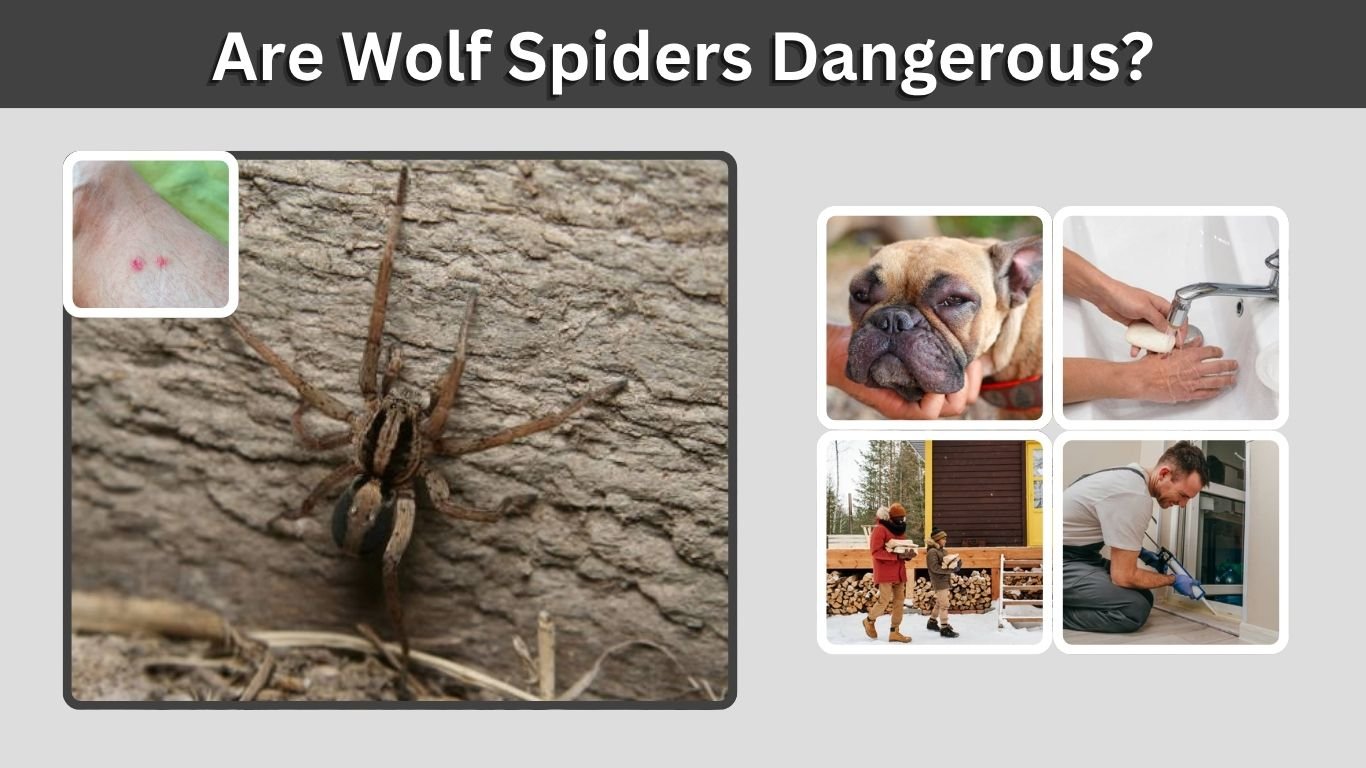
Wolf spiders can look frightening because of their large, hairy bodies and fast movements, but are wolf spiders dangerous? For most people, the answer is no. Wolf spiders possess venom for hunting insects, yet their bites are generally associated with temporary pain, redness, or localized swelling rather than serious medical problems. They usually avoid people and bite mainly when trapped or handled. This guide explains how dangerous wolf spiders are to humans, children, dogs, cats, and other pets, along with bite symptoms and basic first aid.
Are Wolf Spiders Dangerous?
Despite their intimidating appearance, wolf spiders are not generally considered dangerous to healthy humans. They are hunting spiders that chase insects rather than catching prey in large webs. Their venom helps immobilize small prey, but documented wolf spider bites in people usually cause localized symptoms. They are also reluctant to bite unless they feel threatened, trapped, or pressed against the skin.
Are Wolf Spiders Venomous or Poisonous?
Wolf spiders are venomous, not poisonous. Venom is delivered through their fangs when they bite prey. Being venomous does not automatically make an animal highly dangerous to humans.
Their venom is primarily adapted for insects and other small prey. A wolf spider bite can hurt, but severe medical effects are not normally expected. Penn State Extension notes that typical bites may produce pain, redness, and localized swelling, with symptoms generally subsiding within about 24 hours.
Why Do Wolf Spiders Bite?
Wolf spiders do not normally seek out humans. A bite is more likely when someone accidentally:
- Picks up or handles the spider.
- Traps it between clothing and skin.
- Steps on it with bare feet.
- Reaches into an area where it is hiding.
- Attempts to catch or crush it by hand.
Leaving the spider alone greatly reduces the chance of being bitten.
How Dangerous Are Wolf Spider Bites?
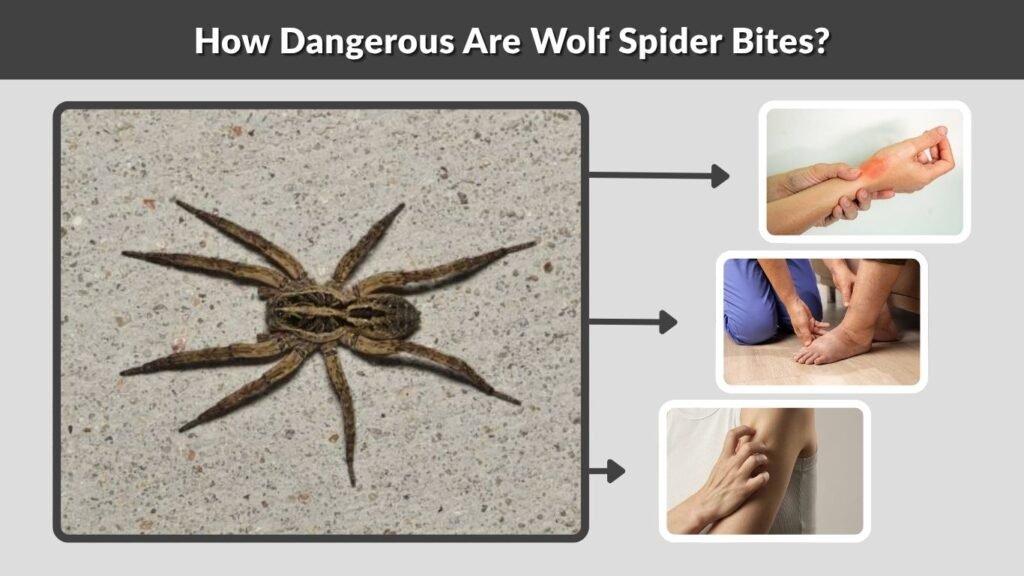
A confirmed wolf spider bite is generally a localized problem rather than a medical emergency. The bite itself may initially feel similar to a sharp pinprick or sting. Reactions vary depending on the person, bite location, and amount of venom delivered. More serious symptoms should not automatically be blamed on a wolf spider because spider identification is often uncertain.
Common Wolf Spider Bite Symptoms
Possible symptoms around the bite can include:
- Immediate mild or moderate pain
- Redness around the bite
- Minor swelling
- Tenderness
- Itching or irritation
- A small raised bump
- Temporary discomfort around the affected area
Most uncomplicated reactions remain limited to the bite area.
When Should You Seek Medical Attention?
Get medical advice when symptoms appear unusually severe or continue getting worse. Warning signs include:
- Difficulty breathing or swallowing
- Significant facial, mouth, or throat swelling
- Widespread hives or another severe allergic reaction
- Severe or rapidly increasing pain
- Extensive swelling or redness
- Signs of infection such as pus, increasing warmth, or worsening tenderness
- Symptoms that persist or worsen rather than gradually improving
If someone collapses, has trouble breathing, experiences a seizure, or cannot be awakened, emergency medical care is required.
Are Wolf Spiders Dangerous to Humans, Babies, and Kids?
For most adults, wolf spiders pose little serious danger. Children and babies should receive closer attention after any suspected spider bite because it may be difficult to identify exactly what caused the injury or determine how symptoms are developing. The spider’s size alone does not reliably indicate how medically significant a bite will be.
Are Wolf Spiders Dangerous to Humans?
Wolf spiders can bite humans, but serious complications are unusual. Penn State Extension reports no serious medical consequences associated with the wolf spider bites it discusses.
People sometimes mistake other skin problems, insect bites, infections, or bites from different spiders for wolf spider bites. If the spider was not actually seen and identified, it is better to describe the injury as a suspected bite rather than assuming a wolf spider caused it.
Are Wolf Spiders Dangerous to Babies and Kids?
Wolf spiders are not considered especially aggressive toward children. However, a suspected bite on a baby or very young child deserves closer observation.
Do not encourage children to pick up large spiders. If a child develops significant swelling, severe pain, breathing difficulty, widespread rash, vomiting, or other concerning symptoms after a suspected bite, obtain medical advice promptly.
Are Wolf Spiders Dangerous to Dogs, Cats, and Other Pets?
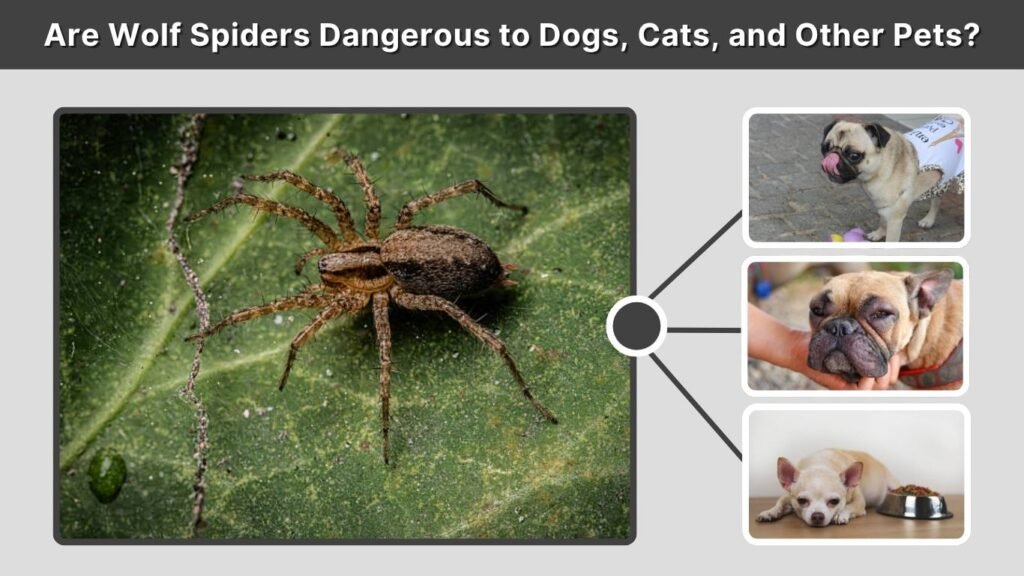
Dogs and cats may investigate moving spiders with their paws or mouths, making encounters possible. A wolf spider may bite defensively if a pet corners, paws at, or bites it. Most suspected encounters are unlikely to cause major problems, but animals cannot explain their symptoms, so owners should watch carefully for unusual behavior or reactions.
Are Wolf Spiders Dangerous to Dogs?
A dog that receives a bite may experience localized discomfort or swelling, particularly around the muzzle or paws.
Watch for:
- Pawing at the face
- Limping after a paw bite
- Local swelling
- Excessive licking
- Unusual pain
- Weakness or abnormal behavior
Contact a veterinarian if substantial swelling, breathing problems, persistent vomiting, weakness, or other concerning symptoms appear.
Are Wolf Spiders Dangerous to Cats?
Cats frequently chase insects and spiders, so contact is possible. A defensive bite could cause localized irritation or discomfort.
A cat that suddenly develops swelling around its mouth, persistent pawing at the face, breathing difficulty, or significant behavioral changes after interacting with a spider should be evaluated by a veterinarian.
Are Different Types of Wolf Spiders More Dangerous?
Wolf spiders belong to the family Lycosidae, which contains many species ranging considerably in appearance and size. Search terms such as Carolina wolf spider, rabid wolf spider, giant wolf spider, black wolf spider, and Australian wolf spider may make certain varieties sound especially dangerous. However, a large body size or alarming common name does not automatically mean greater medical danger.
Rabid Wolf Spider
The rabid wolf spider has an intimidating name, but “rabid” does not mean that the spider carries rabies. It is simply part of the spider’s common name.
Like other wolf spiders, it may defend itself when handled or trapped, but it should not be assumed to be exceptionally dangerous to humans.
Carolina and Giant Wolf Spiders
The Carolina wolf spider (Hogna carolinensis) is among the larger wolf spiders found in North America. Large individuals may appear threatening simply because their bodies and legs are noticeable.
Penn State Extension lists Hogna carolinensis among large wolf spiders and describes typical wolf spider bites as producing temporary localized symptoms rather than serious medical consequences.
Are Baby, Small, Black, or Brown Wolf Spiders Dangerous?
Color and size are not reliable measures of danger. Wolf spiders naturally occur in various shades of brown, gray, tan, and nearly black.
Baby and smaller wolf spiders are also predators equipped to capture tiny prey. They should still be handled carefully, but being black, brown, large, small, or young does not by itself indicate a particularly dangerous wolf spider.
What to Do After a Wolf Spider Bite
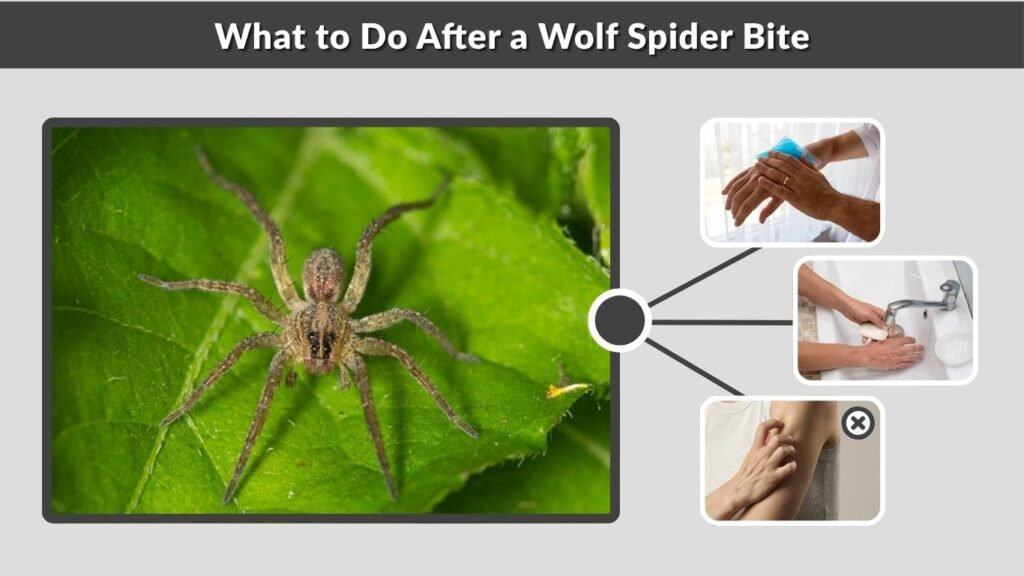
If you believe a wolf spider has bitten you and symptoms are mild, basic wound care is usually appropriate. Avoid repeatedly touching, squeezing, or scratching the area because irritated skin can become more uncomfortable. The most important step is monitoring how the bite changes during the hours following the incident.
Basic First Aid Steps
For a mild suspected wolf spider bite:
- Wash the bite gently with soap and water.
- Apply a cool compress wrapped in cloth.
- Rest the affected area.
- Avoid scratching the bite.
- Monitor redness and swelling.
- Seek professional advice if symptoms become severe or unusual.
If you are uncertain about a significant bite or exposure, a poison-control service or healthcare professional can provide case-specific guidance.
What You Should Avoid
Do not cut the bite, attempt to suck out venom, or aggressively squeeze the affected skin. These methods do not provide a reliable benefit and may further damage or contaminate the area.
If possible, photograph the spider from a safe distance rather than handling it. A clear photo may help with identification if medical advice becomes necessary.
How to Reduce Wolf Spider Encounters at Home
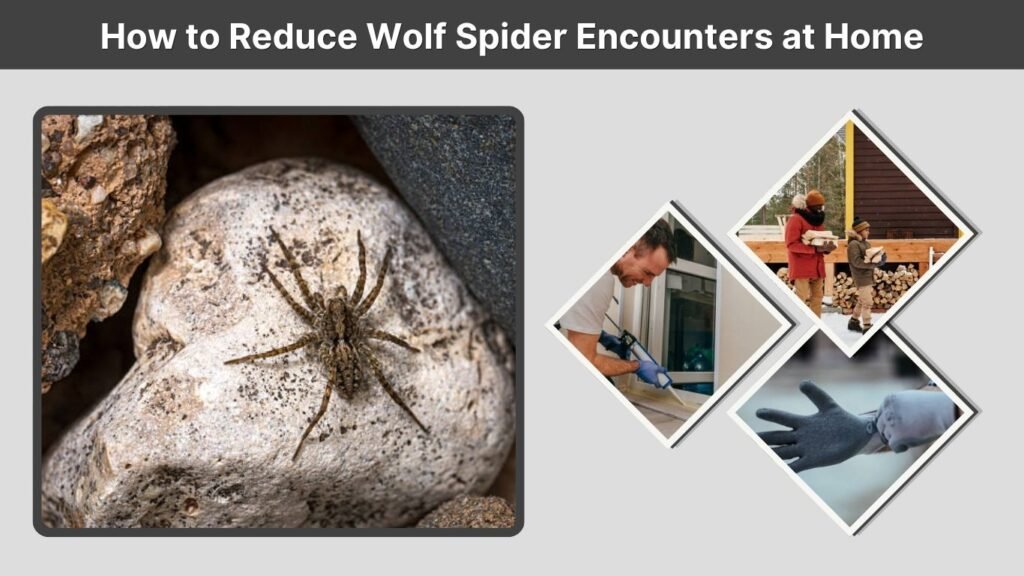
Wolf spiders occasionally enter houses while searching for prey, shelter, or suitable environmental conditions. Because they are active hunters, people may see them walking across floors instead of sitting in webs. Preventing entry and reducing insect prey are generally more useful than attempting to handle individual spiders with bare hands.
Reduce Indoor Hiding Places
Keep storage areas relatively uncluttered and avoid leaving piles of clothing or shoes undisturbed on floors. Shake out shoes, gloves, gardening equipment, or stored fabrics before using them if spiders are common in the area.
Sealing cracks around doors, windows, foundations, and utility openings can also reduce accidental entry.
Reduce Outdoor Encounters
Move firewood, boards, rocks, and dense debris away from frequently used entrances when practical. Wear gloves when moving outdoor materials where spiders may hide.
Wolf spiders also consume many insects, so encountering one outdoors does not necessarily indicate a harmful infestation.
FAQs
1. How dangerous are wolf spiders?
Wolf spiders are generally not considered highly dangerous to humans. Their bites may cause temporary pain, redness, tenderness, or localized swelling, but serious medical consequences are uncommon.
2. Are wolf spiders dangerous to humans?
They can bite humans when threatened or trapped, but most bites are mild and remain localized. People experiencing severe or unusual symptoms should seek medical attention.
3. Are wolf spiders dangerous to dogs?
Wolf spiders are not usually considered a major threat to dogs, although a defensive bite can potentially cause pain or swelling. Contact a veterinarian if a dog develops significant or worsening symptoms.
4. Are wolf spiders dangerous to cats?
A cat may be bitten while playing with or attacking a wolf spider. Most suspected encounters are unlikely to be severe, but unusual swelling, breathing difficulty, weakness, or persistent symptoms warrant veterinary attention.
5. Are rabid wolf spiders dangerous?
Rabid wolf spiders are not named because they carry rabies. They belong to the wolf spider family and can bite defensively, but their common name should not be interpreted as evidence that they are unusually dangerous.
