
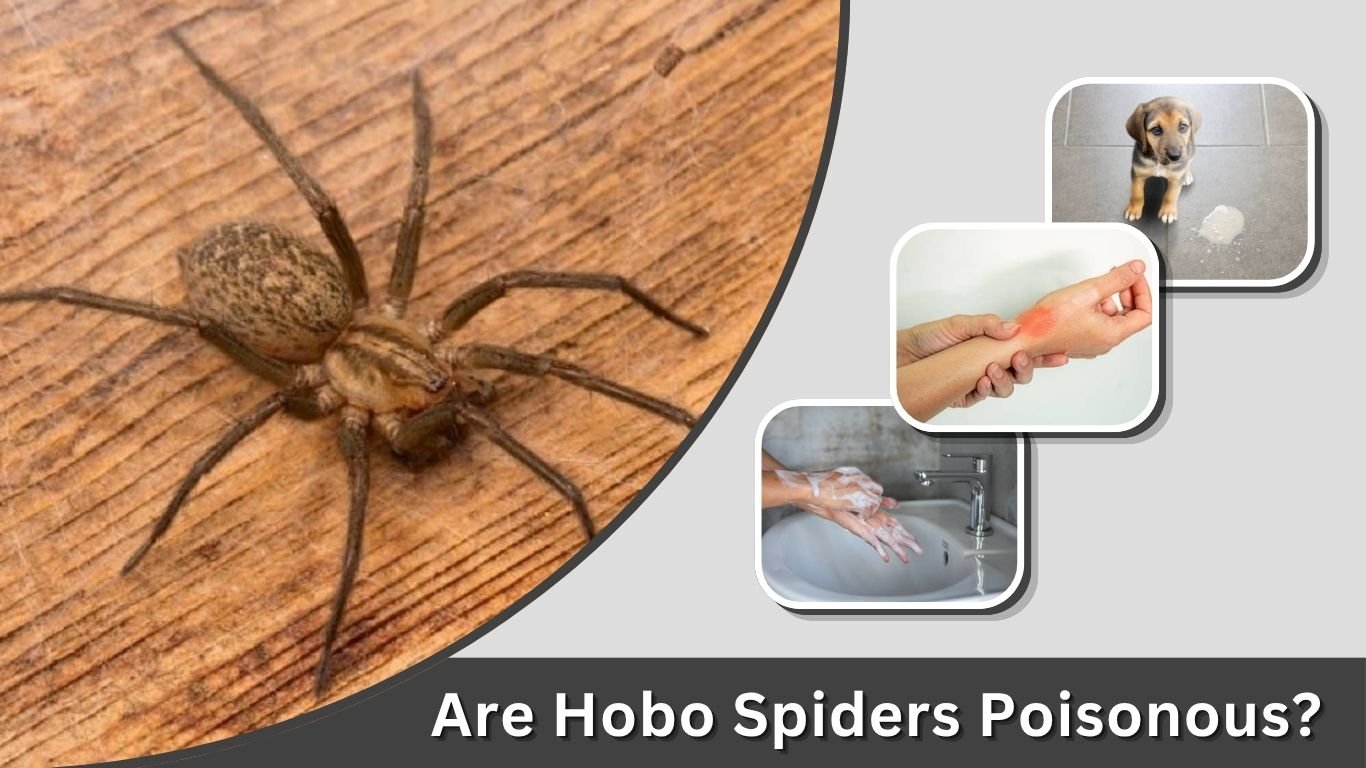
Hobo spiders have developed a frightening reputation, especially because older reports linked their bites with severe skin damage. But are hobo spiders poisonous to humans or pets? Technically, hobo spiders are venomous rather than poisonous because they inject venom through their fangs. Current evidence indicates that their venom is not considered medically significant to humans, and claims that hobo spider bites routinely cause tissue necrosis are not supported by strong scientific evidence. Still, any unexplained or worsening bite deserves proper attention.
Are Hobo Spiders Poisonous or Venomous?
Hobo spiders (Eratigena agrestis) do produce venom, primarily to immobilize the insects and other small prey they eat. However, having venom does not automatically mean a spider poses a serious threat to people. Modern research and university extension guidance indicate that hobo spider venom is not considered a major human health hazard.
Poisonous vs. Venomous: What Is the Difference?
The word “poisonous” is commonly used when discussing dangerous spiders, but venomous is technically more accurate. Poison usually causes harm when something is eaten, inhaled, or absorbed, while venom is delivered through a bite or sting.
Key facts about hobo spiders include:
- Hobo spiders possess venom glands and fangs.
- Their venom helps capture prey.
- They can bite humans when trapped or threatened.
- They are not regarded as dangerously venomous spiders under current U.S. guidance.
- They are not naturally aggressive toward humans.
The CDC currently highlights black widow and brown recluse spiders as important venomous spiders in the United States rather than hobo spiders.
How Poisonous Are Hobo Spiders?
Evidence suggests that hobo spider venom has been greatly overstated in older literature. A study examining verified spider bites in Oregon documented one confirmed hobo spider bite. It caused pain, redness, and muscle twitching, with symptoms resolving within about 12 hours; no tissue necrosis occurred.
Laboratory research has also failed to support the idea that hobo spider venom has the destructive effects once attributed to it.
What Happens if a Hobo Spider Bites You?
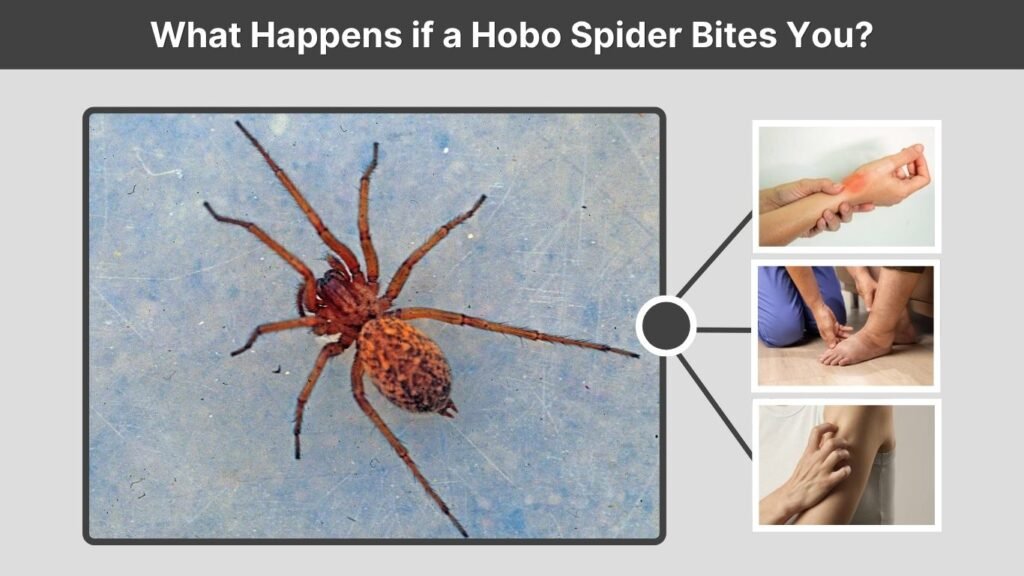
A hobo spider may bite when it is squeezed against the skin, handled, or unable to escape. Bites themselves appear to be uncommon, and accurately identifying the responsible spider is difficult. Finding a hobo spider somewhere in the house after developing a mysterious skin lesion does not prove that the spider caused it.
Possible Hobo Spider Bite Symptoms
Reported or plausible localized symptoms include:
- Mild to moderate pain
- Redness around the bite
- Minor swelling
- Local irritation or tenderness
- Temporary itching
- Occasionally muscle twitching near the affected area
Symptoms can vary between individuals, and similar-looking marks may result from insect bites, infections, allergic reactions, or other skin conditions.
Do Hobo Spider Bites Cause Skin Necrosis?
This is where much of the confusion surrounding hobo spiders originates. For years, they were blamed for necrotic or “flesh-eating” wounds in the Pacific Northwest.
Current scientific evidence has not established hobo spiders as a reliable cause of human dermonecrosis. Utah State University states that there is no significant scientific evidence supporting a necrotic hobo spider bite, while research on verified bites has likewise failed to demonstrate the severe tissue destruction historically attributed to the species.
Skin infections and other medical conditions can resemble presumed spider bites, which is one reason professional evaluation is important for worsening wounds.
Are Hobo Spiders Dangerous to Humans and Babies?
Hobo spiders can physically bite humans, but current evidence does not classify them alongside the U.S. spiders best established as medically important. Small children and babies deserve additional caution with any bite because they cannot reliably describe symptoms, and swelling or allergic reactions may be harder for caregivers to evaluate.
Hobo Spiders vs. Black Widows and Brown Recluses
The differences are important:
- Hobo spider: Current research does not establish its venom as medically significant or a proven cause of necrotic wounds.
- Black widow: Venom can affect the nervous system and produce intense pain, muscle spasms, abdominal symptoms, and other systemic effects.
- Brown recluse: Its venom can damage skin tissue, although suspected bites should be diagnosed carefully.
- Australian funnel-web spiders: These are completely different spiders from hobo spiders and can cause severe, potentially life-threatening envenomation.
CDC guidance identifies black widows and brown recluses as venomous spiders of concern in the United States.
Therefore, claims that hobo spiders are more poisonous than black widows are not supported by current evidence.
Are Baby or Black Hobo Spiders More Dangerous?
Baby hobo spiders are not known to present a special poisoning risk. Likewise, a particularly dark or “black” spider should not automatically be identified as a hobo spider.
Color alone is unreliable for hobo spider identification. Several funnel weavers and other common house spiders can resemble them, and Utah State University notes that nonexperts often have difficulty identifying hobo spiders accurately.
Are Hobo Spiders Poisonous to Cats and Dogs?
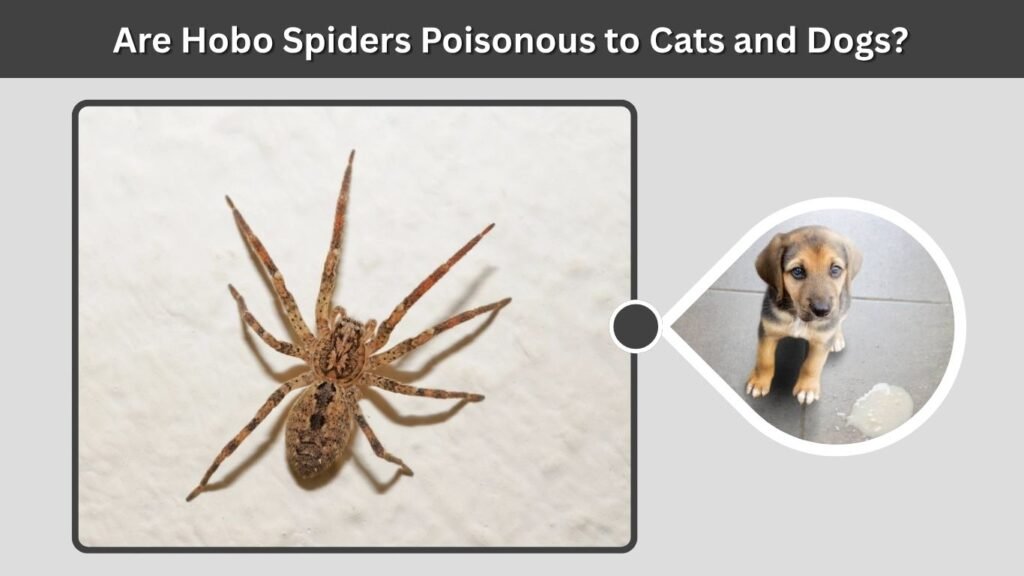
Pet owners may understandably worry when spiders appear indoors. Most spiders possess venom, but only a relatively small number can cause clinically important envenomation in mammals. Veterinary references primarily identify widow and recluse spiders as important U.S. concerns rather than hobo spiders.
What Should Pet Owners Watch For?
If a cat or dog appears to have been bitten by an unidentified spider, watch for:
- Significant swelling or increasing redness
- Severe or persistent pain
- Muscle tremors or weakness
- Difficulty walking
- Vomiting
- Abnormal breathing
- Extreme restlessness or lethargy
- A wound that continues to deteriorate
These symptoms do not specifically indicate a hobo spider bite. They are reasons to contact a veterinarian because another spider, insect, toxin, infection, or medical problem may be responsible. Veterinary sources note that confirmed spider bites in pets are often difficult to diagnose.
What Should You Do After a Suspected Hobo Spider Bite?
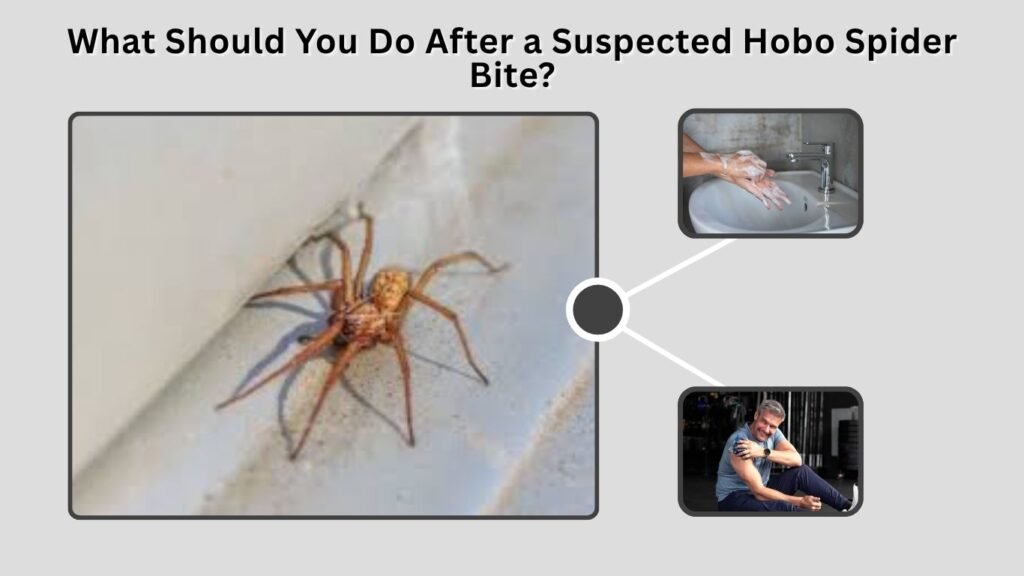
Most minor bites can initially be managed with basic wound care, but symptoms should be monitored rather than assuming that every lesion is harmless. Accurate spider identification is especially useful because many spiders commonly mistaken for hobo spiders look remarkably similar.
Basic First Aid for a Spider Bite
Recommended initial steps include:
- Wash the affected area with soap and water.
- Apply a cool, damp cloth or wrapped cold pack.
- Elevate the affected limb when practical.
- Avoid cutting, squeezing, or attempting to remove venom.
- If the spider can be collected safely, preserve it for possible identification.
CDC first-aid guidance similarly recommends cleaning the bite and applying cold treatment rather than trying to extract venom.
When Should You Seek Medical Care?
Seek professional medical attention if pain or swelling becomes severe, symptoms spread beyond the bite area, breathing becomes difficult, fever develops, or the wound progressively worsens.
A rapidly expanding ulcer or persistent skin lesion should not automatically be blamed on a hobo spider. Because infections and other conditions can mimic spider bites, obtaining an accurate diagnosis can be more important than trying to identify the cause from appearance alone.
FAQs
Hobo spiders remain surrounded by myths because older reports portrayed them as much more dangerous than current evidence indicates. Understanding the difference between confirmed research and historical assumptions makes it easier to respond appropriately to encounters and suspected bites without overlooking symptoms that genuinely require medical or veterinary care.
1. Are hobo spiders poisonous to humans?
Hobo spiders are venomous rather than poisonous, but current scientific evidence does not consider their venom medically significant to humans. A bite may cause localized pain, redness, or irritation.
2. Can a hobo spider bite kill you?
There is no strong evidence showing that typical hobo spider bites cause fatal human envenomation. Their former reputation for causing severe necrotic wounds is also poorly supported by verified bite research.
3. Are hobo spiders poisonous to cats?
Hobo spiders are not identified as a major cause of dangerous spider envenomation in cats. However, cats can be highly sensitive to some genuinely dangerous spiders, particularly widow spiders, so unusual symptoms after a suspected bite warrant veterinary attention.
4. Are hobo spiders poisonous to dogs?
Current veterinary guidance does not identify hobo spiders among the principal medically important spiders for dogs. If a dog develops severe pain, weakness, tremors, vomiting, breathing problems, or a worsening wound after a suspected spider bite, contact a veterinarian.
5. Are hobo spiders more poisonous than black widows?
No evidence supports that comparison. Black widow venom is well established as medically significant and can cause severe neurological and muscular symptoms. Hobo spider venom has not been demonstrated to pose a comparable human health risk.
