
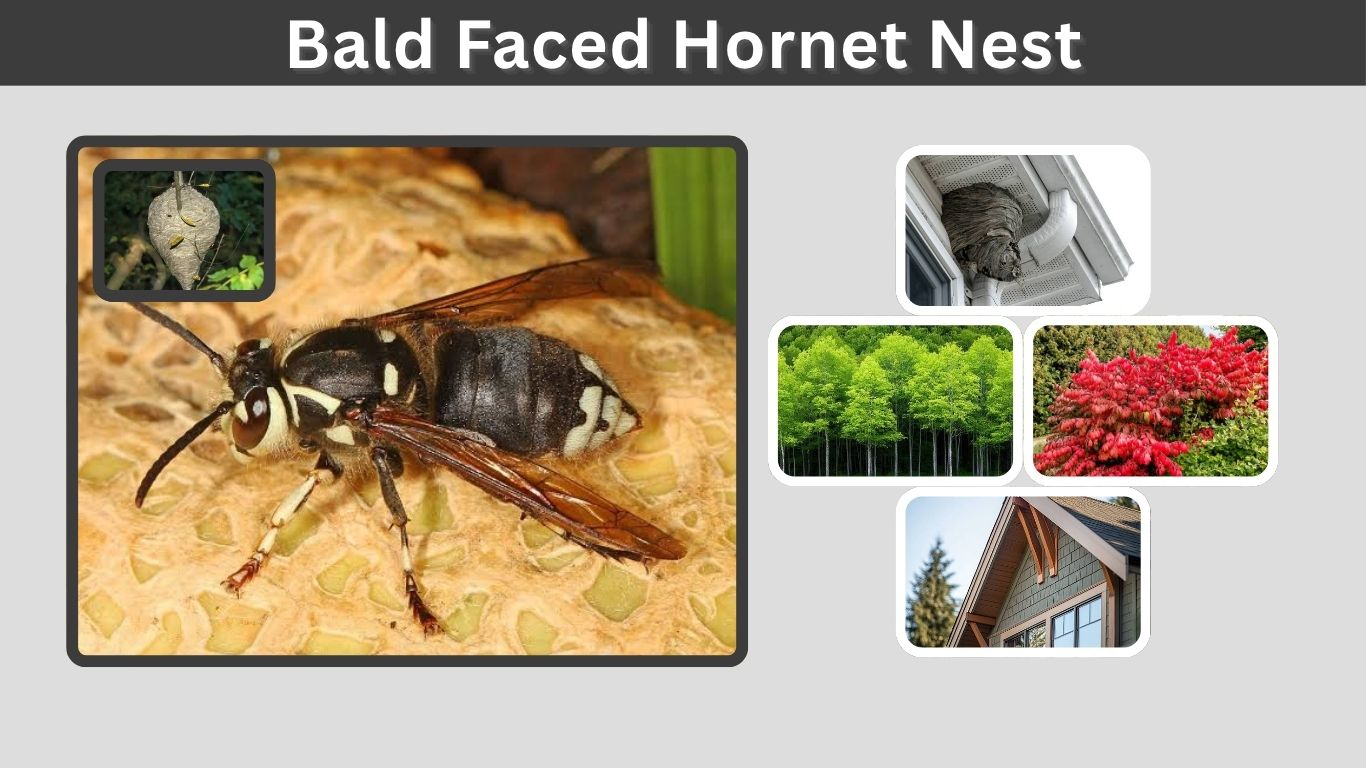
A bald faced hornet nest is one of the easiest wasp nests to recognize because it usually looks like a large gray paper ball hanging from a tree, shrub, roof edge, or building. These nests can grow quickly during warm months and may contain hundreds of aggressive hornets by late summer. If you find one near a doorway, deck, playground, or busy yard area, it should be handled carefully because bald faced hornets defend their nest strongly.
What Does a Bald Faced Hornet Nest Look Like?
A bald faced hornet nest usually has a rounded or football-shaped appearance. It is made from a gray, papery material that the hornets create by chewing wood fibers and mixing them with saliva. The outside looks layered, rough, and enclosed, unlike an open paper wasp nest.
Identification
- Gray or light brown paper-like outer shell
- Round, oval, or football-shaped nest
- Usually enclosed, not open-combed
- One main entrance hole near the lower part
- Often attached to a tree branch, shrub, roofline, or building
- Can grow from small ball size to basketball size or larger
A small bald faced hornet nest in early spring may look harmless, but it can expand quickly as the colony grows.
Where Do Bald Faced Hornets Build Their Nests?
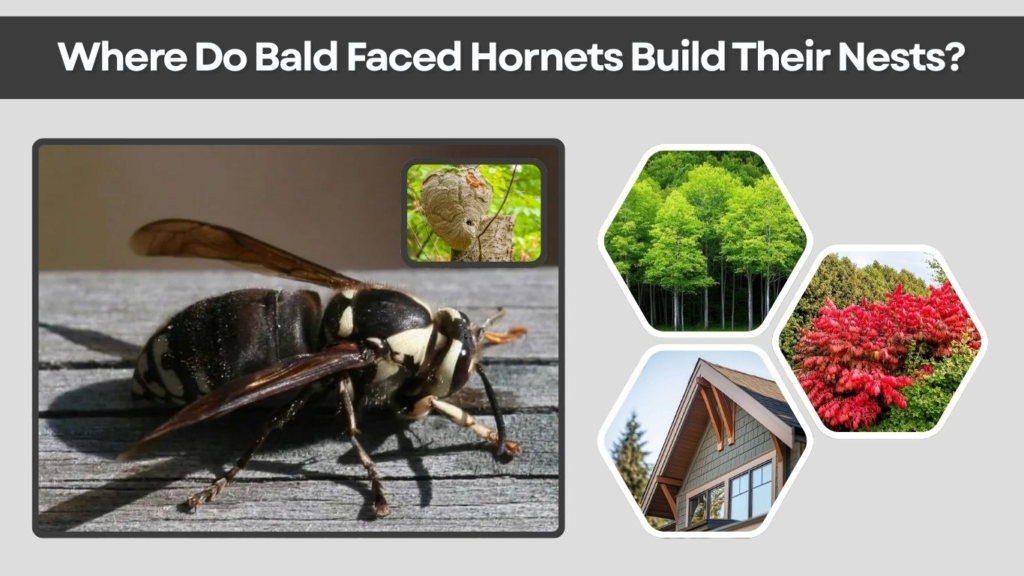
Bald faced hornets usually build aerial nests above ground. They often choose protected places where the nest can hang securely and stay away from heavy disturbance.
Common Nest Locations
You may find bald faced hornet nests in:
- Trees
- Large shrubs
- Bushes
- Roof eaves
- Sheds
- Barns
- Utility poles
- Attics or wall voids
- Under decks
- Near porch ceilings
A nest on a house can be especially risky if it is close to windows, doors, gutters, or outdoor sitting areas. Hornets may become defensive when people walk nearby, mow the lawn, trim shrubs, or use noisy tools.
Do Bald Faced Hornets Nest in the Ground?
Bald faced hornets usually do not build underground nests. They are best known for large hanging paper nests above ground. However, people sometimes search for “bald faced hornet nest in ground” because they see black-and-white wasps flying from a hole or low hidden area.
In many cases, a ground nest is more likely to belong to yellow jackets, not bald faced hornets. Yellow jackets commonly nest underground, inside old rodent burrows, wall spaces, or hidden cavities.
Ground Nest Confusion
If you see insects flying in and out of a hole in the ground, check carefully from a safe distance. Bald faced hornets are larger, black and white, and usually linked with hanging nests. Yellow jackets are smaller, often yellow and black, and are more likely to use underground cavities.
Bald Faced Hornet Nest Size
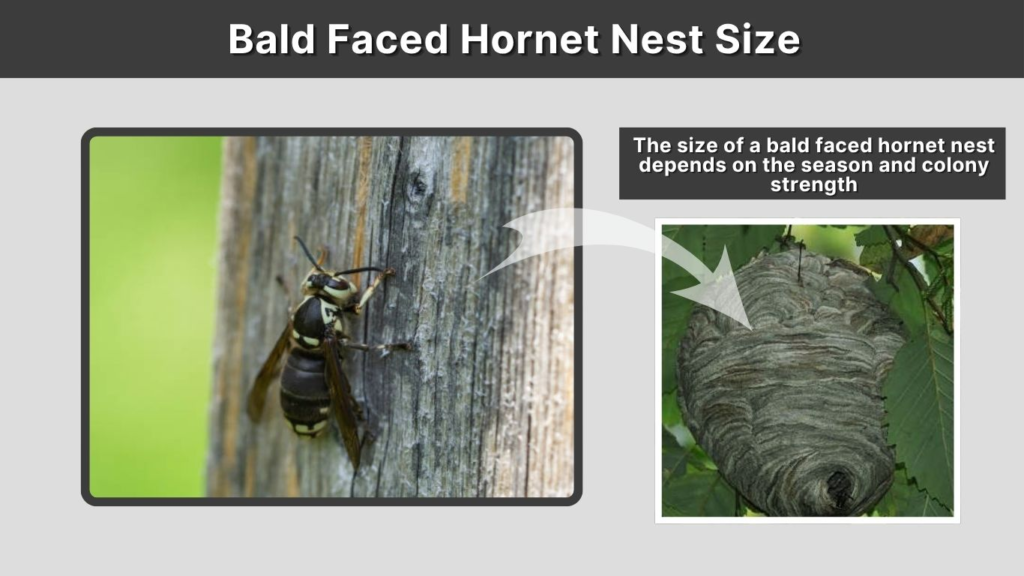
The size of a bald faced hornet nest depends on the season and colony strength. In early spring, a queen starts a small nest. By summer, workers expand it. By late summer or early fall, the nest may be very large.
| Nest Stage | Approximate Size | What It Means |
|---|---|---|
| Early nest | Golf ball to tennis ball size | Queen is starting the colony |
| Growing nest | Softball to volleyball size | Workers are expanding the nest |
| Mature nest | Basketball size or larger | Colony may have hundreds of hornets |
| Late-season nest | Very large and active | Highest risk near people |
A large bald faced hornet nest can contain many workers. The bigger the nest, the more defensive the colony may be when disturbed.
How Fast Do Bald Faced Hornets Build a Nest?
Bald faced hornets can build a nest surprisingly fast once workers are active. The queen begins the nest alone, but after the first workers mature, they take over building, feeding larvae, and defending the colony.
During warm weather with enough food, the nest may grow noticeably within a few weeks. This is why a small bald faced hornet starter nest should not be ignored if it is close to a high-traffic area.
Nest Building Materials
Bald faced hornets make their nest from chewed wood fibers. They scrape weathered wood from fences, logs, sheds, decks, or tree bark. After mixing the fibers with saliva, they spread the material into thin paper-like layers.
How Many Bald Faced Hornets Are in a Nest?
A mature bald faced hornet nest can contain hundreds of hornets. The exact number depends on food supply, weather, nest age, and colony health. Early nests may only have the queen and a few workers, while late-season nests can become crowded and aggressive.
Because the population grows through the season, a nest that seems manageable in spring can become dangerous by late summer. This is one reason early identification is important.
Bald Faced Hornet Nest vs Paper Wasp Nest
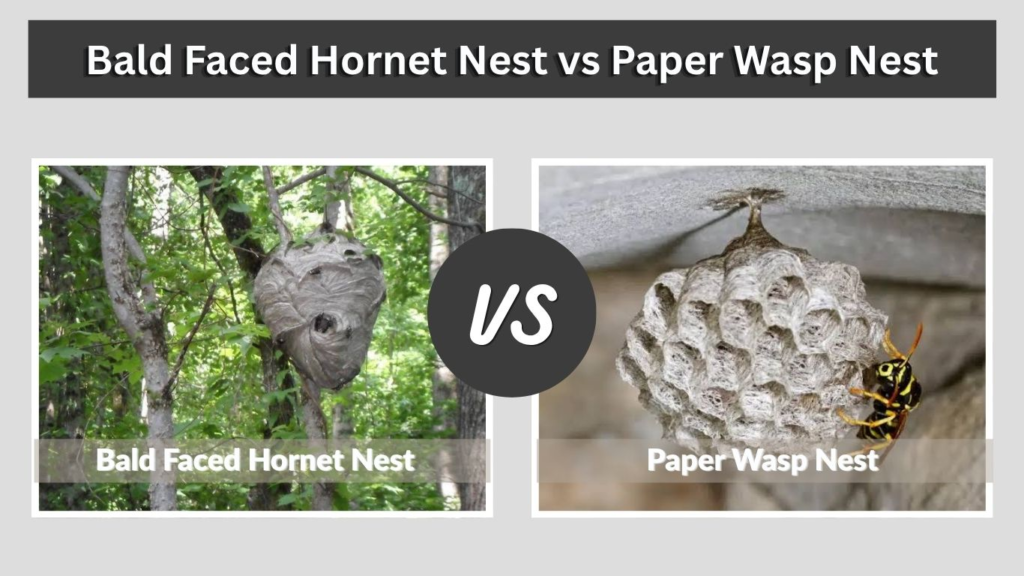
A bald faced hornet nest and a paper wasp nest are easy to confuse if you only know they are both made from paper-like material. However, their structure is different.
| Feature | Bald Faced Hornet Nest | Paper Wasp Nest |
|---|---|---|
| Shape | Enclosed ball or oval | Open umbrella shape |
| Outer covering | Yes | No |
| Comb visibility | Hidden inside | Visible from below |
| Size | Often larger | Usually smaller |
| Aggression | Very defensive near nest | Defensive but often less intense |
| Common location | Trees, shrubs, eaves | Eaves, railings, porch ceilings |
If the nest has an enclosed gray outer shell, it is more likely a bald faced hornet nest. If you can see open cells, it is more likely a paper wasp nest.
Bald Faced Hornet Nest vs Yellow Jacket Nest
Bald faced hornets are actually a type of yellow jacket, but they look different from the familiar yellow-and-black yellow jackets. Their nests can also be different.
Yellow jackets often nest in the ground or wall voids, while bald faced hornets usually build visible aerial nests. A hanging gray paper nest in a tree is more likely bald faced hornets. A hidden nest in a lawn hole is more likely yellow jackets.
Key Difference
The easiest clue is location. A large hanging paper nest points toward bald faced hornets. A hidden ground entrance with many wasps flying in and out usually points toward yellow jackets.
When Do Bald Faced Hornets Leave the Nest?
Bald faced hornet colonies are seasonal in many climates. The nest grows during spring and summer, reaches peak activity in late summer, and declines when cold weather arrives. Most workers die after frost or freezing weather.
New queens leave the nest before winter, mate, and find protected places to overwinter. The old nest is usually abandoned and not reused the next year.
Bald Faced Hornet Nest in Winter
A bald faced hornet nest in winter is usually inactive if the weather has been cold enough. Many people safely remove old nests after several hard freezes. However, in mild climates or early cold snaps, caution is still smart. Watch for activity before touching any nest.
Do Bald Faced Hornets Reuse Nests?
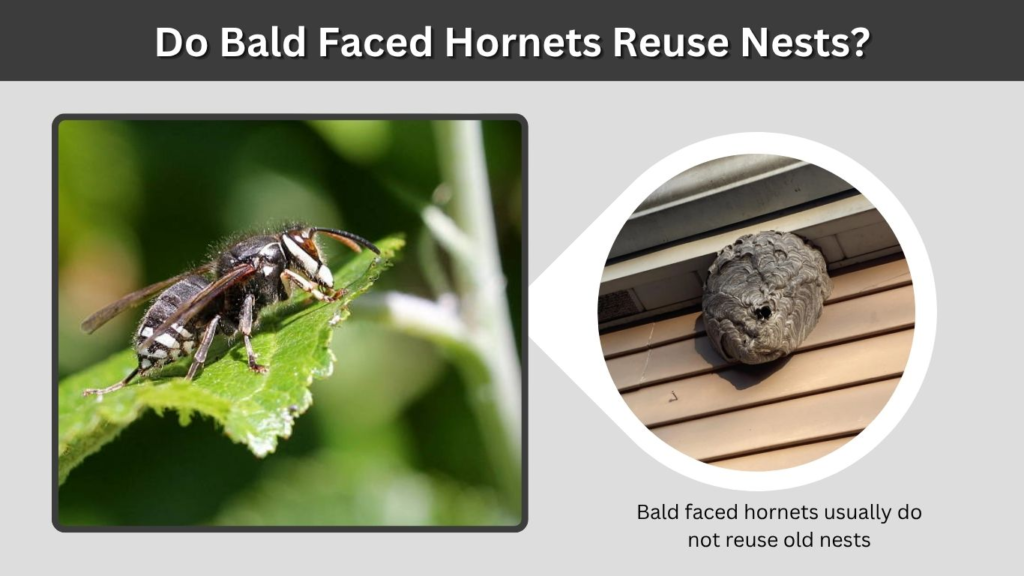
Bald faced hornets usually do not reuse old nests. A new queen starts a new nest in spring. Old nests may remain attached to trees or buildings for months, but they normally break down from weather over time.
Even though old nests are not usually reused, removing them may improve appearance and prevent confusion later. It can also help you notice new nest-building activity the following season.
How Far Do Bald Faced Hornets Travel From the Nest?
Bald faced hornets may travel away from the nest to search for insects, nectar, fruit, and other food sources. Around the nest, they are most defensive. The closer you get to the entrance, the greater the risk of being stung.
As a simple rule, avoid standing near the flight path. If hornets are flying directly in and out of one spot, stay well away and do not block the entrance.
How to Find a Bald Faced Hornet Nest
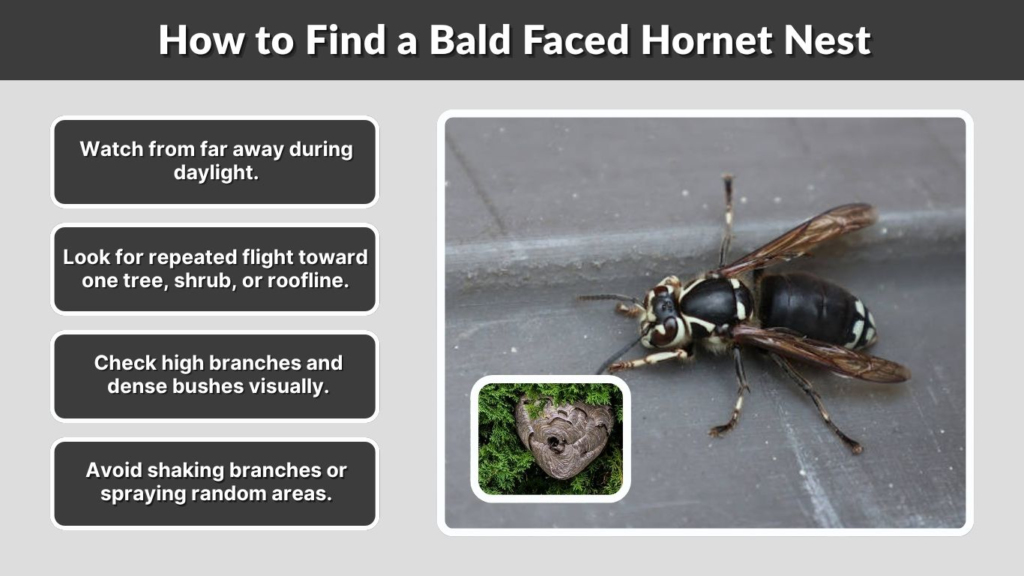
If you see bald faced hornets around your yard, you may be able to locate the nest by watching their flight direction from a safe distance. Do not swat at them or follow them too closely.
Safe Nest-Finding Tips
- Watch from far away during daylight.
- Look for repeated flight toward one tree, shrub, or roofline.
- Check high branches and dense bushes visually.
- Avoid shaking branches or spraying random areas.
- Keep children and pets away from the suspected nest area.
If hornets become active around you, walk away slowly. Fast movements and swatting can increase the chance of stings.
Bald Faced Hornet Nest Removal
Bald faced hornet nest removal can be dangerous, especially when the nest is large, high, or close to people. These hornets can sting repeatedly and may attack in groups when the nest is disturbed.
For nests near doors, decks, playgrounds, sidewalks, schools, or business entrances, professional removal is usually the safest choice. A pest control professional has protective equipment, proper tools, and experience dealing with defensive nests.
When Removal Is Needed
Removal may be necessary if the nest is:
- Near an entrance
- Close to children or pets
- Attached to the house
- Near a deck, patio, or walkway
- Inside a wall, attic, or shed
- Large and highly active
- In an area that must be used regularly
If the nest is far away in a tree or unused area, it may be possible to leave it alone until winter.
Can You Remove a Bald Faced Hornet Nest Yourself?
DIY removal is risky. Spraying a bald faced hornet nest without protective gear can trigger a defensive swarm. Knocking down a live nest is even more dangerous.
If someone is allergic to stings, has asthma, is elderly, or if children and pets are nearby, do not attempt DIY removal. Also avoid removal if the nest is high, inside a wall, or difficult to escape from quickly.
Best Time to Remove a Nest
If removal must be done, professionals often treat nests when hornets are less active, such as evening or early morning. However, even at those times, the nest can still be dangerous. Do not shine bright lights directly at the nest, stand under it, or block the entrance.
Bald Faced Hornet Nest Removal Cost
Bald faced hornet nest removal cost varies by location, nest height, nest size, accessibility, and whether the nest is inside a structure. A low, easy-to-reach outdoor nest may cost less than a large nest high in a tree or inside a wall.
Factors that affect price include:
- Nest height
- Nest location
- Colony size
- Emergency service needs
- Indoor vs outdoor nest
- Equipment required
- Local pest control rates
For an accurate price, contact a local pest control company and describe the nest location clearly.
What to Do If a Bald Faced Hornet Nest Is on Your House
A bald faced hornet nest on a house should be taken seriously. Hornets may become defensive when doors open, windows move, people walk nearby, or vibrations disturb the nest.
Do not block the entrance hole with caulk, foam, or tape while the nest is active. Trapped hornets may find another route and enter the living space. If the nest is in a wall void, attic, or roofline, professional help is strongly recommended.
FAQs
What does a bald faced hornet nest look like?
A bald faced hornet nest looks like a gray paper ball or football-shaped structure. It usually has an enclosed outer shell and one entrance hole near the lower part.
Do bald faced hornets nest in the ground?
Bald faced hornets usually build aerial nests above ground. If you see a nest in the ground, it is more likely a yellow jacket nest.
How many bald faced hornets are in a nest?
A mature nest may contain hundreds of hornets. Early nests have far fewer, but the colony grows quickly during warm months.
Do bald faced hornets reuse nests?
No, bald faced hornets usually do not reuse old nests. New queens normally start new nests each spring.
Should I remove a bald faced hornet nest myself?
DIY removal can be dangerous because bald faced hornets aggressively defend their nest and can sting repeatedly. Professional removal is safest for large, active, high, or house-attached nests.
