
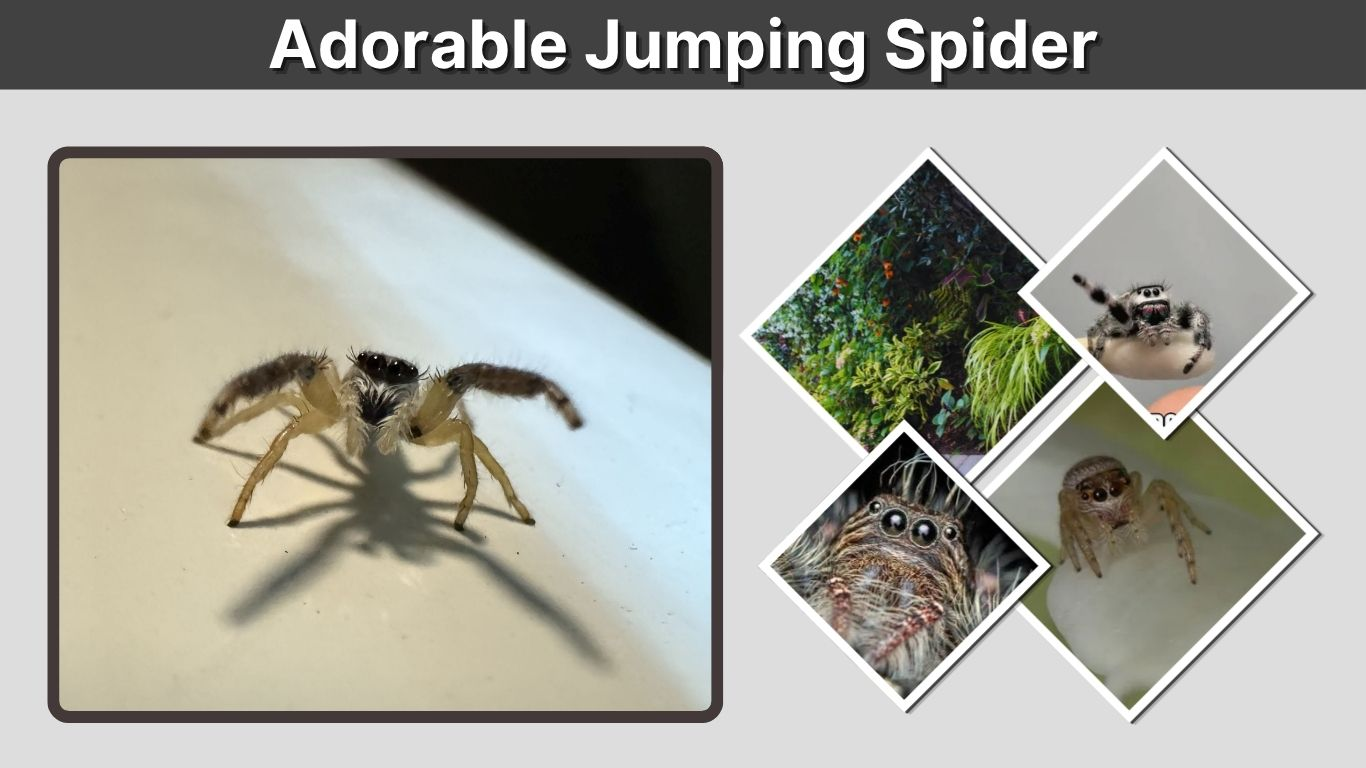
An adorable jumping spider can change the way people see spiders. With big front eyes, tiny fuzzy bodies, curious movements, and careful little jumps, these spiders often look more like miniature pets than scary pests. They are active hunters, helpful insect predators, and usually harmless to people. This guide explains why jumping spiders look so cute, how they behave, and what to know if you find one.
Why Are Jumping Spiders So Adorable?
Jumping spiders look adorable because their faces are different from many other spiders. Their large front-facing eyes create a curious expression. They often turn toward movement, pause, and seem to “look back” at people. This makes them feel more interactive than web spiders that hide in corners.
Their small size also helps. A tiny spider with fuzzy legs, bright markings, and slow head-like movements can seem charming instead of frightening. Many species are colorful, with black, white, orange, brown, gray, or metallic details. Some even have shiny green or blue mouthparts.
Big Cute Eyes
The most adorable feature of a jumping spider is its large front eyes. These eyes help the spider judge distance, spot prey, and move with accuracy. To humans, the eyes can look round, expressive, and almost cartoon-like.
Tiny Fuzzy Body
Many jumping spiders have short hairs on the body and legs. This fuzzy texture softens their appearance. Instead of looking flat or sharp, they may look like tiny plush animals. Young spiders can look even more delicate because their bodies are smaller and lighter.
Curious Movement
Jumping spiders often stop, turn, and study their surroundings. They may lift their front legs, tilt slightly, or move in short bursts. This behavior makes them look alert and curious. They are not trying to scare people; they are using their strong vision to understand movement.
Adorable Baby Jumping Spider
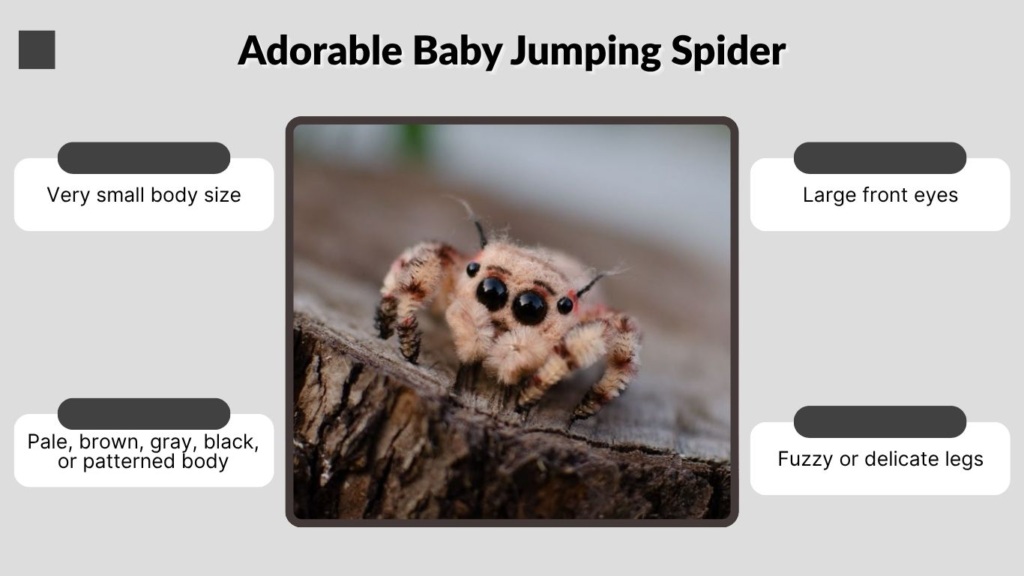
Baby jumping spiders are even smaller and softer-looking than adults. They may be only a few millimeters long when young. Their legs are thin, their bodies are tiny, and their movements are quick but careful.
A baby jumping spider may appear on windowsills, plant leaves, walls, or outdoor furniture. It may look like a tiny moving dot at first. When seen up close, the same big-eyed face and jumping behavior become clear.
Baby Jumping Spider Features
- Very small body size
- Large front eyes
- Pale, brown, gray, black, or patterned body
- Short jumping movements
- Fuzzy or delicate legs
- Active during the day
- Often found near plants or windows
- Feeds on tiny insects and small arthropods
Are Baby Jumping Spiders Dangerous?
Baby jumping spiders are not dangerous to people. They are too small to cause serious harm and usually avoid contact. Like adults, they prefer hunting tiny prey. If you find one indoors, you can gently move it outside using paper or a small container.
What Do Baby Jumping Spiders Eat?
Baby jumping spiders eat very small prey, such as fruit flies, gnats, tiny flies, and other small arthropods. They need prey small enough to catch safely. In nature, they help control tiny insects around plants and outdoor spaces.
Adorable Jumping Spider Faces
Jumping spider faces are popular because they look expressive. Their two large central eyes are placed at the front of the head, while smaller eyes help detect movement from the sides. This eye arrangement gives them a face-like appearance.
People often describe jumping spiders as cute because they seem to make eye contact. Of course, they are not smiling or showing emotions in a human way. Their “cute face” comes from useful hunting features that help them survive.
Why the Face Looks Cute
The face looks cute because the eyes are large compared with the body. The front eyes also sit close together, creating a rounded, innocent look. When the spider turns toward you, it can look like it is paying attention.
Do Jumping Spiders Recognize People?
Jumping spiders can notice movement, shapes, and nearby objects very well. They may react to a hand, camera, or person moving nearby. However, it is better to say they are visually aware rather than saying they recognize people the way pets do.
Why They Look at Cameras
Jumping spiders may turn toward cameras because the lens reflects light or moves close to them. Their strong vision helps them inspect objects in front of them. This is why close-up videos often show them staring directly at the camera.
Adorable Jumping Spider Behavior
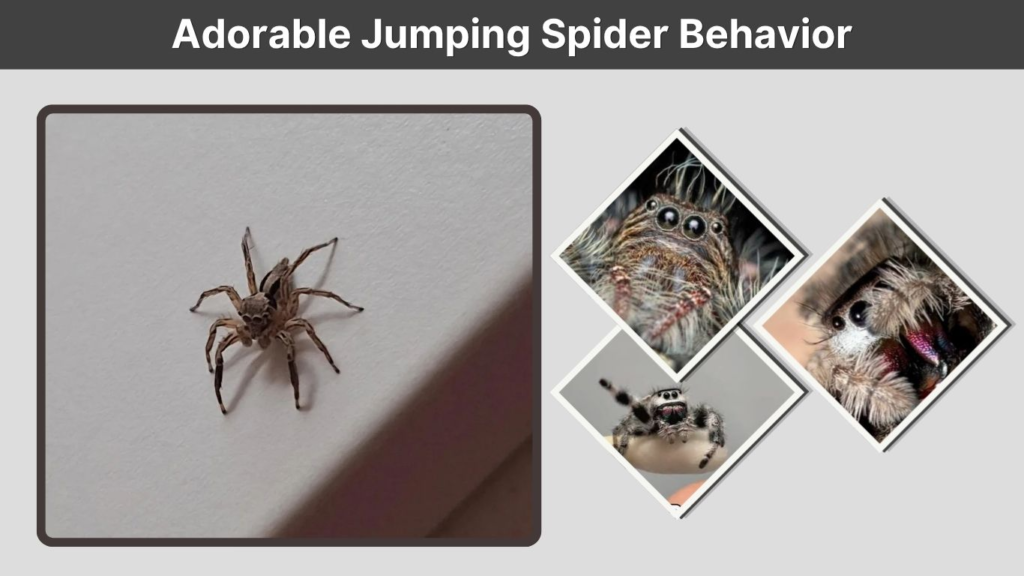
Jumping spiders are active during the day. They do not sit in sticky webs waiting for prey. Instead, they walk, look, stalk, and jump. This active lifestyle makes them more visible and interesting to watch.
Their behavior can seem playful, but most actions have a purpose. They move carefully to hunt, escape danger, explore surfaces, and find safe resting spots. They also use silk as a safety line when jumping.
Cute Behaviors to Notice
- Turning to face movement
- Waving front legs
- Making short, careful jumps
- Looking around before moving
- Cleaning legs and face
- Hiding inside silk retreats
- Watching prey before pouncing
- Slowly exploring leaves, walls, or hands
Why They Jump
Jumping spiders jump to catch prey, escape danger, or move between surfaces. Before jumping, they often attach a thin silk line. This silk works like a safety rope if they miss the landing.
Why They Wave Their Front Legs
A jumping spider may wave its front legs while exploring, communicating, or reacting to nearby movement. Males may also use leg movements during courtship. These gestures can look cute, but they are part of natural spider behavior.
Adorable Jumping Spider Size and Features
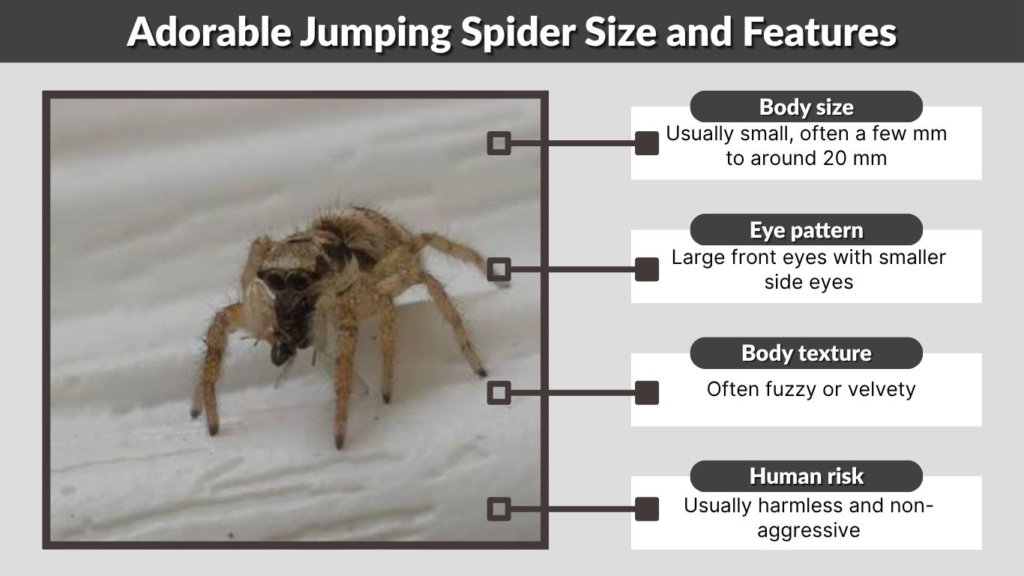
Jumping spiders are usually small, but their details are easy to notice in close-up view. Many common species range from a few millimeters to around 20 mm. Their compact body, short legs, and large eyes make them easy to identify.
| Feature | Adorable Jumping Spider Details |
| Body size | Usually small, often a few mm to around 20 mm |
| Eye pattern | Large front eyes with smaller side eyes |
| Body texture | Often fuzzy or velvety |
| Movement | Short walks, pauses, and jumps |
| Activity time | Mostly active during the day |
| Web use | Silk retreats and safety lines, not sticky prey webs |
| Diet | Tiny insects and small arthropods |
| Human risk | Usually harmless and non-aggressive |
Lucas the Adorable Jumping Spider
Lucas the Spider helped many people see spiders in a friendlier way. The character has a soft voice, big eyes, and a round, fuzzy look inspired by jumping spiders. Because of this, many people connect real jumping spiders with cuteness instead of fear.
Real jumping spiders are not cartoon characters, but they do share some features that made Lucas popular. Their big front eyes, tiny body, and curious movements are based on real traits. This is why real jumping spiders often remind people of animated spider characters.
Why Lucas Looks Like a Jumping Spider
Lucas has large forward-facing eyes, a small rounded body, and a soft fuzzy appearance. These traits match the features that make jumping spiders recognizable. The design makes the spider look gentle and friendly.
Real Spiders vs Cartoon Spiders
Real jumping spiders do not talk, smile, or behave like animated characters. They are wild animals with natural instincts. Still, their real behavior can be charming. Watching one explore a leaf or window can feel surprisingly personal.
Why the Character Became Popular
Lucas became popular because he made spiders less frightening. Many people are afraid of spiders, but a cute spider character can help reduce fear. It also shows that not every spider has to be viewed as dangerous or ugly.
Are Adorable Jumping Spiders Safe?
Jumping spiders are usually safe to observe. They are not aggressive toward people and prefer to escape rather than bite. A bite can happen if the spider is squeezed, trapped, or handled roughly, but it is not common.
Most jumping spider bites are mild. The area may become red, itchy, or slightly swollen. Serious reactions are rare, but anyone with strong pain, spreading swelling, breathing trouble, dizziness, or other unusual symptoms should seek medical help.
Are They Poisonous?
Jumping spiders are not poisonous to touch. They are venomous because they use venom to subdue prey, but their venom is not considered dangerous to most people. It is still best to avoid rough handling.
Safe Way to Move One
Use a cup and paper. Place the cup gently over the spider, slide paper underneath, and carry it outside. Release it near plants, shrubs, or a sheltered area. This method keeps both you and the spider safe.
Should You Keep One in Your Hand?
Some calm jumping spiders may walk on a hand, but handling should be limited. They are delicate and can be injured by falls, pressure, or sudden movements. Observation is safer than frequent handling.
Adorable Jumping Spider Water and Care
Jumping spiders need moisture, but they do not drink from deep bowls like larger pets. In nature, they may drink tiny droplets from leaves, silk, or surfaces. For pet jumping spiders, light misting on one side of the enclosure can provide drinking droplets.
Too much water can be dangerous. A soaked enclosure may cause mold, stress, or drowning risk. The goal is light moisture, good airflow, and dry surfaces where the spider can rest.
How They Drink Water
Jumping spiders drink from tiny droplets. They may sip water from plant leaves, enclosure walls, or silk. In the wild, dew and rain droplets can provide moisture. In captivity, small mist droplets are usually enough.
Water Safety Tips
- Do not use deep water bowls
- Mist lightly, not heavily
- Keep good ventilation
- Avoid soaking the substrate
- Remove mold quickly
- Use clean water
- Do not spray directly on the spider
- Let one side of the enclosure stay drier
Adorable Jumping Spider Pet Care
A pet jumping spider needs a small, secure, ventilated enclosure with climbing space. Add twigs, cork bark, artificial leaves, or small decorations for exploring. Feed small live insects such as fruit flies, house flies, or tiny crickets, depending on the spider’s size.
Where to Find Adorable Jumping Spiders
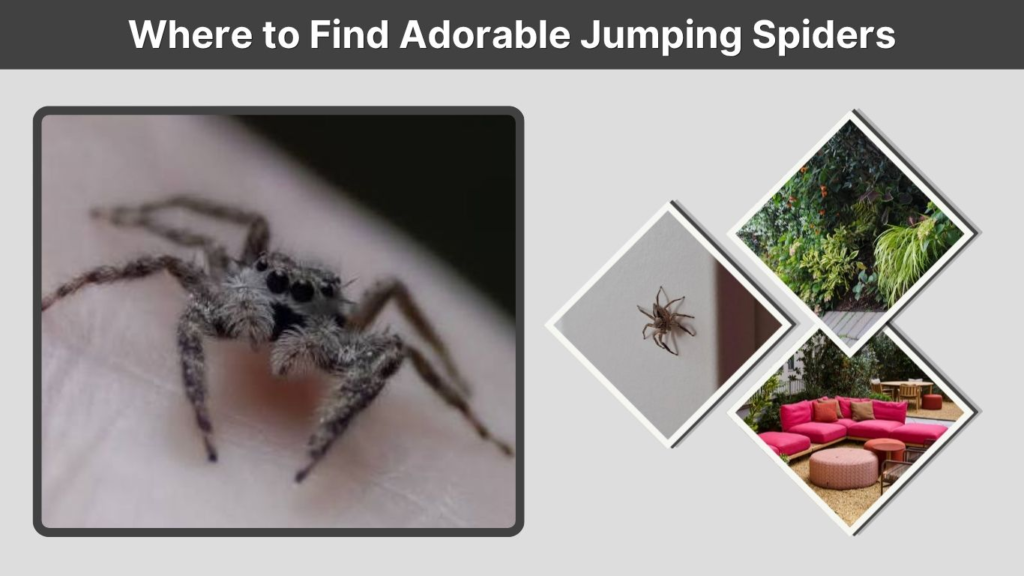
Jumping spiders live in many outdoor places. They like sunny surfaces where prey is easy to see. You may find them on garden plants, fences, tree bark, walls, windows, porch railings, or outdoor furniture.
Indoors, they may appear near windows or houseplants. They often enter by accident while hunting insects. Seeing one inside does not always mean you have a spider problem.
Common Places
- Garden leaves
- Window frames
- Sunny walls
- Fences and railings
- Tree bark
- Outdoor furniture
- Porch lights
- Houseplants
Why They Come Indoors
They may come indoors while chasing tiny insects or looking for shelter. Open windows, damaged screens, gaps around doors, and plants brought inside can allow them in. If there are many small flies indoors, jumping spiders may stay nearby.
How to Attract Them Outside
A healthy garden with flowering plants and no heavy pesticide use can support jumping spiders. They need small insects to eat and safe places to hide. Native plants, shrubs, and leaf cover can make outdoor spaces more spider-friendly.
Why People Love Adorable Jumping Spiders
Many people love jumping spiders because they are small, expressive, and helpful. They hunt flies, gnats, mosquitoes, and other tiny pests. Their movements are easy to watch, and their faces make them less scary than many other spiders.
They also help people overcome spider fear. A person who dislikes spiders may feel differently after watching a jumping spider clean its face, look around, or make a tiny jump. These little hunters show that spiders can be interesting and even charming.
Good for Gardens
Jumping spiders help control small insects naturally. They do not damage plants, bite leaves, or build messy web traps across garden paths. They are part of a healthy outdoor ecosystem.
Helpful Indoors
If one appears indoors, it may catch small flies or gnats. However, it is usually better to move it outside where it has more natural hunting space. Indoor air, cleaning chemicals, and lack of prey can be risky for wild spiders.
Great for Learning
Jumping spiders are excellent animals for nature observation. Their eyes, hunting style, silk use, and courtship behavior make them fascinating. Children and adults can learn a lot from watching them safely and gently.
FAQs
Why are jumping spiders so adorable?
Jumping spiders look adorable because they have large front-facing eyes, fuzzy bodies, and curious movements. They often turn toward people or cameras, which makes them seem expressive. Their small size and careful jumps also make them look less frightening than many other spiders.
Are adorable baby jumping spiders safe?
Yes, baby jumping spiders are generally safe. They are tiny, shy, and focused on hunting very small prey. They are not aggressive toward people. If you find one indoors, gently move it outside using a small container or paper.
Do jumping spiders need water?
Yes, jumping spiders need water, but they usually drink tiny droplets instead of standing water. In captivity, light misting can provide moisture. Deep water bowls are not recommended because small spiders can drown or become trapped.
Is Lucas the Spider based on a jumping spider?
Lucas the Spider is inspired by the cute appearance of jumping spiders. The large eyes, fuzzy body, and friendly design match features people often notice in real jumping spiders. Real jumping spiders do not act like cartoons, but they can look very charming.
Can I keep an adorable jumping spider as a pet?
Yes, some jumping spiders can be kept as pets, but they need proper care. They require a secure ventilated enclosure, safe climbing space, small live prey, and gentle handling. Beginners should research the species before keeping one.
