
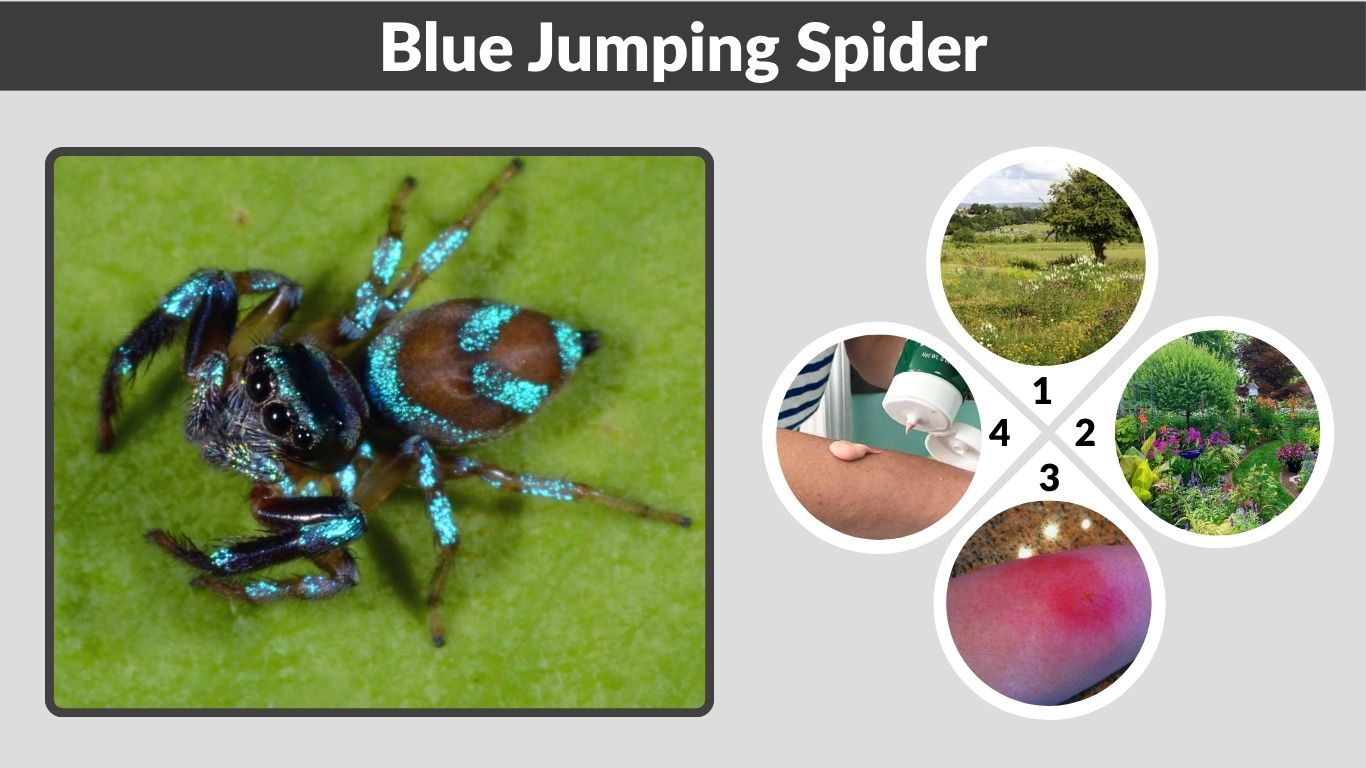
Blue jumping spiders are some of the most eye-catching spiders people search for online. In most cases, the “blue” color does not cover the whole body. Instead, people usually notice a black, fuzzy jumping spider with shiny metallic blue or green mouthparts. These colorful parts are often called blue fangs, blue jaws, or blue teeth, although the correct body part is the chelicerae.
What Is a Blue Jumping Spider?
A blue jumping spider is not always one single species. The phrase is commonly used by people who see a jumping spider with blue, green, or metallic-looking features. The most common match is the bold jumping spider, also known as the daring jumping spider. Its scientific name is Phidippus audax.
This spider is usually black with white markings and bright, iridescent mouthparts. Depending on the light, those mouthparts can look blue, teal, green, or even purple. That is why people search for names like blue fanged jumping spider, metallic blue jumping spider, black and blue jumping spider, and jumping spider with blue fangs.
Why Do Some Jumping Spiders Look Blue?
The blue color often comes from iridescence. This means the surface reflects light in a way that creates a shining color effect. The spider may not have a flat blue pigment like paint. Instead, its mouthparts can shift color depending on the viewing angle, sunlight, camera flash, or background.
This is why the same spider may look:
- Metallic blue in bright light
- Greenish blue in shade
- Teal in close-up photos
- Dark or black when viewed from far away
For many people, the first sign is not the body color but the flash of color near the face.
Common Blue Jumping Spider Identification
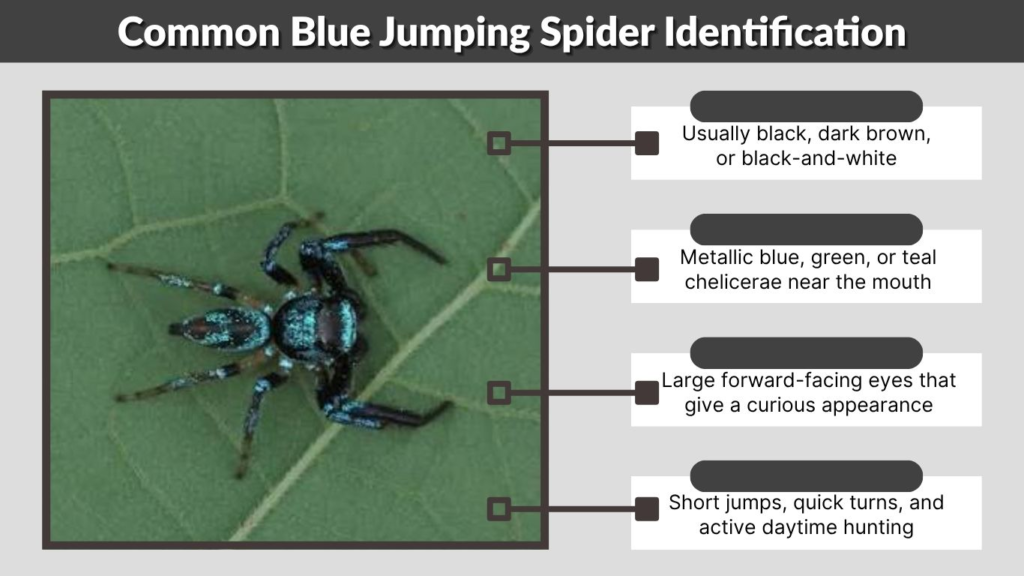
Blue jumping spiders are usually noticed because of their bold contrast. A small black spider with large front eyes and shiny blue mouthparts can look unusual, but it is often a harmless jumping spider rather than a dangerous species.
| Feature | What to Look For |
| Body color | Usually black, dark brown, or black-and-white |
| Blue feature | Metallic blue, green, or teal chelicerae near the mouth |
| Eyes | Large forward-facing eyes that give a curious appearance |
| Movement | Short jumps, quick turns, and active daytime hunting |
| Web behavior | Does not build a large prey-catching web |
| Common match | Bold jumping spider, also called daring jumping spider |
Black and Blue Jumping Spider
The phrase black and blue jumping spider usually describes a dark jumping spider with shiny blue mouthparts. The body is often black with white spots or bands. In many cases, this is a bold jumping spider.
A typical bold jumping spider may have:
- A black, fuzzy body
- White spots on the abdomen
- White bands or markings on the legs
- Large front-facing eyes
- Metallic blue-green chelicerae
These spiders often pause and look directly at people. This behavior makes them seem curious, but they are usually watching movement and deciding whether to jump away.
Blue Fanged Jumping Spider
Many people call these spiders “blue fanged jumping spiders.” The phrase is understandable, but it is not fully accurate. The blue parts people notice are usually the chelicerae, which are jaw-like mouthparts. The actual fangs are smaller and not always the bright blue part seen in photos.
Still, “blue fangs” has become a common way to describe them. Searches like jumping spider with blue fangs, black jumping spider with blue fangs, and blue fang jumping spider usually point to the same kind of spider.
Fuzzy Blue Jumping Spider
A fuzzy blue jumping spider is usually a hairy jumping spider with blue or green iridescent mouthparts. Jumping spiders often look fuzzy because their bodies and legs are covered in fine hairs. These hairs help them sense vibrations and air movement.
The fuzzy appearance can make them look cute or pet-like, especially in close-up photos. However, they are still small predators that hunt flies, gnats, moths, and other tiny insects.
Is There a Fully Blue Jumping Spider?
A truly all-blue jumping spider is much less common than search results may suggest. Most “blue jumping spider” sightings are spiders with only certain blue features. The body may be black, white, brown, red, orange, or greenish depending on the species.
Some jumping spiders, especially peacock jumping spiders, can have brilliant colors. In Australia, male peacock spiders are famous for colorful displays, and some may show blue, red, orange, or rainbow-like markings. However, those are different from the common black jumping spider with blue fangs seen in North America.
Blue Peacock Jumping Spider
The blue peacock jumping spider is often searched because peacock spiders are colorful and visually striking. These spiders are mostly known from Australia and are famous for courtship dances. Males lift and display colorful abdominal flaps to attract females.
A blue face peacock jumping spider or blue faced jumping spider may refer to a colorful species or a photographed individual with blue facial markings. These spiders are usually tiny and not the same as the bold jumping spider commonly found around homes, gardens, fences, and walls.
Blue Regal Jumping Spider
The regal jumping spider, Phidippus regius, is another popular pet jumping spider. Some individuals can show attractive markings, and their chelicerae may appear colorful. However, “blue regal jumping spider” is often used loosely by sellers or hobbyists to describe color variations or lighting effects.
Regal jumping spiders are larger than many other jumpers and are popular in the pet trade. They should only be bought from responsible, ethical breeders who can identify the species correctly.
Where Blue Jumping Spiders Live
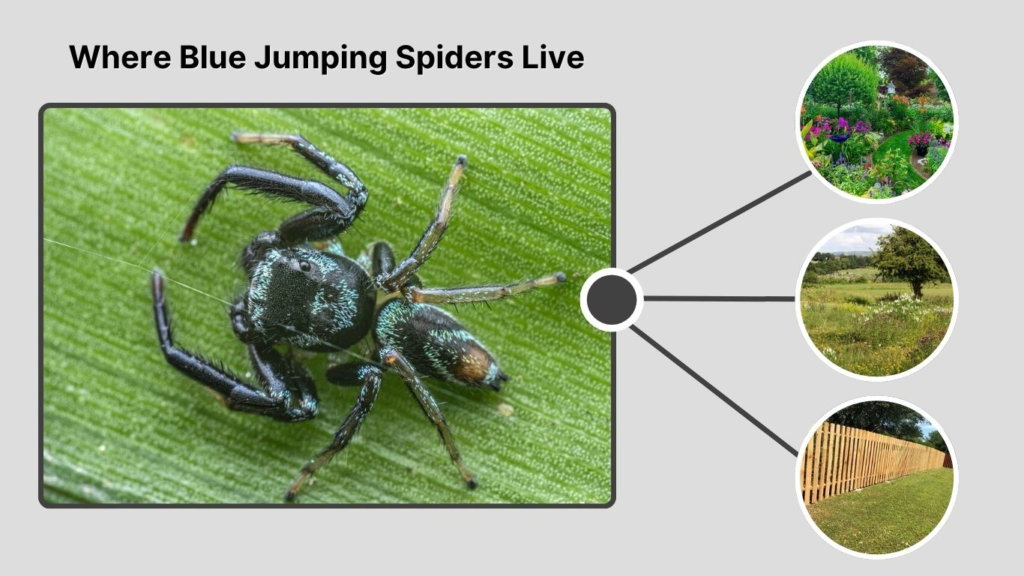
The location depends on the species. The bold jumping spider is widespread in North America and is often found near houses, gardens, fields, fences, sheds, and sunny outdoor surfaces. It may also wander indoors while searching for prey or shelter.
People search for blue jumping spiders in places like Michigan, North Carolina, Oregon, Virginia, Georgia, and Australia. These searches often come from local sightings. In North America, a black jumping spider with blue-green mouthparts is very likely to be a bold jumping spider or a related Phidippus species.
Common Places to Find Them
Blue-fanged jumping spiders may be found in:
- Window frames and sunny walls
- Garden plants and flowers
- Wooden fences and railings
- Outdoor furniture
- Sheds, barns, and garages
- Tree bark and shrubs
- House corners where insects gather
They are active hunters, so they move around during the day. Instead of waiting in a web, they stalk prey, judge distance with their strong eyesight, and leap onto insects.
Are Blue Jumping Spiders Dangerous?
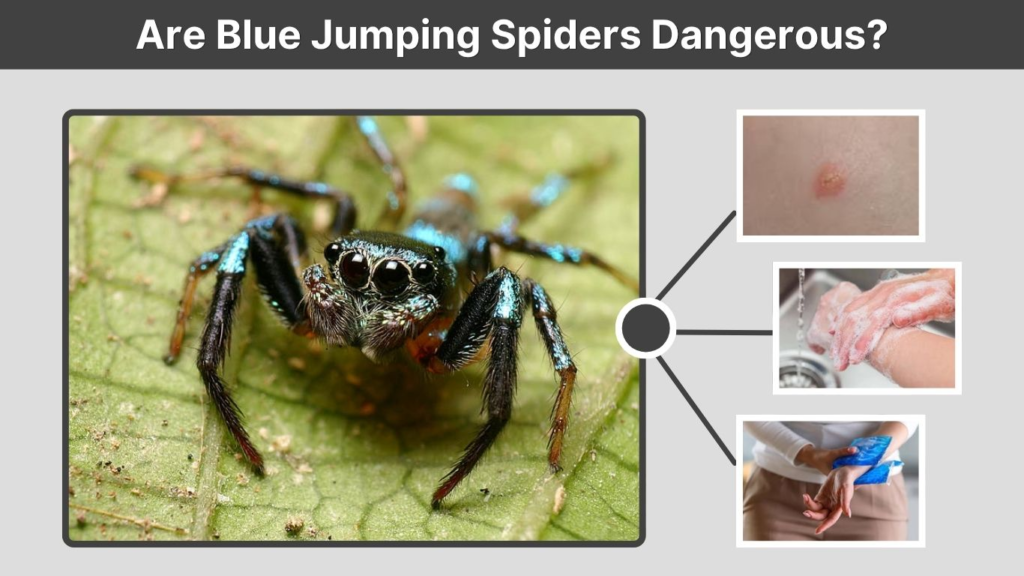
Blue jumping spiders are not considered dangerous to people. Like most spiders, they can bite if squeezed, trapped, or handled roughly, but they usually prefer to escape. Their first response is often to jump away, hide, or freeze.
A bite may cause mild local discomfort, redness, itching, or swelling. Serious reactions are uncommon, but anyone with severe pain, spreading swelling, breathing trouble, dizziness, or signs of infection should seek medical help.
Black and Blue Jumping Spider Bite
A black and blue jumping spider bite is usually not a major concern. These spiders are small, and their venom is designed for tiny insect prey. They do not hunt people, and they do not bite aggressively.
Basic care may include:
- Washing the area with soap and water
- Applying a cold compress
- Avoiding scratching
- Watching for unusual symptoms
- Getting medical advice if symptoms worsen
Do not try to identify a spider only from a bite mark. Many skin bumps are caused by irritation, allergies, other insects, or infection rather than spider bites.
Can You Keep a Blue Jumping Spider as a Pet?
Some people keep jumping spiders as pets because they are small, alert, and interesting to watch. A blue jumping spider pet is usually a bold jumping spider, regal jumping spider, or another captive-kept jumping spider with colorful mouthparts.
However, keeping one requires care and responsibility. A jumping spider is not like a toy or decoration. It needs a safe enclosure, proper airflow, the right humidity, suitable prey, and gentle handling.
Basic Pet Care Needs
A pet jumping spider usually needs:
- A small, secure enclosure with ventilation
- Climbing surfaces and hiding spots
- Proper humidity based on the species
- Live feeder insects of the right size
- Clean water offered safely through misting or droplets
- No pesticides, perfumes, or cleaning chemicals nearby
Wild-caught spiders may be stressed in captivity and may not adapt well. Captive-bred spiders are usually a better choice for beginners because their age, species, and care needs are easier to confirm.
Blue Jumping Spider for Sale
Searches like blue jumping spider for sale and buy blue jumping spider online often show pet listings, but buyers should be careful. Sellers may use attractive color names that are not official species names. “Blue,” “electric blue,” or “metallic blue” may simply describe the appearance in certain lighting.
Before buying, check:
- The exact scientific name
- Whether it is captive-bred
- The spider’s age or life stage
- The seller’s care instructions
- Shipping safety and weather conditions
- Local rules about keeping or importing spiders
Never release a pet spider outdoors, especially if it is not native to your area.
Why Do Jumping Spiders Have Such Big Eyes?
Jumping spiders are famous for their large front eyes. These eyes help them track movement, judge distance, and focus on prey. Their vision is one of the main reasons they behave differently from many web-building spiders.
Instead of sitting in a web, they actively explore. They turn toward movement, watch insects, and make careful jumps. Their eyes also help them recognize other jumping spiders during courtship or territorial displays.
Jumping Spider With Blue Eyes
A jumping spider with blue eyes is less common than a jumping spider with blue fangs. In many photos, the eyes may appear blue because they reflect light from the camera, sky, or surroundings. The eye surface can look glossy, black, green, or bluish depending on the angle.
Searches like blue eyed jumping spider, black jumping spider with blue eyes, and jumping spider blue eyes often come from photo reflections rather than a species with naturally bright blue eyes.
Blue Jumping Spider Species and Lookalikes
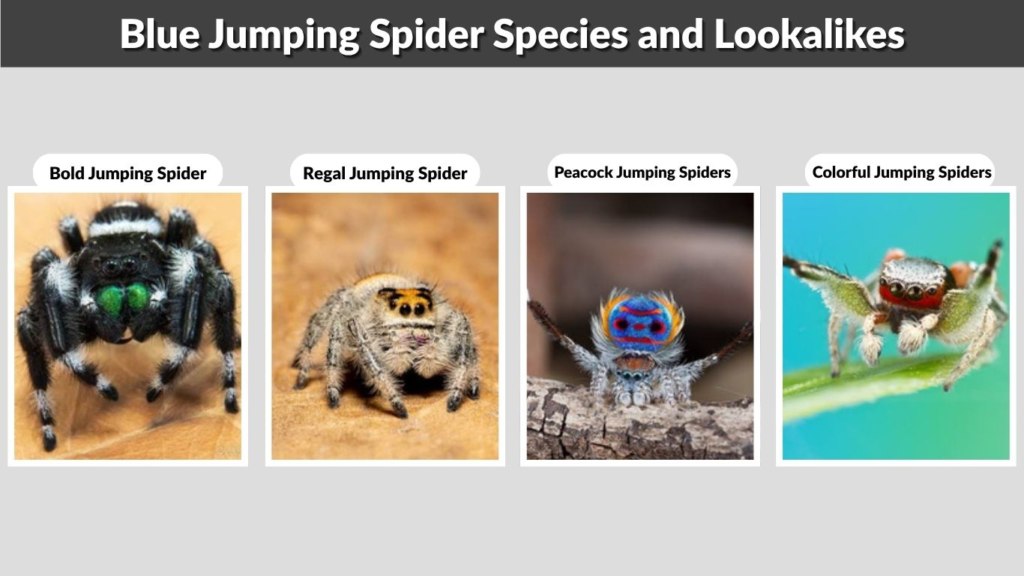
Several spiders may be described as blue jumping spiders because of color, lighting, or markings. The most likely options depend on location.
Bold Jumping Spider
The bold jumping spider is the most common match for black jumping spider with blue fangs. It has a sturdy body, strong legs, white markings, and metallic chelicerae. It is common around homes and gardens in much of North America.
Regal Jumping Spider
The regal jumping spider is popular among pet keepers. It can be larger and more colorful than many smaller jumpers. Some individuals may show bright facial features or attractive markings, but it should not be confused with every blue-looking spider online.
Peacock Jumping Spiders
Peacock jumping spiders are famous for their colorful bodies and dances. Some species show blue, red, orange, yellow, or rainbow-like patterns. They are tiny and mostly associated with Australia.
Other Colorful Jumping Spiders
Some jumping spiders may look green, blue, orange, red, or metallic depending on the species and light. A photo alone can be misleading, so location, body shape, markings, and size matter when identifying one.
How to Photograph or Identify One Safely
If you find a shiny blue jumping spider, the safest approach is to observe it without touching it. Jumping spiders are usually easy to watch because they often pause and look around before moving.
For identification, try to note:
- Your location
- Body color and markings
- Whether the blue color is on the mouthparts, eyes, back, or legs
- Approximate size
- Where it was found
- Clear photos from the front and top
Good lighting helps, but flash may change how the blue color appears. A spider that looks electric blue in one photo may look green or black in another.
Should You Remove a Blue Jumping Spider?
In most cases, there is no need to kill or remove a blue jumping spider. These spiders eat small insects and can be helpful around gardens and outdoor spaces. If one enters your home and you do not want it inside, you can gently relocate it.
Use a cup and a piece of paper. Place the cup over the spider, slide the paper underneath, and release it outside near plants or a sheltered area. Avoid grabbing it with your fingers because squeezing may injure the spider or cause a defensive bite.
FAQs
Are blue jumping spiders real?
Yes, but most are not fully blue. The phrase usually describes jumping spiders with metallic blue, teal, or green mouthparts. The bold jumping spider is a common example because its dark body and shiny chelicerae can create a strong blue-and-black appearance.
What is the black jumping spider with blue fangs?
The black jumping spider with blue fangs is often the bold jumping spider, also called the daring jumping spider. Its “blue fangs” are usually iridescent chelicerae near the mouth. These can look blue, green, or teal depending on the light.
Are blue jumping spiders poisonous?
Blue jumping spiders have venom for hunting small insects, but they are not considered dangerous to humans. They are better described as venomous rather than poisonous. Bites are uncommon and usually mild, though medical help is wise if symptoms become severe.
Can I keep a blue jumping spider as a pet?
Yes, some jumping spiders can be kept as pets, but they need proper care. A safe enclosure, ventilation, humidity, hiding spots, and suitable live prey are important. Captive-bred spiders from responsible sellers are usually better than wild-caught spiders.
Why does my jumping spider look blue in photos?
The blue color often comes from iridescence or light reflection. The spider’s mouthparts, eyes, or body hairs may reflect light in a way that looks blue. Camera flash, sunlight, and viewing angle can make the same spider look blue, green, teal, or dark.
