
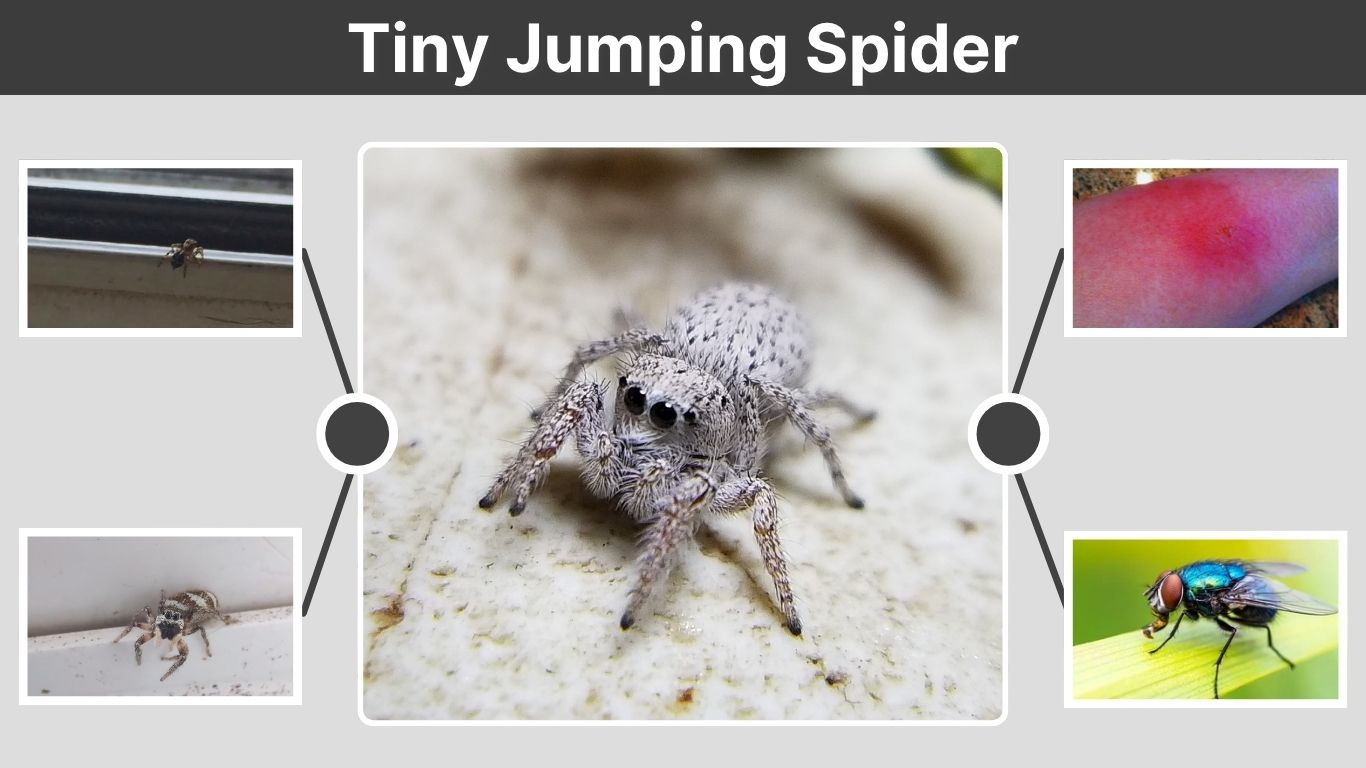
A tiny jumping spider can look surprising when it suddenly hops across a wall, windowsill, plant, or desk. These small spiders are usually harmless, curious, and helpful because they hunt tiny insects instead of building messy capture webs. This guide explains how to identify a tiny jumping spider, why it may be in your house, whether it can bite, and what to do if you find one indoors.
What Is a Tiny Jumping Spider?
A tiny jumping spider is a small spider from the jumping spider family, also known as Salticidae. These spiders are famous for their large front-facing eyes, quick movements, and ability to jump short distances when hunting or escaping danger.
Most people notice them because they do not move like common web-building spiders. Instead of sitting in a web and waiting, they stalk prey slowly, pause, look around, and then leap. This behavior makes them easy to recognize even when they are very small.
Common Features
Tiny jumping spiders may be black, brown, gray, white, tan, yellowish, or patterned. Some have stripes, white spots, fuzzy bodies, or shiny markings. Their exact look depends on the species, age, sex, and location.
Look for these signs:
- Compact body with short, strong legs
- Large front eyes that make the spider look “cute”
- Jerky, stop-and-go movement
- Sudden short jumps
- Active behavior during the day
- Little or no visible web for catching prey
How Small Are They?
Many jumping spiders are only a few millimeters long, especially young spiders. A very tiny jumping spider may be a juvenile, which means it has not reached adult size yet. Adult jumping spiders can still be small, but babies and young spiders are often the ones people describe as “super tiny.”
Why Is There a Tiny Jumping Spider in Your House?
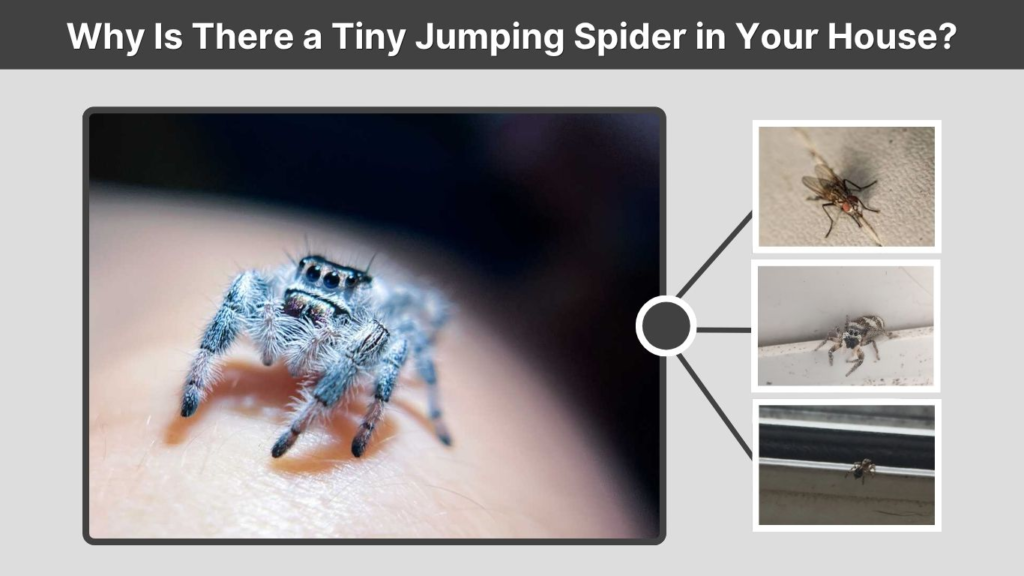
Finding a tiny jumping spider in your house does not usually mean you have an infestation. These spiders often wander indoors by accident or follow small insects near windows, lights, plants, doors, and wall cracks.
They are usually not looking for people. They are looking for food, shelter, or a safe place to hide.
Common Indoor Spots
You may find a tiny jumping spider in:
- Windowsills and curtains
- Houseplants
- Door frames
- Bathroom walls
- Kitchen corners
- Ceiling edges
- Bedrooms
- Basements or garages
- Near outdoor lights
They prefer places where small insects gather. Windows are especially common because light attracts tiny flies, gnats, and other prey.
Should You Remove It?
You do not need to panic. A single tiny jumping spider indoors is usually harmless. If you do not want it inside, use a cup and paper to move it outdoors gently. Place it near a plant, wall, fence, or sheltered area rather than dropping it in open grass where it may be exposed.
If you keep seeing many spiders, the bigger issue may be small insects in the home. Reducing gnats, flies, and clutter usually makes the home less attractive to spiders.
Tiny Black Jumping Spider: What Kind Is It?
A tiny black jumping spider is one of the most common descriptions people search for. Many jumping spiders are dark, especially from a distance. Some are solid black, while others have white spots, stripes, orange markings, gray hairs, or metallic-looking mouthparts.
Black Spider With White Spots
A tiny black jumping spider with white spots may be a bold jumping spider or a related species, depending on your region. These spiders often look compact and fuzzy, with bright markings on the abdomen.
However, color alone is not enough for exact identification. Young spiders can look different from adults, and males often look different from females.
Black and White Jumping Spider
A tiny black and white jumping spider may be a zebra jumping spider or another patterned species. Zebra jumping spiders often have bold black-and-white stripes and are commonly seen on walls, fences, and sunny surfaces.
These spiders are active hunters. They may turn toward you when you move because they rely heavily on vision.
Is a Tiny Black Jumping Spider Dangerous?
In most cases, no. Jumping spiders have venom for subduing prey, but they are not considered dangerous to people. They are shy and usually try to escape rather than bite. A bite is uncommon and typically happens only if the spider is trapped against skin, squeezed, or handled roughly.
Tiny Jumping Spider Bite: Should You Worry?
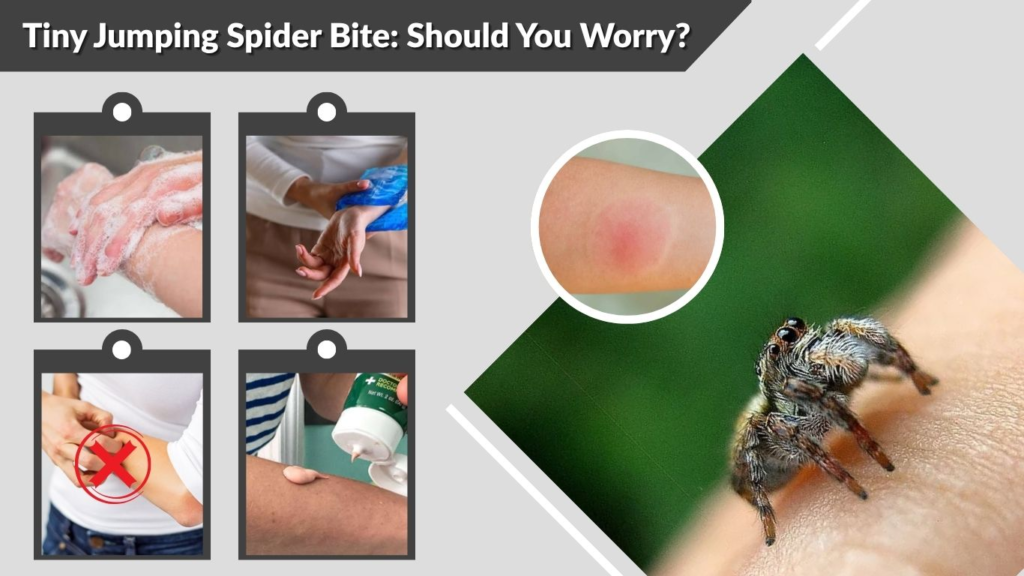
A tiny jumping spider bite is rare. These spiders are not aggressive toward humans. They may jump away, hide, or raise their front legs defensively if they feel threatened.
If a bite does happen, it is usually mild. Some people may notice slight redness, itching, swelling, or a small bump, similar to a minor insect bite.
What to Do After a Bite
Basic first aid is usually enough:
- Wash the area with soap and water
- Apply a cold compress
- Avoid scratching
- Use an over-the-counter itch cream if needed
- Watch for worsening symptoms
Seek medical help if you have severe pain, spreading swelling, trouble breathing, dizziness, fever, or symptoms that continue to worsen. Also seek help if you are unsure what spider caused the bite, especially in areas where medically important spiders live.
Is a Tiny Jumping Spider Poisonous?
People often use “poisonous” when they mean “venomous.” Jumping spiders are venomous in the sense that they use venom on prey, but their venom is not considered medically dangerous to humans. They are not poisonous to touch.
The safest approach is still to avoid handling any unknown spider with bare hands.
Tiny Brown, White, Yellow, Gray, or Green Jumping Spiders
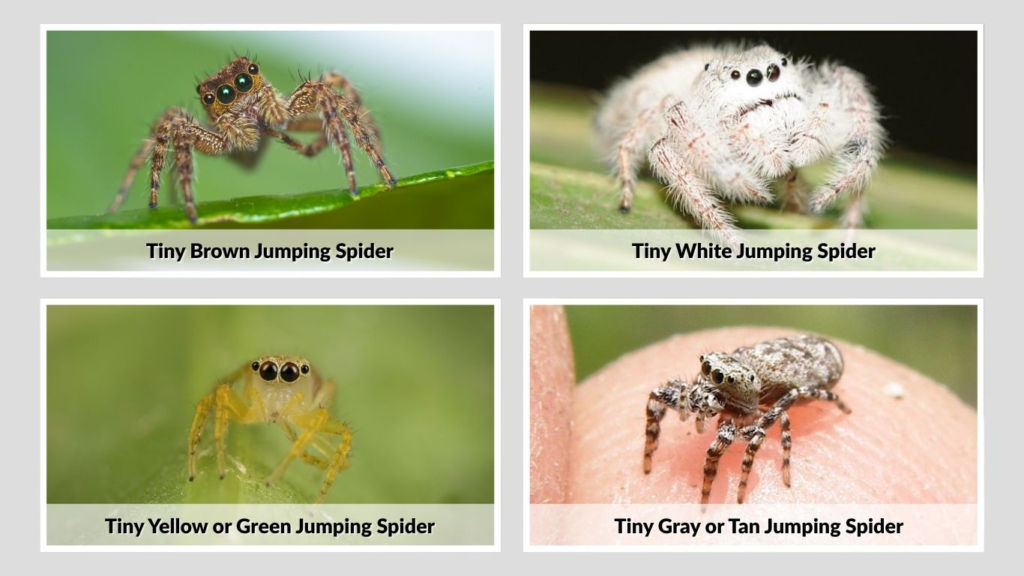
Not all tiny jumping spiders are black. Search data shows interest in tiny brown, white, yellow, gray, green, tan, and even blue-looking jumping spiders. These colors can be natural markings, reflected light, age differences, or regional species traits.
Tiny Brown Jumping Spider
A tiny brown jumping spider in the house may blend in with wood, cardboard, soil, or dried leaves. Brown jumping spiders are often found near houseplants, windows, and outdoor entry points.
Tiny White Jumping Spider
A tiny white jumping spider may be a pale species, a young spider, or a spider with light hairs. Some crab spiders are also white and may be confused with jumping spiders. The easiest difference is behavior: jumping spiders move in short bursts and have large forward-facing eyes.
Tiny Yellow or Green Jumping Spider
A tiny yellow or green jumping spider is more likely to be found around plants, gardens, or vegetation. These colors help some spiders blend into leaves and flowers while hunting small insects.
Tiny Gray or Tan Jumping Spider
Tiny gray and tan jumping spiders are common on walls, bark, stone, and outdoor surfaces. Indoors, they may appear on neutral-colored walls or near windows where they are easier to spot.
Tiny Jumping Spider as a Pet
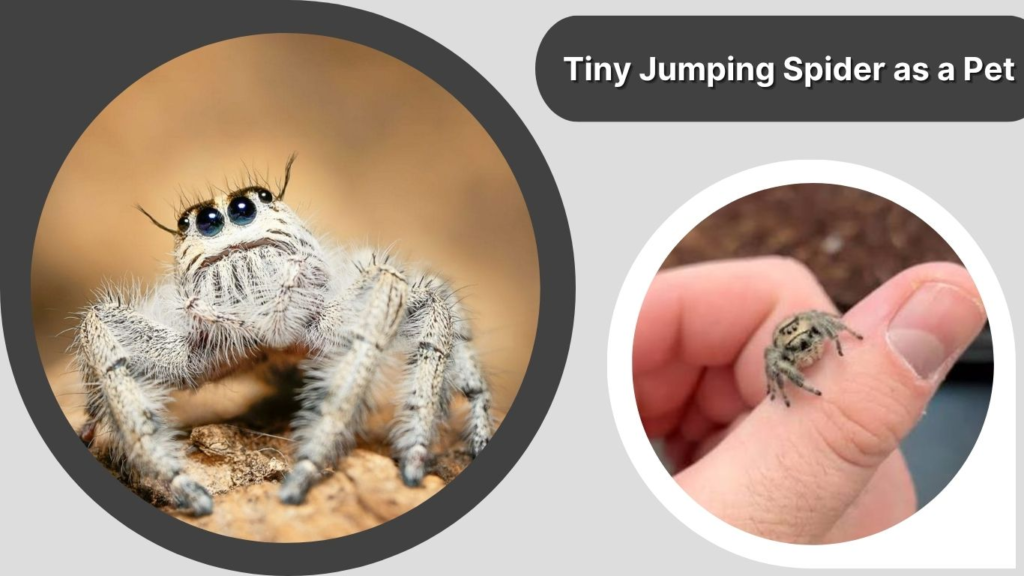
Some people search for a tiny jumping spider because they think it looks cute or want to keep one as a pet. Jumping spiders can be fascinating to observe, but they require gentle care, proper food, and a safe enclosure.
A wild spider should not be kept casually unless you understand its needs. Very tiny spiders are especially delicate and may be difficult to feed safely.
Basic Pet Care Needs
A small jumping spider needs:
- A ventilated enclosure
- Safe climbing surfaces
- Hiding spots
- Light misting for water droplets
- Tiny live prey
- No chemicals, perfumes, or pesticides nearby
- Escape-proof gaps
Never put a tiny spider in a large enclosure where it cannot find food. Small spiders often do better in a small, secure container with ventilation and room to climb.
What to Feed a Tiny Jumping Spider
A tiny jumping spider eats small live prey. The food must be smaller than the spider or at least easy for it to overpower.
Good options may include:
- Flightless fruit flies
- Tiny gnats
- Small flies
- Pinhead crickets for larger juveniles
- Very small moths
- Small springtails for very tiny spiderlings
Avoid wild insects from areas treated with pesticides. Also avoid prey that is too large, such as big crickets, because it can injure or stress the spider.
Tiny Baby Jumping Spider
A tiny baby jumping spider is called a spiderling. Spiderlings can be extremely small and may appear as tiny dots that move and jump. They are fragile, quick, and easy to lose.
If you find a tiny baby jumping spider indoors, the best option is usually to move it gently outside or near a safe indoor plant area if you are comfortable with it. Keeping a baby spider alive in captivity can be challenging because it needs very small prey and careful moisture control.
Baby Jumping Spider Behavior
Baby jumping spiders already behave like miniature hunters. They look around, stalk tiny prey, and leap when needed. They may also use silk as a safety line when jumping or climbing.
That silk is not usually a prey-catching web. It works more like a backup rope.
How Long Does a Tiny Jumping Spider Live?
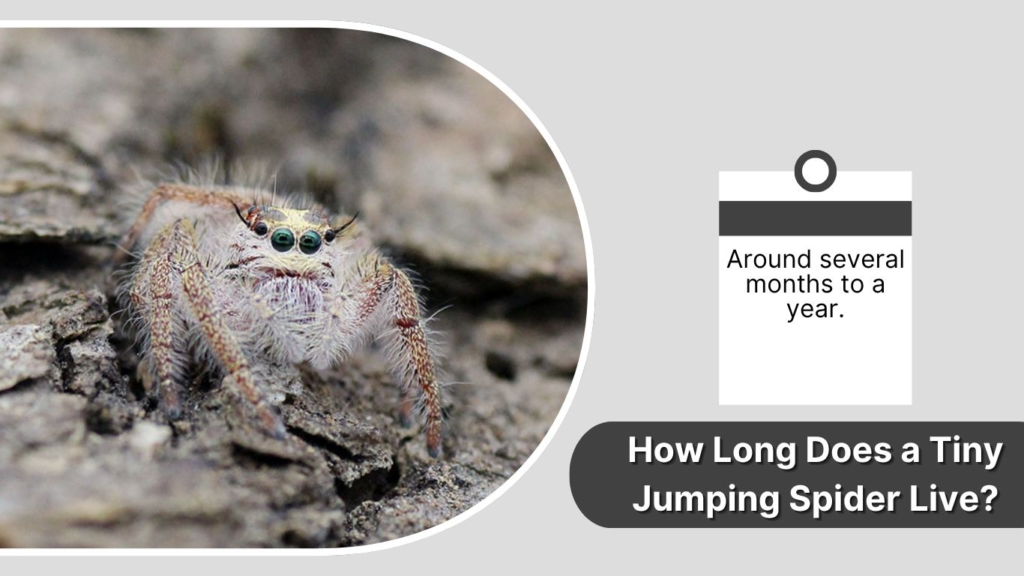
A tiny jumping spider’s lifespan depends on species, environment, food, temperature, and whether it is wild or captive. Many jumping spiders live around several months to a year, while some may live longer under good conditions.
Young spiders grow by molting. During this time, they may stop eating, hide more often, and become vulnerable. If you keep one as a pet, never disturb it during a molt.
Signs of Molting
A jumping spider preparing to molt may:
- Refuse food
- Stay in a silk retreat
- Move less than usual
- Look duller in color
- Avoid bright open areas
After molting, the spider’s body is soft for a while. Do not feed large prey immediately after a molt because the spider can be injured.
Are Tiny Jumping Spiders Good or Bad?
Tiny jumping spiders are generally good to have around. They help control small insects and do not create large messy webs. They are also interesting to watch because they seem alert and responsive.
They are not a sign of a dirty home. Like many small predators, they simply go where food is available.
Benefits
Tiny jumping spiders can help reduce:
- Gnats
- Fruit flies
- Small moths
- Mosquitoes
- Tiny plant pests
- Other small insects
In gardens, they are part of the natural pest-control system. Indoors, one or two jumping spiders may quietly hunt insects near windows or plants.
How to Keep Tiny Jumping Spiders Out of the House
If you prefer not to have spiders indoors, focus on prevention rather than killing them. Jumping spiders usually enter through small gaps or follow insects inside.
Prevention Tips
Try these simple steps:
- Seal gaps around windows and doors
- Repair torn screens
- Reduce indoor gnats and flies
- Keep outdoor lights off when not needed
- Move plants slightly away from doors
- Vacuum corners and windowsills regularly
- Avoid leaving fruit or food scraps exposed
- Check houseplants before bringing them indoors
Removing their food source is often more effective than removing the spider itself.
Tiny Jumping Spider vs Other Tiny Spiders
A tiny spider that jumps is often a jumping spider, but not always. Some other tiny arthropods can hop or move suddenly, including spider beetles, mites, springtails, and small insects.
Jumping spiders are usually easy to separate because of their body shape and eyes. They have eight legs, a compact body, and a curious stop-and-look movement.
Key Identification Clues
A tiny jumping spider usually:
- Faces movement directly
- Has large front eyes
- Moves in short bursts
- Jumps with control
- Hunts during the day
- Does not rely on a sticky web
If the spider has a round shiny body, long thin legs, or hangs upside down in a web, it may not be a jumping spider.
FAQs
Are tiny jumping spiders harmful?
Tiny jumping spiders are not considered harmful to people. They have venom for catching small prey, but their bites are rare and usually mild. Most will run or jump away if disturbed. It is still best not to handle unknown spiders with bare hands.
Why do I keep seeing tiny jumping spiders in my house?
You may be seeing them because small insects are present near windows, plants, lights, or doors. Jumping spiders follow prey and may enter through gaps or open windows. Seeing one or two does not usually mean you have an infestation.
What does a tiny black jumping spider eat?
A tiny black jumping spider eats small live insects such as gnats, fruit flies, tiny moths, and small flies. If kept as a pet, it should be fed prey smaller than itself. Avoid wild insects from pesticide-treated areas.
Can I keep a tiny jumping spider as a pet?
Yes, some people keep jumping spiders as pets, but very tiny ones can be difficult to care for. They need a secure ventilated enclosure, small live prey, gentle misting, and safe climbing space. A larger captive-bred juvenile is usually easier for beginners.
What should I do if I find a tiny jumping spider in bed?
Stay calm and gently move it with a cup and paper. A jumping spider in bed is usually accidental and not looking to bite. Check nearby windows, walls, curtains, and plants. If insects are present, removing them may reduce future spider visits.
