
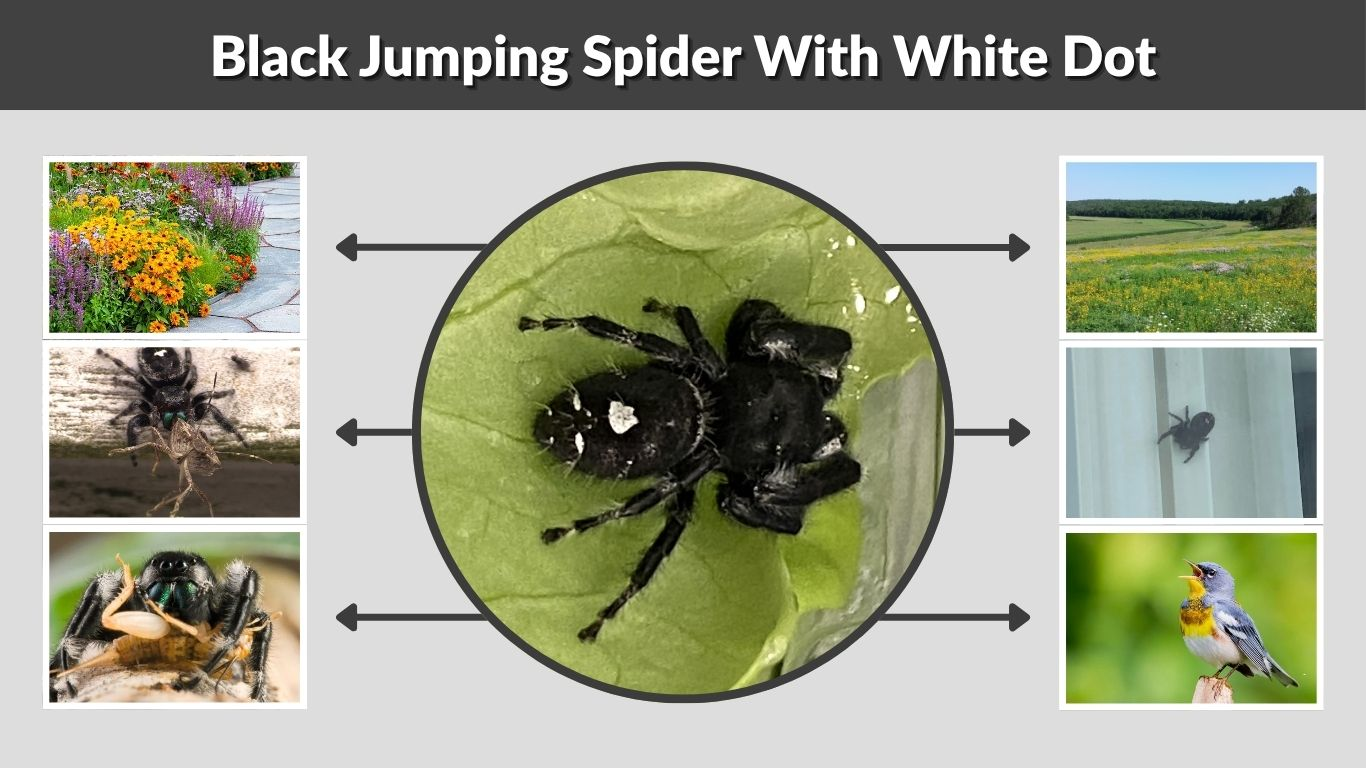
A black jumping spider with a white dot is usually the bold jumping spider, also called Phidippus audax. This small, alert spider is common around gardens, walls, windows, fences, and sometimes inside homes. Its black body, bright white abdominal spot, fuzzy legs, and shiny green or blue mouthparts make it one of the easiest jumping spiders to recognize.
What Is a Black Jumping Spider With a White Dot?
A black jumping spider with a white dot is most often a bold jumping spider. This species belongs to the jumping spider family, known for excellent eyesight, quick movement, and active hunting behavior. Unlike web-building spiders, jumping spiders stalk prey during the day and leap short distances to catch insects.
The bold jumping spider is not considered dangerous to people. It may look intimidating because of its dark color and sudden movements, but it is usually shy and more likely to run away than bite. Many people even find these spiders interesting because they appear curious, turning toward movement and watching with large front-facing eyes.
Scientific Name and Common Names
The scientific name of the bold jumping spider is Phidippus audax. It is also commonly called:
- Bold jumping spider
- Daring jumping spider
- White-spotted jumping spider
- Bold jumper
- Black and white jumping spider
The word “audax” means bold or daring, which fits its active hunting style and confident movements.
Why It Has a White Dot
The white dot is part of the spider’s natural body pattern. Adult bold jumping spiders often have one large white or pale spot in the middle of the abdomen, along with smaller white markings near the back. In young spiders, these spots may appear orange or yellowish before turning white as the spider matures.
How to Identify a Black Jumping Spider With a White Dot
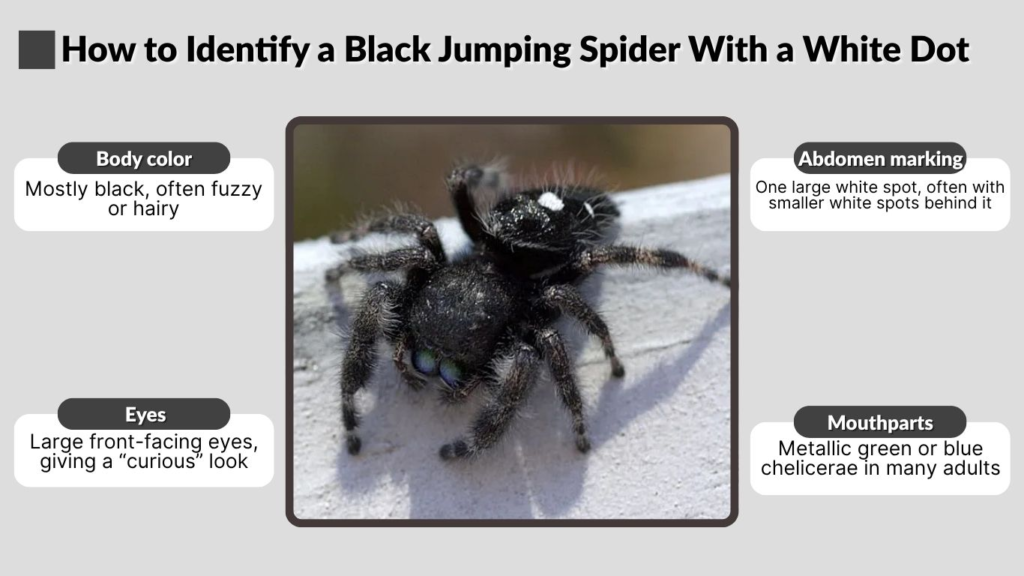
Correct identification depends on several features, not just one white spot. Many spiders can have light markings, so it helps to look at body shape, eye pattern, movement, and color details.
| Feature | What to Look For |
|---|---|
| Body color | Mostly black, often fuzzy or hairy |
| Abdomen marking | One large white spot, often with smaller white spots behind it |
| Eyes | Large front-facing eyes, giving a “curious” look |
| Mouthparts | Metallic green or blue chelicerae in many adults |
| Movement | Quick, jerky steps and sudden jumps |
| Web use | Does not build a web to catch prey; uses silk for safety lines and retreats |
Body Shape and Size
Bold jumping spiders are small but sturdy. Their bodies are compact, with strong legs designed for jumping. Adults are often around a few millimeters to over a centimeter long, depending on age and sex. Females are usually larger and heavier-bodied, while males may look slimmer and have more noticeable front legs.
Their fuzzy appearance is another useful clue. The body and legs often have short hairs, and the legs may show pale bands or white patches.
Eye Pattern
Jumping spiders are famous for their large eyes. The bold jumping spider has two big front-facing eyes that help it judge distance and track prey. This gives it a very different look from many web-building spiders, which often have smaller, less noticeable eyes.
When you move near one, it may turn toward you. This does not mean it is aggressive. It is simply using its strong vision to understand what is nearby.
White Spot on the Abdomen
The main white dot is usually found on the top of the abdomen. In many bold jumping spiders, this marking is somewhat triangular or rounded. Two smaller white spots may appear behind it, creating a pattern of three pale marks.
However, the markings can vary. Some individuals have bright white spots, while others have cream, gray, yellow, or orange markings. Juveniles often have orange spots that become paler with age.
Where These Spiders Are Commonly Found
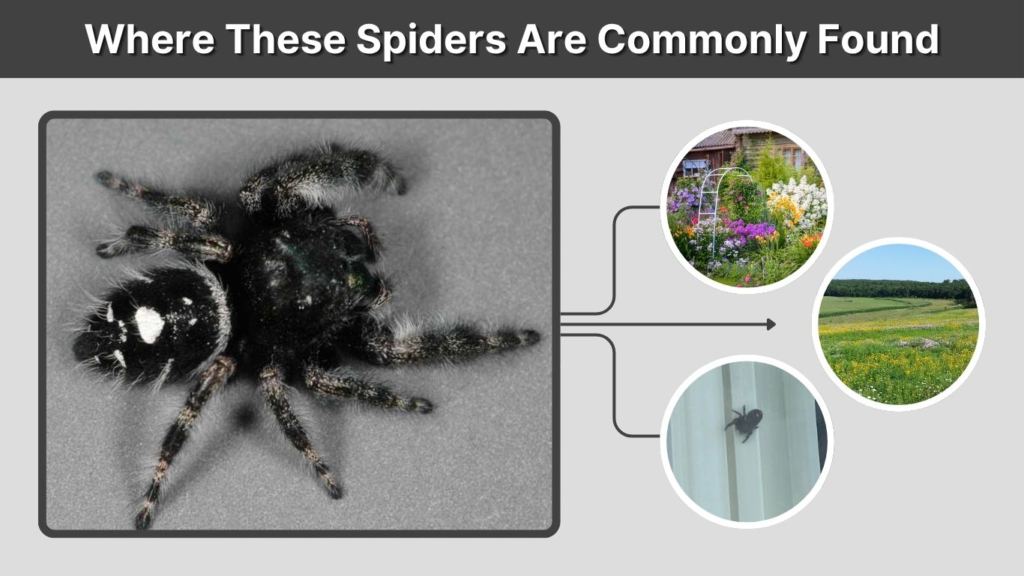
Black jumping spiders with white dots are commonly seen in open, sunny areas where insects are available. They are active hunters, so they often appear in places where they can walk, watch, and leap at prey.
Outdoor Locations
You may find them in:
- Gardens and flower beds
- Grasslands and fields
- Fences and railings
- Tree trunks and shrubs
- Porch steps and decks
- Exterior walls
- Window frames
- Around outdoor lights where insects gather
They like areas with good visibility because they hunt by sight. Sunny surfaces, garden plants, and walls can all make ideal hunting grounds.
Indoor Locations
Bold jumping spiders may enter homes by accident or while following small insects. Indoors, they are often found near:
- Windows
- Curtains
- Screens
- Walls
- Ceilings
- Houseplants
- Basements or garages
They do not infest homes in the same way ants, cockroaches, or termites might. Seeing one usually means it wandered inside, not that there is a major spider problem.
Behavior of the Bold Jumping Spider
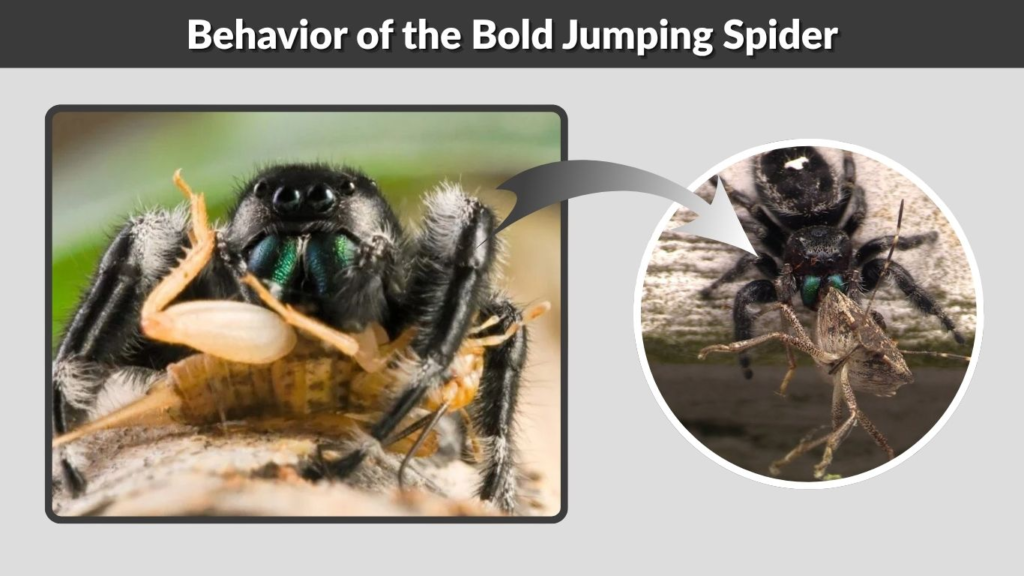
The bold jumping spider behaves very differently from many spiders people are used to seeing. It does not sit in a large web waiting for food. Instead, it walks around and hunts actively during the daytime.
It Hunts Without a Web
Jumping spiders use their sharp vision to find prey. Once they spot an insect, they slowly approach, calculate the distance, and jump. Before jumping, they may attach a silk safety line to the surface. This line works like a backup cord in case they miss or fall.
Common prey includes:
- Flies
- Small moths
- Mosquitoes
- Gnats
- Aphids
- Small beetles
- Other tiny insects
Because they eat pests, these spiders can be helpful in gardens and around homes.
It Uses Silk Differently
Although bold jumping spiders do produce silk, they do not build large prey-catching webs. Instead, they use silk to make small shelters, protect egg sacs, and create draglines while jumping.
At night or during bad weather, the spider may hide in a small silk retreat under bark, inside a crevice, behind siding, or in a quiet corner.
It May Seem Curious
Many people describe jumping spiders as curious because they turn to face movement. They may pause, look around, raise their front legs, or shift position as if studying their surroundings.
This behavior is linked to their excellent eyesight. They rely on vision more than many other spiders, so they constantly observe movement and shapes around them.
Is a Black Jumping Spider With a White Dot Dangerous?
A black jumping spider with a white dot is usually not dangerous. Bold jumping spiders are not aggressive toward humans, and bites are uncommon. They usually bite only if trapped, squeezed, or handled roughly.
What Happens If It Bites?
A bite from a jumping spider is generally mild. Some people may experience:
- Slight redness
- Minor swelling
- Itching
- A small bump
- Mild pain similar to a bee sting or mosquito bite
Most symptoms improve with simple care, such as washing the area, applying a cold compress, and avoiding scratching. However, anyone who develops severe swelling, trouble breathing, dizziness, spreading redness, or signs of infection should seek medical help.
Should You Kill It?
In most cases, there is no need to kill a bold jumping spider. It is beneficial because it eats insects and does not damage your home. If you do not want it indoors, the best option is to gently relocate it outside.
Use a cup and a piece of paper. Place the cup over the spider, slide the paper underneath, and release it in a garden, shrub, or sheltered outdoor area.
Difference Between Bold Jumping Spiders and Dangerous Spiders
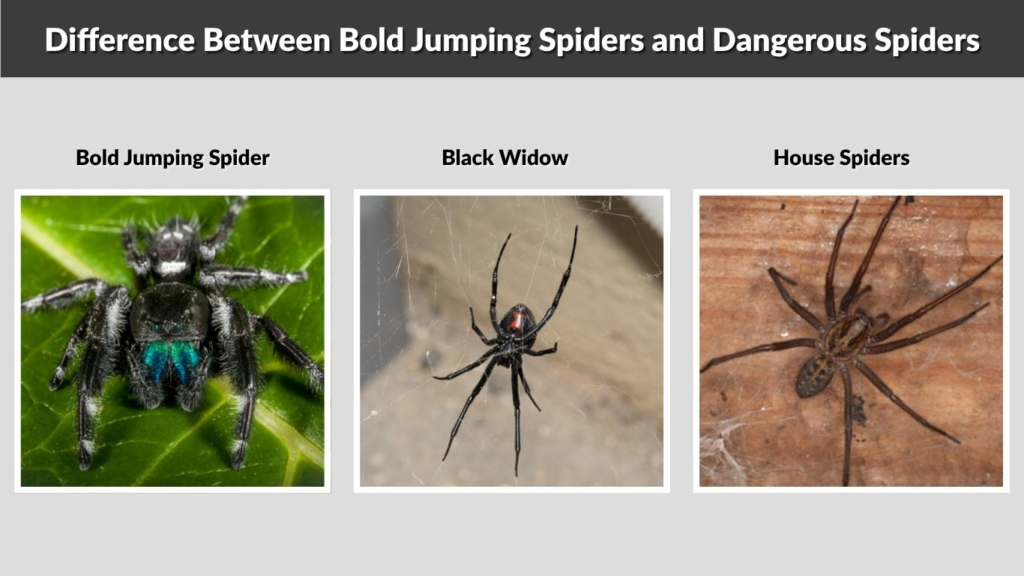
Some people worry when they see a black spider indoors. However, the bold jumping spider has several features that separate it from more concerning spiders.
Bold Jumping Spider vs. Black Widow
A black widow has a shiny black body, a round abdomen, and usually a red hourglass marking on the underside. It does not have the same large forward-facing eyes or fuzzy black-and-white jumping spider appearance.
The bold jumping spider has a compact fuzzy body, white spots on the top of the abdomen, and often metallic green or blue mouthparts. It also moves in short, quick bursts and jumps when hunting.
Bold Jumping Spider vs. House Spiders
Many house spiders have longer, thinner legs and build webs in corners. Bold jumping spiders are more compact, more active during the day, and usually do not make messy webs. Their large eyes and white abdominal spot are strong identification clues.
Why You May Be Seeing Them Around Your Home
If you keep seeing black jumping spiders with white dots, your home or yard may be attracting small insects. Outdoor lights, garden plants, moisture, and open windows can all bring in prey. The spiders follow food sources.
Common Reasons They Appear
You may notice them more often because:
- Small insects are active around your windows
- Outdoor lights attract flying bugs
- Your garden has plenty of prey
- Screens or door gaps allow entry
- Warm sunny walls provide good hunting spots
- Houseplants attract gnats or tiny insects
Their presence is not usually a sign of poor hygiene. It often means there is a healthy insect population nearby.
How to Reduce Indoor Sightings
To keep them outside, focus on exclusion and insect control rather than harsh pesticides.
Helpful steps include:
- Seal gaps around doors and windows
- Repair damaged screens
- Reduce insects around indoor plants
- Vacuum corners and window tracks
- Turn off unnecessary outdoor lights at night
- Move firewood and clutter away from the house
- Keep vegetation trimmed back from exterior walls
These steps reduce both spiders and the insects they hunt.
Are Black Jumping Spiders Good for Gardens?
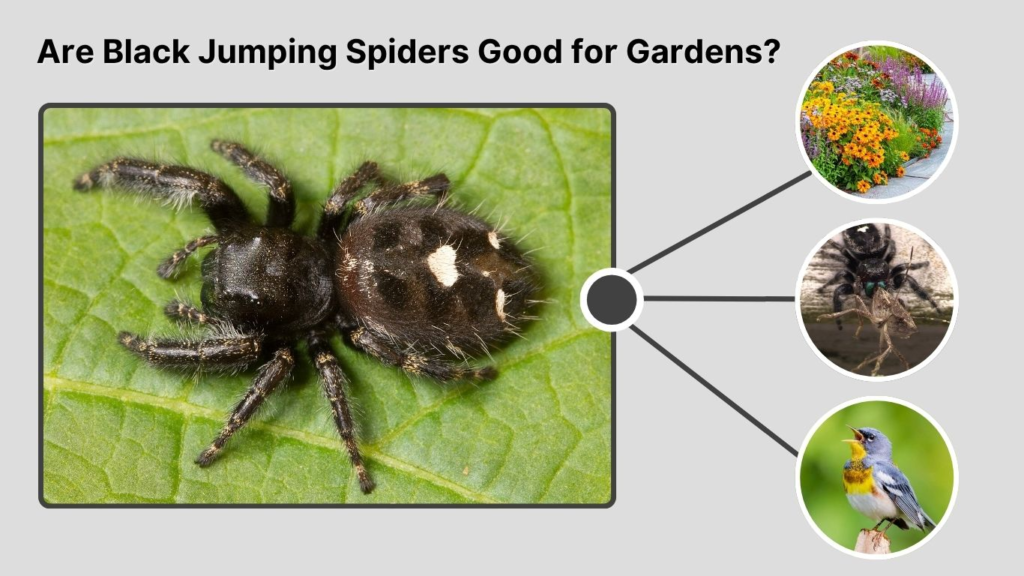
Yes, bold jumping spiders can be good for gardens. They are natural predators that help control small insects without harming plants. Since they do not feed on leaves, roots, wood, fabric, or stored food, they are not considered destructive pests.
Benefits in the Garden
In garden spaces, these spiders may help by:
- Eating flies and gnats
- Reducing small plant pests
- Supporting natural pest balance
- Providing food for birds and other wildlife
- Reducing the need for chemical insect control
A garden with jumping spiders often has a healthier natural ecosystem. They are part of the food web and can help keep pest populations from growing too quickly.
How to Safely Handle or Remove One
It is best not to handle jumping spiders with bare hands. Even though they are usually harmless, they may bite if they feel trapped. Gentle relocation is safer for both you and the spider.
Safe Removal Steps
Follow these steps:
- Get a clear cup and stiff paper.
- Slowly place the cup over the spider.
- Slide the paper under the cup.
- Carry the spider outside.
- Release it near plants, shrubs, or another sheltered area.
Avoid spraying it with chemicals indoors. Pesticides are often unnecessary for a single spider and may create more risk than the spider itself.
FAQs
What is the black jumping spider with a white dot?
It is usually the bold jumping spider, scientifically known as Phidippus audax. This spider is mostly black with a white spot or several pale markings on the abdomen. It is common in gardens, on walls, near windows, and sometimes inside homes.
Is a black jumping spider with a white dot poisonous?
It has venom for catching prey, but it is not considered dangerous to humans. Bites are uncommon and usually mild. Most bold jumping spiders avoid people and only bite if squeezed, trapped, or handled roughly.
Why is a jumping spider looking at me?
Jumping spiders have excellent eyesight and often turn toward movement. When one appears to look at you, it is simply observing its surroundings. This behavior is normal and does not mean the spider is preparing to attack.
Should I remove bold jumping spiders from my house?
You can remove them if you do not want spiders indoors, but killing them is usually unnecessary. Use a cup and paper to gently move the spider outside. They are helpful predators that eat small insects.
Do black jumping spiders with white dots make webs?
They produce silk but do not build large webs to trap prey. Instead, they use silk for safety lines, egg sacs, and small resting shelters. They catch insects by stalking and jumping rather than waiting in a web.
