
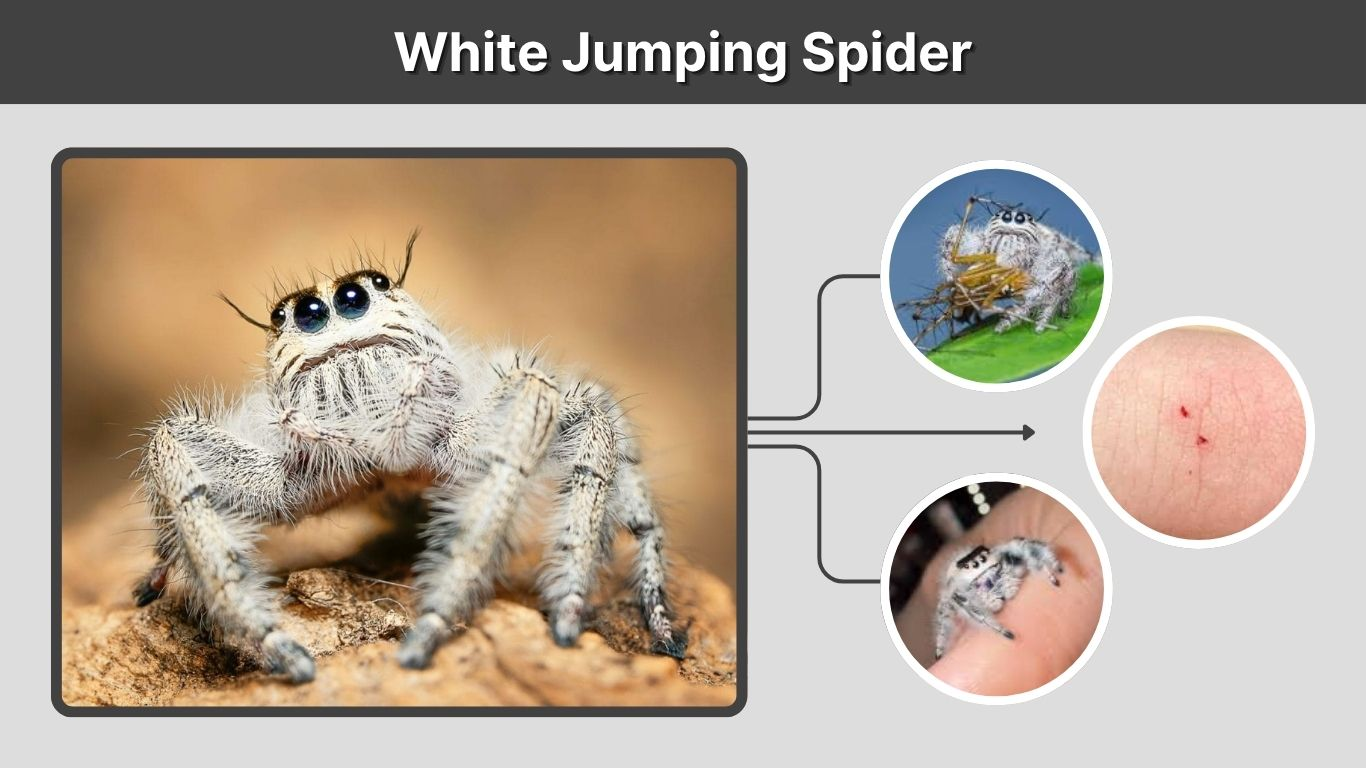
A white jumping spider can look unusual because most people expect jumping spiders to be black, brown, or patterned. These pale spiders may be naturally white, cream, grayish, or simply lighter because of age, sex, molt stage, or species. Many searches also focus on whether white jumping spiders are poisonous, whether they make good pets, and where they are found in places like California, Texas, Arizona, Australia, and the UK.
What Is a White Jumping Spider?
A white jumping spider is not one single species. It is a general description for jumping spiders that appear mostly white, pale, cream-colored, or light gray. Jumping spiders belong to the family Salticidae, a large spider family known for excellent eyesight, active hunting, and short, controlled jumps.
Unlike web-building spiders, jumping spiders do not rely on sticky webs to catch prey. Instead, they stalk insects, judge distance with their large front-facing eyes, and leap when close enough. Their curious behavior often makes them easier to watch than many other spiders.
Why Some Jumping Spiders Look White
A jumping spider may look white for several reasons. Some species naturally have white or pale markings. Others may appear pale after molting, before their new outer body covering darkens. In some species, males and females have different colors, and juveniles may look lighter than adults.
Lighting also matters. A spider photographed in bright sunlight may look much whiter than it appears in shade.
Are White Jumping Spiders Rare?
Some white jumping spiders are uncommon in certain areas, but pale coloration itself is not impossible to find. Many jumping spiders have white bands, white hairs, white faces, or pale abdomens.
A completely white jumping spider may attract attention because it stands out. However, proper identification should be based on body shape, eye pattern, markings, location, and behavior rather than color alone.
What Does a White Jumping Spider Look Like?
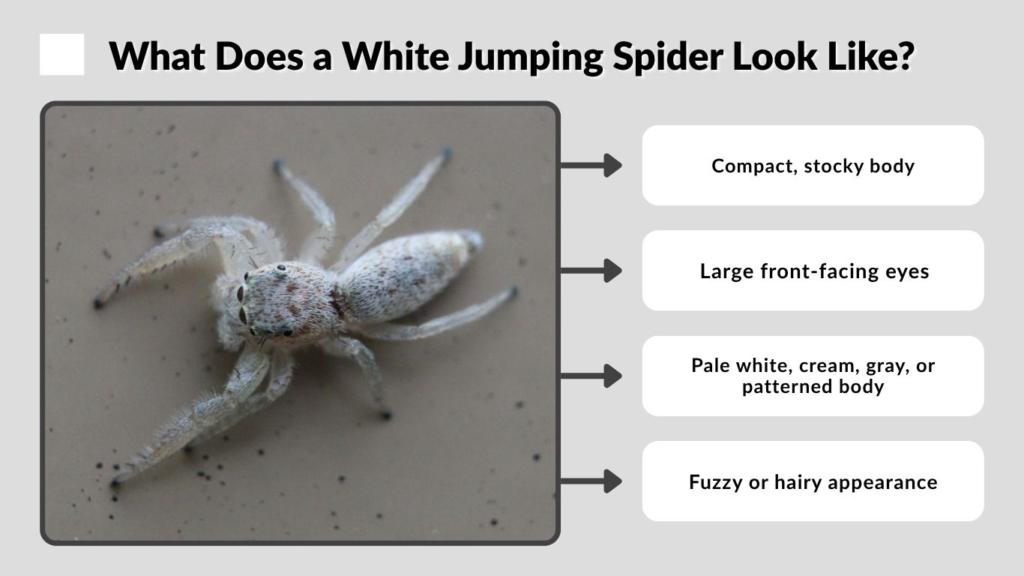
White jumping spiders usually have the same general body shape as other jumping spiders. They are compact, alert, and often fuzzy. Their legs are usually short to medium length, and their front eyes are large and forward-facing.
They often move in short bursts, pause frequently, and turn toward movement. This behavior is a strong clue that the spider is a jumping spider.
White Jumping Spider Size
Most white jumping spiders are small. Many are only a few millimeters long, while larger species may be around half an inch or more in body length. Some pet trade species can look bigger because of their leg span and fuzzy appearance.
Size varies by species, age, and sex. Females are often larger and heavier-bodied than males. Juveniles may appear tiny and delicate.
White Jumping Spider Identification Signs
Common signs of a white jumping spider include:
- Compact, stocky body
- Large front-facing eyes
- Short, quick jumps
- Fuzzy or hairy appearance
- Pale white, cream, gray, or patterned body
- Active daytime hunting
- No large prey-catching web
- Curious behavior around movement
If a spider is pale but sits in a messy web all day, it may not be a jumping spider.
Common White Jumping Spider Types
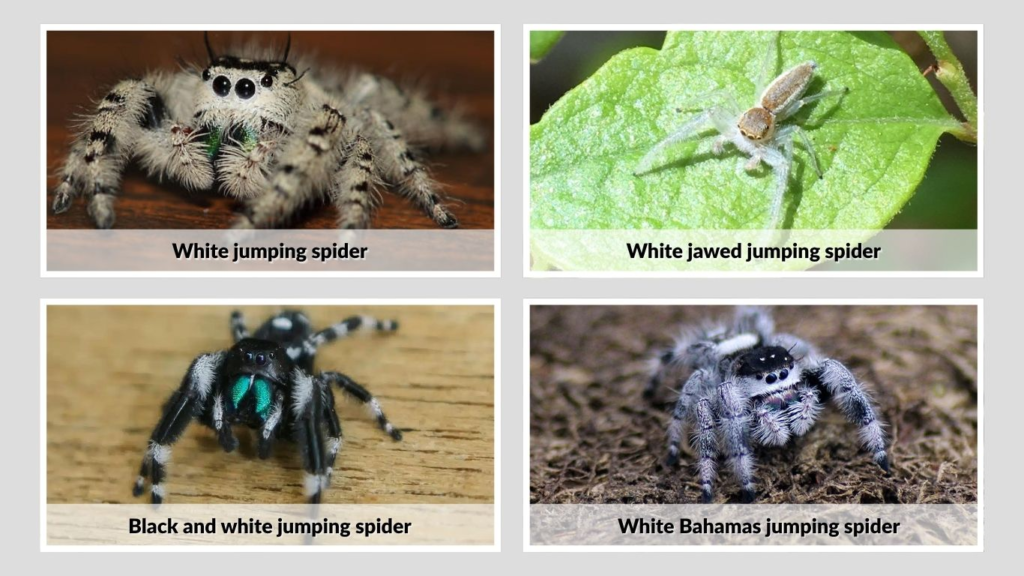
Because “white jumping spider” is a broad term, several species may match the description. Some are wild species found outdoors, while others are captive-bred species popular among hobbyists.
| Common Search Term | What It May Refer To | Notes |
| White jumping spider | Any pale or mostly white jumping spider | Broad descriptive term |
| White jawed jumping spider | A species or group with pale jaw/mouthpart markings | Often searched for identification |
| Black and white jumping spider | Jumping spider with white bands or spots | Common in many regions |
| White Bahamas jumping spider | A pale pet-trade jumping spider type | Often searched with “for sale” |
| White jumping spider species | Search for exact identification | Requires location and clear photos |
White Jawed Jumping Spider
The white jawed jumping spider is a common search term for pale or marked jumping spiders with noticeable light-colored mouthparts or facial markings. Depending on location, this may refer to different species.
If you see a spider with a pale face or white “jaws,” look closely at the body pattern, leg color, and eye arrangement. Clear photos from the front and top are helpful for identification.
Black and White Jumping Spider
A black and white jumping spider may have white stripes, spots, or bands on a dark body. These are often easier to identify than all-white spiders because the markings create a stronger pattern.
Many black and white jumping spiders are harmless, active hunters found on walls, fences, trees, gardens, and window frames.
White Jumping Spider in Different Locations
Searches for white jumping spiders often include locations such as California, Texas, Arizona, Australia, and the UK. Location matters because jumping spider species vary by region.
A spider found in Arizona may be a different species from one found in the UK or Australia, even if both look pale.
White Jumping Spider California
California has many jumping spider species because of its varied habitats, from coastal areas to deserts, woodlands, gardens, and urban spaces. A white jumping spider in California may be a pale species, a juvenile, or a spider with reflective white hairs.
Garden walls, fences, shrubs, and sunny outdoor surfaces are common places to see them.
White Jumping Spider Texas and Arizona
Texas and Arizona both have warm climates and diverse spider populations. Pale jumping spiders may be found in dry habitats, desert edges, grasslands, gardens, and around buildings.
In sunny regions, pale coloring can help some small animals blend with dry surfaces, sand, bark, or light-colored walls.
White Jumping Spider Australia
Australia has many jumping spiders, including colorful, patterned, and pale species. Some Australian jumping spiders are well known for their bright displays and unusual markings.
Because Australia has some medically significant spiders, it is wise not to handle any unknown spider. For identification, take a photo rather than touching it.
White Jumping Spider UK
The UK has fewer jumping spider species than warmer regions, but small black, white, gray, or patterned jumping spiders may still be found on walls, fences, plants, and windows.
Most UK jumping spiders are small and not considered dangerous to people.
Is a White Jumping Spider Poisonous?
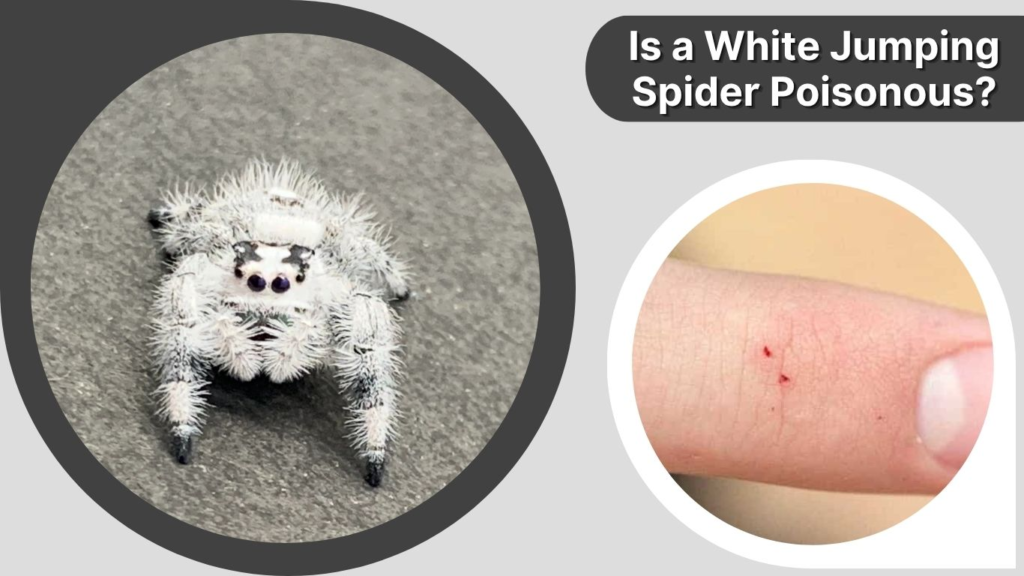
Many people ask whether a white jumping spider is poisonous. The more accurate word is venomous, because spiders use venom to subdue prey. Jumping spiders do have venom, but they are not considered dangerous to most people.
Their venom is designed for small insects, not humans. A bite is uncommon and usually happens only if the spider is trapped, squeezed, or handled roughly.
White Jumping Spider Bite
A white jumping spider bite may feel like a tiny pinch. If symptoms occur, they are usually mild and may include redness, slight swelling, tenderness, or itching.
Basic care includes washing the area with soap and water, using a cold compress, and avoiding scratching. Medical advice is recommended if symptoms worsen, swelling spreads, pus appears, or signs of an allergic reaction develop.
Are White Jumping Spiders Aggressive?
White jumping spiders are not usually aggressive. They may appear bold because they turn to look at you or jump suddenly, but this is normal jumping spider behavior. They are visual hunters and react quickly to movement.
Most prefer to escape rather than bite.
White Jumping Spider as a Pet
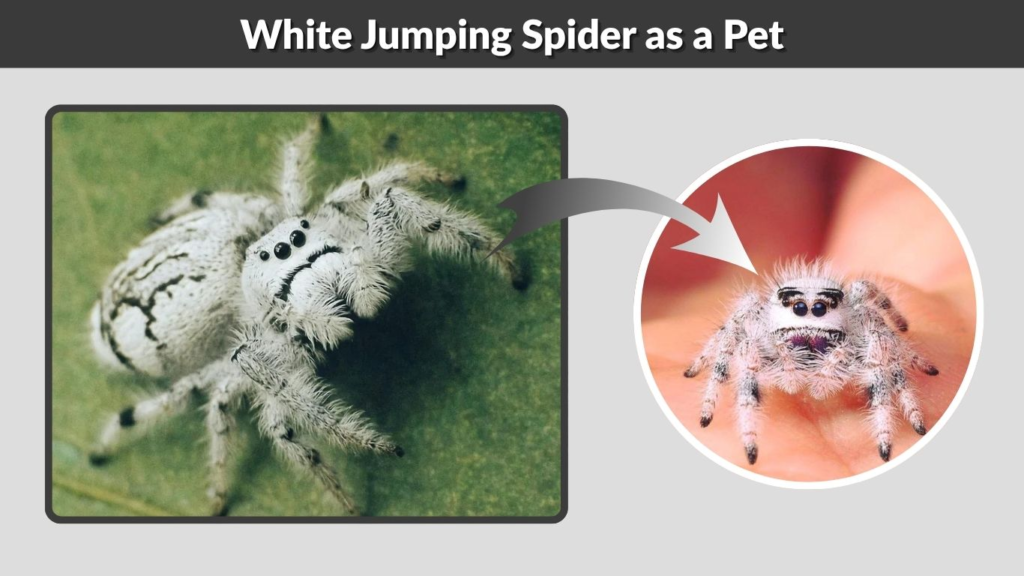
White jumping spider pet searches are common because jumping spiders have become popular among spider hobbyists. Their small size, active behavior, and expressive-looking eyes make them appealing to people who enjoy invertebrates.
However, they still require proper care. They are not toys, and they should not be handled casually.
Do White Jumping Spiders Make Good Pets?
Captive-bred jumping spiders can make interesting pets for careful keepers. They need a secure enclosure, ventilation, climbing surfaces, proper humidity, safe feeding, and protection from falls or escape.
They are best for people who enjoy observing small animals rather than handling them. Jumping spiders are delicate and can be injured easily.
Basic Care Needs
A pet jumping spider needs:
- A small, escape-proof enclosure
- Good ventilation
- Climbing surfaces and hiding spots
- Proper humidity for the species
- Safe feeder insects
- Clean water droplets or light misting
- Protection from direct heat or strong sun
- Gentle, minimal handling
Different species may have different temperature and humidity needs, so research the exact species before buying one.
White Jumping Spider for Sale
Searches such as “white jumping spider for sale,” “white jumping spider price,” and “white Bahamas jumping spider for sale” usually come from people interested in pet jumping spiders. Before buying, it is important to understand legality, ethics, and care requirements.
Not every spider listed online is captive-bred or suitable for beginners. Some may be wild-caught, mislabeled, or shipped poorly.
White Jumping Spider Price
White jumping spider price can vary widely depending on species, age, sex, color, availability, breeder reputation, and location. Rare color forms or popular pet-trade names may cost more than common species.
The spider itself is only part of the cost. You may also need an enclosure, feeder insects, misting supplies, décor, and backup care items.
Buying Responsibly
Before buying a white jumping spider:
- Check local laws about keeping spiders
- Choose captive-bred spiders when possible
- Avoid sellers with unclear species information
- Ask about age, sex, and care needs
- Make sure shipping is safe and legal
- Have an enclosure ready before arrival
- Do not release pet spiders outdoors
Releasing captive spiders can harm local ecosystems and may kill the spider if it is not suited to the environment.
Natural Behavior of White Jumping Spiders
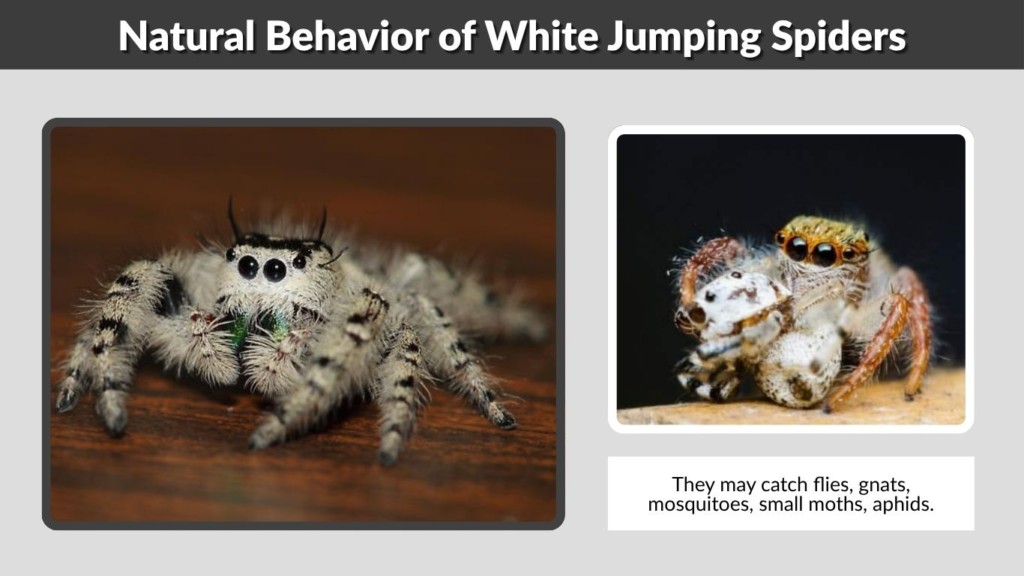
White jumping spiders behave like other jumping spiders. They are active hunters, usually during the day. They rely heavily on vision and may react to movement from several directions.
They use silk, but not to build prey-catching webs. Instead, they make small silk retreats for resting, molting, hiding, or laying eggs.
Hunting Behavior
Jumping spiders stalk prey slowly, then leap when close. They may catch flies, gnats, mosquitoes, small moths, aphids, and other tiny insects.
This makes them useful around gardens and outdoor spaces. They help control small insect populations naturally.
Molting and Growth
Young jumping spiders molt several times as they grow. After molting, they may look paler or softer for a short time. This can make a normally darker spider appear white or faded.
During molting, a spider should not be disturbed or fed large prey because it is vulnerable.
How to Identify a White Jumping Spider Safely
If you find a white jumping spider and want to identify it, avoid touching it. Instead, take clear photos from above, the side, and the front. Include the location and approximate size.
Identification is much easier when you know the state, country, habitat, and where it was found.
Helpful Identification Clues
Note these details:
- Body size
- Main color
- Leg markings
- Eye pattern
- Abdomen shape
- Whether it jumps
- Where it was found
- Time of day
- Web or no web
- Any white, black, orange, or brown markings
A photo is often more useful than a written description alone.
Should You Remove White Jumping Spiders from Your Home?
If a white jumping spider enters your home, it is usually accidental. It may be hunting small insects near windows, plants, or lights.
You do not need to kill it. Place a cup over the spider, slide paper underneath, and release it outside near plants or a sheltered area.
How to Keep Them Outside
To reduce indoor sightings:
- Repair torn window screens
- Seal gaps around doors and windows
- Reduce indoor insects
- Keep clutter away from walls
- Check houseplants before bringing them inside
- Use outdoor lights less near entryways
Jumping spiders are not house-damaging pests. They do not chew wood, spread disease, or infest food.
FAQs
Are white jumping spiders poisonous?
White jumping spiders have venom for catching small insects, but they are not considered dangerous to most people. A bite is uncommon and usually causes only mild local irritation. They are not aggressive and usually jump away when disturbed.
What is a white jumping spider?
A white jumping spider is usually a pale, cream, gray, or white-colored jumping spider. It may be a naturally pale species, a juvenile, a recently molted spider, or a spider with white hairs or markings.
Can you keep a white jumping spider as a pet?
Yes, some captive-bred white or pale jumping spiders can be kept as pets by careful keepers. They need a secure enclosure, proper humidity, feeder insects, and minimal handling. Always research the exact species before buying.
How big is a white jumping spider?
White jumping spider size depends on the species, sex, and age. Most are small, often only a few millimeters to around half an inch in body length. Females are often larger than males, and juveniles can be very tiny.
Where can I find a white jumping spider for sale?
White jumping spiders may be sold by specialty invertebrate breeders or reptile and exotic pet shops. Check local laws, choose captive-bred spiders, confirm the species, and avoid sellers who cannot provide care details or safe shipping information.
