
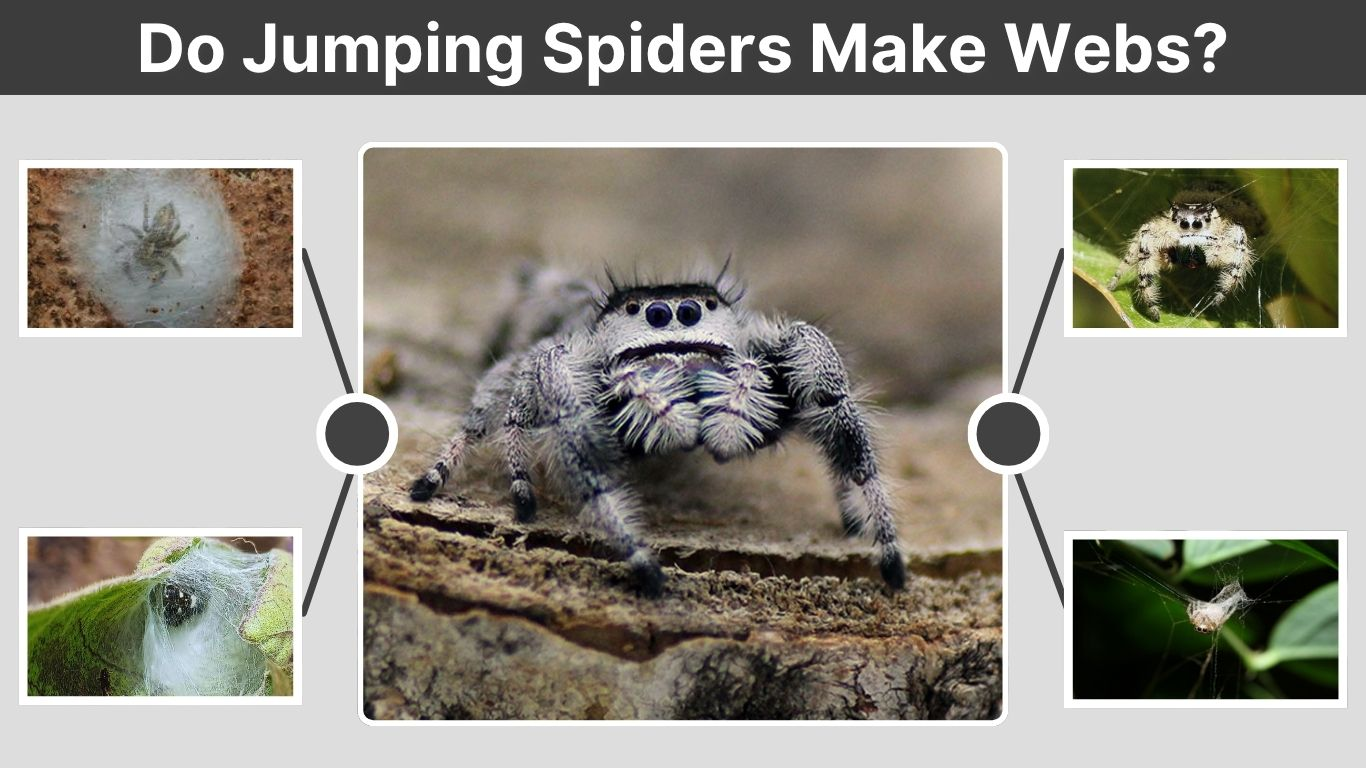
Jumping spiders do make webs, but not in the same way many people expect. They do not build large sticky webs to catch flying insects like orb-weaver spiders. Instead, jumping spiders use silk for safety lines, resting shelters, egg sacs, molting nests, and protection. They are active hunters that stalk and jump on prey using their excellent eyesight. Because of this, their silk has a different purpose. Understanding how jumping spiders use webs helps explain their behavior in the wild and in pet enclosures.
Do Jumping Spiders Make Webs?
Jumping spiders make silk, but they usually do not make big prey-catching webs. They belong to the spider family Salticidae, a group known for hunting by sight rather than waiting in a web. Their large front-facing eyes help them track prey, judge distance, and leap accurately.
Jumping Spiders Use Webs Differently
Many spiders build webs as traps. Jumping spiders use silk more like a tool. They create small silk retreats where they rest, hide, molt, or lay eggs. They also release a thin silk line while moving or jumping. This line works like a safety rope if they fall or miss a jump.
Why They Do Not Need Catching Webs
Jumping spiders are skilled hunters. They walk, stalk, watch, and pounce on insects. Since they can chase prey directly, they do not depend on sticky webs to catch food. Their hunting style is more active than web-building spiders.
How Jumping Spiders Use Silk
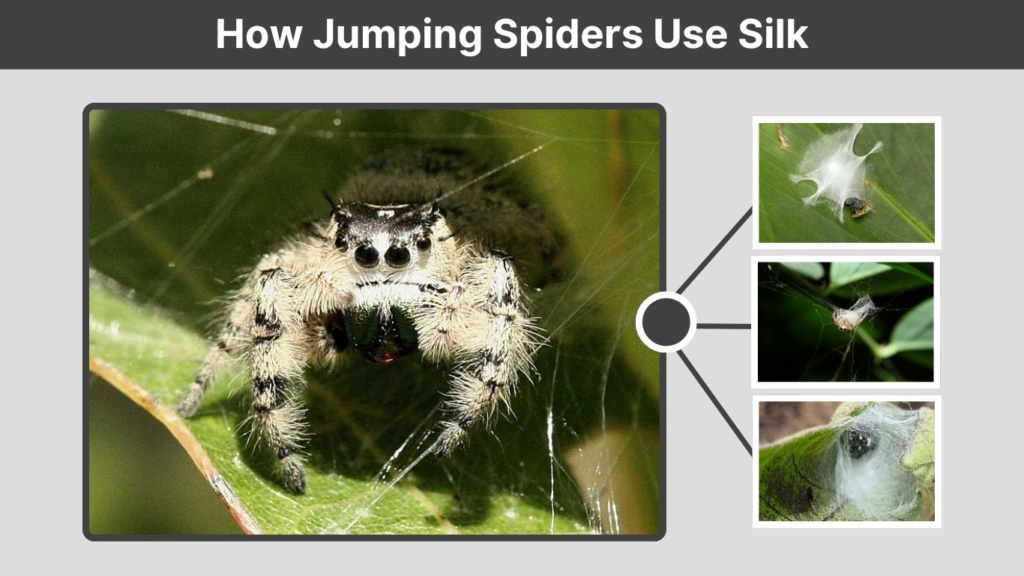
Jumping spider silk is important for survival. Even though their webs are small, silk helps them stay safe, move confidently, and protect their young.
Main Uses of Jumping Spider Silk
Jumping spiders use silk for several important purposes:
- Safety lines while jumping or climbing
- Small sleeping shelters
- Molting retreats
- Egg sacs for protecting spiderlings
- Temporary hiding places
- Anchoring themselves to surfaces
- Protecting themselves from bad weather
- Creating secure resting spots in pet enclosures
Silk as a Safety Line
Before a jumping spider jumps, it may attach a silk thread to the surface behind it. If the jump fails, the spider can hang from the silk and climb back up. This is why jumping spiders can leap boldly without falling as easily as many other tiny animals.
Silk for Resting
Jumping spiders often build small silk nests in protected spaces. These nests may be found under leaves, inside curled plant parts, in cracks, behind bark, or in corners of buildings. Pet jumping spiders often make these retreats near the top of their enclosure.
Do Jumping Spiders Make Webs to Catch Food?
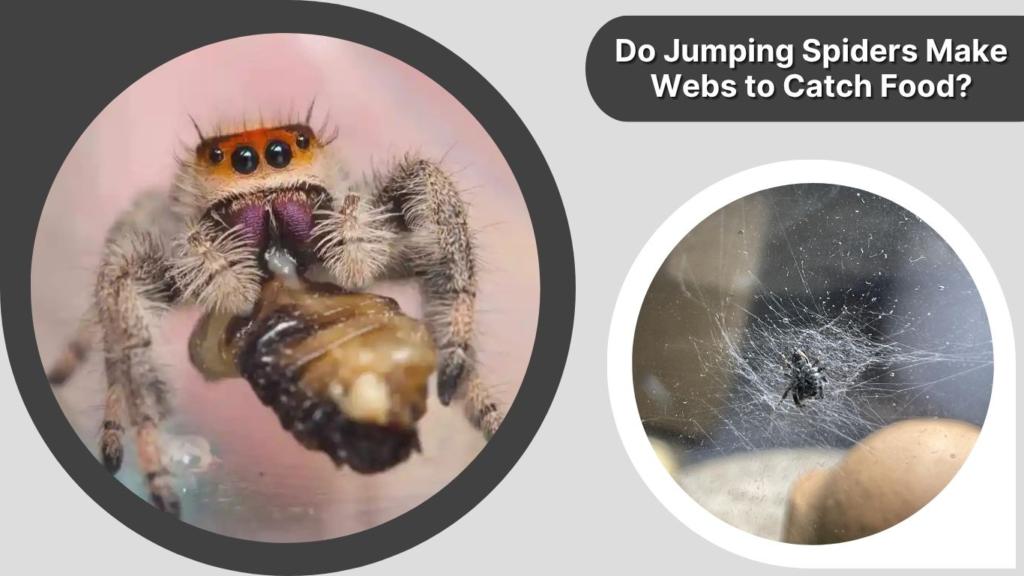
Jumping spiders generally do not make webs to catch food. They catch prey by hunting. This is one of the biggest differences between jumping spiders and many common web-building spiders.
Their Hunting Style
A jumping spider usually spots prey with its sharp vision. It slowly moves closer, pauses, judges the distance, and then jumps. It uses its front legs and fangs to grab the prey. This hunting behavior is one reason people find jumping spiders interesting to watch.
What They Eat
Jumping spiders eat small insects and other tiny arthropods. In the wild, they may catch flies, gnats, mosquitoes, moths, small crickets, and other small bugs. As pets, they are often fed fruit flies, small flies, small crickets, small roaches, or mealworms.
Why Webs Are Not Their Main Trap
A sticky web is useful for spiders that wait for prey. Jumping spiders do not wait in the same way. They move around and search for food. Their strong eyesight, quick reflexes, and jumping ability allow them to hunt without a large web.
Jumping Spider Webs vs Other Spider Webs
Jumping spider webs are usually small and hidden. Other spiders may build large, visible webs in corners, gardens, or trees. The difference comes from how each spider catches food and protects itself.
Comparison Table
| Spider Type | Web Use | Hunting Method |
| Jumping spider | Small retreats, safety lines, egg sacs | Actively stalks and jumps on prey |
| Orb-weaver spider | Large round sticky webs | Waits for insects to fly into web |
| Cobweb spider | Messy sticky webs | Traps insects in tangled silk |
| Funnel-web spider | Funnel-shaped shelter web | Waits for prey near web entrance |
| Wolf spider | Little or no prey-catching web | Hunts on the ground |
Where Do Jumping Spiders Make Webs?
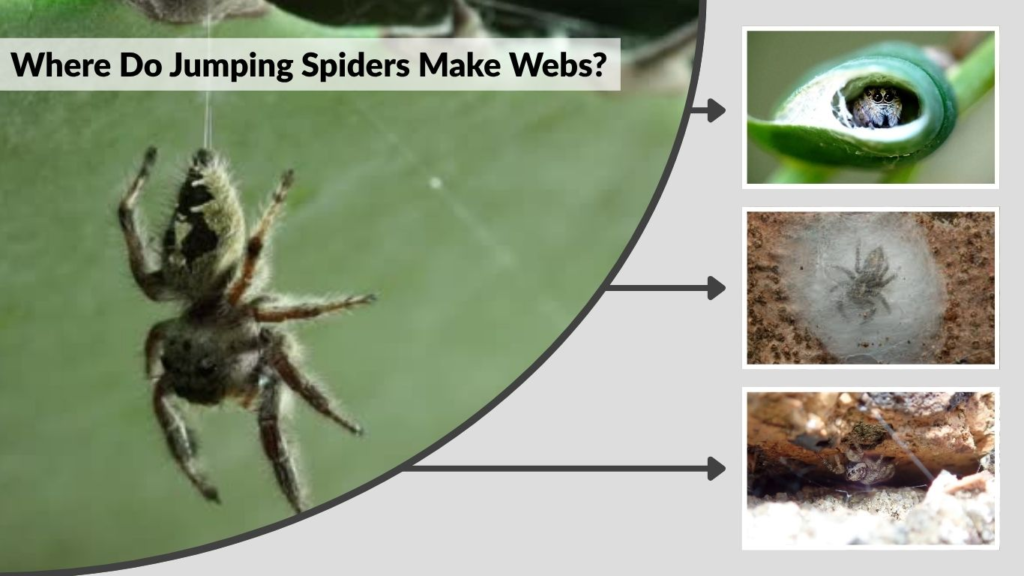
Jumping spiders choose safe, hidden places for their silk retreats. These places help them rest without being disturbed.
Common Web Locations in the Wild
In nature, jumping spiders may build silk retreats in:
- Rolled leaves
- Under bark
- Rock cracks
- Plant stems
- Wall corners
- Window frames
- Fence gaps
- Garden plants
- Tree branches
These retreats are usually small and may look like a thin white silk pocket or soft patch of webbing.
Webs in Homes
If a jumping spider enters a house, it may make a small web in a window corner, shelf gap, plant pot, or wall crack. It is not usually trying to infest the home. It is simply finding a safe place to rest and hunt small insects.
Webs in Pet Enclosures
Pet jumping spiders often build their silk nests near the top of the enclosure. This is normal and healthy behavior. A keeper should avoid destroying the web unless absolutely necessary. The web retreat helps the spider feel secure.
Do Baby Jumping Spiders Make Webs?
Baby jumping spiders, also called spiderlings, can make silk too. Even tiny spiderlings use silk for protection and movement.
Spiderling Web Use
Baby jumping spiders use silk to rest, climb, and stay safe. After hatching, they may stay near the egg sac for a short time before dispersing. As they grow, each spiderling begins hunting small prey and making its own tiny silk shelter.
Molting Webs
Baby jumping spiders molt several times as they grow. Before molting, they often make a small silk retreat. This protects them while their body changes. During molting, spiders are soft and vulnerable, so the web gives them extra safety.
Why You Should Not Disturb Molting Webs
If a pet jumping spider hides inside a thick silk nest and refuses food, it may be preparing to molt. This is not the time to open the web or poke the spider. Disturbing it during molting can cause stress, injury, or a failed molt.
Do Female Jumping Spiders Make Egg Webs?
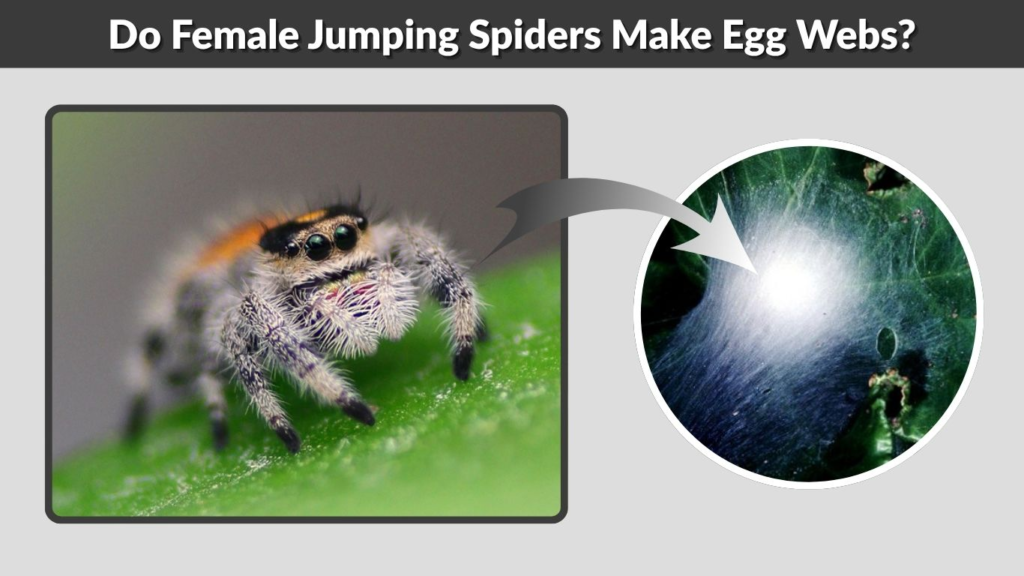
Female jumping spiders use silk to protect their eggs. This is one of the most important web uses in their life cycle.
Egg Sacs
A female may create a thick silk chamber or egg sac where she lays eggs. She may stay near the eggs and guard them. The silk protects the eggs from drying out, predators, and disturbance.
Webbing Around Eggs
The egg sac may look like a dense white or cream-colored silk patch. In pet enclosures, females may lay eggs in the upper corners, inside hides, or behind decorations. If the female was wild-caught or previously mated, the eggs may be fertile.
Caring for a Spider With Eggs
If a pet jumping spider lays eggs, avoid disturbing the egg sac. The female may stop eating or become more protective. Keep the enclosure stable, offer food carefully, and avoid damaging the web.
Should You Remove Jumping Spider Webs?
In most cases, you should not remove jumping spider webs. Their silk retreats are important for comfort and safety.
In a Pet Enclosure
Do not remove a pet jumping spider’s web nest unless it becomes moldy, unsafe, or part of a full enclosure emergency. The web is the spider’s home. Removing it can cause stress and may leave the spider exposed.
Around the House
If a wild jumping spider makes a small web indoors, you can leave it alone if it is not bothering anyone. If you want to move the spider outside, use a cup and paper. Avoid crushing it or pulling apart its retreat while the spider is inside.
When Cleaning Is Needed
Clean around the enclosure carefully. Remove old food, dead feeder insects, and waste, but try to leave the main web retreat alone. Good ventilation also helps prevent mold around webbed areas.
Why Is My Jumping Spider Making So Much Web?
A jumping spider may make more web when it is resting, molting, stressed, older, or preparing to lay eggs. More webbing does not always mean something is wrong.
Possible Reasons
Heavy webbing may happen because:
- The spider is preparing to molt
- A female is making an egg sac
- The spider wants a safer retreat
- The enclosure feels too exposed
- The spider is stressed by frequent disturbance
- The spider is older and resting more
- The enclosure has good anchor points for silk
When It Is Normal
It is normal for jumping spiders to build a thick sleeping sac or molting nest. Many pet jumping spiders return to the same web retreat each night. Some spiders add more silk over time.
When to Watch Closely
Watch carefully if heavy webbing comes with refusal to eat, weakness, falling, or strange behavior. Refusing food before molting can be normal, but long-term inactivity or a shriveled abdomen may mean the spider needs better care or hydration.
FAQs
Do jumping spiders make webs in houses?
Yes, jumping spiders may make small webs in houses, especially near windows, corners, shelves, or plant areas. These webs are usually small retreats, not large sticky traps. The spider uses them for resting, hiding, or safety.
Do jumping spiders use webs to catch prey?
No, jumping spiders usually do not use webs to catch prey. They are active hunters that stalk and jump on insects. They use silk mainly for safety lines, shelters, molting nests, and egg sacs.
Why does my jumping spider make a web at the top?
A pet jumping spider often builds its web retreat near the top because it naturally likes high, secure resting places. This web may be used for sleeping, molting, hiding, or laying eggs. It is normal behavior.
Should I remove my jumping spider’s web?
You should not remove your jumping spider’s main web retreat unless it becomes unsafe or moldy. The web is important for security, rest, and molting. Removing it can stress the spider.
Do baby jumping spiders make webs?
Yes, baby jumping spiders make tiny webs and silk lines. They use silk for safety, movement, resting, and molting. As they grow, they create their own small retreats and use silk just like adult jumping spiders.
