
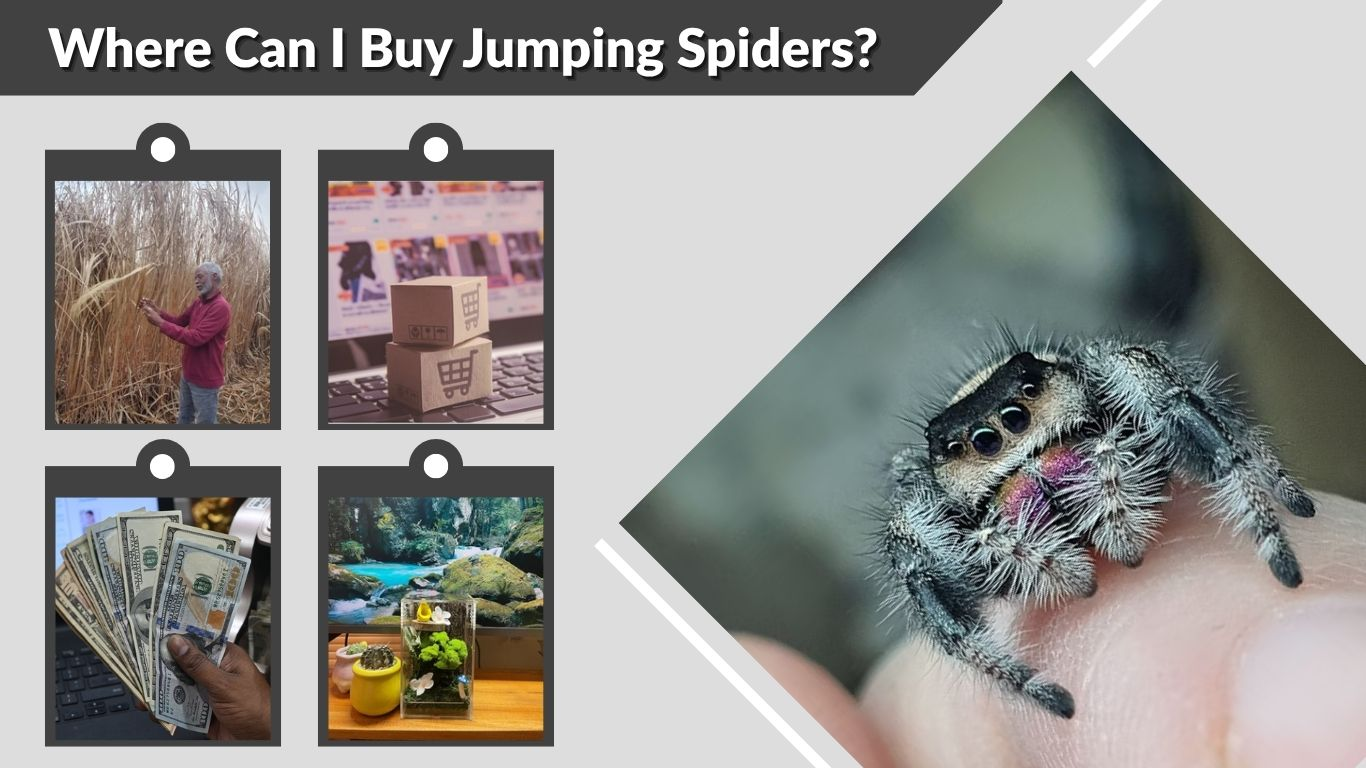
Jumping spiders are becoming popular exotic pets because they are small, curious, colorful, and easier to house than many larger arachnids. But buying one should never be a rushed decision. A healthy spider must come from a responsible source, be the right age, and arrive with clear care information. This guide explains where you can buy jumping spiders, which sellers to trust, what warning signs to avoid, and what to prepare before bringing your new spider home.
Where Can I Buy Jumping Spiders?
Before choosing a seller, understand that not every buying option offers the same level of safety, support, or spider health. A responsible source should clearly identify the species, age, sex if known, captive-bred status, shipping policy, and basic care needs. This section helps readers compare the most common places to find jumping spiders for sale.
Captive-Bred Jumping Spider Breeders
Specialist breeders are often the best place to buy a jumping spider. They usually know the spider’s age, feeding history, molt stage, and species background. A good breeder can also explain temperament, enclosure size, humidity needs, and safe feeding methods. Choose breeders who show real photos, answer questions clearly, and avoid selling very young or fragile spiderlings to beginners.
Online Exotic Pet Marketplaces
Online marketplaces can give buyers access to many species, colors, and price ranges. They are useful when local options are limited, but buyers must compare seller reviews, shipping terms, and health guarantees. Look for listings that mention captive-bred spiders, clear photos, recent feeding, and safe overnight shipping. Avoid vague listings with no care support or unclear species names.
Reptile Expos and Invertebrate Shows
Reptile expos are good places to meet breeders face-to-face and inspect available spiders before buying. You can ask questions directly, compare enclosures, and see whether the seller handles animals responsibly. Expos are also useful for buying starter supplies. However, buyers should still avoid impulse purchases and confirm the spider is captive-bred, legal, and healthy.
Local Exotic Pet Shops
Some exotic pet stores sell jumping spiders, especially in areas with a strong reptile or invertebrate hobby community. The advantage is that you can see the spider before purchasing. The downside is that staff may not always know detailed spider care. Ask when the spider last ate, whether it is captive-bred, and what species it is before buying.
Best Places to Buy Jumping Spiders Compared
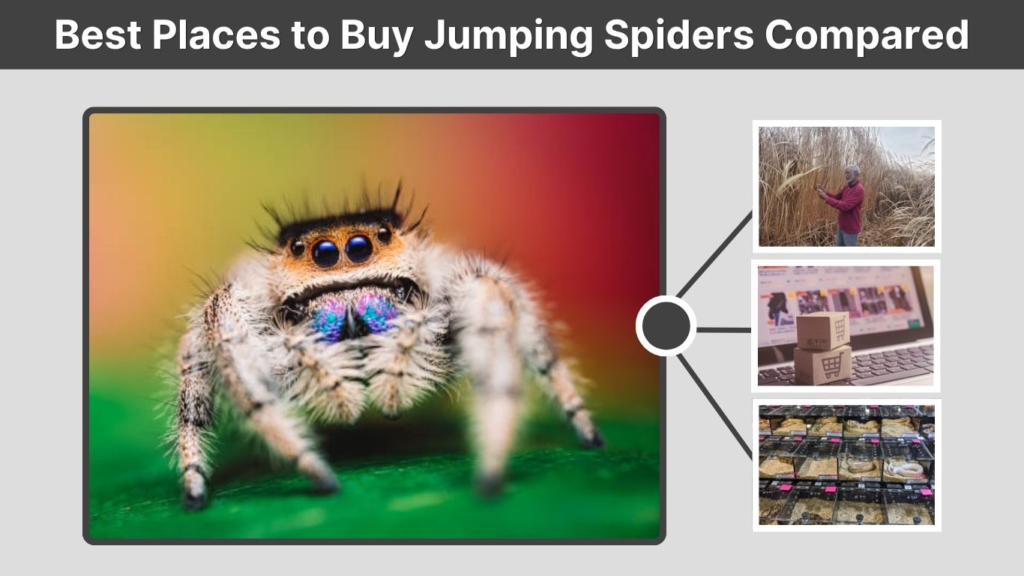
Each buying source has strengths and weaknesses. Beginners should focus less on finding the cheapest spider and more on finding a healthy, well-started, captive-bred animal from a seller who provides care guidance. This comparison helps readers quickly understand which buying option may fit their budget, experience level, and comfort with shipping live animals.
| Buying Source | Best For | Pros | Watch Out For |
| Specialist breeder | Beginners and serious keepers | Better care history, captive-bred options, advice | Limited availability |
| Online marketplace | More species and morph choices | Wide selection, reviews, shipping options | Seller quality varies |
| Reptile expo | Seeing before buying | Direct questions, supplies available | Impulse buying risk |
| Exotic pet shop | Local buyers | No shipping needed, in-person viewing | Staff may lack spider expertise |
| Hobby groups | Local deals and breeder referrals | Community advice, nearby pickup | Must verify seller credibility |
What to Check Before Buying a Jumping Spider
Buying a jumping spider is not only about finding one for sale. You need to confirm that the spider is healthy, legal, and suitable for your experience level. A good seller should not pressure you. They should be willing to answer basic questions and provide enough information for safe care after purchase.
Ask the Seller These Questions
- Is the spider captive-bred or wild-caught?
- What species is it?
- How old is it or what instar is it?
- When did it last eat?
- What prey has it been eating?
- Has it molted recently?
- Is the sex confirmed or estimated?
- What enclosure size do you recommend?
- Do you offer live-arrival or health guarantees?
- Do you ship only in safe weather?
Signs of a Healthy Jumping Spider
- Active and responsive to movement
- Able to climb enclosure walls
- Abdomen looks rounded but not overly swollen
- Legs are not curled underneath the body
- No visible mites or strange debris on the body
- Clear movement and normal posture
- Good feeding response, if recently offered prey
- Seller can provide recent photos or videos
Red Flags to Avoid
- Seller cannot identify the species
- Spider is listed only as “cute jumper” with no details
- No mention of captive-bred or wild-caught status
- Very cheap price with poor photos
- Seller ships in unsafe hot or cold weather
- No care instructions provided
- Spider appears weak, curled, or unable to grip
- Seller refuses basic questions
Captive-Bred vs. Wild-Caught Jumping Spiders
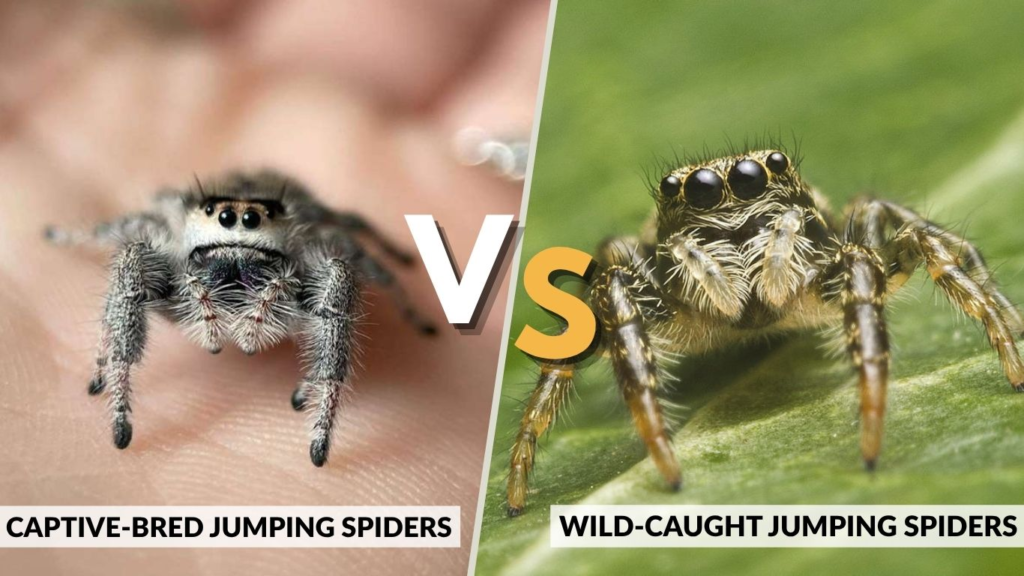
This is one of the most important decisions when buying. Captive-bred jumping spiders are usually a better choice for beginners because they are already used to enclosure conditions, regular feeding, and human-managed environments. Wild-caught spiders may be older, stressed, parasitized, or harder to feed, so they are less predictable as pets.
Why Captive-Bred Is Usually Better
Captive-bred spiders often settle more easily into small enclosures. Their age and feeding history are usually better documented, and they are less likely to have been exposed to outdoor pesticides or parasites. Buying captive-bred also reduces pressure on wild populations. For a first spider, captive-bred Phidippus regius or Phidippus audax is usually easier to manage than an unknown wild-caught jumper.
When Wild-Caught Spiders Are Risky
Wild-caught spiders can be beautiful, but they come with more uncertainty. You may not know their age, reproductive status, health history, or exposure to chemicals. Some may refuse captive prey or decline quickly after capture. Beginners should avoid wild-caught spiders unless they have experience with ethical collection, local laws, and species-specific care.
Legal and Ethical Buying Considerations
Jumping spiders are small, but they are still live exotic animals. Laws may vary by country, state, or region, especially when spiders are shipped across borders or state lines. Responsible buyers should check local regulations, avoid illegal imports, and choose sellers who follow safe shipping and ethical breeding practices.
Check Local Laws First
Before ordering online, confirm whether the species is legal to own in your area. Some invertebrates may be restricted because they could affect agriculture, ecosystems, or native wildlife if released. Laws can also change depending on whether the spider is native, imported, or shipped across state or national borders.
Avoid Illegal Imports
Never buy from sellers who hide the origin of the spider, avoid paperwork, or offer suspicious international shipping. Illegal imports can harm native ecosystems and may put the buyer at risk. Responsible sellers should be transparent about location, species, captive-bred status, and shipping rules.
Buy From Ethical Sellers
Ethical sellers prioritize the spider’s health over fast sales. They avoid shipping during unsafe temperatures, provide care instructions, and do not sell fragile spiderlings to unprepared beginners. They also label species correctly and explain what the buyer needs before purchase.
What You Need Before Bringing One Home
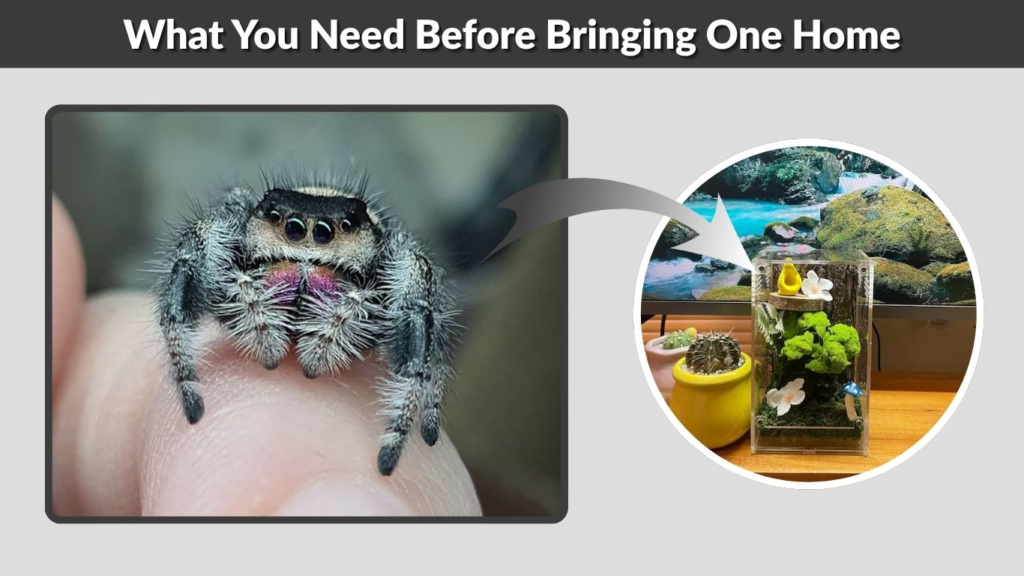
A jumping spider should have its enclosure ready before it arrives. These spiders are small and delicate, so poor housing can quickly cause stress, escape, dehydration, or injury. The goal is to create a secure, ventilated, vertical space with proper feeding tools and safe décor before the spider is introduced.
Basic Setup Checklist
- Escape-proof enclosure with fine ventilation
- Vertical climbing space
- Cross-ventilation to reduce stagnant air
- Small hides or anchor points near the top
- Safe décor without sharp edges
- Spray bottle for light misting
- Feeding tongs or soft tools
- Proper feeder insects
- Good lighting cycle, but no direct hot sunlight
- A quiet place away from vibration and pets
Starter Food Options
- Flightless fruit flies for small spiderlings
- Small crickets for larger juveniles
- House flies or bottle flies
- Small mealworms as occasional feeders
- Appropriately sized roaches where legal
- Avoid prey larger than the spider’s body
- Avoid wild-caught insects from unknown areas
Beginner-Friendly Species
- Phidippus regius: Popular, colorful, and commonly captive-bred.
- Phidippus audax: Bold, active, and widely known in North America.
- Phidippus otiosus: Attractive and manageable when captive-bred.
- Hyllus diardi: Larger and impressive, but may need more careful humidity control.
How Much Do Jumping Spiders Cost?
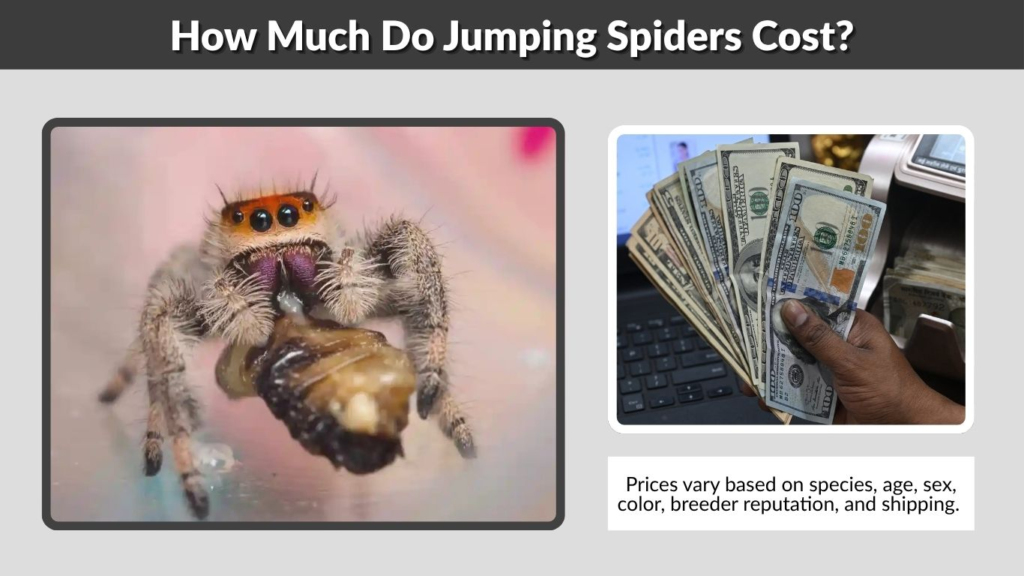
Prices vary based on species, age, sex, color, breeder reputation, and shipping. The spider itself may be affordable, but buyers should budget for the enclosure, feeders, décor, shipping, and possible replacement supplies. A cheap spider is not always a good deal if it comes from a poor source or arrives unhealthy.
Typical Price Factors
A common captive-bred jumping spider may cost less than a rare color form or confirmed female. Juveniles are often cheaper than mature females, but very young spiderlings can be harder for beginners. Shipping live animals can also add a significant cost because responsible sellers use insulated packaging and fast delivery.
Budget Beyond the Spider
The full starter cost includes the spider, enclosure, feeder insects, décor, misting tools, and shipping. Buyers should also consider ongoing feeder costs. Jumping spiders are not expensive compared with many pets, but they still require responsible care and a safe setup from day one.
Final Buying Checklist
Before completing a purchase, pause and review the basics. A healthy jumping spider should come from a transparent seller, have clear care requirements, and be legal to own in your area. This checklist helps readers make a safer final decision and avoid common beginner mistakes.
Quick Decision Checklist
- The spider is captive-bred.
- The seller identifies the species clearly.
- The spider is old enough for a beginner.
- The seller provides feeding history.
- The spider looks active and healthy.
- Shipping weather is safe.
- Local laws have been checked.
- The enclosure is ready before arrival.
- You have proper feeder insects.
- You understand molting and basic care.
FAQs
Where can I buy jumping spiders safely?
The safest option is usually a reputable captive-bred breeder or trusted exotic pet marketplace with clear seller reviews, live-arrival policies, and proper care information. Reptile expos and specialty pet stores can also be good choices if the seller identifies the species and explains the spider’s feeding and care history.
Are jumping spiders legal to buy?
Jumping spider laws depend on your location and the species being sold. Some regions restrict certain invertebrates, especially imported or non-native species. Before buying, check local rules and avoid sellers who cannot explain where the spider came from or whether shipping is allowed to your area.
Should I buy a captive-bred or wild-caught jumping spider?
Captive-bred jumping spiders are usually better for beginners. They are more likely to adapt to enclosure life, accept feeder insects, and come with a known age or care history. Wild-caught spiders may be older, stressed, exposed to pesticides, or harder to keep successfully in captivity.
How do I know if a jumping spider is healthy?
A healthy jumping spider should be alert, responsive, able to climb, and have a rounded abdomen. Avoid spiders that look curled, weak, unable to grip surfaces, or covered with tiny mites. A responsible seller should provide recent photos, feeding details, and basic care guidance before purchase.
What should I buy before my jumping spider arrives?
Prepare an escape-proof enclosure with ventilation, climbing space, safe décor, a small hide, misting tools, and suitable feeder insects. The enclosure should be ready before the spider arrives so it can settle in quickly. Avoid direct sunlight, oversized prey, and decorations with sharp or sticky surfaces.
