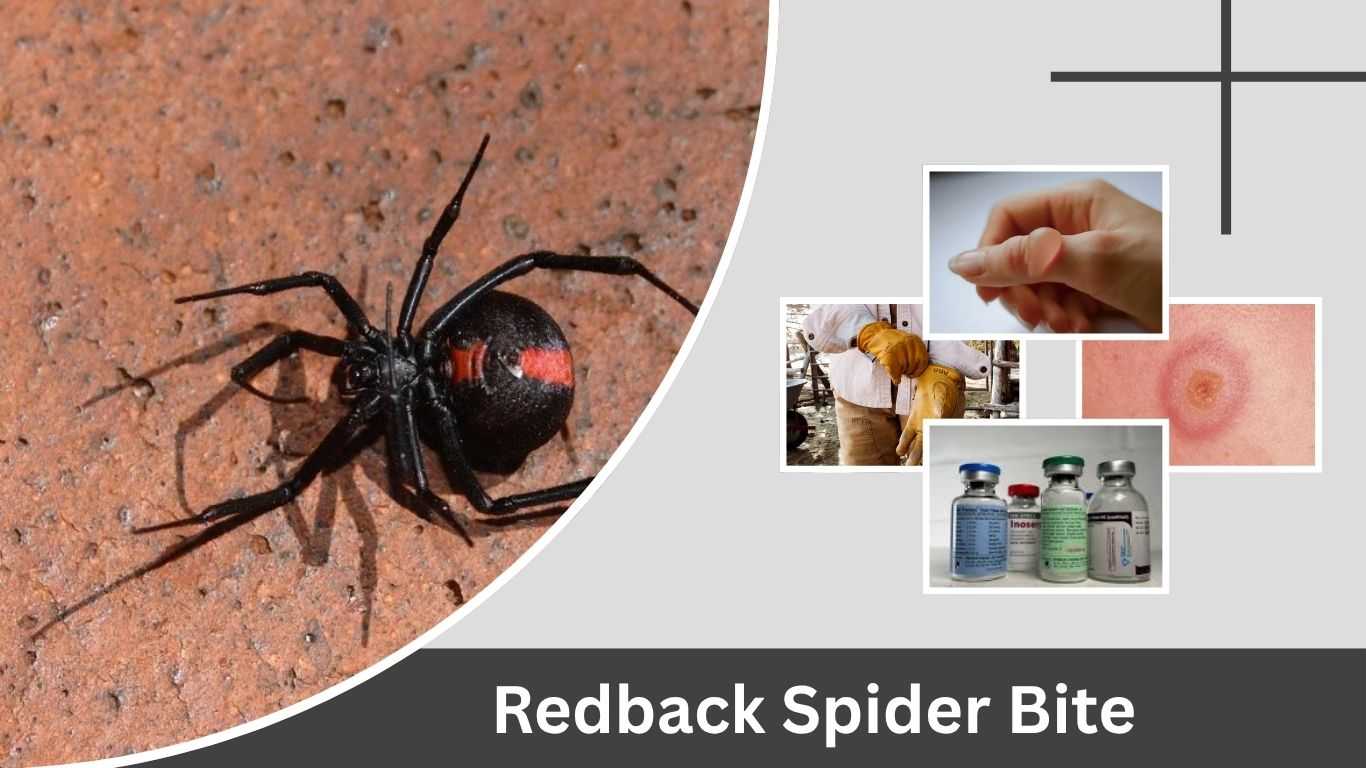
Redback spider bites are a serious concern in Australia and nearby regions. The venom from a female redback spider can cause painful symptoms, including sweating, nausea, muscle pain, and severe discomfort. Many people worry about how dangerous the bite can be and whether it may become deadly without treatment. Learning the signs of a redback spider bite and knowing the proper first aid steps can help reduce complications and improve recovery after exposure to this venomous spider.
Redback spider bites are most common in garages, sheds, gardens, and outdoor furniture areas. While deaths are now rare because of modern antivenom and medical care, bites can still be very painful and dangerous for children, elderly people, pets, and individuals with health problems. Understanding symptoms, treatment, and prevention is important for staying safe.
What Is a Redback Spider?
Redback spiders are venomous spiders mainly found in Australia. They belong to the widow spider family and are recognized by the bright red stripe on the female spider’s black body. These spiders prefer warm, sheltered areas and often hide close to homes, outdoor equipment, and storage spaces where people may accidentally disturb them.
Female vs Male Redback Spider
Female redback spiders are much larger and more dangerous than males. The female has a shiny black body with a red or orange stripe on the back of the abdomen. Male redback spiders are smaller, lighter in color, and their bites are usually less harmful.
Where Redback Spiders Live
Redback spiders commonly live in:
- Garages and sheds
- Wood piles
- Outdoor furniture
- Mailboxes
- Garden tools and pots
- Under rocks and logs
Are Redback Spiders Venomous?
Yes, redback spiders are highly venomous. Their venom affects the nervous system and can cause severe pain and illness. Most serious bites come from female redback spiders because they inject more venom than males.
What Does a Redback Spider Bite Look Like?
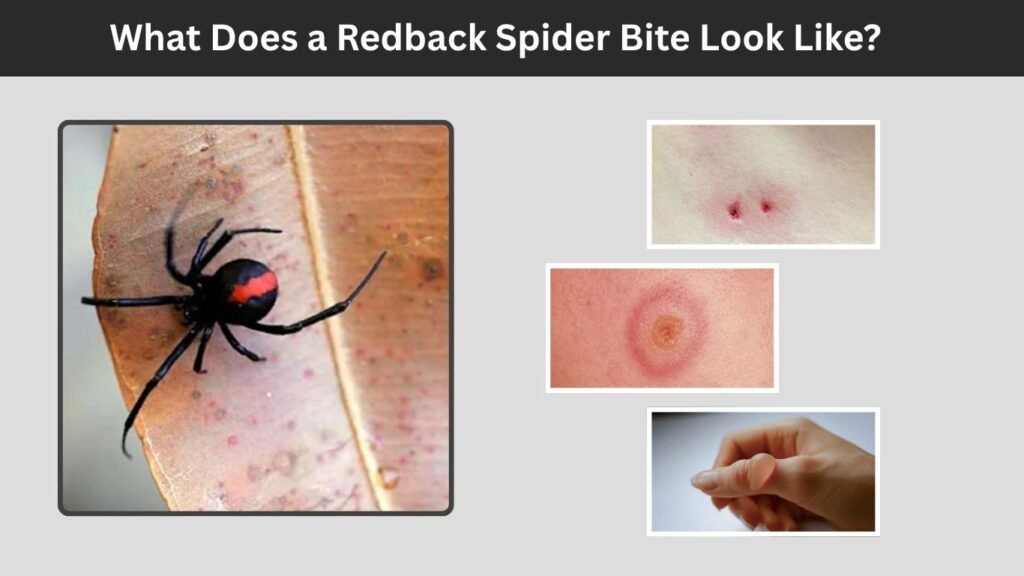
A redback spider bite may appear small at first, but symptoms often become stronger over time. Some bites leave only tiny puncture marks, while others cause redness, swelling, or blistering around the skin. The appearance can vary depending on the amount of venom injected and the body’s reaction.
Common Bite Mark Appearance
Many redback spider bites show:
- Small puncture marks
- Red circular swelling
- Sweating near the bite
- Mild blister formation
- Skin irritation or redness
Day 1 Redback Spider Bite Symptoms
During the first day, the bite area may become painful and sweaty. Pain often spreads from the bite site to nearby muscles or joints. Some people also experience nausea, headache, or stomach pain within hours.
How To Identify a Redback Spider Bite
A redback spider bite is often identified by severe localized pain combined with sweating around the wound. If a person recently handled outdoor items or disturbed a web before symptoms started, a redback spider may be responsible.
What Does a Redback Spider Bite Feel Like?
Redback spider bites are usually painful. Some people feel an immediate sharp sting, while others notice increasing pain over several hours. The discomfort may spread away from the bite and become intense if treatment is delayed.
Does a Redback Spider Bite Hurt?
Yes, most redback spider bites are painful. The pain may begin as a burning or stinging sensation and later develop into throbbing discomfort.
Can You Feel a Redback Spider Bite Immediately?
Many victims feel the bite right away, but some only notice mild irritation at first. Symptoms often become stronger within 30 minutes to several hours.
Pain Timeline After the Bite
Pain usually starts near the bite area before spreading to the chest, abdomen, or limbs. Severe discomfort may continue for many hours without medical treatment.
Redback Spider Bite Symptoms in Humans
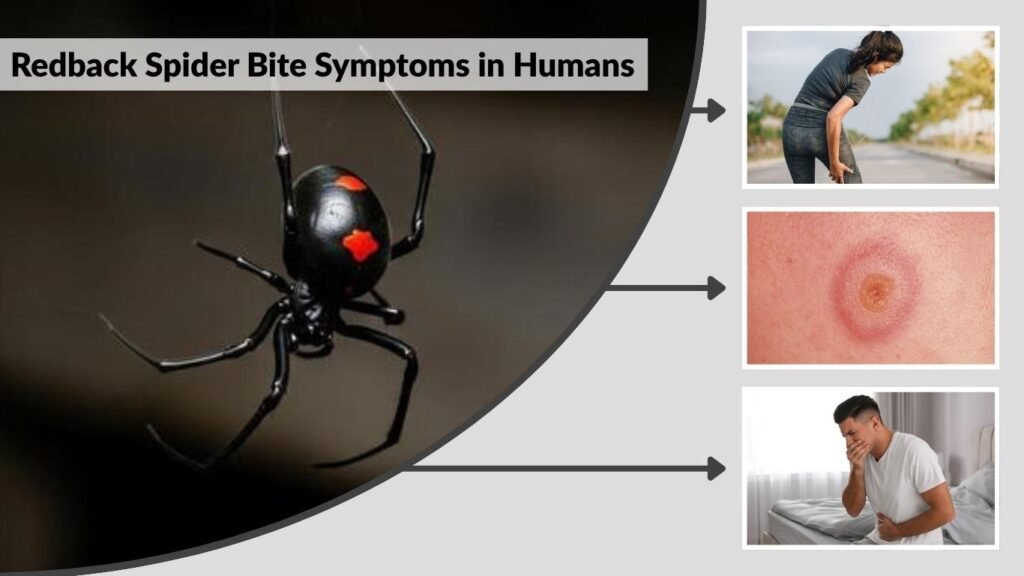
Symptoms from a redback spider bite can range from mild irritation to severe illness. The venom affects nerves and muscles, causing pain, sweating, and other body reactions. Children and elderly people may experience stronger symptoms than healthy adults.
Early Symptoms
Common early symptoms include:
- Sharp local pain
- Sweating around the bite
- Redness and swelling
- Headache
- Nausea
- Muscle aches
Severe Symptoms
More serious symptoms may include:
- Severe abdominal pain
- Vomiting
- Fever and chills
- Rapid heartbeat
- Trouble breathing
- Extreme sweating
How Long Do Symptoms Last?
Mild symptoms may improve within one or two days. Severe pain and muscle discomfort can sometimes last several days or longer if medical care is delayed.
Can a Redback Spider Bite Kill You?
Many people fear that a redback spider bite is always deadly, but deaths are now extremely rare because of effective medical treatment and antivenom. However, severe bites still require medical attention, especially in vulnerable individuals such as young children or older adults.
Are Redback Spider Bites Deadly?
Modern treatment has greatly reduced fatalities. Most people recover fully with proper medical care, but untreated severe bites can still become dangerous.
Who Is Most at Risk?
The highest-risk groups include:
- Children
- Elderly people
- Pregnant women
- People with heart problems
- Individuals with weak immune systems
How Fast Can Symptoms Become Serious?
Symptoms may worsen within a few hours after the bite. Severe pain, sweating, and breathing problems should never be ignored because rapid treatment improves recovery.
Redback Spider Bite First Aid
Quick first aid can help reduce pain and prevent complications after a redback spider bite. Although most bites are not fatal, medical attention is often recommended because symptoms may become severe over time. Proper first aid focuses on pain control, monitoring symptoms, and getting professional treatment when needed.
What To Do Immediately After a Bite
If a redback spider bites you:
- Stay calm and sit down
- Wash the bite area gently
- Apply a cold pack for pain
- Avoid excessive movement
- Seek medical advice quickly
- Watch for worsening symptoms
First Aid Used in Australia
Australian first aid guidelines recommend using cold packs instead of pressure immobilization bandages. Pressure bandages may worsen pain because redback venom spreads slowly through local tissues rather than the lymphatic system.
What NOT To Do
Do not cut the bite, suck out venom, or apply harmful chemicals to the skin. Avoid using tight tourniquets because they may increase tissue damage and pain.
When To Call Emergency Services
Emergency medical care is important if the person has:
- Breathing problems
- Severe chest pain
- Continuous vomiting
- Fainting or confusion
- Rapid worsening symptoms
Redback Spider Bite Treatment Options
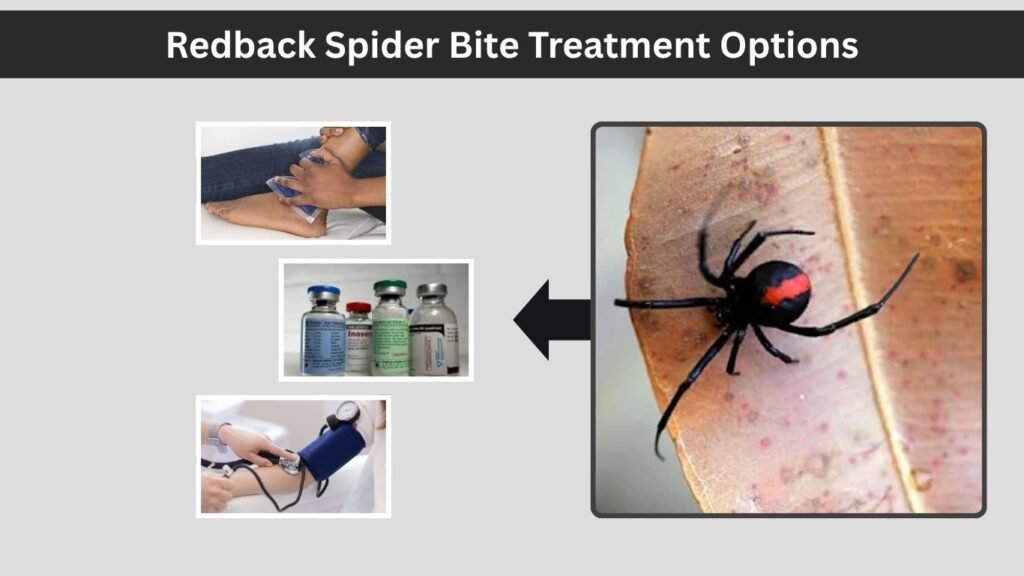
Treatment for a redback spider bite depends on the severity of symptoms. Mild bites may only need pain relief and rest, while severe cases can require hospital care and antivenom treatment. Early medical attention usually leads to faster recovery and fewer complications.
Pain Relief Treatments
Doctors often recommend pain medication to control severe discomfort. Ice packs and rest may also help reduce swelling and irritation near the bite.
Redback Spider Antivenom
Antivenom is available for serious bites that cause severe pain or dangerous symptoms. It works by neutralizing the venom and reducing symptom severity. Many patients improve quickly after receiving antivenom treatment.
Hospital Management and Monitoring
Hospital staff may monitor:
- Heart rate
- Blood pressure
- Breathing
- Pain levels
- Muscle symptoms
Patients with severe reactions sometimes require intravenous fluids and additional pain management.
Recovery Time and Healing Process
Most people recover within several days, although lingering pain or weakness can continue for weeks in some cases. Early treatment often shortens recovery time.
Long-Term Effects of Redback Spider Bites
Most people recover fully after a redback spider bite, but a small number may continue experiencing symptoms for a longer period. Persistent pain, fatigue, or anxiety sometimes occur after severe envenomation, especially when treatment is delayed.
Chronic Pain After a Bite
Some individuals develop long-lasting muscle or nerve pain near the bite area. This discomfort may continue even after the venom is no longer active.
Nerve and Muscle Problems
Rare complications include muscle weakness, tingling sensations, or ongoing nerve irritation. These symptoms should be evaluated by a doctor if they continue.
Emotional Effects and Anxiety
A painful spider bite can create anxiety or fear of spiders afterward. Some people become highly cautious around garages, gardens, or outdoor furniture where redback spiders may hide.
When Long-Term Symptoms Need Medical Care
Persistent symptoms lasting several weeks should be checked by a healthcare professional to rule out infection or other complications.
Redback Spider Bites in Dogs and Cats
Pets can also suffer serious reactions from redback spider bites. Dogs and cats may show signs of pain, weakness, or unusual behavior after being bitten. Veterinary care is important because animals can become seriously ill from venom exposure.
Dog Redback Spider Bite Symptoms
Dogs may experience:
- Trembling or shaking
- Vomiting
- Weakness
- Trouble walking
- Heavy panting
- Signs of severe pain
Cat Redback Spider Bite Symptoms
Cats may become restless, hide, drool excessively, or show difficulty breathing. Some cats become aggressive because of pain caused by the venom.
Can a Redback Spider Bite Kill a Dog or Cat?
Yes, severe bites can become life-threatening for pets if treatment is delayed. Smaller animals are usually at greater risk because venom affects their bodies more quickly.
Veterinary Treatment for Pets
Veterinarians may provide:
- Pain medication
- Antivenom
- Intravenous fluids
- Breathing support
- Monitoring for complications
How To Prevent Redback Spider Bites
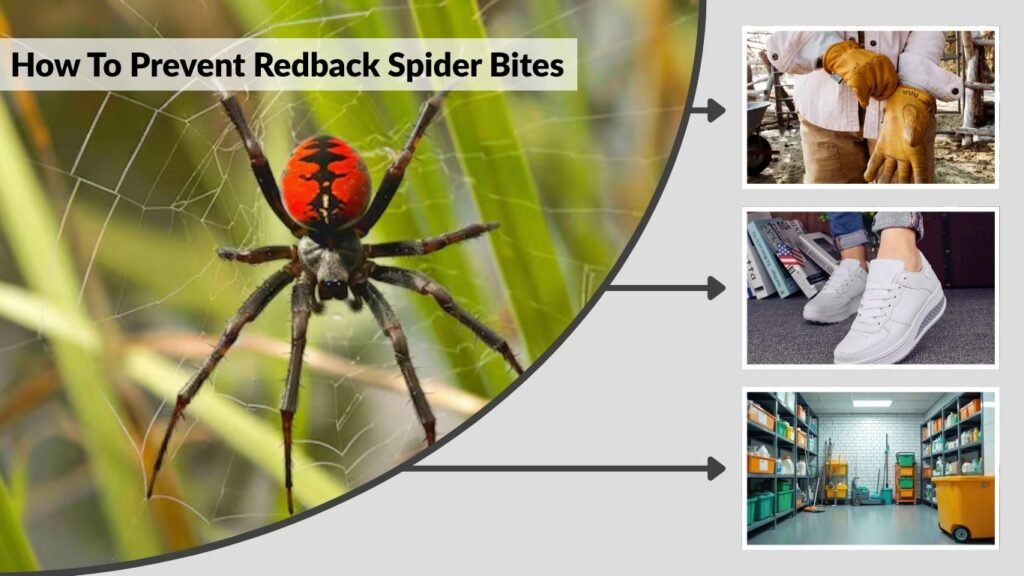
Preventing redback spider bites starts with reducing contact with spider habitats. These spiders prefer dark, sheltered areas close to homes and outdoor structures. Simple safety habits can lower the chance of accidental bites for both humans and pets.
Safety Tips Around the Home
Helpful prevention tips include:
- Wear gloves outdoors
- Shake out shoes and clothing
- Remove clutter from sheds
- Inspect outdoor furniture
- Keep storage areas clean
- Be careful near wood piles
Keeping Pets Safe From Redback Spiders
Check pet sleeping areas regularly and remove webs around kennels, garages, and gardens. Pets should be kept away from places where redback spiders commonly hide.
When To Contact Pest Control
Professional pest control may be necessary if large numbers of redback spiders are found around the property or if spiders continue returning after removal efforts.
FAQs
What happens if a redback spider bites you?
A redback spider bite usually causes severe pain, sweating, redness, and muscle discomfort. Some people also experience nausea, headache, or abdominal pain. Serious symptoms may require hospital treatment and antivenom.
How painful is a redback spider bite?
The bite is often very painful and may feel like a burning or sharp sting. Pain can spread through nearby muscles and continue for many hours without treatment.
Can you die from a redback spider bite?
Deaths are now extremely rare because antivenom and modern medical care are widely available. However, severe bites can still become dangerous if left untreated.
How long do redback spider bite symptoms last?
Mild symptoms may disappear within a day or two, while severe pain and weakness can continue for several days or even weeks in rare cases.
What is the first aid for a redback spider bite?
First aid includes washing the bite, applying a cold pack, staying calm, and seeking medical advice. Pressure immobilization bandages are generally not recommended for redback spider bites.
