
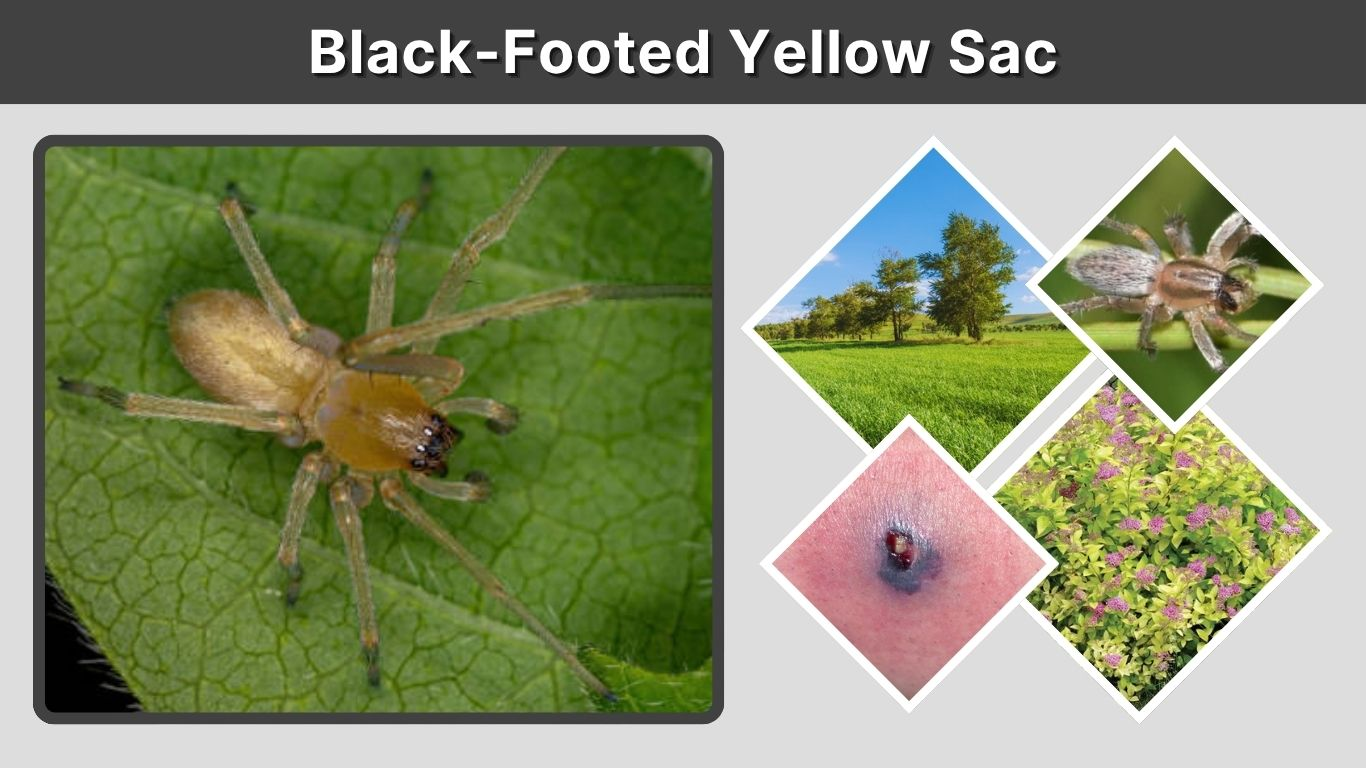
The black-footed yellow sac spider is a small hunting spider commonly found inside homes, gardens, and outdoor vegetation throughout North America. Although its pale body and dark feet make it appear harmless, many people become concerned after learning that this spider can bite humans. Most bites are mild and cause temporary irritation, but the species is often confused with more dangerous spiders such as the brown recluse. Understanding the black-footed yellow sac spider’s appearance, habitat, bite symptoms, and behavior can help homeowners identify it correctly and reduce unnecessary fear.
What Is a Black-Footed Yellow Sac Spider?
The black-footed yellow sac spider belongs to the genus Cheiracanthium and is one of the most common yellow sac spider species found indoors. Its scientific name is Cheiracanthium inclusum, and it is closely related to other yellow sac spiders found throughout North America.
Unlike web-building spiders that wait for prey, black-footed yellow sac spiders actively hunt insects at night. During the daytime, they rest inside small silk sacs hidden in corners, leaves, or indoor crevices.
Key Facts About the Black-Footed Yellow Sac Spider
- Scientific name is Cheiracanthium inclusum
- Belongs to the yellow sac spider group
- Active hunter rather than web trapper
- Commonly found indoors
- Creates small silk resting sacs
Why These Spiders Enter Homes
Black-footed yellow sac spiders often enter homes while searching for food, warmth, or shelter. They are attracted to areas with insect activity and quiet hiding spots.
Common indoor locations include:
- Ceiling corners
- Window frames
- Closets and storage spaces
- Behind furniture
- Curtains and bedding
Although these spiders may wander indoors at night, they usually avoid direct contact with humans.
What Does a Black-Footed Yellow Sac Spider Look Like?
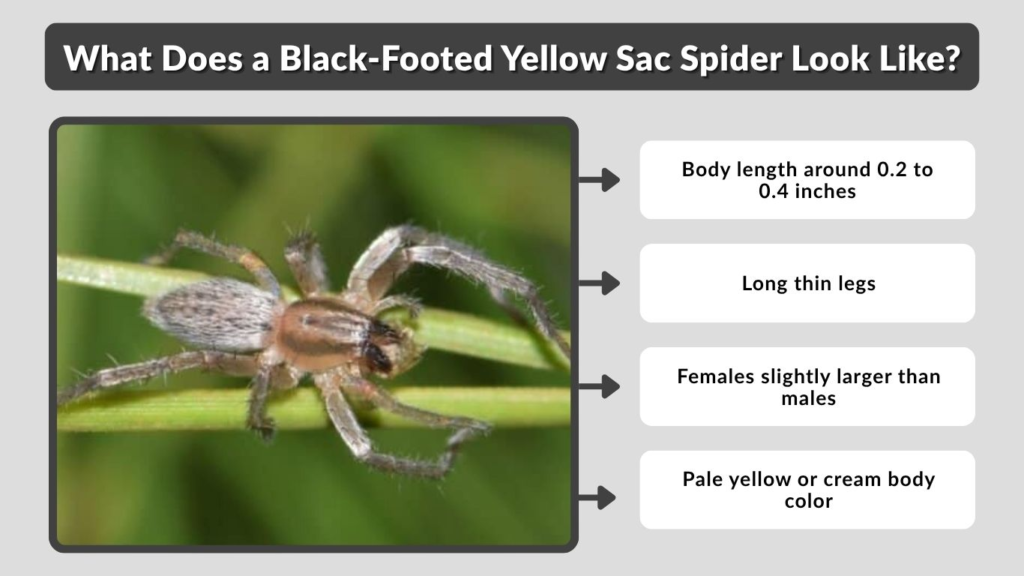
The black-footed yellow sac spider has a pale yellow, cream, or light beige body with slightly darker mouthparts and dark-tipped feet. Its body is smooth and slender, with long delicate legs designed for active hunting.
Because of their small size and pale coloring, these spiders are often overlooked until they move across walls or ceilings at night.
Black-Footed Yellow Sac Spider Size
Most black-footed yellow sac spiders are relatively small compared to larger house spiders.
Typical size features include:
- Body length around 0.2 to 0.4 inches
- Long thin legs
- Females slightly larger than males
- Pale yellow or cream body color
Black-Footed Yellow Sac Spider Habitat
These spiders can survive in both indoor and outdoor environments. Outdoors, they often live among plants, shrubs, and garden vegetation. Indoors, they prefer hidden quiet areas where they can build silk resting sacs safely.
Their ability to adapt to homes makes them one of the more commonly encountered indoor spiders in many regions.
Black-Footed Yellow Sac Spider vs Brown Recluse
The black-footed yellow sac spider is frequently confused with the brown recluse spider because both species are small and capable of biting humans. However, important differences exist between them.
Brown recluse spiders possess a violin-shaped marking and stronger medically significant venom. Black-footed yellow sac spiders lack the violin marking and usually produce milder bite symptoms.
Main Differences Between the Two Spiders
| Feature | Black-Footed Yellow Sac Spider | Brown Recluse |
| Body Color | Pale yellow or cream | Brown |
| Violin Marking | No | Yes |
| Bite Severity | Usually mild | Potentially severe |
| Hunting Style | Active hunter | Reclusive hunter |
| Common Habitat | Homes and gardens | Hidden indoor spaces |
Why Misidentification Happens
Many harmless or mildly venomous spiders are mistakenly identified as brown recluse spiders. Because yellow sac spiders are common indoors, people often blame them for unexplained skin irritation or insect bites.
Correct identification is important because fear surrounding spider bites frequently leads to unnecessary panic.
Is the Black-Footed Yellow Sac Spider Poisonous?
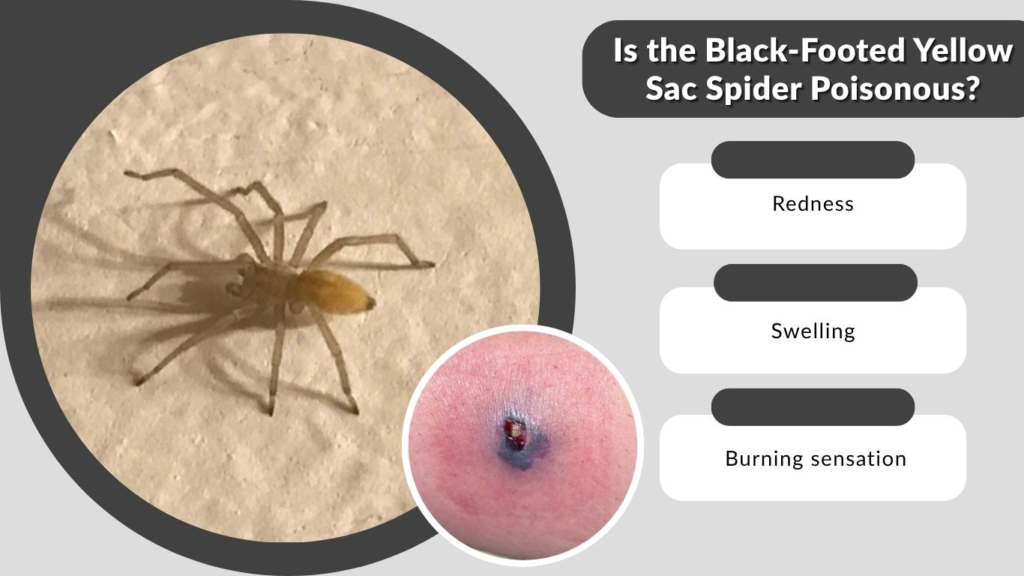
The black-footed yellow sac spider is venomous rather than poisonous. Venom is injected through a bite and is mainly used to subdue insect prey.
Although the spider can bite humans, its venom is not considered highly dangerous for most healthy adults. Most reactions remain localized and improve without serious medical complications.
Is the Black-Footed Yellow Sac Spider Dangerous?
Most bites cause mild to moderate symptoms rather than severe medical emergencies.
Typical bite effects include:
- Redness
- Swelling
- Burning sensation
- Itching
- Temporary discomfort
Serious allergic reactions are rare but possible in sensitive individuals.
Black-Footed Yellow Sac Spider Aggression
These spiders are not naturally aggressive toward humans. Most bites occur when the spider becomes trapped against skin, disturbed in bedding, or accidentally handled.
Because they are nocturnal hunters, many encounters happen at night when the spiders wander indoors searching for prey.
Black-Footed Yellow Sac Spider Bite Symptoms
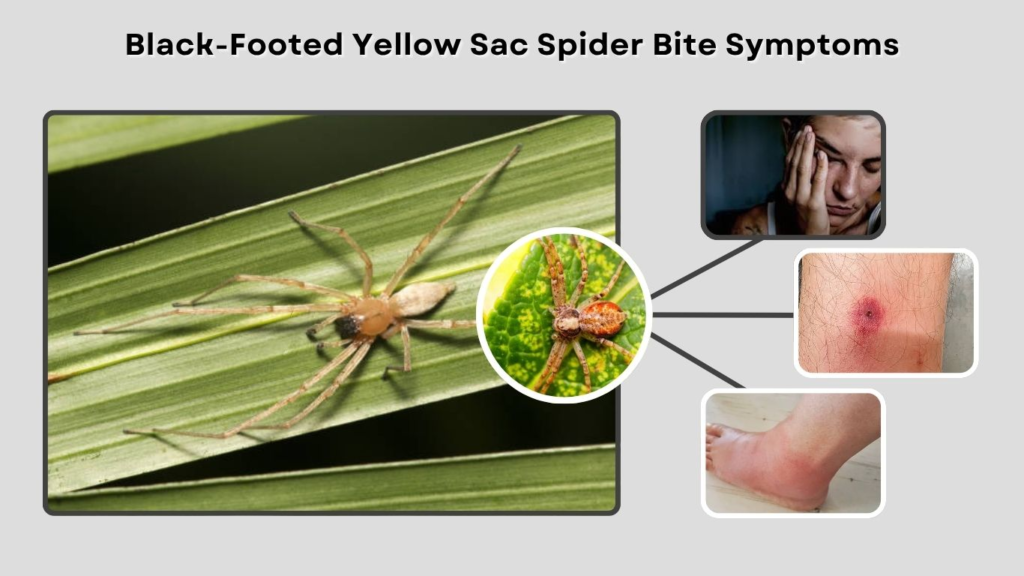
A black-footed yellow sac spider bite may cause immediate discomfort followed by localized irritation. Some people describe the bite as similar to a mild bee sting or ant bite.
The severity of symptoms varies depending on skin sensitivity and the amount of venom injected.
Common Bite Symptoms
- Sharp stinging sensation
- Red bite mark
- Mild swelling
- Itching or irritation
- Small blister formation
Black-Footed Yellow Sac Spider Bite Pictures
Online bite pictures often show redness, swelling, and mild irritation around the sting area. In some cases, the bite may appear more severe because of scratching or secondary skin infection rather than venom alone.
Most bites heal within several days without permanent damage.
Black-Footed Yellow Sac Spider Bite Treatment
Most black-footed yellow sac spider bites can be treated at home using basic first-aid methods. Cleaning the bite area and reducing swelling quickly can help minimize discomfort and irritation.
Although these bites are usually mild, monitoring symptoms is still important because skin reactions vary from person to person.
How to Treat a Black-Footed Yellow Sac Spider Bite
The following treatment steps are commonly recommended:
- Wash the bite area with soap and water
- Apply a cold compress or ice pack
- Use antihistamines for itching
- Keep the affected area clean
- Avoid scratching the bite mark
When Medical Attention Is Needed
Medical care may be necessary if symptoms become severe or unusual reactions appear.
Warning signs include:
- Difficulty breathing
- Rapid swelling
- Fever
- Severe pain
- Signs of infection
People with allergies or weakened immune systems should monitor spider bites carefully.
What Does the Black-Footed Yellow Sac Spider Eat?
Black-footed yellow sac spiders are active predators that hunt small insects rather than trapping prey in webs. They search for food mainly at night and use venom to immobilize prey quickly.
Because they feed on insects commonly found around homes and gardens, they can help reduce certain pest populations naturally.
Common Prey of Black-Footed Yellow Sac Spiders
These spiders commonly eat:
- Flies
- Mosquitoes
- Small moths
- Ants
- Tiny spiders
Hunting Behavior
Unlike orb-weaving spiders, black-footed yellow sac spiders do not rely on sticky capture webs. Instead, they move actively across walls, plants, and ceilings while searching for prey.
Their speed and pale coloration make them effective nighttime hunters in both indoor and outdoor environments.
Black-Footed Yellow Sac Spider Habitat and Locations
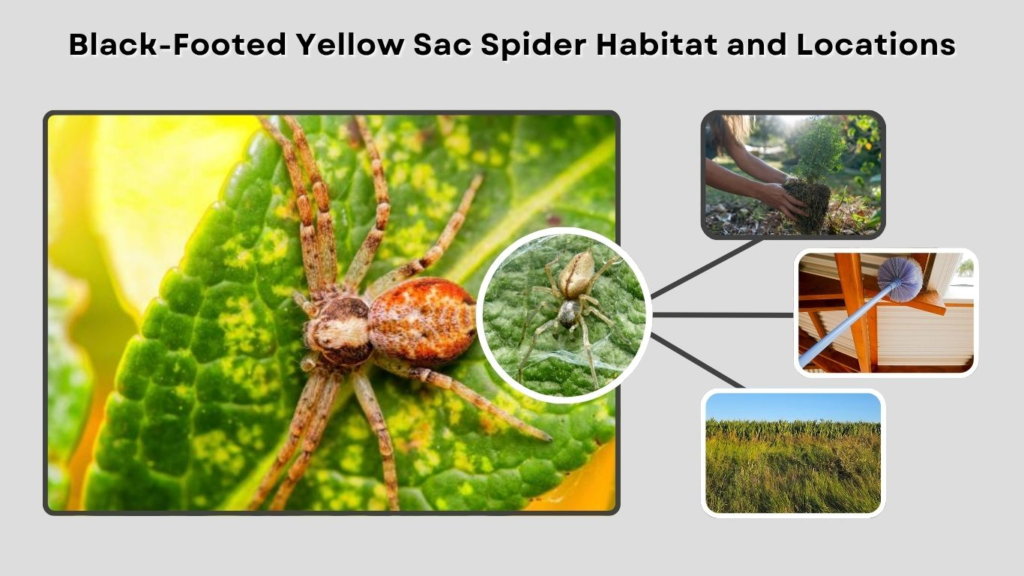
Black-footed yellow sac spiders are widespread throughout North America and can survive in many climates. They are commonly found in homes, gardens, garages, and outdoor vegetation.
Because they prefer hidden resting places during the daytime, many people do not notice them until nighttime activity increases.
Common Indoor and Outdoor Habitats
Typical habitats include:
- Gardens and shrubs
- Tall grass
- House ceilings
- Window frames
- Basements and garages
Black-Footed Yellow Sac Spider in Massachusetts
The species is commonly reported in Massachusetts and other northeastern states because it adapts well to cooler climates and indoor environments.
In colder regions, these spiders often move indoors during seasonal weather changes while searching for warmth and shelter.
Black-Footed Yellow Sac Spider Lifespan
The black-footed yellow sac spider generally lives for about one year, though lifespan varies depending on climate, food supply, and environmental conditions.
Females usually survive longer than males because they remain near egg sacs and sheltered resting areas.
Life Cycle Stages
The spider develops through several stages:
- Egg stage
- Spiderling stage
- Juvenile growth
- Adult maturity
Reproduction and Egg Sacs
Female black-footed yellow sac spiders create silk sacs to protect their eggs until spiderlings hatch. These sacs are usually hidden in corners, leaves, ceilings, or folded surfaces.
After hatching, young spiders disperse quickly to search for food and shelter.
Are Black-Footed Yellow Sac Spiders Beneficial?
Although many homeowners dislike finding spiders indoors, black-footed yellow sac spiders provide important pest control benefits. Their hunting behavior helps reduce populations of insects that may otherwise become household nuisances.
Because they are solitary hunters rather than aggressive colony insects, they rarely create major infestations.
Benefits of Black-Footed Yellow Sac Spiders
These spiders help by:
- Eating mosquitoes
- Reducing fly populations
- Hunting small pest insects
- Supporting natural insect control
- Limiting indoor bug activity
Should You Remove Them?
Most black-footed yellow sac spiders can simply be relocated outdoors if discovered inside a home. However, repeated sightings or heavy spider activity may encourage homeowners to improve pest control and reduce hiding places indoors.
Sealing cracks, reducing clutter, and lowering indoor insect activity often helps discourage spiders naturally.
How to Prevent Black-Footed Yellow Sac Spiders Indoors
Preventing black-footed yellow sac spiders usually involves reducing insect prey and limiting indoor hiding locations.
Simple maintenance and cleaning routines can greatly reduce spider activity around homes.
Prevention Tips
- Seal cracks around windows and doors
- Remove clutter from storage areas
- Vacuum corners and ceilings regularly
- Reduce outdoor lighting that attracts insects
- Keep indoor spaces clean and dry
Professional Spider Control
In severe infestations, professional pest control services may help identify nesting areas and reduce indoor spider populations safely.
Because these spiders are generally low-risk, large-scale extermination is rarely necessary.
FAQs
Is the black-footed yellow sac spider dangerous to humans?
The black-footed yellow sac spider is not considered highly dangerous to most people. Its bite may cause mild pain, redness, swelling, or itching, but serious medical complications are rare in healthy adults.
What does a black-footed yellow sac spider bite look like?
A bite usually appears as a small red bump or irritated area of skin. Some bites may develop mild swelling or a small blister, while others resemble mosquito bites or minor insect stings.
Where are black-footed yellow sac spiders commonly found?
These spiders are commonly found inside homes, garages, gardens, shrubs, ceiling corners, and storage spaces. They prefer quiet hidden areas where they can build small silk resting sacs during the daytime.
Do black-footed yellow sac spiders build webs?
Black-footed yellow sac spiders do not build large capture webs like orb-weaving spiders. Instead, they create small silk sacs used for resting, hiding, and protecting egg sacs while actively hunting insects at night.
What do black-footed yellow sac spiders eat?
Black-footed yellow sac spiders feed mainly on small insects such as flies, mosquitoes, ants, moths, and other tiny arthropods. Their hunting behavior helps reduce certain household and garden pest populations naturally.
