
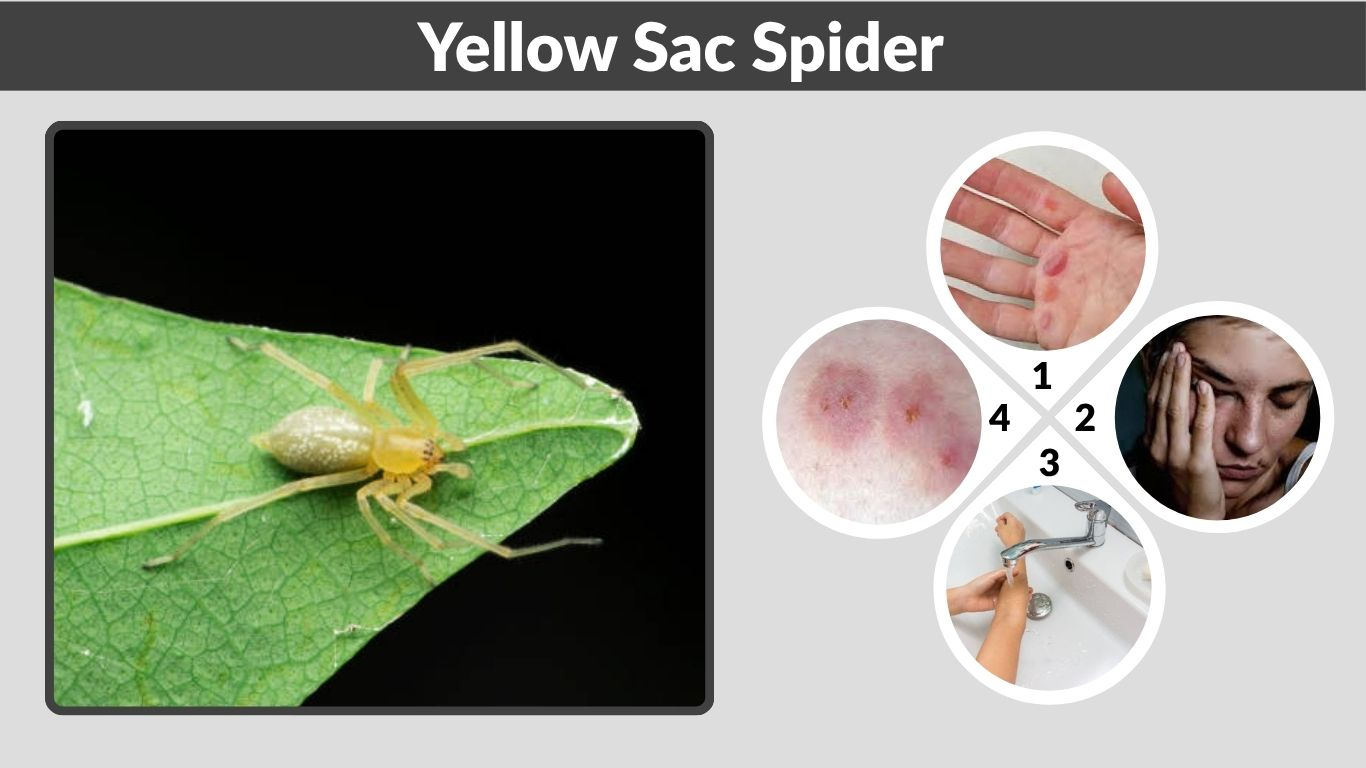
The yellow sac spider is a small but commonly encountered spider found throughout North America in homes, gardens, and outdoor vegetation. Although these spiders are not considered highly dangerous, their bites can cause pain, redness, and irritation that often worry homeowners. Yellow sac spiders are active hunters rather than traditional web builders, and they frequently hide inside silk sacs during the daytime. Understanding how to identify yellow sac spiders, recognize their bites, and prevent infestations can help reduce fear and improve home pest management safely and effectively.
What Is a Yellow Sac Spider?
The yellow sac spider belongs to the genus Cheiracanthium and is one of the most common indoor hunting spiders in North America. These spiders are known for creating small silk sacs that serve as resting shelters during the daytime.
Unlike spiders that build large webs to trap prey, yellow sac spiders actively hunt insects at night. They are often found wandering on walls, ceilings, windows, and around household corners after dark.
Common Types of Yellow Sac Spiders
- Northern yellow sac spider
- American yellow sac spider
- Western yellow sac spider
- Black-footed yellow sac spider
Why Yellow Sac Spiders Enter Homes
Yellow sac spiders commonly move indoors while searching for food, shelter, or warmth. They are attracted to homes with insect activity and quiet hiding spaces.
Typical indoor hiding locations include:
- Ceiling corners
- Window frames
- Closets and storage areas
- Behind furniture
- Bedding or curtains
Although these spiders may appear alarming, they usually avoid humans and prefer remaining hidden during the day.
What Does a Yellow Sac Spider Look Like?
Yellow sac spiders are small pale-colored spiders with slender legs and smooth bodies. Their color may range from light yellow to cream, beige, or pale green depending on the species and environment.
Most yellow sac spiders have darker mouthparts and slightly translucent legs. Their bodies are much slimmer than large house spiders or wolf spiders.
Yellow Sac Spider Size
Yellow sac spiders are relatively small compared to many other household spiders.
Typical size features include:
- Body length around 0.2 to 0.4 inches
- Long thin legs
- Females slightly larger than males
- Pale yellow or cream-colored body
Black-Footed Yellow Sac Spider
The black-footed yellow sac spider is one of the most recognized species in North America. It can be identified by darker feet and slightly deeper body coloration.
Despite its name, the spider is usually pale yellow rather than bright yellow. Many homeowners confuse it with harmless juvenile house spiders because of its small size.
Yellow Sac Spider vs Brown Recluse
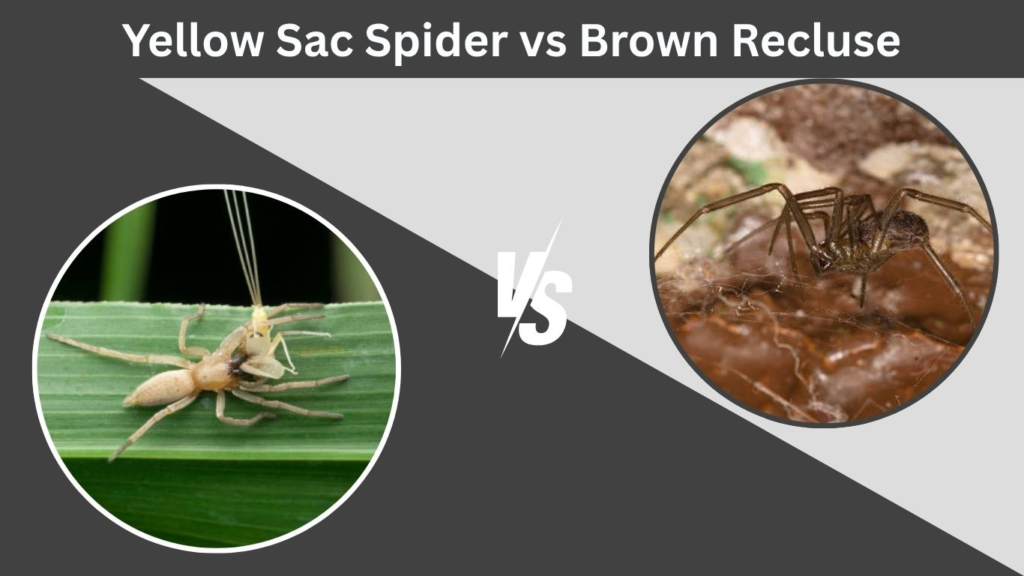
Yellow sac spiders are frequently mistaken for brown recluse spiders because both species are small brownish spiders that may bite humans indoors. However, important differences exist between them.
Brown recluse spiders have a distinct violin-shaped marking and more dangerous venom. Yellow sac spiders lack the violin marking and usually cause milder symptoms.
Main Differences Between Yellow Sac and Brown Recluse Spiders
| Feature | Yellow Sac Spider | Brown Recluse |
| Body Color | Pale yellow or cream | Brown |
| Violin Marking | No | Yes |
| Bite Severity | Mild to moderate | Potentially severe |
| Web Type | Silk resting sac | Irregular retreat |
| Aggression Level | Low | Low |
Why These Spiders Are Misidentified
Many skin infections and unexplained bites are incorrectly blamed on brown recluse spiders. Yellow sac spiders are more common indoors in many regions, which increases confusion between the two species.
Correct identification is important because unnecessary panic often follows suspected spider bites.
Are Yellow Sac Spiders Dangerous?
Yellow sac spiders are venomous, but they are not considered highly dangerous to most healthy adults. Their venom is designed to immobilize insect prey rather than seriously harm humans.
Most bites result in temporary irritation rather than severe medical emergencies. However, sensitive individuals may experience stronger reactions.
Are Yellow Sac Spider Bites Dangerous?
In most cases, yellow sac spider bites cause:
- Redness
- Mild swelling
- Burning sensation
- Itching
- Temporary discomfort
Serious complications are rare, though allergic reactions can occur in sensitive individuals.
Is the Yellow Sac Spider Poisonous?
Yellow sac spiders are technically venomous rather than poisonous. Venom is injected through a bite, while poisonous organisms are harmful when touched or eaten.
Although online discussions sometimes exaggerate the danger of yellow sac spiders, medical experts generally consider them low-risk compared to highly venomous spiders.
Yellow Sac Spider Bite Symptoms
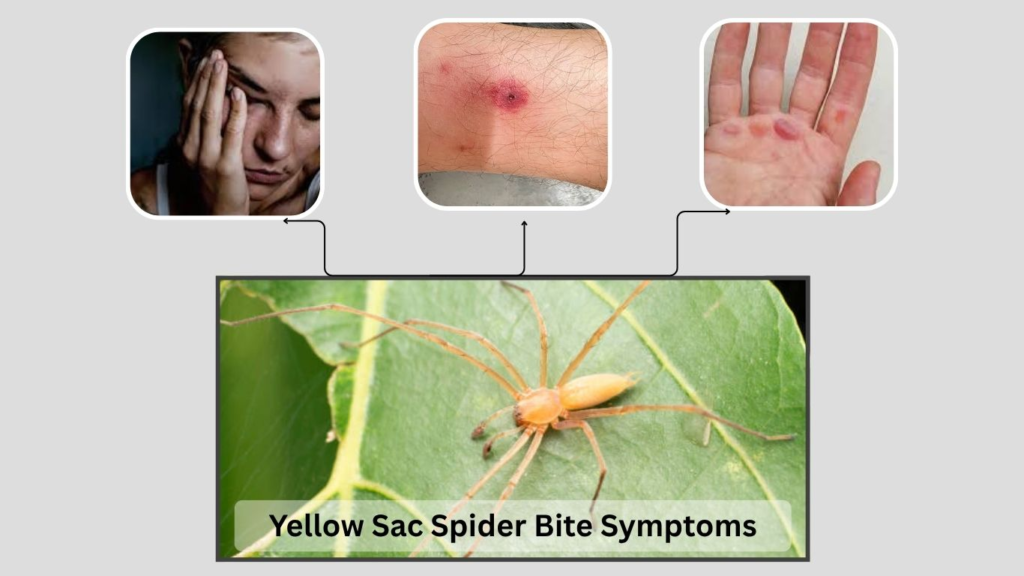
Yellow sac spider bites are often described as painful compared to bites from many other small house spiders. Symptoms can appear quickly after the bite occurs.
The severity of symptoms depends on factors such as the amount of venom injected, bite location, and individual sensitivity.
Common Yellow Sac Spider Bite Symptoms
- Sharp stinging pain
- Red bite mark
- Mild swelling
- Itching or irritation
- Small blister formation
Yellow Sac Spider Bite Stages
A yellow sac spider bite may progress through several mild stages during healing.
- Day 1: Redness and pain appear
- Day 2: Swelling or itching increases
- Day 3 and beyond: Symptoms gradually fade
Most bites improve within several days without serious complications. Severe skin damage is uncommon compared to brown recluse bites.
What Does a Yellow Sac Spider Bite Look Like?
A yellow sac spider bite usually appears as a small red bump or irritated patch of skin. Some bites resemble mosquito bites or mild bee stings.
In certain cases, the bite area may develop a blister or slightly raised center. The appearance varies widely depending on the person’s skin sensitivity and immune response.
Yellow Sac Spider Bite Treatment
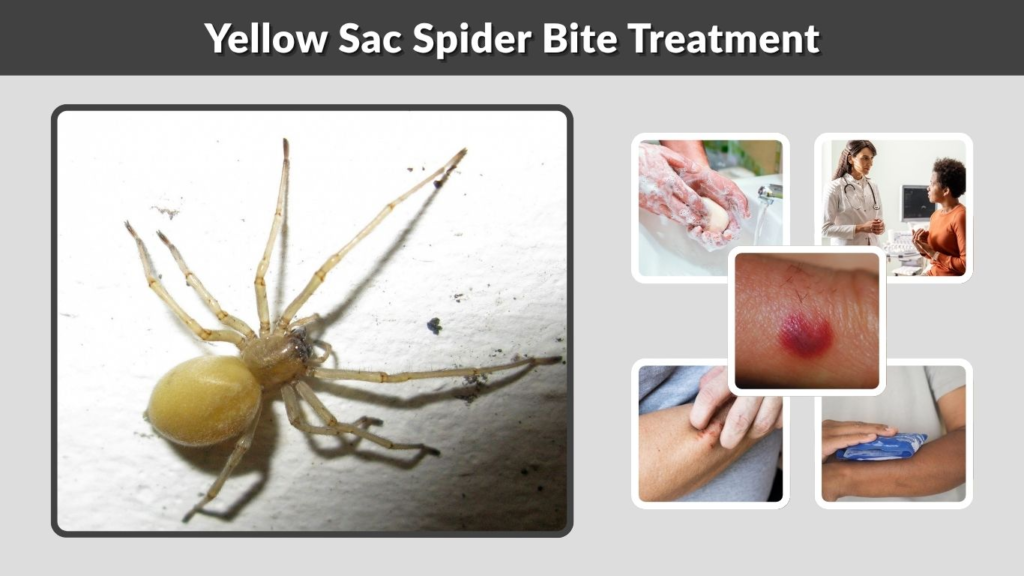
Most yellow sac spider bites can be treated at home with simple first-aid measures. Symptoms usually improve within a few days, although itching and irritation may continue slightly longer in sensitive individuals.
Keeping the bite clean and avoiding scratching can help reduce the risk of infection and speed up healing.
Basic Treatment for a Yellow Sac Spider Bite
- Wash the area with soap and water
- Apply a cold compress to reduce swelling
- Use over-the-counter antihistamines for itching
- Elevate the affected area if swelling occurs
- Avoid scratching the bite mark
When to Seek Medical Attention
Although severe reactions are uncommon, medical care may be necessary if symptoms worsen or unusual complications appear.
Warning signs include:
- Fever
- Severe swelling
- Difficulty breathing
- Expanding redness
- Signs of infection
People with allergies or weakened immune systems should monitor spider bites carefully.
Yellow Sac Spider Nest and Egg Sac Identification
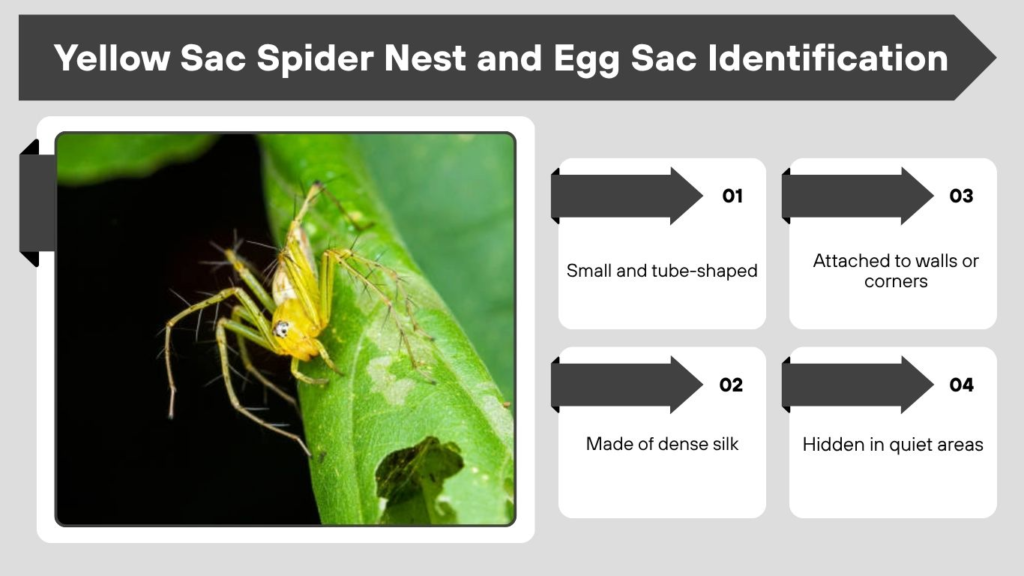
Yellow sac spiders do not build traditional capture webs like orb-weaving spiders. Instead, they create small silk sacs used for resting, hiding, or protecting eggs.
These sacs are commonly attached to ceilings, corners, folded leaves, curtains, or hidden indoor spaces. The silk shelter is usually white or slightly translucent.
What Does a Yellow Sac Spider Nest Look Like?
A yellow sac spider nest is typically:
- Small and tube-shaped
- Made of dense silk
- Attached to walls or corners
- Hidden in quiet areas
- Used mainly during daytime resting
Yellow Sac Spider Egg Sac
Female yellow sac spiders protect egg sacs inside their silk shelters until spiderlings hatch.
Egg sac characteristics include:
- White or pale silk covering
- Small round appearance
- Hidden placement indoors or outdoors
- Dozens of tiny spider eggs inside
Baby yellow sac spiders remain near the sac briefly before dispersing into nearby areas.
Yellow Sac Spider Infestation in House
Yellow sac spider infestations often happen when homes contain abundant insects and hidden resting places. Because these spiders actively hunt at night, homeowners may notice them wandering across walls or ceilings after dark.
Infestations are usually more noticeable during warmer months when spider activity increases.
Signs of a Yellow Sac Spider Infestation
- Multiple silk sacs in corners
- Frequent spider sightings at night
- Spider activity near windows
- Small pale spiders on ceilings
- Presence of flying insects indoors
Why Yellow Sac Spiders Thrive Indoors
Yellow sac spiders prefer homes because indoor environments provide warmth, shelter, and reliable food sources. Insects attracted to lights or food crumbs create hunting opportunities for these spiders.
Cluttered storage areas and undisturbed corners also provide ideal hiding spots for nesting sacs.
Yellow Sac Spider Habitat and Range
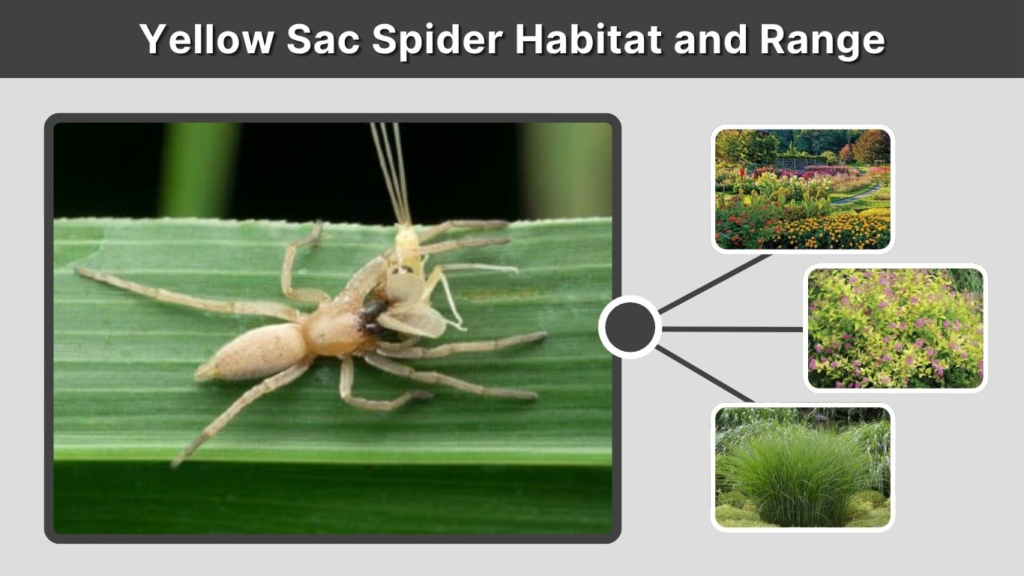
Yellow sac spiders are widespread throughout North America and can survive in many different climates. They are found both indoors and outdoors depending on weather conditions and prey availability.
Outdoors, these spiders commonly live in gardens, shrubs, tall grass, and tree branches. Indoors, they are especially common in houses, garages, and apartments.
States Where Yellow Sac Spiders Are Common
Yellow sac spiders are frequently reported in:
- California
- Michigan
- Ohio
- Texas
- Florida
- Washington
- Oregon
- New York
Yellow Sac Spider in Michigan and Northern States
Northern yellow sac spiders are especially common in cooler northern states such as Michigan, Wisconsin, Minnesota, and parts of Canada.
These spiders often move indoors during colder seasons while searching for warmth and shelter.
Yellow Sac Spider Web and Hunting Behavior
Yellow sac spiders are active nocturnal hunters rather than passive web builders. They wander at night searching for insects and use venom to immobilize prey quickly.
Their silk sacs serve mainly as protective shelters instead of prey-catching traps. During the daytime, they remain hidden inside these small silk retreats.
What Yellow Sac Spiders Eat
Yellow sac spiders feed on:
- Flies
- Mosquitoes
- Small moths
- Ants
- Other small insects
Because they help reduce insect populations, yellow sac spiders can provide some natural pest control benefits inside homes and gardens.
Yellow Sac Spider Lifespan and Reproduction
Most yellow sac spiders live for about one year, though lifespan varies depending on climate and environmental conditions. Females generally survive longer than males.
After mating, females produce egg sacs protected inside silk shelters. Spiderlings hatch and disperse after developing inside the sac.
Yellow Sac Spider Male vs Female
There are several differences between male and female yellow sac spiders.
- Females are slightly larger
- Males have longer legs
- Females guard egg sacs
- Males roam more frequently
Pregnant female yellow sac spiders may appear larger and more rounded before laying eggs.
Should You Kill Yellow Sac Spiders?
Most yellow sac spiders are not dangerous enough to require extermination unless infestations become severe. Because they feed on household insects, they can actually help reduce pest populations naturally.
However, homeowners uncomfortable with spider activity may choose to remove them safely.
Yellow Sac Spider Control Tips
- Reduce indoor insect populations
- Seal cracks and gaps around windows
- Remove clutter from storage areas
- Vacuum spider sacs regularly
- Use professional pest control if infestations grow
Avoid handling yellow sac spiders directly because bites may occur if they feel trapped or threatened.
FAQs
Are yellow sac spider bites dangerous?
Most yellow sac spider bites are not dangerous and usually cause mild symptoms such as redness, swelling, itching, and temporary pain. Severe reactions are uncommon, though sensitive individuals may experience stronger irritation or allergic responses.
What does a yellow sac spider bite look like?
A yellow sac spider bite often appears as a small red bump or irritated patch of skin. Some bites may develop mild swelling, a blister, or a slightly raised center that resembles a mosquito bite or minor bee sting.
Do yellow sac spiders live in houses?
Yes, yellow sac spiders commonly live indoors and are often found in corners, ceilings, closets, curtains, and around windows. They enter homes searching for insects, warmth, and quiet hiding places for their silk sacs.
Should I kill yellow sac spiders in my home?
Yellow sac spiders are generally not aggressive and can help control insects indoors. However, if infestations become severe or spider activity makes homeowners uncomfortable, removing nests and reducing insect populations can help manage them safely.
What do yellow sac spider eggs look like?
Yellow sac spider eggs are contained inside small white or pale silk sacs hidden in corners, ceilings, folded leaves, or behind objects. Each egg sac may contain dozens of tiny developing spiderlings protected by the female spider.
