
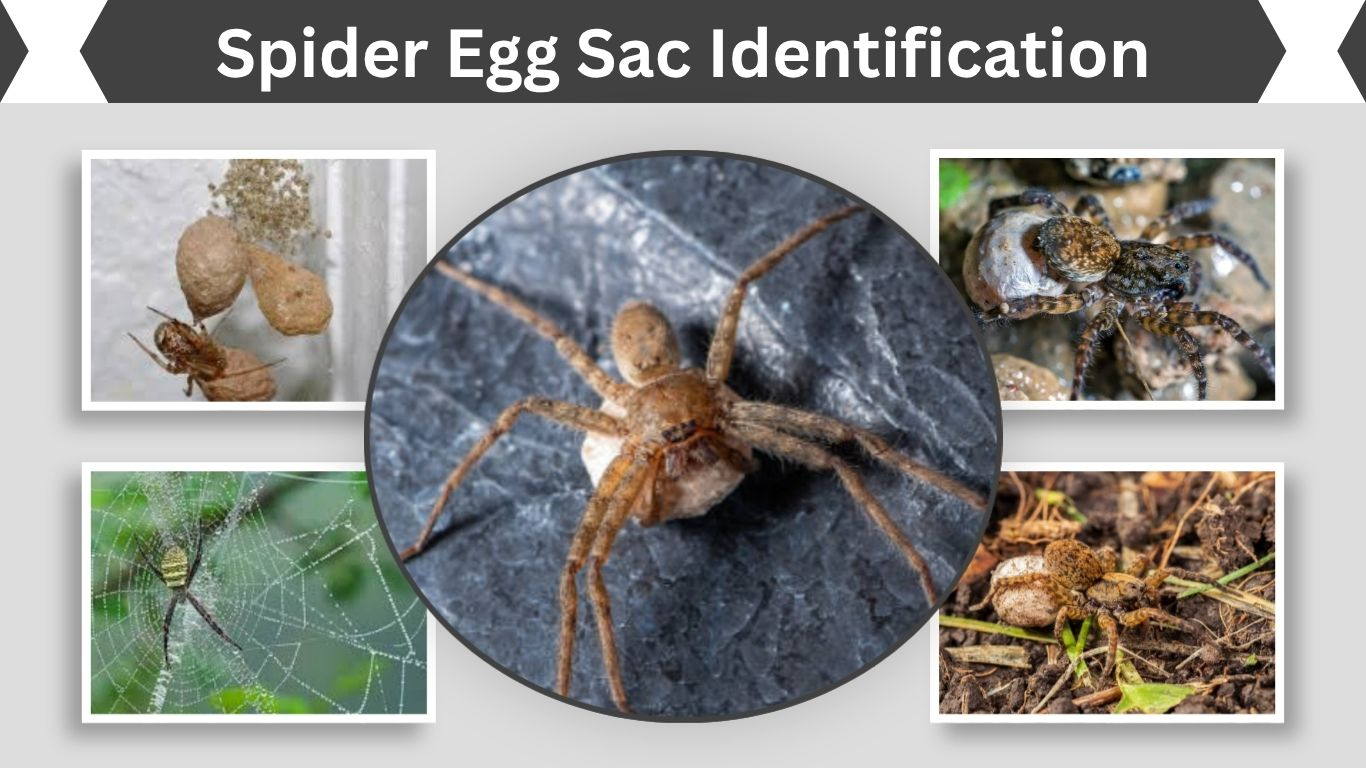
Have you ever found a small, round, or cocoon-like sac in a dark corner or hidden in your garage and wondered whether it could be a spider egg sac? Spider egg sacs are often mistaken for other insect eggs or simply dismissed as harmless. However, correctly identifying a spider egg sac is crucial for understanding whether you are dealing with a harmless house spider or a potentially dangerous species like a black widow or brown recluse.
This guide will walk you through everything you need to know about spider egg sacs: what they look like, how to identify them, and what to do if you come across one. We’ll also cover how different spider species produce their egg sacs and give tips on what to do if you encounter them.
What Is a Spider Egg Sac?
A spider egg sac is a protective silk case created by female spiders to hold their eggs until they hatch. The sac helps shield the eggs from environmental elements, predators, and drying out. The appearance of these sacs can vary depending on the species of spider, but they generally share common characteristics: a small size, a round or oval shape, and a silk texture.
Some spider egg sacs are hidden in webs, while others are carried by the female spider until the eggs hatch. Spiders create their egg sacs in various locations—indoors, outdoors, and sometimes in very unexpected places like basements, attics, or storage sheds.
Though spider egg sacs in general are not dangerous, some spiders, such as the black widow or brown recluse, can pose a significant health risk to humans. Identifying the species associated with the egg sac is an important step in determining any potential danger.
Quick Spider Egg Sac Identification Chart
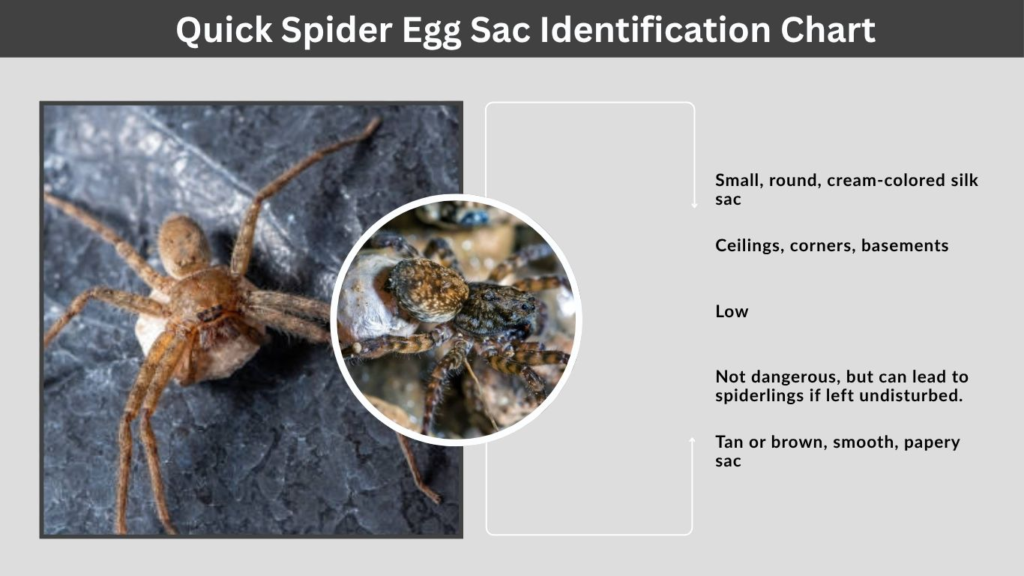
Below is a simple reference chart to help you identify common spider egg sacs and the species they belong to:
| Spider Type | Egg Sac Appearance | Common Location | Risk Level | What to Do |
| Common House Spider | Small, round, cream-colored silk sac | Ceilings, corners, basements | Low | Not dangerous, but can lead to spiderlings if left undisturbed. |
| Black Widow | Tan or brown, smooth, papery sac | Hidden in dark, messy webs | High | Caution! Handle carefully. Call pest control for removal. |
| Brown Recluse | Off-white, small, flat sac | Dark, sheltered spaces | High | Handle with care; get professional help if inside. |
| Wolf Spider | Round sac carried by the female | Outdoors, near ground-level | Low | No immediate danger, but avoid contact. |
| Orb-Weaver | Round or oval silk sac | Vegetation, fences, branches | Low | Common outdoor spider, usually not a threat to humans. |
Use this chart to match the appearance of the egg sac you’ve found with the description of each spider type and location. If you encounter an egg sac from a potentially dangerous species, be sure to follow proper safety protocols.
How to Identify a Spider Egg Sac Step by Step
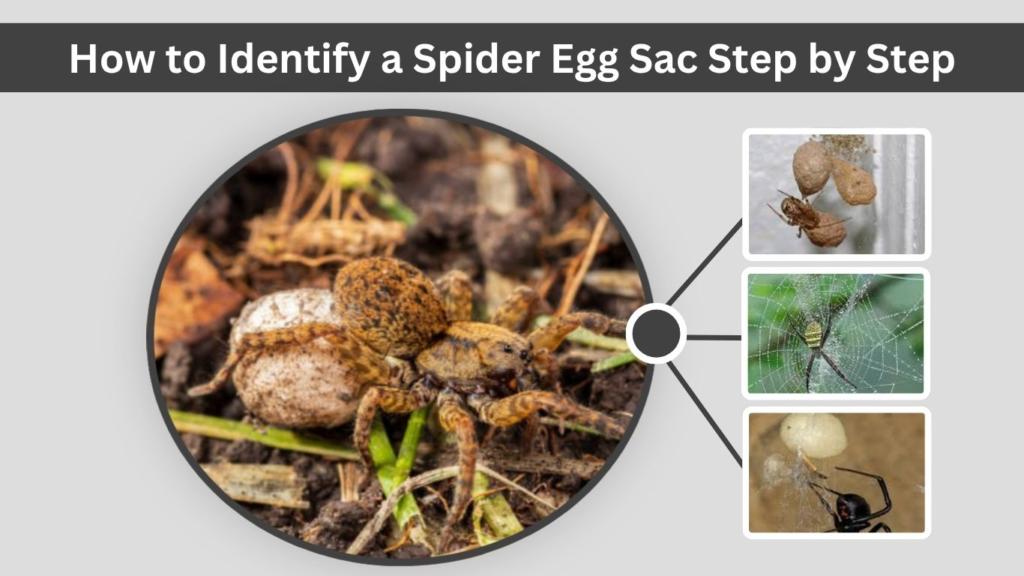
1. Look at the Shape
Spider egg sacs can vary significantly in shape depending on the spider species:
- Round: Many spiders, like house spiders, produce round egg sacs.
- Oval: Some orb-weavers and other species create oval-shaped sacs.
- Flattened or Disc-Shaped: A few spiders, like the brown recluse, create flattened, disc-like egg sacs.
- Teardrop or Irregular: Certain species, such as the black widow, may create irregularly shaped sacs, especially as they mature or become damaged.
2. Check the Color
Color is one of the most distinguishing features of spider egg sacs. While many egg sacs are white or cream-colored, others can vary in hue:
- White: Common in house spiders and orb-weavers.
- Tan or Brown: Black widow and brown recluse egg sacs are often tan or brown.
- Yellowish or Off-White: Wolf spiders and other common garden spiders create these types of sacs.
3. Notice the Texture
The texture of the egg sac can also help you identify the species. Look for:
- Smooth: Black widow sacs are often smooth, while those of house spiders may be slightly rough.
- Papery: Brown recluse egg sacs can appear papery and thin.
- Cottony or Fuzzy: House spider sacs are often cotton-like in texture.
- Loose or Dense Silk: Orb-weaver sacs may have loose silk, whereas wolf spider sacs may be tightly woven.
4. Look at the Location
The location where the egg sac is found is an important clue for identification. Spider egg sacs can be found in a variety of locations, depending on the species:
- House spiders tend to create their egg sacs in hidden indoor areas such as corners of ceilings, in basements, or in attics.
- Black widow spiders often hide their egg sacs in dark, cluttered spaces like wood piles, sheds, or basements.
- Brown recluse spiders typically create their egg sacs in secluded, undisturbed spaces such as behind furniture or inside boxes.
- Wolf spiders may carry their egg sacs with them, and these sacs are often found outdoors, especially in grassy or forested areas.
- Orb-weavers commonly create their egg sacs outdoors, often in trees, bushes, or on fences.
5. Check for the Adult Spider Nearby
If possible, the presence of the adult spider nearby can give you the best clue for identification. The appearance of the adult spider, along with the egg sac’s location and structure, can confirm the species.
Be cautious with potentially dangerous spiders like black widows or brown recluses. These spiders may guard their egg sacs, making them dangerous to approach. Always take extra care or contact pest control if you suspect the presence of venomous spiders.
Common Types of Spider Egg Sacs
House Spider Egg Sac Identification
House spider egg sacs are commonly found indoors. These sacs are often small, round, and white or cream-colored. You’ll most likely find them in corners of ceilings, window frames, or in storage areas like basements or attics. House spiders are generally harmless, but their egg sacs can lead to multiple spiderlings emerging if left undisturbed. While house spiders are not dangerous, their presence can still cause discomfort for some people.
Black Widow Spider Egg Sac Identification
Black widow egg sacs are typically tan or brown and may appear smooth or papery. They are often found in dark, undisturbed areas like sheds, basements, or wood piles. Black widow spiders are notorious for their venom, which can be deadly to humans, particularly young children or the elderly. If you come across a black widow egg sac, take extreme care and consider calling a pest control expert for safe removal.
Brown Recluse Spider Egg Sac Identification
Brown recluse spiders are known for their distinctive violin-shaped marking on their back. Their egg sacs are typically off-white, silken, and relatively small, often appearing flat or disc-shaped. These sacs are usually hidden in dark, secluded areas like closets, storage rooms, or under furniture. Brown recluse spiders are medically significant, as their bite can cause severe reactions in humans, including necrosis. If you find a brown recluse egg sac, handle it with extreme caution and avoid direct contact. It’s recommended to call a professional pest control service to safely manage the removal.
Wolf Spider Egg Sac Identification
Wolf spiders are unique in that the female carries the egg sac attached to her abdomen. The sac is usually round and made of a coarse silk. You may see the female spider carrying her egg sac as she moves across the ground, which can often be in gardens, lawns, or forested areas. Unlike black widow and brown recluse spiders, wolf spiders are not dangerous to humans, but it’s still wise to avoid direct contact with the spider and her egg sac. Wolf spider egg sacs are often tan or brown, with a rougher texture compared to other species.
Orb-Weaver Spider Egg Sac Identification
Orb-weaver spiders are common garden spiders and are known for the large, intricate webs they build. Their egg sacs are typically round or oval, made from fine silk, and are often found attached to vegetation, fences, or under eaves. These sacs are usually white or light brown and are often placed in sheltered outdoor areas. Orb-weavers are not dangerous to humans and are beneficial to have around since they help control insect populations.
Brown Widow Spider Egg Sac Identification
The brown widow spider’s egg sac is often tan and has a spiky, prickly appearance, making it easily distinguishable from the smoother black widow sacs. Brown widows are typically found in warm, outdoor environments, such as sheds, garages, and wood piles. Though brown widows are related to black widows, their venom is less potent and less likely to cause serious harm to humans. However, if you find their egg sacs, it’s still important to handle them carefully and avoid direct contact.
Peacock Spider Egg Sac Identification
Peacock spiders, known for their colorful and elaborate mating displays, are less common and are primarily found in Australia. Their egg sacs are small, silk-based, and usually white or pale in color. The sacs may appear similar to those of other jumping spiders, and they are often hidden in leaves or other debris. While these spiders are harmless and not a concern for human health, they can be fascinating to observe because of their vibrant colors and unique behavior.
Spider Egg Sac Identification by Location
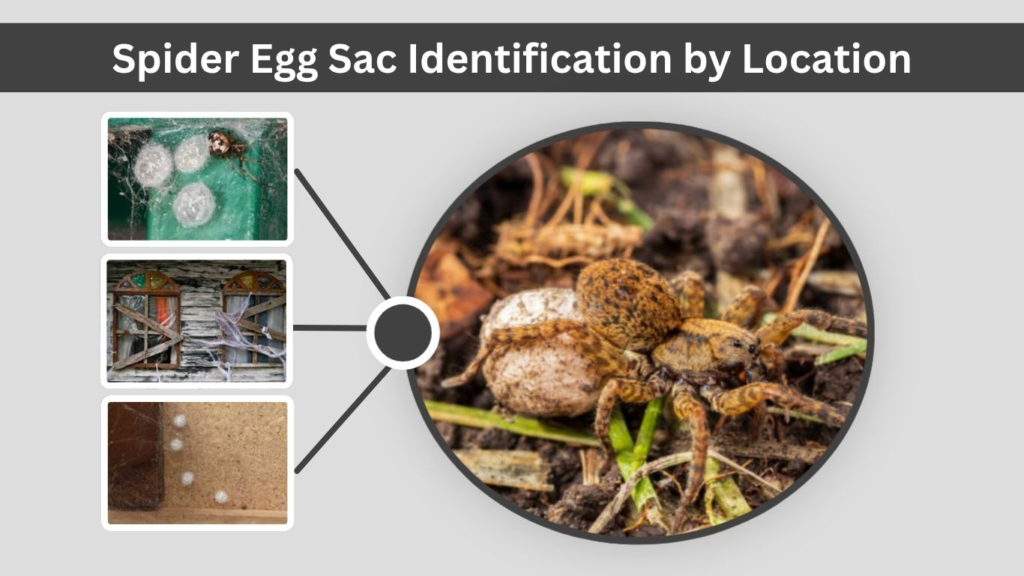
Spider Egg Sac Identification in the House
Spider egg sacs are commonly found indoors, especially in areas that are not frequently disturbed. If you find a sac in your house, check for the presence of nearby webs or adult spiders. The most common areas to find spider egg sacs indoors include:
- Ceilings: Spiders tend to create egg sacs in high corners or areas that are not regularly cleaned.
- Windows and Door Frames: These areas provide ample opportunity for spiders to create webs and lay their eggs.
- Basements and Attics: These areas are often dark, cool, and undisturbed, making them ideal for spider egg sac placement.
- Behind Furniture or Appliances: Spiders may also hide their egg sacs in dark corners, where human activity is minimal.
If you notice spider egg sacs in your home, take care to inspect the surrounding areas for the presence of adult spiders. If you suspect the presence of dangerous species like black widows or brown recluses, avoid contact and call a professional for assistance.
Spider Egg Sac Identification in Florida
Florida’s warm, humid climate provides an ideal environment for various spider species to thrive. Some common spiders in Florida include the black widow, brown widow, and house spiders. If you find a spider egg sac in Florida, it is important to identify the species accurately, as some, such as the black widow and brown widow, can pose a risk to humans.
Black widow egg sacs are often found in dark, sheltered areas, while brown widow sacs are usually spiky and tan. House spiders may create small, round egg sacs that are typically found in corners or hidden areas of the house.
Spider Egg Sac Identification in Texas
In Texas, a wide range of spiders are found, including black widows, brown recluse spiders, and orb-weavers. Black widow egg sacs are typically round and tan, while brown recluse sacs are off-white and small. These sacs are often hidden in dark, undisturbed areas such as basements, closets, and behind furniture.
Texas is also home to a variety of outdoor spiders, including wolf spiders and orb-weavers, which may create egg sacs in gardens, lawns, or on fences.
Spider Egg Sac Identification in Australia
Australia has a diverse range of spiders, including the redback spider, funnel-web spider, and peacock spider. The redback spider, which is related to the black widow, creates round, smooth egg sacs that are typically found in sheltered outdoor areas like wood piles or sheds. Funnel-web spiders create larger, more distinct egg sacs, often found in burrows or dark, hidden areas.
Australia’s warm climate is also conducive to the growth of orb-weavers and peacock spiders. Peacock spider egg sacs are typically small and silk-based, found in debris or vegetation.
Spider Egg Sac Identification in the UK
In the UK, house spiders and orb-weavers are the most common species responsible for egg sacs found indoors. The sacs are usually small, round, and white or tan in color. Orb-weaver spiders, in particular, tend to create their egg sacs in sheltered outdoor locations such as bushes, trees, and fences. The sacs are typically round or oval and are often attached to the web or nearby vegetation.
Spider Egg Sac vs Insect Egg Sac vs Cocoon
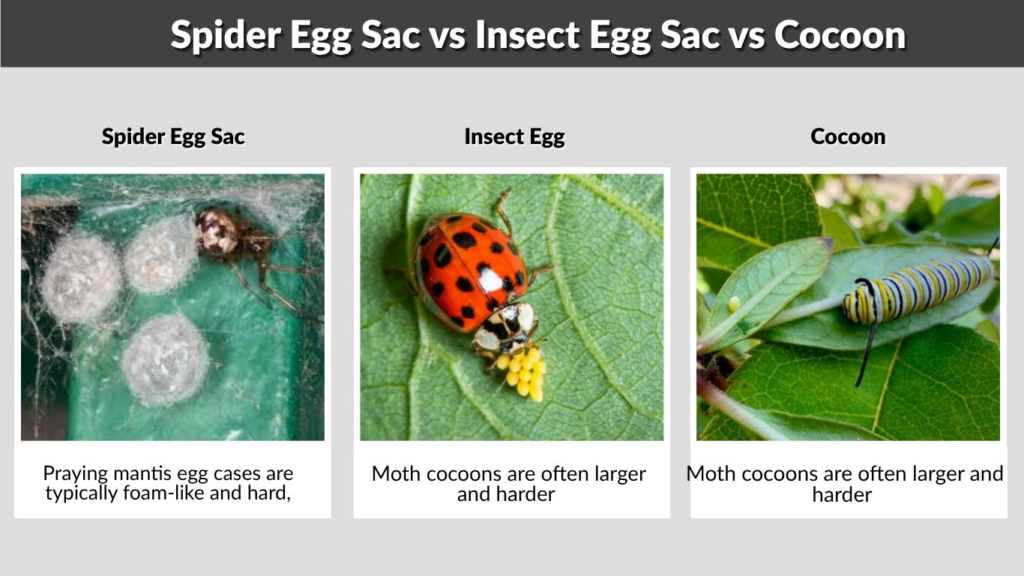
While spider egg sacs are unique to arachnids, they can sometimes be confused with insect egg sacs or cocoons. Here’s how to tell the difference:
Spider Egg Sac vs Moth Cocoon
Moth cocoons are often larger and harder than spider egg sacs, and they are typically made from more robust materials. These cocoons are generally found attached to branches, walls, or other structures.
Spider Egg Sac vs Mud Dauber Nest
Mud dauber nests are made of hard mud, not silk, and are typically found outdoors on walls or structures. Unlike spider egg sacs, they don’t have the same fine silk texture.
Spider Egg Sac vs Praying Mantis Egg Case
Praying mantis egg cases are typically foam-like and hard, and they are attached to twigs or other surfaces. They look very different from the soft, silk-based egg sacs of spiders.
What to Do If You Find a Spider Egg Sac
If you find a spider egg sac, it’s important to handle the situation with caution, especially if you’re dealing with potentially dangerous species like black widows or brown recluses. Here’s what to do:
Safe Removal Steps:
- Wear Gloves: Always wear gloves when handling spider egg sacs.
- Use a Vacuum: If the sac is in an accessible location, use a vacuum with a disposable bag to safely remove the sac.
- Seal the Sac: If you can’t vacuum the sac, place it in a sealed bag and remove it from the premises.
- Clean the Area: After removing the egg sac, clean the surrounding area to prevent future egg sacs from being laid.
- Call a Professional: If you suspect the presence of dangerous spiders or egg sacs, call pest control to have them safely removed.
When to Call a Professional
- If the egg sac is found in a location difficult for you to reach.
- If the egg sac is from a potentially dangerous species, such as a black widow or brown recluse.
- If you find multiple egg sacs or a large infestation, it’s time to call for expert help.
Conclusion
Identifying spider egg sacs can be challenging, but it’s important for your safety and peace of mind. By following the steps outlined in this guide, you can easily distinguish between harmless spider species and potentially dangerous ones. If you’re ever in doubt, it’s best to call pest control professionals to handle the situation safely.
