
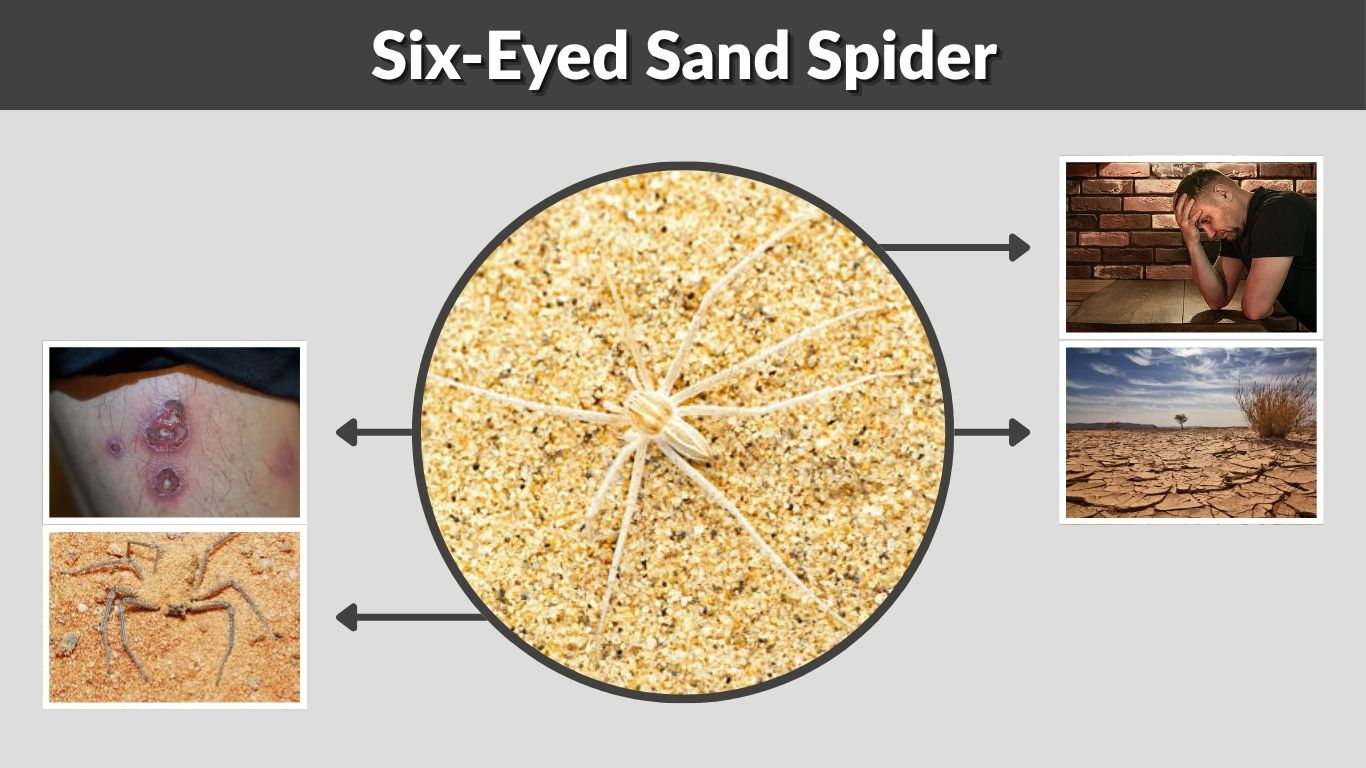
The six-eyed sand spider is one of the most mysterious and feared spiders found in desert environments. Known for its incredible camouflage and potent venom, this arachnid spends most of its life buried beneath sand while waiting to ambush prey. Native mainly to southern Africa, the six-eyed sand spider rarely encounters humans, but its venom has gained worldwide attention because of its tissue-damaging effects. This guide explains six-eyed sand spider identification, habitat, venom potency, bite symptoms, behavior, and the dangers associated with this unusual desert predator.
What Is a Six-Eyed Sand Spider?
The six-eyed sand spider belongs to the genus Sicarius, a group of desert-dwelling spiders known for their flat bodies and sand-colored camouflage. One of the best-known species is Sicarius hahni, which is commonly associated with the name six-eyed sand spider.
Why Is It Called a Six-Eyed Sand Spider?
Unlike most spiders that possess eight eyes, this species has only six eyes arranged in three pairs. The reduced eye count helps distinguish it from many other arachnids.
The spider is also famous for its ability to disappear beneath loose sand. Its flattened body and hairy legs collect sand particles that blend perfectly with desert surroundings. This camouflage makes it extremely difficult for predators and prey to notice the spider.
Six-Eyed Sand Spider Appearance
The six-eyed sand spider has a broad, crab-like body with long legs extending sideways. Most individuals display sandy brown, yellowish, or reddish coloration that matches desert terrain.
Important identification features include:
- Six eyes arranged in pairs
- Flattened body shape
- Hairy legs covered in sand particles
- Wide leg stance
- Pale brown or reddish coloring
Some individuals may appear slightly purple or reddish depending on lighting and species variation.
Six-Eyed Sand Spider Habitat and Distribution
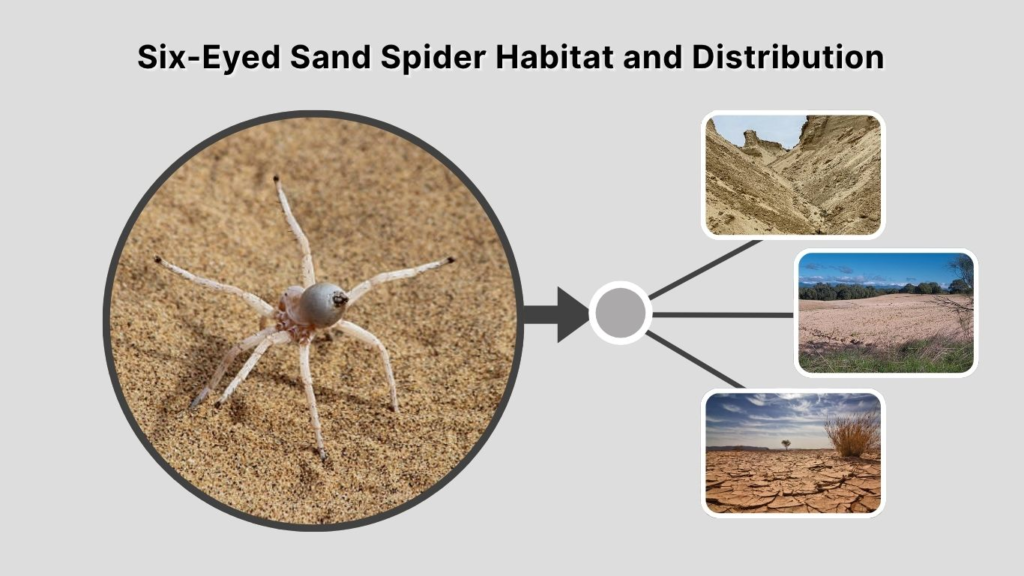
The six-eyed sand spider survives in harsh desert and semi-desert environments where camouflage is essential for survival. These spiders remain hidden for long periods and are rarely seen in the wild.
Where Does the Six-Eyed Sand Spider Live?
Most six-eyed sand spiders are found in southern Africa, especially in Namibia and South Africa. They inhabit sandy dunes, dry plains, and arid grasslands where loose soil allows effective burrowing and concealment.
The spider spends much of its time partially buried beneath sand with only its eyes exposed. This ambush strategy allows it to attack prey quickly while conserving energy.
Six-Eyed Sand Spider Habitat
These spiders thrive in hot and dry climates with soft sandy ground. Desert conditions help support their camouflage and hunting behavior.
Common habitat features include:
- Loose desert sand
- Dry grassland regions
- Rocky sandy plains
- Sparse desert vegetation
- Warm arid climates
Unlike web-building spiders, six-eyed sand spiders do not rely on silk traps. Instead, they depend entirely on stealth and venom to capture prey.
Africa Six-Eyed Sand Spider Range
The species occurs mainly in southern African ecosystems, although closely related Sicarius species exist in parts of South America. Reports of six-eyed sand spiders in locations such as Hawaii or New Mexico are usually misidentifications or isolated imported specimens.
Because these spiders are highly specialized for desert survival, they struggle to establish populations outside suitable climates.
Six-Eyed Sand Spider Behavior
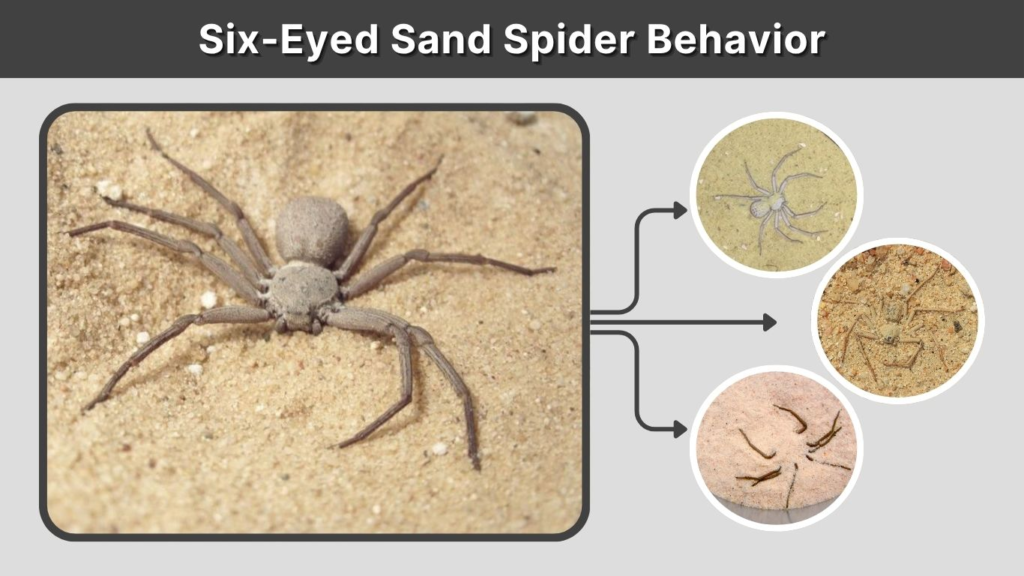
The six-eyed sand spider is an ambush predator that remains hidden beneath sand until prey approaches. Its behavior is centered around camouflage, patience, and quick attacks.
Six-Eyed Sand Spider Burying Itself
One of the spider’s most impressive adaptations is its ability to bury itself almost completely beneath sand. Using its legs, the spider throws sand particles over its body until only the eyes remain visible.
This camouflage serves multiple purposes:
- Hiding from predators
- Concealing itself from prey
- Reducing moisture loss
- Avoiding extreme heat
- Conserving energy during hunting
The spider may remain motionless for long periods before attacking passing insects or arthropods.
Six-Eyed Sand Spider Hunting
When prey moves close enough, the spider strikes rapidly with its powerful fangs and venom. The venom begins breaking down tissue immediately, helping immobilize and digest prey efficiently.
Unlike aggressive wandering spiders, the six-eyed sand spider relies more on stealth than speed. Human bites are extremely rare because the spider prefers avoiding contact whenever possible.
Six-Eyed Sand Spider Adaptations
Several physical and behavioral adaptations help this species survive in desert conditions. Its flattened body reduces visibility, while tiny hairs on the legs trap sand for better camouflage.
The spider can also survive long periods without food or water, making it highly adapted to harsh environments with limited prey availability.
Six-Eyed Sand Spider Venom
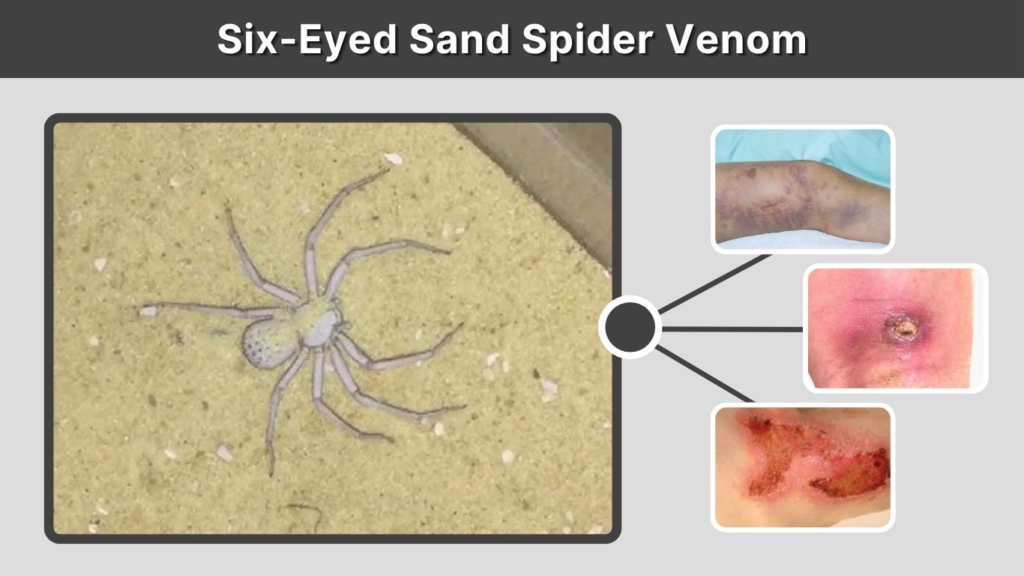
The venom of the six-eyed sand spider is considered highly dangerous because it contains powerful cytotoxic compounds capable of damaging skin and tissue.
Six-Eyed Sand Spider Venom Explained
Unlike neurotoxic venom that attacks nerves, the venom of the six-eyed sand spider mainly destroys cells and blood vessels. Scientists classify it as cytotoxic and hemolytic venom because it can damage tissue and interfere with blood circulation.
Common venom effects include:
- Severe tissue damage
- Skin ulceration
- Blood vessel destruction
- Internal bleeding risks
- Delayed wound healing
Laboratory research suggests the venom is extremely potent, although confirmed human bite cases remain rare.
How Venomous Is the Six-Eyed Sand Spider?
The six-eyed sand spider is often listed among the world’s most venomous spiders because of the destructive effects of its venom. However, the species rarely bites humans due to its secretive nature and isolated habitat.
Researchers continue studying the venom for medical and scientific purposes because of its unusual tissue-destroying properties.
Six-Eyed Sand Spider Bite
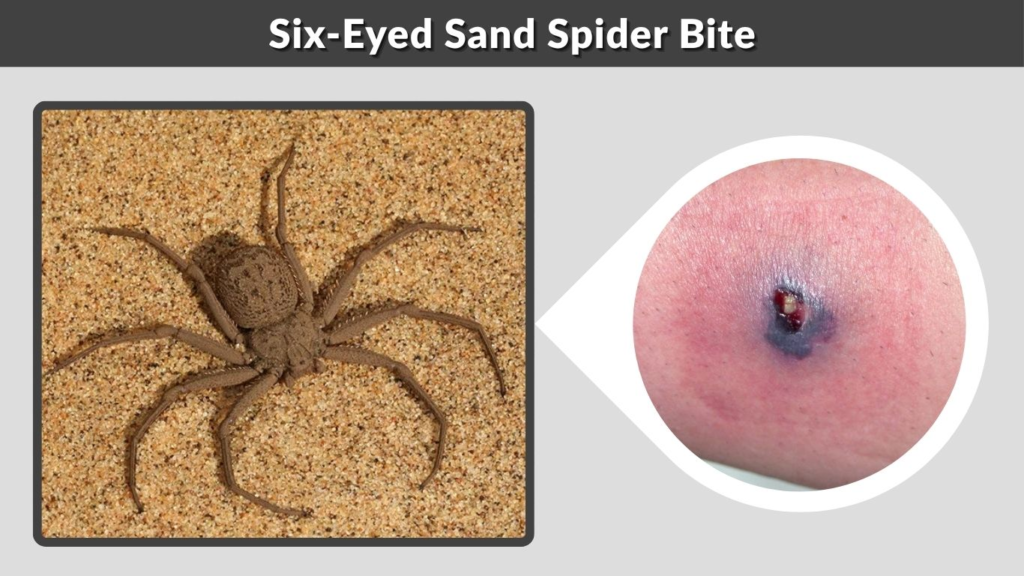
Although six-eyed sand spider bites are extremely uncommon, experts consider them medically serious because of the spider’s powerful cytotoxic venom. Most encounters with humans happen accidentally when the spider is disturbed in sandy environments.
Six-Eyed Sand Spider Bite Symptoms
The symptoms of a six-eyed sand spider bite may not appear immediately. In some cases, pain starts mildly before tissue damage gradually develops around the bite area.
Common symptoms include:
- Redness and swelling
- Skin blistering
- Tissue breakdown
- Severe pain near the wound
- Slow healing and scarring
In severe situations, venom may damage blood vessels and surrounding tissue. Scientists believe untreated bites could potentially lead to dangerous complications, although verified cases remain very limited.
Human Six-Eyed Sand Spider Bite Cases
Documented human bites are rare because the spider lives in remote desert regions and avoids human contact. Most scientific knowledge comes from laboratory venom studies rather than confirmed medical incidents.
Researchers believe many bites may go unreported or be mistaken for injuries caused by other insects or spiders. Despite the lack of widespread bite records, experts still recommend treating the spider with extreme caution.
Six-Eyed Sand Spider Bite Treatment
There is currently no specific antivenom designed for six-eyed sand spider bites. Medical treatment focuses mainly on wound care and preventing infection or tissue damage.
Recommended treatment methods include:
- Cleaning the wound immediately
- Applying basic first aid
- Seeking emergency medical care
- Monitoring tissue damage
- Preventing secondary infection
Doctors may also provide pain relief and supportive treatment depending on the severity of symptoms.
Six-Eyed Sand Spider vs Other Animals
The six-eyed sand spider is frequently compared with other venomous creatures because of its unusual venom and ambush hunting style.
Six-Eyed Sand Spider vs Funnel-Web Spider
The Sydney funnel-web spider possesses highly neurotoxic venom that attacks the nervous system rapidly, while the six-eyed sand spider uses cytotoxic venom that destroys tissue more slowly.
Funnel-web spiders are generally considered more aggressive and more likely to bite humans. Six-eyed sand spiders rely heavily on camouflage and prefer avoiding direct confrontation.
Six-Eyed Sand Spider vs Brazilian Wandering Spider
The Brazilian wandering spider actively hunts prey and frequently wanders through forests and homes at night. In contrast, the six-eyed sand spider remains hidden beneath sand waiting for prey to approach.
Both spiders possess dangerous venom, but the effects differ greatly. Wandering spider venom mainly affects nerves and muscles, while six-eyed sand spider venom causes tissue destruction and vascular damage.
Six-Eyed Sand Spider vs Scorpion
Desert scorpions and six-eyed sand spiders share similar habitats and ambush hunting strategies. However, scorpions use stingers for venom delivery, while spiders rely on fangs.
The six-eyed sand spider’s camouflage is considered among the best in the arachnid world, allowing it to disappear almost completely beneath sand surfaces.
Six-Eyed Sand Spider Diet and Feeding
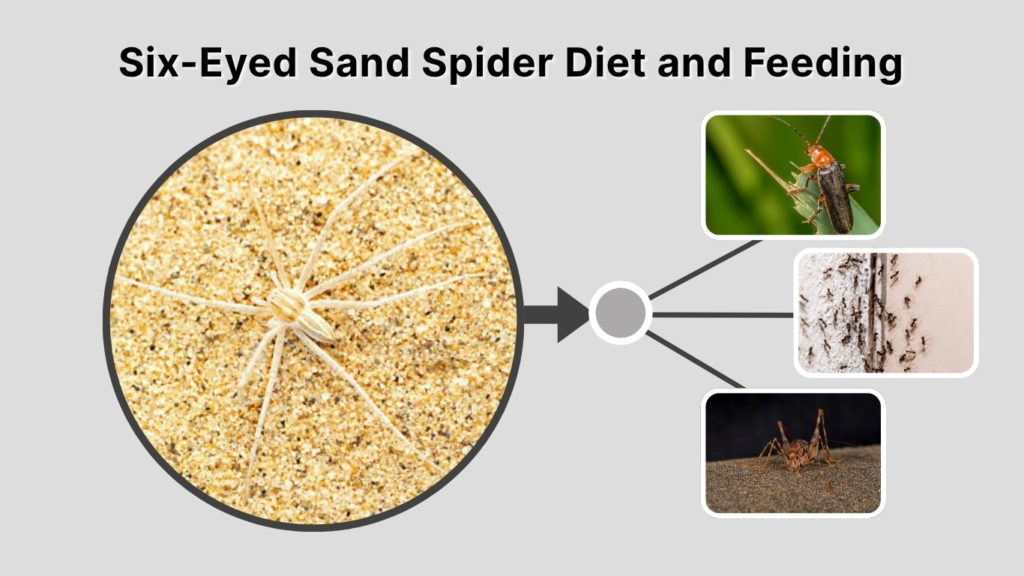
The six-eyed sand spider feeds mainly on insects and other small desert arthropods. Its hunting strategy depends on patience rather than speed or web construction.
Six-Eyed Sand Spider Diet
These spiders consume a variety of prey animals found in dry environments.
Typical prey includes:
- Beetles
- Ants
- Small spiders
- Crickets
- Desert insects
After biting prey, the venom begins breaking down tissues and internal structures, making digestion easier for the spider.
Six-Eyed Sand Spider Feeding Behavior
The spider remains hidden until vibrations or movement signal that prey is nearby. Once the target enters striking distance, the spider attacks quickly before retreating beneath the sand again.
This hunting method conserves energy and reduces exposure to predators in harsh desert climates.
Six-Eyed Sand Spider Lifespan and Care
The six-eyed sand spider can survive for several years in suitable desert conditions. Because of its venom and specialized habitat requirements, it is considered unsuitable for inexperienced keepers.
How Long Does a Six-Eyed Sand Spider Live?
Most six-eyed sand spiders live several years depending on species, environmental conditions, and food availability. Females generally survive longer than males because males wander more frequently in search of mates.
Their slow metabolism allows them to survive extended periods without food or water.
Six-Eyed Sand Spider Care Basics
Exotic spider keepers sometimes attempt to maintain these spiders in captivity, although ownership carries significant risks.
Important enclosure considerations include:
- Deep sandy substrate
- Warm temperatures
- Dry environment
- Minimal humidity
- Secure escape-proof enclosure
Because there is no specific antivenom, handling should never be attempted.
Six-Eyed Sand Spider Facts
The six-eyed sand spider remains one of the most fascinating desert arachnids because of its unique camouflage and unusual venom.
Interesting Facts About the Six-Eyed Sand Spider
Several characteristics make this spider highly unusual among arachnids.
- Possesses only six eyes instead of eight
- Uses sand for near-perfect camouflage
- Rarely seen in the wild
- Can survive long periods without food
- Relies on ambush hunting instead of webs
Scientists continue studying its venom to better understand its tissue-destroying effects and possible medical applications.
FAQs
Is the six-eyed sand spider dangerous?
Yes, the spider possesses highly potent cytotoxic venom that can damage tissue and blood vessels, although human bites are extremely rare.
Can a six-eyed sand spider kill you?
Fatalities are not well documented, but the venom is considered medically significant and potentially dangerous without proper treatment.
Where does the six-eyed sand spider live?
The species mainly inhabits sandy desert regions of southern Africa, especially Namibia and South Africa.
Does the six-eyed sand spider have antivenom?
No specific antivenom currently exists for six-eyed sand spider bites. Treatment focuses on supportive medical care and wound management.
Is the six-eyed sand spider aggressive?
The spider is generally not aggressive and prefers hiding beneath sand rather than confronting threats directly.
